November 25, 2025
Why Every Malaysian Household Needs a Well-Stocked Home Pharmacy

Have you ever found yourself in desperate need of a simple pain reliever or antiseptic in the middle of the night, only to discover your bathroom cabinet is completely empty? This scenario is all too common and highlights a critical gap in household preparedness. For families across Malaysia, from the heart of Kuala Lumpur to the villages of Sarawak, a well-prepared home pharmacy checklist is far from a luxury—it is an essential safeguard. The unpredictable weather patterns, the sudden onset of common colds, and the inevitable minor injuries from daily life all demand quick, reliable access to trusted health products without having to wait for clinic hours or pharmacy openings. A properly stocked medicine cabinet provides this immediate relief for common ailments, effectively reducing unnecessary and often costly trips to the doctor. This accessibility is made possible by the reliable supply networks supported by sophisticated pharmacy distribution services in Malaysia. Behind the scenes, a complex system of independent pharmacy distributors and pharmacy wholesale distributors works tirelessly to guarantee not only the widespread availability of these products but also their absolute product authenticity and nationwide reach, ensuring that a family in Johor Bahru has the same access as one in Penang. Furthermore, the role of the pharmacy merchandiser is subtle yet profoundly strategic. These experts collaborate directly with brand owners and distributors to ensure the consistent visibility and availability of Over-the-Counter (OTC) medicines, antiseptics, and general wellness goods across every type of retail outlet, from large urban hypermarkets to small rural kedai ubat. In essence, a dependable home pharmacy is more than just a collection of items in a cupboard; it is a direct reflection of Malaysia’s robust, interconnected distribution system, a proven and efficient infrastructure designed to keep essential medicines within everyone’s reach, day or night.
Understanding the Role of Pharmacy Distribution in Everyday Health Access
How is it that your local pharmacy almost always has the basic healthcare items you need, even during sudden demand spikes like a flu outbreak or a public holiday? The answer lies in Malaysia’s highly developed pharmacy distributor network, which operates with the precision of a finely tuned engine. From major retail chains in urban centers like KLCC to small, independent counters in rural Sabah, every single outlet depends on this efficient logistics and compliance-driven handling system. These pharmacy wholesale distributors adhere strictly to Good Distribution Practice (GDP) guidelines, a set of rigorous standards that govern every aspect of the supply chain. This includes temperature control for heat-sensitive items, systematic stock rotation to prevent expiry, and meticulous transport safety protocols. Acting as the crucial bridge between manufacturers and community pharmacies, distributors ensure that essential products—from pain relievers and fever reducers to bandages and dietary supplements—arrive not only on time but also perfectly intact and fully verified for authenticity. The ecosystem is further enriched by distributor pharmacies that specialize in specific therapeutic classes, such as diabetic care or pediatric medicines, enabling tailored supply strategies that significantly reduce the risks of overstocking and product expiration. Their strategic partnerships with hospitals, clinics, and retail pharmacies create a streamlined inventory flow that minimizes wastage and maximizes efficiency.
From the pharmacist’s perspective, having a dependable distributor is the cornerstone of their service; it means they can confidently assure their patients that the right product will be available at the right time, fostering patient trust and community health. From the brand manager’s viewpoint, this network is indispensable for securing shelf presence and maintaining compliance confidence, ensuring their products reach the intended market without regulatory hiccups. And from the consumer’s standpoint, this entire, often invisible, system is what empowers their home pharmacy, providing the peace of mind that comes from knowing healthcare is accessible. Ultimately, Malaysia’s distribution network is a reliable, expert, and powerful backbone, centrally responsible for maintaining consistent healthcare accessibility for all its citizens.
Learn more: Pharmacy Wholesale Distributors: How to Select the Right Partner | Good Distribution Practices (GDP) for pharmaceutical supply chains
Criteria for Selecting Must-Have Home Pharmacy Items
What truly separates an ordinary, haphazardly stocked medicine cabinet from a truly effective and reliable one? A proven home pharmacy is not assembled by chance; it is carefully curated using a set of clear, practical criteria recognized by healthcare experts, including pharmacists, distributors, and the Ministry of Health (MOH Malaysia). These criteria ensure that every item serves a purpose and meets the highest standards of safety and efficacy.
The key selection criteria include:
-
Frequency of Use: Prioritizing items that address common, recurring illnesses such as fever, pain, flu, or mild allergies. These are the workhorses of any home pharmacy.
-
Safety and KKM Approval: Insisting on products that have valid Notification of Verification (NOT) or Medicines Advertisement and Sale (MAL) numbers, which can be easily verified through the National Pharmaceutical Regulatory Agency (NPRA) database. This is a non-negotiable aspect of product authenticity.
-
Storage Stability: Choosing medicines and supplies that remain stable and reliable in Malaysia’s characteristically humid climate when stored according to label instructions. This is crucial for maintaining drug efficacy.
-
Accessibility Through Pharmacy Distribution: Selecting items that are consistently supplied and restocked by licensed pharmacy distributors in Malaysia. This ensures that when you run out, replacements are easy to find.
-
Ease of Use and Clear Labeling: Opting for products with straightforward instructions and clear labeling, which is especially important for multi-generational households that may include elderly members or young children.
Pharmacists consistently emphasize starting with a foundation of essential first-aid and OTC medicines before considering more specialized products. For instance, a family in a suburban area like Petaling Jaya might focus on allergy relief due to urban pollution, while a family in a rural, coastal area might prioritize more robust antiseptics for minor cuts and scrapes. Families can and should consult with expert pharmacists at their local retail outlets to identify suitable alternatives for chronic conditions or age-specific needs. The best home pharmacies strike a perfect balance between variety and simplicity; every product has a clear purpose, complies with stringent safety standards, and aligns perfectly with the distribution availability ensured by Malaysia’s trusted pharmaceutical logistics network. It is an organized, strategic system that consciously mirrors the professional standards used by healthcare providers across the nation.
Learn more: Why Your Pharmacy Needs a Merchandising Service Partner
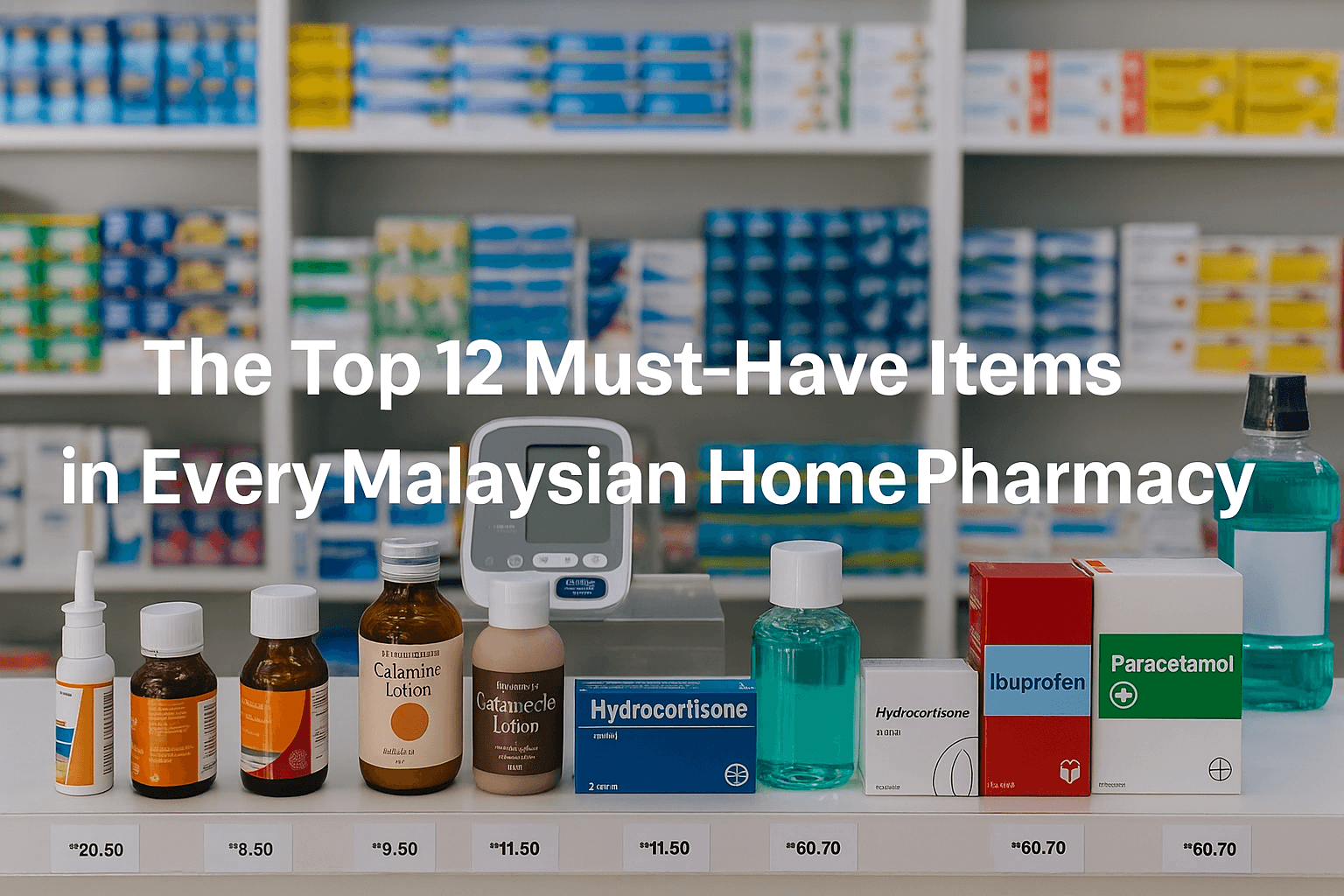
The Top 12 Must-Have Items in Every Malaysian Home Pharmacy
Every Malaysian home should maintain a consistent baseline of health products to handle most common health situations. The following list of twelve essential categories is compiled from the collective recommendations of practicing pharmacists and distributor pharmacy experts, reflecting what is both necessary and consistently available through the country’s supply chain.
-
Pain and Fever Relievers. This category is the absolute cornerstone of any home pharmacy. Paracetamol and Ibuprofen are proven and effective for managing fever, headaches, muscle aches, and menstrual pain. It is essential to always check the dosage instructions, especially for children, and ensure you have both adult and pediatric formulations.
-
Cough and Cold Medication. Malaysia’s frequent weather transitions can trigger respiratory issues. A selection of cough lozenges, antihistamines for runny noses, and saline nasal sprays can provide significant comfort and manage symptoms until the body recovers.
-
Antiseptics and Disinfectants. For any break in the skin, from a small paper cut to a more significant scrape, immediate cleaning is vital to prevent infection. Povidone-iodine (Betadine) and alcohol swabs are crucial for proper wound care and infection prevention.
-
Plasters and Dressings. A variety of sizes and types of plasters (waterproof, fabric) and sterile gauze dressings are necessary for protecting wounds from dirt and further irritation. They should be stored in a dry, sealed container to maintain their sterility.
-
Thermometer and Digital Health Devices. Accurate home diagnosis begins with reliable tools. A digital thermometer is indispensable for checking fever, and a blood pressure monitor is increasingly considered an essential device for monitoring cardiovascular health, especially in households with older adults.
-
Digestive Aids. Stomach upsets, indigestion, and mild food poisoning are common occurrences. Having antacids and Oral Rehydration Salts (ORS) on hand can manage discomfort and prevent dehydration, a proven response to gastrointestinal distress.
-
Allergy Relief Tablets. With allergens ranging from haze to dust mites, non-drowsy antihistamines are a trusted solution for managing sudden allergic reactions, including sneezing, itchy eyes, and skin rashes.
-
Topical Creams and Ointments. Skin irritations like rashes, itchiness, and insect bites are frequent nuisances. Hydrocortisone cream or calamine lotion can provide effective and targeted relief from inflammation and itching.
-
Basic Medical Tools. A set of blunt-ended scissors, tweezers (for splinter removal), disposable gloves, and sterile gauze pads are fundamental tools for administering safe and effective emergency first aid.
-
Oral Care and Mouth Ulcer Treatment. Painful mouth ulcers or minor gum irritations can be debilitating. An antiseptic mouthwash or a specialized ulcer gel can promote healing and provide comfort, making them a valuable addition.
-
Vitamins and Immunity Boosters. While not medicines, supplements like Vitamin C, Vitamin D3, and Zinc are widely used to support the immune system. These are commonly and reliably distributed through pharmacy wholesale channels, ensuring consistent quality.
-
Eye Drops and Lubricants. In our modern, screen-saturated lives, and with the prevalence of air-conditioning, eye dryness is a common complaint. Lubricating eye drops offer quick and reliable relief.
Each item in your cabinet should be from a trusted brand, clinically effective, and properly labeled with clear storage guidance. To better understand how these categories interact with practical use and availability, consider the following comparative framework.
Learn more: How to Boost Over-the-Counter (OTC) Product Sales with Effective Merchandising in Malaysia
Comparative Table: Essential Home Pharmacy Categories & Their Supply Chain Context
A well-maintained medicine cabinet is a dynamic resource. It should always be accompanied by a simple written checklist that includes expiry dates, which must be reviewed and updated at least every six months to ensure everything is in safe, working order.
Safety, Storage, and Expiry Management
How often do you actually take the time to check the expiry dates of the medicines in your home? This simple, yet profoundly essential practice is overlooked by a surprising number of households, potentially turning a meant-to-be remedy into a health risk. In a climate like Malaysia’s, improper storage can rapidly degrade a drug’s active ingredients, reducing its therapeutic effectiveness or, in worst-case scenarios, causing adverse reactions. To ensure your home pharmacy remains a safe and reliable resource, it is critical to follow these proven guidelines that mirror professional standards.
First, organization is key. You should separate your medicines logically by their use—for example, keeping all fever and pain relievers in one clearly labeled section, and all digestive aids in another. This not only helps you find what you need quickly in an emergency but also prevents accidental misuse. Second, make it a non-negotiable household rule to check expiry dates systematically at least twice a year. A good way to remember is to do it when the clocks change or during major holidays. Any expired products must be disposed of responsibly, following the KKM recommendations, which often involve returning them to a pharmacy for proper disposal instead of simply throwing them in the trash. Third, always be mindful of the environment. You must avoid storing medicines in direct sunlight or in humid places like the bathroom. The consistent heat and moisture of the Malaysian weather can rapidly weaken both tablets and liquid formulations, compromising their stability. Instead, a cool, dark, and dry cupboard in a bedroom or hallway is a much more efficient and safer location.
Furthermore, using airtight boxes for storing hygroscopic items like bandages and plasters is a strategic move to prevent moisture absorption and maintain their sterility. Finally, any sharp tools like scissors and tweezers, as well as fragile devices like thermometers, should be kept in a separate, secure section that is child-proof. This layered approach to storage is not just a consumer best practice; it directly complements the tailored supply practices used by pharmacy wholesale distributors across the country. These distributors manage millions of Ringgit worth of inventory through efficient rotation systems like FEFO (First Expiry, First Out), ensuring that the oldest stock is always sold first. By adopting a similar mindset at home, households can directly extend the shelf life of their medicines and guarantee their safety and efficacy during emergencies. This conscious habit, though simple, is a powerful component of personal healthcare, fully supported by the robust and interconnected nature of Malaysia’s entire pharmaceutical ecosystem.
The Role of Pharmacists and Distributors in Product Education
Have you ever picked up an over-the-counter medicine and felt unsure about the correct dosage or its potential side effects? You are not alone, and the system designed to address this uncertainty is a cornerstone of public health in Malaysia. The answer lies in a deeply strategic collaboration between community pharmacists, independent pharmacy distributors, and brand partners, each playing a distinct but interconnected role in consumer education. Pharmacists serve as the frontline educators, translating complex medical information into practical, actionable advice for patients on everything from dosage timing to potential drug interactions. Meanwhile, the role of the distributor is fundamentally essential in ensuring that these products arrive at the pharmacy not just physically, but also accompanied by accurate product inserts, compliant labeling, and up-to-date educational materials that empower the pharmacist’s counsel. This partnership ensures that knowledge is delivered as reliably as the medicine itself. Within Malaysia’s unique pharmaceutical landscape, distributor pharmacies often initiate and fund nationwide training programs for retail pharmacy staff. These proven initiatives are crucial for keeping pharmacists and their assistants updated on new products or revised guidelines for common items like antihistamines, vitamin supplements, and wound care disinfectants, enabling them to explain usage instructions with greater confidence and authority. The shared, overarching goal is the delivery of effective, informed care at the most critical level—the household.
Consider a practical scenario during the annual haze season or a dengue outbreak. Pharmacy wholesale distributors frequently coordinate with brand managers to launch targeted promotional campaigns. These often bundle items like paracetamol, oral rehydration salts (ORS), and N95 masks or mosquito repellents into special “seasonal wellness packs.” This strategic bundling does more than just boost sales; it encourages responsible purchasing behavior and subtly improves medicine literacy by helping families understand which products work together for specific health situations. Another common example can be seen in rural areas, where a distributor’s sales representative might provide a local clinic with simple, visual charts on how to use a liquid antipyretic for children, which the clinic staff can then easily disseminate. By continuously reinforcing this trusted link between product accessibility and public knowledge, Malaysia’s pharmacy ecosystem demonstrates a powerful truth: in modern healthcare, distributing knowledge is just as important as distributing the physical product, and both must be handled with expert care.
Learn more: Medicine shortages: a complex global challenge
Common Mistakes Malaysian Households Make in Managing Home Pharmacies
What are the most frequent and dangerous errors that families commit when managing their home medicine cabinets? The answers often extend beyond simple forgetfulness and into practices that can inadvertently compromise health and safety. Surprisingly, many of these recurring mistakes revolve around three core areas: storage negligence, labeling oversight, and the growing risk of unverified purchases from dubious sources. These are not minor issues; they represent significant gaps in household health preparedness that are regularly identified by pharmacy professionals and the extensive pharmacy distributor Malaysia networks as key public-education priorities.
The most common household mistakes include:
-
Mixing expired with new medicines – a dangerous practice that frequently leads to accidental misuse of ineffective or degraded drugs.
-
Buying from unverified online sellers – a modern pitfall that carries a high risk of introducing counterfeit products into the home, products that have bypassed the secure supply chain.
-
A general lack of clear organization – which transforms a minor emergency into a frantic, stressful search for a needed item.
-
Ignoring or misinterpreting dosage instructions – resulting in reduced therapeutic effectiveness or, in worse cases, mild overdosing, especially in children.
-
Having no tracking system for refills – leading to last-minute rushes or finding oneself empty-handed when a common ailment strikes.
Through reliable outreach campaigns and consistent consultations with pharmacists at the point of sale, households are being encouraged to adopt safer practices. These include maintaining clearly labelled, child-safe containers, conducting bi-annual cabinet audits, and disposing of unused medicines properly by returning them to a pharmacy. The contrast between compliant and non-compliant homes is stark, as visualized in the following comparison of common practices.
Learn more: Navigating the Latest Consumer Trends in OTC Retail
Comparative Table: Household Compliance Practices in Malaysia
Reducing the prevalence of these common mistakes fundamentally begins with sustained awareness—a mission that the expert Malaysian pharmacy community, from the largest distributor to the smallest neighborhood chemist, continues to champion through strategic and locally relevant education efforts.
Compliance and Regulatory Insights: Ensuring Product Safety in Malaysia
Why is regulatory compliance treated with such immense seriousness within the Malaysian healthcare supply chain? The reason is both simple and profound: every single product that finds its way onto a pharmacy shelf is a direct reflection of the country’s trusted public health safety standards. This unwavering commitment to safety is enforced by Malaysia’s National Pharmaceutical Regulatory Agency (NPRA), which operates under the auspices of the Ministry of Health (KKM). The agency mandates strict pre-market approval for all medicines, with each legitimate product carrying a unique NOT (Notification of Verification) or MAL (Medicines Advertisement and Sale) registration number. This number is not merely a formality; it is a verifiable seal of approval, signifying that the product’s formulation, labeling, and recommended storage conditions have been rigorously assessed for safety, quality, and efficacy.
The journey of a product from manufacturer to consumer is governed by the Good Distribution Practice (GDP) framework, a comprehensive set of regulations that all pharmacy distribution services in Malaysia must adhere to without exception. These proven standards meticulously regulate every logistical touchpoint, including unbroken temperature control for sensitive items, precise batch tracking for efficient recall if needed, and flawless documentation accuracy. Every single pharmacy wholesale distributor undergoes regular and surprise audits to ensure adherence, guaranteeing a reliable and secure flow of medicines from the factory floor directly to the consumer’s shelf. From a brand manager’s perspective, maintaining compliance is a strategic imperative that extends beyond the product itself to encompass all promotional materials and health claims, ensuring they remain accurate and non-misleading to avoid regulatory sanctions. For the retail pharmacies, partnering with a reliable independent distributor means outsourcing a significant portion of this complex regulatory burden, receiving streamlined regulatory support that drastically reduces the risk of product suspension or a costly market recall. Through the NPRA’s consistent and vigilant monitoring, Malaysia has cultivated one of Southeast Asia’s most efficient and respected pharmacy systems. In this context, compliance is far from mere bureaucratic red tape; it is a essential protective layer that ensures every tablet, syrup, or ointment sold in the country meets globally recognized safety expectations, thereby safeguarding the health of millions.
Learn more: How to adapt to changing consumer behaviour – Healthcare & consumer goods
Building a Responsible, Consumer-Centric Pharmacy Culture in Malaysia
The Malaysian pharmacy sector is engaged in a mission far greater than the simple movement of products from a warehouse to a shelf; it is actively nurturing a culture of public trust and responsible self-care. This final pillar explores how the sophisticated integration of logistics, merchandising, and health education collectively builds a resilient and informed consumer culture.
The Distribution Perspective
From the distribution viewpoint, the system is a marvel of coordination. Pharmaceutical distribution in Malaysia is a network of trusted logistics providers, pharmacists, and regulators working in concert. Every shipment, whether it contains vital antibiotics or simple vitamin supplements, moves through efficient, temperature-controlled systems designed to preserve product integrity. Leading pharmacy distributor Malaysia companies now employ advanced barcoding and serialized tracking technologies, which are essential tools in the ongoing battle against counterfeit drugs, providing an immutable guarantee of product authenticity from factory to family.
The Merchandising Perspective
The role of merchandising is to make the safest choices the most visible and intuitive for consumers. Effective pharmacy merchandising services transform a retail space into an educational environment. Well-organized gondolas, clearly labeled displays, and thematic campaigns like “Back-to-School Health Kits” or “Diabetic Foot Care Corners” do more than just sell—they guide shoppers towards proven, compliant products. Distributors often collaborate directly with these merchandisers to create tailored planograms, which are strategic layout tools that help pharmacists display home pharmacy essentials in a way that is both commercially sensible and promotes rational consumer choice.
The Pharmacist Perspective
The community pharmacist remains the human heart of this ecosystem. They are the expert translators of medical complexity into practical, daily wisdom. Their guidance—whether explaining why a specific dosage interval is critical or the difference between two similar-looking creams—transforms potential confusion into clarity and confidence. An increasing number of pharmacies in Malaysia are enhancing this role by dedicating space for community health corners or mini-consultation booths, fostering direct dialogue and significantly improving patient adherence to treatment regimens.
The Brand Manager Perspective
For the brand manager, success is increasingly defined by a deep understanding of consumer behavior, data which is often funneled through distributor pharmacies. This data reveals top-selling OTC items, emerging health trends, and regional purchasing patterns, all of which guide future product innovation, strategic packaging changes, and effective educational campaigns that resonate with the Malaysian public.
The Consumer Perspective
Ultimately, the entire system is validated by an educated consumer. A consumer who actively looks for the KKM-approved logo, who purchases only from distributor-verified sources, and who knows how to cross-check the NPRA database is not just a savvy shopper—they are an active participant in supporting Malaysia’s national health goals. This pillar underscores how effective, multi-stakeholder collaboration creates a virtuous cycle, ensuring that every Malaysian home pharmacy remains a safe, legal, and beneficial resource for all.
Empowering Malaysian Households Through Responsible Pharmacy Practices
The journey toward lifelong health preparedness for Malaysian families is anchored in the adoption of responsible, structured habits for managing their home pharmacy. This personal diligence is powerfully reinforced by the country’s reliable distribution systems and the ever-present guidance of community pharmacists. The call to action is clear: every family should institutionalize the habit of reviewing their home pharmacy checklist twice a year, diligently removing expired drugs, and consistently restocking from trusted pharmacy distributors. On the frontline, retail pharmacies—supported by strategic pharmacy merchandising services—continue to be pillars of education, using in-store posters, digital promotions, and pharmacist-led workshops to disseminate crucial information.
From a broader, national perspective, the goal transcends mere individual convenience. It is about building nationwide health resilience. When a significant majority of households are equipped to manage minor illnesses and injuries promptly at home, the collective pressure on public clinics and hospital emergency departments is substantially eased, allowing these essential services to focus on more critical cases. This self-reliant model is a proven contributor to a more efficient national healthcare system. This cycle—where consumer education, regulatory compliance, and product accessibility continuously reinforce one another—beautifully reflects Malaysia’s effective model of public-private collaboration in healthcare. Every stakeholder, from the smallest independent pharmacist in a Kelantan village to the largest pharmacy wholesale distributor operating out of Selangor, plays an indispensable role in this ecosystem, collectively ensuring the safety and well-being of every Malaysian household.
Frequently Asked Questions (FAQ)
Q1: What are the essential items every Malaysian home pharmacy should have?
Answer: Every household should include pain relievers, antiseptics, plasters, thermometers, digestive aids, allergy medicine, topical creams, oral care items, vitamins, and eye drops to handle common ailments safely.
Q2: How often should I check and update my home pharmacy items?
Answer: You should review expiry dates and restock essential medicines at least twice a year to ensure all items remain safe and effective for use.
Q3: Why is KKM approval important when buying medicines?
Answer: KKM approval ensures the medicine has been verified by Malaysia’s NPRA for safety, quality, and authenticity—protecting consumers from counterfeit or unsafe products.
Q4: How can I verify if my medicine is officially registered with KKM?
Answer: Look for the NOT or MAL number on the product packaging and confirm its validity using the NPRA Malaysia online database.
Q5: What’s the difference between a pharmacy distributor and a retail pharmacy?
Answer: A pharmacy distributor supplies products in bulk to pharmacies and clinics, while a retail pharmacy sells directly to consumers for personal use.
Q6: Why is proper storage of medicines important in Malaysia’s climate?
Answer: Malaysia’s humidity and heat can degrade medicine potency. Store medicines in a cool, dry place away from sunlight to maintain their reliability.
Q7: Can I buy over-the-counter medicine online safely?
Answer: Only if the online seller is licensed and verified. Buying from unregistered sources risks counterfeit or expired medicines that may harm your health.
Q8: How do pharmacists and distributors ensure medicine safety?
Answer: They follow Good Distribution Practice (GDP) guidelines—ensuring correct temperature, handling, and labeling from manufacturer to pharmacy shelf.
Q9: What are common mistakes households make when managing a home pharmacy?
Answer: Storing expired medicines, buying from unverified sellers, mixing drugs in one container, and ignoring dosage instructions are the most frequent errors.
Q10: How does having a well-stocked home pharmacy benefit Malaysian families?
Answer: It ensures quick, reliable access to trusted remedies during minor illnesses or emergencies—reducing unnecessary clinic visits and improving health preparedness.
A well-maintained home pharmacy is a powerful statement of preparedness and a reflection of a deeper understanding of Malaysia’s carefully regulated healthcare ecosystem. Whether you are a pharmacy distributor, a brand manager, or a household consumer, the commitment to responsible medicine handling is a shared responsibility that ensures safety for everyone.
For expert guidance on strategic pharmacy distribution solutions, tailored merchandising support, or collaboration opportunities within Malaysia’s dynamic pharmaceutical network, we welcome you to reach out to our team at PriooCare Malaysia. Let’s work together to build a trusted, efficient, and reliable foundation for health in every Malaysian home.