
Ultimate Guide to KKM Approval in Malaysia (2026 Edition)

February 24, 2026
What does securing regulatory approval truly signify for your pharmacy business? In Malaysia’s dynamic healthcare sector, obtaining KKM approval transcends a mere regulatory milestone—it represents an operational necessity and a strategic imperative for any brand aiming for market access and longevity. From burgeoning independent skincare labels to established pharmaceutical giants, businesses fundamentally depend on pharmacy distributor Malaysia teams and robust distributor pharmacy channels to navigate the complex journey from factory to shelf. For these players, having products formally registered under the Ministry of Health (MOH) via the National Pharmaceutical Regulatory Agency (NPRA) does more than just check a box for compliance; it builds the trusted relationships with both pharmacies and end-consumers that are essential for sustainable growth. Whether you operate as an independent pharmacy distributor or are embedded within a nationwide pharmacy wholesale distributors network, approaching KKM processes with a strategic mindset directly determines your speed to shelf, eligibility for coveted planogram placements, and overall long-term viability. As we move into 2026, characterized by heightened regulatory audits and more sophisticated NPRA tracking databases, your regulatory foundation is unequivocally a reliable growth lever, not a back-office afterthought.
Understanding KKM and NPRA: The Foundational Framework Governing Market Access
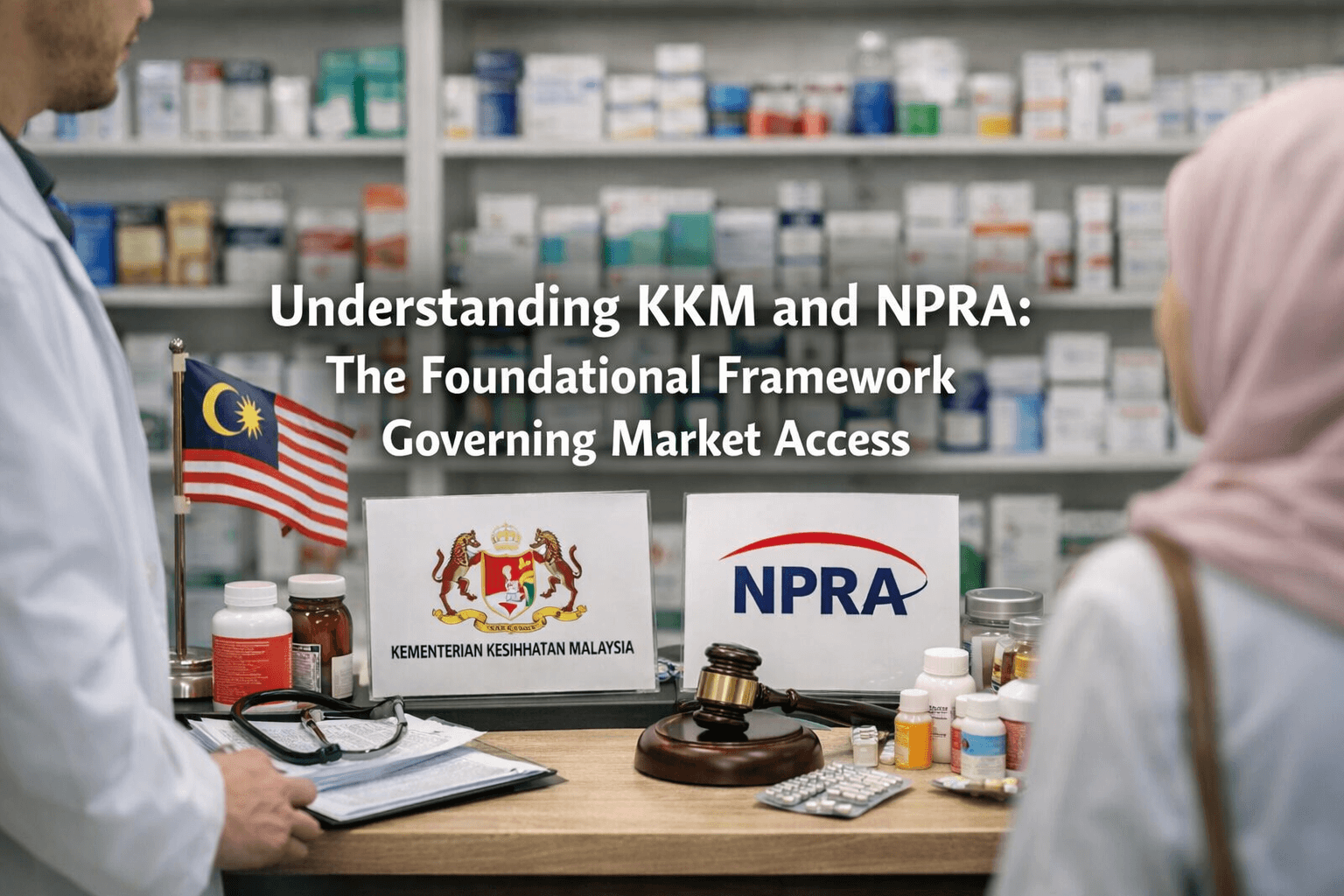
Who precisely sets the rules, and how do these frameworks impact your product’s commercial launch? In Malaysia, the Ministry of Health (MOH) is the overarching authority for public health and product safety, with the National Pharmaceutical Regulatory Agency (NPRA) acting as its expert enforcement and evaluation arm. The NPRA governs all therapeutic and cosmetic product approvals through two primary legal pathways, creating a clear but demanding framework for market entry. The first is the MAL registration, a mandatory and rigorous process for pharmaceuticals, dietary supplements, and traditional medicines. The second is the NOT notification system, which applies to cosmetic and general skincare products. A product launched without the proper MAL number or NOT reference is classified as kkm produk tidak berdaftar—an unregistered product—and its sale is strictly illegal. The NPRA’s role is dual-natured: it serves as a scientific reviewer to ensure all products are safe, effective, and of quality, while also acting as a vigilant market watchdog. With a surge in both imported goods and local health-tech startups, possessing an efficient and nuanced understanding of NPRA guidelines is now a proven strategy to drastically reduce approval delays and mitigate severe enforcement risks, including product seizures and penalties.
Products falling under the mandatory registration categories include a wide range, such as:
Dietary supplements (e.g., vitamins, probiotics)
Herbal and traditional products
Over-the-counter (OTC) medications
Functional cosmetics (such as anti-aging serums, acne treatments, and skin-whitening creams)
Navigating this approval matrix is therefore vital not merely for legal selling, but for achieving pharmacy visibility and buyer confidence. A pharmacist’s perspective is crucial here: they are legally and ethically bound to stock only registered products. For them, a valid MAL number is a non-negotiable prerequisite, a trusted signal of a product’s legitimacy and safety for their customers. From a brand manager’s viewpoint, this approval is the golden ticket that unlocks formal distribution talks and retail partnerships.
Learn more: Ultimate Guide to KKM Approval in Malaysia (2026 Edition) | Regulatory Control of Pharmaceutical Products in Malaysia
A Step-by-Step Guide to Securing Product Registration with KKM in Malaysia
What specific steps must a brand undertake to transform a product concept into an officially sanctioned item for sale? The KKM registration journey is a meticulous process demanding precision, forward planning, and strategic execution from the very beginning. Missteps at any stage can result in costly rejections and timeline blowouts. Here is a high-level, yet detailed breakdown of the sequence:
Step 1: Determine the Correct Product Category
The initial, critical step is accurately classifying your product. Is it a drug, a supplement, or a cosmetic? This classification dictates the entire regulatory pathway (MAL vs. NOT). Misclassification remains one of the most common causes for application rejection, setting brands back by months. Engaging a regulatory consultant or an experienced pharmacy distribution service in Malaysia early can provide clarity.
Step 2: Appoint a Formal Responsible Person (RP)
Every application must name a Responsible Person (RP), typically from the brand’s regulatory or quality assurance team. This individual or entity must be locally based and will be the NPRA’s point of contact, legally accountable for the submission. The RP requires official access to NPRA’s online QUEST3+ system, the portal for all electronic submissions.
Step 3: Meticulously Prepare the Required Dossier
This phase involves compiling a comprehensive dossier. The requirements are stringent and include complete product formulation details, exhaustive documentation of the manufacturing process and quality controls (often requiring Good Manufacturing Practice (GMP) certification evidence), and robust safety data with clinical support for therapeutic claims. The depth of data required for a new chemical entity drug is far greater than for a standard cosmetic, underscoring the need for a tailored documentation approach.
Step 4: Submission via the QUEST3+ Portal
Once the dossier is complete, the RP submits all forms and attaches the requisite files through the QUEST3+ system, paying the associated registration or notification fees. The completeness and accuracy of this submission are paramount for avoiding immediate administrative hold-ups.
Step 5: The NPRA Review and Evaluation Period
The product then enters the NPRA’s review queue. For a standard MAL registration, the timeline can range from 6 to 12 months, depending on the product’s complexity and the agency’s workload. For a NOT notification for cosmetics, the process is faster, typically taking 2 to 4 weeks if the documentation is complete and compliant. This stage requires patience and readiness to respond to any clarifications the NPRA may request.
Step 6: Receiving the Official Approval
Upon successful evaluation, the NPRA issues the product its unique MAL number (e.g., MALXXXXXXXXX) or NOT reference. This alphanumeric code must be displayed on the product’s primary packaging label. With this in hand, the product achieves legal status for sale in Malaysia. Following a structured checklist and aligning early with effective pharmacy distribution service in Malaysia partners, who understand the nuances of this process, can smooth out potential friction points significantly.
The Pivotal Role of Pharmacy Distributors in Upholding KKM Compliance
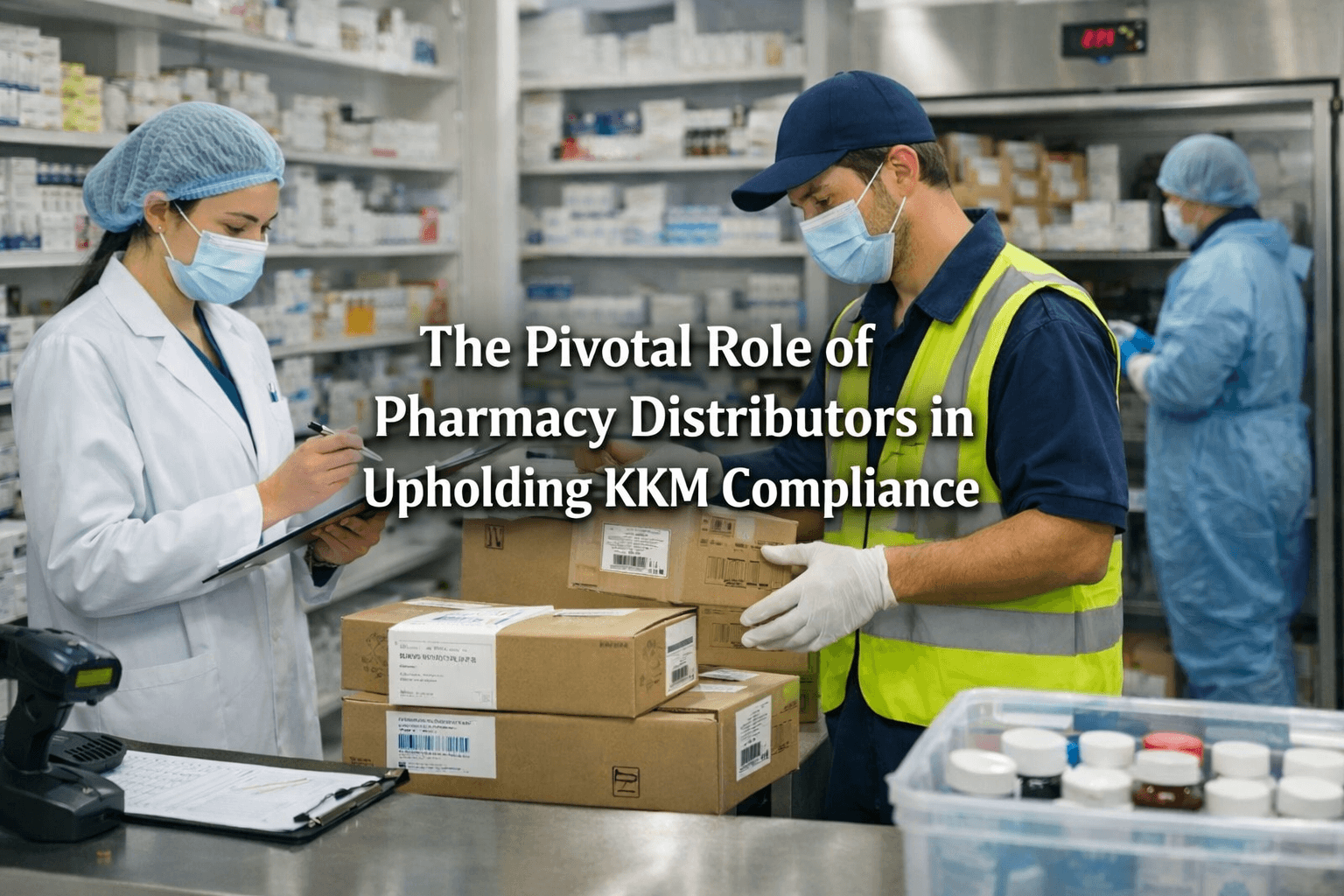
How do pharmacy distributor Malaysia entities contribute to maintaining integrity within KKM-aligned supply chains? Securing approval is only the first battle; maintaining continuous compliance throughout the product’s lifecycle is where distributor pharmacy companies prove indispensable. Their role evolves from logistics providers to strategic compliance partners, ensuring the regulatory sanctity of the product is preserved from warehouse to retail point-of-sale.
Their key responsibilities encompass several critical areas:
Ensuring warehouse practices adhere to NPRA’s Good Distribution Practice (GDP) standards for proper storage, handling, and documentation.
Maintaining impeccable batch traceability systems to facilitate swift, targeted recalls if ever mandated by the NPRA—a reliable system that protects public health and brand reputation.
Educating retail pharmacists and store owners on the product’s compliance status, how to verify MAL numbers, and the importance of not stocking unregistered goods.
Managing and submitting post-approval variation documents to the NPRA for any changes in packaging, formulation, or manufacturer—a often-overlooked but essential task.
In operational scenarios, such as with distributors in Kuala Lumpur servicing hospital pharmacies, or a pharmacy wholesale distributors network in East Malaysia, this compliance mantle is heavy. They must navigate state-level enforcement variations while ensuring central NPRA standards are met. At companies like PharmaCare Malaysia or MediDistributor Sdn Bhd, proven distributor frameworks help local and international brands uphold NPRA alignment across every touchpoint: logistics, labeling, and documentation. Thus, the role of a distributor pharmacy is fundamentally not transactional; it is an efficient, reliable partnership designed to preserve hard-earned market access and mitigate downstream regulatory risks.
Learn more: What Is a Distributor Pharmacy? A Comprehensive Guide | WHO Good Distribution Practices for Pharmaceutical Products
In-House Brand Teams vs. Distributors: Demarcating Responsibilities in the Compliance Chain
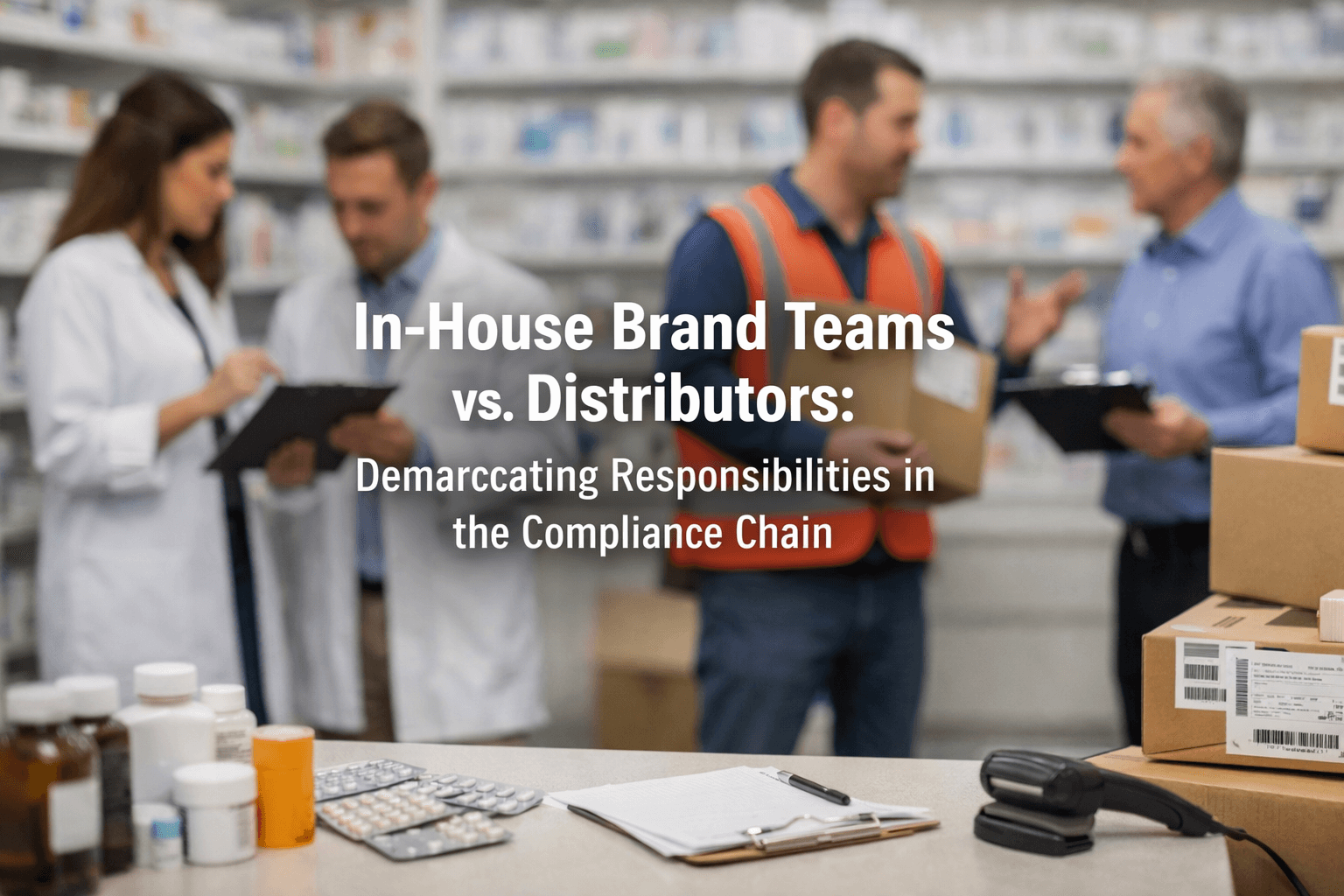
Where does the brand owner’s regulatory obligation end, and where does the distributor’s operational duty begin? A common misconception is that the brand handles everything until the product is shipped. In reality, KKM compliance requires seamless, strategic coordination between internal and external stakeholders, with clear divisions of labor to ensure expert handling and avoid dangerous gaps or wasteful redundancies.
The following comparative table outlines a typical division of compliance responsibilities, offering clarity for both brand managers and distributor operations teams:
| Compliance Task | Brand Owner Responsibility | Distributor Pharmacy Responsibility | Shared / Collaborative Responsibility |
|---|---|---|---|
| Product Formulation & Safety Data Generation | ✅ Primary | ||
| Dossier Preparation & NPRA Submission | ✅ Primary | Consultation on local requirements | |
| Import Permit & Customs Clearance | ✅ Primary | Brand provides necessary documents | |
| Warehouse Storage (GDP Compliance) & Batch Record Management | ✅ Primary | Brand audits facility | |
| Post-Approval Monitoring & Variation Reporting | ✅ (Initiation) | ✅ (Execution & Logistics) | ✅ Joint oversight |
| KKM Audit Support & Training for Retail Pharmacies | ✅ Primary | Brand provides training materials |
This shared model is effective because it leverages the core strengths of each party. The brand owner is the expert on the product’s science and fundamental data, while the distributor is the expert on local logistics, GDP, and the practical realities of Malaysian retail compliance. For instance, a brand manager for a new probiotic supplement must secure the MAL, but they rely on their Selangor-based distributor to ensure the cold chain is unbroken during storage and delivery, a critical GDP requirement for product efficacy. Similarly, when the NPRA issues a new guideline on labeling, the distributor’s field team becomes essential in communicating this change to hundreds of pharmacy partners, ensuring uniform adherence across the network. This clear, collaborative demarcation is not just about efficiency; it’s about building a tailored, resilient system that can withstand regulatory scrutiny and adapt to the evolving Malaysian healthcare landscape.
The Hidden Traps in Malaysia’s Regulatory Approval Process: Navigating NPRA Protocols in 2026
Navigating the National Pharmaceutical Regulatory Agency (NPRA) landscape requires more than just box-ticking; it demands a proactive, strategic understanding of evolving protocols. The hidden traps within the KKM approval process are often subtle, emerging from outdated assumptions or fragmented internal workflows. A failure to align with current NPRA protocols does not merely cause a paperwork delay; it triggers a cascade of operational setbacks that can stall market entry for months, erode brand equity, and incur significant financial penalties. The compliance failures observed in recent years provide a stark, instructive map of pitfalls to avoid as we move deeper into 2026. These are not minor clerical errors but critical vulnerabilities in a brand’s market access strategy.
The High Cost of Incomplete Submissions and Overstated Claims
Consider the real-world example of a growing health supplement brand that sought to launch an innovative immune support product. Confident in their global certifications, their local team submitted a dossier to the NPRA that was missing a crucial, Malaysia-specific Good Manufacturing Practice (GMP) certification from a recently updated list of approved facilities. The application was not merely rejected; it was placed on hold, triggering a mandatory audit pathway that added over six months to their launch timeline. During this period, competitor products solidified their shelf presence. This scenario underscores a core, costly trap: assuming international documentation is universally sufficient. In Malaysia’s regulatory framework, tailored, local compliance is non-negotiable. Similarly, overstated claims on packaging—such as using absolute terms like “cures” or “prevents”—are a direct invitation for regulatory action. The NPRA’s mandate to protect public health makes it exceptionally vigilant about any language that could mislead consumers, especially for products hovering between the cosmetic and pharmaceutical categories.
The Operational Peril of Licensing and Premature Sales
Another prevalent pitfall revolves around licensing and timing. Operating without a valid Type A Import License, or attempting to sell products before the official Notification of Registration (NOT) or Medicines Advertisement License (MAL) confirmation, constitutes a severe breach. For instance, a Singapore-based skincare brand eager to capitalize on festive season demand in Kuala Lumpur allowed a distributor to ship stock before the final MAL number was published on the QUEST3+ portal. This premature market entry led to the product being flagged, seized at customs, and subsequently blacklisted from several major pharmacy chains—a reputational damage far exceeding any short-term sales gain. From the pharmacist’s perspective, stocking such a product exposes their business to immense risk, instantly dissolving hard-earned trust with both regulators and customers. Each of these errors—incomplete dossiers, overstated claims, licensing lapses, and premature sales—functions as a critical failure point that can derail a product’s commercial journey entirely.
Building a Proactive and Trusted Compliance Framework
The practical implication for brand owners and pharmacy wholesale distributors is clear: compliance oversight must be integrated into the earliest stages of strategic planning. A single non-compliant Stock Keeping Unit (SKU) can compromise broader distribution agreements and tarnish a brand’s reputation across the entire network. Mitigating these risks requires moving from a reactive to a proactive stance. This means instituting rigorous internal checkpoints before submission, engaging with expert local regulatory consultants, and fostering efficient communication channels between brand regulatory teams and distributor quality assurance departments. In the context of Malaysia’s diverse market, this also means understanding regional nuances; an approval processed in Putrajaya must be executed with equal diligence in Sarawak or Sabah. The foundation of sustainable market access is, therefore, a trusted, effective partnership with entities that have proven, on-the-ground regulatory expertise.
Learn more: WHO Quality Risk Management for Pharmaceutical Products
Streamlining Verification: Mastering the KKM Product Check in the Digital Age
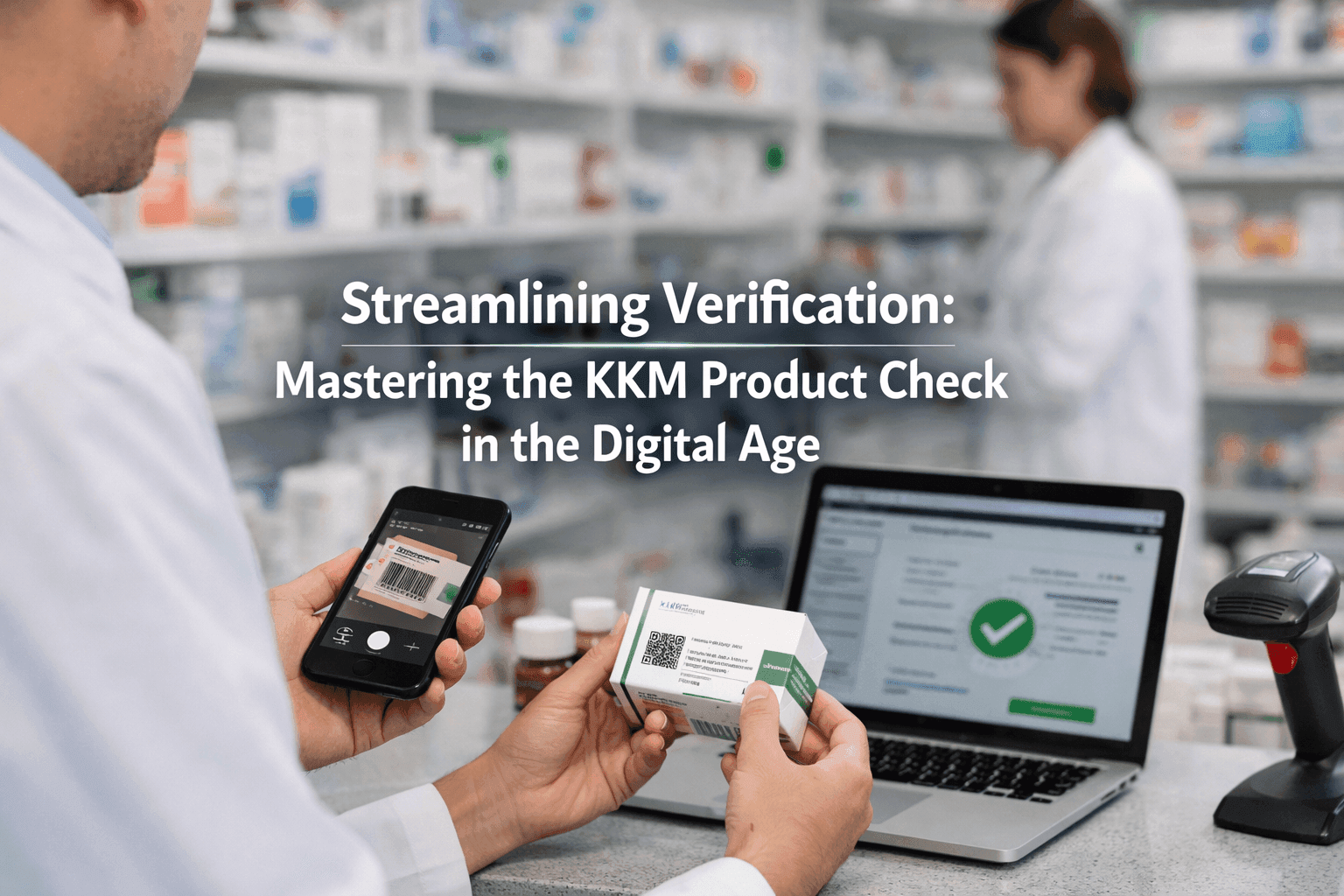
How can stakeholders, from brand managers to community pharmacists, definitively verify a product’s legal standing? The process, often referred to as cara check produk lulus kkm, has been transformed by the NPRA’s commitment to digital transparency. The cornerstone of this system is the QUEST3+ online portal, a publicly accessible database that serves as the definitive source for registration status. This digital shift represents a powerful tool for risk mitigation, allowing any party in the supply chain to perform due diligence instantly. For merchandisers planning a promotional campaign or pharmacists evaluating a new product line, the ability to conduct a swift, accurate KKM check is an essential operational safeguard. It transforms regulatory compliance from a mysterious hurdle into a manageable, daily verification task.
The QUEST3+ Portal: A Step-by-Step Guide for Stakeholders
The verification process via QUEST3+ is designed for reliable public use. The primary steps involve visiting the official portal, then searching using key identifiers such as the product’s trade name, its unique NOT or MAL registration number, or the name of the registration holder. The search results will clearly display the product’s current status—such as “Active,” “Suspended,” or “Expired”—along with important details like the holder’s name and approved indications. This is the gold standard for verification. In parallel, the NPRA’s push for QR code verification labels on packaging offers a complementary, real-time check. Pharmacists in East Malaysia, particularly in independent outlets, have reported the efficient use of these QR codes as a secondary validation method during stock receipt, enhancing confidence before products ever reach the shelf.
Why Routine Verification is a Non-Negotiable Distributor Practice
For pharmacy distributors and their merchandising teams, integrating a routine KKM product approval check into standard operating procedures is a critical layer of protection. Before integrating a new SKU into a planogram, launching a trade promotion, or even featuring a product in a catalog, a quick database confirmation should be mandatory. This practice prevents the commercial and legal fallout of inadvertently promoting a product whose status has lapsed or changed. Consider the operational scenario of a distributor in Johor Bahru preparing a major promotional push with a regional pharmacy chain. A pre-campaign verification check reveals that one product’s registration is pending renewal. Identifying this early allows for substitution, protecting the distributor’s relationship with the retailer and ensuring the campaign’s integrity. This simple, habitual verification is a strategic discipline that safeguards inventory investment and maintains market credibility.
Learn more: KKM Check: Tools and Platforms You Can Use (2026 Edition)
From Compliance to Commerce: The Strategic Impact of KKM Approval on Pharmacy Merchandising
Does regulatory compliance actively shape physical shelf presence and product rotation dynamics? The answer is an unequivocal yes. In 2026, a product’s Kelulusan KKM status is far more than a legal permit; it is a fundamental merchandising filter that dictates commercial velocity and retail prioritization. The approval status directly influences the decision-making algorithms of every stakeholder in the retail pathway. Pharmacists, bound by professional ethics and liability, overwhelmingly prioritize recommending KKM-approved products to their customers. This professional endorsement is a powerful driver of consumer trust and repeat purchase. Consequently, merchandisers working for or with distributors will only allocate precious premium shelf rows—eye-level and front-of-counter placements—to SKUs with unambiguous compliant status.
The Shelf-Level Consequences of Regulatory Status
The impact manifests in several tangible, commercial ways. First, it determines shelf tier level; non-compliant or pending-status products are relegated to bottom rows or excluded entirely. Second, it affects retail push frequency; sales teams can advocate with full confidence for approved products, while those with questionable status become a liability. Third, it governs bundle eligibility and in-store promotions. Pharmacy chain headquarters will simply not approve promotional funds or feature space for a product that carries any regulatory risk. For example, a popular pain relief brand undergoing a formulation change must secure its updated KKM approval before it can be included in a “Buy 1 Free 1” campaign at major outlets like Caring or Guardian. The delay in approval translates directly into a loss of promotional visibility and sales momentum.
KKM Approval as a Proven Marketing and Trust Asset
From the perspective of a brand manager, this transforms regulatory compliance into a proven marketing asset. A product with clear KKM product approval carries a badge of credibility that resonates through the entire supply chain, from the distributor’s warehouse to the pharmacist’s recommendation and finally to the consumer’s choice. In the competitive Malaysian wellness landscape, this approval is a key differentiator, especially in crowded categories like vitamins or herbal supplements. It provides a trusted positioning that advertising alone cannot buy. For independent pharmacy owners in Penang or Kuantan, stocking approved products minimizes risk and aligns with their role as trusted health advisors in their community. Thus, the strategic implication is profound: investing in a robust, seamless approval process is not a cost center but a direct investment in market access, brand equity, and long-term shelf dominance.
| Aspect of Pharmacy Operations | Impact of FULL KKM Approval | Impact of PENDING/LAPSED Approval |
|---|---|---|
| Shelf Placement Priority | Eligible for eye-level, front-counter, and promotional endcaps. | Relegated to lower shelves or excluded from planograms entirely. |
| Pharmacist Recommendation | Actively recommended with confidence as a trusted product. | Avoided or mentioned with caution due to potential liability. |
| In-Store Promotion Eligibility | Approved for bundle deals, discount campaigns, and featured advertising. | Ineligible for any chain-wide promotional activities. |
| Distributor Sales Push | Prioritized in sales team targets and trade incentive programs. | Deprioritized or placed on hold, affecting sales velocity. |
| Inventory Risk Profile | Considered low-risk, ensuring steady stock rotation. | High-risk; potential for seizure or forced recall, leading to dead stock. |
Future-Proofing Operations: Best Practices for Distributors and Brand Owners in 2026
What defines ongoing compliance success in an environment of tightening enforcement? It is the institutionalization of tailored workflows and a cultural mindset that treats regulatory alignment as a core competitive function, not a back-office task. For both brand owners and their pharmacy distribution service in Malaysia partners, 2026 demands systems that are both agile and meticulous. The goal is to create a seamless flow of compliant products to market, where regulatory diligence accelerates rather than hinders commercial execution. This requires an integrated approach where compliance data is visible, actionable, and central to decision-making for all teams, from marketing to logistics.
Implementing Centralized Dashboards and Proactive Audits
A foundational best practice is the maintenance of a centralized compliance dashboard. This living tool tracks critical metrics for every SKU: certificate expiry dates, batch release documentation, and renewal deadlines. For a distributor managing hundreds of products across multiple brands, such a dashboard is essential for preventing oversights. Complementing this technology with semi-annual internal KKM audits creates a cycle of continuous improvement. These audits simulate regulatory inspections, reviewing dossier completeness, label claims, and warehouse storage conditions against current NPRA standards. Furthermore, training commercial teams on the nuances of product claims is vital. A salesperson’s well-intentioned but exaggerated verbal claim about a product’s efficacy can create liability just as serious as a non-compliant label.
The Imperative of a Unified Brand-Distributor Compliance Partnership
The path forward hinges on efficient, reliable communication between the brand’s regulatory affairs team and the distributor’s quality assurance and operations departments. The most effective partnerships operate with shared digital platforms and clear protocols for communicating status changes. For instance, when a brand secures a renewal, the information should instantly update the distributor’s system, triggering the “green light” for renewed sales pushes. For pharmacy wholesale distributors specifically, embedding this compliance mindset into Standard Operating Procedures (SOPs) for procurement, warehousing, and sales is no longer optional—it is the most reliable form of risk management. A distributor known for impeccable compliance becomes a strategic partner of choice for both international brands seeking market entry and major pharmacy chains demanding supply chain integrity.
Navigating Forward: Integrating Compliance for Sustainable Growth
The 2026 landscape presents a clear paradigm: regulatory rigor is the bedrock upon which commercial success in Malaysia’s pharmacy sector is built. Alignment with KKM approval processes has evolved from a bureaucratic hurdle into a core operational pillar that influences every facet of the business, from supply chain logistics to consumer trust. This integration ensures that brands and distributors are not merely avoiding penalties but are actively building a foundation for sustainable visibility and growth. The journey from a KKM check to full shelf integration is supported by a robust ecosystem of knowledgeable partners, where expert navigation of local protocols defines market leaders.
Learn more: Building Regulatory Compliance into Healthcare Supply Chains
Frequently Asked Questions (FAQ)
Q1: How to apply for KKM approval?
Answer:
KKM approval depends on the product category. Drugs and supplements require registration with NPRA via the QUEST system, cosmetics require NPRA notification (NOT), and medical devices require registration with the Medical Device Authority (MDA). Applicants must appoint a local Responsible Person (RP), submit technical documents, and comply with Malaysian regulatory guidelines.
Q2: What is KKM certification?
Answer:
KKM certification refers to approval, registration, or notification issued under Malaysia’s Ministry of Health (KKM). It confirms that a product complies with safety, quality, and regulatory requirements enforced by agencies such as NPRA or MDA.
Q3: What products require a KKM check?
Answer:
Prescription medicines, over-the-counter drugs, traditional medicines, health supplements, cosmetics, and medical devices all require a KKM-related check—either registration, notification, or listing—before being marketed in Malaysia.
Q4: What is KKM in Malaysia?
Answer:
KKM (Kementerian Kesihatan Malaysia) is Malaysia’s Ministry of Health. It oversees public health policy, healthcare services, and regulatory control of drugs, cosmetics, medical devices, and healthcare facilities.
Q5: How to get drug approval?
Answer:
Drug approval is obtained by registering the product with NPRA. The process includes dossier submission, product evaluation for safety and efficacy, GMP compliance of the manufacturer, and final approval resulting in a MAL registration number.
Q6: How much does it cost to open a pharmacy in Malaysia?
Answer:
Costs vary but typically include premise renovation, licensing, pharmacist employment, inventory, and regulatory fees. Initial setup costs commonly range from tens to hundreds of thousands of ringgit, depending on location and scale.
Q7: How long does the drug approval process take?
Answer:
Drug registration usually takes between 12 to 24 months, depending on product type, dossier completeness, and evaluation pathway.
Q8: What is the minimum requirement for pharmacy?
Answer:
A pharmacy must have a licensed pharmacist, a registered premise, proper storage conditions, approved suppliers, and compliance with Pharmacy Board Malaysia and KKM regulations.
Q9: What are the steps of the drug approval process?
Answer:
The key steps include appointing a local product holder, preparing the technical dossier, submitting via NPRA’s system, undergoing evaluation and queries, and receiving approval with a MAL number.
Q10: How much does it cost to open a cosmetic?
Answer:
Cosmetics are not registered but notified. Costs typically include NPRA notification fees, compliance documentation, formulation safety assessment, and local Responsible Person fees, usually much lower than drug registration.
Our Services
Our marketing and sales teams use their strong relationships with the channel to create demand for your product at every stage of its lifecycle.
Demand creation services we offer:
Market Access Services
Regulatory Registration Services
Pharma Product Listing Services
Merchandising services (RSMS)
Brand Management
Logistic & Warehousing
Exclusive Merchandising Services
Visual Merchandising
Discover More About Our Solution
How PriooCare Can Help
If you found this article useful, see how we put these insights into practice for our clients:
Or contact our team for a tailored consultation.
How can we assist you today? 😊
Just let us know—we’re here to help!