
KKM Approval Process for Skincare and Supplements (2026 Edition)

March 4, 2026
In Malaysia’s meticulously regulated pharmaceutical and healthcare market, securing Kelulusan KKM (KKM approval) transcends mere bureaucratic compliance. It represents the absolute bedrock upon which market entry, product credibility, and sustainable commercial success are built. Overseen by the National Pharmaceutical Regulatory Agency (NPRA), this approval process is a non-negotiable gatekeeping mechanism, ensuring every skincare and supplement product destined for pharmacy shelves is safe, efficacious, and fully aligned with national health policies. For stakeholders across the supply chain—from brand owners and pharmacy distributor Malaysia operators to independent pharmacy distributor teams—this legitimacy is embedded directly into the merchandising lifecycle. Without this proven approval, even the most well-formulated products face immediate shelf rejection, distributor pushback, and severe legal repercussions. Furthermore, KKM approval determines fundamental commercial eligibility: from initial store listing negotiations and physical merchandising rollouts to digital marketing within strictly controlled health categories. As distribution channels grow increasingly saturated, adopting a strategic, efficient, and trusted approach to product verification and compliance has transitioned from a regulatory formality to a core business essential.
Demystifying Product Categories Under KKM: The Critical Skincare vs. Supplements Distinction
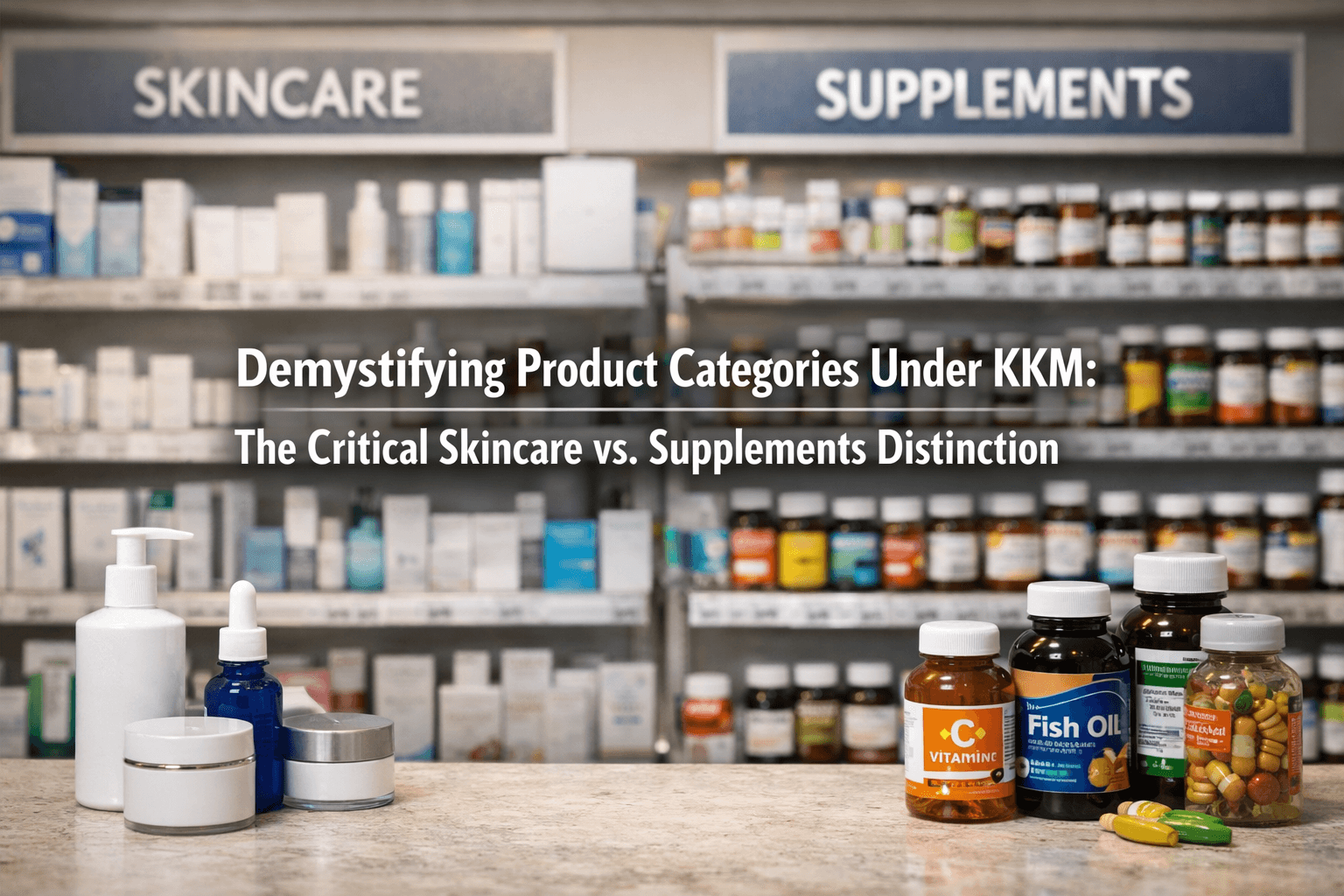
Is your product genuinely a health supplement, or could it be classified as a cosmetic under Malaysian law? This is not a semantic debate but a critical compliance determinant that brands must navigate with precision. Misclassification stands as one of the most common and costly pitfalls during NPRA submission preparation. The legal and procedural distinction between MAL (medicine and health supplement) registration and NOT (cosmetic notification) status is subtle but carries monumental implications for your route to market, marketing freedom, and regulatory risk exposure. For instance, a collagen drink that makes therapeutic claims regarding joint health must undergo the rigorous MAL registration pathway. Conversely, a topical serum claiming only to moisturize and brighten skin tone without medical benefits may qualify for the typically faster NOT status. This product classification is far from a technicality; it defines the entire compliance journey. Distributors and pharmacists are trained to flag unclear labels or unverified claims proactively, actions that can lead to costly shelf delays or outright rejections. Implementing a reliable submission strategy, often developed in consultation with expert regulatory consultants, is essential to prevent expensive rework and timeline blowouts.
In the competitive Malaysian landscape, a distributor pharmacy or pharmacy wholesale distributor will frequently conduct its own internal KKM checks as a prerequisite for onboarding any new product. Their verification checklist typically demands:
Confirmation of the product’s official classification status (MAL or NOT).
The valid NPRA submission number.
Proof of a registered local Responsible Person (RP) designation.
Screenshots or copies of packaging and labels to verify compliance with NPRA guidelines.
Possessing a clear, well-documented, and proven classification pathway is therefore instrumental. It not only smooths the logistical onboarding but directly secures listing agreements, builds pharmacist confidence, and ultimately fosters consumer trust. A Malaysia-related example can be seen with local brands of herbal supplements, such as those containing Tongkat Ali or Kacip Fatimah. If these products make specific health claims about vitality or hormonal balance, they require MAL approval. However, if marketed purely as general wellness tonics with carefully curated cosmetic-style branding, the regulatory path and associated marketing constraints differ significantly.
Learn more : Perbezaan Antara Produk Lulus KKM dan Tidak Berdaftar | Drug Registration Guidance Document
A Detailed Walkthrough: The KKM & NPRA Approval Workflow for Market Entry
What does the end-to-end process of securing KKM approval actually entail? While the NPRA outlines the official steps, many brands—both international and local—underestimate the extensive internal readiness and meticulous technical preparation required long before accessing the QUEST3+ portal. The process is structured yet demands a tailored approach for each product category.
The initial phase, Pre-submission Readiness, is arguably the most crucial. This involves compiling a comprehensive dossier including the complete product formula, detailed ingredient safety data, and all relevant source documentation. Label design must be finalized in strict adherence to requirements, with all mandatory information presented accurately in Bahasa Malaysia. A fundamental step is designating and registering a local Responsible Person (RP), a mandatory legal presence for all products. Furthermore, brands must prepare a robust scientific justification for all health claims (for MAL) or a clear rationale for cosmetic classification (for NOT).
Following preparation, the NPRA Portal Submission begins. Through the QUEST3+ system, applicants complete the specific form for their category (MAL or NOT), attaching all required documents such as stability data, Certificates of Analysis (CoA), and Good Manufacturing Practice (GMP) certificates, before paying the stipulated application fees.
The subsequent Review and Evaluation phase varies dramatically by category. Products with NOT status typically receive approval within 1 to 2 months, given their lower-risk profile. In contrast, MAL products undergo a far more extensive, evidence-based review by NPRA scientists, a process that can extend from 6 to 12 months or longer. During this time, the NPRA may issue clarification requests or demand additional evidence, underscoring the need for thorough initial preparation.
Finally, Post-Approval Requirements ensure ongoing compliance. Brands must guarantee that all market-ready packaging and claims are perfectly consistent with the approved submission. Approval renewals are required every 3-5 years, depending on the product type. Critically, distribution teams must validate the current KKM status of every batch before initiating any retail rollout. This efficient and structured workflow is not merely about regulatory clearance; it is a strategic framework that prevents costly delays in onboarding products into major pharmacy chains like Caring or Guardian, ensuring seamless integration with pharmacy distribution service in Malaysia.
Learn more : KKM Approval Process for Skincare and Supplements | Product Registration Process
The Strategic Intermediary: How Pharmacy Distributors in Malaysia Uphold Compliance
How do distribution partners influence the KKM approval journey? Their role has evolved far beyond logistics; pharmacy distributor Malaysia firms now function as critical compliance gatekeepers. Their involvement often begins before a product secures final approval and certainly before it ever touches a shelf. Most pharmacy wholesale distributors, especially those servicing national chains, enforce rigorous internal validation checklists. These checks serve as a secondary audit, protecting the distributor’s reputation and the pharmacy’s license.
| Validation Checkpoint | Distributor’s Concern | Potential Risk if Failed |
|---|---|---|
| MAL/NOT Number Confirmation | Is the approval authentic and current? | Listing of unapproved or fake products. |
| Local Responsible Person (RP) | Who is legally accountable post-market? | No local contact for NPRA queries or recalls. |
| Bahasa Malaysia Labeling | Is the product information accessible to all consumers? | Regulatory fines and consumer misuse. |
| Packaging & Insert Readiness | Is the product shelf-ready for pharmacist inspection? | Rejection at the store level during delivery. |
For independent pharmacy distributor teams operating on a more localized scale, these verifications happen in a more granular, store-by-store manner. Individual pharmacists will often request hardcopy proof of KKM registration, evidence that brand representatives have provided adequate product training, and clear category segmentation to avoid shelf overlap with existing products. From the brand manager’s perspective, this distributor scrutiny, while sometimes demanding, is a reliable safeguard that streamlines market acceptance. From the pharmacist’s point of view, it provides a trusted filter, ensuring they stock only verified products. Distributors will typically delay or outright refuse onboarding if the KKM approval is pending, if marketing claims deviate from the NPRA-verified classification, or if the certificate appears expired. Thus, as strategic intermediaries, distributors uphold the integrity of the entire ecosystem, shielding all parties from the risks of non-compliant products.
Learn more : National Pharmaceutical Regulatory Agency (NPRA) – Official Website
From Certificate to Customer: How KKM Status Dictates Pharmacy Merchandising Success
Does possessing KKM approval automatically guarantee prime placement on pharmacy shelves? Absolutely not. While it is the mandatory entry ticket, commercial execution determines visibility and velocity. From planogram assignment and promotional eligibility to in-store recommendations, KKM status actively shapes a product’s commercial trajectory. Distributor pharmacies and their merchandising teams must constantly balance commercial objectives with strict compliance, considering factors such as whether the product’s NOT/MAL status permits its intended display location, if in-store promoters are adequately trained on regulatory guidelines, and whether sample campaigns align with Ministry of Health (MOH) directives.
This creates specific merchandising limitations that brands must respect. For example, a KKM-approved vitamin C supplement cannot carry shelf talkers implying it cures the common cold if that claim wasn’t specifically approved. All in-store visuals must replicate the approved packaging exactly. Furthermore, trial or sampling activities for over-the-counter supplements often require direct pharmacist supervision, limiting certain promotional tactics. Here, a Malaysia-related operational scenario involves the merchandising of halal-certified supplements. While halal certification is a powerful marketing tool, it does not replace KKM approval. However, a product with both credentials—displayed correctly on its packaging—often earns greater pharmacist confidence and is more frequently recommended to the predominantly Muslim consumer base, illustrating how compliance fuels commercial trust.
Pharmacist confidence is the ultimate lever. Products backed by clear KKM approval, coupled with consistent training support from brand reps, are significantly more likely to be actively recommended at the counter. Conversely, any non-compliance, such as a retracted NOT/MAL status discovered post-listing, typically results in immediate planogram delisting and a severe loss of trust that is difficult to rebuild. Another local example can be found in the skincare aisles of Malaysian pharmacies. A brand of acne treatment gel with MAL approval for its active ingredients will be placed in the therapeutic skincare section and can be discussed openly by pharmacists. A similar-looking cosmetic (NOT) product making only aesthetic claims will be merchandised in the general beauty section, with pharmacists limited in the advisory claims they can make. In this effective and essential merchandising ecosystem, regulatory compliance is not a back-office function—it is a front-and-centre commercial strategy that dictates every customer touchpoint.
Learn more : Cara Check Produk Lulus KKM Secara Online
Navigating Regulatory Complexity: The Core Claim for Uninterrupted Market Access
Achieving KKM approval represents a significant milestone, yet it is merely the first step in a complex, ongoing journey towards sustainable market presence in Malaysia. The true challenge, and the most common point of failure for brands, lies in the meticulous orchestration required after the certificate is granted. A proactive, aligned strategy between brand owners, their appointed Responsible Person (RP), and their pharmacy distributor in Malaysia is not just beneficial—it is critical, non-negotiable for maintaining compliance integrity and safeguarding hard-earned shelf space. This phase demands a shift from a project-based “approval mindset” to an operational “compliance lifecycle mindset,” where vigilance, communication, and strategic partnership determine long-term success.
Learn more : Bolstering Health System Supply Chain Resilience to Reduce Risk
A Real-World Scenario: The Cost of Complacency Post-Approval
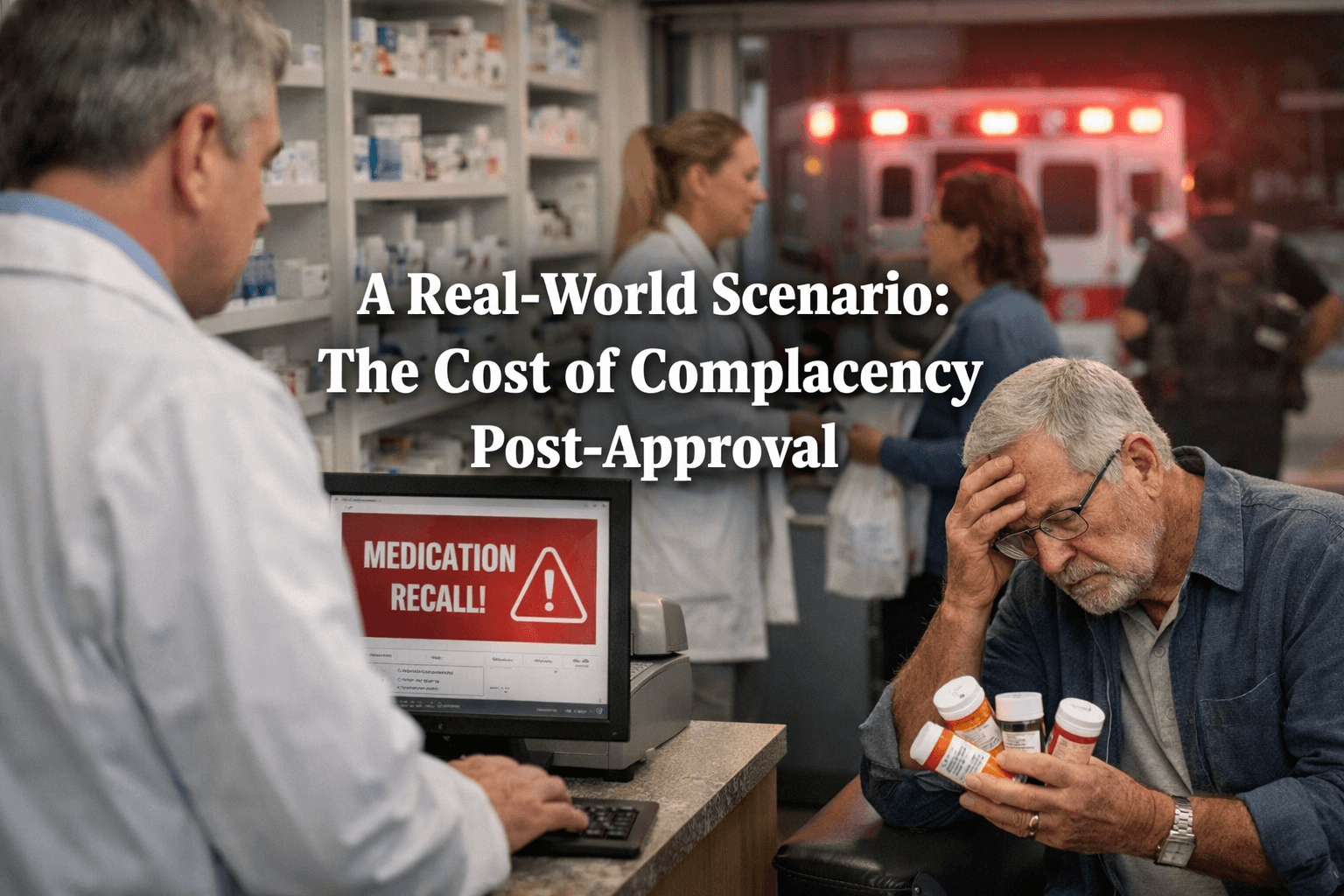
Consider a successful health supplement brand that has navigated the lengthy MAL registration process. Their product is listed with a major pharmacy chain like Caring or Aeon Wellness, moving units consistently. Six months in, the brand’s international R&D team improves the formula, slightly altering an excipient. The change is minor from a manufacturing standpoint, but the updated Certificate of Analysis (CoA) and product label are not re-submitted to the NPRA for an amendment. The brand’s local distributor, unaware of the change, continues to fulfill purchase orders. During a routine audit by the pharmacy’s quality assurance team, a discrepancy is found between the shelf item and the registered dossier. The consequence is immediate: a product halt, stock withdrawal, and a blacklist flag within the pharmacy’s system. The reputational damage and financial loss far exceed the effort required for a compliant variation submission. This scenario underscores that market readiness is a dynamic state, perpetually tied to regulatory alignment.
Data and Trends: The Malaysian Pharmacy Landscape’s Evolving Standards
The enforcement landscape in Malaysia is becoming increasingly stringent. Pharmacy giants like Guardian and Watsons have invested heavily in digital compliance tracking systems, allowing them to cross-reference batch details with NPRA’s database in near real-time. A 2023 industry survey indicated that over 70% of major pharmacy distributors have terminated agreements with brands due to recurrent compliance lapses, not commercial performance. Furthermore, the NPRA has ramped up post-market surveillance, with a particular focus on cosmetic-classified products making unsubstantiated therapeutic claims. The data reveals a clear trend: tolerance for regulatory missteps is diminishing. Pharmacist trust, once eroded, is exceptionally difficult to rebuild. Your distribution partner’s ability to navigate this tightened ecosystem is therefore an essential component of your brand’s longevity.
Practical Implications: Building a Resilient Post-Approval Framework
The practical implication is that brands must institutionalize post-approval governance. This goes beyond simply filing documents; it involves creating seamless feedback loops between all entities in the supply chain. For instance, a pharmacy merchandiser noting consistent consumer queries about an ingredient must have a clear channel to relay this to the brand’s regulatory affairs team, who can assess if it warrants a labeling clarification with authorities. Similarly, a distributor’s sales team hearing feedback from independent pharmacies in Penang or Johor Bahru about packaging durability must be able to escalate this to ensure brand integrity is maintained. This framework turns potential crises into managed processes.
A practical, internal checklist for brand owners should include:
Establishing a mandatory regulatory review before any manufacturing change, however minor.
Implementing a centralized document portal accessible to your RP and Malaysia pharmacy distributor for the latest versions of ALL approved documents.
Scheduling quarterly compliance syncs with your distribution partner, beyond commercial reviews.
Budgeting and planning for renewal applications at least 6-12 months before expiry, considering NPRA processing lead times.
The Distributor’s Pivotal Role: Beyond Logistics to Compliance Stewardship
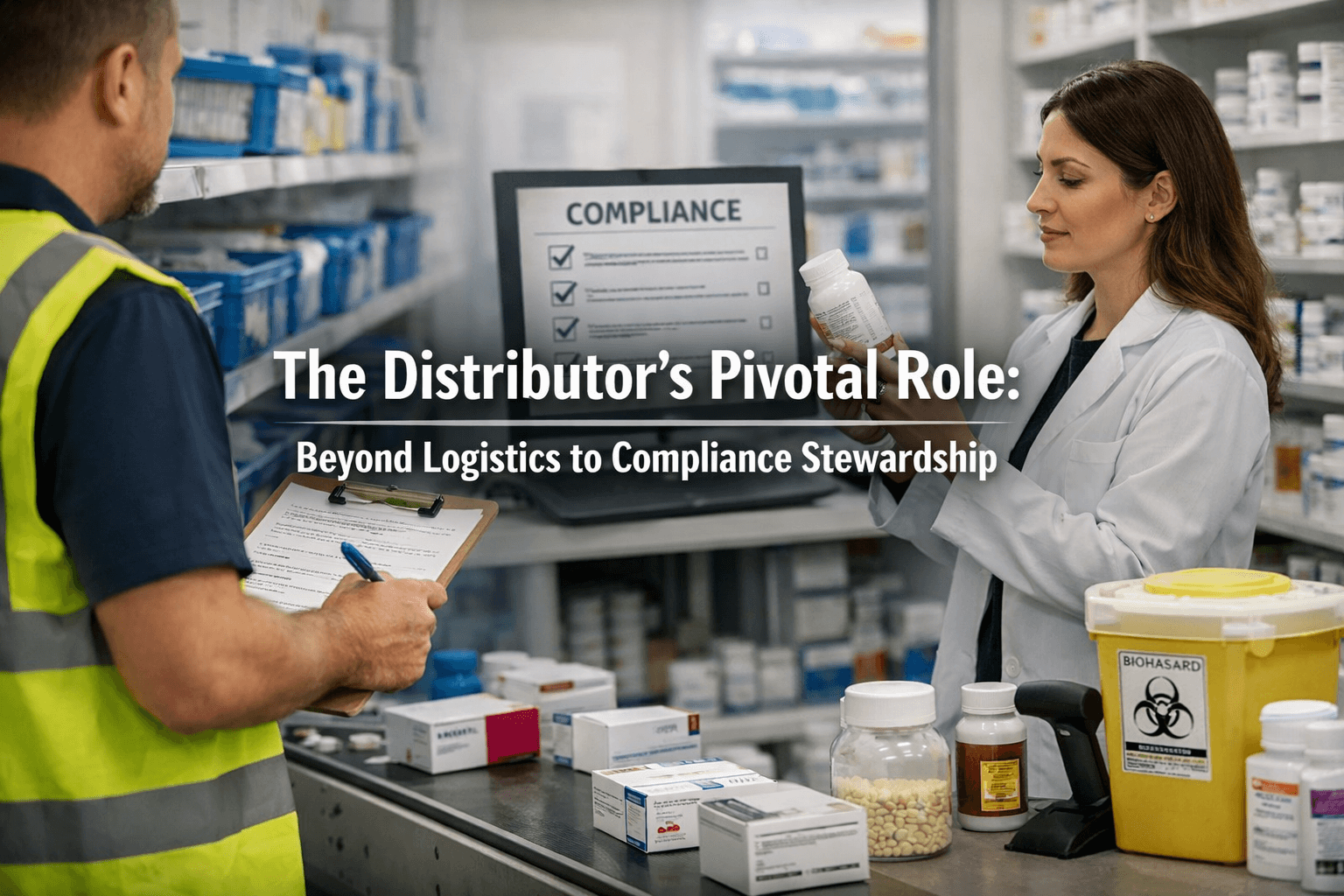
A strategic pharmacy distributor in Malaysia acts as your local compliance sentinel. Their role transcends warehousing and sales; it encompasses ongoing compliance monitoring. This includes tracking the expiry of your NOT or MAL status and providing proactive reminders for renewal—a simple but effective service that prevents catastrophic delisting. They also serve as a critical bridge to retail pharmacists, conducting refresher training on product details and approved claims, ensuring the last mile of communication is accurate and compliant. When a new circular or guideline is issued by the authorities, a reliable distributor interprets its operational impact for your brand and advises on necessary actions. From the distributor’s perspective, this stewardship is a risk-management imperative; a compliance failure in one brand can jeopardize their trusted relationships with key pharmacy accounts.
The Pharmacist’s Perspective: Trust, Clarity, and Patient Safety
For the community or retail pharmacist, the presence of a product on their shelf is an implicit endorsement of its safety, quality, and regulatory status. Their primary concern is patient safety and trust. A product with labeling conflicts or an approval in pending status creates unacceptable professional risk. Pharmacists are not just retailers; they are healthcare advisors. They need absolute confidence that the information on the packaging and in the product insert is complete, accurate, and fully sanctioned by the KKM. When a brand representative or merchandiser provides clear, compliant training materials, it empowers the pharmacist to recommend the product with confidence. This perspective is crucial: winning the pharmacist’s trust is as important as winning the consumer’s, and it is built on a foundation of unwavering compliance transparency.
Synchronizing Actions: A Framework for Brand and Distributor Alignment
To prevent the common pitfalls that derail market presence, both brand owners and their distribution partners must operate from a shared framework. This alignment ensures that commercial ambitions are always tempered by compliance reality. For example, a planned marketing campaign featuring point-of-sale materials must be vetted against approved claims before production. The launch timeline for a new product variant in Kuala Lumpur pharmacies must be built around the confirmed approval date, not the submission date.
The following table illustrates where responsibilities often overlap and must be actively coordinated to ensure seamless market operations:
| Compliance Activity | Primary Brand Owner Responsibility | Primary Distributor Responsibility | Optimal Collaborative Action |
|---|---|---|---|
| Regulatory Document Integrity | Generating accurate, updated dossiers, CoAs, and GMP certificates. | Validating documents for local format compliance and RP verification. | Shared access to a real-time document management system with version control. |
| Market Communication & Training | Developing core product knowledge and approved claim guidelines. | Executing on-ground training for pharmacists and merchandisers across states. | Co-creating tailored training modules for different pharmacy chain requirements. |
| Post-Market Surveillance | Monitoring global adverse event reports and initiating formula reviews. | Gathering frontline feedback from pharmacists and consumers in the Malaysian context. | Establishing a joint incident protocol for rapid escalation and regulatory reporting if needed. |
| Renewal & Lifecycle Management | Initiating the renewal process and funding associated fees. | Providing local market intelligence on timing and flagging expiry risks early. | A shared calendar with milestone reminders starting 180 days before expiry. |
Incorporating Malaysian Nuances: Sabah, Sarawak, and Independent Pharmacy Networks
Operational scenarios in Malaysia require a nuanced understanding beyond the Peninsular hub. States like Sabah and Sarawak may have specific logistical and documentation nuances for healthcare products. A proven distribution partner will have the network and expertise to ensure that compliance is maintained even when supplying remote independent pharmacies in Kuching or Kota Kinabalu. Furthermore, the relationship dynamics with large buying groups for independent pharmacies differ from those with corporate chains. A strategic partner navigates these subtleties, ensuring that merchandising agreements and promotional materials are consistently compliant across all outlet types, preventing isolated incidents that can affect broader brand reputation.
Frequently Asked Questions (FAQ)
Q1: How to check if a product is KKM approved?
Answer: You can verify a product’s KKM (Ministry of Health Malaysia) status through the NPRA public search portal. Enter the product name, MAL number (for medicines), or NOT number (for cosmetics) to confirm whether it is officially registered.
Q2: How do I verify a product’s KKM status?
Answer: Use the National Pharmaceutical Regulatory Agency (NPRA) online database. A valid product will appear with its registration number, holder details, and approval status.
Q3: How to check if the supplement is original?
Answer: Check for a valid MAL registration number on the label and cross-verify it on the NPRA portal. Original supplements will match the registered product name, brand owner, and manufacturer details.
Q4: What does KKM certified mean?
Answer: “KKM certified” means the product has been evaluated and approved by Malaysia’s Ministry of Health (via NPRA) for safety, quality, and compliance with local regulations.
Q5: What is a KKM approved product?
Answer: A KKM approved product is a medicine, supplement, cosmetic, or medical-related item that is legally registered with NPRA and allowed to be sold in Malaysia.
Q6: How to check if a product is registered in Malaysia?
Answer: Search the NPRA product registration database using the product name or registration number. Registered products will have an active approval status.
Q7: How to check if a product is legit?
Answer: Verify its registration number with NPRA, review the label for accurate manufacturer details, and ensure claims align with approved indications.
Q8: How does a product get KKM approval?
Answer: The product owner must submit documentation to NPRA, including safety data, formulation details, labeling, and manufacturing compliance. Approval is granted after regulatory review.
Q9: How can I verify a company in Malaysia?
Answer: You can check company registration through the Companies Commission of Malaysia (SSM) to confirm whether the business is legally registered and active.
Q10: How to check if a product is halal or not?
Answer: Verify halal status through JAKIM’s halal certification database. Only products listed there are officially recognized as halal in Malaysia.
The journey from regulatory approval to sustained retail success is built on a foundation of continuous partnership and meticulous attention to the compliance lifecycle. It requires a shared commitment to operational excellence from all stakeholders. For brands seeking a tailored, reliable pathway through the complexities of the Malaysian market, aligning with a partner deeply embedded in the pharmacy distribution ecosystem is a decisive step.
Our Services
Our marketing and sales teams use their strong relationships with the channel to create demand for your product at every stage of its lifecycle.
Demand creation services we offer:
Market Access Services
Regulatory Registration Services
Pharma Product Listing Services
Merchandising services (RSMS)
Brand Management
Logistic & Warehousing
Exclusive Merchandising Services
Visual Merchandising
Discover More About Our Solution
How can we assist you today? 😊
Just let us know—we’re here to help!