

March 22 , 2026
What truly unfolds when a health supplement lacking the proper governmental stamps of approval finds its way onto a pharmacy shelf? In the context of Malaysia’s meticulously regulated healthcare landscape, this is far from a minor administrative hiccup. Such an oversight can cascade into a scenario of substantial regulatory penalties, severe reputational damage, and most critically, a potential risk to public safety. The Kementerian Kesihatan Malaysia (KKM) product approval, manifested through its distinctive MAL and NOT numbers, represents far more than bureaucratic red tape. It is the essential safeguard and strategic cornerstone upon which the integrity of the nation’s pharmaceutical and retail health supply chains is built. For every entity operating within the pharmacy channel—from the largest pharmacy distributor Malaysia network to the smallest independent pharmacy distributor—a deep, operational understanding of these codes is not optional; it is the bedrock of legitimate, reliable, and trustworthy market participation.
Decoding the Regulatory Fingerprint: Understanding ‘MAL’ vs. ‘NOT’ Numbers
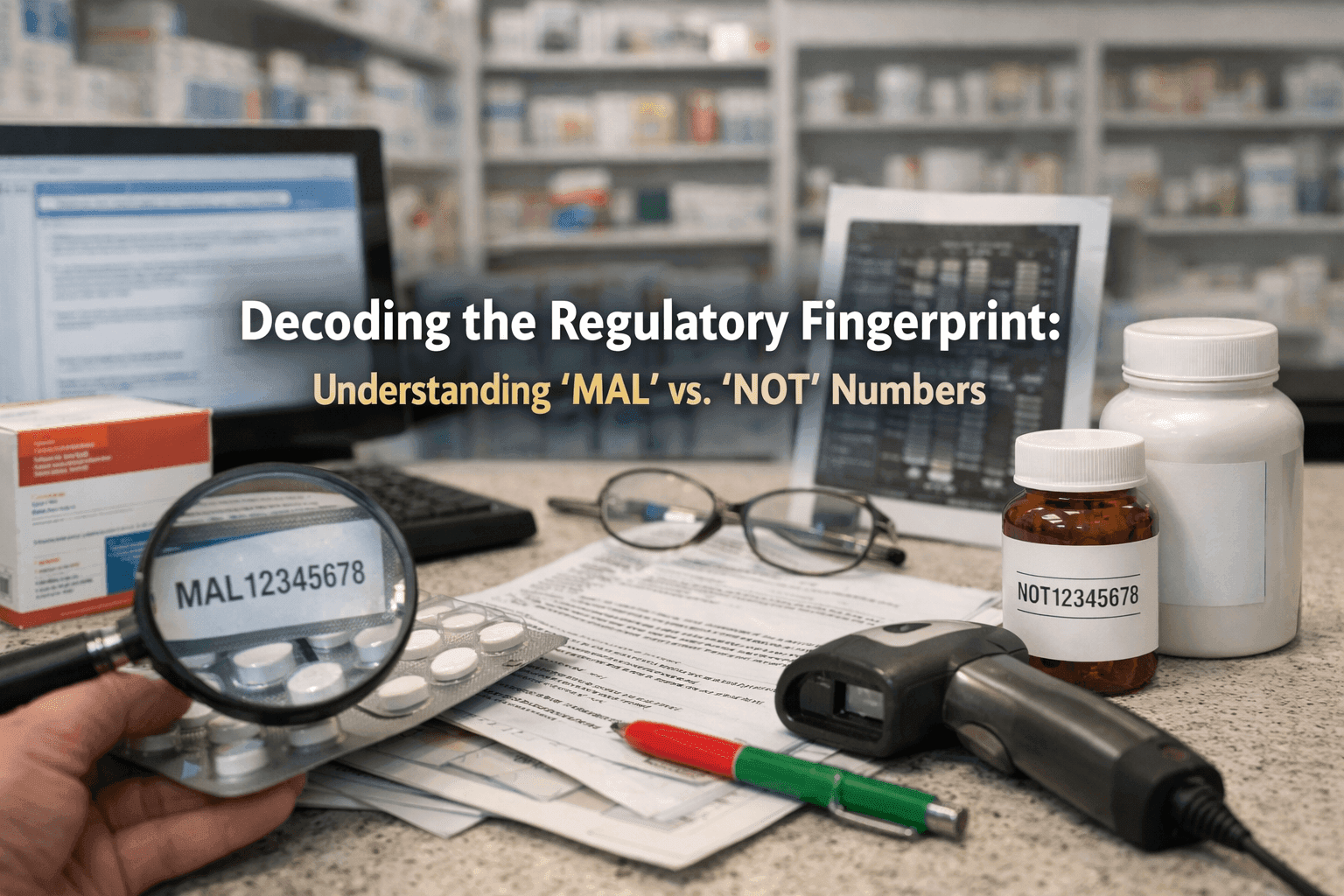
You see them on every bottle, box, and tube: short alphanumeric codes printed near the barcode. But what do these identifiers truly signify? MAL and NOT numbers are the official regulatory fingerprints issued by the National Pharmaceutical Regulatory Agency (NPRA), the technical arm of the Ministry of Health. They are the definitive proof that a product has been formally recognized under Malaysia’s strict regulatory framework, but they serve different purposes based on the product’s nature and claims. Understanding this distinction is the first, and most critical, step in compliance hygiene.
A MAL Number (e.g., MAL19976309X) is assigned to products that have undergone a full registration process. This category includes items that make therapeutic, prophylactic, or diagnostic claims. Think prescription medicines, over-the-counter (OTC) drugs, traditional medicines, and health supplements that claim to support joint health, improve immunity, or aid digestion. The number itself is informative: the segment following “MAL” often includes the year of registration, and a trailing letter typically denotes the product category, allowing a trained eye to quickly ascertain its general classification. Conversely, a NOT Number (e.g., NOT230601298K) is assigned to products that have been notified. This primarily applies to cosmetic products—items intended to be applied to the human body for cleansing, beautifying, or altering appearance without affecting the body’s structure or functions. Examples include moisturizers, shampoos, lipsticks, and sunscreens that do not make medicinal claims. The “NOT” prefix is followed by details like the notification date, providing a clear timeline for regulatory tracking.
Comparative Framework: MAL vs. NOT at a Glance
| Feature | MAL Number (Registration) | NOT Number (Notification) |
|---|---|---|
| Governing Legislation | Control of Drugs and Cosmetics Regulations 1984 | Control of Drugs and Cosmetics Regulations 1984 |
| Product Scope | Pharmaceuticals, Traditional Medicines, Health Supplements (with claims) | Cosmetics (without therapeutic claims) |
| Regulatory Scrutiny | Pre-market approval; detailed review of safety, efficacy, quality | Post-market surveillance; review of safety and ingredient compliance |
| Common Examples | Paracetamol tablets, vitamin C with immunity claims, herbal capsules for joint pain | Facial cleansers, body lotions, hair colorants, perfumes |
| Key Implication | Product is assessed and approved for its intended use and claims. | Product is acknowledged and its formulation is recorded for monitoring. |
Learn more : KKM Approved Product Number: Apa Itu ‘MAL’ dan ‘NOT’? (2026 Edition) | Control of Drugs and Cosmetics Regulations 1984
The High-Stakes Consequences of Regulatory Non-Compliance
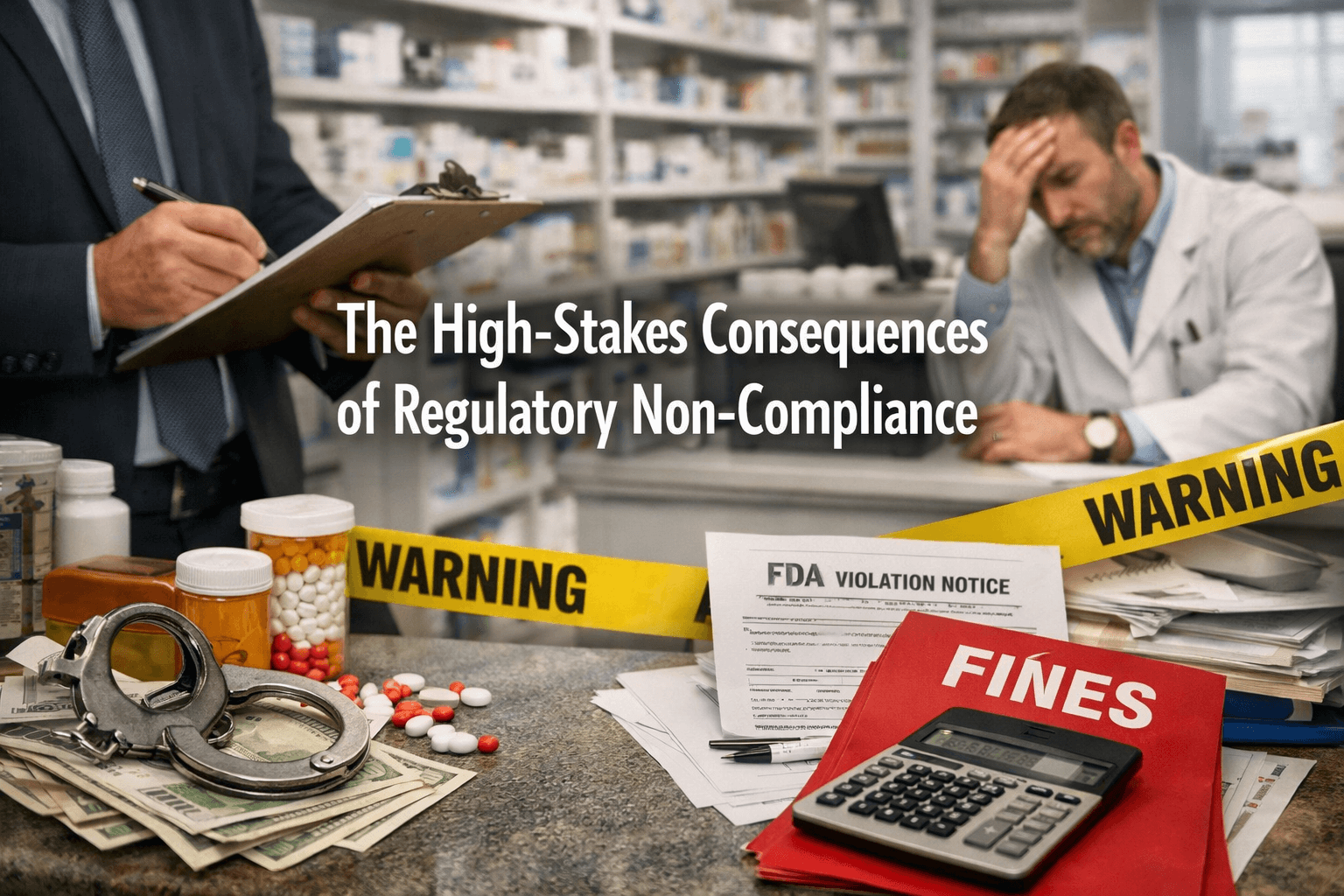
What are the tangible, operational risks of bypassing or neglecting KKM approvals? The implications are severe and multi-layered, impacting every link in the supply chain. For a pharmacy wholesale distributor, the discovery of an unregistered or unnotified product in their inventory or, worse, on a retail shelf they supply, can trigger a cascade of damaging events. The most immediate threat comes from MOH inspections, which can result in product seizures, forced delisting, and substantial fines. From the perspective of a pharmacist, stocking such items breaches their fiduciary duty to patient safety and exposes them to professional liability. For the brand owner, the penalties extend beyond fines to include public reprimands, loss of consumer trust, and potentially irreparable brand damage in a competitive market.
Consider a real-world scenario in Malaysia: a distributor pharmacy eagerly lists a new, trending “detox” tea from an international brand, relying on the supplier’s assurance of compliance. If that product makes unapproved health claims and lacks a valid MAL number, the entire chain is at risk. During a routine audit, the NPRA inspectors can order the immediate removal of the product from all shelves—not just in one store, but across every outlet supplied. The financial loss from seized stock is direct, but the indirect costs—disrupted store planograms, broken trust with retail partners, and time spent on crisis management—are often far greater. This underscores why regulatory due diligence is not a back-office function but a frontline, strategic imperative for any effective pharmacy distribution business.
Learn more : Do All Cosmetics Need KKM Approval? (2026 Edition) | Four ways pharma companies can make their supply chains more resilient
Integrating Compliance into the Product Lifecycle Strategy
When should product compliance enter the strategic planning of a distributor or brand? The answer is unequivocally: at the very beginning. KKM number validation must be embedded into the product lifecycle, from conception to consumer. A proven and efficient pharmacy distribution strategy treats regulatory status as a key gatekeeper at every major milestone, not as a final box to check before shipping.
The process begins at the brand listing phase. Before a new SKU is even presented to a pharmacy distributor Malaysia team or a large retail chain’s buying committee, its MAL or NOT status must be confirmed and documented. This is a shared accountability model. The brand owner is responsible for securing the number, but the distributor’s team must independently verify it using the NPRA’s QUEST database, a reliable public portal for checking product registration status. This verification should be a non-negotiable line item in the onboarding checklist. As the product moves to the merchandising activation stage, ensuring all point-of-sale materials (POSM), leaflets, and promotional claims align perfectly with the product’s approved category is essential. You cannot advertise a “NOT”-category facial serum as treating acne if it’s registered only as a cosmetic; that would require a “MAL” registration. Finally, during promotions and ongoing sales, periodic re-verification acts as a safeguard against accidental listing of products whose registrations may have lapsed or been suspended.
Learn more : KKM Product Search: Cara Guna Sistem QUEST (2026 Edition)
Operational Checklist for Distributors: Pre-Distribution KKM Verification
-
Confirm Existence: Verify the product has an active MAL or NOT number via the official NPRA QUEST system.
-
Validate Category: Ensure the number’s category (e.g., the trailing letter in a MAL number) matches the product type and its intended claims.
-
Check Expiry: For MAL numbers, confirm the registration is still valid and has not expired or been revoked.
-
Audit Marketing Materials: Cross-reference all packaging, leaflets, and POSM against the approved claims in the registration/notification dossier.
-
Document Evidence: Maintain a digital or physical file of the KKM verification for each SKU as part of your quality assurance records.
Shared Accountability: The Compliance Ecosystem of Brand, Distributor, and Pharmacist
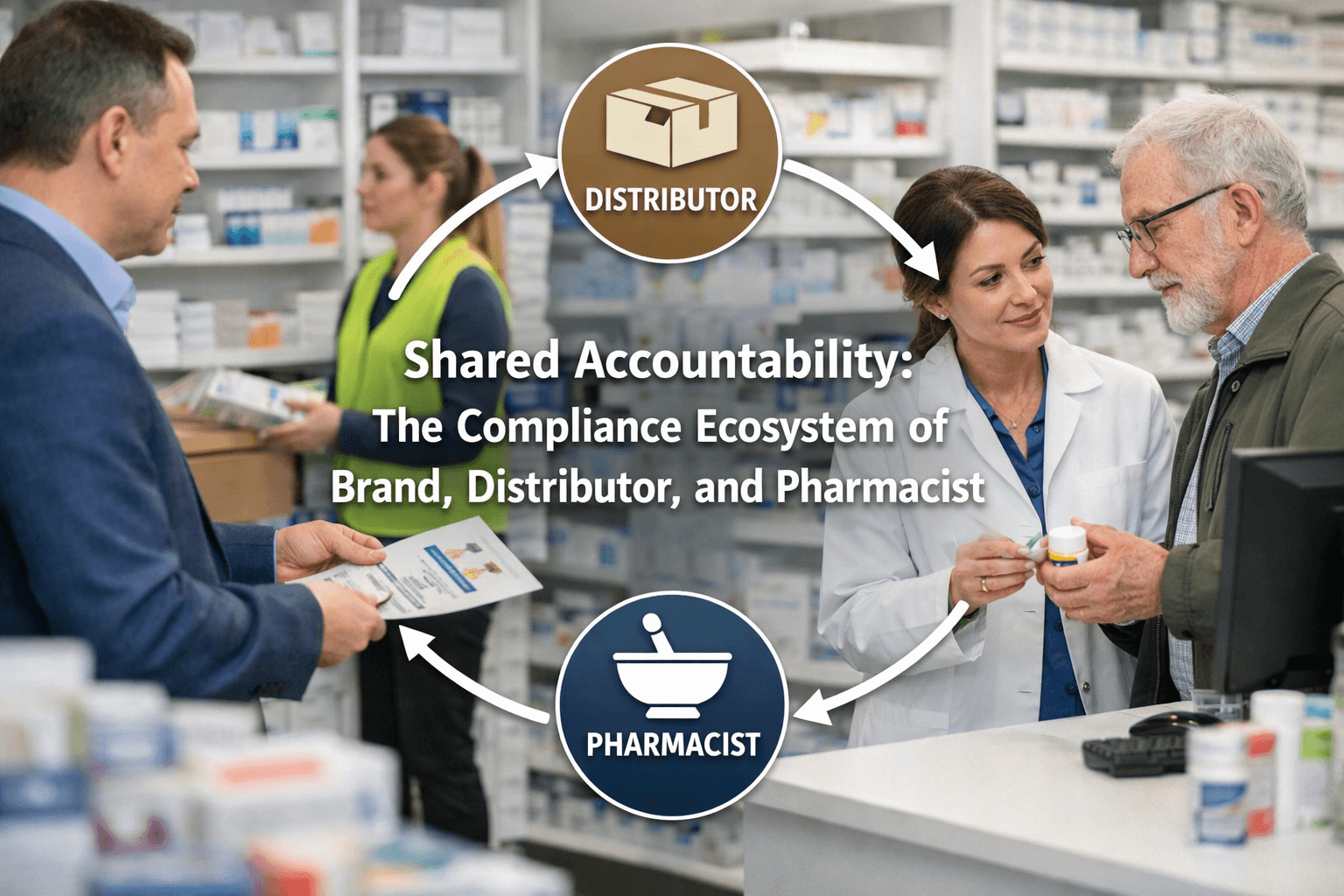
Who bears responsibility when an unregistered product is discovered? In Malaysia’s pharmacy ecosystem, the burden is strategically distributed across a chain of custody, creating multiple defensive layers for consumer protection. This shared accountability model means that a failure at any point can compromise the entire system, but it also allows each party to act as a checkpoint for the others.
The journey begins with the Brand Owner. Theirs is the primary duty to correctly classify their product, submit the comprehensive dossier to the NPRA, obtain the appropriate KKM number, and ensure all product labeling and claims are strictly within the approved boundaries. They are the source of the regulatory truth. The Pharmacy Distributor—whether a broad-line pharmacy wholesale distributor or a specialized independent pharmacy distributor—acts as the crucial verification filter. Their role is to conduct independent audits of the brand’s compliance documentation before agreeing to distribute. They must not take a supplier’s word for granted; their own operational license and retailer relationships are on the line. Finally, the Pharmacist serves as the last and most visible gatekeeper. During shelf stocking, planogram updates, and especially at the point of sale when making recommendations, pharmacists have a professional and ethical obligation to ensure the products they sell are fully compliant. A pharmacist in Penang or Johor Bahru must be as vigilant about checking a novel supplement’s MAL number as they are about dispensing a prescription accurately.
From the brand manager’s perspective, providing clear, accessible compliance documentation to distributors is a service that builds trust and smoothes market entry. From the distributor’s logistics manager’s view, integrating automated checks for KKM status into the procurement software is an investment in operational resilience. From the retail pharmacist’s standpoint, having a simple, quick-reference guide or digital tool to verify dubious products is part of their daily quality assurance. This multi-perspective approach enforces a culture where regulatory compliance is seen not as a hindrance, but as the fundamental marker of a professional, reliable, and strategic partner in Malaysia’s healthcare landscape.
Learn more : Good Regulatory Practices in the Regulation of Medical Products
Verifying Product Legitimacy with QUEST 3+: A Pillar of Operational Integrity
In the complex landscape of Malaysian pharmaceutical and cosmetic distribution, the National Pharmaceutical Regulatory Agency (NPRA) QUEST 3+ portal stands as the definitive, publicly accessible tool for real-time product verification. Its function extends far beyond a simple lookup; it is the frontline defense against compliance breaches and a critical component of supply chain integrity. For distributors, pharmacists, and brand managers, mastering this system is not an administrative task—it’s a non-negotiable operational discipline that safeguards public health and commercial viability. A proven and efficient system like QUEST reinforces the robustness of Malaysia’s multi-layered regulatory framework, making compliance a tangible, daily practice rather than an abstract concept.
Learn more : QUEST3+ Product Search Portal
The Critical Role of Real-Time Verification in Mitigating Risk
The consequences of distributing or selling a non-compliant product in Malaysia are severe, ranging from hefty financial penalties and product recalls to irreparable damage to a brand’s reputation. The QUEST 3+ portal directly addresses this by providing instant transparency. For instance, a distributor in Johor Bahru might receive an attractive offer for a new skincare line from an international brand. Before committing to warehouse space and sales efforts, a quick verification on QUEST can reveal if the products hold a valid NOT number for cosmetics or if they are being incorrectly presented without notification. This simple, strategic check prevents a potentially costly mistake, transforming regulatory compliance from a reactive audit activity into a proactive risk management strategy. It empowers every stakeholder in the chain to become a guardian of compliance.
A Practical Walkthrough: Leveraging QUEST 3+ for Daily Operations
Navigating the QUEST portal is designed for clarity and speed, which is essential for high-volume environments like pharmacy warehouses or busy retail counters. The process begins by visiting the official NPRA website and locating the ‘Product Search’ function, which allows queries by either MAL (for registered medicines and health supplements) or NOT (for notified cosmetics) numbers. Users can input key details such as the exact product name or the marketing authorization holder. The returned data is comprehensive and decisive. It confirms the product’s category, its current registration or notification status (active, expired, or cancelled), and the official expiry date of that approval. For a pharmacist in a Kuala Lumpur clinic pharmacy, this means being able to verify a patient’s requested supplement in moments, ensuring it is a KKM-compliant product before it ever leaves the shelf. Distributors should formally embed this verification step into their Standard Operating Procedures (SOPs) for all new stock intake, creating a systematic barrier against non-compliant inventory.
Empowering Field Teams and Pharmacy Partners with Mobile Access
One of the most powerful applications of QUEST 3+ is its utility in the field, directly at the point of sale or merchandising. The mobile-responsive design of the portal means field representatives and pharmacists are no longer tethered to a desktop. Consider a merchandiser visiting a chain of Malaysian retail pharmacies in Penang; they can use a tablet or smartphone to instantly validate the MAL numbers on a batch of OTC cough syrups during a shelf audit. This capability is transformative. It enables immediate corrective action—such as flagging products with nearing approval expiry dates—and fosters a culture of shared responsibility. Training pharmacy partners to perform these quick checks themselves builds a trusted partnership. It shifts the dynamic from a distributor merely supplying products to a distributor supplying verified, compliant stock, thereby enhancing the pharmacist’s confidence and protecting the end consumer. This mobile verification acts as the final, crucial checkpoint in the compliance journey.
Understanding the Regulatory Distinction: MAL vs. NOT Numbers
A foundational element of using QUEST 3+ effectively is understanding what you are verifying. The Malaysian regulatory framework distinguishes sharply between products that require full registration (MAL) and those requiring notification (NOT). This distinction is not merely bureaucratic; it reflects the product’s risk profile, its intended use, and the rigor of pre-market assessment it has undergone. A MAL number is assigned following a comprehensive evaluation of quality, safety, and efficacy data—a process mandatory for all pharmaceuticals, over-the-counter drugs, and traditional medicines. The compliance risk associated with these products is severe, as they directly impact therapeutic outcomes. Conversely, a NOT number is required for cosmetics and simple topical products, involving a notification process that, while mandatory, is less complex. The enforcement penalties differ accordingly, making it essential for distributors to categorize their SKUs correctly from the outset.
Here is a comparative framework outlining the key differences:
| Feature | MAL Number (Registered Product) | NOT Number (Notified Product) |
|---|---|---|
| Product Type | Prescription drugs, OTC medicines, Health Supplements | Cosmetics, Topical Care (e.g., certain creams, lotions) |
| Governing Authority | NPRA (Drug Division) | NPRA – Cosmetic Division |
| Pre-Market Scrutiny | High (Full dossier review, GMP inspections) | Low to Moderate (Document notification) |
| Typical Compliance Risk | Severe (Legal action, product recalls) | Moderate (Product delisting, fines) |
| Common Retail Channels | Pharmacies, Clinics, Hospitals | Retail Outlets, Beauty Chains, Online |
| Primary Stakeholder Concern | Patient safety, therapeutic claims | Product safety, accurate ingredient listing |
Building a Bulletproof Compliance Framework for Distributors
For a pharmacy distributor Malaysia operations depend on, compliance must be engineered into every process. Relying on ad-hoc checks is a significant vulnerability. A strategic compliance plan is built on actionable SOPs and continuous team education. The first line of defense is a rigorous product vetting protocol before any new SKU is listed. This goes beyond checking a number; it involves ensuring all marketing claims and packaging materials perfectly align with the parameters approved under the MAL or NOT registration. A common pitfall for distributors importing health supplements, for example, is discovering that the local marketing copy makes unauthorised therapeutic claims that the KKM registration status does not permit, leading to enforcement action.
The framework must be dynamic, not static. This means scheduling systematic re-verification of all MAL and NOT numbers in the portfolio at least every six months to catch any suspensions or expirations. Furthermore, the human element is critical. Field teams and merchandisers must be trained as compliance sensors. They should be adept at spotting suspicious product codes, dubious packaging, or discrepancies in labeling. For example, a trained merchandiser in a Sabah pharmacy might notice a cosmetic product lacking the mandatory NOT number on its label, triggering an immediate quarantine and investigation. Simultaneously, fostering a strong partnership with pharmacists by providing them with simple verification guides empowers them to reject non-compliant stock confidently, creating a unified front for regulatory adherence. Adopting this tailored and reliable approach systematically de-risks the entire distribution operation.
Multi-Perspective Insights: Compliance as a Shared Mission
The responsibility for compliance is a chain that links multiple actors, each with a unique perspective and role. From the brand manager’s viewpoint, securing the correct MAL or NOT is the critical first investment for market entry—a failure here derails all subsequent commercial plans. They rely on distributors who are expert navigators of local regulations to provide accurate feedback and ensure their products are presented correctly at retail.
For the distributor, compliance is the core of operational legitimacy and scalability. It’s a complex balancing act of managing vast SKU counts, educating numerous retail partners, and staying ahead of regulatory updates. Their efficiency and diligence directly protect the brands they represent. Finally, for the pharmacist, compliance is a matter of professional ethics and legal duty. Their license and the trust of their community are on the line with every product they dispense or recommend. They depend utterly on their supply chain partner to provide fully compliant stock, making the distributor’s internal checks and verification support not just a service, but a cornerstone of a trusted professional relationship. This interlocking of perspectives shows that robust compliance is not a cost center but a value driver for all parties.
Frequently Asked Questions (FAQ)
Q1: How to check if a product is KKM approved?
Answer: Check the product’s registration via official Malaysian platforms. Medicines and supplements must have a valid MAL number registered with NPRA, while cosmetics require a NOT notification number. You can verify both through NPRA’s public search tools.
Q2: How do I verify a product’s KKM status?
Answer: Look for the MAL (medicines/supplements) or NOT (cosmetics) number on the label, then confirm the details (product name, holder, status) using NPRA’s online databases.
Q3: How to check if the supplement is original?
Answer: Confirm the MAL number with NPRA, ensure label details match the database exactly, check batch/expiry consistency, and buy only from licensed pharmacies or authorized sellers.
Q4: How to identify medicines that are registered with MOH?
Answer: Registered medicines will display a MAL number and can be verified through NPRA’s medicine registration search, which is overseen by the Ministry of Health (MOH).
Q5: How do I spot a fake KKM label?
Answer: Be cautious of missing/incorrect MAL or NOT numbers, mismatched product names, spelling errors, exaggerated claims, or labels that don’t match NPRA records.
Q6: How do I know if a supplement is FDA-approved?
Answer: FDA approval applies to the United States. In Malaysia, supplements must be registered with NPRA (KKM). An “FDA-approved” claim alone does not indicate Malaysian regulatory approval.
Q7: How to check if a product is original or not?
Answer: Verify NPRA registration, inspect packaging quality, confirm batch/expiry details, scan any official QR/Meditag codes, and purchase from licensed outlets.
Q8: What products need a KKM check?
Answer: Medicines, supplements, cosmetics, and certain health products sold in Malaysia require NPRA verification—either MAL registration or NOT notification, depending on the category.
Q9: Is KKM approval required for all products?
Answer: Not all products. KKM/NPRA approval is required for regulated health products (medicines, supplements, cosmetics). General consumer goods follow other regulatory bodies.
Q10: How to check product details?
Answer: Use NPRA’s search tools to review the registered product name, active ingredients, registration holder, approval status, and validity dates.
How can we assist you today? 😊
Just let us know—we’re here to help!