

April 25 , 2026
Learn more: Emerging from Disruption: The Future of Pharma Operations Strategy
Learn more: Supply Chain Challenges in the Pharmaceutical Industry | An Overview of Cold Chain Management in Malaysia’s Pharmaceutical Distribution Sector
The Non-Negotiable Pillars of NPRA and KKM Compliance in Malaysian Pharma
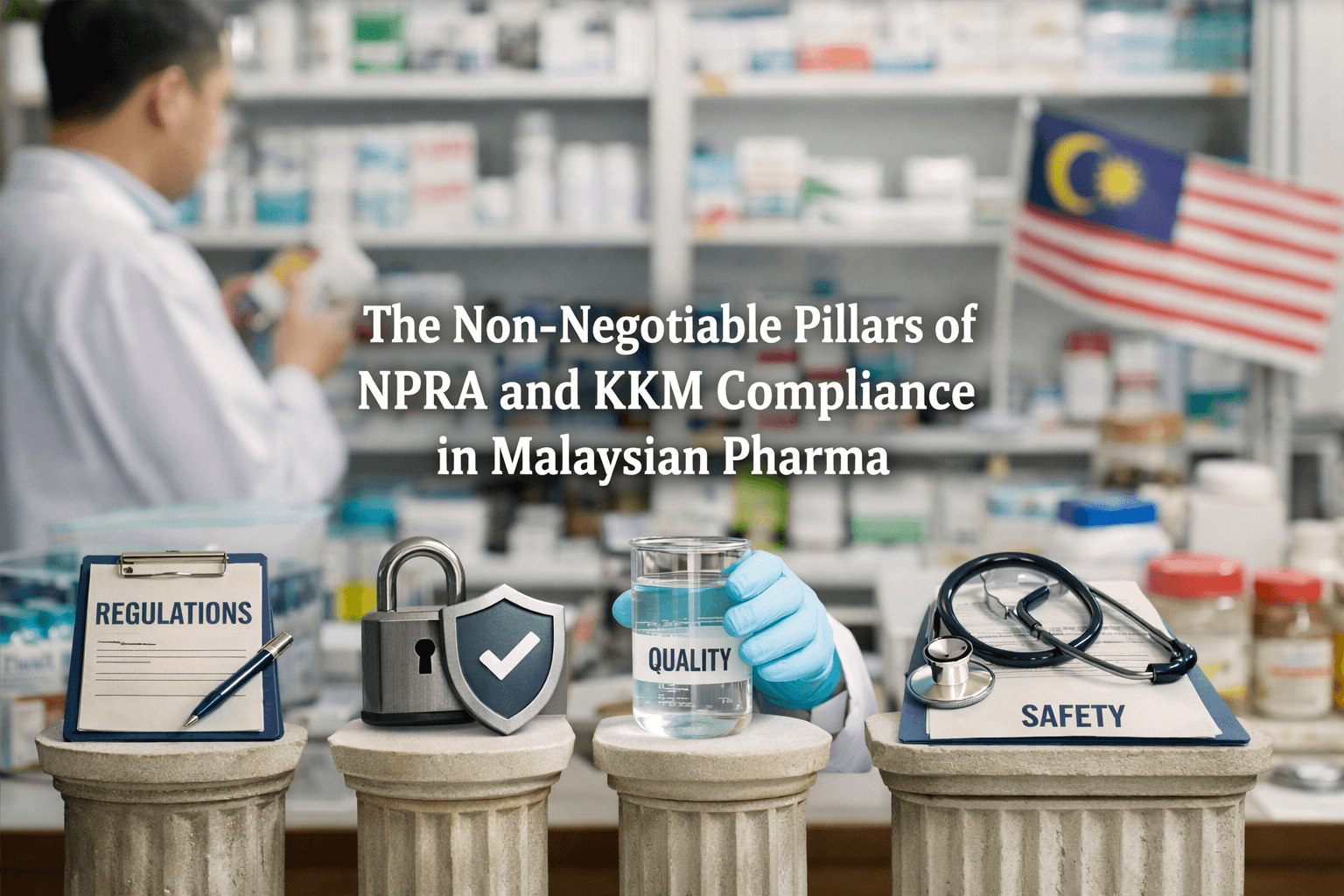
Regulatory adherence is not merely a legal requirement but the fundamental bedrock upon which a secure pharmaceutical supply chain is built. In Malaysia, this translates to a rigorous, dual-framework governed by the National Pharmaceutical Regulatory Agency (NPRA) and the Ministry of Health (KKM). For any distributor, aligning with these bodies is not a passive activity but a proactive, integrated operational discipline. The guidelines enforced are meticulously designed to safeguard public health at every touchpoint, from the moment a product enters the country to its final dispensing at a pharmacy counter. This creates a controlled ecosystem where patient safety and medication efficacy are paramount, directly facilitating the seamless flow of goods through legitimate channels. Top-tier distributors recognize that this compliance is their license to operate and the core of their social contract with the Malaysian public.
Learn more: Guidelines on Good Distribution Practice (GDP)
A Real-World Consequence: The Cost of Non-Compliance
Consider the operational scenario of a distributor handling a new line of biologic medicines, which require stringent cold chain management. NPRA’s Good Distribution Practice (GDP) guidelines mandate specific temperature ranges, documented logging, and validated equipment throughout the journey. A failure in any link—a refrigerated truck malfunction, an undocumented temperature excursion—doesn’t just risk product degradation. It triggers a cascade of severe repercussions. The NPRA can mandate a full product recall, a process that is logistically chaotic and financially devastating. This is often accompanied by substantial fines from KKM for breaching public health regulations. Beyond the immediate financial loss, the true, lasting damage is the erosion of trust with pharmacies, healthcare professionals, and, ultimately, patients. In a market where reputation is everything, such an event can cripple a distributor’s standing. This is precisely why leading distributors invest heavily in compliance infrastructure, viewing it not as a cost center but as a strategic investment in long-term reliability and market credibility.
Data-Driven Vigilance and Proactive Auditing
The regulatory landscape is dynamic, with guidelines evolving in response to new therapeutic classes and global best practices. For instance, the NPRA’s increasing focus on track-and-trace capabilities for high-risk medicines demands sophisticated serialization technology. Operational data and performance metrics become critical here. Distributors must not only collect data but analyze it to demonstrate compliance proactively. This involves regular internal audits, staff certification programs in GDP, and maintaining an immaculate audit trail. From a pharmacist’s perspective, choosing a distributor with a proven audit history minimizes their own risk exposure. For a brand manager, a distributor’s compliance scorecard is a direct reflection of their brand’s integrity in the market. The practical implication is clear: operational transparency and a culture of compliance are non-negotiable traits of a trusted supply chain partner.
The Malaysian Context: Nuances in East and West Malaysia
The application of these universal principles requires tailored execution across Malaysia’s diverse geography. A one-size-fits-all approach to logistics is a recipe for compliance failure. For example, ensuring the continuous cool chain for insulin deliveries to a hospital in rural Sarawak presents a vastly different challenge than a delivery to a central hospital in Kuala Lumpur. Distributors must account for longer transit times, variable infrastructure, and complex last-mile logistics while still meeting the same uncompromising NPRA standards. Another Malaysia-related example is the distribution of controlled medicines. KKM has strict protocols for drugs like potent opioids. A distributor must have foolproof systems for secure storage, specialized transportation, and precise documentation that satisfies both NPRA and KKM inspectors, whether the destination is a clinic in George Town or a palliative care center in Kuching. This demands not just technology, but localized expert knowledge.
Inline Framework for Compliance Excellence:
Pre-emptive Licensing & Product Registration: Ensuring all products have valid NPRA notification or registration before storage or distribution.
Infrastructure Validation: Regular calibration of warehouse climate systems and transport units against GDP specs.
Personnel Training: Mandatory, ongoing GDP and SOP training for all handling staff, with clear records.
Documentation Integrity: Maintaining a complete, readily retrievable chain of custody for every product batch.
Leveraging Technology as a Strategic Compliance Engine
In today’s landscape, manual processes are inherently risky. Technological integration is the most effective tool to achieve both compliance and operational efficiency. Advanced Warehouse Management Systems (WMS) integrated with Enterprise Resource Planning (ERP) platforms do more than track inventory; they enforce compliance workflows. For instance, the system can prevent the picking of a batch that hasn’t cleared quality assurance or automatically flag products approaching expiry for priority dispatch. Digital tracking, through GPS and IoT sensors, provides real-time, immutable data on a shipment’s location and environmental conditions. This data is essential for audit defense and proactive issue resolution. If a temperature deviation occurs en route to a pharmacy in Johor Bahru, alerts can trigger immediate corrective action, potentially saving the shipment and preventing a compliance incident. This transforms compliance from a retrospective report into a live, managed process.
Learn more: Digital Transformation in Malaysia’s Pharmaceutical Distribution Services
Enhancing Pharmacy Operations Through Reliable, Tailored Service
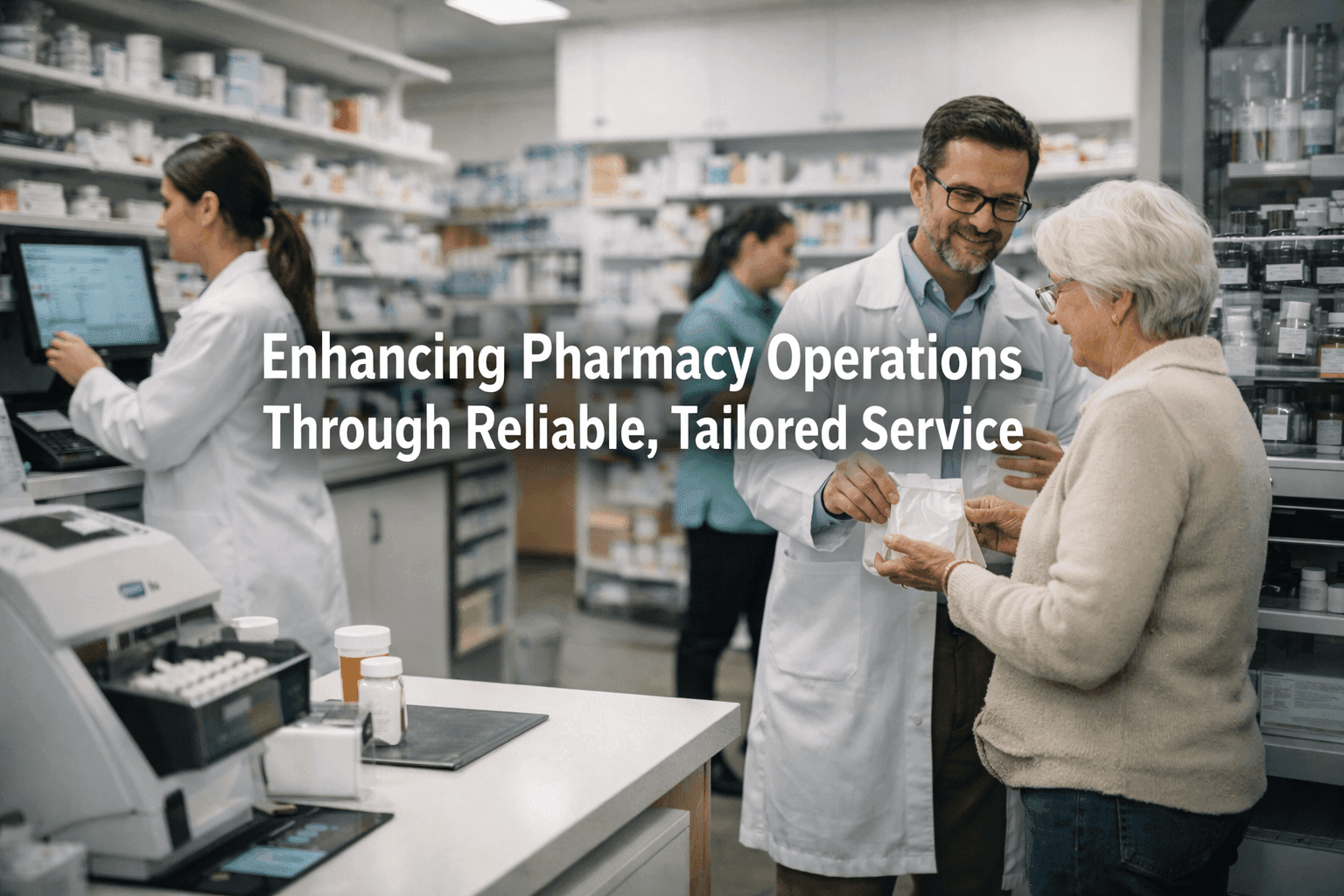
The direct impact of a distributor’s performance is felt at the pharmacy level. A reliable distributor functions as an extension of the pharmacy’s inventory management team. By managing the complexities of the upstream supply chain, they allow pharmacists to focus on their core patient-care roles. This collaboration is especially critical in Malaysia, where pharmacies range from large hospital outlets to independent community pillars in smaller towns. For a busy urban pharmacy in KL, a distributor’s ability to offer frequent, just-in-time deliveries of a broad product range is key to optimizing shelf-space and working capital. Conversely, for a community pharmacy in Kelantan, the distributor’s role in ensuring the consistent availability of essential chronic medications, like antihypertensives or diabetes care, directly influences community health outcomes. This tailored approach to service—understanding disparate needs—is what minimizes stockouts and enhances patient access.
The Future is Integrated: Digital and Sustainable
The distribution landscape is on the cusp of a digital transformation that will redefine expectations. The growth of healthcare e-commerce and digital pharmacies in Malaysia is creating demand for direct-to-patient (DTP) and direct-to-consumer (DTC) logistics models. This requires distributors to develop new capabilities in parcel-scale logistics, patient data privacy, and even faster delivery cycles. Simultaneously, sustainability is moving from a corporate social responsibility initiative to a business imperative. We can expect KKM and NPRA to incorporate more green logistics guidelines. Forward-thinking distributors are already exploring eco-friendly packaging, optimizing delivery routes for fuel efficiency, and investing in electric or hybrid fleets for urban deliveries. This dual thrust of digital and green innovation will separate the market leaders. The distributors who will thrive are those leveraging proven technologies like AI for demand forecasting and blockchain for enhanced traceability, all within a sustainable operational framework.
Choosing Your Strategic Partner: A Multi-Perspective View
Selecting a distribution partner is one of the most strategic decisions a pharmacy or brand manager can make. This choice must be viewed through multiple lenses. From a pharmacist’s perspective, the primary concerns are service reliability, order accuracy, and responsive support—can they get what they need, when they need it, without error? For a brand manager, the focus shifts to brand compliance, market reach, and merchandising support—will their products be handled with care, placed in target outlets, and kept in-date? The distributor’s own viewpoint centers on operational synergy, shared growth objectives, and risk management—can they build a efficient, scalable partnership? Aligning these perspectives reveals the hallmarks of an ideal partner: one that combines global standards with local expertise, possesses robust technological infrastructure, and demonstrates an unwavering commitment to regulatory adherence.
Comparative Table: Evaluating Distributor Capabilities
| Operational Dimension | Basic Compliance Distributor | Strategic Partnership Distributor |
|---|---|---|
| Regulatory Approach | Reactive; meets minimum audit requirements. | Proactive; invests in training, tech, and audits to exceed standards. |
| Technology Utilization | Manual or legacy systems; limited real-time data. | Integrated WMS/ERP with GPS/IoT tracking; provides data portals to partners. |
| Service Model | Standardized, one-size-fits-all delivery schedules. | Tailored solutions (e.g., JIT for urban, consolidated for rural). |
| Sustainability Focus | Minimal or not a priority. | Strategic initiatives in green packaging, fleet optimization, and waste reduction. |
| Problem Resolution | Slow, with limited communication. | Efficient, transparent, and collaborative with pharmacies/managers. |
Frequently Asked Questions (FAQ)
Q1: Who is the largest pharmaceutical distributor in the world?
Answer: McKesson is widely cited as the largest pharmaceutical distributor by scale and revenue in drug distribution.
Q2: Who are the big 3 pharmaceutical wholesalers?
Answer: The “Big Three” U.S. drug wholesalers are McKesson, Cencora, and Cardinal Health—often described as controlling the vast majority of U.S. wholesale market revenue.
Q3: Who is the largest medical distributor?
Answer: In broad “medical distribution” (medical supplies + healthcare distribution), McKesson is commonly listed among the largest players, alongside Cardinal Health and others, depending on the exact segment (medical-surgical vs. pharmaceuticals).
Q4: What are the 10 largest pharmaceutical companies in the world?
Answer: Rankings vary by year/metric, but a widely used “pharma sales” list includes: Pfizer, Johnson & Johnson, AbbVie, Merck & Co., Roche, Sanofi, AstraZeneca, Novartis, Bristol Myers Squibb, GSK.
Q5: Who are the big pharma distributors?
Answer: “Big pharma distributors” typically refers to major wholesalers and distribution networks—especially McKesson, Cencora, and Cardinal Health in the U.S.
Q6: Who is Pfizer’s biggest competitor?
Answer: It depends on the therapy area, but at a “big pharma” level, Merck & Co. and Johnson & Johnson are frequently positioned as close peers (size, pipeline breadth, major product categories).
Q7: What is the big 4 in pharma?
Answer: There isn’t one universal “Big 4” definition—people use it differently (by revenue, market cap, or by sub-sectors like generics). A common revenue-style “top tier” grouping often includes names like Johnson & Johnson, Roche, Merck & Co., and Pfizer for recent-year rankings.
Q8: What are the big 3 pharmacy chains?
Answer: In the U.S. retail chain context, the “big three” are commonly cited as CVS Health, Walgreens, and Rite Aid (even though the market has been rapidly changing).
Q9: What are the big 3 pharmaceuticals?
Answer: There’s no single official “big 3,” but in many global revenue lists, the very top tier typically features Johnson & Johnson, Roche, and Merck & Co. (with Pfizer often very close).
Q10: Which country is no. 1 in pharma?
Answer: If you mean the largest pharmaceutical market by sales, the United States ranks #1 (by a wide margin in 2024 sales).
How can we assist you today? 😊
Just let us know—we’re here to help!