
Top 3 Pharmacy Distributors in Malaysia Ranking

April 5, 2026
The Pivotal Function of Pharmacy Distributors in Malaysia’s Healthcare System
At the very heart of Malaysia’s modern healthcare delivery lies a complex, often unseen network: the pharmacy distribution channel. These entities are far more than simple middlemen; they are the essential arteries that ensure a consistent, safe, and compliant flow of medicines, medical devices, and wellness products from manufacturers to the frontline—your local pharmacies, hospitals, and clinics. Without their strategic orchestration of logistics, inventory, and regulatory navigation, the entire system would falter, directly impacting patient care and public health outcomes. Their role transcends basic warehousing and transportation, embedding them as critical partners in the national health infrastructure, guaranteeing that the right product reaches the right place at the right time, and in the right condition.
How Distributors Ensure Uninterrupted Access to Medicines Across the Nation
The core claim of a distributor’s value is supply chain continuity. In practical terms, this means that a pharmacy in Kota Bharu or Kuching should have the same reliable access to a common antibiotic or a life-saving cardiac medication as a major hospital in Kuala Lumpur. Distributors achieve this through a sophisticated logistics network and demand forecasting models. They absorb the volatility and bulk-handling complexities that individual pharmacies cannot manage, maintaining vast inventories to buffer against manufacturing delays or sudden spikes in demand. For instance, during seasonal outbreaks like dengue fever, a reliable distributor anticipates increased need for oral rehydration salts and paracetamol, proactively allocating stock to affected regions to prevent shortages. This logistical prowess is not merely convenient; it is a public health safeguard, preventing treatment interruptions that can lead to worsened patient outcomes, antibiotic resistance, or broader health crises.
Learn more: Six major trends in healthcare supply chains
The Regulatory Gatekeepers: NPRA Compliance as a Non-Negotiable Standard
Perhaps the most critical differentiator between a mere transporter and a trusted pharmacy distributor is their role as a regulatory gatekeeper. In Malaysia, the National Pharmaceutical Regulatory Agency (NPRA), under the Ministry of Health (KKM), enforces stringent rules governing the import, storage, and distribution of all health products. A top-tier distributor integrates compliance into every operational layer. This begins with product registration validation—ensuring every item in their warehouse has a valid NPRA registration number and Meditag hologram. They manage the cold chain integrity for temperature-sensitive products like vaccines, insulin, and certain biologics, with continuous monitoring from receipt to dispatch.
Furthermore, they uphold Good Distribution Practice (GDP) standards, which dictate everything from warehouse pest control and cleanliness to staff training and documentation traceability. A breach here isn’t just a business failure; it risks patient safety and carries severe legal repercussions. Thus, a distributor’s compliance framework is the bedrock of its trustworthiness.
Learn more: How to Ensure Regulatory Compliance for Pharmacy Distribution in Malaysia| An Overview of Cold Chain Management in Malaysia’s Pharmaceutical Distribution Sector (2026 Edition) | Understanding Pharmaceutical Regulatory Compliance and Its Importance
Operational Scenarios: The Distributor’s Role in Urban and Rural Malaysian Contexts
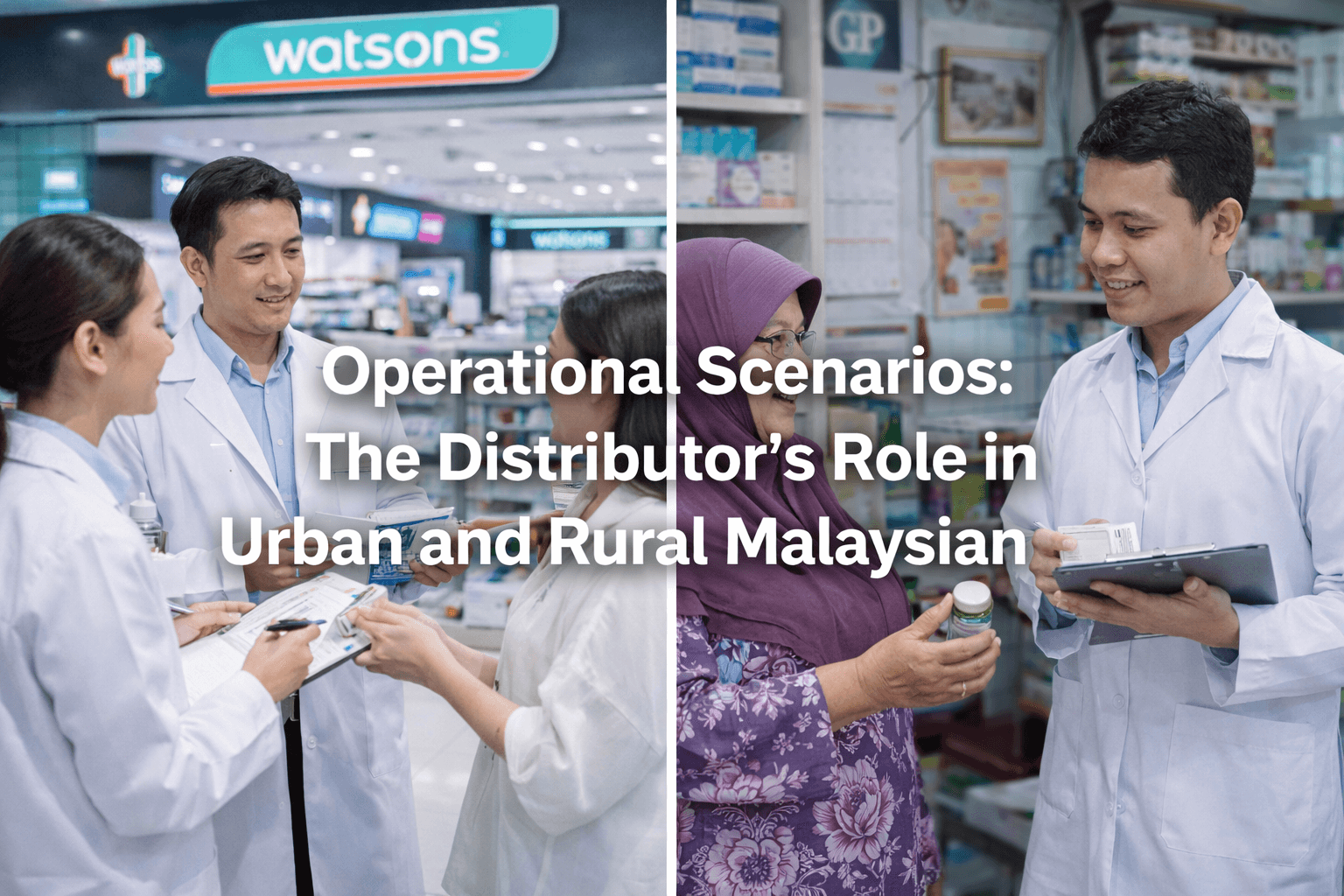
The operational demands on distributors vary dramatically across Malaysia’s diverse landscape, testing their adaptability and service depth.
-
Scenario 1: Supporting a Large Hospital Chain in the Klang Valley. Here, the demand is for high-volume, just-in-time deliveries of a vast product range, from high-cost oncology drugs to bulk surgical supplies. The distributor must provide vendor-managed inventory (VMI) services, using real-time data integration with the hospital’s system to predict and replenish stock automatically. The focus is on efficiency, accuracy, and handling specialized products, requiring advanced logistics technology and a large, readily available inventory.
-
Scenario 2: Servicing an Independent Community Pharmacy in Sarawak. The challenge shifts to cost-effective last-mile logistics across difficult terrain. The order might be smaller but no less critical. A strategic distributor serving this market might consolidate orders for a route, ensuring weekly reliable deliveries that make running a rural pharmacy viable. They also become a source of market intelligence, informing the pharmacist about new generics or NPRA-approved health supplements that could benefit their community.
-
Scenario 3: Managing a Nationwide Product Recall. This scenario tests the proven crisis-management mettle of a distributor. When an NPRA recall notice is issued, the distributor must instantly freeze affected stock, trace every unit to its destination pharmacy (down to the batch number), and coordinate the reverse logistics for retrieval and replacement. Their recall protocol efficiency protects the public and safeguards pharmacy partners from liability and reputational damage.
Beyond Logistics: The Value-Added Services of a Modern Distributor

Leading pharmacy distributors have evolved into comprehensive supply chain partners, offering services that empower pharmacies to operate more effectively. This expansion into value-added areas is what separates industry leaders from basic wholesalers.
Key value-added pillars include:
-
Credit Facilities and Flexible Payment Terms: Providing working capital flexibility, which is especially essential for small and independent pharmacies managing cash flow.
-
Digital Procurement Platforms: User-friendly B2B portals or mobile apps for 24/7 ordering, real-time stock checks, and access to promotional offers, enhancing operational efficiency.
-
Market Intelligence and Product Training: Distributing insights on market trends, upcoming therapeutic classes, and providing expert-led training sessions for pharmacy staff on new products or disease management, adding an educational layer to the transaction.
-
Merchandising and Marketing Support: Assisting with in-store product placement, promotional displays, and co-branded marketing materials to help pharmacies drive sales of OTC products and supplements.
To illustrate the distinct roles within the ecosystem, consider the comparative framework between a distributor’s merchandising support and an in-house pharmacy team:
| Aspect | Distributor’s Merchandising Support | Pharmacy’s In-House Team |
|---|---|---|
| Primary Focus | Brand-specific campaigns, new product launches, and broad category management. | Overall store layout, customer experience, and cross-selling all store inventory. |
| Expertise | Deep product knowledge from manufacturer training, category performance data. | Holistic retail knowledge, understanding of local customer demographics and preferences. |
| Resource & Scale | Brings pre-designed materials, possible manpower for setup, and insights from nationwide data. | Has limited time and may lack specialized design/resources for every brand campaign. |
| Strategic Value | Extends the manufacturer’s marketing reach to the point-of-sale, providing tailored tactical execution. | Ensures all merchandising aligns with the store’s unique brand and operational flow. |
Learn more: What is the role of VM in retail?
The Multi-Angle Perspective: Distributors Through the Eyes of Stakeholders
Understanding the distributor’s role fully requires viewing it from multiple angles within the supply chain.
-
From the Pharmacist’s Viewpoint: The distributor is a reliable lifeline and a business partner. They depend on the distributor for inventory consistency to meet patient needs, for accurate invoicing, and for trusted advice on product alternatives during shortages. A delay or error isn’t just an inventory problem; it erodes patient trust in the pharmacy itself. The pharmacist values a distributor whose customer service team is responsive and knowledgeable, turning a transactional relationship into a strategic partnership.
-
From the Brand Manager’s Viewpoint: For a pharmaceutical or consumer health manufacturer, the distributor is the field force multiplier. A proven distributor with extensive market penetration is the most effective channel to achieve wide product availability and visibility. The brand manager assesses distributors on their ability to execute planogram agreements, provide granular sales data feedback, and protect brand equity through proper handling and compliance. They seek a distributor that acts as a true extension of their own commercial team.
-
From the Distributor’s Own Operational Viewpoint: Internally, the mission is balancing service level with cost efficiency. This involves optimizing delivery routes across Peninsular Malaysia and East Malaysia, investing in Warehouse Management Systems (WMS) for pick-pack accuracy, and training staff on the latest GDP guidelines. Their biggest challenge is maintaining profit margins while absorbing rising logistics costs and providing the value-added services that the market now expects. Their strategic focus is on leveraging technology and scale to stay both indispensable and competitive.
The Tangible Impact: What This Means for Healthcare Delivery in Malaysia
The practical implication of a robust pharmacy distribution sector is a more resilient, responsive, and equitable healthcare system for all Malaysians. It enables community pharmacies to thrive as accessible first-line healthcare hubs. It allows public health initiatives—like vaccination drives or chronic disease medication programs—to be executed smoothly, as distributors can handle the large-scale, coordinated logistics required. Ultimately, the efficiency and reliability of these behind-the-scenes players directly influence drug affordability, availability, and safety. Choosing a distributor, therefore, is one of the most strategic decisions a pharmacy makes. It is a choice that goes beyond price catalogs, deeply into partnership credentials, regulatory rigor, and a shared commitment to upholding the integrity of Malaysia’s healthcare delivery.
How Pharmacy Distributors Elevate Retail Success Through Merchandising and Strategic Support
The role of a pharmacy distributor extends far beyond the warehouse gates and delivery trucks; it actively shapes the commercial success and customer experience within the retail pharmacy itself. A strategic distributor functions as a critical retail partner, providing the tools, insights, and execution support that transform a simple stockroom into a dynamic, sales-driven retail space. This involves a deep collaboration on pharmacy merchandising, brand visibility strategies, and in-store marketing execution, which are essential for competing in crowded retail environments like Watsons, Guardian, or even independent pharmacies in high-traffic urban malls. The core claim is that a distributor’s value is measured not just by what they deliver, but by how they help you sell it. They provide the proven frameworks that turn inventory into revenue, making them an indispensable extension of a pharmacy’s own commercial team.
Learn more: 5 top trends in retail pharmacy
Executing In-Store Excellence: Planograms, Promotions, and Product Placement
The most tangible evidence of this support is in the execution of planograms—the detailed, schematic diagrams that dictate where every product should be placed on a shelf. A distributor with strong merchandising capabilities doesn’t just supply a planogram; they provide the manpower or expert guidance to implement it. This ensures maximum visibility for high-margin items, logical category adjacencies (like placing cough syrup next to throat lozenges), and compliance with brand agreements. For a major retail chain launching a new line of NPRA-approved vitamin supplements, the distributor’s team might work overnight to reset entire aisles, install point-of-sale (POS) displays, and place shelf talkers—all before the store opens. This operational support is a force multiplier, allowing pharmacy staff to focus on customer service rather than manual restocking. The practical implication is a direct lift in sales per square foot and enhanced shopper navigation, which drives both turnover and customer satisfaction.
A Tale of Two Pharmacies: Real-World Scenarios in the Malaysian Market
Consider the differing needs of a large franchise outlet and a standalone community pharmacy, and how a tailored distributor approach addresses each.
-
Scenario 1: Supporting a Guardian Pharmacy in Mid Valley Megamall. Here, foot traffic is enormous, and competition is just a few steps away. The distributor’s role is to ensure flawless compliance with nationwide promotional campaigns—like a “Healthy Immunity” drive—ensuring all branded collateral and bundled promotions are deployed perfectly and on time. They might provide data analytics showing that skincare products in this specific demographic have higher afternoon sales, suggesting a strategic placement near the entrance during those hours. The partnership is about precision, scale, and brand synergy.
-
Scenario 2: Revitalizing an Independent Pharmacy in Ipoh. The challenge isn’t massive footfall but maximizing basket size from loyal customers. A reliable local distributor might offer a differentiated service: conducting a free store layout audit and suggesting a new planogram that highlights high-margin generic medicines alongside trusted brands. They could supply customizable promotional kits for a “Diabetes Care Week,” helping the pharmacist create a dedicated end-cap display that educates customers and drives sales of related meters, strips, and foot care products. This effective, hands-on support helps the independent pharmacy compete without the corporate budget of a large chain.
The Multifaceted Role: Beyond Merchandising to Holistic Business Support
Modern distributors provide a suite of services that support the entire business, not just the sales floor. This holistic approach is what fosters long-term, strategic partnerships. Key areas of support include:
An integrated distributor typically assists with:
-
Inventory Financing: Offering flexible credit terms that improve a pharmacy’s cash flow management, a crucial lifeline for independent owners.
-
Product Training and Updates: Providing expert-led sessions or digital modules on new therapeutic categories, NPRA regulation changes, or complex devices, ensuring pharmacy staff are knowledgeable and confident.
-
Market Intelligence: Sharing insights on regional sales trends—like a rising demand for pediatric supplements in a growing suburban area—allowing the pharmacy to proactively adjust its purchasing strategy.
-
Returns and Recall Management: Streamlining the reverse logistics process for expired or recalled stock, which is a complex, compliance-heavy burden if managed alone.
Global Reach vs. Local Expertise: A Strategic Decision for Malaysian Pharmacies
The choice between a global pharmaceutical distributor and a local Malaysian distributor is a significant strategic crossroads, each with distinct advantages shaped by their operational DNA. Global players, often branches of international giants, bring unparalleled supply chain networks, access to a vast portfolio of multinational brands, and sophisticated technology platforms for global track-and-trace. They are reliable for sourcing hard-to-find or imported specialty medicines. However, their processes can sometimes be less flexible, with decision-making potentially distant from the nuances of the Malaysian regulatory landscape.
Conversely, a local pharmacy distributor offers agility and deep market intimacy. They excel in tailored solutions, such as faster, more frequent delivery cycles to rural clinics in Sabah or understanding the specific KKM documentation preferences of different state health departments. Their strength lies in relationships and hyper-local responsiveness. For a pharmacy prioritizing just-in-time delivery, custom merchandising support for local brands, and a partner that can adapt quickly to its unique operational rhythm, a proven local distributor is often the more effective and strategic choice. The decision ultimately hinges on whether a pharmacy values vast, standardized resources or nimble, customized partnership.
The Future is Integrated: Digital Platforms and AI-Driven Logistics
The future of pharmacy distribution in Malaysia is being written in code and data. Digital transformation is no longer a luxury but an essential component of an efficient supply chain. Leading distributors are investing heavily in B2B e-commerce platforms that allow pharmacists to order, track shipments, and manage invoices 24/7 from a single dashboard. More transformative, however, is the adoption of Artificial Intelligence (AI) and predictive analytics in warehouse management and demand forecasting.
Imagine a system that analyzes historical sales data, local disease outbreak reports, and even school holiday calendars to predict a future spike in demand for asthma inhalers in Johor Bahru. The distributor can then pre-allocate stock, preventing shortages. Similarly, Internet of Things (IoT) sensors in cold-chain lorries provide real-time, immutable data on temperature and humidity, automatically generating compliance reports for NPRA audits. These innovations create a more reliable, transparent, and resilient supply chain for everyone.
Learn more: The role of technology in Pharmaceuticals
A Framework for Selection: Choosing Your Strategic Distribution Partner
Selecting the right distributor is one of the most consequential decisions a pharmacy owner or manager will make. It requires moving beyond price lists to a holistic evaluation of capability and cultural fit. A structured framework for evaluation should consider several critical pillars:
Essential Evaluation Checklist for Pharmacy Distributors:
-
Regulatory Provenance: What is their track record with NPRA compliance? Can they provide evidence of GDP adherence and handle audits smoothly?
-
Service Scope & Specialization: Do they offer the tailored services you need, be it cold-chain logistics, merchandising, or vendor-managed inventory?
-
Technological Integration: How modern is their ordering, tracking, and reporting infrastructure? Is it compatible with your workflow?
-
Geographic & Delivery Reliability: Can they consistently service your location with the speed and frequency you require? What are their service level agreements (SLAs)?
-
Commercial Terms & Support: Are their payment terms and pricing structure sustainable for your business? Do they provide value-added support like staff training?
To further aid in differentiation, here is a comparative analysis based on operational metrics that matter:
| Evaluation Dimension | Global/Large-Scale Distributor | Local/Niche Distributor |
|---|---|---|
| Portfolio Breadth | Extensive, especially in multinational brands and specialty medicines. | May focus on local generics, OTC products, or specific therapeutic areas. |
| Regulatory Navigation | Strong, but sometimes procedural; may rely on centralised compliance teams. | Deep, intuitive understanding of KKM and state-level requirements; highly agile. |
| Pricing & Terms | Often volume-based; standardized; less room for negotiation. | Can be more flexible; may offer personalized credit terms. |
| Relationship & Service | Can feel transactional; account management may be structured. | Typically high-touch; direct access to decision-makers; highly responsive. |
| Innovation & Tech | Leading-edge digital platforms and automated warehouses. | May adopt best-in-class tech but prized for personalized service over scale. |
Navigating the Partnership: Perspectives from Across the Supply Chain
The distributor-pharmacy relationship is viewed through different lenses, each revealing unique priorities.
-
From the Pharmacist’s Perspective: The distributor is a reliable lifeline for inventory and a strategic ally in retail success. They need a partner who understands that a stock-out of a common antihypertensive isn’t just a lost sale—it’s a broken promise to a patient. They value transparency, consistency, and a partner who brings them effective tools to grow their business.
-
From the Brand Manager’s Perspective: For a company launching a new product, the distributor is the critical link to market penetration. They assess distributors on executional excellence—can they get the product on the shelf, in the right position, with the correct signage, as per the marketing plan? Their ideal distributor acts as a trusted field force, protecting brand equity through perfect compliance and providing accurate sell-through data.
-
From the Distributor’s Perspective: The goal is to be an indispensable partner, not just a supplier. This means investing in the efficient systems that guarantee delivery accuracy, building a compliance-first culture, and deploying expert teams that understand both retail science and healthcare. Their success is intrinsically tied to the success of their pharmacy partners.
Frequently Asked Questions (FAQ)
Q1: Who are the big 3 pharma distributors?
Answer: The big 3 pharma distributors in Malaysia include companies like Pharmaniaga, DKSH Malaysia, and Zuellig Pharma, which dominate the pharmaceutical distribution market through extensive networks, reliable supply chains, and compliance with local regulations.
Q2: What are the top 5 pharmacy in Malaysia?
Answer: The top 5 pharmacies in Malaysia are Watsons, Guardian, Caring Pharmacy, Alpro Pharmacy, and HealthLane, known for their extensive networks, product range, and customer service across the country.
Q3: Which is the largest retail pharmacy in Malaysia?
Answer: The largest retail pharmacy in Malaysia is Watsons, with the widest network of outlets and a strong presence in both urban and suburban areas.
Q4: Which company is best for pharmacy?
Answer: Some of the best companies for pharmacy in Malaysia include Watsons, Guardian, and Caring Pharmacy, offering reliable products, services, and extensive reach within the market.
Q5: Who are the top 20 pharma companies?
Answer: The top 20 pharma companies globally include Pfizer, Novartis, Roche, Merck, Sanofi, AstraZeneca, Johnson & Johnson, GSK, Bayer, and more, with significant operations in Malaysia.
Q6: Who is the biggest pharmacy company?
Answer: The biggest pharmacy company in Malaysia is Watsons, with the largest market share and extensive nationwide coverage of retail pharmacy outlets.
Q7: Who is the biggest retailer in Malaysia?
Answer: The biggest retailer in Malaysia is Tesco Malaysia (now known as Lotus’s), followed by other major players like AEON and Giant in the retail sector.
Q8: Who are the top 20 pharma companies?
Answer: The top 20 pharma companies globally include Pfizer, Novartis, Roche, Merck, Sanofi, AstraZeneca, Johnson & Johnson, GSK, Bayer, and others, leading the pharmaceutical industry in research, manufacturing, and distribution.
Q9: Which is the largest pharmacy in Malaysia?
Answer: The largest pharmacy in Malaysia is Watsons, with the largest network of pharmacies nationwide, offering a broad selection of pharmaceutical and health products.
Q10: Who is the biggest pharmacy chain?
Answer: Watsons is the biggest pharmacy chain in Malaysia, dominating the market with its extensive presence and wide range of products in retail outlets across the country.
Our Services
Our marketing and sales teams use their strong relationships with the channel to create demand for your product at every stage of its lifecycle.
Demand creation services we offer:
Market Access Services
Regulatory Registration Services
Pharma Product Listing Services
Merchandising services (RSMS)
Brand Management
Logistic & Warehousing
Exclusive Merchandising Services
Visual Merchandising
Discover More About Our Solution
How PriooCare Can Help
If you found this article useful, see how we put these insights into practice for our clients:
Or contact our team for a tailored consultation.
How can we assist you today? 😊
Just let us know—we’re here to help!