

May 30, 2025
Imagine this: A customer picks up a lotion or serum from your pharmacy, trusting it’s safe—only to later discover it lacks proper authorization. As Malaysia’s cosmetics sector expands rapidly, fueled by skincare trends and wellness-focused shoppers, pharmacies and distributors face growing pressure to balance market opportunities with regulatory oversight. While rising demand creates lucrative prospects, the stakes for compliance have never been higher.
For pharmacy networks and suppliers operating in Malaysia, verifying KKM-approved cosmetics transcends checkbox compliance. It’s a multilayered responsibility involving consumer safety, ethical operations, and shielding businesses from fines or reputational damage. Recent enforcement crackdowns highlight how easily oversight can occur in fast-moving markets, particularly when managing imported or niche products. Independent distributors and corporate purchasing teams alike need clear, actionable frameworks to navigate these complexities.
So how do you distinguish authorized products from non-compliant items? Start by scrutinizing labeling details. Legitimate KKM-registered cosmetics will display a unique notification number (e.g., NOT*******X) and full ingredient lists in English or Bahasa Malaysia. Cross-reference these details using the NPRA portal—the National Pharmaceutical Regulatory Agency’s official verification platform. Bookmarking this tool allows real-time checks during inventory audits or supplier negotiations.
Context matters too. Under Malaysia’s Control of Drugs and Cosmetics Regulations, each product must undergoes rigorous testing for safety and quality before receiving market approval. This process ensures formulations meet strict guidelines on banned substances and labeling accuracy. Pharmacies prioritizing verified suppliers gain long-term advantages, from minimizing legal exposure to fostering customer loyalty in an era where shoppers increasingly research product origins.
By understanding these markers and tools, pharmacies can not only meet compliance standards but builds trust with health-conscious shoppers. Pair digital verification with staff training programs to create layered safeguards. Remember, in a market where authenticity drives decisions, your diligence becomes your competitive edge.
Understanding KKM and Its Role in Cosmetic Regulation
In Malaysia, the Kementerian Kesihatan Malaysia (KKM) serves as the cornerstone of public health governance, with its subsidiary agency—the National Pharmaceutical Regulatory Agency (NPRA)—spearheading regulatory oversight for cosmetics. This framework guarantees that every skincare, makeup, or personal care item sold domestically adheres to stringent safety protocols, from production to retail. By mandating NPRA registration, the agency systematically evaluates product formulations, packaging claims, and ingredient transparency, ensuring consumer trust in items labeled as KKM-approved.
Malaysia’s regulatory landscape operates under the Control of Drugs and Cosmetics Regulations 1984, which mandates a unique post-market surveillance approach. Unlike traditional pre-approval systems, brands or distributors acting as the Responsible Person must submit comprehensive product notifications to the NPRA prior to market entry. This process shifts accountability onto stakeholders to verify compliance with banned substance lists, labeling accuracy, and quality benchmarks. For pharmacy wholesalers and retailers, this system underscores the necessity of rigorous supply chain audits—a misstep in documentation or ingredient disclosure could trigger legal repercussions or product recalls.
The absence of KKM’s oversight would create a regulatory vacuum, exposing businesses to significant risks. Non-compliant cosmetics—whether containing unapproved chemicals or misleading claims—could endanger public health while opening distributors to lawsuits or license suspensions. Pharmacies, in particular, face heightened accountability as frontline retailers; selling unvetted products compromises both consumer safety and professional credibility.
Ultimately, KKM’s involvement harmonizes industry practices with global safety standards. By prioritizing preemptive notification over reactive enforcement, Malaysia’s model balances market accessibility with accountability—a win for businesses and consumers alike. Still, stakeholders must remain vigilant: even minor oversights in labeling or formulation can unravel compliance in this tightly governed sector.
Learn More : The Cosmetic Product Notification (CPN) to National Pharmaceutical Regulatory Agency (NPRA), Malaysia
What Is a KKM Approved Cosmetic Label? Key Elements to Look For
Wondering how to confirm if your skincare or makeup products meet Malaysian regulatory standards? Unlike common assumptions, genuine compliance isn’t signaled by flashy holograms or decorative stamps. Instead, Malaysia’s National Pharmaceutical Regulatory Agency (NPRA), formerly known as KKM, uses a straightforward alphanumeric system—the NOT number—to validate cosmetic registrations. Understanding this system empowers consumers and businesses alike to spot compliant products effortlessly.
Decoding the NOT Number
Every legally registered cosmetic item in Malaysia carries a unique NOT identifier (e.g., NOT230100123K). Issued after rigorous NPRA review, this code—typically starting with “NOT” followed by digits and a trailing letter—serves as the primary marker of approval. Unlike counterfeit labels that might feature elaborate designs, authentic products prioritize clarity: the NOT number must be prominently displayed, often near the manufacturer details or barcode.
The Compliance Checklist
When assessing a product’s legitimacy, scrutinize its packaging for these non-negotiable elements:
Legible NOT Number: Ensure it’s unaltered and matches NPRA’s public database entries.
Exact Product Name: Must mirror the name submitted during NPRA notification—even minor deviations raise red flags.
Complete Manufacturer/Importer Details: Includes both the company name and physical address.
Batch Number & Expiry Date: Critical for traceability and safety.
Storage Guidelines: Proper storage conditions ensure product integrity.
While labels might appear minimalist, each component plays a vital role. A mismatch between the packaging details and NPRA’s online registry could indicate unauthorized alterations or counterfeit goods.
Why Documentation Matters
For pharmacy distributors in Malaysia, maintaining precise records isn’t just about compliance—it’s about consumer trust. Retailers must cross-reference product labels with the NPRA database to avoid stocking non-compliant items. This step is especially crucial given Malaysia’s strict cosmetic regulations, which mandate transparency at every supply chain stage.
Final Tips for Consumers
Always cross-check the NOT number via NPRA’s portal before purchasing. If a product lacks this identifier or displays inconsistent information, reconsider its authenticity. Remember: compliant cosmetics prioritize safety over aesthetics, so a “plain” label often signals legitimacy.
By staying informed, you protect yourself from substandard products while supporting ethical pharmacy distributors in Malaysia. After all, in cosmetics—where safety is paramount—details always matter.
Learn More : Cosmetic Labeling According to KKM Guidelines
Step-by-Step Guide: How to Verify Cosmetic Products Using KKM Tools
Ensuring cosmetics sold in your pharmacy comply with Malaysia’s National Pharmaceutical Regulatory Agency (NPRA) guidelines isn’t just good practice—it’s essential for consumer safety. With counterfeit products flooding markets, pharmacists and retailers must know how to verify certifications efficiently. Fortunately, the NPRA simplifies this process through their Cosmetic Notification Search portal. Here’s your step-by-step guide to navigating this tool and avoiding non-compliant items.
Step 1: Access the NPRA’s Verification Platform
Begin by visiting the NPRA’s official website and locating their Cosmetic Notification Search database. This free online resource allows users to cross-reference product details against registered items approved by the Ministry of Health. Whether you’re checking a new shipment or vetting a supplier, this tool is your first line of defense.
Step 2: Input Key Product Information
Search using the product’s unique NOT number, brand name, or exact product title. For accuracy, have the physical item on hand to compare details. The NOT number—usually printed on packaging—is the most reliable identifier, but partial names can work if formatting matches the database.
Step 3: Analyze the Results Carefully
Once the system generates a match, scrutinize the listed information. Valid entries will show active notifications, ingredient lists, and brand details. Pay attention to discrepancies like mismatched ingredients, expired registrations, or variations in branding. If a product isn’t listed at all, consider it a major red flag.
Critical Warning Signs to Remember
Unregistered Products: Absence from the database suggests illegal status.
Expired Notifications: Approval certificates have validity periods—expired ones void compliance.
Ingredient Inconsistencies: Differences between listed and actual components indicate tampering.
Why This Matters for Your Business
Selling non-compliant kosmetik lulus KKM not only risks consumer health but exposes pharmacies to fines or legal action under Malaysia’s cosmetic regulations. Regular checks protect your reputation while upholding public trust.
Prioritizing these verifications ensures you distribute only safe, legally compliant products. Stay vigilant—your role in safeguarding public health starts with every product you stock.
Learn More : The Step-by-Step Guide for Cosmetic Notification in Malaysia
Common Labeling Mistakes and How They Impact Pharmacy Distribution
In Malaysia’s tightly regulated cosmetic industry, product labeling serves as more than just informational content—it’s a critical compliance pillar. Misleading or incomplete details on cosmetic packaging aren’t mere oversights; they represent significant regulatory vulnerabilities that can derail businesses. From missing licenses to incomplete ingredient disclosures, even minor labeling errors expose distributors and pharmacies to legal, financial, and reputational fallout.
Common Labeling Pitfalls to Avoid
One frequent issue involves falsified or omitted NOT registration codes, mandatory identifiers issued by Malaysia’s Ministry of Health (KKM). Similarly, discrepancies in manufacturer credentials—such as outdated addresses or unverified facility details—raise immediate red flags during inspections. Equally problematic are labels that exclude key active ingredients, whether accidentally or intentionally. These gaps not only breach KKM guidelines but also mislead consumers and healthcare professionals relying on accurate product data.
Why Compliance Matters for Pharmacy Networks
When KKM enforcement units identify non-compliant products, distributors face steep fines or sudden product seizures, disrupting supply chains and revenue streams. Beyond financial penalties, repeated violations strain relationships with pharmacy partners, who prioritize suppliers with flawless compliance records. Over time, recurring issues erode hard-earned trust, making collaborations unsustainable.
Brand reputation also takes a hit. Modern consumers increasingly scrutinize product transparency, and errors in labeling spark doubts about overall quality. A single incident of non-compliance can fuel negative reviews, social media backlash, or even permanent loss of shelf space in pharmacies.
The Bigger Picture for Distributors
KKM’s stringent standards aim to protect public health, but they also create operational complexities for businesses. A misplaced ingredient or incorrect license number might seem trivial, but such oversights can cascade into operational paralysis. Distributors risk losing their position as reliable partners in Malaysia’s competitive pharmacy ecosystem, where compliance isn’t optional—it’s the foundation of credibility.
Proactive measures, like routine label audits and staff training on KKM updates, help mitigate these risks. After all, in an industry where trust determines longevity, accuracy isn’t just regulatory—it’s strategic.
Learn More : Understanding the Label
Implications for Independent Pharmacy Distributors and Retail Chains
Navigating KKM (Kementerian Kesihatan Malaysia) compliance is a critical challenge for distributors in Malaysia’s pharmaceutical industry, but its implications vary depending on business size and operational focus. For independent pharmacies, which often operate with streamlined resources and tight logistics, the stakes are particularly high. Without systematic KKM verification processes, these smaller distributors risk inadvertently shipping non-approved items—a misstep that could lead to fines, legal headaches, or supply chain disruptions.
Meanwhile, larger retail chains face a different set of vulnerabilities. While they may have more sophisticated compliance infrastructure, their visibility in the market magnifies the fallout of errors. A single non-registered product discovered on their shelves could trigger public scrutiny, eroding consumer trust and damaging hard-earned brand reputations. For both business models, proactive compliance isn’t just about avoiding penalties—it’s a cornerstone of sustainable operations.
To safeguard against these risks, distributors of all sizes should prioritize three core strategies:
Curate a Dynamic Regulatory Database
Keep an updated internal registry of products requiring KKM approval, cross-referenced with evolving regulations.Implement Multi-Layer Product Verification
Scrutinize every SKU’s KKM status during procurement and periodically audit existing inventory.Forge Strategic Manufacturing Partnerships
Work exclusively with brands that maintain transparent compliance records and ethical production practices.
When distributors embed these practices into daily workflows, they do more than check regulatory boxes—they build safer, more trustworthy product pipelines. For independent pharmacies, this translates to stabilized operations and reduced legal exposure. For retail giants, it means protecting market position while demonstrating leadership in consumer safety.
The takeaway? Whether you’re a lean local distributor or a nationwide chain, KKM compliance isn’t a bureaucratic hurdle—it’s a competitive advantage. By aligning operations with Malaysia’s health authority standards, businesses future-proof their supply chains while contributing to public health outcomes. After all, in an industry where trust equals currency, rigorous compliance is the ultimate brand protection.
Learn More : Top 10 Pharmacy Distributors in Malaysia for Reliable and Cost-Effective Services
Best Practices for Pharmacy Wholesale Distributors in Handling KKM Cosmetics
In Malaysia’s tightly regulated pharmaceutical sector, distributors prioritizing compliance gain a competitive edge while ensuring patient safety. Leading companies establish rigorous standard operating procedures (SOPs) that serve as their operational backbone, embedding accountability at every stage.
Central to this approach are product registration protocols – systematic checklists emphasizing critical details like formulation accuracy, expiration dates, and proper labeling (rather than arbitrary numbering systems). These safeguards prevent non-compliant stock from entering the supply chain. To maintain compliance, distributors conducts quarterly inventory audits, cross-referencing physical stock with digital records to identify discrepancies early.
Equally vital is supplier due diligence. Reputable wholesalers verify licenses, Good Manufacturing Practice (GMP) certifications, and batch testing reports before onboarding partners. This minimizes risks tied to counterfeit or substandard medications. Staff training programs further reinforce compliance, equipping teams to recognize KKM (Ministry of Health Malaysia)-authorized products through holograms, serial numbers, or official documentation.
Forward-thinking organizations amplify these efforts by collaborating with accredited pharmacy distribution networks in Malaysia. These partnerships provide dual advantages: real-time regulatory updates to navigate shifting policies and tech-driven traceability tools. Advanced track-and-trace systems, for instance, log a product’s journey from manufacturer to retailer, simplifying recalls and ensuring audit readiness.
By integrating these elements—SOPs, supplier vetting, staff upskilling, and strategic alliances—distributors create a self-correcting ecosystem. This not only aligns with Malaysia’s Pharmaceutical Services Programme standards but also builds trust with healthcare providers and consumers. In an industry where regulatory missteps can trigger penalties or reputational damage, a compliance-first model isn’t just ethical—it’s a smart business strategy.
Learn More : Cost-Effective Strategies for Pharmacy Distribution in Malaysia
How to Educate Pharmacy Staff and Consumers on KKM Approval
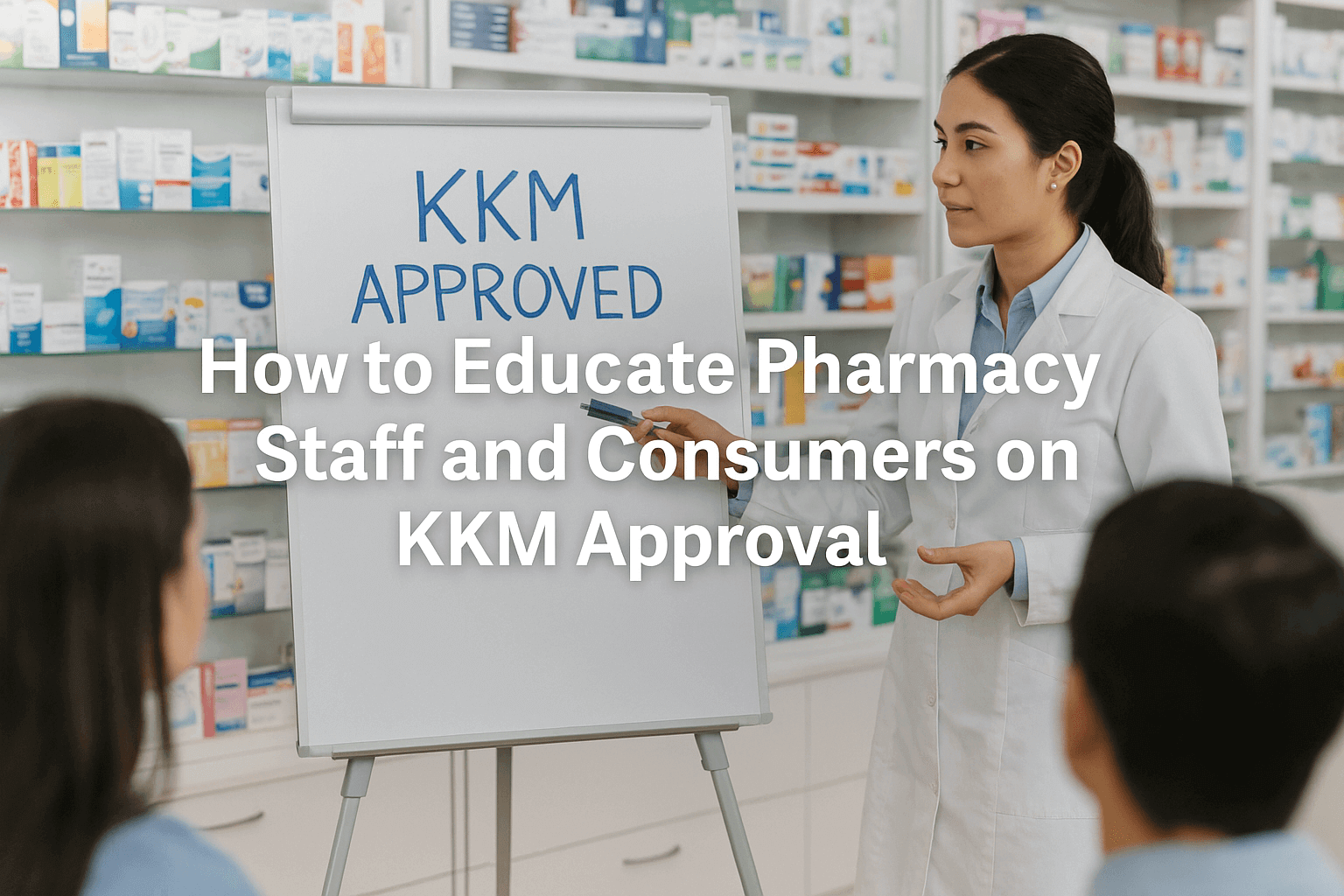
In today’s crowded cosmetics market, pharmacy teams serve as frontline guardians of consumer safety. Their ability to distinguish compliant products from questionable items isn’t just helpful—it’s a critical layer of public health protection. But are your staff equipped with the skills to navigate this responsibility effectively?
Proper training empowers teams to uphold strict standards. First, employees must confidently identify legitimate Notification of Trade (NOT) codes—the official markers signaling a product’s approval by Malaysia’s Ministry of Health (KKM). This involves recognizing valid formats and cross-checking suspicious items against regulatory databases. Second, staff should develop a sharp eye for inconsistencies: mismatched packaging, missing labels, or unusual textures often hint at counterfeit goods. Third, clear communication skills matter. When customers ask about the kelulusan KKM process, teams must explain regulatory checks in simple terms, reinforcing trust without overwhelming shoppers.
Implementing practical strategies can streamline these efforts. Start by labeling shelves with “KKM Certified” tags, creating visual cues that guide both staff and customers toward verified products. Regular workshops with mock inspections also help—simulating scenarios like spotting fake labels or handling non-compliant stock builds real-world confidence. Don’t overlook public education, either. Brief videos on digital displays or brochures near checkout areas can demystify KKM standards, turning casual buyers into informed advocates.
The payoff? Dual benefits emerge. Rigorous compliance not only shields customers from unsafe items but elevates your pharmacy’s reputation as a reliable source. Shoppers remember businesses that prioritize transparency, often returning for that peace of mind. Meanwhile, staff gain pride in their roles as community health partners, fostering a culture of accountability.
Small investments in training and visibility tools yield outsized returns. Not only does this approach protect customers—it positions your pharmacy as a trustworthy pillar in an industry where credibility is everything. After all, in healthcare retail, vigilance isn’t just policy; it’s the foundation of lasting relationships.
KKM Label Compliance and Its Role in Long-Term Business Trust
In the fast-paced health and beauty industry, trust isn’t just a buzzword—it’s the bedrock of lasting customer relationships. But does adhering to regulatory standards, like stocking KKPM-approved cosmetics, genuinely impact loyalty? The answer is a resounding yes. For pharmacies and distributors, prioritizing label compliance isn’t merely about checking boxes; it’s a strategic move that shapes long-term success.
Why Compliance Matters More Than You Think
Imagine walking into a store unsure whether a product is safe or accurately labeled. Consumers today are savvy—they scrutinize labels and demand transparency. Brands that consistently offer authentic, compliant products not only avoid costly fines or recalls but also build a reputation as reliable sources. For instance, pharmacies aligning with KKPM standards signal to customers that safety and quality are non-negotiable. This fosters trust, which translates to repeat purchases and fewer abandoned carts.
Beyond Avoiding Penalties: The Hidden Perks of Compliance
While dodging regulatory headaches is a clear benefit, the advantages run deeper. Retailers committed to compliance often see improved customer retention. When shoppers know they can rely on your products, they’re less likely to explore competitors. Moreover, suppliers and partners gravitate toward businesses with clean track records. Think about it: reputable brands prefer collaborating with distributors that mirror their commitment to authenticity, creating opportunities for exclusive deals or premium product lines.
The Bigger Picture: Ethics Meets Strategy
Label compliance isn’t just about ethics—it’s a savvy business play. In markets flooded with counterfeit goods, standing out as a trustworthy retailer can differentiate your pharmacy. Customers aren’t just buying a product; they’re investing in peace of mind. Over time, this loyalty compounds, driving word-of-mouth referrals and strengthening your market position.
So, is compliance worth the effort? Absolutely. By embedding regulatory adherence into your operations, you’re not just following rules—you’re future-proofing your business. After all, in an industry where trust is fragile, consistency is the ultimate loyalty driver.
Learn More : The Future of Pharmaceutical Distribution Services in Malaysia: Trends and Innovations
Counterfeit product codes, vague labeling, and incomplete certifications—these are just a few risks pharmacies face when sidestepping Malaysia’s KKM (Kementerian Kesihatan Malaysia) guidelines. For retailers, distributors, and brand managers alike, neglecting proper verification processes isn’t just a regulatory misstep; it’s a direct threat to consumer safety and brand credibility. Whether you’re sourcing cosmetics or overseeing pharmacy merchandising, implementing rigorous KKM documentation checks isn’t optional—it’s essential.
The stakes extend beyond legal repercussions. Non-compliant products erode customer trust, expose businesses to liability, and jeopardize public health. A single oversight, like distributing items with falsified NOT numbers or inadequate ingredient disclosures, can lead to recalls, fines, or lasting reputational damage. This is why every player in the supply chain—from independent distributors to national brands—must adopt systematic protocols for validating KKM approvals. Regular audits, digital record-keeping, and staff training are practical steps to embed compliance into daily operations.
By prioritizing KKM standards, pharmacies not only align with national regulations but also position themselves as reliable health partners. Consumers today demand transparency; they want assurance that skincare or makeup items meet stringent safety benchmarks. Consistent verification ensures products are ethically sourced, accurately labeled, and free from harmful additives. In an industry where trust translates to loyalty, compliance becomes a competitive advantage.
Frequently Asked Questions (FAQ)
Q1: What does “KKM-approved cosmetic” mean in Malaysia?
Answer:
A KKM-approved cosmetic refers to products verified and registered with Malaysia’s Ministry of Health (Kementerian Kesihatan Malaysia) through the National Pharmaceutical Regulatory Agency (NPRA). Each approved product carries a valid NOT number (e.g., NOT230100123K) confirming it meets safety, quality, and labeling standards before sale.
Q2: How can consumers verify if a cosmetic product is registered with KKM?
Answer:
Consumers can use the NPRA’s Cosmetic Notification Search portal. By entering the product’s NOT number or exact name, you can confirm if it’s listed as an active, approved cosmetic under Malaysia’s Control of Drugs and Cosmetics Regulations 1984.
Q3: What are the main labeling elements required on a KKM-approved cosmetic?
Answer:
Each label must display the NOT number, product name, manufacturer or importer details, batch number, expiry date, storage instructions, and ingredient list in English or Bahasa Malaysia. Missing or inconsistent details signal non-compliance.
Q4: Why is KKM compliance critical for pharmacies and distributors?
Answer:
KKM compliance ensures that only safe and verified products reach consumers. Non-compliant cosmetics can lead to fines, product seizures, legal penalties, or reputational damage for retailers and distributors in Malaysia’s regulated market.
Q5: What are common labeling mistakes that cause non-compliance?
Answer:
Frequent errors include missing or falsified NOT numbers, outdated manufacturer information, incomplete ingredient lists, and mismatched packaging details. Even minor discrepancies can trigger enforcement actions or recalls.
Q6: What should independent distributors do to maintain KKM compliance?
Answer:
They should maintain a live database of registered products, verify suppliers’ GMP certifications, conduct regular inventory audits, and cross-check each SKU’s KKM status before stocking. Documentation and digital tracking are essential safeguards.
Q7: How do large retail chains differ from small distributors in handling KKM verification?
Answer:
Large chains often have compliance teams and digital systems for verification, while small distributors must rely on manual checks. However, both face equal accountability if a non-compliant product reaches the shelf.
Q8: What role does staff training play in KKM compliance?
Answer:
Training empowers pharmacy staff to recognize genuine NOT codes, detect suspicious products, and communicate KKM standards clearly to customers. Well-trained teams reduce compliance risks and boost consumer trust.
Q9: What are the consequences of selling non-registered cosmetics in Malaysia?
Answer:
Selling unregistered or falsified cosmetics can result in severe penalties—fines, product confiscation, and business license suspension—under the Control of Drugs and Cosmetics Regulations 1984.
Q10: How does KKM label compliance build long-term business trust?
Answer:
Consistent compliance signals reliability and transparency. Pharmacies and distributors that prioritize verified products earn stronger consumer loyalty, attract reputable partners, and sustain brand credibility in Malaysia’s competitive market.
PriooCare specializes in end-to-end pharmacy distribution services, offering expertise in KKM-ready product sourcing, regulatory navigation, and strategic retail solutions. Let us help you streamline operations while upholding the highest safety standards.
How can we assist you today? 😊
Just let us know—we’re here to help!