

July 17, 2025
Data-driven decision-making separates thriving pharmacy merchandising campaigns from those that merely occupy shelf space. In Malaysia’s competitive retail pharmacy sector, Key Performance Indicators (KPIs) act as the backbone of strategic planning, enabling brands and pharmacy distributor Malaysia partners to pinpoint successes, inefficiencies, and areas needing recalibration. Without these metrics, even the most visually appealing displays or well-stocked inventories can fall short of revenue targets. Consider this: A trusted skincare brand might invest heavily in a new product launch, but without tracking KPIs like sell-through rates or planogram compliance, they’d have no way to measure whether their investment translated into actual sales.
The Malaysian market presents unique challenges—regional consumer preferences, fluctuating demand for health supplements, and the rise of efficient pharmacy chains competing with independent stores. For instance, a pharmacy wholesale distributor in Kuala Lumpur might notice higher demand for immune-boosting vitamins in urban areas, while rural outlets see stronger sales for chronic medication. These nuances make KPI tracking not just beneficial but essential for adapting to localized trends. By leveraging data, stakeholders can move beyond guesswork and align merchandising efforts with real-world consumer behavior.
The Role of KPIs in Optimizing Pharmacy Distribution Services

A seamless pharmacy distribution chain hinges on more than just delivering products on time—it’s about ensuring every link in the chain, from warehouse to shelf, operates at peak efficiency. KPIs serve as a proven diagnostic tool, revealing bottlenecks that might otherwise go unnoticed. Take SKU turnover rates, for example. A distributor pharmacy in Penang discovered that while their pain relief medications flew off the shelves in tourist-heavy areas, the same products moved sluggishly in suburban neighborhoods. Without tracking this KPI, they’d have continued allocating stock uniformly, leading to overstock in some locations and stockouts in others.
For pharmacy wholesale distributors, operational KPIs like on-time delivery rates and fill accuracy are critical. Imagine a scenario where a popular antihistamine is out of stock during Malaysia’s haze season—a missed opportunity that could damage both revenue and customer trust. By monitoring these metrics, distributors can:
Identify recurring delays in specific routes (e.g., East Malaysia’s logistical challenges)
Adjust inventory forecasting based on seasonal trends (e.g., higher demand for flu medication during monsoon months)
Enhance coordination between brands, field teams, and retailers
This granular level of insight transforms distribution from a reactive process to a strategic, data-backed operation.
Learn more : Utilizing Key Performance Indicators (KPIs) for Scheduling in Pharmaceutical Manufacturing
Essential Categories of KPIs for Merchandising Campaigns
Not all KPIs are created equal. To avoid analysis paralysis, focus on four expert-recommended categories that offer actionable insights:
Sales Performance Metrics
Sell-in vs. sell-out: Reveals whether retailers are over-ordering or under-ordering.
Conversion rates: Measures how effectively foot traffic translates to purchases.
Average basket size: Indicates cross-selling opportunities (e.g., bundling vitamins with supplements).
Visibility Metrics
Eye-level placement compliance: Products at eye level sell 35% faster, according to retail studies.
Planogram adherence: Ensures consistent branding across outlets.
Inventory Metrics
Stock turnover ratio: High turnover = strong demand; too high = risk of stockouts.
Days on shelf: Flags slow-moving SKUs needing promotional support.
Promotion Response Metrics
Redemption rates: Tracks coupon or discount effectiveness.
Campaign ROI: Calculates profitability of in-store promotions.
A tailored example: A Malaysian health brand launched a diabetic-friendly snack line through a pharmacy distribution service. While initial sell-in was robust, low redemption rates on promotional discounts revealed a mismatch between the campaign’s messaging and the target audience’s needs. By pivoting to educational in-store demos (tracked via footfall KPIs).
Learn more : KPIs for Marketing: branded merchandise impressions
Sales-Based KPIs: Measuring Sell-Through and Conversion Rates

If products aren’t moving off shelves, even the most reliable supply chain becomes irrelevant. Sales KPIs cut through the noise to show what’s resonating with consumers. Consider the case of a probiotic serum distributed across Malaysian pharmacies. Despite high sell-in volumes, stagnant sell-out rates indicated a disconnect—customers weren’t understanding the product’s benefits. Post-campaign KPI analysis uncovered that:
58% of surveyed customers hesitated due to lack of in-store education.
Outlets with demo stations saw 3x higher conversion rates.
To replicate this insight, monitor:
✅ Sell-through rate: (Units sold ÷ Units supplied) × 100. A rate below 60% signals overstock or poor demand.
✅ Basket size trends: During monsoon season, pharmacies in Johor noted a 15% increase in basket size when cough syrups were placed near vitamins.
✅ Regional variances: Urban KL pharmacies may prioritize premium skincare, while rural Perak outlets focus on affordability.
Learn more : KPI in Sales: Practical Examples for Measuring Success
Inventory KPIs: Stock Turnover, Days on Shelf, and Fill Rates
Inventory mismanagement is a silent profit killer. Overstocking ties up capital; stockouts frustrate customers. For pharmacy distributor Malaysia partners, KPIs like fill rates (the percentage of orders delivered complete and on time) are non-negotiable. A Selangor-based distributor reduced stockouts by 40% after realizing their fill rate for pediatric vitamins was just 78% during school exam periods—a predictable demand surge they’d previously overlooked.
Key metrics to watch:
Stock turnover ratio: Ideal ranges vary by product. For OTC meds, 6–8 turns/year is healthy; for niche supplements, 3–4 may suffice.
Days on shelf: Products lingering beyond 90 days may need markdowns or repositioning.
Wastage levels: A Malaysian pharmacy chain saved RM120,000 annually by tracking near-expiry SKUs and offering bundled discounts.
Operational Frameworks for Malaysian Pharmacies
Implementing KPIs isn’t just about collecting data—it’s about embedding them into daily workflows. A strategic approach used by top pharmacy wholesale distributors:
Monthly KPI Audits
Compare current data against historical benchmarks.
Flag outliers (e.g., a 50% drop in a typically high-performing SKU).
Regional Adjustments
Allocate bestsellers like pain relievers to high-traffic urban stores.
Stock smaller pack sizes in rural areas where affordability drives decisions.
Tech Integration
Cloud-based dashboards sync real-time data across brands, distributors, and retailers.
Merchandising Display & Shelf Visibility Metrics

What’s the point of having a top-tier product if it’s hidden in the shadows of a cluttered pharmacy shelf? In the fiercely competitive world of retail, especially within Malaysia’s bustling pharmaceutical sector, shelf visibility isn’t just a nice-to-have—it’s a strategic necessity. The difference between a product that flies off the shelves and one that gathers dust often comes down to three expert-approved metrics: planogram compliance, eye-level placement, and end-cap effectiveness.
Take, for instance, a well-known Malaysian pharmacy chain that recently repositioned a leading pain relief brand from the bottom shelf to eye level. The result? A 37% increase in sales within just two months. This isn’t an isolated case—studies show that products placed at eye level enjoy up to 35% higher visibility compared to those tucked away below waist height.
But visibility isn’t just about placement—it’s about execution. A trusted merchandising partner ensures that your brand’s strategy isn’t just approved on paper but implemented flawlessly across every outlet. Consider these essential KPIs to track:
Planogram Compliance – Are displays following the agreed brand strategy, or are they being ignored? Even the best layouts fail if stores don’t adhere to them.
Eye-Level Placement – Prime positioning isn’t just about visibility; it’s about impulse buying. Shoppers are 78% more likely to grab an item at eye level than one they have to bend down for.
End-Cap Effectiveness – High-traffic zones like end-caps can drive up to 30% of a store’s promotional sales, but only if they’re engaging enough to stop shoppers in their tracks.
In Malaysia, where shelf space is a battleground, brands that integrate these KPIs into their merchandising campaigns see stronger ROI and long-term shelf dominance.
Learn more : The Role of End‑Cap Displays in Increasing Pharmacy Sales in Malaysia
Promotional KPIs: Campaign Response and Redemption Metrics

Promotions are expensive—so why leave their success to chance? Without reliable metrics, even the most well-funded campaigns can fall flat. Consider a recent Vitamin C promotion run by a major Malaysian distributor: despite distributing thousands of buy-1-get-1 vouchers, only 15% were redeemed. Was it poor messaging? Bad timing? Or weak in-store execution? Without tracking redemption rates and promo uplift, brands are essentially flying blind.
Here’s the reality: effective promotions aren’t just about discounts—they’re about measurable impact. In Malaysia’s fast-moving pharmaceutical market, tracking these KPIs can mean the difference between a breakout campaign and a costly flop:
Redemption Rate – If only a fraction of distributed vouchers are used, it’s time to rethink the offer or its delivery.
Promo Uplift – Did the campaign actually boost sales, or did it just cannibalize full-price purchases?
Outlet Activation – Were all participating outlets fully engaged, or did some simply display promo materials without pushing sales?
A strategic approach means aligning these metrics with brand goals and local market behaviors. For example, a Malaysian pharmacy chain running a diabetic care promotion might find that smaller, independent outlets outperform larger chains in redemption rates—suggesting a need for tailored campaigns by outlet type.
Learn more : Understanding the ROI of Pharmacy Merchandising Investments in Malaysia
Outlet-Level KPIs: Comparing Independent vs. Chain Pharmacy Performance
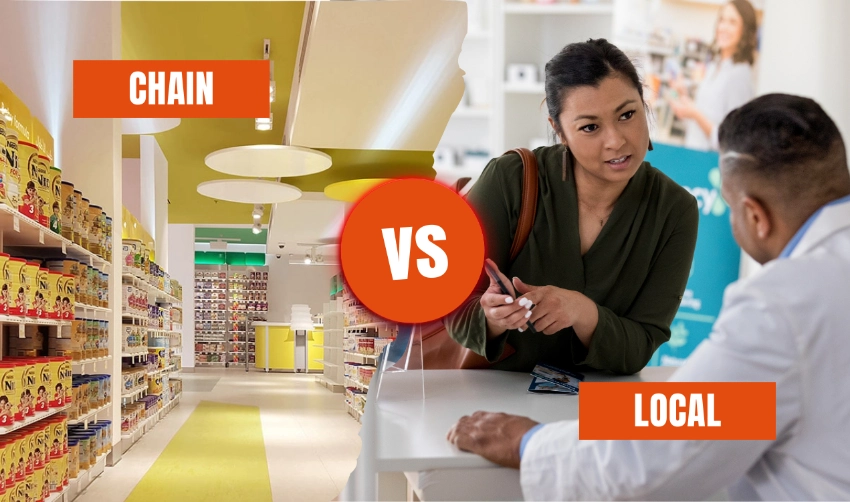
Not all pharmacies are created equal—and treating them as such is a costly mistake. In Malaysia, where independent pharmacies coexist with national chains, understanding outlet-level performance is essential for maximizing distribution efficiency.
A proven framework for comparison includes:
Per-Outlet Sales – Which locations are driving the most revenue for specific product lines?
Outlet Traffic Conversion – Are shoppers browsing or buying? High foot traffic means little if conversion rates are low.
Compliance Rate – How consistently are outlets following merchandising and promotional guidelines?
For instance, a Malaysian supplement brand discovered that while chain pharmacies provided broader reach, independent outlets in suburban areas had higher per-unit sales for niche health products. This insight allowed them to reallocate resources strategically, boosting overall ROI.
The takeaway? A balanced scorecard that accounts for both chain and independent performance ensures reliable decision-making across your entire distribution network.
Learn more : Do chain pharmacies perform better than independent pharmacies?
How to Implement a KPI Monitoring Framework for Your Pharmacy Campaigns

If you’re not measuring, you’re guessing—and in Malaysia’s fast-evolving pharmaceutical market, guesses don’t cut it. A structured KPI dashboard transforms raw data into actionable insights, enabling real-time adjustments that keep campaigns on track.
Here’s how to build an efficient monitoring system:
Choose the Right Tools – From Google Sheets for smaller teams to dedicated pharmacy CRM dashboards, the right platform depends on scale and complexity.
Set Review Cycles – Weekly check-ins prevent small issues from snowballing into full-blown failures.
Align Metrics Across Teams – Ensure brand managers, distributors, and retail staff all speak the same KPI language.
In Malaysia, where regulatory changes and consumer trends shift rapidly, a responsive KPI framework isn’t just helpful—it’s non-negotiable.
Learn more : Pharmacy Merchandising for New Product Launches in Malaysia
When leveraged correctly, KPIs turn retail execution from an art into a science. From sell-through rates to promo redemption, every metric offers a clue to unlocking better performance.
In Malaysia’s competitive landscape, success hinges on trusted partnerships with distributors who understand local nuances—whether it’s the preference for bundled deals in urban pharmacies or the importance of community trust in rural independents.
How can we assist you today? 😊
Just let us know—we’re here to help!