

September 23, 2025
What ensures that a life-saving drug manufactured in Germany arrives safely on a pharmacy shelf in Shah Alam? Behind this process lies a strategic, highly regulated global pharmaceutical distribution system. In today’s interconnected world, Malaysian pharmacies are deeply reliant on efficient cross-border medicine supply. From importers to regulators, every stakeholder plays a role in ensuring the timely and compliant delivery of medications.
For a pharmacy distributor Malaysia depends on, understanding this system is not just a technical requirement—it’s an essential part of staying competitive. This article explores the full spectrum of international distribution: from regulatory harmonization to cold chain logistics, highlighting challenges and opportunities relevant to Malaysia’s pharmacy industry.
Key Players in the Global Pharmaceutical Distribution Chain
The journey of a single pill—from a trusted manufacturer in Europe to a distributor pharmacy Malaysia relies on—is anything but simple. It involves a strategic network of stakeholders, each playing a proven role in ensuring medicines reach patients safely and efficiently.
At the heart of this system are manufacturers, whether multinational giants or specialized regional producers, adhering to Good Manufacturing Practice (GMP). Their responsibility isn’t just production—it’s guaranteeing stability, potency, and compliance with international standards.
Next, pharmacy wholesale distributors step in, purchasing in bulk and supplying hospitals, clinics, and independent pharmacy distributors. These wholesalers act as the bridge between large-scale production and localized demand.
But what happens when a rural Malaysian clinic needs a niche cancer drug? That’s where independent distributors shine. Unlike big wholesalers, they offer tailored access to specialized medications, ensuring even underserved areas receive critical treatments.
Then come the unsung heroes: third-party logistics providers (3PLs). These efficient operators handle everything from temperature-controlled transport to navigating customs—essential for maintaining product integrity
A Real-World Malaysian Scenario
Imagine a distributor pharmacy in Penang sourcing a high-demand biologic from Japan. The challenge? Ensuring the product remains within a strict 2–8°C range throughout transit.
Step 1: The 3PL confirms cold chain compliance before departure.
Step 2: Customs clearance in Malaysia requires detailed calibration logs and import permits.
Step 3: The NPRA may conduct random inspections, adding another layer of scrutiny.
One misstep—say, a missing temperature log—could delay the shipment, risking spoilage. That’s why reliable partnerships between local importers and global 3PLs are non-negotiable.
Common Pain Points (And How to Avoid Them)
Labeling discrepancies – A German-manufactured drug may use EU-approved packaging, but Malaysian regulations require additional Bahasa Malaysia warnings.
Documentation delays – Incomplete Certificate of Analysis (COA) submissions can hold up shipments for days.
Last-mile logistics – Even after customs clearance, inefficient local transport can degrade temperature-sensitive products.
For pharmacy distributors Malaysia trusts, overcoming these hurdles means expert coordination—aligning with suppliers, logistics partners, and regulators proactively.
Learn more : Untangle the complex web of pharma supply chain and logistics
International Regulatory Harmonization: ICH, PIC/S & WHO Standards
Why can a drug approved in Switzerland enter Malaysia faster than one from a non-aligned country? The answer lies in harmonization—a strategic effort to synchronize pharmaceutical regulations worldwide.
Three trusted frameworks dominate this space:
ICH (International Council for Harmonisation) – Standardizes drug registration requirements, reducing redundant testing.
PIC/S (Pharmaceutical Inspection Co-operation Scheme) – Ensures mutual recognition of GMP audits, so a facility inspected in France meets Malaysia’s NPRA standards.
WHO Guidelines – Provides proven best practices for pharmacovigilance and supply chain security.
How This Benefits Malaysian Pharmacies
Malaysia’s membership in PIC/S means faster approvals for PIC/S-certified drugs. For example:
A diabetes medication approved in Australia (a PIC/S member) faces fewer regulatory hurdles when entering Malaysia.
A distributor pharmacy importing from non-PIC/S countries, however, may need additional testing, increasing costs and lead times.
But harmonization isn’t perfect. Gaps remain, especially in:
Language requirements – Some regulators demand local-language inserts, while others accept English.
Pharmacovigilance reporting – Malaysia’s NPRA has stricter adverse-event tracking than some ASEAN neighbors.
Operational Impact for Distributors
Faster time-to-market for harmonized drugs.
Lower compliance costs due to reduced retesting.
Risk mitigation by aligning with globally recognized standards.
For independent pharmacy distributors, staying updated on these frameworks isn’t just good practice—it’s expert risk management.
Learn more : An Overview and Membership Process of PIC/S and ICH and Its Requirement for Global Regulatory Harmonization of Drugs
Import and Export Licensing: What Malaysian Pharmacies Must Know
Navigating Malaysia’s pharmaceutical licensing maze requires precision—one missed permit can derail shipments for weeks.
Critical Licenses for Importers
NPRA Product Registration (via QUEST system) – Mandatory for all medicines sold locally.
Import License (Type A) – Required for commercial pharmaceutical imports.
Controlled Substances Permit – Needed for narcotics, psychotropics, and certain high-risk drugs.
Meditag Hologram – Malaysia’s anti-counterfeiting measure, applied before retail distribution.
Export Challenges for Malaysian Brands
A Malaysian health supplement brand learned this the hard way when their halal-certified vitamins were rejected in the UAE—not due to quality issues, but missing local halal accreditation.
Key lessons:
✓ Research destination-specific requirements (e.g., ASEAN vs. Middle East markets).
✓ Engage regulatory consultants early to avoid last-minute surprises.
✓ Maintain meticulous documentation—customs officers scrutinize every detail.
Why Proper Licensing Matters
Avoids costly delays – A single missing permit can stall shipments.
Builds trust with international partners – Compliance signals reliability.
Reduces legal risks – Unlicensed imports can lead to fines or blacklisting.
For pharmacy distributors Malaysia depends on, licensing isn’t just paperwork—it’s strategic positioning in a competitive global market.
Customs and Border Control Procedures for Pharmaceuticals
When a shipment of temperature-sensitive vaccines lands at KLIA, the clock starts ticking. Every hour in customs is an hour closer to potential spoilage.
Critical Checkpoints for Smooth Clearance
HS Code Accuracy – Misclassifying a drug as “general goods” triggers inspections.
Customs Declaration Alignment – Invoices, packing lists, and COAs must match perfectly.
Cold Chain Documentation – Proof of continuous temperature monitoring is mandatory for biologics.
ASEAN Trade Advantages
Malaysia’s participation in ASEAN customs agreements allows trusted shippers expedited processing. For example:
A pharmacy distributor frequently importing from Singapore may qualify for green lane clearance, reducing hold times.
Documentation errors, however, can forfeit these privileges—making expert 3PL partners invaluable.
Real Consequences of Non-Compliance
Product seizures – Non-compliant labeling leads to confiscation.
Financial penalties – Customs fines can exceed 10% of shipment value.
Reputation damage – Repeated delays erode supplier trust.
For distributor pharmacy Malaysia operations, mastering customs isn’t optional—it’s essential for seamless supply chain performance.
Learn more : The Impact of Logistics and Supply Chain Management on Malaysia’s Pharmacy Distribution Services | Navigating Customs Clearance for Pharmaceuticals
Global Logistics & Cold Chain: How Medicines Are Transported Across Borders
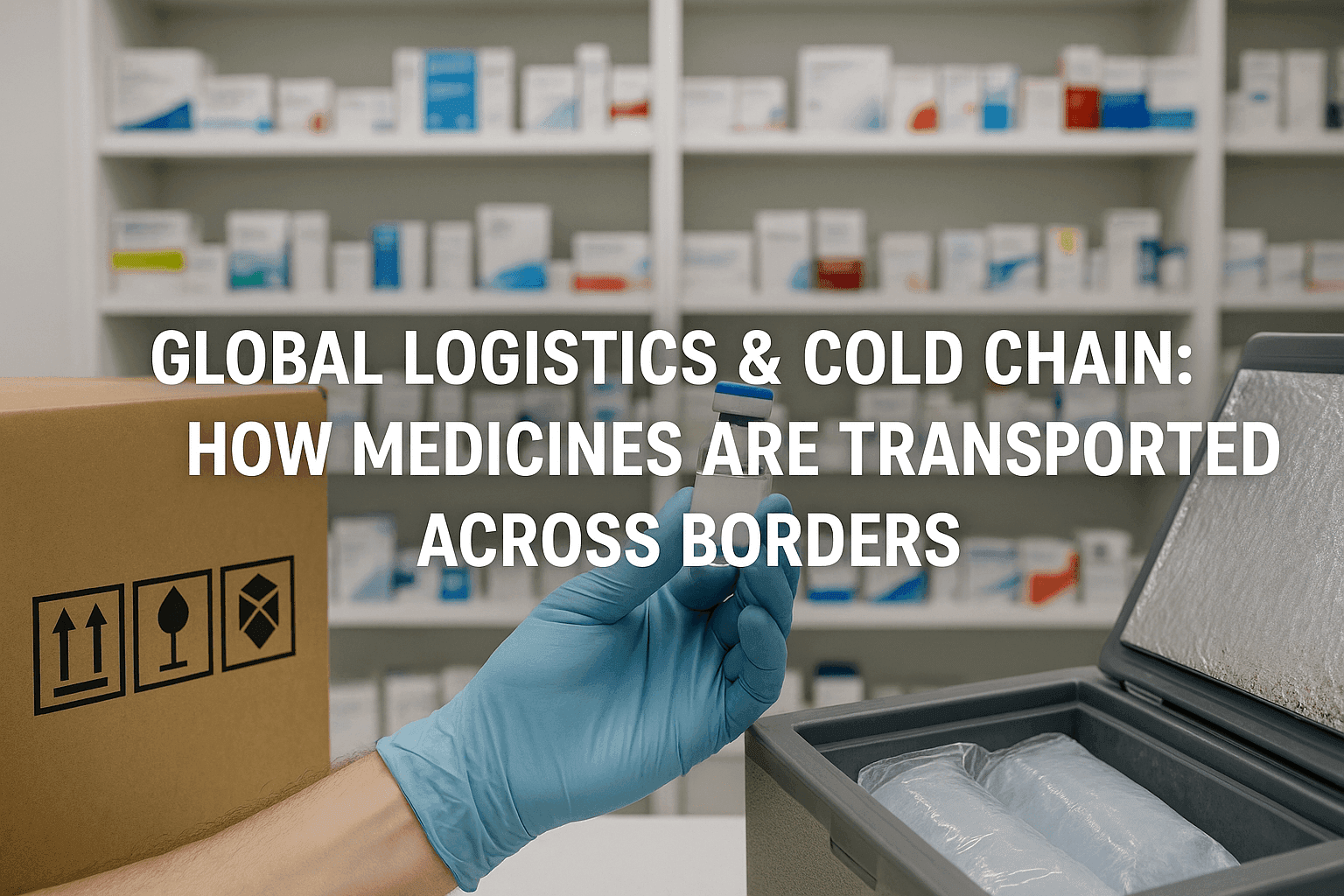
Ensuring medications travel safely across continents is no small feat—it demands precise coordination, expert handling, and unwavering commitment to temperature integrity. The journey of a single vial from a manufacturing plant in Europe to a pharmacy shelf in Malaysia involves multiple checkpoints, each requiring proven cold chain solutions to prevent degradation.
The Backbone of Pharmaceutical Transport: Air, Sea & Courier
When it comes to moving high-value biologics, vaccines, or temperature-sensitive drugs, logistics teams rely on three primary methods:
✓ Air Freight – The trusted choice for urgent, high-stakes shipments. Insulin pens, monoclonal antibodies, and certain vaccines often travel this way due to strict shelf-life constraints. While costly, air transport minimizes transit time, reducing exposure to temperature fluctuations.
✓ Ocean Freight – A strategic, cost-efficient alternative for bulk shipments with longer shelf lives. Large consignments of generics or over-the-counter medications frequently move via sea routes. However, this method demands GDP-compliant cold storage at ports to prevent spoilage during delays.
✓ Courier Services – Reserved for critical, small-batch deliveries—think clinical trial samples or emergency stock. Speed comes at a premium, but for time-sensitive biologics, the investment is non-negotiable.
Why Cold Chain Integrity Can’t Be Compromised
A single breach in temperature control can render an entire shipment useless. Consider this real-world scenario: A batch of COVID-19 vaccines bound for Kuala Lumpur was delayed due to customs clearance. Without backup refrigeration at the airport, the consignment would have been discarded—a loss of millions.
Learn more : An Overview of Cold Chain Management in Malaysia’s Pharmaceutical Distribution Sector | The Role of Third-Party Logistics (3PL) in Malaysia’s Pharmaceutical Supply Chain
Distribution Models: Centralized vs. Decentralized Systems
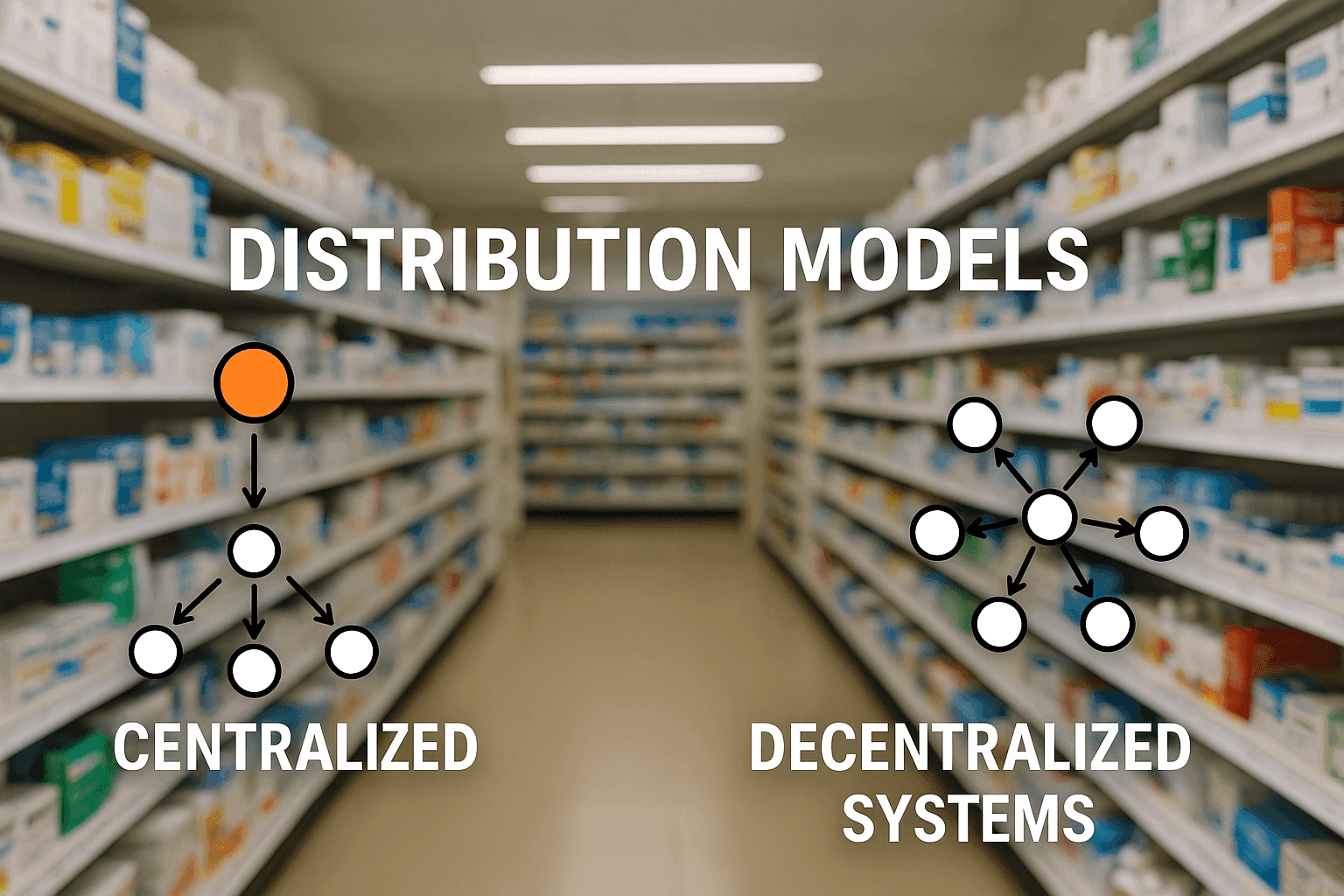
Choosing the right distribution framework isn’t a binary decision—it’s about aligning with market demands, geographic spread, and cost efficiency.
Centralized Distribution: Streamlined but Inflexible
This model funnels all operations through a single hub, offering:
✓ Lower overhead costs (fewer warehouses to maintain)
✓ Simplified inventory management (one stockpile to monitor)
However, delays are inevitable. A patient in Kota Kinabalu might wait days for a shipment from Selangor, especially during monsoon-related transport disruptions.
Decentralized Networks: Speed at a Cost
By contrast, a decentralized approach places smaller fulfillment centers near high-demand zones. For example:
A pharmacy distributor Malaysia might station cold storage units in Johor Bahru to serve southern regions faster.
Another could partner with East Malaysia logistics firms to cut delivery times to Sarawak and Sabah.
The trade-off? Higher operational costs—but in competitive sectors like oncology or rare disease drugs, speed saves lives.
Hybrid Models: The Malaysian Middle Ground
Many local players adopt blended strategies. A Klang Valley-based distributor could centralize bulk storage in Shah Alam but deploy micro-fulfillment hubs in Penang and Kuching for fast-turnaround orders.
Key considerations when designing a model:
- Product shelf life (e.g., vaccines vs. stable tablets)
- Geographic density (urban vs. rural demand)
- Regulatory constraints (state-specific licensing)
For halal-certified pharmaceuticals, which require segregated storage, decentralized systems often prove more effective.
Challenges Faced by Malaysian Pharmacies in Global Distribution
Breaking into international markets isn’t just about logistics—it’s about overcoming systemic barriers that can derail even the most strategic plans.
1. Regulatory Patchwork
A drug approved in the EU or U.S. might face 12–18 months of additional reviews by NPRA Malaysia. This misalignment forces distributors to:
Maintain dual inventories (approved vs. pending items)
Absorb costs from stalled shipments
Example: During the 2022 infant formula shortage, Malaysian pharmacies struggled to import alternatives due to labeling regulation mismatches—a crisis that highlighted the need for harmonized ASEAN standards.
2. Currency & Cost Volatility
The ringgit’s fluctuation against the U.S. dollar and euro directly impacts procurement budgets. In 2023, some Malaysian pharma importers saw 15–20% cost spikes for European-sourced antibiotics, squeezing profit margins.
Mitigation tactics:
✓ Forward contracts locking in exchange rates
✓ Diversified supplier pools (e.g., adding Indian or Korean vendors)
3. Cold Chain Blind Spots
Even with IoT-enabled tracking, gaps persist. A Kuala Lumpur-based importer reported a RM500,000 loss when a refrigerated truck’s compressor failed en route from Port Klang—a scenario that could’ve been avoided with real-time backup cooling.
Operational fixes:
✓ Multi-stage contingency plans (e.g., pre-chilled standby vehicles)
✓ Supplier audits to verify GDP compliance
Strategic Opportunities for Malaysian Pharmacy Distributors
Amid these challenges lie lucrative openings for agile firms.
1. ASEAN as a Growth Springboard
The Regional Comprehensive Economic Partnership (RCEP) slashes tariffs for pharma products traded between ASEAN, China, and Australia. Malaysian distributors can leverage this to:
Export halal-certified medicines to Indonesia (the world’s largest Muslim market)
Partner with Thai herbal supplement brands for cross-border distribution
Success story: A Selangor-based distributor partnered with a Korean skincare biotech firm, using Penang’s free trade zone to cut import taxes. Within 18 months, they dominated dermaceutical sales in Vietnam and the Philippines.
2. Niche Specialization: Rare Diseases & Biologics
With orphan drug demand rising, distributors who secure exclusive regional rights for treatments (e.g., cystic fibrosis or ALS therapies) can carve monopolies.
Example: A Malaysian startup became the sole ASEAN distributor for a German-made gene therapy, leveraging Klang Valley’s medical tourism demand.
3. Tech-Driven Logistics
AI-powered tools now predict:
✓ Optimal shipping routes (avoiding monsoon delays)
✓ Demand surges (e.g., stocking extra flu vaccines before rainy season
Investment in these systems isn’t optional—it’s essential for survival.
The country’s strategic location, improving GDP compliance, and ASEAN trade ties make it a natural gateway for pharmaceutical distribution. Yet, long-term success hinges on:
Adopting hybrid distribution models that balance cost and speed
Building trusted partnerships with regulators and global suppliers
Investing in predictive logistics tech to preempt disruptions
Frequently Asked Questions (FAQ)
Q1: What is the supply chain of pharma distribution?
Answer:
The pharma distribution supply chain includes manufacturing, quality testing, warehousing, regulatory checks, wholesaler distribution, pharmacy/hospital delivery, and final dispensing to patients. Each stage ensures product safety, integrity, and compliance with health regulations.
Q2: What are the distribution channels in the pharmaceutical industry?
Answer:
Common channels include manufacturers → wholesalers → pharmacies/hospitals → patients, as well as direct-to-pharmacy (DTP) models, direct-to-hospital models, and online pharmacy platforms depending on regulatory guidelines.
Q3: What are the 5 C’s of supply chain management?
Answer:
The 5 C’s are Customer focus, Collaboration, Connectivity, Cyber-awareness, and Cost efficiency. Together, they ensure modern supply chains remain responsive, integrated, secure, and economically sustainable.
Q4: What are the 5 stages of a supply chain?
Answer:
The five stages are Planning, Sourcing, Manufacturing, Delivery, and Returns. These stages help companies manage demand, production, logistics, and post-market support efficiently.
Q5: What are the 4 distribution channels?
Answer:
The four channels are direct distribution, wholesale distribution, retail distribution, and online/e-commerce distribution. Each channel varies based on cost structure, product type, and customer access.
Q6: What is distribution in pharma?
Answer:
Distribution in pharma is the process of safely transporting and supplying medicines from manufacturers to healthcare providers, ensuring compliance with GDP standards, temperature control, product authenticity, and regulatory documentation.
Q7: What are pharmaceutical distributors?
Answer:
Pharmaceutical distributors are licensed intermediaries that purchase medicines from manufacturers and supply them to pharmacies, clinics, and hospitals. They manage warehousing, cold chain logistics, inventory flow, and regulatory compliance.
Q8: How many types of drug distribution are there?
Answer:
There are generally three main types: direct distribution, indirect distribution (via wholesalers), and hybrid distribution where manufacturers use both channels depending on product category and market strategy.
Q9: What are the 3 to 4 roles in the distribution channel?
Answer:
Typical roles include manufacturers (produce products), distributors/wholesalers (store and supply), retailers/pharmacies (dispense to customers), and logistics providers (manage transport and delivery).
Q10: What are the 4 pillars of supply chain management?
Answer:
The four pillars are Integration, Operations, Purchasing, and Distribution. These pillars ensure supply chains stay coordinated, cost-efficient, and capable of delivering products on time and in full.
For pharmaceutical brands eyeing Malaysia, aligning with a local expert isn’t just helpful—it’s the proven way to navigate the market’s unique demands.
How can we assist you today? 😊
Just let us know—we’re here to help!