

October 7, 2025
Walk into any Malaysian pharmacy, and the first thing that strikes you isn’t just the products—it’s how they’re arranged. Shelf layout isn’t about aesthetics alone; it’s a strategic tool that silently guides purchasing decisions. Studies show that over 70% of buying choices are made in-store, often influenced by product placement alone. When shelves lack organization, customers face confusion, leading to lost sales and fragmented brand experiences.
Independent pharmacies in Malaysia face this hurdle more acutely than chain stores. Without standardized merchandising systems, these outlets often struggle with inconsistent displays, cluttered aisles, and inefficient space use. This is where pharmacy distributor Malaysia partners step in, offering tailored solutions to transform chaotic shelves into revenue-driving assets.
One proven method they deploy? The planogram—a visual blueprint that dictates product placement for maximum impact. Far from just a pretty diagram, it’s a strategic framework that aligns stock levels, customer behavior, and compliance needs. In a competitive market like Malaysia’s, where pharmacies stock everything from OTC meds to halal-certified supplements, a well-executed planogram isn’t just helpful—it’s essential.
Consider this real-world scenario: A trusted pharmacy distributor in Kuala Lumpur revamped the skincare aisle of a local outlet using a data-backed planogram. By repositioning high-margin serums at eye level and grouping products by skin concern (acne, aging, hydration), the store saw a 22% uplift in cross-category sales within three months.
Key Pain Points in Shelf Management:
Inconsistent layouts across branches confuse repeat customers
Poor visibility for high-margin items buried in lower shelves
Regulatory risks when KKM-approved products aren’t displayed correctly
Without a planogram, even the best inventory can underperform.
What Is a Planogram? Definition, Purpose & Visual Examples

At its core, a planogram is a strategic map for retail success. It answers critical questions: Which products should sit at eye level? How many facings does a bestselling cough syrup need? Where should impulse buys like lip balms or hand sanitizers be placed near checkout counters?
For Malaysian pharmacies, planograms serve multiple roles:
Space optimization: Prevents overstocking slow-moving items while highlighting profitable SKUs
Compliance: Ensures NPRA-regulated drugs or temperature-sensitive items meet display guidelines
Customer experience: Groups related products (e.g., prenatal vitamins next to maternity care items) for intuitive shopping
Real-World Applications in Malaysia:
Eye-Level Rule: A Johor Bahru pharmacy shifted diabetic care supplements to middle shelves (instead of top rows), resulting in a 15% sales boost from older shoppers.
Seasonal Adjustments: During monsoon season, a Penang outlet used a planogram to position immune boosters and heat rubs at aisle ends—sales spiked 30% without extra promotions.
Impulse Zones: A Kota Kinabalu store placed travel-sized sanitizers and pocket tissues near cash wraps, lifting add-on purchases by 18%.
Common Planogram Myths Debunked:
✘ “Only big chains need planograms.” → Independents benefit more from reduced waste and better turnover.
✘ “It’s just about looks.” → It’s a strategic tool tying space, compliance, and revenue together.
✘ “Once set, it’s permanent.” → Top distributors update them quarterly for trends like Ramadan or back-to-school demand.
Why Planograms Matter: Sales, Space Optimization, and Compliance

Can a piece of paper (or digital layout) really impact profitability? The data says yes. A reliable planogram directly influences:
Sales velocity: Products placed in “hot zones” (right of the entrance, eye level) sell 2–3x faster.
Stock efficiency: A Klang Valley pharmacy reduced excess inventory by 40% after aligning orders with planogram priorities.
Regulatory safety: Avoids fines by ensuring KKM-approved items like controlled meds aren’t misplaced.
A pharmacy distributor Malaysia case study reveals more: When a cough syrup brand’s SKUs were moved from bottom shelves to waist-level per the planogram, sell-through rates jumped 18% in a month. Why? Simple ergonomics—customers rarely bend down unless necessary.
Operational Benefits Beyond Sales:
Faster restocking: Staff follow visual guides instead of guessing layouts.
Easier audits: Health inspectors or brand managers verify compliance in minutes.
Theft reduction: High-risk small items (e.g., acne patches) placed near staff counters.
For temperature-sensitive products like probiotics, planograms aren’t optional—they ensure proper storage zones are marked and maintained.
Learn More : Pharmacy Merchandising: Best Practices for Product Pricing and Promotion in Malaysia | WHO Guidelines on Good Pharmacy Practice
Strategic Role of Pharmacy Distributors in Planogram Execution

Why trust distributors with shelf design? Because they merge local expertise with strategic scalability. A pharmacy distributor Malaysia team doesn’t just deliver stock—they engineer retail success through:
Customization: A planogram for a cramped Kuala Lumpur urban outlet differs vastly from one in a spacious suburban Malacca store. Distributors adjust for:
Foot traffic patterns
Demographic preferences (e.g., traditional supplements in majority-Malay neighborhoods)
Store shape (L-shaped vs. linear aisles)
Training: Pharmacists learn the “why” behind placements—like why allergy meds should flank sinus relief sprays.
Real-Time Adjustments: Field teams audit shelves monthly, tweaking layouts for new launches or seasonal shifts (e.g., pre-Raya wellness displays).
Success Story: A Sabah-based distributor partnered with a local pharmacy to reorganize its chaotic “Wellness Corner.” By creating dedicated zones for energy boosters, sleep aids, and stress relief—each with clear signage—average transaction values rose RM12 per customer.
Key Elements of an Effective Planogram in Malaysian Pharmacies
Crafting a high-impact planogram isn’t guesswork. It blends strategic planning with on-ground realities. Here’s what works in Malaysia’s diverse pharmacy landscape:
1. Product Priority Hierarchy
Top Tier (Eye Level): High-margin items (e.g., premium vitamins, specialized skincare)
Middle Tier: Everyday essentials (painkillers, digestive aids)
Bottom Tier: Bulkier or low-rotation products (e.g., adult diapers, large supplement bottles)
2. Category Flow Logic
Groupings that mirror customer journeys:
Cold & Flu Section: Lozenges → Thermometers → Immune boosters
Maternal Health: Prenatal vitamins → Nursing aids → Baby probiotics
3. Visual Merchandising Tricks
Color blocking: Arranging skincare by brand hues (blues for hydration, greens for acne)
Facing Counts: 2–3 facings for bestsellers vs. 1 for niche items
4. Local Adaptations
Urban Stores: More premium beauty lines and snackable health snacks.
Rural Outlets: Emphasis on traditional herbs and family-sized packs.
Common Pitfalls to Avoid:
✘ Ignoring seasonal spikes (e.g., not promoting hydration aids during heatwaves).
✘ Overloading shelves—clutter reduces perceived value.
✘ Isolating promotional items away from related categories.
A proven planogram is dynamic. For instance, a Pahang pharmacy switches its “New Arrivals” bay monthly, tying it to local health trends—like positioning joint pain supplements near fishing gear during monsoon season when arthritis flares up.
Learn More : Top 10 Most Trusted Pharmacy Distributors in Malaysia
Planogram Implementation Process: From Concept to Shelf
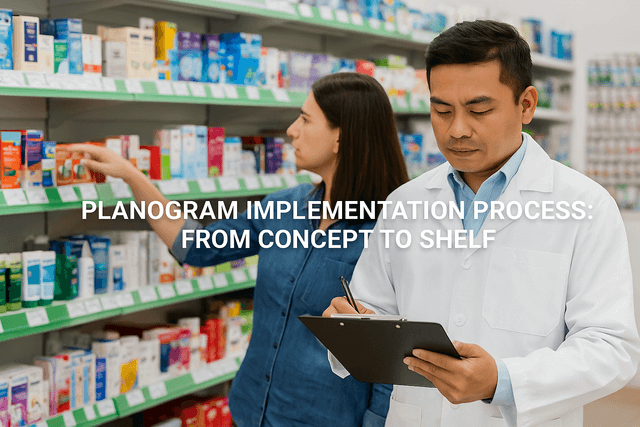
Turning a planogram from a digital blueprint into a real-world sales driver isn’t magic—it’s a strategic process. For Malaysian pharmacies, successful execution hinges on seamless coordination between brands, pharmacy distributor Malaysia partners, and retail staff. Here’s how it unfolds:
Design Phase:
Merchandising teams use specialized software (like Shelf Logic or JDA) to create layouts based on sales data, product dimensions, and shopper behavior.
In Malaysia, local nuances matter: A planogram for a Kuala Lumpur urban store might prioritize grab-and-go health snacks, while a Johor outlet emphasizes family-sized supplement packs.
Distributor Adaptation:
Pharmacy wholesale distributors tweak designs to fit outlet constraints—like adjusting aisle widths for smaller Kedah stores or adding halal-certified product zones in Kelantan.
Training & Rollout:
Staff are briefed via video tutorials or in-person sessions. For instance, a trusted distributor in Penang reduced setup errors by 40% using laminated quick-reference guides.
Execution:
Field teams implement during low-traffic hours. A Selangor skincare brand saw faster rollout by syncing planogram updates with monthly stock deliveries.
Audit & Optimization:
Post-launch, distributors use mobile apps to capture shelf photos, ensuring compliance. One Malacca pharmacy boosted compliance rates from 62% to 89% with bi-weekly digital audits.
Real-World Impact:
A Malaysian vitamin brand partnered with a reliable distributor to launch a Ramadan-themed planogram across 150 stores. By positioning energy boosters near checkout counters and using bilingual signage, sales jumped 27% during the fasting month—proving that cultural adaptation drives results.
Learn More : Winning in Modern Retail: Merchandising Transformation
Challenges in Planogram Adoption and How to Overcome Them

Even the best planograms fail without buy-in. Common hurdles in Malaysia’s pharmacy distribution ecosystem include:
Staff Resistance: Older pharmacists may dismiss planograms as “corporate interference.” Solution? Distributors like PriooCare use tailored training—like showing how eye-level placement lifted sales of a joint pain gel by 33% in Ipoh outlets.
Outlet Variability: A 200 sq.ft. Kuala Terengganu store can’t mirror a 1,000 sq.ft. KL branch. Expert distributors create modular planograms—like prioritizing vertical displays for cramped spaces.
Compliance Gaps: Limited staff? A Perak distributor automated audits via WhatsApp photo check-ins, cutting follow-up time by half.
Case Study:
A Penang independent pharmacy distributor struggled with inconsistent supplement placements. After introducing a gamified “Shelf Score” system (where staff earned rewards for compliance), misplaced SKUs dropped by 68% in 8 weeks.
Proven Fixes:
✔ Simplify Training: Use before/after visuals instead of jargon-heavy manuals.
✔ Localize Incentives: Offer bonus margins for top-performing planogram stores.
✔ Leverage Tech: Cloud-based tools like Repsly help remote audits.
How Planograms Influence Consumer Behavior at the Shelf
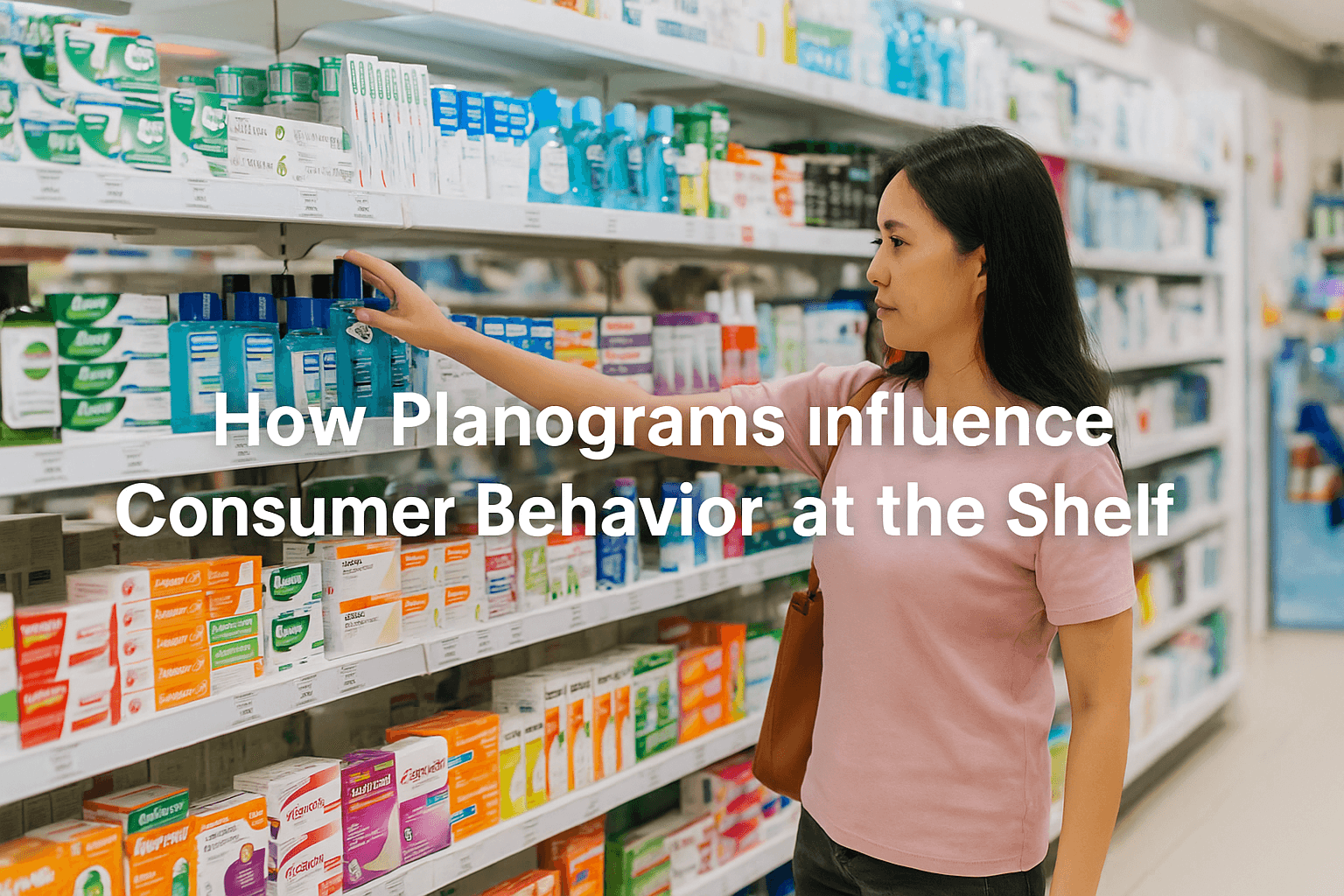
Ever wondered why you impulsively grab that lip balm by the counter? That’s strategic planogramming at work. In Malaysia’s pharmacies, subtle layout shifts dramatically alter buying habits:
Eye-Level Bias: Shoppers are 3x more likely to notice products placed at 1.5m height. A Seremban outlet moved kids’ vitamins to lower shelves (parent eye-level), boosting sales by 19%.
Category Adjacency: Placing hair growth supplements near scalp treatments in a Johor Bahru store increased cross-purchases by RM22 per transaction.
Endcap Power: Limited-time displays of travel-sized sanitizers near pharmacy entrances drove 41% more impulse buys during Malaysia’s post-pandemic reopening.
Behavioral Triggers:
Color Grouping: A KL pharmacy arranged pain relievers by packaging color (red for muscle pain, blue for headaches), reducing customer search time by 30 seconds.- Bundle Psychology: “Immunity Kits” (vitamin C + zinc + elderberry) displayed together in Melaka saw 15% higher uptake than scattered placements.
Distributor Spotlight:
A pharmacy distributor Malaysia team partnered with a cough syrup brand to test two layouts:
Version A: Product placed beside throat lozenges.
Version B: Positioned near nighttime teas.
Result? Version B outsold A by 2:1—proving that context matters more than category.
Learn More : The Science Behind Shelf Placement
The Future of Planogramming in Malaysia’s Pharmacy Distribution Ecosystem

The next wave? Data-driven, hyper-localized shelf science. Emerging trends reshaping Malaysia’s landscape:
AI-Powered Optimization:
Algorithms analyze foot traffic cams and POS data to suggest real-time tweaks. Pilot tests in Klang Valley stores reduced out-of-stocks by 23%.
3D Virtual Shelving:
Distributors like PriooCare use tools like ShelfZone to simulate layouts before physical rollout—cutting implementation errors by 50%.
Micro Planograms:
Niche segments (e.g., diabetic-friendly snacks or halal-certified beauty) get tailored mini-layouts. A pilot in Kuching saw 12% higher niche category sales.
Regulatory Shifts:
With NPRA tightening OTC display rules, proactive distributors are embedding compliance checks into digital planograms—flagging misplaced regulated items automatically.
Local Vision:
A Sabah distributor pharmacy now uses weather data to adjust plans: Hydration products are highlighted during heatwaves, while heat rubs dominate monsoon months.
Learn More : Retail Analytics for Informed Merchandising Decisions | AI in Merchandising: Unlocking Efficiency in Retail
In Malaysia’s fragmented pharmacy market, planograms are no longer optional—they’re the essential bridge between stock visibility and sales. From strategic SKU placements in urban KL to monsoon-ready layouts in Terengganu, the right blueprint transforms shelves into reliable revenue engines.
For brands, this means partnering with distributors who don’t just deliver products—but proven merchandising expertise. For pharmacists, it’s about embracing data over guesswork. And for shoppers? A seamless, intuitive experience where the right product finds them.
Frequently Asked Questions (FAQ)
Q1: What is a planogram in merchandising?
Answer: A planogram is a visual layout or diagram that shows how and where products should be placed on retail shelves to maximize visibility and sales. It serves as a guide for merchandisers to ensure consistency across all store locations.
Q2: Why is a planogram important for sales?
Answer: A well-designed planogram helps increase sales by ensuring high-demand products are placed in the most visible areas, guiding customer flow, and preventing out-of-stock situations. It helps retailers display products strategically for better shopping experiences.
Q3: How does a planogram benefit brand visibility?
Answer: Planograms ensure every product is displayed at the right height, position, and space allocation. This consistency strengthens brand recognition and makes it easier for customers to find your products in different stores.
Q4: Who creates planograms in retail stores?
Answer: Planograms are typically created by visual merchandisers, category managers, or retail planners. In many cases, merchandising service providers also assist brands in developing and executing planograms based on sales data and shopper behavior.
Q5: How often should planograms be updated?
Answer: Planograms should be reviewed and updated every few months, especially during new product launches, seasonal promotions, or changes in consumer demand patterns. Regular updates keep store layouts relevant and effective.
Q6: What tools are used to create planograms?
Answer: Retailers and distributors often use planogram software like Nielsen Spaceman, DotActiv, or SmartDraw to design accurate shelf layouts, manage stock data, and analyze performance.
Q7: What is the difference between a planogram and a store layout?
Answer: A store layout refers to the overall floor plan of the store, while a planogram focuses specifically on product placement within each category or shelf section to optimize sales performance.
Q8: How do planograms help with inventory management?
Answer: Planograms ensure balanced product placement and prevent overstocking or understocking. They guide merchandisers on replenishment frequency and help reduce product wastage or expired stock.
Q9: Can small businesses or pharmacies use planograms?
Answer: Yes. Even small or independent pharmacies can use simple planograms to improve shelf organization, ensure best-selling items are visible, and enhance overall shopping convenience for customers.
Q10: How do merchandising services support planogram execution?
Answer: Merchandising teams help implement and audit planograms across stores. They ensure shelves follow the correct layout, products are stocked according to guidelines, and promotional materials are placed accurately to maintain brand consistency.
How can we assist you today? 😊
Just let us know—we’re here to help!