
Do All Cosmetics Need KKM Approval? (2026 Edition)

March 14, 2026
In the bustling aisles of Malaysia’s modern retail pharmacies, from major chains in Kuala Lumpur to independent outlets in Kuching, a critical assumption is often made by both consumers and some healthcare professionals: if a product is on a pharmacy shelf, it has been vetted and is unquestionably safe. This assumption, while rooted in a inherent trust in the pharmacy channel, can be dangerously misleading in today’s complex personal care landscape. For stakeholders across the supply chain—pharmacists, brand owners, and particularly pharmacy distribution services—moving beyond this assumption to a rigorous, documented understanding of what “approval” truly means is no longer just a regulatory formality. It has evolved into a non-negotiable, business-critical responsibility that protects consumer safety, brand integrity, and commercial viability. In 2026, navigating this nuanced compliance environment is a strategic duty, demanding expert knowledge and reliable processes from sourcing to point-of-sale.
Decoding “KKM Approval”: The NPRA’s Cosmetic Notification Framework
What does it actually mean when a product is said to be “KKM approved”? To unravel this, one must first grasp the fundamental role of Malaysia’s National Pharmaceutical Regulatory Agency (NPRA), which operates under the Ministry of Health (KKM). A common and costly misconception is equating cosmetic regulation with pharmaceutical registration. They are distinctly different processes. Pharmaceuticals undergo a stringent, pre-market registration process, resulting in the issuance of a MAL number—a true mark of formal evaluation and approval for sale. Cosmetics, however, are governed by the Cosmetic Notification Procedure (CNP). This is a post-market surveillance system where the onus of compliance shifts significantly. Under the CNP, a responsible person (RP)—typically the brand owner, importer, or manufacturer—notifies the NPRA after placing the product on the market. This notification yields a NOT number, not a MAL number.
The critical distinction lies in the verification process. The NPRA does not pre-approve each cosmetic product before it hits shelves. Instead, the RP must declare and ensure that the product meets all stipulated requirements: its ingredients are within permitted limits and exclude banned substances, its labeling is accurate and bilingual, and its claims strictly avoid any therapeutic or medicinal implications. The NPRA’s role is to monitor the market, conduct audits, and take enforcement action against non-compliant products. For a pharmacy distributor in Malaysia, understanding this “notification versus registration” dichotomy is essential. Sourcing a product with a NOT number doesn’t mean the NPRA has endorsed its safety beforehand; it means the supplier has made a legal declaration. The downstream risk of inventory recalls or reputational damage from a non-compliant product rests on every link in the supply chain, making due diligence a proven necessity.
Learn more: ASEAN Cosmetic Directive (ACD): Regulatory Framework for Cosmetic Products | National Pharmaceutical Regulatory Agency (NPRA) Malaysia
The Notification Mandate: Clarifying What Must Be Notified to the NPRA
A logical question follows: does every lotion, powder, or spray in a pharmacy require this NOT number? The answer is defined by clear, regulatory criteria that determine whether a product is classified as a cosmetic under Malaysian law. The NPRA’s definition hinges on three pillars:
Intended Use: The product must be intended for application to external parts of the human body (e.g., skin, hair, nails, lips, external genital organs) or teeth and mucous membranes of the oral cavity. Its purpose must be exclusively for cleansing, perfuming, protecting, altering appearance, or correcting body odors.
Physical Form: This includes a wide array of forms such as creams, emulsions, lotions, gels, oils, powders, masks, and sprays.
Ingredient Compliance: The formulation must not contain any prohibited substances listed in the regulation and must adhere to concentration limits for restricted ingredients.
Products that squarely fit this definition—such as facial moisturizers, sunscreen, lipstick, shampoo, deodorant, and cosmetic face masks—must carry a valid NOT number to be legally sold in Malaysia. The grey areas, however, are where compliance risks often silently accumulate on pharmacy shelves.
Consider these common borderline categories:
Oral Beauty Supplements (e.g., collagen drinks, biotin tablets): These are regulated as food or traditional medicines, not cosmetics. They require different permits from other agencies and should not bear a cosmetic NOT number.
Medicated Creams or Ointments (e.g., anti-itch creams with hydrocortisone, antifungal creams): If they make therapeutic claims, they cross into the pharmaceutical realm and require the full MAL registration, a far more rigorous process.
Essential Oils: If marketed purely for fragrance, they may be cosmetics. If claims venture into aromatherapy for stress relief or sleep aid, they may be classified as traditional products, falling under a separate notification scheme.
For a trusted independent pharmacy distributor, implementing a strategic Standard Operating Procedure (SOP) to vet these distinctions before onboarding any new SKU is not optional. A simple internal verification framework could involve:
Check 1: Confirm the product’s intended use against the NPRA’s cosmetic definition.
Check 2: Obtain and verify the active NOT number via the NPRA’s Cosmetic Notification Portal.
Check 3: Scrutinize product claims and ingredients list for red flags (e.g., “treats eczema,” “cures acne”).
Learn more: KKM Produk Malaysia: Jenis Produk yang Perlu Diluluskan
Debunking Shelf-Level Myths: The Hidden Compliance Risks in Retail Pharmacies
The pervasive myth that “shelf presence equals safety” creates a significant vulnerability. NPRA enforcement data and surprise inspections have repeatedly shown that non-notified and non-compliant cosmetics can and do find their way onto the shelves of even reputable pharmacy chains in Malaysia. This disconnect often stems from fragmented processes within distributor pharmacy teams or an over-reliance on verbal assurances from suppliers without documentary proof. The consequences are severe: forced product delisting by head office, substantial NPRA fines, and, most damaging of all, a lasting erosion of hard-earned consumer trust. Let’s dismantle a few specific, dangerous misconceptions prevalent in the retail environment:
Myth 1: “KKM Approval is the same as an import license.” Fact: An import license from the Ministry of International Trade and Industry (MITI) allows goods into the country. It says nothing about the product’s compliance with health and safety regulations under the NPRA. A product can be legally imported but utterly illegal to sell if it lacks proper notification.
Myth 2: “Locally manufactured products have automatic approval.” Fact: Whether produced in a factory in Selangor or imported from abroad, the Cosmetic Notification Procedure (CNP) applies equally. The local responsible person (RP) holds the same legal obligation to notify the product and ensure its compliance.
Myth 3: “The barcode or a fancy hologram on the box indicates a NOT number.” Fact: A barcode is for inventory and pricing. A hologram might be a brand’s anti-counterfeit measure. The NOT number is a specific, alphanumeric code (e.g., NOT XXXXXXXX) that must be printed on the product label. It is the only marker for cosmetic notification.
Implementing efficient digital tools, such as QR code scanners linked to the NPRA database or integrated compliance checks within a pharmacy visual merchandising system, can transform this risk area. Regular, scheduled shelf-audits, where staff physically verify the NOT number on a sample of products, must become a core, non-negotiable part of the retail workflow to ensure reliable compliance.
Learn more: Cara Check Produk Lulus KKM Secara Online
A Chain of Accountability: Roles of Pharmacists, Distributors, and Brand Owners
When a non-compliant product is discovered on a pharmacy shelf, the question of blame is complex. The reality is a shared chain of accountability where a failure at any point can compromise the entire system. Each stakeholder has a distinct yet interconnected role defined by both regulation and ethical commerce.
From the Pharmacist’s Perspective: The pharmacist is the final gatekeeper of patient and consumer safety at the point of sale. Their professional duty extends beyond dispensing medicine to ensuring all health and wellness products on their shelf meet regulatory standards. This involves:
Conducting periodic visual checks of stocked products for the presence and validity of the NOT number.
Questioning the supply source if a product’s labeling appears dubious or makes exaggerated claims.
Acting as the crucial feedback loop to the pharmacy distribution service or head office, flagging potential issues before they escalate into regulatory breaches.
From the Independent Pharmacy Distributor’s Perspective: Distributors are the vital logistics and compliance bridge between brands and retail points. An independent pharmacy distributor operates with significant leverage and responsibility. Their role requires:
Requesting and Archiving Documentation: Before any purchase order is cut, they must obtain and securely file the NOT verification letter or certificate from the brand owner or principal supplier. This is their primary due diligence.
Supplier Vetting: Assessing the regulatory track record of their suppliers is as important as negotiating price. A trusted distributor prioritizes partners with a proven history of compliance.
Internal Training: Ensuring their sales and operations team understands the basics of cosmetic notification to prevent the accidental introduction of non-compliant stock into their catalog.
From the Brand Owner’s Perspective: The brand owner (or their appointed responsible person) sits at the genesis of compliance. Their obligations are foundational:
Accurate Notification: Submitting a complete and truthful dossier to the NPRA through the CNP portal for each product variant.
Ingredient Stewardship: Guaranteeing the formula adheres to the ASEAN Cosmetic Directive and does not contain prohibited substances.
Truthful Marketing: Ensuring all claims, packaging, and promotional materials stay strictly within the cosmetic domain and do not mislead consumers into believing the product has therapeutic effects.
The synergy between these roles is what creates a resilient and compliant supply chain. A breakdown in communication or procedure at any stage—such as a brand owner using a non-compliant ingredient, a distributor failing to verify documentation, or a pharmacist overlooking a missing NOT number—can lead to a cascade of problems. Implementing tailored, interconnected SOPs across this ecosystem is the most effective strategy for mitigating enforcement risks. For example, a distributor’s onboarding checklist for a new cosmetic brand should be mirrored in the audit checklist used by the pharmacy chain’s merchandising team, creating a consistent standard.
Comparative Accountability: Stakeholder Roles in KKM Cosmetic Compliance
| Stakeholder | Primary Regulatory Duty | Key Risk if Non-Compliant | Essential Action for Mitigation |
|---|---|---|---|
| Brand Owner / RP | Notify product via CNP; ensure ingredient & claim compliance. | Product recall, NPRA fines, blacklisting, brand reputation damage. | Maintain up-to-date technical dossiers; conduct pre-market legal checks. |
| Pharmacy Distributor | Verify and archive supplier NOT documentation; vet suppliers. | Supply of non-compliant inventory; contractual breaches with retailers; shared liability. | Implement a mandatory document-check SOP before procurement. |
| Retail Pharmacist / Chain | Ensure shelf stock has valid NOT numbers; conduct in-store audits. | Sales of illegal products; consumer harm; loss of pharmacy license & trust. | Integrate NOT checks into routine shelf-management and staff training protocols. |
Learn more: Market Surveillance and Control of Health Products
Operationalizing Compliance: Practical Scenarios for the Malaysian Market
To translate these principles from theory into practice, let’s examine a few Malaysia-centric operational scenarios that highlight the day-to-day implications of cosmetic notification.
Scenario 1: A Pharmacy Chain in Penang Expanding Its Private-Label Range
A large pharmacy chain decides to launch its own line of “halal-certified” facial serums and sheet masks. While the halal certification is crucial for the market, it does not supersede KKM notification. The chain, acting as the brand owner, must appoint a responsible person to handle the CNP for each product variant with the NPRA before manufacturing begins. Their distributor pharmacy arm, which will handle logistics to individual stores, must then ensure the manufactured products have the NOT number printed on the label before accepting them into the central warehouse. This internal handoff requires strategic coordination to avoid a situation where thousands of units are produced but cannot be legally distributed.
Scenario 2: An Independent Distributor in Johor Bahru Sourcing from a New Supplier
An independent pharmacy distributor servicing clinics and small pharmacies is approached by a new brand offering an attractive range of “natural” deodorants and shampoos at a competitive price. The sales representative is pushy and assures that “all documents are in order.” An efficient and reliable distributor will not proceed on verbal assurance. Their SOP should mandate a “hold on ordering” until they receive the official NOT notification documents, cross-verify the NOT numbers on the NPRA portal, and perhaps even request a sample to check the physical labeling. This diligence protects their business from becoming an unwitting conduit for non-compliant goods.
Scenario 3: A Community Pharmacist in Kota Kinabalu Receiving a Customer Complaint
A customer returns a purchased “brightening cream,” complaining it caused a severe rash and suspects it’s not genuine. The pharmacist’s first step is to examine the tube for the NOT number. If it is missing, or if the number appears falsified, this triggers an immediate internal alert. The pharmacist should quarantine remaining stock, report the issue to their head office or supplying distributor, and document the complaint. This proactive stance not only addresses the immediate customer safety issue but also provides valuable intelligence back up the supply chain to identify and eliminate the source of the non-compliant product, fulfilling their role as a trusted healthcare advisor.
Ultimately, navigating Malaysia’s cosmetic regulatory landscape demands a proactive, informed, and collaborative approach. It moves far beyond a simple checkbox exercise, embedding a culture of compliance diligence into the very DNA of pharmacy operations, distribution logistics, and brand management. In doing so, stakeholders do not just avoid regulatory pitfalls; they build a foundation of consumer trust and market integrity that is essential for sustainable growth in the dynamic and competitive health and beauty sector.
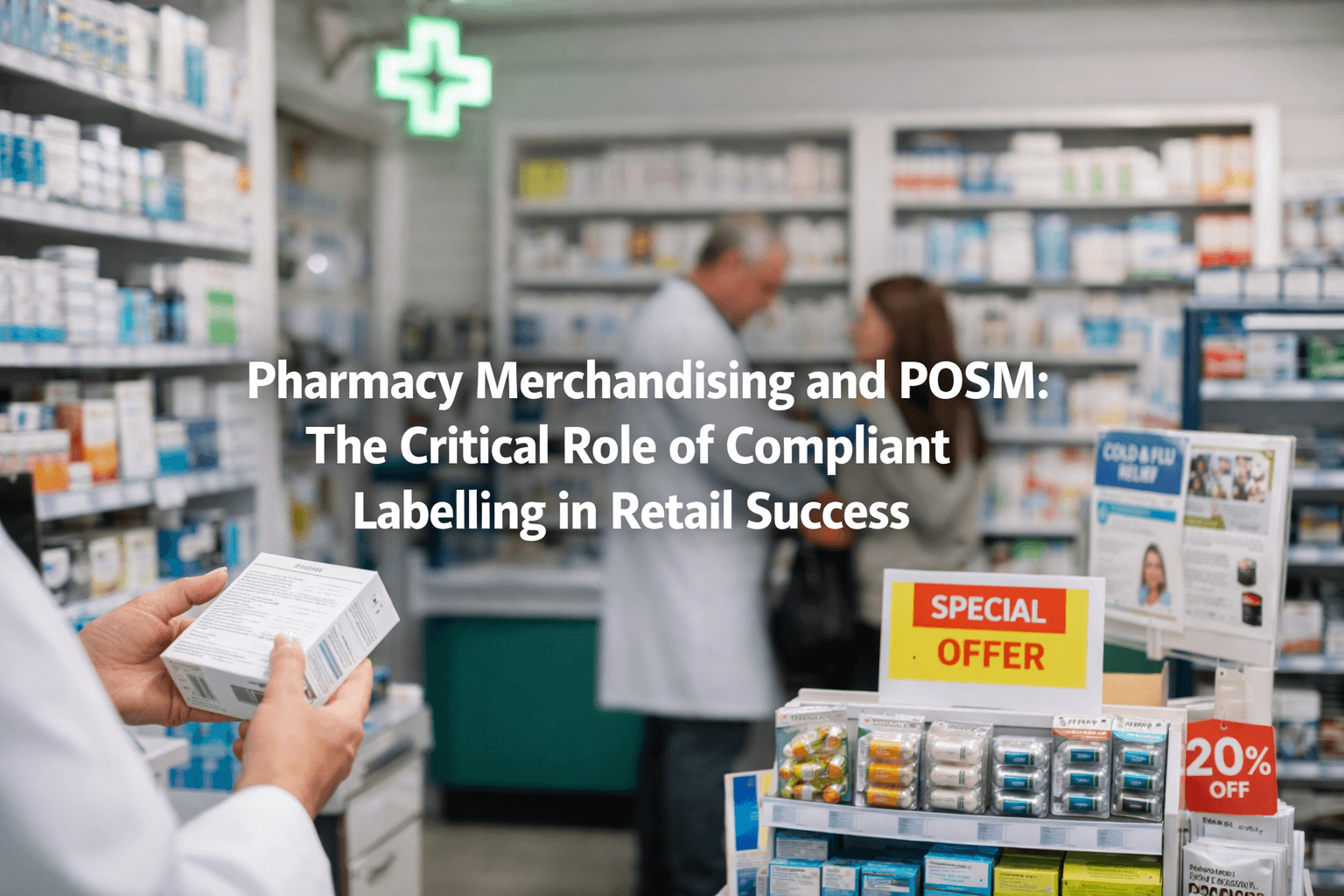
Pharmacy Merchandising and POSM: The Critical Role of Compliant Labelling in Retail Success
The Hidden Risks in Retail Displays
In the bustling aisles of a modern pharmacy, point-of-sale materials (POSM) serve as silent salespeople, guiding customer decisions at the crucial moment of purchase. However, these powerful tools can become significant liabilities if not managed with rigorous compliance in mind. A display that showcases a cosmetic product with an unverified skin-whitening claim or a shelf talker missing a valid NOT number does more than just mislead—it directly breaches NPRA regulations. This creates a tangible disconnect between marketing allure and regulatory reality, undermining the very trust that pharmacies work so hard to cultivate with their patrons. The risk isn’t merely theoretical; it’s a daily operational vulnerability that hinges on the seamless collaboration between merchandising teams, brand managers, and pharmacy distribution units. When these groups operate in silos, compliance gaps inevitably appear on the shop floor, turning attractive displays into potential sources of regulatory non-compliance.
A Malaysian Scenario: The High Stakes of Unverified Claims
Consider a common sight in many Malaysian pharmacies: a prominent end-cap display promoting a newly launched anti-acne serum. The POSM materials, supplied by an eager brand, feature bold claims like “clinically proven to reduce blemishes in 3 days.” If the merchandising team activates this display without verifying that these exact claims are tied to an active KKM notification in the NPRA portal, the pharmacy has instantly assumed substantial risk. The National Pharmaceutical Regulatory Agency (NPRA) conducts regular market surveillance, and such a visual claim constitutes a direct violation if not part of the officially notified product information. The consequences extend beyond a warning letter. For the pharmacy distributor who supplied the product and the materials, this scenario can trigger a cascade of operational disruptions, including forced removal of the entire stock-keeping unit (SKU) from all partnered outlets. This real-world example underscores why label verification is not a back-office task but a frontline commercial imperative for any trusted healthcare retailer.
Building a Collaborative Compliance Framework
Ensuring that every customer-facing element reflects full compliance requires a proven and systematic framework. This is not the sole responsibility of the regulatory affairs team but a shared mandate across the supply chain.
Pre-Display Verification Checklist:
All product testers and samplers must correspond to SKUs with verified, active NOT numbers.
Every claim on a shelf talker, banner, or poster must be cross-referenced with the NPRA database submission.
Promotional visuals should, where possible, incorporate a small but clear snapshot of the compliant product label, including the NOT number.
Planogram approvals must be conditional on all listed SKUs having passed the KKM check via official portals.
This collaborative model transforms compliance from a hurdle into a strategic asset, ensuring that in-store excitement is always built on a foundation of regulatory integrity. For a pharmacy distribution service in Malaysia, embedding these checks into the merchandising workflow is what separates a reactive operator from a reliable, expert partner.
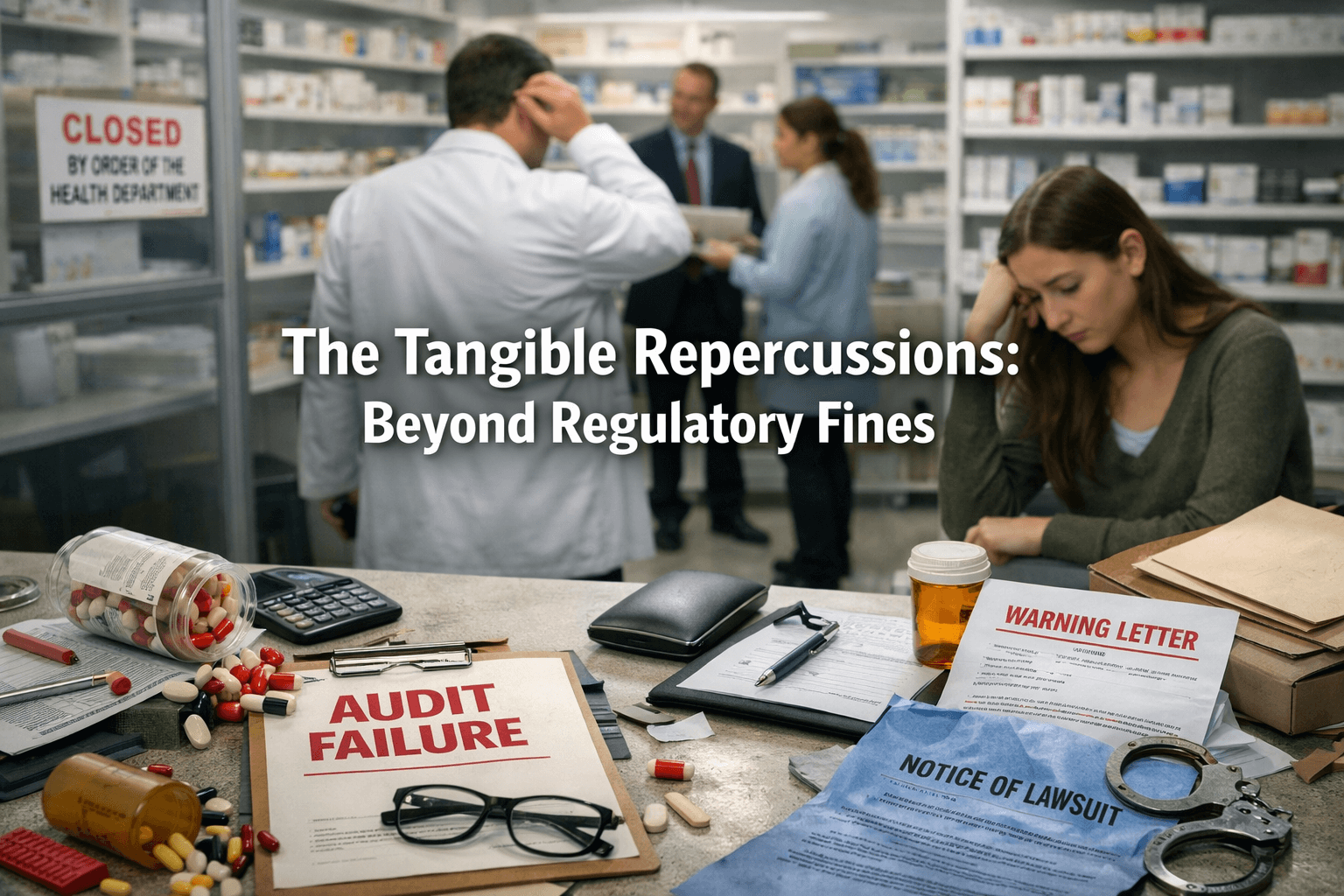
The Tangible Repercussions: Beyond Regulatory Fines
A Triad of Business Threats
Viewing KKM notification simply as a box-ticking exercise is a perilous underestimation. Non-compliance unleashes a triad of interconnected threats: legal, commercial, and reputational. The immediate regulatory risk in Malaysia is often the most visible—potential product seizure, mandatory recalls, and substantial financial penalties imposed by the NPRA. However, the commercial fallout is frequently more devastating. Major pharmacy chains, like Guardian or Watsons, have stringent vendor compliance protocols. A single violation can lead to the delisting of the non-compliant product, or in severe cases, the entire brand portfolio from their shelves. This action severs a critical revenue channel and can take months or years to rebuild. Simultaneously, the reputational damage unfolds in the court of public opinion. In an age of social media, customer complaints about misleading labels or ineffective products can spiral into negative publicity, eroding hard-earned brand equity and consumer trust at an alarming pace.
The Distributor’s Perspective: Guarding the Gateway
From the viewpoint of a pharmacy wholesale distributor, this triad of risks places them in a pivotal gatekeeper role. They are the crucial link between manufacturers and retail endpoints. Distributors who treat KKM verification as a core, non-negotiable Standard Operating Procedure (SOP) do more than protect their own operating license. They actively preserve brand equity for their partners and ensure supply chain integrity. Implementing a strategic and essential verification process is a powerful market differentiator. It signals to both brands and pharmacies that the distributor is a trusted custodian of compliance, mitigating risk for everyone in the value chain. For instance, a distributor supplying to a network of independent pharmacies across Johor Bahru carries a profound responsibility; a single non-compliant product can jeopardize the business licenses of multiple small pharmacy owners, damaging relationships built over years.
Comparative Analysis: Understanding the Spectrum of Compliance
To crystallize understanding across teams—from warehouse staff to sales merchandisers—a clear comparison of the stakes involved is invaluable. The table below delineates the stark contrast between compliant and non-compliant products, serving as an effective training and reference tool.
Table: The Operational Reality of Compliant vs. Non-Compliant Cosmetic Products
| Criteria | KKM-Notified (Compliant) Product | Non-Compliant Product |
|---|---|---|
| NPRA Registration Status | Holds an active, verifiable NOT number in the official database. | Not listed, or listing is expired, revoked, or falsified. |
| Label & Claim Compliance | All packaging and promotional claims match the details submitted to and approved by NPRA. | Labels contain unverified claims, missing mandatory information, or discrepancies with the database. |
| Primary Risk to Pharmacy | Low. Considered a trusted, authorized product for sale. | Extremely High. Carries direct risk of penalties, product seizure, and forced delisting. |
| Eligibility for Merchandising | YES. Can be safely featured in planograms, promotions, and POSM campaigns. | NO. Should be quarantined and removed from circulation; any promotion amplifies liability. |
| Action Required by Distributor | Mandatory verification as part of standard SOP during goods receipt. | Immediate flagging, supply suspension, and escalation to the supplier for resolution. |
Learn more: KKM Produk Tidak Berdaftar: Bahaya dan Risiko
Actionable Strategies for a KKM-Compliant Inventory System
Building a Proactive Verification Protocol
For pharmacy distributor Malaysia operations, maintaining a compliant inventory is a dynamic, continuous process, not a one-time audit. It demands a reliable and systematic protocol integrated into the core procurement and warehousing workflow. The first, non-negotiable step is to formally request the valid NOT number from every brand or supplier prior to the first purchase order. This establishes compliance as a precondition for business. Subsequently, this number must be cross-checked on the NPRA portal—the definitive source of truth—to verify its active status and ensure the listed product name, brand holder, and ingredients align with the supplied goods. This simple, efficient check prevents countless downstream issues.
Documentation and Continuous Auditing
Verification is futile without robust documentation. Archiving proof—such as PDF copies of the NPRA portal search results or screenshots of the product listing—creates an essential audit trail for internal reviews or regulatory inspections. This archive should be systematically organized and easily accessible. Furthermore, compliance is not a permanent state. NOT numbers can expire, and product formulations can change. Therefore, implementing a quarterly stock audit cycle is a strategic operational necessity. This process involves spot-checking existing inventory against the current NPRA database to flag any items that have become non-compliant since their initial receipt. For products commonly found in Malaysian retail, like sunscreens or halal-certified skincare, which may have frequent formulation updates, this proactive auditing is particularly crucial.
Operationalizing Compliance in Malaysian Retail
Let’s ground this in a local operational scenario. A distributor pharmacy in Kuala Lumpur signs a new agreement to carry a range of popular Korean cosmetics. The practical strategy unfolds as follows:
Upon supplier onboarding, they utilize the NPRA portal and other KKM check tools to validate the NOT status of all 50 incoming SKUs.
Three items raise flags—one number is expired, and two cannot be found. These are immediately segregated.
The compliant 47 items are processed, with their notification documents filed in a dedicated supplier folder.
The merchandising team is notified that only these 47 SKUs are eligible for inclusion in the upcoming POSM Malaysia campaign for a major mall outlet in Mid Valley.
A calendar reminder is set for 90 days later to re-audit the status of the active NOT numbers.
This disciplined, integrated approach transforms regulatory adherence from a cost center into a cornerstone of efficient and reliable business practice, safeguarding every link in the distribution chain.
Learn more: Supply Chain Risk Management Is Back
Frequently Asked Questions (FAQ)
Q1: How to check if a product is KKM approved?
Answer: You can verify a product’s KKM (Ministry of Health Malaysia) status through the NPRA public search portal. Enter the product name, MAL number (for medicines), or NOT number (for cosmetics) to confirm whether it is officially registered.
Q2: How do I verify a product’s KKM status?
Answer: Use the National Pharmaceutical Regulatory Agency (NPRA) online database. A valid product will appear with its registration number, holder details, and approval status.
Q3: How to check if the supplement is original?
Answer: Check for a valid MAL registration number on the label and cross-verify it on the NPRA portal. Original supplements will match the registered product name, brand owner, and manufacturer details.
Q4: What does KKM certified mean?
Answer: “KKM certified” means the product has been evaluated and approved by Malaysia’s Ministry of Health (via NPRA) for safety, quality, and compliance with local regulations.
Q5: What is a KKM approved product?
Answer: A KKM approved product is a medicine, supplement, cosmetic, or medical-related item that is legally registered with NPRA and allowed to be sold in Malaysia.
Q6: How to check if a product is registered in Malaysia?
Answer: Search the NPRA product registration database using the product name or registration number. Registered products will have an active approval status.
Q7: How to check if a product is legit?
Answer: Verify its registration number with NPRA, review the label for accurate manufacturer details, and ensure claims align with approved indications.
Q8: How does a product get KKM approval?
Answer: The product owner must submit documentation to NPRA, including safety data, formulation details, labeling, and manufacturing compliance. Approval is granted after regulatory review.
Q9: How can I verify a company in Malaysia?
Answer: You can check company registration through the Companies Commission of Malaysia (SSM) to confirm whether the business is legally registered and active.
Q10: How to check if a product is halal or not?
Answer: Verify halal status through JAKIM’s halal certification database. Only products listed there are officially recognized as halal in Malaysia.
Our Services
Our marketing and sales teams use their strong relationships with the channel to create demand for your product at every stage of its lifecycle.
Demand creation services we offer:
Market Access Services
Regulatory Registration Services
Pharma Product Listing Services
Merchandising services (RSMS)
Brand Management
Logistic & Warehousing
Exclusive Merchandising Services
Visual Merchandising
Discover More About Our Solution
How can we assist you today? 😊
Just let us know—we’re here to help!