

August 23, 2025
The independent pharmacy sector in Malaysia faces a make-or-break challenge: securing a trusted, strategic distribution partner capable of keeping shelves stocked without crippling operational costs. In markets like Klang Valley or Penang, where retail giants dominate, small pharmacies often struggle with supplier delays, inconsistent stock levels, and logistical inefficiencies. The difference between thriving and merely surviving hinges on efficient pharmacy distribution—a system that balances cost, reliability, and compliance while meeting rising customer expectations for instant availability.
Consider the real-world impact of poor distribution. A Johor Bahru-based pharmacy lost 15% of its regular customers in six months due to repeated stockouts of common antibiotics and diabetic supplies. Meanwhile, a competitor 5km away—partnered with a reliable pharmacy distributor Malaysia—saw a 20% revenue boost by ensuring essential medications were always available. This disparity underscores why distribution isn’t just a backend concern; it’s the lifeline of customer trust and retention.
Understanding Pharmacy Distribution Models: Direct vs. Third-Party

Malaysian pharmacies typically navigate two primary distribution frameworks, each with distinct trade-offs:
1. Direct Purchasing Model
Pros: Better pricing control, direct manufacturer relationships.
Cons: Demands high-volume orders, robust cash flow, and in-house logistics expertise.
For example, a Kuala Lumpur pharmacy chain with 10+ outlets can leverage bulk purchases from manufacturers. But for a single-outlet independent pharmacy in Malacca, the storage costs and financial strain of minimum order quantities (MOQs) often outweigh the benefits.
2. Third-Party Distributor Model
This approach, adopted by expert partners like PriooCare, offers:
Lower MOQs, easing cash flow pressure.
Tailored delivery schedules (e.g., twice-weekly drops to match prescription refill cycles).
Multi-brand access without juggling dozens of supplier contracts.
A Seremban pharmacy reduced its supplier roster from 12 to just 1 pharmacy wholesale distributor, slashing administrative costs by 30% while improving stock turnover.
Key Insight: Direct purchasing suits large chains; independents benefit from third-party partnerships that provide strategic scalability.
Learn More : Four ways pharma companies can make their supply chains more resilient
Why Independent Pharmacies Struggle with Distribution
1. Limited Bargaining Power
Small order volumes mean:
Higher per-unit costs (e.g., paying 10–15% more for painkillers vs. chain pharmacies).
Exclusion from promotional deals (e.g., “buy 50, get 5 free” offers only for bulk buyers).
A Kuching pharmacy owner noted how larger competitors secured fever medication at 20% discounts during a dengue outbreak, while her orders faced delays and premium pricing.
2. Logistics Breakdowns
Stockouts: 68% of Malaysian independents report losing sales due to delayed deliveries of fast-moving items like vitamins or baby formula.
Fragmented Suppliers: Managing 5–7 vendors for different product categories drains staff time and increases errors.
3. Compliance Risks
Non-compliant stock from unvetted distributors can trigger NPRA penalties. One Ipoh pharmacy faced a RM5,000 fine after a distributor supplied unregistered supplements.
Practical Fixes:
✅ Partner with proven distributors with NPRA audit trails.
✅ Use inventory tech to flag low-stock items before they run out.
✅ Negotiate MOQ flexibility—some distributors now offer “just-in-time” ordering for independents.
Learn More : Pharmacy Merchandising: Best Practices for Product Pricing and Promotion in Malaysia | Access to medicines and health products
Choosing the Right Pharmacy Distributor: A Framework

Not all distributors are created equal. Here’s how to vet partners:
1. Reliability Metrics
On-time delivery rate (aim for 95%+).
Real-time tracking for shipments (e.g., GPS-enabled deliveries).
A Penang pharmacy switched to a distributor offering live tracking, reducing customer complaints about delayed orders by 40%.
2. Geographic Coverage
West Malaysia-focused distributors may lack East Malaysia logistics.
Localized hubs (e.g., a distributor with warehouses in Johor and Perak) cut delivery times.
3. Value-Added Services
Merchandising support: PriooCare provides in-store display kits for pharmacies launching new skincare lines.
Demand forecasting: Some distributors analyze sales data to suggest order adjustments before seasonal spikes.
Operational Strategies to Optimize Distribution

1. Route Optimization Tools
A Klang Valley pharmacy used Route4Me to:
Cluster deliveries by neighborhood, cutting fuel costs by 18%.
Add 12 more stops per driver shift without extending hours.
2. Smart Order Batching
Example: Ordering a 3-month supply of chronic medications (e.g., hypertension drugs) + monthly fast-moving goods (e.g., masks).
Outcome: Fewer deliveries, lower freight fees.
3. Integrated Inventory Systems
Cloud-based tools like EMIS Pharmacy sync with distributor portals, auto-reordering when stock hits threshold.
Case Study: A Melaka pharmacy reduced overstock by 22% using AI-driven demand predictions.
Checklist for Implementation:
☑️ Pilot route optimization on your busiest delivery day.
☑️ Negotiate batch-order discounts with your pharmacy distributor Malaysia.
☑️ Train staff on inventory software to minimize manual counts.
Leveraging Technology for Enhanced Distribution Efficiency

The independent pharmacy sector in Malaysia is undergoing a quiet revolution—one where efficient, tech-driven distribution separates thriving businesses from those struggling to keep shelves stocked. In an era where customers expect instant availability of everything from painkillers to premium supplements, pharmacies can no longer rely on manual processes or guesswork. The right digital tools don’t just streamline operations; they transform supply chains into strategic assets.
Take the case of a Johor Bahru pharmacy that slashed stock discrepancies by 80% after adopting a cloud-based inventory system. By scanning products via mobile devices during deliveries, staff reduced human errors—a common pain point when managing hundreds of SKUs. Real-time tracking also allowed them to flag slow-moving items before expiry, cutting wastage costs by RM12,000 annually. This isn’t just about convenience; it’s about reliable service that keeps customers returning.
Digital Inventory Management: The Backbone of Modern Pharmacies
Expiry date tracking: Automated alerts prevent losses from expired stock (a RM50 million problem annually for Malaysian pharmacies).
Supplier performance dashboards: Identify which pharmacy wholesale distributors consistently meet deadlines—and which lag.
AI-driven demand forecasting: Predict seasonal spikes (e.g., flu season supplements) using historical sales data.
For smaller pharmacies, even basic tools matter. A Kuala Selangor outlet used a free app to track paracetamol sales, discovering a 30% surge during monsoon months. They adjusted orders preemptively, avoiding stockouts that previously sent customers to competitors.
ERP Systems: Bridging Financials and Supply Chains
Larger independents benefit from enterprise resource planning (ERP) integrations that:
✅ Sync purchase orders with accounting software, reducing payment delays.
✅ Maintain audit-ready records for NPRA compliance—a lifesaver during surprise inspections.
✅ Automate reordering when stock hits predefined thresholds (e.g., diabetes test strips below 20 units).
One Penang-based pharmacy saved 15 staff hours monthly after linking their ERP to a trusted pharmacy distributor Malaysia partner’s portal. Orders now auto-generate, with delivery slots adjusted based on real-time traffic data.
Pharmacy Management Software: The Silent Profit Booster
POS integrations: Instant updates when items are sold, triggering replenishment requests.
Live delivery tracking: Customers appreciate precise ETAs for out-of-stock items.
Promotion alerts: Distributors flag bulk discounts on linked platforms (e.g., 10% off when ordering 50+ units of vitamins).
A Malacca pharmacy increased sales conversion by 18% after their system started auto-ordering bestsellers like baby formula. No more “Sorry, we’re out” signs—just consistent availability that builds loyalty.
Learn More : How Digital Transformation Can Improve Hospitals’ Operational Decisions
Regulatory Compliance in Pharmaceutical Distribution

In Malaysia’s tightly regulated pharma landscape, compliance isn’t optional—it’s the price of staying in business. A single misstep, like stocking unregistered supplements, can trigger NPRA fines up to RM50,000 or worse, a license suspension. Yet, many independents underestimate how deeply compliance ties into distribution partnerships.
Non-Negotiable Compliance Pillars
NPRA Registration Checks
Every product must display valid registration numbers (e.g., MALxxxxxxxxx).
A Selangor pharmacy avoided a RM8,000 fine by verifying their distributor’s NPRA certificates before accepting a new skincare line.
Good Distribution Practice (GDP)
Covers temperature control, hygiene protocols, and tamper-proof packaging.
Example: A Kuching distributor lost a major client after repeated violations—like transporting insulin without refrigeration.
KKM Labelling Rules
Bahasa Malaysia instructions, dosage clarity, and halal certifications where applicable.
Why Your Distributor’s Compliance Record Matters
Partnering with a proven pharmacy distributor Malaysia provider like PriooCare means:
Pre-vetted products: No risky “grey market” imports.
Audit support: Ready documentation for KKM inspections.
GDP-trained drivers: Ensuring sensitive items (e.g., vaccines) aren’t compromised in transit.
A Ipoh pharmacy learned this the hard way. They sourced cheaper supplements from an unvetted supplier, only to face a product recall when NPRA tests found undeclared steroids. The fallout? A 40% drop in customer trust—and two years rebuilding their reputation.
Learn More : Medicines supply – health product policy and standards
Measuring the Impact of Distribution Strategies

Data-driven decisions separate high-growth pharmacies from stagnant ones. But which metrics actually matter?
4 KPIs Every Pharmacy Should Track
Delivery Timeliness
Target: ≥95% on-time rate.
A Shah Alam pharmacy renegotiated contracts after data showed their distributor was late 25% of the time.
Stock Turnover Rate
Ideal range: 6–8 times annually.
Low turnover? Overstocking ties up cash. High turnover? Risk of stockouts.
Cost Efficiency
Distribution costs should stay under 8% of total sales.
Case Study: A Klang Valley outlet reduced this from 11% to 6.5% by switching to a distributor with route-optimized deliveries.
Customer Satisfaction
Simple surveys (e.g., “Was your medication available today?”) reveal gaps.
One Johor pharmacy discovered 22% of customers left due to stockouts—prompting an inventory system overhaul.
Turning Data into Action
Monthly reviews with distributors to address bottlenecks (e.g., chronic late deliveries every Friday).
Benchmarking against industry averages (Malaysian independents average 7.2 stock turnovers/year).
Tech tools: Google Analytics for e-commerce integrations, or lightweight apps like Stocky for SMEs.
Learn More : Top 10 Pharmacy Distributors in Malaysia Ranking | What is the Role of Merchandising?
Future Trends Shaping Pharmacy Distribution
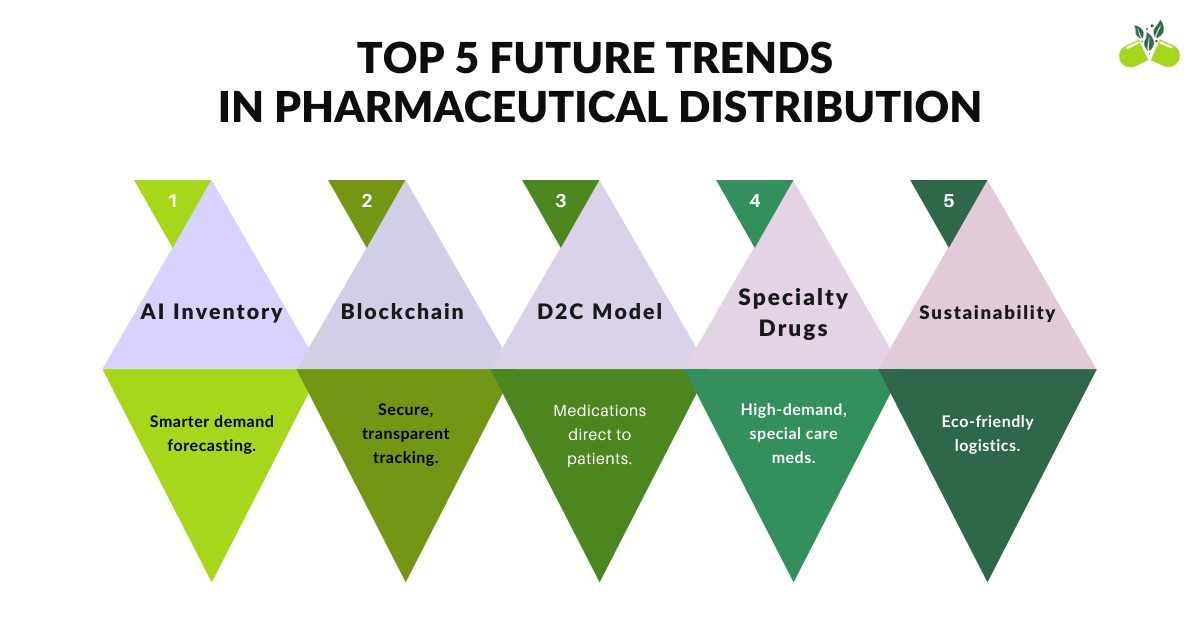
Malaysia’s pharmaceutical logistics sector is evolving rapidly. Independents who adapt early will dominate their neighborhoods.
3 Trends to Watch
E-Commerce Integration
Platforms like Pharmacy2U Malaysia show online orders now account for 12% of independent pharmacy revenue.
Solution: Partner distributors offering click-and-collect or same-day delivery APIs.
Last-Mile Delivery Innovations
GrabExpress Health collaborations cut prescription delivery times to under 2 hours in urban areas.
Example: A Petaling Jaya pharmacy uses Lalamove for urgent deliveries, charging customers RM5—far cheaper than losing sales.
Cold Chain Demands
Biologics (e.g., monoclonal antibodies) require 2–8°C storage.
Strategic move: Partner only with distributors investing in refrigerated fleets.
For Malaysian independents, effective distribution isn’t about finding the cheapest supplier—it’s about building strategic, reliable partnerships that align with regulatory demands, customer expectations, and tech advancements. From AI-powered inventory tools to GDP-compliant logistics, every improvement compounds into better patient outcomes and healthier margins.
How can we assist you today? 😊
Just let us know—we’re here to help!