

March 28 , 2026
In a market where consumer trust is the ultimate currency, verifying the regulatory status of every single product on your shelf or in your warehouse isn’t just a procedural step—it’s the non-negotiable bedrock of a reliable and trusted pharmaceutical or cosmetics business. The question of how to be absolutely certain a product is approved by Malaysia’s health authorities sits at the heart of operational integrity, legal compliance, and commercial viability. As Malaysia’s healthcare and wellness sectors experience robust growth, the regulatory landscape is becoming simultaneously more sophisticated and more stringent. Authorities like Kementerian Kesihatan Malaysia (KKM) are intensifying enforcement actions, while a digitally-savvy consumer base is increasingly proactive about checking product safety and authenticity. For any pharmacy distributor Malaysia, independent pharmacy distributor, or retail pharmacy, this convergence of factors transforms product verification from a back-office task into a strategic imperative that safeguards the entire supply chain from manufacturer to end-user. A single unregistered item can jeopardize a business’s license, erode hard-earned consumer confidence, and trigger significant financial penalties. Therefore, establishing a proven and systematic verification protocol is an essential operational pillar, directly impacting inventory decisions, risk management, and long-term brand partnerships.
Navigating Malaysia’s Regulatory Triad: KKM, NPRA, and FSQD
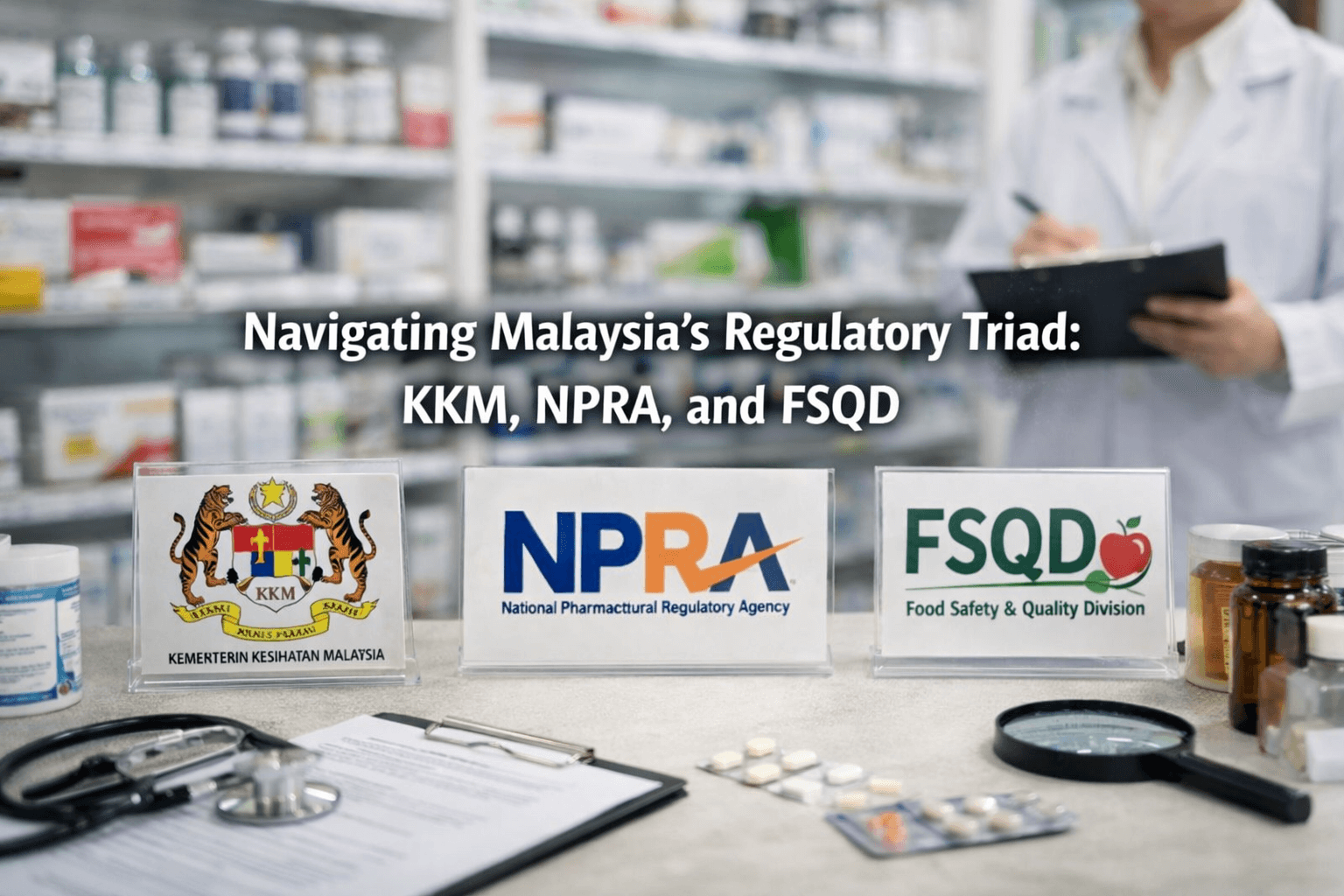
Malaysia’s regulatory framework for health and cosmetic products is distinguished by its clear, agency-specific delineations, a structure that provides clarity but demands precise understanding. For pharmacy wholesale distributors and brand managers, grasping the distinct functions of each body is the first critical step toward efficient compliance. The overarching authority is the Ministry of Health Malaysia (KKM), which sets national health policy and oversees the entire ecosystem. Operating under KKM are two specialized agencies with distinct mandates. The National Pharmaceutical Regulatory Agency (NPRA) is the key authority for the registration and regulation of pharmaceutical drugs, nutritional supplements, traditional medicines, and medical devices. Concurrently, the Food Safety and Quality Division (FSQD) manages the notification and safety of cosmetics, topical products, and food items.
The practical implication of this structure is profound. Misclassifying a product at the point of procurement can lead to a cascade of operational failures. For instance, a herbal supplement intended for immune support must undergo the rigorous NPRA registration process. Attempting to bring it to market under a cosmetic notification with the FSQD because it is capsule-based is a serious violation. This precise classification dictates every subsequent step: the documentation required for customs clearance, the marketing claims you are legally permitted to make, and the retail channels (pharmacies vs. general retail) where the product can be sold. A Malaysia-related example highlights this risk: a local distributor faced shipment confiscation and fines after importing a popular overseas acne gel, incorrectly assuming it was a cosmetic. The product’s “anti-bacterial” claim placed it squarely under NPRA’s purview as a pharmaceutical, requiring a full MAL registration it did not possess. This costly error underscores why expert knowledge of this regulatory triad is not optional but a strategic business asset.
Learn more : Ultimate Guide to KKM Approval in Malaysia (2026 Edition) | NPRA Malaysia – Product Registration FAQ
Decoding MAL vs. NOT Numbers: The Key to Legal Market Entry
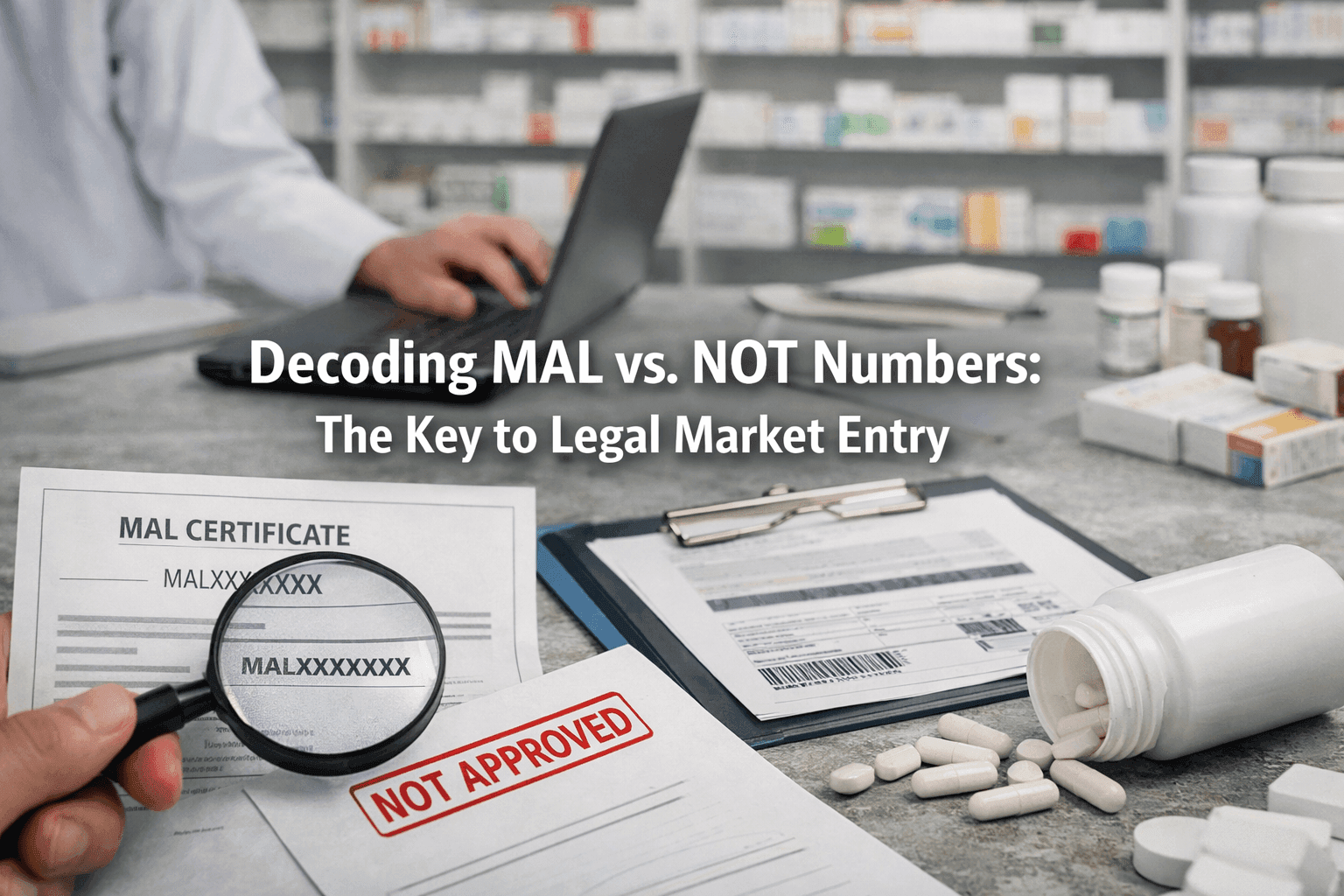
Understanding the difference between a MAL number and a NOT number is fundamental to navigating Malaysia’s compliance landscape. These alphanumeric codes are more than just identifiers; they are public, verifiable proof of a product’s legal status and directly dictate its route-to-market. A MAL number (e.g., MAL20251234T) is issued by the NPRA following a comprehensive evaluation of a product’s safety, quality, and efficacy. This number signifies full registration and is required for all pharmaceutical drugs, controlled supplements, and traditional medicines. In contrast, a NOT number (e.g., NOT23050678K) is issued by the FSQD through a notification process, which is based on the principle of manufacturer responsibility and is used for cosmetics and simple topical products with no therapeutic claims.
Why does this distinction matter critically for distributors? It determines the scope of your business operations. A product with a valid MAL number can be stocked and sold in all licensed pharmacies and prescribed by healthcare practitioners. A product with only a NOT number is restricted to cosmetic counters and general retail; it cannot make medicinal claims. For example, a Malaysian pharmacy chain looking to expand its range of vitamin C products must discern between a registered effervescent tablet for immune support (requiring a MAL) and a vitamin C-enriched facial serum (requiring a NOT). Listing the serum in the pharmaceutical section with implied health claims would be a direct compliance breach. The following comparison clarifies the core differences:
| Feature | MAL Number (NPRA Registration) | NOT Number (FSQD Notification) |
|---|---|---|
| Governing Agency | National Pharmaceutical Regulatory Agency (NPRA) | Food Safety & Quality Division (FSQD) |
| Product Scope | Pharmaceutical drugs, supplements, traditional medicines, medical devices | Cosmetics, topical products (e.g., creams, serums) without therapeutic claims |
| Process Rigor | Pre-market approval with full dossier review on safety, quality, efficacy | Post-market notification based on manufacturer’s declaration of safety |
| Legal Implication | Mandatory for sale in pharmacies for intended use | Mandatory for market entry, but sale is limited to cosmetic channels |
| Example Claim | “Reduces fever and pain” (Paracetamol) | “Moisturizes and brightens skin” (Face Cream) |
From the pharmacist’s perspective, verifying the correct number type is a reliable shield against enforcement action. From the brand manager’s viewpoint, securing the appropriate registration is the essential first step in any market entry strategy. For the distributor pharmacy, it is the core of inventory compliance.
Learn more : How to register a pharmaceutical product in Malaysia | NPRA Malaysia – Cosmetic Products Main Page
A Practical Guide to Verification Using NPRA QUEST and FSQD Portals
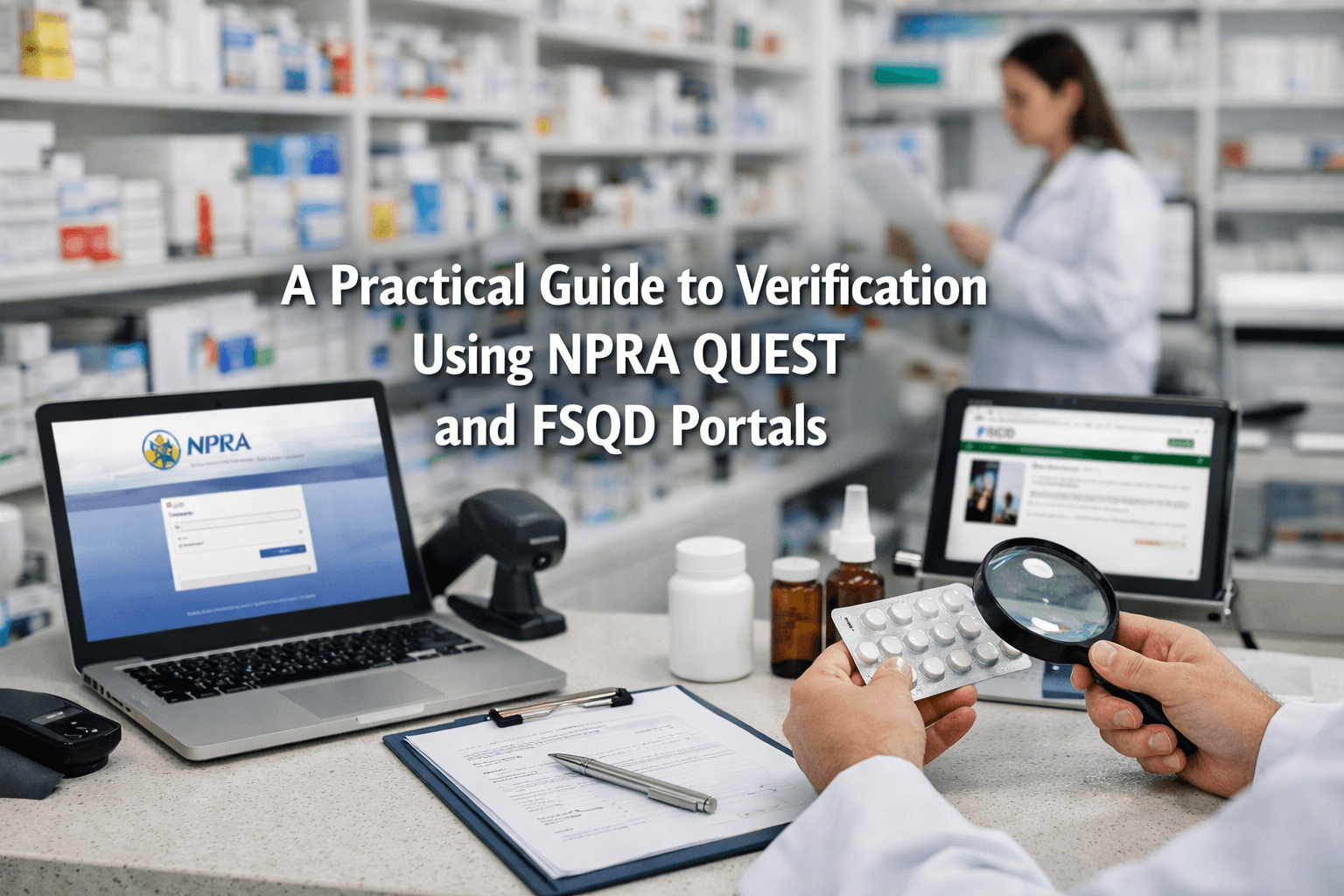
While the theory is clear, the practical application of verification is where many Malaysian pharmacy professionals seek clarity. The NPRA QUEST and FSQD portals are publicly accessible, trusted tools designed for this exact purpose. An efficient, routine check using these systems should be embedded in every procurement and shelf-audit process. Here is a detailed, operational walkthrough tailored for the Malaysian context.
For Products Requiring a MAL Number (NPRA QUEST Portal):
The NPRA QUEST (Quick and Easy Search System) portal is the definitive database for all NPRA-registered products. Begin by navigating to the official NPRA website. Locate and click on the “Product Search” function, often found under a “Public” or “Information” menu. You will typically be directed to a search page where you can query by multiple parameters: the exact product name, the brand name, the active ingredient, or most definitively, the MAL number itself. Entering the known MAL number yields the most accurate and immediate result. The returned record will provide layered insights crucial for verification: the product’s current registration status (Active, Expired, Cancelled), the registration holder’s name (which must match your supplier or the local agent), the approved indications or usage, and the validity period. A proven best practice for merchandisers is to cross-reference the company name on the physical product packaging with the “holder name” listed on QUEST; a mismatch can indicate an unauthorized parallel import or a listing issue.
For Products Requiring a NOT Number (FSQD Cosmetic Notification Portal):
The verification pathway for cosmetics is through the FSQD’s Cosmetic Notification Search. Access the FSQD website and find the dedicated search page for notified cosmetics. This portal allows searches by product name, brand name, or NOT number. Similar to the NPRA portal, inputting the specific NOT number is the most effective method. The search results will confirm the notification status (Valid, Expired), the notifier company (the entity legally responsible for the product in Malaysia), and the notification date. A critical check here is the product category and the listed ingredients, ensuring they align with the product’s marketed form and purpose. For distribution teams handling a high volume of cosmetic lines, such as a Kuala Lumpur-based distributor supplying to chain pharmacies and beauty stores, implementing a monthly audit cycle using this portal is an expert strategy to pre-empt issues. It empowers staff to proactively flag products with approaching expiry dates or lapsed notifications before they become a compliance liability during a KKM inspection.
Learn more : KKM Product Verification: What You Need to Know | NPRA Malaysia – Notified Cosmetic Products Dataset
Recurring Compliance Pitfalls in the Malaysian Market
Despite available tools, several common compliance issues persistently challenge pharmacies and distributors across Malaysia. These are not mere administrative oversights but significant violations that can trigger KKM enforcement raids, product seizures, and substantial penalties. Awareness of these pitfalls is the first step toward building a more resilient operation.
From the pharmacist’s point of view, the most frequent issue is the inadvertent stocking of products with expired notification or registration numbers. A cosmetic item might have a valid NOT number upon initial import, but these notifications have a validity period tied to the product’s shelf life. If the product remains unsold past this date, it is no longer compliant for sale. Another common lapse involves imported brands—often sourced from regional markets or online—that lack any Malaysian KKM approval. A Singapore or Thailand-registered health supplement, for instance, cannot be legally sold in Malaysia without a separate MAL registration. Consumers, and sometimes even retailers, mistakenly believe regional approvals are reciprocal, which they are not.
From the distributor and brand manager’s perspective, illegal therapeutic claims on cosmetic products represent a major risk area. The Cosmetic Regulations in Malaysia strictly prohibit claims that imply a physiological effect beyond basic cleansing, perfuming, or appearance alteration. Using terms like “anti-inflammatory,” “slimming,” “treats eczema,” or even “skin healing” on a cream or serum transforms it from a cosmetic into an unregistered pharmaceutical in the eyes of the NPRA. Furthermore, a company name mismatch—where the local entity named on the NPRA or FSQD listing differs from the company named on the product packaging or invoice—can halt a shipment at customs or cause a product to be pulled from shelves, as it suggests an unauthorized supply chain.
A strategic pharmacy chain in Johor Bahru reported a telling scenario: they lost the right to distribute several high-margin skincare lines after a surprise KKM audit found discrepancies between the NOT holder information and their supply contracts. This incident highlights the practical implication that compliance is a continuous, dynamic process, not a one-time box-ticking exercise. Training procurement and merchandising staff to perform essential checks using the official portals should be a weekly operational ritual. A simple internal framework to avoid these pitfalls can include:
Implementing a pre-procurement checklist that mandates MAL/NOT verification for every new SKU.
Establishing a digital register to track the expiry dates of product notifications alongside product shelf life.
Conducting quarterly training sessions for floor staff on identifying illegal claims on product packaging.
By adopting such a tailored and systematic approach, businesses can transform regulatory compliance from a point of vulnerability into a reliable component of their competitive advantage, ensuring they not only meet the standards set by Malaysia’s health authorities but also earn the enduring trust of their customers.
Learn more : NPRA Malaysia – Quality Reporting on Registered Products
Navigating Shared Responsibility: The Critical Roles of Distributors, Pharmacists, and Brand Owners in Malaysia
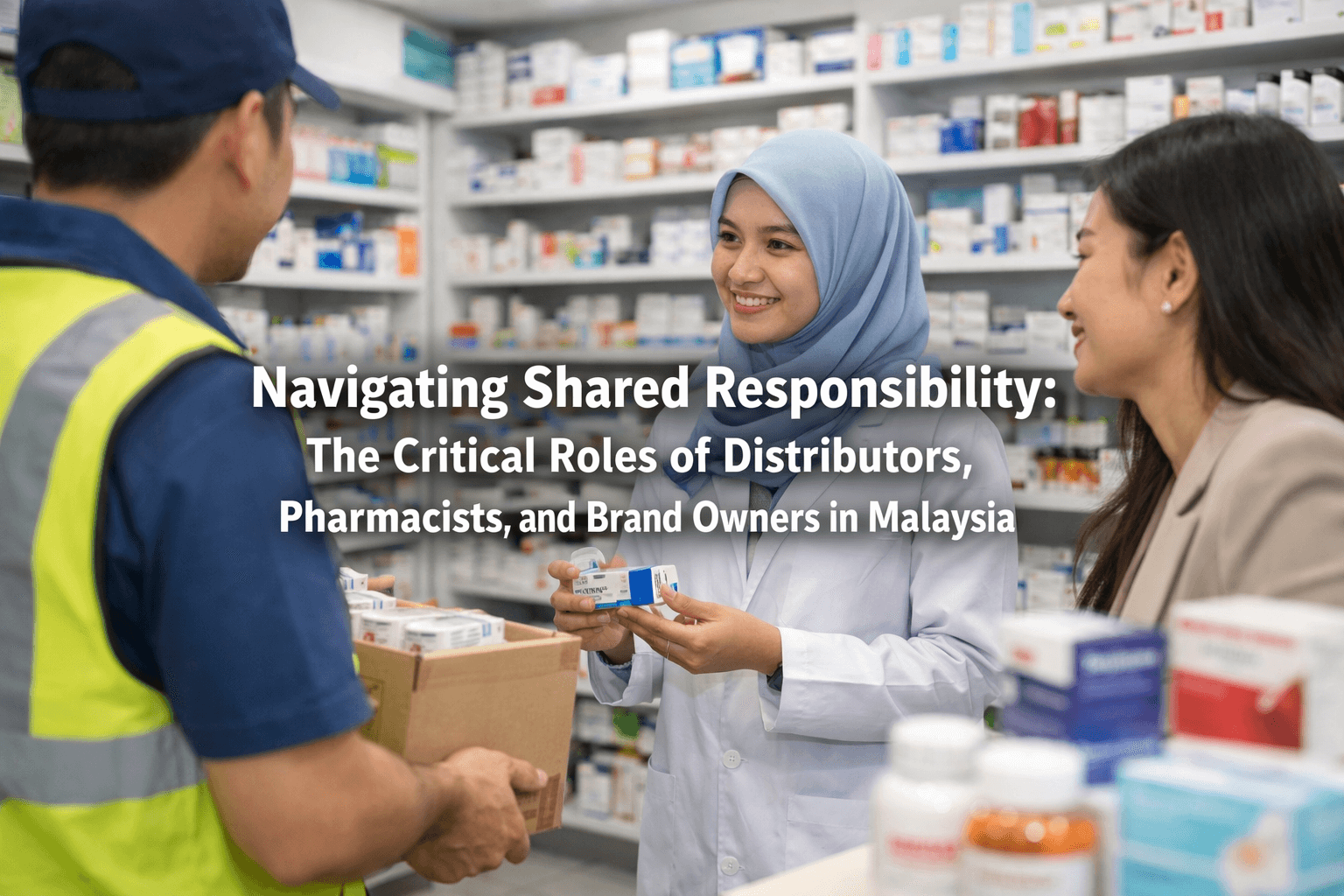
When a non-compliant product is discovered on a pharmacy shelf, the immediate reaction is often to assign blame. However, the reality within the Malaysian pharmaceutical landscape is far more interconnected. The question of responsibility is not a simple one, as it is distributed across a tripartite ecosystem where vigilance is the collective duty of brand owners, distributors, and pharmacists. A failure in compliance is rarely the fault of a single entity; rather, it typically indicates a breakdown in the shared accountability chain. While the National Pharmaceutical Regulatory Agency (NPRA) and KKM (Ministry of Health) provide the legal framework, the practical enforcement and daily upholding of these standards fall upon these three key players. Understanding and executing these distinct yet overlapping roles is not just about avoiding penalties—it’s about protecting public health and maintaining the integrity of the entire pharmaceutical supply chain.
The Pharmacist’s Duty: The Final Gatekeeper at the Shelf Level
For pharmacists operating in Malaysia, their role transcends clinical expertise and customer service; they act as the final and most crucial checkpoint before a product reaches the consumer. This is a professional obligation backed by stringent KKM law. The primary, non-negotiable task is the physical validation of a product’s regulatory status directly at the point of display or sale. This means systematically checking for and verifying the authenticity of either a MAL number (for registered health supplements and medicines) or a NOT number (for notified cosmetic products). It is a proactive, hands-on responsibility. Pharmacists cannot assume that products received from a trusted distributor are automatically compliant. They must cultivate a routine of verification, treating it with the same importance as patient counseling. Common operational challenges, such as high customer volume or inventory turnover, can create gaps, but these are not considered valid defenses during an inspection. The pharmacist’s perspective is uniquely grounded in patient safety; their direct contact with the end-user makes their compliance role a fundamental aspect of professional healthcare duty.
The Distributor’s Mandate: Acting as the Strategic Regulatory Gatekeeper
Pharmaceutical distributors in Malaysia serve as the essential bridge between brand owners and retail pharmacies, and with this position comes the weighty responsibility of being the regulatory gatekeeper. Their duty extends far beyond warehousing and logistics; it encompasses a proactive compliance mandate. Distributors are obligated to ensure that every product they handle is fully authorized for the Malaysian market before it enters their warehouse. This involves obtaining, verifying, and maintaining up-to-date documentation from brand owners, including valid KKM registration certificates and Letters of Notification. An efficient and reliable distributor integrates compliance checks directly into their order management and fulfillment workflows. For instance, leading pharmacy distributor networks in Malaysia now employ digital systems that automatically flag products without a verified MAL or NOT number, blocking the order from proceeding. This strategic integration of technology transforms compliance from a retrospective audit task into a seamless, preventive operational standard. From the distributor’s viewpoint, this gatekeeper role is a core component of their value proposition—it protects their business license, safeguards their pharmacy partners, and builds long-term trusted partnerships with brands.
The Brand Owner’s Foundation: Ensuring Accurate Classification and Submission
The compliance journey begins and ends with the brand owner. Their fundamental responsibility is to ensure their product is correctly classified and that all mandatory submissions to the NPRA (KKM) are complete, accurate, and timely. This is the bedrock upon which the entire supply chain’s compliance is built. A brand owner must determine whether a product is a cosmetic (requiring a NOT) or a health supplement/drug (requiring a MAL), a process that often requires expert regulatory knowledge to navigate ambiguous claims or ingredients. Errors in this initial stage—such as incorrect labeling, overstated marketing claims, or incomplete dossiers—create ripple effects that compromise distributors and pharmacists downstream. Brand owners must also ensure that any advertising and promotional (A&P) materials align perfectly with the approved product classification; a cosmetic marketed with therapeutic claims is a direct violation. For international brands entering Malaysia, partnering with a proven local regulatory consultant or distributor is not a luxury but an essential strategy to navigate the nuances of KKM regulations.
Operational Scenarios in Malaysia: Where Theory Meets Reality
Consider a local Malaysian herbal supplement brand that has successfully sold a product for years. A regulatory update changes the classification of one of its key ingredients. The brand owner misses this update and fails to resubmit documentation. A diligent distributor, during a routine portal check, discovers the now-expired MAL and halts all further shipments, initiating contact with the brand to rectify the issue. This proactive catch prevents a widespread compliance failure across hundreds of pharmacies.
Conversely, imagine a busy pharmacy in Kuala Lumpur during a peak sales period. A new sales representative from a distributor delivers a product with outdated printed packaging that still shows an old NOT number. The pharmacist, overwhelmed, shelves the product without scanning the QR code to verify its current status on the NPRA QUEST portal. During a KKM inspection, this product is flagged, resulting in a seizure and a warning letter to the pharmacy. This scenario highlights how a momentary lapse in the final verification step can lead to direct consequences.
A third scenario involves a foreign cosmaceutical brand entering the Malaysian market. They classify their anti-aging serum as a cosmetic (NOT), but their global marketing material includes strong biological efficacy claims. Their Malaysian distributor, reviewing the A&P assets, flags the discrepancy before a launch. They guide the brand owner to either modify the claims to align with cosmetic regulations or pursue a more rigorous MAL registration. This tailored guidance avoids a potentially catastrophic enforcement action post-launch.
The Power of Integrated Systems: Moving Beyond Isolated Checks
The most effective compliance frameworks are those that break down silos between these three roles. Digital Standard Operating Procedures (SOPs) that centralize product information, with live links to MAL/NOT listings, create a single source of truth accessible to brand owners, distributor teams, and pharmacists. Automated verification logs and mandatory training modules on KKM refresher courses for sales and merchandising teams ensure that human vigilance is consistently supported by systemized processes. These are not theoretical ideals but proven practices employed by leading supply chain partners in Malaysia to transform compliance from a cost center into a strategic asset that builds market trust and operational resilience.
KKM Enforcement in 2026: A Shift Towards Strategic Scrutiny and Digital Verification
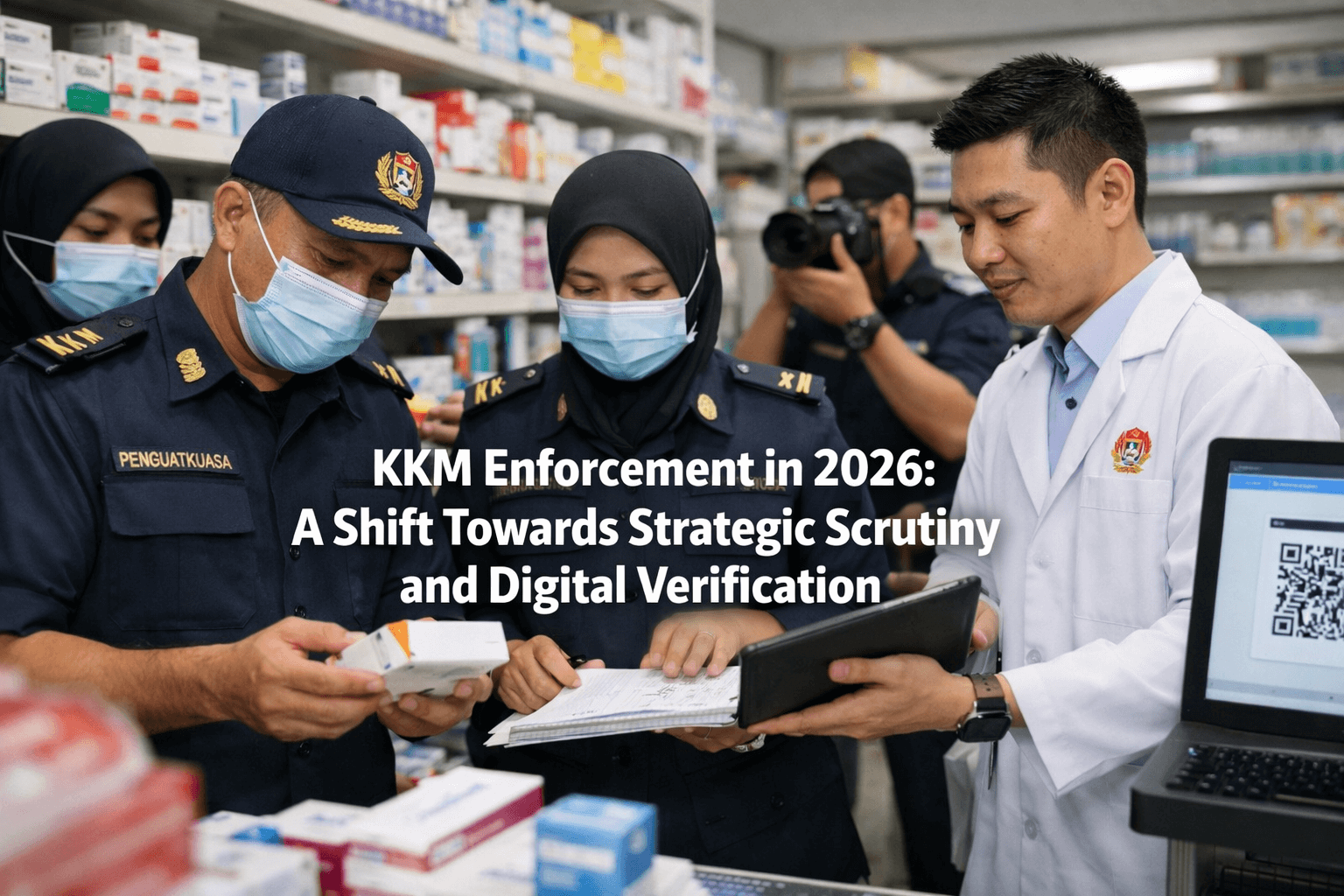
The enforcement landscape in Malaysia is not static; it evolves in response to market dynamics and public health objectives. As we move through 2026, KKM inspectors are adopting a more integrated, data-aware approach. The focus has sharpened from mere document checks to a holistic assessment of end-to-end compliance integrity. This shift demands that all stakeholders upgrade their preparedness from a basic checklist mentality to a comprehensive, embedded operational mindset. The days of last-minute preparation for an audit are over. Proactive and continuous compliance is now the only sustainable model, with enforcement trends clearly signaling zero tolerance for systemic negligence or willful ignorance.
The Strategic Emphasis: Shelf Compliance and Claim Alignment
A primary focus for inspectors is direct shelf compliance. Officers will physically verify that products on display have active, valid MAL or NOT listings that match the exact batch on the shelf. But their scrutiny goes deeper. They are strategically cross-referencing any in-store advertising and promotional materials—from shelf talkers to brochures—against the product’s official classification. A cosmetic product (NOT) advertised with drug-like claims will be treated as an unregistered drug, a serious violation. This means brand managers and marketers must work in lockstep with regulatory affairs, and distributors must vet all point-of-sale materials they help distribute. Furthermore, inspectors are meticulously tracing the product journey, demanding to see proper import records and documentation from pharmacy wholesale distributors that directly link to the KKM authorization. This creates a clear, unbroken paper trail from port to pharmacy shelf.
Practical Tools for Modern Compliance: Beyond the Binder
In response to these trends, proven methods for demonstrating compliance have also modernized. While maintaining printed product summaries is still a reliable practice, the integration of digital tools is becoming paramount. For example:
Dynamic QR Codes on shelf talkers that link directly to the product’s current status on the official NPRA QUEST or FSQD portal.
Digital audit trails within distributor management systems that log every verification check, product transfer, and document update.
Centralized cloud-based repositories for all KKM documentation, accessible to authorized partners across the supply chain.
An efficient pharmacy or distributor will use these tools not as a shield during inspections, but as a daily management dashboard. From the pharmacist’s perspective, a quick smartphone scan of a QR code provides instant peace of mind. For the distributor, a digital log provides irrefutable evidence of due diligence. The implication is clear: invest in technology that makes compliance verification intuitive, quick, and auditable.
Consequences of Non-Compliance: Tangible Business Risks
The repercussions of failing to meet these enforcement standards are severe and immediate. KKM enforcement officers are empowered to take on-the-spot action, which can include:
The immediate seizure of non-compliant stock, leading to direct financial loss.
Issuance of formal warnings that remain on the entity’s record.
Suspension or even revocation of the License to Sell Poisons (for pharmacists) or the Wholesaler’s License (for distributors).
For a brand, this can mean a de-listing from the entire Malaysian market, a devastating commercial blow. The risk level is unequivocally high, transforming regulatory compliance from a legal formality into a core business continuity priority.
Building a Compliance-First Distribution Strategy: A Framework for the Malaysian Market
Embedding compliance into the DNA of your distribution operations requires a strategic framework that is both robust and adaptable. It must be woven into every process, from initial product onboarding to final delivery and merchandising. This approach transforms compliance from a reactive cost into a competitive advantage, fostering trust with regulators, healthcare professionals, and consumers alike. A compliance-first strategy is your most reliable insurance policy in a tightly regulated market like Malaysia.
Core Pillars of an Effective Framework
A successful framework rests on three interconnected pillars: Digitalization, Education, and Verification.
Digital SOPs and Centralized Information: Replace paper-based and disparate digital files with a centralized, cloud-hosted product master database. This system should automatically house the latest MAL/NOT certificates, NPRA portal links, product images, and approved marketing claims. Access should be tiered for brand owners, distributor teams, and pharmacy partners, ensuring everyone works from the same authentic information hub.
Ongoing Training and KKM Refresher Courses: Compliance regulations are updated regularly. Mandatory, periodic training modules for all customer-facing teams—sales reps, merchandisers, and medical detailers—are non-negotiable. These sessions should cover how to spot regulatory red flags, use verification portals, and understand recent KKM enforcement trends. This turns your frontline staff into informed compliance ambassadors.
Systematized Verification Logs and Audit Trails: Implement a mandatory step in your order and delivery workflow where the product’s KKM status is checked and recorded. This could be a digital signature from the warehouse team or a QR scan by the delivery personnel. Weekly reviews of these logs by a designated compliance officer allow for proactive issue identification before they reach the pharmacy shelf.
The Role of the Merchandiser: A Critical On-Ground Asset
In the Malaysian context, the pharmaceutical merchandiser plays a pivotal and often underestimated role in executing this strategy. They are the eyes and hands at the retail level. Beyond stock rotation and display building, a compliance-trained merchandiser can perform visual checks for expired registration stickers, ensure correct A&P materials are displayed, and even provide immediate, gentle reminders to pharmacy staff about a product nearing its registration renewal. This on-ground intelligence is invaluable for brands and distributors, creating a real-time feedback loop that pure digital systems cannot replicate.
Comparative Analysis: In-House Teams vs. Outsourced Partner Networks
Many brands grapple with the decision between building an in-house compliance and merchandising team or partnering with an expert third-party distribution network. The choice significantly impacts strategy execution.
| Aspect | In-House Compliance & Sales Team | Partnership with a Compliance-First Distributor |
|---|---|---|
| Control & Direct Oversight | High. Direct management of processes and personnel. | Shared. Relies on the distributor’s proven systems and reporting. |
| Upfront Investment & Operational Cost | Very High. Salaries, training, management overhead, and technology setup. | Lower, variable cost. Leverages the partner’s existing scale and infrastructure. |
| Depth of Local Regulatory Expertise | Must be built from scratch, risking knowledge gaps. | Immediate access to tailored, local expertise and established KKM liaison experience. |
| Scalability Across Malaysia | Slow and costly to scale into East Malaysia or new states. | Rapid. Leverages the partner’s nationwide network and existing logistics. |
| Risk Mitigation | Brand bears 100% of the liability and operational risk. | Risk is shared and mitigated by the distributor’s integrated compliance protocols. |
For many international and even local brands, partnering with a trusted Malaysian pharmacy distributor that has already built this compliance-first infrastructure is the most strategic and efficient path to market safety and growth.
Frequently Asked Questions (FAQ)
Q1: How do I verify a product’s KKM status in Malaysia?
Answer: You can verify a product’s KKM status by checking its registration or notification number through official Ministry of Health (KKM) channels. Medicines and supplements use a MAL number, while cosmetics use a NOT number. Always confirm the product name, company name, and status match what is shown on the official database.
Q2: How do I check if a product is registered in Malaysia?
Answer: Look for a valid MAL (medicine/supplement) or NOT (cosmetic) number on the label, then verify it online via official Malaysian regulatory databases. A registered product will show active status, correct product details, and a legitimate local company.
Q3: How do I check a KKM sticker and spot a fake one?
Answer: A genuine KKM-approved product does not rely on stickers alone. Fake KKM labels often use vague wording like “KKM approved” without a valid MAL or NOT number. Always cross-check the number online—stickers without verifiable records are a red flag.
Q4: How can I check if a supplement or medicine is original or fake?
Answer: Verify the MAL number, confirm the brand and manufacturer details, inspect packaging consistency, and buy only from licensed pharmacies or authorized sellers. Missing registration numbers, spelling errors, or exaggerated claims often indicate counterfeit products.
Q5: What does KKM approved mean?
Answer: “KKM approved” generally means the product has been registered (MAL) or notified (NOT) and meets Malaysia’s safety, quality, and regulatory requirements. It does not guarantee effectiveness or suitability for everyone—only regulatory compliance.
Q6: How do I check a MAL number?
Answer: Enter the MAL number into the official Malaysian medicine verification system. A valid MAL record will show the product name, dosage form, registration holder, and current approval status.
Q7: How do I check if a cosmetic product is original and compliant?
Answer: Cosmetics in Malaysia use NOT numbers, not MAL. Verify the NOT number online, ensure the product category matches (cosmetic vs medicine), and confirm the responsible company is registered in Malaysia.
Q8: What are the official methods of product verification and validation?
Answer: The main methods include online database checks, label verification (MAL/NOT), company registration review, and supply-chain validation through licensed distributors or pharmacies. Using multiple checks together gives the highest confidence.
Q9: How do I check a brand’s registry status in Malaysia?
Answer: Search the brand or company name in official Malaysian regulatory and business registries. A legitimate brand will be linked to valid product registrations or notifications and a registered local entity.
Q10: How do I spot a fake KKM label?
Answer: Fake KKM labels often use misleading terms such as “100% KKM approved” without displaying a valid MAL or NOT number. Common warning signs include numbers that cannot be verified online, mismatched product or company names, poor print quality, spelling errors, or exaggerated medical claims. Always rely on official online verification rather than labels or stickers alone.
The journey toward impeccable regulatory compliance in Malaysia’s pharmaceutical sector is continuous. It demands a conscious choice to view every transaction, every shelf placement, and every marketing claim through the lens of shared accountability. By embracing a strategic, systemized approach that leverages digital tools, continuous education, and clear role definitions, businesses transform compliance from a daunting obligation into the very foundation of market trust and sustainable growth. It is the bedrock upon which patient safety and commercial success are jointly built.
How can we assist you today? 😊
Just let us know—we’re here to help!