

September 16, 2025
In Malaysia’s fast-evolving pharmacy retail landscape, standing out requires more than just stocking the right products—it demands strategic in-store engagement. Point-of-Sale Materials (POSM) aren’t mere decorations; they’re essential tools that shape purchasing behavior, reinforce brand trust, and ensure compliance with Malaysia’s strict pharmaceutical marketing regulations. For pharmacy distributors and retailers, investing in high-impact POSM isn’t optional—it’s a proven method to drive sales, educate customers, and maintain regulatory alignment.
Take, for instance, a bustling Guardian Pharmacy in Kuala Lumpur. Amid crowded shelves, a well-placed shelf talker highlighting a seasonal flu remedy doesn’t just catch the eye—it provides NPRA-approved dosage guidance, easing purchase decisions. Nearby, a counter card promotes an impulse-buy vitamin bundle, while a dangler above the OTC aisle reinforces a trusted brand’s allergy relief campaign. These materials work synergistically, transforming passive browsing into confident purchases. Data from Euromonitor shows that 72% of Malaysian pharmacy shoppers rely on in-store signage for product information, underscoring POSM’s role as a silent salesforce.
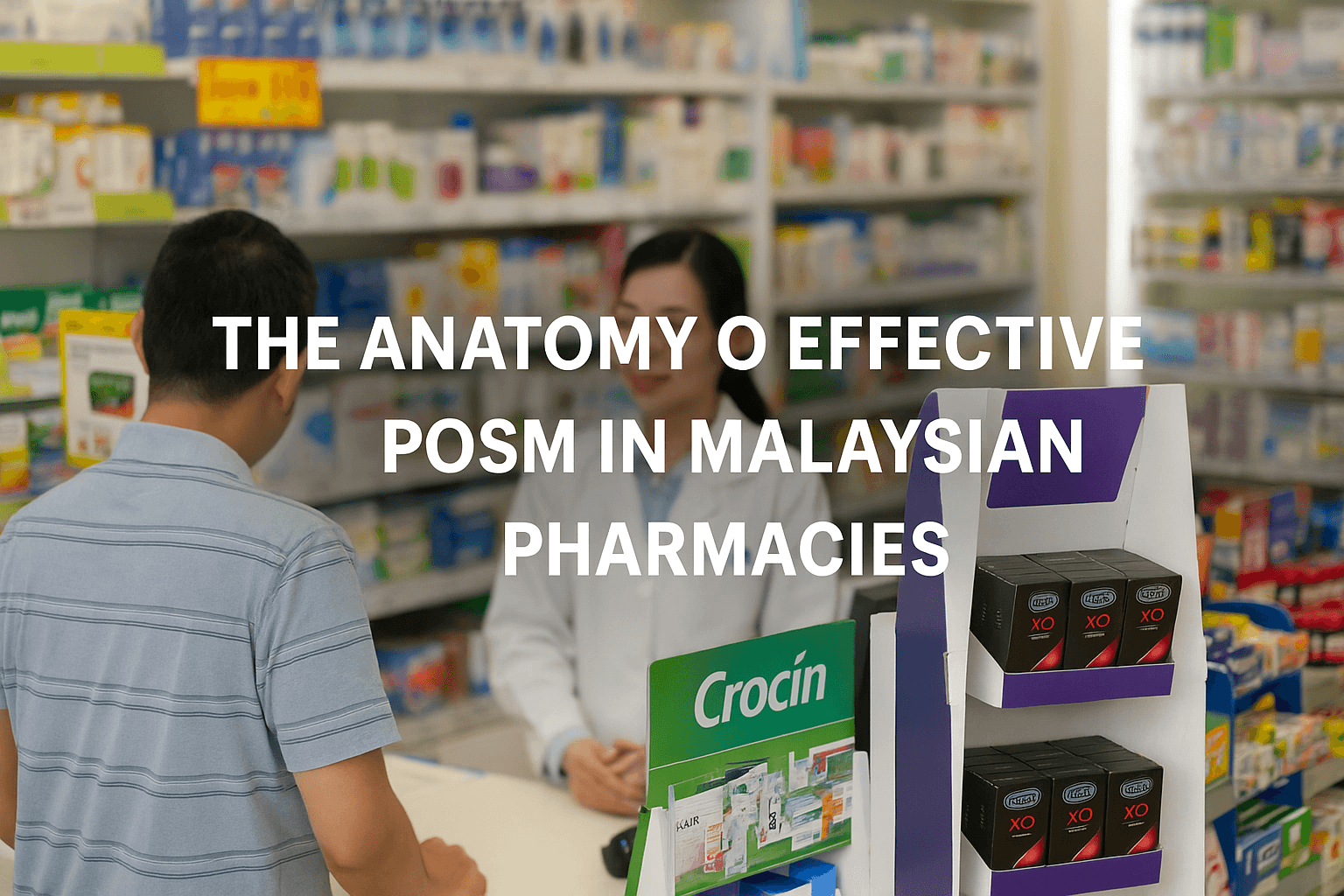
Not all POSM formats deliver equal impact. In healthcare retail, clarity and compliance are non-negotiable. Here’s a breakdown of the most effective types and their functions:
Wobblers: These small, attention-grabbing signs are perfect for limited-time promotions. A pharmacy distributor Malaysia might use them to spotlight a new diabetic-friendly snack line, leveraging motion to draw focus in high-traffic zones.
Shelf Talkers: Acting as mini-billboards, they provide regulatory-critical details (e.g., “For adults 50+ only”) while summarizing benefits. Brands like Alpro Pharmacy use them to differentiate similar-looking supplements.
Display Stands: Ideal for new product launches. A tiered stand in Health Lane Family Pharmacy showcasing pediatric vitamins creates a dedicated “destination” within the store.
Counter Cards: Positioned near checkout, they capitalize on last-minute decisions. Think pain-relief patches or travel-sized sanitizers—items shoppers add while waiting to pay.
Posters/Danglers: These amplify visibility for high-margin categories. In Caring Pharmacy, ceiling danglers for skincare lines guide customers from the entrance to the relevant aisle.
A 2023 Nielsen study found that pharmacies using tailored POSM saw a 19% higher sell-through rate for promoted items versus those relying solely on shelf placement. The lesson? Strategic POSM placement isn’t just about aesthetics—it’s a reliable revenue driver.
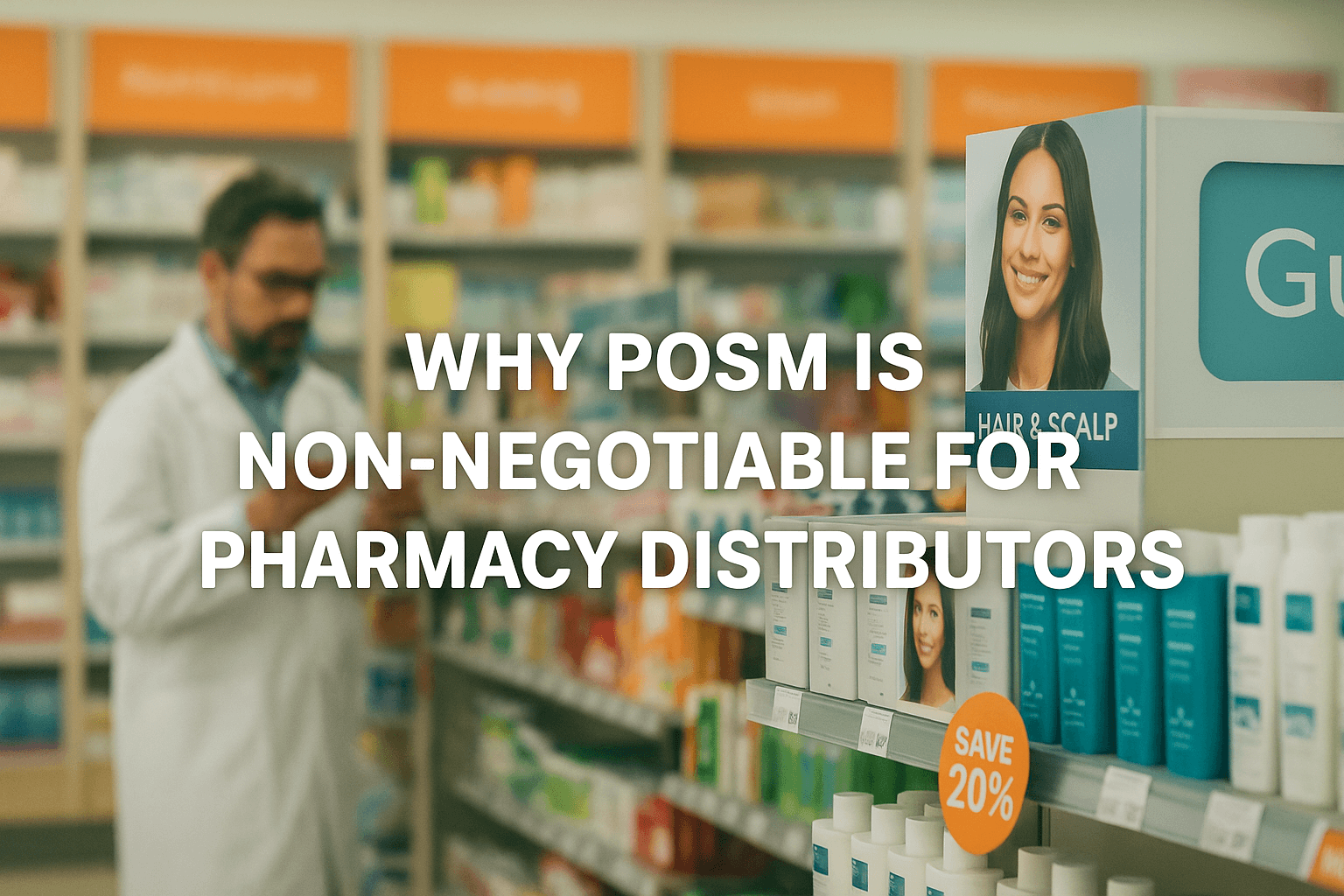
Real-world implications:
Regulatory Assurance: POSM with NPRA-approved wording (e.g., “Consult a doctor before use”) mitigates legal risks. A Johor Bahru-based distributor pharmacy avoided fines by auditing POSM for dosage clarity.
Customer Trust: Materials with expert medical visuals (e.g., a diagram comparing antihistamine strengths) reduce purchase hesitation.
Campaign Agility: When PharmaPrintHub produced flu-season POSM within 3 days for Health Lane, the chain capitalized on a surge in demand before competitors.
Checklist for Compliance-Driven POSM:
✓ Verify all health claims align with NPRA and Ministry of Health standards
✓ Use durable, smudge-proof materials for longevity in high-touch areas
✓ Include multilingual text (Bahasa Malaysia, English, Mandarin) where relevant
Learn More : WHO Guidelines on Point‑of‑Sale Promotion of Pharmaceuticals
Choosing a POSM printing vendor for pharmacy distribution services requires evaluating niche expertise. A budget printer might cut costs but miss critical details like:
Legibility of fine print (e.g., drug interactions in 8pt font)
Material safety (non-toxic inks for pediatric product displays)
Turnaround sync with NPRA approval timelines
Localized insights:
EcoPOS Malaysia gained traction among Klang Valley independent pharmacies for biodegradable danglers, aligning with urban sustainability trends.
POSM ProPrint’s familiarity with Guardian’s seasonal campaigns ensures seamless restocking during peak periods like Ramadan.
Comparison Framework for Vendors:
| Criterion | Budget Pick | Mid-Tier | Premium |
|---|---|---|---|
| Regulatory Knowledge | Basic | NPRA-aware | Full compliance audits |
| Speed | 7–10 days | 5–7 days | 3–5 days |
| Pharmacy Clients | Small retailers | Regional chains | National brands |
A trusted partner like PharmaPrintHub offers end-to-end solutions—from design checks to logistics coordination—making them a strategic ally for pharmacy distributor Malaysia networks.
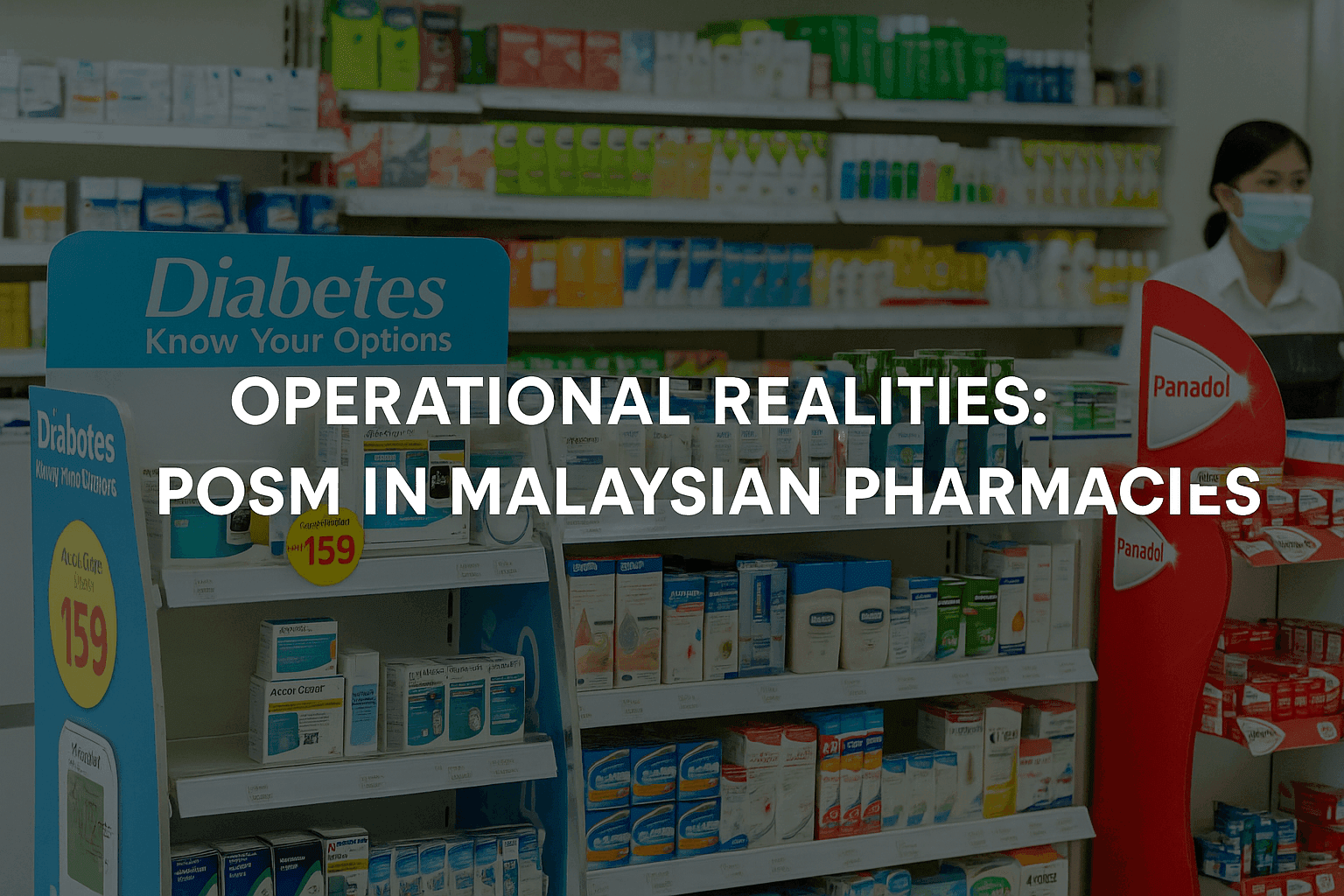
Kedai Urat in Penang credits a 15% sales lift in their traditional medicine section to Bahasa Malaysia-centric shelf talkers explaining usage in local idioms. Meanwhile, Watsons’ “Buy 1 Free 1” counter cards in Selangor malls consistently boost basket sizes by RM8–12 per transaction.
Common pitfalls to avoid:
Overcrowding shelves with POSM (limits product visibility)
Ignoring cultural nuances (e.g., green-themed POSM for halal products resonates better)
Using low-adhesion materials in humid climates (leading to fallen danglers)
Proven tactic: Aeon Wellness rotates POSM quarterly, tying displays to health awareness months (e.g., pink-themed breast cancer campaigns in October).
The right POSM strategy doesn’t just inform—it persuades, compliantly. For pharmacy distributors, that’s the difference between stagnant inventory and efficient stock turnover.
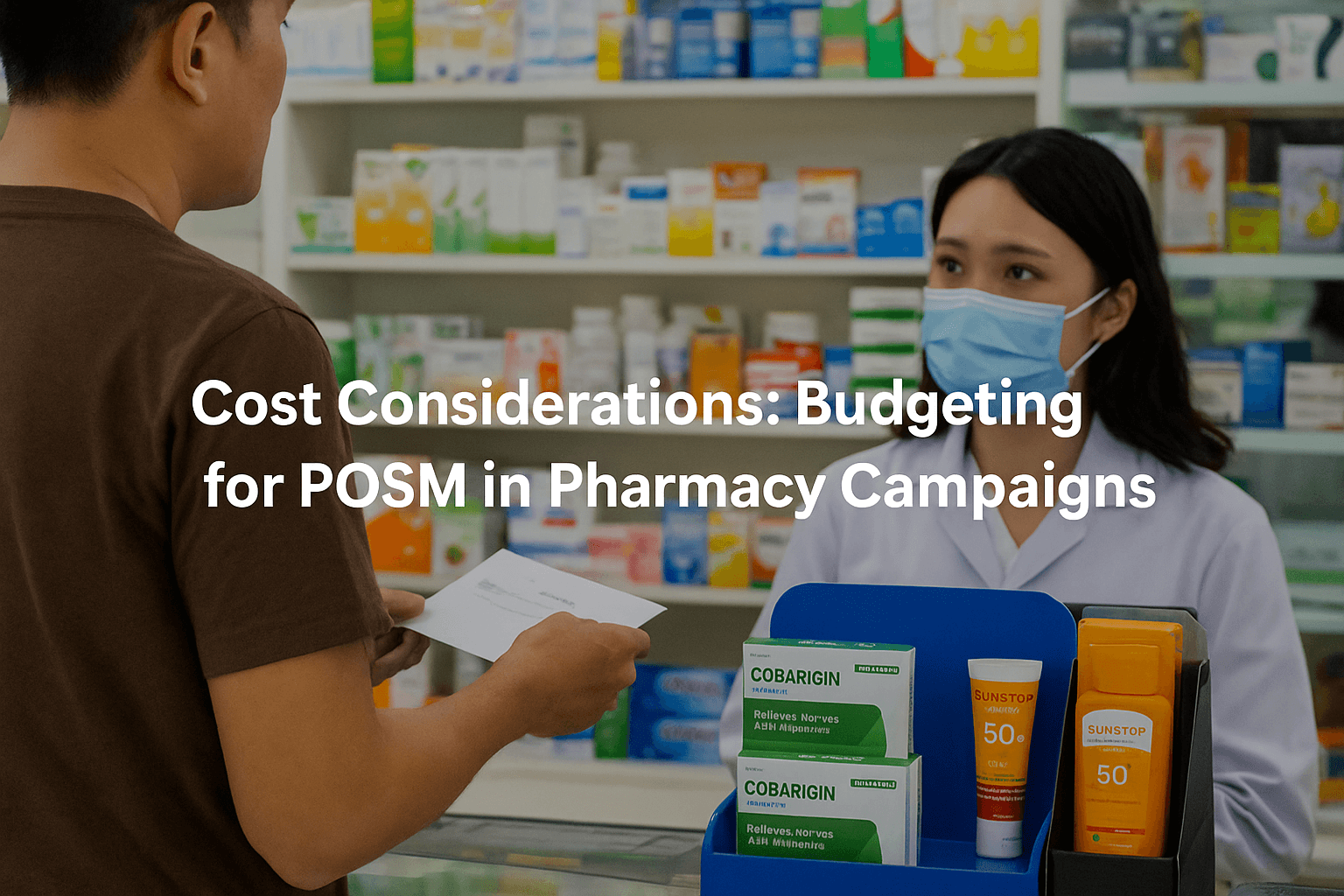
When planning a pharmacy merchandising campaign in Malaysia, one of the most critical decisions revolves around POSM budgeting. While it’s tempting to cut costs, strategic investment in high-quality Point-of-Sale Materials can make the difference between a forgettable display and one that drives proven sales conversions.
For example, a Guardian Pharmacy branch in Penang allocated RM 2,000 for a seasonal flu-relief campaign, investing in acrylic display stands, shelf talkers, and counter cards. Within a month, the promoted products saw a 28% sales increase, proving that efficient POSM spending directly impacts revenue. Meanwhile, a budget-conscious independent pharmacy in Ipoh opted for cheaper cardboard displays, only to find them warping in humidity—leading to frequent replacements and, ultimately, higher long-term costs.
Learn More : Regulatory Landscape for Pharmacy Distribution in Malaysia
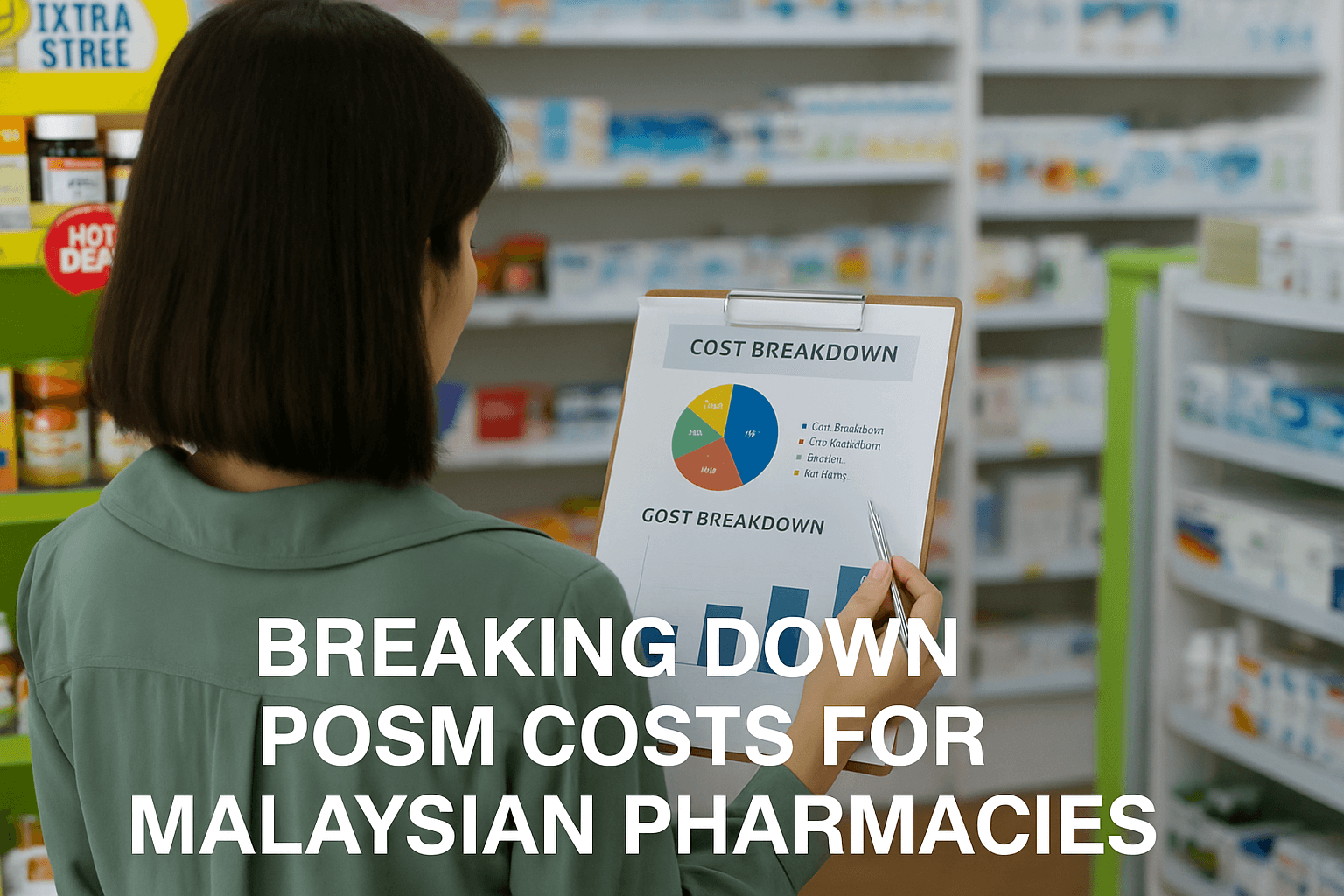
Here’s a realistic cost breakdown for different POSM formats in Malaysia’s pharmacy retail sector:
Wobblers: RM 0.50–1.50 per unit (ideal for promotions, but durability varies)
Shelf Talkers: RM 1.00–2.00 per piece (must balance readability and regulatory text)
Display Stands: RM 80–150 (cardboard) vs. RM 300+ (acrylic—longer lifespan)
Posters & Danglers: RM 3–10 per piece (depends on size and material)
Hidden costs that derail budgets:
✓ Design revisions (some vendors charge per edit)
✓ Rush fees (if NPRA approvals delay production)
✓ Custom die-cuts (unique shapes cost extra)
A Klang Valley pharmacy distributor learned this the hard way—their initial quote for 500 shelf talkers was RM 1,000, but last-minute compliance edits added RM 300 in fees. Lesson? Always factor in buffer costs for regulatory adjustments.
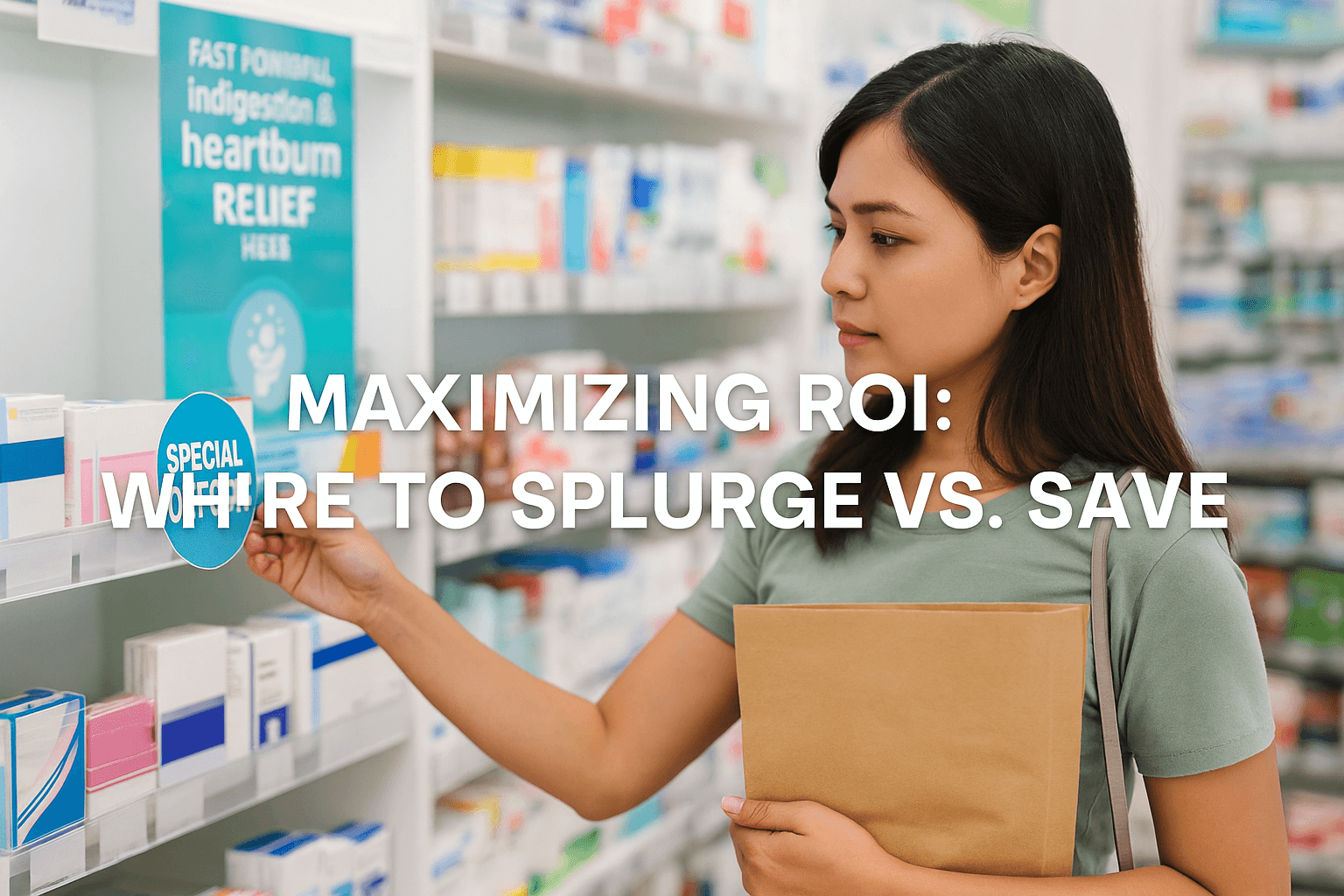
Not all POSM requires premium materials. A reliable strategy involves:
✓ Prioritizing high-traffic areas (checkout counters, eye-level shelves) with durable acrylic stands
✓ Using cost-effective wobblers for short-term promotions
✓ Investing in multilingual POSM (Bahasa Malaysia, English, Mandarin) to cater to diverse shoppers
Case in point: A Health Lane Family Pharmacy in Johor Bahru spent 15% more on UV-coated shelf talkers to prevent fading—resulting in 6 months of use versus competitors replacing flimsy versions every 2 months.
Learn More : McKinsey: The New Consumer Decision Journey in Pharmacies
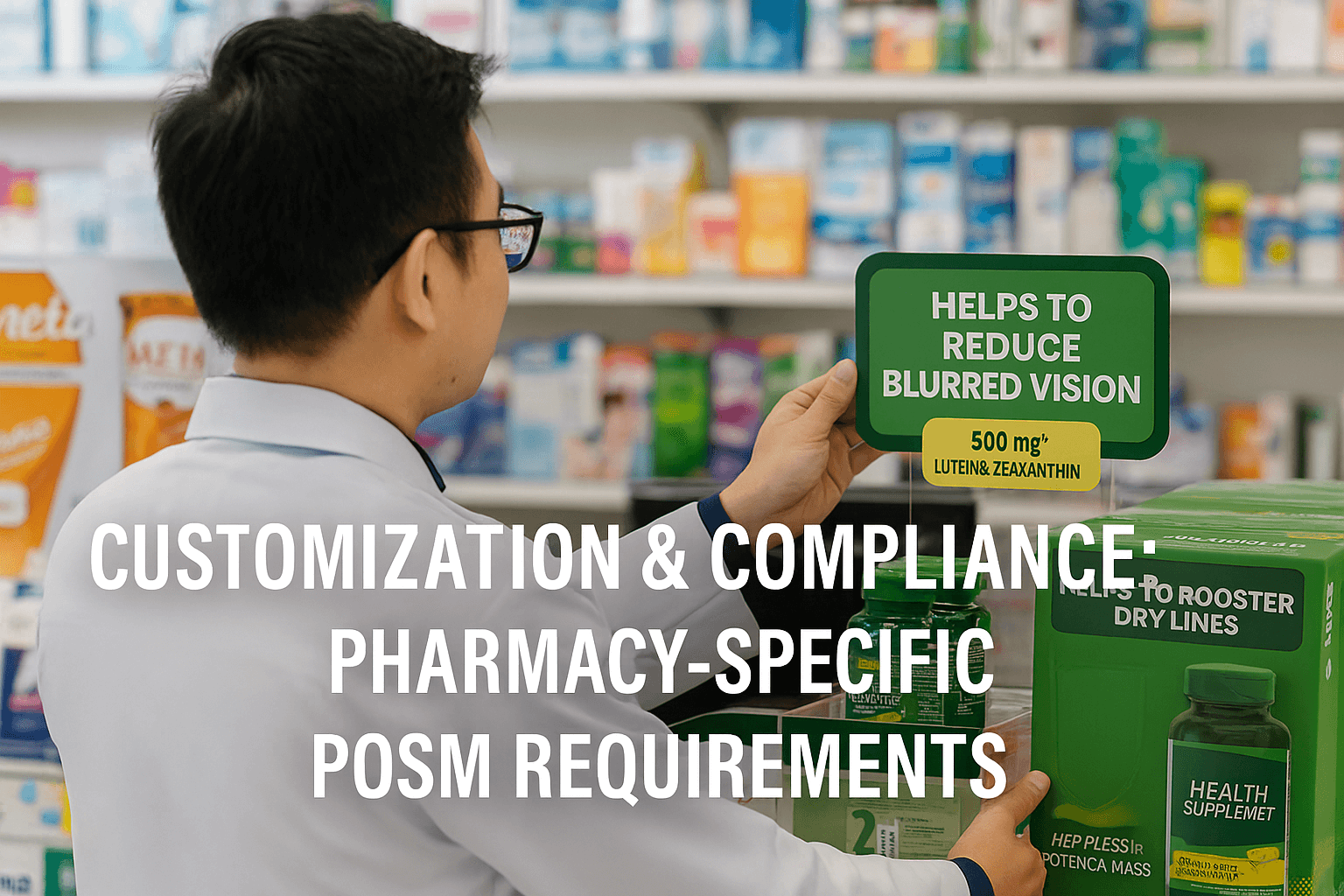
Malaysia’s pharmaceutical marketing landscape is tightly regulated, meaning POSM isn’t just about aesthetics—it’s about legal compliance. A single non-compliant claim (e.g., exaggerating a supplement’s benefits) can trigger NPRA penalties, making expert vendor selection essential.
KKM & NPRA Guidelines
Phrases like “KKM Approved” must be verifiable.
Dosage instructions need clear, legible formatting (no fine print).
Traditional medicine POSM must avoid misleading therapeutic claims.
Audience-Specific Messaging
OTC products can use bolder promotional language.
Prescription drug POSM must emphasize “Consult a doctor” disclaimers.
Visual Safety Cues
Icons (e.g., pregnancy warnings) improve comprehension.
Color contrasts ensure readability for elderly shoppers.
Real-world compliance fail: A Kuala Lumpur pharmacy used POSM claiming a vitamin could “prevent heart disease”—resulting in an NPRA warning and forced campaign cancellation. Their vendor hadn’t vetted the wording.
Checklist for Compliance-Centric POSM:
✓ Verify all health claims with NPRA’s latest guidelines
✓ Use high-contrast fonts (e.g., black text on yellow for warnings)
✓ Include multilingual disclaimers where applicable
Learn More : Journal of Pharmaceutcal Policy and Practice: Regulatory Compliance in Pharma Marketing
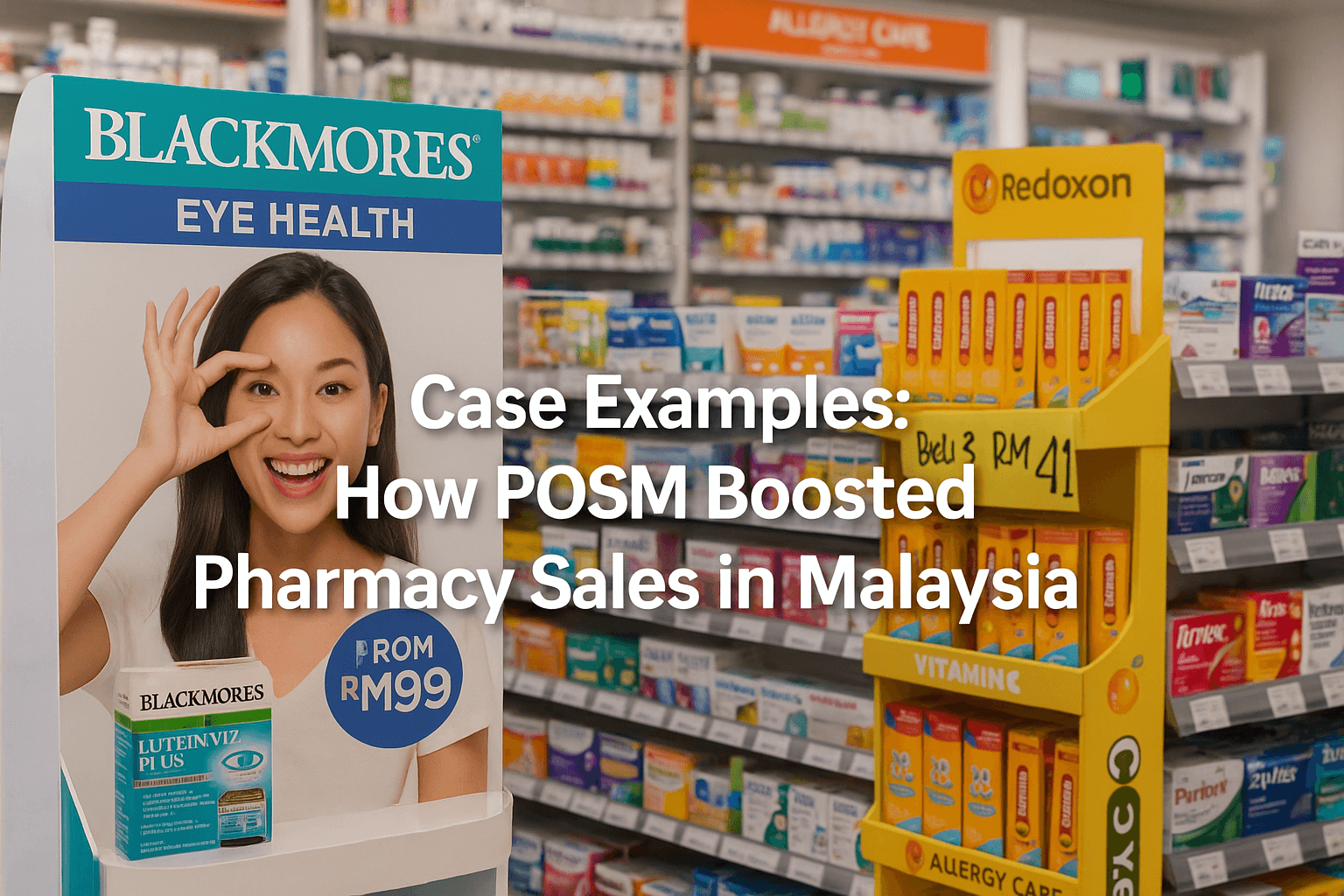
Does visual merchandising actually work? Data says yes—when done strategically.
POSM Used: Branded floor display + wobblers
Result: 22% sales uplift in 30 days, aided by pharmacist recommendations.
Why It Worked: The display’s eye-level placement aligned with shopper traffic flow.
POSM Used: Cartoon-themed danglers + shelf talkers
Result: 3X more engagement during back-to-school season.
Key Insight: Child-friendly visuals encouraged parents to explore the section.
POSM Used: Counter cards + “Buy 1 Free 1” signage
Result: 18% higher sales in 2 weeks.
Takeaway: Impulse-driven POSM at checkout drove unplanned purchases.
Learn More : Cost-Effective Strategies for Pharmacy Distribution in Malaysia | How a Supplement Brand Doubled Sales with Better Merchandising | Nielsen Report: Retail Shelf Promotions Effectiveness
Even proven POSM strategies can fail if execution falters.
✗ Overcrowded designs (shoppers ignore cluttered messaging)
✗ Low-quality prints (blurry text undermines trust)
✗ Ignoring pharmacist input (they know customer pain points)
✗ Static placements (failing to rotate POSM reduces impact)
A Johor-based distributor once used dark blue text on black stands—rendering dosage instructions illegible. Sales dropped until a redesign fixed the contrast.
Framework for Error-Free POSM:
Pre-Campaign Testing – Mock up displays for feedback.
Regulatory Pre-Check – Have NPRA-compliant templates vetted.
Post-Campaign Audit – Track which POSM drove the most conversions.
In Malaysia’s competitive healthcare retail market, POSM isn’t optional—it’s a trusted tool for driving compliance, visibility, and sales. Whether you’re a pharmacy distributor Malaysia or a brand manager, tailored POSM bridges the gap between regulatory requirements and consumer engagement.
For expert POSM solutions that align with NPRA standards and boost shelf-level performance, reach out to PriooCare Malaysia. Our team specializes in:
✓ End-to-end POSM production (design, compliance checks, printing)
✓ Pharmacy-specific merchandising strategies
✓ Cost-efficient, high-impact displays
Q1: What does POSM mean?
Answer:
POSM stands for Point of Sales Materials, which are physical promotional tools used in retail environments to attract attention, guide shoppers, and influence purchase decisions.
Q2: What is an example of POSM?
Answer:
Common examples include shelf talkers, wobblers, display stands, bunting, posters, gondola end displays, and product demo counters used to highlight a brand or promotion.
Q3: What is POSM printing?
Answer:
POSM printing refers to the production of marketing materials—such as posters, standees, danglers, and shelf strips—using professional printing methods to ensure high-quality visuals for retail displays.
Q4: Where is POSM commonly used?
Answer:
POSM is most commonly used in supermarkets, pharmacies, convenience stores, hypermarkets, and trade events where brands need to influence shoppers at the point of purchase.
Q5: Is POSM still effective?
Answer:
Yes, POSM remains effective because it enhances visibility, reinforces branding, guides consumer decisions, and strengthens in-store promotions, especially in high-traffic retail categories.
Q6: What are the 4 types of marketing?
Answer:
The four core types are Product, Price, Place, and Promotion—commonly known as the 4Ps of marketing, forming the foundation of retail and merchandising strategies.
Q7: What is the role of POSM in retail?
Answer:
POSM helps attract attention, communicate product benefits, highlight promotions, improve category navigation, and increase conversion by influencing shoppers directly at the shelf.
Q8: What is POSM in supply chain?
Answer:
In the supply chain, POSM refers to the production, storage, distribution, and timely deployment of marketing materials to retail outlets, ensuring consistent brand presence across locations.
Q9: Why POSM?
Answer:
Brands use POSM to boost visibility, differentiate from competitors, support promotional campaigns, and influence impulse purchases at the final decision-making point.
Q10: What is the ROI of POSM?
Answer:
The ROI of POSM is measured by increased sales lift, better brand recall, improved shelf visibility, and stronger promotional performance relative to the cost of producing and deploying the materials.
Let’s collaborate to ensure your next campaign is both compliant and conversion-driven.