
Top 30 Medicine Distributors in Malaysia for Pharmacies and Clinics

May 11 , 2026
So, what precisely does a pharmacy distributor Malaysia entity accomplish within this complex network? Fundamentally, a pharmacy distributor serves as the indispensable and strategic intermediary that connects pharmaceutical manufacturers with the final points of care—be it a retail pharmacy, a hospital, or a clinical practice. Their remit, however, extends far beyond the simplistic notion of transporting goods from point A to point B. They are the guardians of the supply chain, entrusted with a multifaceted portfolio of critical responsibilities that ensure the right medicine reaches the right patient at the right time, and in the right condition. This involves meticulous management of regulatory compliance with bodies like the NPRA and KKM, unwavering maintenance of cold chain integrity for sensitive biologics and vaccines, sophisticated handling of thousands of stock-keeping units (SKUs), and the vigilant safeguarding of product authenticity against counterfeit threats.
From large-scale pharmacy wholesale distributors that service nationwide chains like Caring Pharmacy or Health Lane Family Pharmacy to the nimble independent pharmacy distributor catering to a standalone clinic in Kapit, Sarawak, each player fulfills a distinct yet essential role. For the practicing pharmacist, these distributors are the reliable lifeline for seamless inventory replenishment, ensuring shelves are never bare of critical prescription medications or popular over-the-counter (OTC) products. For the brand manager at a multinational pharma company, distributors are the field army executing intricate retail merchandising strategies, in-store promotions, and visibility plans. These organizations are, therefore, trusted pillars of the entire pharmaceutical ecosystem; their proven expertise in marrying rigorous healthcare logistics with stringent regulatory adherence is what transforms them from mere vendors into expert allies for business growth and patient safety.
Core Mandates: The Multifaceted Roles of a Distributor Beyond Logistics
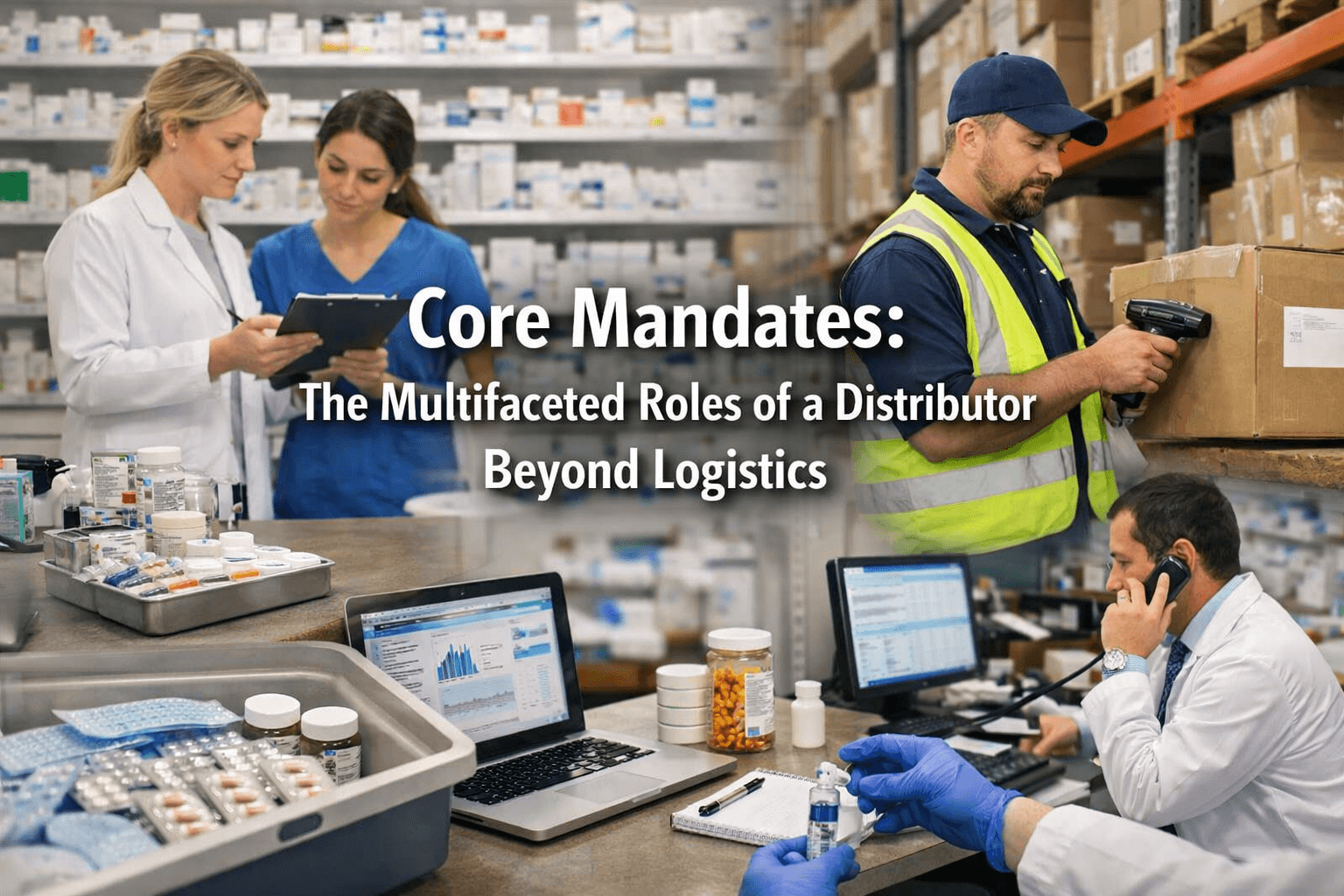
Delving deeper, the operational scope of a top-tier medicine distributor is built on several core pillars. First and foremost is regulatory stewardship. In Malaysia, this means adhering to the Good Distribution Practice (GDP) guidelines, which govern every aspect of storage, transportation, and documentation to prevent contamination, mix-ups, and degradation. A distributor’s warehouse isn’t just a storage space; it’s a controlled environment where temperature, humidity, and security are constantly monitored. Second is inventory and range management. A distributor must maintain an extensive, well-organized portfolio spanning Rx drugs, OTC products, health supplements, skincare items, and medical devices to be a true one-stop solution for pharmacies. This vast SKU breadth allows pharmacies to streamline their ordering processes and meet diverse patient needs.
The third pillar is value-added services. The most effective distributors go beyond drop-shipping boxes. They provide tailored account support, which can include:
Automated restocking reports and inventory analysis to optimize pharmacy capital.
Merchandising assistance, such as setting up planograms for high-traffic OTC sections.
Market intelligence on moving products and emerging consumer trends.
Credit facilities and flexible payment terms to aid pharmacy cash flow.
For instance, a distributor servicing a panel of clinics in Penang might offer batch tracking reports for easier recall management, while one supporting a pharmacy in rural Pahang might provide consolidated weekly deliveries to optimize logistics cost. This role as a strategic supply chain partner is what separates industry leaders from basic freight handlers.
Learn more: Global Quality Assurance & Distribution Standards — World Health Organization
Key Evaluation Criteria: Distinguishing Top-Tier Medicine Distributors in the Market
Given their critical role, how does a pharmacy or clinic objectively determine if their distributor partner is a catalyst for growth or a hidden bottleneck? Evaluating performance against concrete, industry-recognized metrics is essential. The following benchmarks are what savvy healthcare businesses in Malaysia scrutinize closely.
Regulatory Compliance and Licensing: This is the non-negotiable foundation. Any distributor pharmacy must possess valid NPRA registration and GDP certification. For specific product categories, additional KKM approvals are mandatory. Partnering with a non-compliant distributor jeopardizes the pharmacy’s own license and patient safety, exposing them to risks of product seizures and enforcement actions. A proven distributor will transparently share their certifications and welcome audit queries.
Operational and Delivery Performance: Consistency and accuracy are paramount. Metrics here include efficient lead times (the time from order to delivery), order fulfillment accuracy (a near-zero error rate), and real-time tracking capability. A distributor that consistently meets its delivery windows allows a pharmacy to operate with lower safety stock, freeing up capital. For a busy hospital in Kuala Lumpur, a delayed shipment of antibiotics can disrupt treatment protocols, while for a community pharmacy in Johor Bahru, a wrong shipment creates administrative nightmares and erodes patient trust.
Cold-Chain and Special Handling Capability: With the growth of biologics, vaccines, and specialized injectables, this criterion has become exponentially more critical. It’s not just about having refrigerated trucks; it’s about a seamless, monitored cold chain from the manufacturer’s door to the pharmacy’s refrigerator. Reliable distributors invest in IoT-enabled temperature loggers, validated cold storage warehouses, and specially trained handlers. The distribution of the HPV vaccine across clinics in Sabah, for instance, depends entirely on this unbroken cold chain.
Product Range and Account Servicing: Does the distributor offer a comprehensive portfolio that aligns with the pharmacy’s business model? A wellness-focused retail chain will prioritize distributors with strong supplement and organic product lines. Furthermore, the quality of account servicing—having a dedicated key account manager, proactive problem-solving, and providing strategic business insights—is a major differentiator.
To crystallize the trade-offs in the market, consider this comparative framework:
Comparative Table: Operational Models of Independent vs. Corporate Distributors
| Evaluation Criteria | Independent Distributors | Corporate/Large-Scale Distributors |
|---|---|---|
| Service Flexibility & Customization | High – Often able to offer tailored delivery schedules, mixed pallets, and personalized terms. | Moderate – Bound by more standardized, systemic processes for efficiency. |
| Cold-Chain & Technical Support | Variable – Can be high if specialized, but requires verification. May lack scale for nationwide cold chain. | Consistently High – Significant capital for infrastructure, IoT monitoring, and dedicated compliance teams. |
| Minimum Order Quantity (MOQ) | Generally Low – Advantageous for small clinics or new pharmacies managing cash flow. | Medium to High – Optimized for volume, which can be a barrier for smaller outlets. |
| KKM/NPRA Compliance Assurance | Must Be Verified Individually – Diligence is crucial as standards can vary. | Generally Consistent & Robust – Large compliance departments ensure adherence is systemic. |
| Merchandising & Marketing Support | Typically Limited – Focus is on core distribution logistics. | Comprehensive – Often include field merchandisers, planogram services, and promotional execution. |
Understanding these key differentiators empowers pharmacy owners and procurement managers to make informed, strategic decisions, selecting a partner whose strengths directly align with their operational needs and growth stage.
The Imperative of Regulatory and Licensing Verification for Distributors
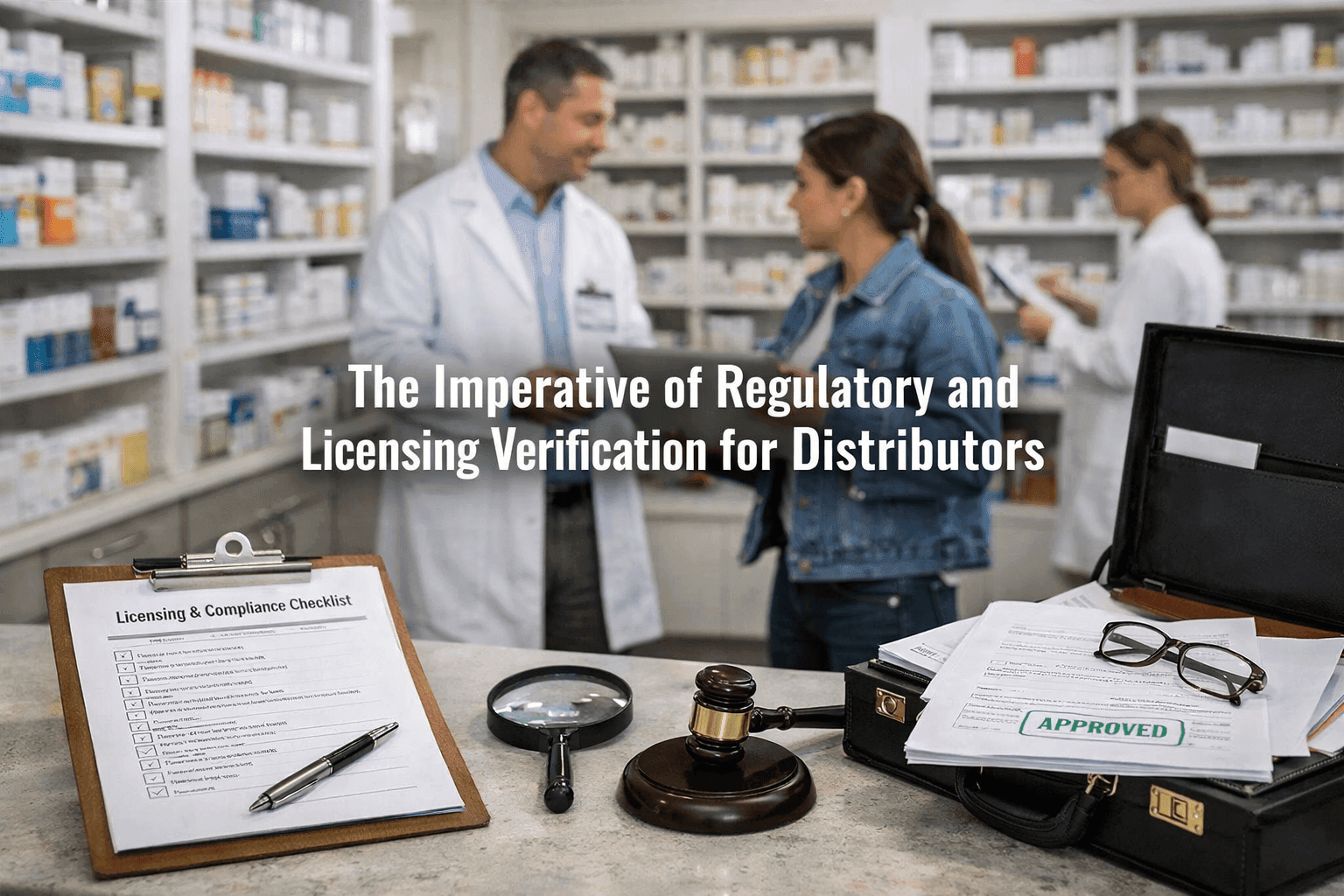
How can a healthcare business definitively ensure their chosen distribution partner won’t inadvertently put their hard-earned operating license in jeopardy? Malaysia’s pharmaceutical regulatory framework is intentionally stringent, designed as the primary defense for public health. Consequently, every legitimate pharmacy distributor company must operate within a clear set of mandated requirements. They must be formally registered with the NPRA and adhere to the Good Distribution Practice (GDP) for medical products—a certification that covers everything from warehouse conditions and staff training to transportation protocols and documentation traceability. Furthermore, specific product categories require explicit approval from the Ministry of Health (KKM).
The risks of non-compliance are severe and multifaceted. From the pharmacist’s perspective, sourcing from a non-compliant distributor could mean receiving products that have been stored in substandard conditions, compromising their efficacy and safety. This directly breaches their duty of care to patients. From the distributor’s own standpoint, failure to comply can result in heavy fines, license revocation, and irreparable damage to their business reputation. There have been instances where enforcement actions led to product recalls and seizures, disrupting supply for countless downstream pharmacies. Therefore, verification is not a bureaucratic step; it is a critical risk management practice.
Essential best practices for verification include:
Utilizing the official NPRA QUEST online portal to actively confirm the distributor’s license status and scope.
Requesting and physically checking a copy of the distributor’s current GDP certificate, noting its validity period.
Asking for product sourcing documentation or letters of authorization from manufacturers to ensure an authentic supply chain.
Inquiring about their audit history and whether they undergo regular third-party quality audits.
By insisting on this due diligence, a pharmacy aligns itself only with strategic, compliant, and essential partners. This diligence acts as a shield, safeguarding not just inventory but the very trust patients place in the healthcare system. It is a fundamental component of responsible pharmacy practice in Malaysia.
Learn more: How to Ensure Regulatory Compliance for Pharmacy Distribution in Malaysia | Guideline on Good Distribution Practice (GDP) — NPRA Malaysia
Emerging Trends Defining the Future of Pharmacy Distribution in Malaysia (2026 Perspective)
Is your current distribution service equipped to navigate the accelerating evolution of the Malaysian healthcare landscape? The sector is undergoing a profound transformation, driven by technological advancement, changing consumer expectations, and heightened regulatory focus. Several key trends are actively reshaping what it means to be a leading pharmacy distribution service in Malaysia, making agility and innovation non-optional for survival and success.
Digital Integration and Data-Driven Operations: The era of manual phone orders and spreadsheet inventory is closing. Digital transformation is now central, with advanced distributors offering web-based platforms and mobile apps that integrate in real-time with a pharmacy’s Point-of-Sale (POS) system. This allows for automated purchase orders, predictive stock alerts, and seamless reconciliation. For a brand manager, this connectivity means access to real-time sales data, enabling more effective promotional planning and territory management. The move towards data analytics provides insights into prescribing patterns and consumer buying behavior, allowing for smarter inventory forecasting.
Advanced Cold-Chain and Logistics Innovation: As the pharmaceutical portfolio becomes more sophisticated, so must the logistics backbone. We are seeing significant investments in regional hub-and-spoke warehouse networks, reducing last-mile delivery times to both urban and remote areas. The use of Internet of Things (IoT) sensors provides end-to-end visibility of shipment conditions, with data logged on blockchain-inspired platforms for immutable proof of chain of custody. This is particularly essential for high-value specialty drugs entering the Malaysian market. A distributor serving hospitals in Klang Valley, for example, might now use GPS and temperature-tracked vehicles for guaranteed integrity of oncology drugs.
Hyper-Specialization and Service Segmentation: The one-size-fits-all distribution model is fading. Forward-thinking distributors are developing tailored service lanes for different pharmacy segments. This might involve creating dedicated catalogues and merchandising sets for:
Muslim-friendly health and wellness products, catering to the growing demand for halal-certified pharmaceuticals and cosmetics.
Senior-care bundles comprising chronic disease medications, mobility aids, and nutritional supplements for an aging population.
Aesthetic and dermocosmetic ranges, complete with training for pharmacy staff, to capture the booming beauty-from-within market.
Expansion of Last-Mile and Reach: There is a concerted push to deepen penetration beyond major cities. Strategic distributors are partnering with local logistics players or investing in their own fleet to reach rural clinics in East Malaysia and off-island communities with greater frequency and reliability. This not only serves a public health need but also unlocks new commercial opportunities.
From the pharmacist’s viewpoint, these trends promise greater operational efficiency, fewer stockouts, and better tools to serve their community. For the distributor, they represent a path to value-added differentiation beyond price competition. The most effective, innovative, and strategic partners are already embedding these trends into their core operations. Pharmacies and clinics that consciously partner with such forward-adapting distributors are not just solving today’s logistics needs—they are future-proofing their access to medicine, ensuring they remain competitive and capable of delivering the highest standard of patient care in the dynamic years ahead.
Learn more: Trends Shaping Independent Pharmacy Distribution in 2025 | Life Sciences & Health Care Industry Research — Deloitte Insights
The Strategic Foundation of a Trusted Distribution Partnership
Selecting a pharmaceutical distributor is not merely a procurement decision; it is a foundational strategic partnership that directly influences patient access, brand integrity, and commercial viability. The right partner functions as an extension of your operations, navigating the complex interplay of NPRA regulations, Good Distribution Practice (GDP), and diverse market dynamics. Conversely, an misaligned partnership can introduce compliance risks, operational inefficiencies, and ultimately, stock-outs that compromise care. The distinction between a simple logistics provider and a true supply chain partner lies in their ability to anticipate challenges, embed compliance into every process, and deliver reliable, consistent performance that pharmacies and clinics can depend upon.
Learn more: The Role of Pharmacy Distribution Services in Malaysia’s Healthcare System
Core Operational Challenges in Malaysian Pharmacy Distribution
The Malaysian healthcare landscape presents a unique set of operational hurdles that test the mettle of even the most established distributors. These challenges are not abstract; they manifest daily at pharmacy counters and in clinic storerooms, demanding proven and effective responses.
Regulatory and Logistical Bottlenecks
Navigating customs clearance for imported medicines and raw materials remains a critical pinch point. Delays here can ripple through the entire supply chain, causing shortages. Furthermore, KKM (Ministry of Health) and NPRA compliance is not a one-time checkbox but a continuous requirement. Distributors must manage complex product registrations, ensure proper storage conditions are documented from port to shelf, and handle recall procedures with precision. For instance, a distributor bringing in novel biologic medications must have impeccable cold chain pharmaceutical Malaysia protocols to maintain product efficacy from arrival at KLIA right through to a hospital in Sarawak.
Demand Volatility and Inventory Management
Seasonal outbreaks, such as dengue or flu seasons, can trigger sudden, unpredictable demand spikes for specific medications. A distributor relying on just-in-time models may fail pharmacies at this crucial moment. Similarly, poor inventory rotation can lead to expired stock accumulating at the pharmacy level—a direct financial loss and a significant patient safety risk. This is where strategic buffer stock planning, informed by historical data and epidemiological trends, becomes an essential service.
On-the-Ground Execution Gaps
A shipment arriving on time is only half the battle. Challenges like incorrect shelf labeling, poor planogram adherence, or a lack of staff product knowledge can stifle sales and confuse patients. This gap between delivery and retail readiness highlights the difference between a basic wholesaler and a distributor providing full pharmacy merchandising Malaysia support. The latter ensures products are not just in the back room, but optimally presented on the shelf and understood by pharmacy staff.
Learn more: Future of Pharma Operations — McKinsey & Company
How Leading Distributors Deploy Strategic Solutions
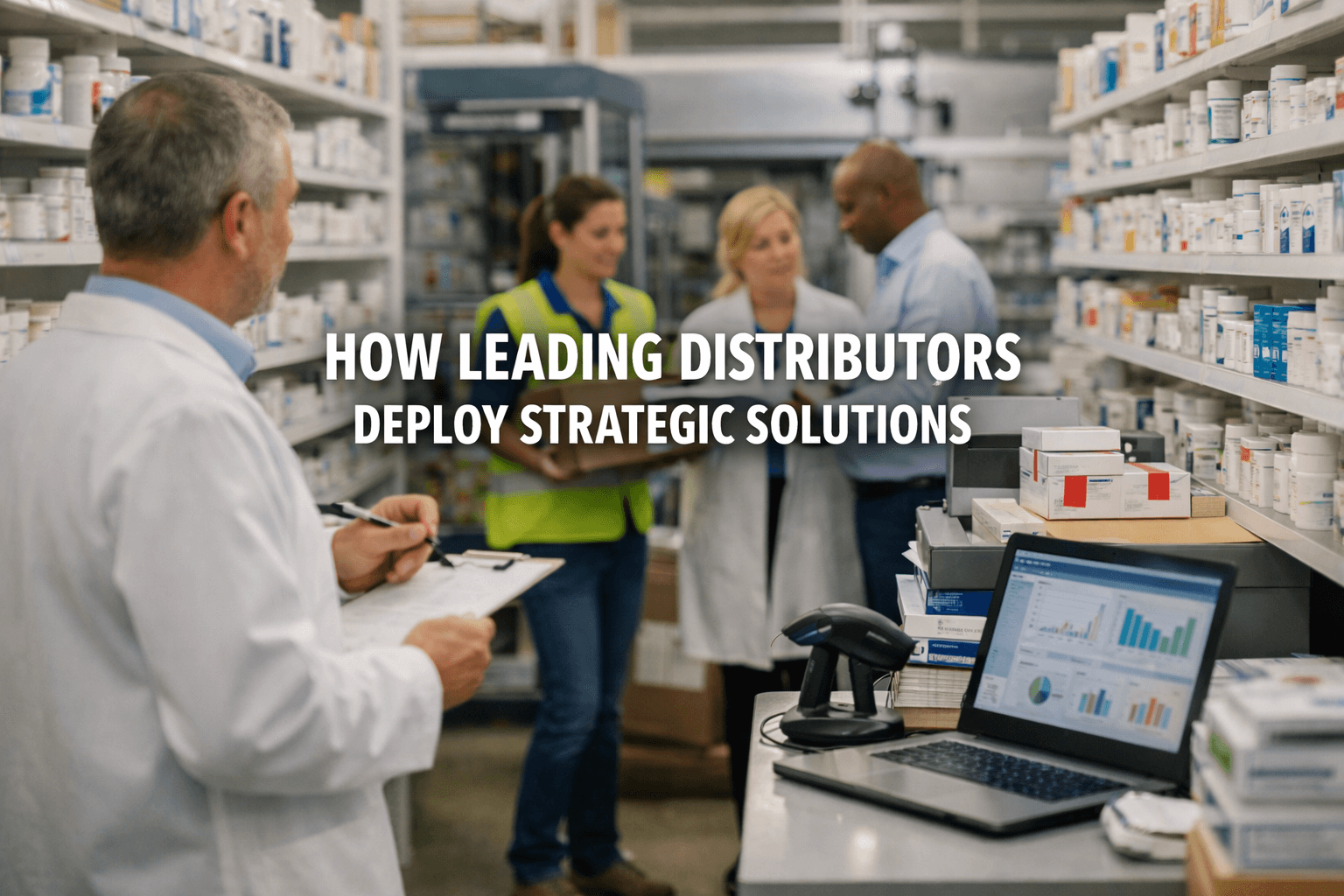
Top-tier pharmacy wholesale distributors differentiate themselves by building systems that transform these common challenges into areas of competitive advantage. Their approach is holistic, integrating technology, human expertise, and rigorous SOPs.
Advanced Logistics and Compliance Integration
Efficient distributors invest in predictive logistics and robust compliance frameworks. They utilize track-and-trace technologies like QR code tagging for real-time visibility. Their warehouses are not just storage spaces but GDP-certified hubs designed for specific needs, such as climate-controlled zones for cold chain products. For example, a trusted distributor serving East Malaysia would operate regional consolidation points in Sabah and Sarawak, reducing last-mile delivery times and ensuring product stability for remote clinics, a tailored solution for a geographically challenging region.
Data-Driven Supply Chain Resilience
Leading players employ sophisticated demand forecasting tools that analyze prescription trends, seasonal data, and even local health alerts. This allows for dynamic buffer stock management, ensuring availability during demand surges without leading to overstock. They provide partners with actionable insights through dashboards showing stock turnover rates, which empowers pharmacies to make smarter purchasing decisions and minimize waste.
Value-Added Services that Drive Performance
The most effective distributors go beyond the transaction. They offer merchandising teams that execute planograms to maximize shelf impact, conduct pharmacy staff education days on new products, and provide detailed post-campaign sales reports to brand managers. Consider a new cardiovascular supplement launch. A distributor with strong merchandising execution would ensure perfect shelf positioning in key urban pharmacies like Caring or Alpro, while their medical representatives provide briefing sheets to clinic doctors in the same catchment—a synchronized launch strategy.
Framework: The Distribution Partnership Value Spectrum
Transactional Level: Focuses solely on cost and delivery speed. Suitable for generic, high-volume products with simple storage needs.
Operational Level: Adds reliability, GDP compliance, and basic inventory reporting. Meets the core needs of most independent pharmacies.
Strategic Partner Level: Integrates merchandising, data analytics, promotional support, and tailored logistics solutions. Essential for brand launches, specialty drugs, and chain pharmacy partnerships.
Matching Distributor Types to Malaysian Pharmacy and Clinic Models
There is no universal “best” distributor. The optimal choice is dictated by the specific operational model, scale, and location of the healthcare outlet. A one-size-fits-all approach will inevitably create friction.
Use Case 1: Large Chain Pharmacies (e.g., Watsons, Guardian, Caring)
For national chains, the priority is seamless, automated integration. They require GDP-certified pharmacy wholesale distributors capable of handling massive SKU volumes across hundreds of locations. Efficient electronic data interchange (EDI) for automated order syncing is non-negotiable. Furthermore, these chains demand strict planogram execution and nationwide, simultaneous campaign rollouts. Their strategic distributors function like an outsourced logistics and merchandising arm, ensuring uniformity from a store in Penang to one in Johor Bahru.
Use Case 2: Independent Community Pharmacies and Clinics
An independent pharmacy in a Kuala Lumpur suburb or a general practitioner’s clinic in Melaka has vastly different needs. They prioritize flexibility over scale. Here, niche independent pharmacy distributor teams shine. They offer lower minimum order quantities (MOQ), more flexible payment terms, and personalized service from an accessible account manager. A clinic introducing a new diabetes management device might partner with a specialized distributor who can provide clinical training support to the doctors and nurses, a service large wholesalers may not offer.
Use Case 3: Rural and East Malaysian Healthcare Outlets
Geography dictates needs here. Pharmacies in rural Pahang or clinics in Sarawak require distributors with an extensive regional network and proven resilience in last-mile delivery. The challenge isn’t volume, but consistency and cold chain integrity over long distances. Distributors with local drop-points or dedicated East Malaysia operations provide a reliable lifeline. Their strategic value is ensuring life-saving medicines, like insulin or vaccines, remain within strict temperature parameters throughout a protracted journey.
The Brand Manager’s Perspective: Beyond Delivery to Market Growth
From a brand manager’s viewpoint, a distributor is a critical channel partner for achieving market penetration and brand equity. Their evaluation criteria extend far beyond warehouse capacity.
Compliance as a Brand Safeguard
A brand manager’s foremost concern is brand compliance. They trust distributors who guarantee that their products are stored, handled, and transported under exacting conditions, preserving safety and efficacy. Any lapse can lead to regulatory action that damages the brand’s reputation across the entire market.
Demand Generation and In-Market Execution
Brand managers value partners who provide pharmacy merchandising Malaysia support and expert field teams. They need distributors who can accurately execute launch activities, place promotional materials, and collect granular sell-out data (what sells to the patient) not just sell-in data (what sells to the pharmacy). This intelligence is gold for measuring campaign effectiveness and planning future marketing investments.
Collaborative Business Planning
The most successful manufacturer-distributor relationships operate as a collaborative unit. They engage in joint business planning, sharing forecasts and market insights to optimize stock levels and promotional calendars. A distributor alerting a brand to rising demand for paediatric vitamins in a specific state enables proactive, localized campaigns.
Comparative Insight: Distributor Services Through Different Lenses
| Service Aspect | Pharmacist/Clinic View | Brand Manager View |
|---|---|---|
| Order Lead Time | Critical for preventing stock-outs and patient care continuity. | Important for ensuring product availability to meet sales targets. |
| Merchandising Support | Ensures shelves are organized, freeing staff time for patient counseling. | Drives brand visibility, shelf share, and ultimately, sales velocity. |
| Reporting & Data | Needs simple stock-level and expiry reports for inventory control. | Requires detailed sales analytics, market share data, and competitor tracking. |
| Relationship Dynamic | Values responsive, problem-solving account management. | Prioritures strategic alignment and business growth partnership. |
A Practical Framework for Selecting Your Distribution Partner
Choosing a partner requires a structured assessment that aligns with your long-term business goals. Use this actionable framework to guide your evaluation process.
Step 1: Verify Foundational Compliance Credentials
This is the non-negotiable baseline. Any potential partner must provide valid NPRA GDP certification for their warehouses and transport. Cross-check this using the official QUEST3+ portal. Confirm they have direct experience with KKM product approval processes for your product category, be it prescription drugs, supplements, or medical devices.
Step 2: Assess Operational and Service Capabilities
Evaluate their practical ability to serve your specific model. Key metrics include average order cycle lead time and order fill rate. Probe their cold-chain readiness—ask for SOPs and temperature monitoring reports. For clinics and independents, assess the accessibility and expertise of the assigned account manager.
Selection Checklist for Partner Evaluation
Valid NPRA GDP License & Product-Specific KKM Approvals
Transparent & Competitive Pricing Structure with Clear MOQs
Demonstrated Cold-Chain & Specialty Handling Capabilities
Proven Track Record in Your Pharmacy/Clinic Segment
Strength in Your Target Geographic Regions (e.g., Central, East Coast, East Malaysia)
Technology Stack: EDI compatibility, real-time tracking portal, reporting dashboards
Value-Adds: Merchandising teams, staff training, marketing campaign support
Step 3: Consider Strategic and Cultural Alignment
Finally, gauge whether they operate as a strategic partner. Do they offer insights during conversations? Do their values around compliance and service match yours? For a niche esthetic medicine brand, a smaller, expert distributor familiar with that precise clinic network may be more effective than the largest national player. The goal is to find a reliable partner whose growth ambitions and operational philosophy are in sync with your own.
Frequently Asked Questions (FAQ)
Q1: What are the top 5 pharmacies in Malaysia?
Answer: The top 5 pharmacies in Malaysia are Watsons, Guardian, Healthlane, Caring Pharmacy, and Alpro Pharmacy.
Q2: Who are the top 3 drug distributors?
Answer: The top 3 drug distributors globally are McKesson, Cardinal Health, and AmerisourceBergen.
Q3: Which are the top 10 pharma companies?
Answer: The top 10 pharmaceutical companies are Pfizer, Roche, Johnson & Johnson, Merck, AbbVie, Sanofi, AstraZeneca, GSK, Novartis, and Eli Lilly.
Q4: Who are the top 20 pharma companies?
Answer: The top 20 pharma companies include Pfizer, Roche, Johnson & Johnson, Merck, AbbVie, Sanofi, AstraZeneca, GSK, Novartis, Eli Lilly, Bayer, Takeda, Bristol-Myers Squibb, Amgen, Gilead Sciences, Novo Nordisk, Teva, Boehringer Ingelheim, Merck & Co., and Regeneron Pharmaceuticals.
Q5: Who are the big 3 pharmacies?
Answer: The big 3 pharmacies globally are CVS Health, Walgreens Boots Alliance, and Rite Aid.
Q6: What are the 7 stars of pharmacy?
Answer: The “7 stars” of pharmacy refer to key competencies such as education, research, clinical services, drug management, professional leadership, ethics, and community involvement.
Q7: Which is the largest retail pharmacy in Malaysia?
Answer: The largest retail pharmacy in Malaysia is Watsons, with the most locations nationwide.
Q8: Who is a 10 star pharmacist?
Answer: A “10-star pharmacist” refers to an exceptionally skilled and knowledgeable pharmacist who excels in multiple areas of pharmacy practice, including patient care and professional development.
Q9: Who owns Big Pharmacy in Malaysia?
Answer: Big Pharmacy in Malaysia is owned by the Pharmaniaga Group, a leading healthcare and pharmaceutical distributor.
Q10: What is the most popular pharmacy?
Answer: Watsons is the most popular pharmacy in Malaysia, with widespread recognition and a large customer base.
Building a resilient presence in Malaysia’s pharmacy and clinic network requires more than a quality product; it demands a strategic, reliable, and compliant channel to market. The complexities of regulation, geography, and diverse customer models make the choice of distribution partner one of your most consequential decisions. By focusing on a partner that aligns with your operational model and strategic goals, you secure not just a logistics provider, but a foundational pillar for sustainable growth and patient trust.
Our Services
Our marketing and sales teams use their strong relationships with the channel to create demand for your product at every stage of its lifecycle.
Demand creation services we offer:
Market Access Services
Regulatory Registration Services
Pharma Product Listing Services
Merchandising services (RSMS)
Brand Management
Logistic & Warehousing
Exclusive Merchandising Services
Visual Merchandising
Discover More About Our Solution
How PriooCare Can Help
If you found this article useful, see how we put these insights into practice for our clients:
Or contact our team for a tailored consultation.
How can we assist you today? 😊
Just let us know—we’re here to help!