

News and Insights
November 13, 2026
In the highly regulated landscape of Malaysian healthcare retail, visual merchandising transcends mere aesthetics to become a critical operational function. It serves as the vital bridge between the complex supply chain managed by pharmacy wholesale distributors and the end-consumer’s experience within the store. This role is especially strategic in pharmacy settings, where consumer trust, safety, and regulatory adherence are non-negotiable. A customer’s ability to navigate the Over-The-Counter (OTC) section with confidence, or a pharmacist’s efficiency in locating a specific product for patient counselling, hinges directly on the clarity and order established by expert merchandising. This visual and operational clarity is profoundly dependent on a reliable and consistent flow of stock from pharmacy distribution service in Malaysia, making the partnership between distributor and merchandiser not just beneficial but essential for both compliance and commercial success.
Core Responsibilities of a Visual Merchandiser in Pharmacy Settings
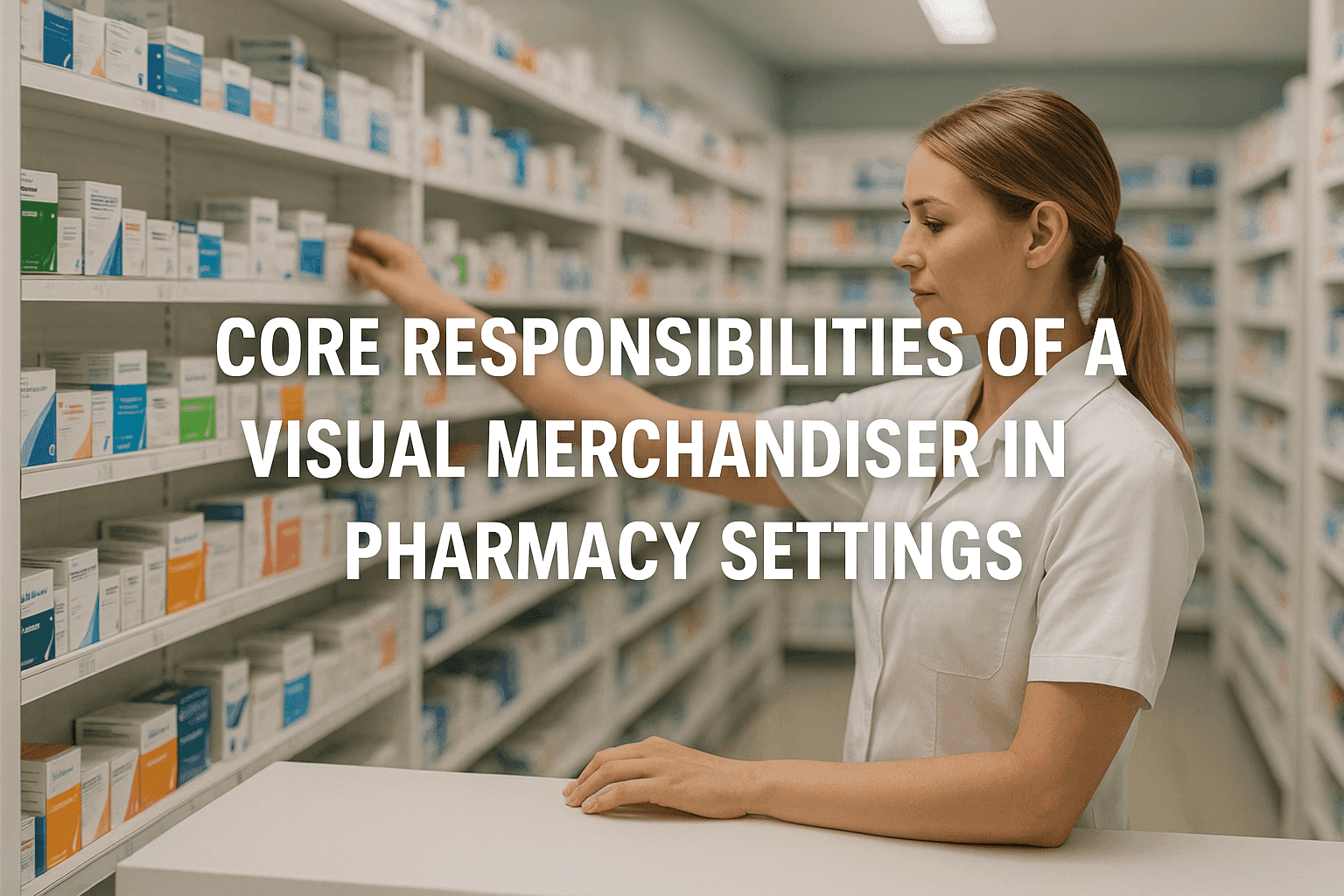
The day-to-day function of a pharmacy visual merchandiser is a multifaceted discipline that blends retail science with healthcare compliance. Far from simply arranging products, these professionals are on-the-ground guardians of brand integrity, stock accuracy, and consumer safety. Their fundamental tasks create the structured environment necessary for both self-selection and professional advisory. This includes the meticulous management of shelf arrangement—ensuring categories are logically zoned, with prescription-only medications (POM) securely separated from General Sales List (GSL) items. Cleanliness and shelf hygiene are paramount, not just for appeal but to meet the strict standards set by Malaysia’s National Pharmaceutical Regulatory Agency (NPRA) under the Ministry of Health (KKM).
A proven and tailored approach is required to adapt global retail principles to the Malaysian context. For instance, the merchandiser must implement and maintain detailed planograms—the visual blueprints for shelf layout—while also managing bilingual signage (Malay and English) that meets regulatory guidelines for product information. The role is deeply interconnected with the pharmacy logistics network. The merchandiser’s ability to execute their duties flawlessly is directly influenced by the performance of their supply chain partner. Consistent execution relies on several key distributor-driven factors:
Delivery Cycle Reliability: Timely and accurate deliveries prevent out-of-stock situations that break planograms and frustrate customers.
SKU Availability: The completeness of each order ensures every product assigned a shelf location is physically present to fill it.
Inventory Alignment: Close communication between the merchandiser and the independent pharmacy distributor regarding promotions or discontinuations avoids incorrect placements.
Consider the scenario in a Malaysian independent pharmacy in Johor Bahru. The merchandiser arrives to set up a new diabetic care section. Their planogram calls for specific brands of test strips, lancets, and monitors. However, if the distributor pharmacy has a stock-out on a key monitor brand, the entire section’s visual impact and utility is compromised, leaving gaps that confuse customers and undermine the pharmacy’s authority as a trusted healthcare destination.
Executing Planograms with Accuracy, Consistency, and Compliance

The planogram is the cornerstone of modern, strategic visual merchandising, especially within national chains like Caring, Guardian, Watsons, and Alpro. It is a data-driven schematic that dictates the exact location, facing (number of product units facing forward), height, and sequence of every single Stock-Keeping Unit (SKU) on the shelf. Its execution is where theory meets practice, and its adherence is non-negotiable for achieving brand objectives and regulatory harmony. Planogram compliance ensures that a best-selling cough syrup in Kuala Lumpur is found in the identical position in a branch in Kuching, building brand recognition and shopper familiarity. This consistency is what allows for efficient shopping experiences and scalable retail operations.
Maintaining this accuracy goes beyond sales; it is a critical component of patient safety and professional practice. A misplaced product—such as a higher-strength painkiller placed within a standard analgesic section—can lead to consumer misuse. Therefore, the merchandiser’s precision directly supports the pharmacist’s advisory role. From a multi-perspective view, the planogram serves different but interconnected masters:
From the Pharmacist’s Viewpoint: A compliant layout creates a logical store flow. It clearly distinguishes between POM, OTC, and GSL products, making it easier to guide patients and prevent errors. It also ensures fast product retrieval during busy periods, enhancing service quality.
From the Distributor’s Viewpoint: Accurate planogram execution is a feedback mechanism. It validates that the correct inventory mix is being delivered and displayed. Discrepancies often highlight issues in the distributor pharmacy supply chain, such as delivery errors or packaging changes not communicated downstream.
From the Brand Manager’s Viewpoint: The planogram is the final, tangible realization of slotting strategy and marketing investment. Consistent placement safeguards brand equity and ensures promotional campaigns and Point-of-Sale Materials (POSM) are activated as intended, directly impacting sales velocity and market share.
The following table illustrates how planogram compliance metrics are evaluated from these different operational angles, highlighting the shared responsibility for flawless execution:
| Compliance Aspect | Pharmacist/Store Focus | Distributor Focus | Brand Manager Focus |
|---|---|---|---|
| Product Facing & Fill | Prevents out-of-stocks, ensures shelf looks full and inviting. | Indicates delivery accuracy and inventory availability. | Protects brand visibility and shelf presence share. |
| Category Adjacencies | Aids customer navigation and supports cross-selling (e.g., vitamins next to immune support). | Ensures correct product categorization in their own warehousing and picking systems. | Maximizes impact of product portfolios and strategic category partnerships. |
| Promotional Compliance | Drives short-term sales and manages promotional stock clearance. | Validates timely distribution of promotional SKUs and POSM to all stores. | Measures return on trade investment and campaign effectiveness. |
| Regulatory Placement | Mitigates risk of regulatory penalty (NPRA/KKM) and protects consumer safety. | Must supply products with correct regulatory labeling and ensure banned items are not distributed. | Ensures product is marketed and placed within its legally approved classification. |
Learn more : Retail Shelf Management & Planogram Optimization — NielsenIQ | Retail Merchandising Services Malaysia
Daily In-Store Duties: Shelf Rotation, Display Refreshing, and Promotional Setup
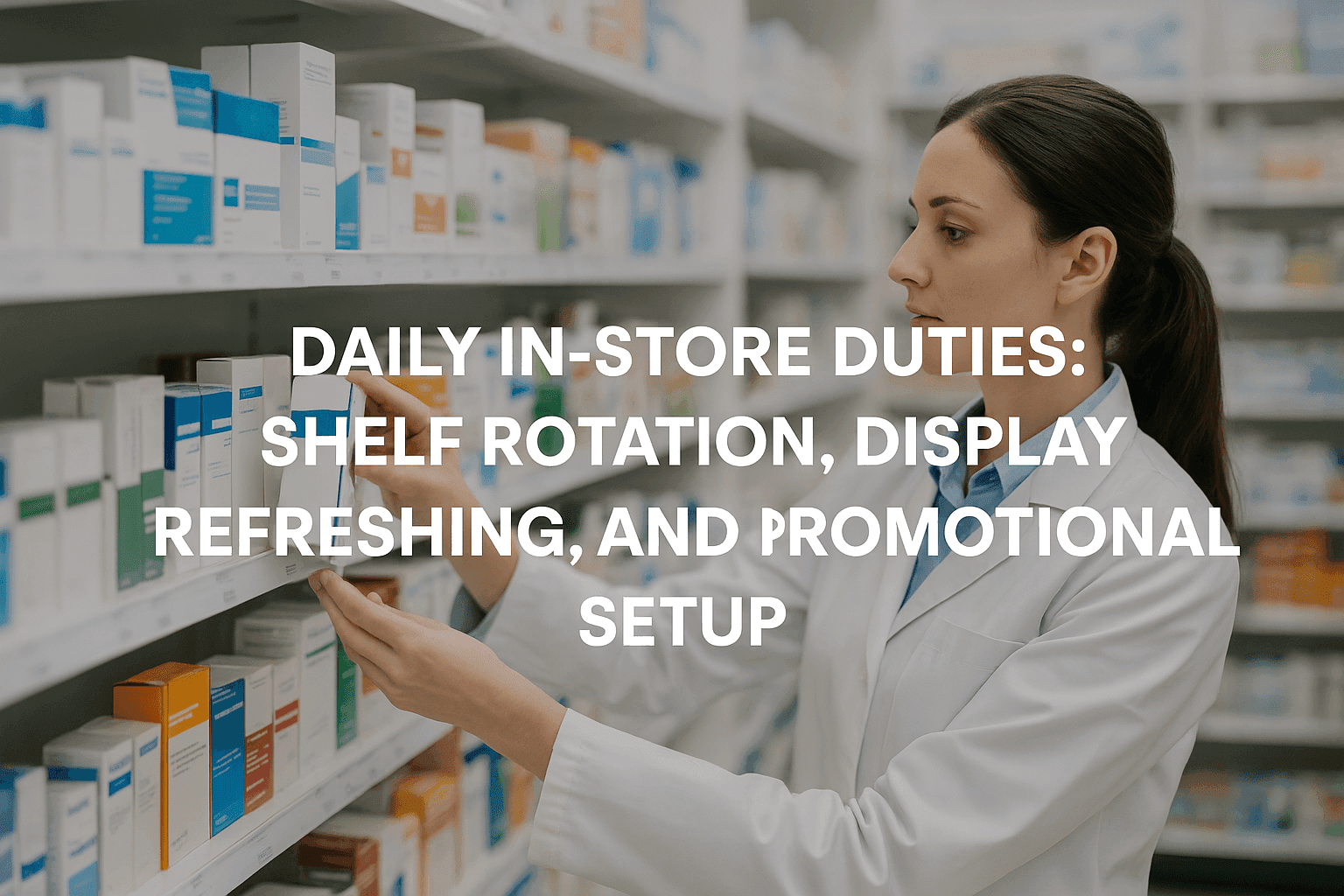
Beyond the structural blueprint of the planogram, the visual merchandiser’s role is intensely operational and cyclical. Each store visit involves a series of critical, hands-on tasks that maintain the integrity of the sales floor over time. The most fundamental of these is stock rotation, governed by FEFO (First Expired, First Out) or FIFO (First In, First Out) principles. This is not a mere suggestion but a rigorous healthcare imperative. A merchandiser must physically check and rotate stock to ensure products with the earliest expiry dates are at the front. In a Malaysian climate where heat and humidity can affect product stability, this diligence is a direct contribution to patient safety and prevents costly write-offs for the pharmacy.
The merchandiser also acts as the primary executor of commercial dynamism on the shop floor. They are responsible for refreshing displays to align with seasonal trends—such as creating prominent raya or Chinese New Year wellness bundles—and setting up short-term promotional campaigns. This involves deploying a variety of POSM like standees, wobblers, and banner strips, and ensuring all promotional pricing is accurately reflected on shelves. For example, during the haze season in Selangor, a merchandiser would be tasked with building a high-visibility display for face masks, air purifiers, and respiratory relief products, often using kits or special offers supplied and marketed by the pharmacy distributor Malaysia.
This daily execution requires seamless collaboration with in-store staff. The merchandiser must brief the pharmacist or store supervisor on new layouts, highlight any stock issues, and ensure promotional mechanics are understood. The effectiveness of a “Buy 1 Free 1” offer on a leading brand of vitamins, for instance, depends entirely on the merchandiser setting it up correctly and the pharmacy staff maintaining it. This symbiotic relationship ensures that the strategic work of brand principals and the logistical effort of independent pharmacy distributor networks are fully realized at the crucial last inch of the customer journey.
Collaborating with Pharmacy Distributors and Brand Principals for Seamless Execution

The isolated efforts of a merchandiser in a single store cannot drive systemic success. Their function is empowered and magnified through strategic collaboration with both pharmacy wholesale distributors and brand principals. This triad forms a communication loop that is vital for adaptive and responsive retail execution. The merchandiser, as the eyes and ears on the ground, provides invaluable market feedback. They report on competitor activities, consumer reactions to new products, the effectiveness of POSM, and persistent stock issues. This real-time intelligence is channeled back to brand teams for marketing optimization and, crucially, to distributors for operational adjustment.
For the distributor pharmacy, this feedback is actionable data for refining forecasting models and inventory allocation. If multiple merchandisers across the Central region report rapid sell-out of a particular children’s supplement, the distributor can proactively adjust warehouse stocks and delivery schedules to meet the surge in demand. Conversely, if a new product launch is seeing poor shelf rotation, it may indicate a need for better retailer education or a review of the initial distribution strategy. This makes the merchandiser a trusted source of field truth.
From a multi-perspective view, this collaboration looks slightly different for each party but converges on the goal of perfect store execution:
For the Distributor: The merchandiser is a key node in their service-level agreement fulfillment. Reliable merchandising data helps them move from being a passive logistics provider to an active, value-added supply chain partner. It allows them to advise brand principals with insights on regional preferences, such as the higher demand for certain traditional herbal complements in the East Coast states.
For the Pharmacists: They depend on this collaborative ecosystem for more than just stock. A well-executed planogram and clear category layouts, supported by efficient distributor replenishment, free up their time for high-value patient counselling. They rely on the merchandiser-distributor link to ensure that the products they recommend are not only in stock but are displayed in a way that supports their professional advice.
For the Brand Owners: The merchandiser is the final quality assurance checkpoint for their trade investments. The collaboration ensures that their brand vision is accurately translated at retail, that promotional budgets are effectively deployed, and that they gain a granular, store-level understanding of the Malaysian market’s nuances. This intelligence is proven to drive more effective and tailored future strategies.
Learn more : Pharmacy Merchandising Services vs In-House Sales Teams: What Works Better?

Ensuring Regulatory and Brand Compliance in Malaysian Pharmacies

For a visual merchandiser operating within Malaysia’s healthcare retail sector, the concept of compliance extends far beyond simply following a planogram. It represents a dual commitment: to the stringent legal frameworks set by the National Pharmaceutical Regulatory Agency (NPRA) and the Ministry of Health (KKM), and to the brand standards established by product principals. This dual mandate transforms the merchandiser’s role from a retail-oriented one into a guardian of public safety and brand integrity. Their daily tasks are the final, physical assurance that the complex journey of a product—from manufacturer, through the pharmacy distribution service in Malaysia, to the shelf—culminates in a compliant, safe, and trustworthy presentation to the public. A single error in zoning or signage is not merely a visual flaw; it is a potential regulatory breach that can undermine patient trust and incur significant penalties for the pharmacy.
The practical implications of this are witnessed in the meticulous separation of product categories based on their regulatory classification. A skilled merchandiser must possess an expert understanding of Malaysia’s poison schedules and which products are designated as Prescription-Only (POM), Pharmacy Medicines (P-Series), or General Sales List (GSL). This knowledge directly informs shelf zoning. For instance, antibiotics or potent antihypertensives must be securely placed behind the counter or in a dedicated POM area, inaccessible to self-selection. In contrast, OTC pain relievers or vitamins can be openly displayed. A common compliance pitfall, which merchandisers vigilantly prevent, is the accidental adjacency of a Schedule G cough syrup with a similar-looking but less-regulated herbal supplement, a placement that could mislead customers about a product’s potency and safety profile. The merchandiser’s role is therefore essential in creating a store layout that naturally guides consumer behavior while adhering to the letter of the law.
This compliance ecosystem is deeply supported by pharma distributors, who act as a crucial link in the information chain. A reliable distributor does more than move boxes; they ensure that all products shipped are accompanied by correct NPRA registration labels, proper Bahasa Malaysia leaflet inserts, and clear expiry dating. They may also provide merchandisers with updated compliance guidelines ahead of regulatory audits. During such an audit at a chain pharmacy in Penang, the auditor will check not just paperwork but physical shelf compliance. The merchandiser’s daily logs and the distributor’s batch-level documentation work in tandem to provide a verifiable trail of responsible handling. The table below outlines key brand compliance metrics that both merchandisers and distributors are jointly accountable for, demonstrating how operational precision feeds directly into regulatory and commercial confidence:
| Compliance Metric | Merchandiser’s On-Site Duty | Distributor’s Supporting Role | Ultimate Impact on Pharmacy |
|---|---|---|---|
| Display & Category Zoning Accuracy | Physically ensuring POM, P, and GSL products are in their legally mandated zones. | Providing clear category guides and ensuring shipments are pre-sorted to simplify shelving. | Prevents NPRA/KKM violations and fines; establishes pharmacy as a trusted professional outlet. |
| Planogram & Facing Compliance | Executing the blueprint for facing count, sequence, and shelf height. | Ensuring consistent SKU availability so every planogram slot can be filled. | Drives sales through optimized visibility and maintains brand partner relationships. |
| Promotional & POSM Execution | Accurately setting up promo pricing, banners, and display units. | Timely delivery of promotional SKUs and all related marketing materials (standees, wobblers). | Maximizes campaign ROI and creates store excitement; avoids customer complaints over pricing errors. |
| Stock Completeness & Rotation | Implementing FEFO, removing expired stock, and reporting gaps. | Maintaining high order fill rates and providing clear expiry information on delivery notes. | Minimizes lost sales from out-of-stocks and reduces costly product wastage. |
| Cold Chain Integrity | Verifying temperature logs for chillers and ensuring cold chain products are immediately shelved. | Using validated cold chain logistics with temperature monitoring during transport. | Preserves product efficacy (e.g., certain probiotics, insulin) and is a non-negotiable safety requirement. |
Learn more : KKM Approval Process for Skincare and Supplemens | Joint FIP/WHO Guidelines on Good Pharmacy Practice — WHO

Using Customer Behaviour and Store Flow Insights to Improve Displays

The most effective pharmacy merchandising is not static; it is dynamically informed by a deep understanding of how customers actually move and behave within the store. This requires moving beyond a purely administrative view of planograms to embrace a strategic, data-informed approach to space planning. By analyzing customer traffic patterns, dwell times, and hot zones, a merchandiser can tailor displays to intuitively match shopping missions, thereby enhancing the customer experience and driving incremental sales. In the context of a Malaysian pharmacy, this involves recognizing distinct shopper profiles—from the busy professional seeking a quick remedy to the caregiver meticulously shopping for a family’s chronic care needs—and designing the store’s flow to serve them all efficiently.
Consider the real-world scenario in a high-traffic urban pharmacy near a Kuala Lumpur LRT station. Through observation, a merchandiser identifies the “grab-and-go” zone just inside the entrance as a prime area for high-demand OTC items like pain relief, sore throat lozenges, and portable health screens. Conversely, the quieter, more consultative area near the prescription counter becomes the ideal location for chronic care management sections for diabetes or hypertension, where customers often seek reassurance and information. Furthermore, the lucrative Mother & Baby aisle, a key revenue driver, is strategically placed mid-store. This placement encourages customers to pass other high-margin categories like vitamins and personal care, increasing the potential for cross-category purchases. These decisions are not guesses; they are proven retail principles applied to the specific rhythm of Malaysian consumer life.
This analytical function is increasingly supported by technology and partnership. Forward-thinking pharmacy distributor Malaysia partners are now providing more than just products; they offer sell-through data and planogram analytics that show which SKUs are moving fastest in which regions. For example, a distributor might share insights that immune-support supplements have a significantly higher velocity in the monsoon season in the East Coast states. A merchandiser can use this intelligence to proactively expand facing for these products in relevant stores ahead of peak demand. From a multi-perspective view, this data-driven approach delivers unique value: For the pharmacist, it creates a store that feels intuitive and easy to navigate, reducing congestion and allowing them to focus on advisory roles. For the brand manager, it ensures their products are placed in positions that maximize visibility to their target demographic. For the distributor, it validates inventory decisions and strengthens their value proposition as a strategic supply chain partner, not just a logistics vendor.
Learn more : How Consumer Behavior Is Changing Retail Experience — McKinsey & Company
Reporting, Documentation, and Performance Tracking for Merchandising Excellence
The tangible, on-shelf results achieved by a visual merchandiser are underpinned by a rigorous framework of administrative discipline. This behind-the-scenes work of reporting, documentation, and performance tracking is what transforms isolated store visits into a scalable, accountable, and continuously improving system. It is the mechanism that closes the loop between the field, the pharmacy wholesale distributors, and brand principals, ensuring that insights are captured, issues are resolved, and standards are uniformly upheld. Without this systematic approach, even the most visually perfect display is an isolated event, not a replicable standard of excellence.
The core administrative duties are multifaceted. During each store visit, the merchandiser acts as a forensic auditor of the retail space. This involves capturing photo evidence of displays for compliance verification, completing detailed SKU-level checklists against the planned planogram, and maintaining meticulous expiry logs for products with short shelf lives. When discrepancies are found—such as an Out-of-Stock (OOS) situation, incorrect shelf pricing, or missing Point-of-Sale Material (POSM)—the merchandiser must immediately report these issues through structured channels. This feedback is essential intelligence. An OOS report sent to the distributor pharmacy is not just a complaint; it is a critical data point that can trigger a rush delivery, adjust future forecasting algorithms, and highlight potential breakdowns in the replenishment cycle.
The performance of a merchandiser is itself measured against clear Key Performance Indicators (KPIs), which quantify their impact on both retail and supply chain operations. These KPIs often include:
Shelf Compliance Score: The percentage of planogram accuracy achieved during an audit.
Promotion Execution Score: A measure of how perfectly promotional setups are implemented on time.
Product Availability Score: Tracking the in-stock rate for key brand and category items.
Store Condition & Cleanliness Rating: Ensuring the professional appearance of the healthcare environment.
By consistently meeting these KPIs, the merchandiser provides proven value. Their reports give distributors concrete data to improve their service level agreements, and give pharmacy managers an objective measure of store-level execution. This cycle of action, documentation, and measurement is what enables a reliable and efficient partnership across the entire supply network.
Learn more : Consumer Products Industry Outlook — Deloitte Insights
The Impact of Visual Merchandisers on Pharmacy Sales, Safety, and Customer Experience
The culmination of these disciplined efforts—strategic planning, regulatory vigilance, and meticulous execution—manifests in a powerful trifecta of outcomes: enhanced commercial performance, reinforced patient safety, and a superior customer journey. The visual merchandiser is, in effect, the final optimizer of the investment made by brands and the logistical effort exerted by distributors. Their work directly translates supply chain efficiency into tangible business and health outcomes at the store level, making their role absolutely essential in the modern pharmacy ecosystem.
From a commercial perspective, the impact is clear. Effective merchandising that ensures high On-Shelf-In-Stock (OSIS) levels directly prevents lost sales from empty shelves. A compelling, well-organized promotional display can dramatically increase the sell-through rate of featured products. Furthermore, a logical and navigable store layout increases basket size by facilitating cross-category discoveries—a customer picking up a prescribed antibiotic might easily see and add a probiotic or a vitamin C supplement displayed nearby. This directly boosts the pharmacy’s bottom line and strengthens its relationship with brand partners who see their products performing optimally.
Most importantly, in a healthcare setting, this work is a critical component of patient safety. Correct category zoning and clear signage are the first lines of defense against medication errors. By ensuring that potent medicines are not available for self-selection and that similar-looking packages are not placed adjacently, the merchandiser creates a safer environment. Their diligent stock rotation practices are a direct safeguard against the dispensing of expired or degraded medications. This builds an immeasurable asset: consumer trust. When a customer walks into a pharmacy that is consistently clean, organized, and professional, their confidence in the advice and products offered soars. This trust is the foundation of patient loyalty and the professional reputation of the pharmacy itself.
The Indispensable Role in a Connected Ecosystem
The journey of a healthcare product in Malaysia is incomplete until it is correctly placed in the hands of a informed consumer. The visual merchandiser is the essential professional who ensures this final, crucial step is executed with precision, care, and strategic intent. Their role synthesizes the demands of NPRA compliance, the commercial goals of brands, the logistical flow from independent pharmacy distributor networks, and the practical needs of both pharmacists and patients. They are the human element that translates data, guidelines, and stock deliveries into a safe, efficient, and trustworthy retail experience. As the Malaysian pharmacy landscape continues to evolve towards greater professionalism and consumer-centricity, the strategic importance of skilled visual merchandising will only grow. It is the discipline that ensures the pharmacy remains what it must be: a trusted healthcare destination, where every detail on the shelf reflects a commitment to well-being.
For pharmacy owners, brand managers, and distributors looking to achieve this level of reliable excellence in execution, the partnership begins with aligning your supply chain with field-level expertise. Ensuring your products are not just delivered, but expertly merchandised, is the final link in a proven chain for success.
Frequently Asked Questions (FAQ)
Q1: What are the duties and responsibilities of a visual merchandiser?
Answer: A visual merchandiser designs store layouts, arranges product displays, creates signage, maintains brand consistency, analyses customer flow, and ensures product visibility aligns with sales targets and safety standards.
Q2: What are the duties and responsibilities of a merchandiser?
Answer: A merchandiser plans product ranges, monitors stock levels, maintains shelf accuracy, tracks sales, coordinates promotions, and ensures compliance with planograms and store policies.
Q3: What skills are required to be a visual merchandiser?
Answer: Key skills include creativity, spatial awareness, basic design knowledge, data interpretation, communication, attention to detail, and understanding customer behaviour.
Q4: What are the 7 functions of merchandising?
Answer: The seven functions are planning, buying, pricing, presenting, distributing, promoting, and evaluating product performance.
Q5: What are the 10 principles of merchandising?
Answer: The ten principles include right product, right place, right price, right time, right quantity, visual appeal, brand consistency, customer flow, clarity in communication, and compliance with store standards.
Q6: What are the six functions of a merchandiser?
Answer: They include product selection, supplier coordination, inventory control, pricing, promotion planning, and sales performance monitoring.
Q7: Is merchandising a high paying job?
Answer: Merchandising pay varies by country and industry. Entry-level roles are moderate, while experienced merchandisers or visual merchandising managers can earn higher salaries due to strategic responsibilities.
Q8: What are the 5 R’s of merchandising?
Answer: The 5 R’s are Right Product, Right Place, Right Time, Right Quantity, and Right Price.
Q9: What are the five qualities of merchandising?
Answer: Important qualities include accuracy, creativity, analytical thinking, communication skills, and strong organisational ability.
Q10: What are the 4 P’s of merchandising?
Answer: The 4 P’s are Product, Placement, Pricing, and Promotion.
Our Services
Our marketing and sales teams use their strong relationships with the channel to create demand for your product at every stage of its lifecycle.
Demand creation services we offer:
Market Access Services
Regulatory Registration Services
Pharma Product Listing Services
Merchandising services (RSMS)
Brand Management
Logistic & Warehousing
Exclusive Merchandising Services
Visual Merchandising
Discover More About Our Solution
How can we assist you today? 😊
Just let us know—we’re here to help!
