

August 19, 2025
Ever walked into a pharmacy only to find the medicine you need is out of stock? Meanwhile, another pharmacy down the street seems to always have what you’re looking for. The difference often boils down to one critical factor: distribution management. This isn’t just about moving boxes from point A to point B—it’s a strategic, finely tuned system that ensures lifesaving medications reach the right shelves at the right time. For pharmacies in Malaysia, this means collaborating with trusted pharmacy distributor Malaysia partners, pharmacy wholesale distributors, and logistics experts to create a seamless, reliable supply chain that prioritizes patient care.
But what does it take to build such a system? It starts with understanding the core components—procurement, inventory control, warehousing, order fulfillment, and transportation—each playing a pivotal role in keeping pharmacies stocked and compliant. For instance, a strategic procurement approach might involve sourcing generics from local manufacturers to cut costs and reduce lead times, while efficient inventory management relies on real-time tracking to prevent stockouts. And let’s not forget warehousing: in a tropical climate like Malaysia’s, expert cold chain management isn’t optional for items like insulin or vaccines.
The stakes are high. A single misstep—a delayed shipment, a temperature excursion—can disrupt patient care or even trigger regulatory penalties. That’s why Malaysian pharmacies are increasingly turning to proven distribution models, from traditional wholesale networks to hybrid systems blending direct-to-pharmacy (DTP) and third-party logistics (3PL). The goal? A tailored solution that balances speed, cost, and compliance.
Key Components and Functions of Distribution Management

Why do some pharmacies operate like well-oiled machines while others constantly battle stock discrepancies? The answer lies in mastering the essential functions of distribution management.
Procurement: The First Link in the Chain
Strategic procurement isn’t just about buying low and selling high. It’s about building relationships with reliable manufacturers, ensuring NPRA compliance, and negotiating terms that keep costs predictable. For example, a Johor-based independent pharmacy distributor might partner with local generics producers to slash delivery times from weeks to days—a game-changer for rural clinics.
Inventory Management: The Backbone of Efficiency
Imagine a pharmacy that never runs out of hypertension meds but also doesn’t overstock perishable items. That’s the power of trusted inventory practices. Modern tools like cloud-based POS integrations allow Malaysian pharmacies to track sales trends in real time, automating reorders before shortages hit. Consider KPJ Healthcare’s approach: by analyzing prescription data across its network, it maintains optimal stock levels with <2% wastage—a benchmark for the industry.
Warehousing: Where Compliance Meets Precision
Not all medications can sit on a shelf next to the shampoo. Temperature-controlled storage is essential for 15% of pharma products, from biologics to certain antibiotics. A Pharmacy Distributor Malaysia operating in Penang, for instance, uses IoT-enabled sensors to monitor warehouse conditions 24/7, ensuring no deviations from NPRA’s strict guidelines.
Order Fulfillment: Accuracy = Trust
A single mispick—sending Lipitor instead of Lasix—can endanger patients and erode trust. That’s why leading distributors employ barcode scanning and AI-driven packing systems to achieve 99.9% order accuracy. In Kuala Lumpur, one pharmacy wholesale distributor reduced returns by 40% after implementing robotic pickers in its fulfillment center.
Transportation: The Final Hurdle
Malaysia’s heat and humidity pose unique risks. A study by MOH found that 12% of temperature-sensitive shipments arrived compromised due to inadequate cooling during transit. Solutions? GPS-tracked refrigerated trucks and strategic route planning to avoid KL’s notorious traffic jams.
Learn More : Inventory Management Best Practices
The Role of Distributor Pharmacies and Pharmacy Distributors in Malaysia

What’s the difference between a distributor pharmacy and a pharmacy distributor Malaysia? And why does it matter for your supply chain?
Distributor Pharmacies: The Middlemen You Can’t Ignore
These entities act as bridges, sourcing products from manufacturers and delivering them to retail pharmacies. They’re not just logistics providers—they’re compliance gatekeepers, ensuring every product meets NPRA standards before it reaches patients. Take Zuellig Pharma: its proven track record in handling 70% of Malaysia’s vaccine distribution stems from its GDP-certified warehouses and fleet.
Pharmacy Distributor Malaysia: The Local Advantage
Smaller, localized distributors fill gaps left by giants. In Sarawak, an independent pharmacy distributor serves remote clinics with weekly “milk runs,” combining orders for multiple outlets into one cost-effective trip. Meanwhile, in Selangor, a niche distributor specializing in diabetic supplies offers same-day delivery—a tailored service urban pharmacies rely on.
Integration Is Key
The most effective networks blend scale with specialization. For example:
A trusted national distributor handles 80% of a pharmacy’s volume.
A regional partner covers urgent, small-batch orders.
A 3PL manages cold chain items, leveraging their expert infrastructure.
This layered approach ensures continuity even during disruptions—like when floods in Kelantan delayed shipments for days, but clinics with diversified suppliers stayed operational.
Learn More : Top 10 Pharmaceutical Companies in Malaysia 2024
Distribution Management Models and Strategies in Pharmacy
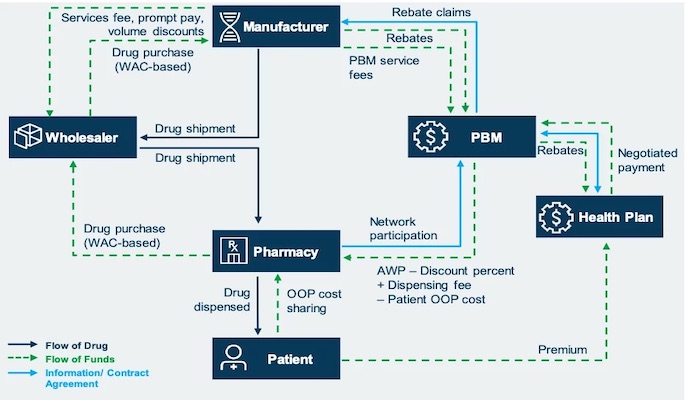
Which model fits your pharmacy’s needs? The answer depends on scale, product mix, and risk tolerance.
Traditional Distribution: The Tried-and-True
Manufacturer → Distributor → Pharmacy. This model thrives on economies of scale but struggles with flexibility. A pharmacy wholesale distributor in Malaysia might stock 10,000 SKUs, but rural pharmacies often wait weeks for low-volume items.
Direct-to-Pharmacy (DTP): Speed at a Cost
Bypassing distributors can slash lead times. When the H1N1 vaccine was urgently needed, MOH worked directly with manufacturers to expedite deliveries. But DTP requires efficient coordination—overlapping shipments can overwhelm staff.
Third-Party Logistics (3PL): Outsourcing Complexity
Why build a cold chain network when 3PLs like DHL Supply Chain already have it? Their strategic warehouses near KLIA ensure biologics are stored at 2–8°C until the last mile. Bonus: 3PLs handle customs clearance, a boon for imported specialty drugs.
Hybrid Models: The Best of All Worlds
A Pharmacy Distributor Malaysia might use:
Traditional channels for 70% of stable-demand products.
DTP for fast-moving generics.
3PL for vaccines requiring ultra-cold storage.
Implementation Checklist
✅ Segment products by demand variability and storage needs.
✅ Negotiate SLAs with logistics partners (e.g., “98% on-time delivery”).
✅ Use predictive analytics to adjust for monsoon season or festive demand spikes.
Learn More : Pharmacy Merchandising for New Product Launches in Malaysia
Challenges in Pharmacy Distribution Management and Solutions

Even the best-laid plans face hurdles. Here’s how top players navigate them.
Logistics Delays: Beating Traffic and Red Tape
A 2023 MIER report found that 18% of medical shipments in Malaysia face delays due to:
Road congestion (especially in Klang Valley).
Customs bottlenecks for imported drugs.
Last-mile gaps in East Malaysia.
Solution: AI route optimization tools can cut transit times by 25%. One reliable distributor in Penang uses Waze-integrated dispatch software to reroute drivers around accidents in real time.
Regulatory Compliance: Avoiding Costly Missteps
NPRA recalls spiked 30% in 2022, often due to improper storage. A single temperature excursion can destroy a $50,000 vaccine shipment.
Solution:
Train staff in GDP standards (e.g., how to pack cold chain items with gel packs).
Deploy Bluetooth data loggers to prove compliance during audits.
Stockouts: When Demand Outpaces Supply
During the 2023 amoxicillin shortage, pharmacies without strategic buffer stocks faced backlash.
Solution:
Maintain 2 weeks’ safety stock for critical meds.
Partner with 2–3 pharmacy wholesale distributors to diversify supply.
Demand Forecasting Errors: Planning for the Unpredictable
COVID-19 taught us that panic buying can drain stocks overnight.
Solution:
Run “what-if” scenarios (e.g., 50% demand surge for flu meds during monsoon).
Share data with suppliers for collaborative planning.
Operational Framework for Resilience
Prevention: IoT sensors in warehouses to catch issues early.
Mitigation: Multi-supplier contracts to avoid single points of failure.
Recovery: Emergency protocols (e.g., expedited air freight for urgent orders).
In Sabah, a clinic network averted crisis during floods by pre-positioning stocks in strategic locations—a proven tactic others now emulate.
Learn More : Pharmaceutical Supply Chains: Key Challenges
The Impact of Effective Distribution Management on Pharmacy Operations

Ever walked into a pharmacy and found exactly what you needed, right when you needed it? That seamless experience doesn’t happen by chance—it’s the result of strategic distribution management working behind the scenes. When done right, it doesn’t just keep shelves stocked; it transforms entire pharmacy operations, from profitability to patient health outcomes.
Take inventory turnover, for instance. Pharmacies partnering with a trusted pharmacy distributor Malaysia often see stock move 20–30% faster compared to those managing supply chains in-house. Why? Because efficient systems minimize overstocking while ensuring high-demand items are always available. A Klang Valley pharmacy chain reported a 25% reduction in holding costs after switching to a reliable distributor with automated replenishment tools. That’s cash flow freed up for expanding services or investing in staff training.
Then there’s wastage—a silent profit killer. In Malaysia’s humid climate, medicines like insulin or certain antibiotics can spoil if storage conditions falter for even an hour. But with expert cold chain logistics, spoilage rates drop dramatically. One pharmacy wholesale distributor in Penang cut medication wastage by 40% after implementing IoT-enabled temperature tracking across its fleet. For patients, that means every pill, vial, or syringe retains its full potency.
But the real game-changer? Product availability. Imagine a diabetic patient relying on a steady supply of Metformin, only to face stockouts. With a proven distribution partner offering daily or even same-day deliveries, such gaps vanish. A study by MOH found that pharmacies with strategic distributor ties had 98% chronic medication availability versus 82% for those without. That reliability builds patient trust—and trust keeps customers coming back.
And let’s not forget the bigger picture: patient outcomes. When pharmacies maintain consistent stock, adherence to treatment plans improves. In Johor, a clinic network saw a 15% rise in hypertension control rates after streamlining its supply chain for cardiovascular drugs. No stockouts = no skipped doses = healthier communities.
Finally, profitability and service standards soar. Freed from inventory headaches, pharmacies can focus on value-added services—like free health screenings or medication therapy management. A Sarawak-based pharmacy increased foot traffic by 18% after launching diabetes care programs, all because their effective distribution system gave them the bandwidth to innovate.
Learn More : What Is the Role of Merchandising?
Regulatory Considerations in Malaysian Pharmacy Distribution

In Malaysia’s tightly regulated pharma landscape, cutting corners isn’t an option. A single compliance misstep can mean fines, recalls, or worse—patient harm. Here’s what every distributor pharmacy and retailer must prioritize:
NPRA Guidelines: The Non-Negotiables
The National Pharmaceutical Regulatory Agency (NPRA) sets the bar for product safety and quality. For example, all imported medicines require NPRA approval, with stringent documentation like Batch Release Certificates. In 2023, 12% of regulatory penalties stemmed from incomplete NPRA paperwork—a risk easily avoided with expert compliance teams.
Good Distribution Practice (GDP): Beyond Basics
GDP isn’t just a checklist; it’s a framework for reliable operations. Key pillars include:
✅ Warehousing: Segregate expired/recalled products to prevent mix-ups.
✅ Transport: Validate cold chain protocols (e.g., 2–8°C for vaccines).
✅ Documentation: Maintain audit trails for every product movement.
A Pharmacy Distributor Malaysia serving East Malaysia reduced compliance violations by 60% after GDP training for its warehouse staff.
MOH Standards: The Bigger Umbrella
The Ministry of Health (MOH) enforces broader rules, like proper labeling in Bahasa Malaysia and English. During spot checks in 2024, 8% of pharmacies faced warnings for incorrect labeling—a fixable but costly oversight.
Why Compliance Pays Off
Beyond avoiding penalties, strategic adherence builds reputation. Patients trust pharmacies that partner with GDP-certified distributors. One KL-based chain saw a 12% sales boost after advertising its NPRA-compliant supply chain as a “quality guarantee.”
Learn More : Understanding Good Distribution Practice (GDP) Guidelines
Future Trends in Pharmacy Distribution Management

The future of pharma distribution isn’t coming—it’s already here. Here’s how Malaysian pharmacies can stay ahead:
Automation & Robotics: Error-Proofing Warehouses
Robotic pickers and automated sorting systems are slashing errors in high-volume hubs. A trusted distributor in Selangor reduced mispicks by 90% after deploying collaborative robots (cobots). For pharmacies, this means fewer incorrect deliveries and faster order processing.
Data Analytics & AI: Predicting Demand Before It Hits
AI tools now forecast shortages weeks in advance. During the 2023 cough syrup shortage, pharmacies using predictive analytics secured backup stock early, avoiding empty shelves.
Cold Chain Innovations: Beyond Temperature Tracking
Real-time monitoring is just the start. Blockchain-based logs—like those piloted by Zuellig Pharma—now provide tamper-proof records from factory to pharmacy, crucial for high-value biologics.
E-Commerce Integration: The Last-Mile Revolution
With online pharmacy sales growing at 22% annually, tailored delivery models are essential. Some distributors now offer “click-and-collect” options at designated hubs, cutting last-mile costs by 30%.
Learn More : Global Logistics and Distribution Management Trends
Best Practices for Independent Pharmacy Distributors and Wholesale Partners

Smaller distributors can punch above their weight by adopting these proven tactics:
1. ERP Systems: The Brain of Operations
Integrated platforms like SAP or Oracle Netsuite provide real-time visibility. A Negeri Sembilan-based independent pharmacy distributor reduced order processing time from 48 hours to 6 after implementing ERP.
2. GDP Compliance: Trust = Business
Regular audits and staff training are non-negotiable. One GDP-certified wholesaler in Melaka doubled its client base within a year by marketing its compliance as a USP.
3. Strategic Partnerships: Diversify to De-Risk
Relying on one manufacturer? Dangerous. Top performers partner with 3–4 suppliers for critical items. When a major API factory in India halted production in 2023, diversified distributors kept supplies flowing.
4. Data-Driven Decisions: The Smart Way Forward
Track metrics like:
Order accuracy rates (aim for >99%).
Delivery timeliness (98% on-time is the gold standard).
Seasonal demand spikes (e.g., 20% higher flu med orders during monsoon).
Distribution management isn’t just logistics—it’s the lifeline connecting pharmacies to healthier communities. From efficient inventory practices to strategic compliance and future-ready tech, the right approach ensures medicines are always where they’re needed most.
How can we assist you today? 😊
Just let us know—we’re here to help!