January 22, 2026
The art of visual merchandising is often celebrated in the glossy pages of fashion magazines, associated with iconic names like Paul Smith and Simon Doonan. Their work transcends mere window dressing; it is a strategic discipline that sculpts consumer perception, guides navigation, and ultimately dictates purchasing behavior within a retail space. This global expertise is not confined to luxury boutiques. Its core principles are profoundly essential for a modern, competitive retail environment—including the dynamic landscape of Malaysian pharmacies. In an sector evolving rapidly with chains like Caring Pharmacy, Guardian, and Multicare, the transition from a purely transactional dispensary to a holistic wellness destination is undeniable. Here, visual merchandising (VM) becomes the silent expert communicator. It bridges the gap between clinical trust and consumer appeal, ensuring that over-the-counter solutions, vital supplements, and chronic care products are not only found but chosen. For pharmacy distributors and brands, understanding and applying these principles is no longer a luxury; it’s a fundamental component of retail success and patient engagement in a crowded market.
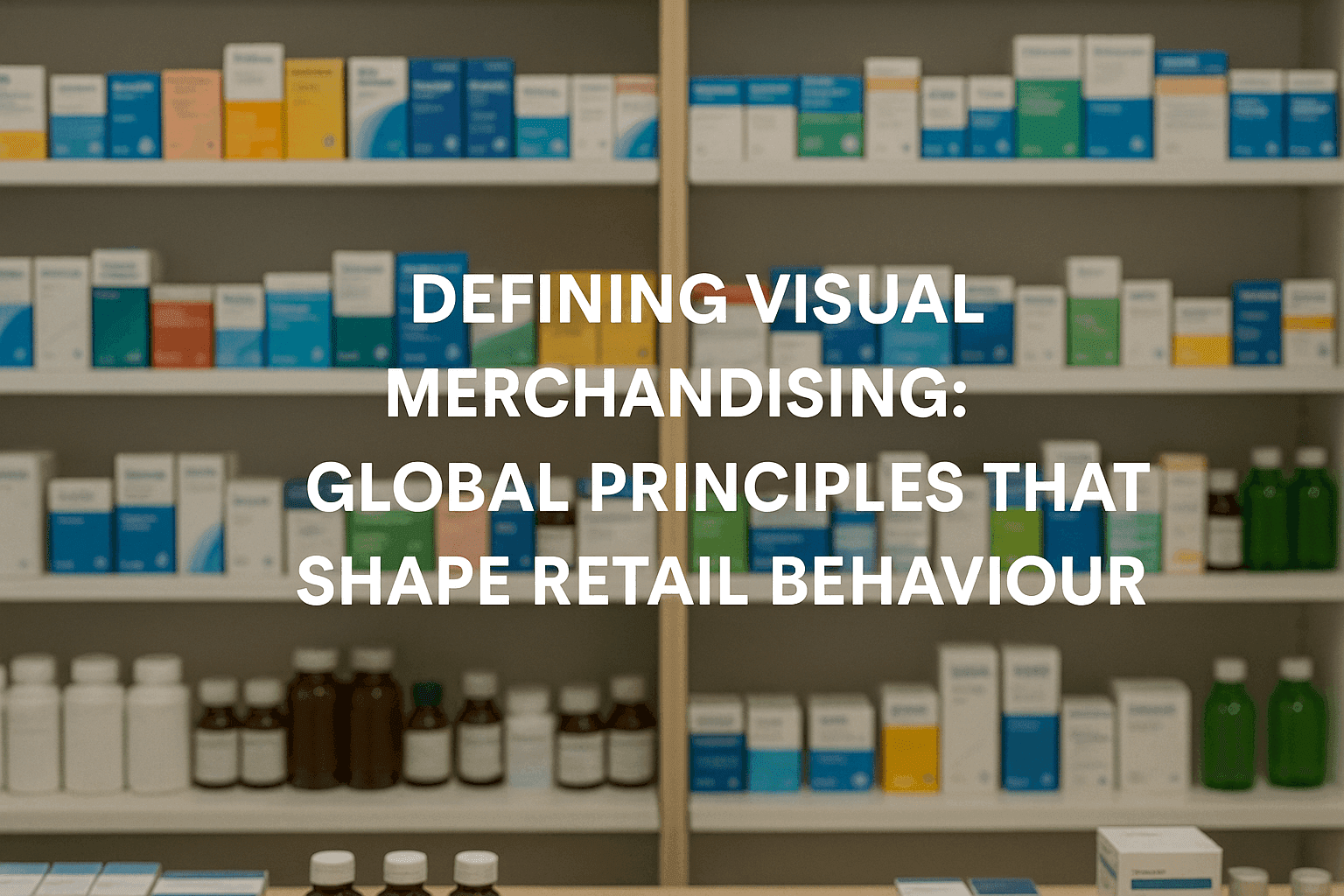
Defining Visual Merchandising: Global Principles That Shape Retail Behaviour

To grasp its importance, we must first define visual merchandising beyond simple aesthetics. At its heart, VM is the strategic orchestration of a retail environment to influence shopper psychology, optimize store navigation, and craft a compelling product narrative. It’s about creating a sensory journey that aligns with business objectives. The trusted principles established by global retail giants—such as strategic sightlines, zoning, and hierarchy of information—are directly applicable to healthcare retail. This is about making the complex simple and the necessary desirable. In a Malaysian pharmacy context, these principles translate into clear, logical pathways. Consider the flow from a wellness and prevention zone at the entrance, featuring vitamins and supplements, leading into OTC medication sections, and finally toward the prescription counter and chronic care management area. This logical progression, guided by signage, lighting, and fixture placement, reduces customer confusion and empowers self-selection. It turns a clinical space into an accessible, navigable store. Effective visual merchandising leverages color psychology—using calming blues in sleep aid sections or vibrant yellows in energy supplement aisles—and tactile engagement through testers for skincare products. It’s a reliable framework for communicating credibility, care, and clarity, ensuring that every square foot of the pharmacy actively works to serve both commercial goals and customer needs.
Learn more : Neuroscience of store layout & shopper behaviour
The World’s Most Influential Visual Merchandisers: Paul Smith, Simon Doonan, and Beyond
The proven methodologies we see in retail today are often pioneered by visionary practitioners. Examining the work of icons like Paul Smith and Simon Doonan provides a masterclass in applied psychology. Paul Smith’s approach is renowned for its bold yet sophisticated use of color blocking and unexpected, playful juxtapositions. He creates memorable, Instagram-worthy moments that forge a deep emotional connection with the brand. Simon Doonan, during his tenure at Barney’s New York, mastered the art of theatrical storytelling and camp aesthetic. His window displays were not just arrangements of products; they were provocative narratives that generated buzz, challenged norms, and cemented brand identity. For Malaysian pharmacy teams, the learnings are not about replicating extravagance but about adapting the core ethos. From Smith, pharmacies can learn the power of cohesive color schemes to define categories—imagine a dedicated “Family Health” bay using consistent, soft green tones across fixtures, signage, and packaging to signal safety and natural wellness. From Doonan, the takeaway is the power of thematic storytelling. A display for the monsoon season, for instance, could theatrically group immune-support supplements, umbrellas, and hot beverage mixes under a “Stay Dry & Healthy” banner, creating a contextual and solution-oriented narrative. These expert techniques move beyond stacking products to creating memorable experiences and strategic conversations with the customer, a vital differentiator in Malaysia’s competitive pharmacy retail scene.
Translating Iconic VM Concepts Into the Malaysian Pharmacy Environment
The tailored application of these global concepts requires a nuanced understanding of the local landscape. Malaysian pharmacies operate within a unique framework defined by strict regulatory requirements from bodies like the NPRA (National Pharmaceutical Regulatory Agency), diverse cultural shopper behaviors, and often, significant physical space constraints. The challenge and opportunity lie in adapting grand ideas to practical, compliant, and culturally resonant executions. For OTC medicines, the principle of clear categorization is paramount. Instead of alphabetic sorting, grouping by symptom—Cold & Flu, Pain Relief, Digestive Health—with distinct visual cues accelerates the customer’s journey. For supplements, applying Paul Smith-inspired color zoning can differentiate between children’s multivitamins (bright, primary colors), women’s health (softer pinks and purples), and sports nutrition (dynamic blacks and oranges). Skincare categories, much like a beauty hall, benefit from Simon Doonan-style thematic storytelling and testers, perhaps organizing by skin concern (hydration, acne, anti-aging) with mirrored stations for engagement. However, every layout must first respect NPRA guidelines on product segregation and mandatory signage. Furthermore, cultural nuances matter: displays for Raya or Chinese New Year wellness hampers, or prominent positioning for traditional and complementary medicines (T&CM) in dedicated sections, show cultural competency. This translation is where pharmacy wholesale distributors add immense value. During a new store setup or refresher program, a distributor with effective VM knowledge can design an efficient planogram that balances commercial appeal, regulatory compliance, and local taste, ensuring the store is optimized from day one.
Learn more : Practical ideas for signage, zoning, color psychology, and pharmacy display strategy. | Global guidelines for pharmaceutical storage & distribution
The Role of Distributor Pharmacy Teams in Modern VM Execution
The consistent, nationwide execution of these strategic visual merchandising plans falls heavily on the shoulders of distributor pharmacy teams. These field operatives are the crucial link between the brand’s vision and the store’s reality. Their role extends far beyond delivery; they are on-the-ground implementers of the commercial strategy. For chain pharmacies, a reliable distributor team ensures brand visibility and planogram compliance are uniform from Johor Bahru to Penang, which is essential for both sales performance and regulatory adherence. A misplaced product or incorrect signage isn’t just a sales loss—it can be a patient safety issue. The execution must be meticulous.
From the Pharmacist’s Perspective: A well-executed VM plan by the distributor team is a tremendous operational aid. It creates an intuitive store flow, making it easier for pharmacy staff to guide customers. When supplements are logically grouped and OTC products are clearly signed, it reduces time spent searching and increases time for meaningful patient consultation. It elevates the pharmacy’s professional image, fostering greater customer trust.
From the Distributor’s Perspective: For an independent pharmacy distributor, providing consistent, high-quality VM execution is a key value-added service that solidifies partnerships. It demonstrates a commitment to the retailer’s success, not just product movement. It involves training merchandisers on the unique requirements of healthcare retail, ensuring they understand why certain product separations are non-negotiable and how to build displays that are both attractive and compliant.
From the Brand Manager’s Perspective: Consistency is king. The brand manager relies on the distributor team to execute planograms with minimal deviations, ensuring marketing campaigns and promotional packs are displayed as intended. This reliable execution at the point-of-sale is where marketing investments are realized. It protects brand equity and ensures a strategic shelf presence that maximizes ROI
The collaboration between these three perspectives is what makes modern pharmacy VM work. It’s a symphony where the distributor team acts as the conductor on the ground, ensuring every element performs in harmony.
Learn more : How outsourcing merchandising drives consistent, compliant retail execution. | WHO TRS 961 Annex 9 — supports arguments about handling, compliance, and distributor responsibilities.
Comparing VM Execution: Ideal vs. Common Pitfalls
Ultimately, the proven success of visual merchandising in a Malaysian pharmacy hinges on this end-stage execution. It’s where strategic design meets reliable implementation. A beautifully crafted planogram is only as effective as its last-mile application on the crowded shelves of a neighborhood Guardian or a bustling Caring outlet. By embracing these layered principles—from global inspiration to local adaptation and flawless execution—pharmacies, supported by expert distributor partners, can transform their spaces into trusted wellness destinations that care for customers, comply with regulations, and drive sustainable growth.
Famous VM Techniques Applied to Pharmacy Categories (OTC, Supplements, Skincare)
Translating the proven techniques of legendary visual merchandisers into the specific context of a pharmacy requires a strategic and category-sensitive approach. The core claim is that universal principles of sensory marketing and spatial logic can be systematically applied to healthcare products to enhance clarity, trust, and sales. A real-world example from global retail is the use of color psychology. Fashion retailers like Paul Smith use bold color blocks to create mood and define collections. In a pharmacy, this translates into using calming, cool blues and greens in the cold & flu section to subliminally communicate relief and cleanliness, while a baby care zone might employ soft pastels like powder blue and gentle yellow to evoke feelings of tenderness and safety. This isn’t mere decoration; it’s visual cueing that speeds up the customer’s search process. Data from in-store analytics often show that well-defined color zones can reduce the time a shopper spends locating a target product category by as much as 30%, a critical factor for someone feeling unwell. The practical implication for Malaysian pharmacies is profound. An efficient store layout that uses color-coded category blocking not only improves the shopper experience but also allows pharmacy staff to guide customers more effectively, turning a potentially frustrating search into a trusted and supportive interaction.
Learn more : Visual Merchandising Displays’ Effect on Consumers
Challenges and Realities in Implementing VM in Malaysian Pharmacies
Despite the clear advantages, the on-ground implementation of sophisticated visual merchandising in Malaysia faces a unique set of operational hurdles. The core claim here is that understanding these constraints is the first step toward developing tailored, workable solutions. Real-world examples of these challenges are ubiquitous. Inconsistent replenishment from various suppliers can break a perfectly planned planogram, leaving gaps that disrupt the visual story and confuse customers. The physical reality of many pharmacies, especially older independent outlets or stores in dense urban areas, involves extremely tight shelf spaces and mixed layout architectures, making standardized VM a challenge. Furthermore, there’s often a gap in specialized staff training; pharmacy assistants are rightly focused on healthcare knowledge, not necessarily the principles of facing and forward-selling. From the perspective of a distributor pharmacy team, the realities include managing planogram deviations due to promotional overstocks, adapting to the fierce seasonality of demand (like during haze season or monsoon flu peaks), and navigating the varied compliance priorities of different chain headquarters. The practical implication is that VM cannot be a rigid, top-down mandate. It must be a flexible framework. Solutions can be inspired by the proven discipline of famous merchandisers—like Simon Doonan’s relentless focus on narrative—applied as simple, repeatable systems. For instance, creating a modular display toolkit for seasonal themes that can be adapted to different store footprints, or implementing a reliable daily facing routine that is as fundamental as opening the store. This operational mindset turns VM from a theoretical ideal into a sustainable, daily practice.
How Pharmacy Wholesale Distributors Can Support Better VM Compliance
Pharmacy wholesale distributors occupy a strategic position to bridge the gap between VM theory and consistent, compliant execution. Their role transforms from a logistics provider to an essential retail partner. The core claim is that distributor-led VM support is a value-added service that drives performance for brands, pharmacies, and ultimately, patient outcomes. In practice, this support manifests through structured initiatives. Comprehensive training modules for merchandising teams move beyond stocking shelves to educating them on the “why” behind planograms—explaining sightline principles or the regulatory reasons for product segregation. Regular store audits, supported by digital tools and photo validation workflows, create a feedback loop that ensures accountability and measures compliance against clear KPIs. To understand the impact, consider the comparative perspectives between different execution models. For an independent pharmacy, a distributor’s expert VM team might be the only access to professional merchandising, making that partnership essential for competing with larger chains. For a major chain, the distributor functions as an extension of the head office, ensuring nationwide consistency.
Distributor-Led VM vs. In-House Pharmacy VM Execution
The practical implication is clear: leveraging the strategic capability of a reliable distributor creates a more effective and sustainable path to VM excellence, freeing pharmacy staff to focus on their clinical and customer service roles.
Learn more : Discusses ROI drivers, KPI impact, and measurable gains from outsourcing VM.
Applying Global VM Inspiration to Malaysian Pharmacies
Concrete scenarios illustrate how global inspiration becomes local innovation. These expert, tailored applications show the transformative power of applied VM thinking. First, consider supplement visibility. A common issue is an overwhelming “wall of white jars” that paralyzes choice. Applying Paul Smith’s principle of color harmony, a distributor team could re-merchandise the section not just by brand, but by consumer need-states, using colored shelf strips or signage. A “Daily Energy & Focus” block features products with green accent packaging on a green-background shelf, while “Bone & Joint Support” uses calming blue. This creates visual order and guides decision-making. Second, the chronic care aisle for diabetes or hypertension management is often clinically sterile. Taking a cue from Simon Doonan’s thematic storytelling, this area could be transformed into a “Healthy Living Hub.” The display incorporates not just medications and test strips, but also curated supporting items like sugar-free supplements, dietary guides, and even blood pressure monitors on a dedicated display stand, all tied together with a unifying graphic theme about proactive wellness. This turns a passive aisle into an engaging, educational destination. Finally, category-blocking inspired by high-end fashion retail can revolutionize OTC skincare. Instead of grouping all creams together, products are organized by skin concern journey—Cleanse, Treat, Moisturize, Protect—mirroring how fashion outfits are presented as complete looks. This strategic organization increases basket size by guiding the customer through a logical regimen, and it positions the pharmacy as a knowledgeable skincare advisor. For a pharmacy distributor Malaysia team, executing these concepts during routine service visits represents a significant upgrade in retail partnership.
The Enduring Impact of Global VM Wisdom on Local Pharmacy Performance
The journey from the theatrical windows of Barney’s to the wellness aisles of a Malaysian pharmacy is not as distant as it may seem. The fundamental principles championed by global visual merchandising icons—clarity of communication, emotional resonance, and strategic spatial planning—are universally effective. Understanding these principles empowers local teams, from brand managers to distributor merchandisers, to move beyond random product placement to intentional experience design. This knowledge strengthens local pharmacy performance by creating environments that are not only trusted for their clinical expertise but also effective in their retail communication. It reduces cognitive load for shoppers, supports patient safety through clear categorization, and drives commercial vitality. Ultimately, the consistent application of these standards relies heavily on the essential partnership with pharmacy wholesale distributors. Their on-the-ground teams are the crucial agents who translate inspired concepts into daily reality, ensuring that every outlet, whether a sprawling chain store or a community independent pharmacy, can deliver a professional, navigable, and compliant retail experience. This synergy between global vision and local execution is what defines the modern, competitive pharmacy landscape in Malaysia.
Frequently Asked Questions (FAQ)
Q1: What is the best company to work as a merchandiser?
Answer:
Some of the most recognized companies for merchandisers include Walmart, Target, Amazon, Nike, and IKEA due to their large retail operations, structured training, and strong career paths.
Q2: What is the highest paid merchandiser?
Answer:
Merchandising managers and senior visual merchandising directors in major global brands like luxury fashion houses or high-volume retailers usually receive the highest pay, especially in markets like the U.S. and Europe.
Q3: What are the 4 types of merchandise?
Answer:
The four main types of merchandise are:
Convenience goods
Shopping goods
Specialty goods
Unsought goods
Q4: Is merchandising a high paying job?
Answer:
It can be, depending on the industry and level. Entry-level merchandisers earn moderately, but senior merchandisers, category managers, and VM directors can command high salaries in large retail or luxury sectors.
Q5: What is the #1 best company to work for?
Answer:
Rankings vary annually, but companies like Google, Microsoft, Salesforce, and Wegmans consistently appear at the top of global “best companies to work for” lists based on employee satisfaction and workplace culture.
Q6: What are the top 5 retail stores?
Answer:
Globally, the top retail stores often include Walmart, Amazon, Costco, Schwarz Group (Lidl/Kaufland), and Alibaba, based on revenue and market presence.
Q7: What are the 5 R’s of merchandising?
Answer:
The 5 R’s are:
Right Product
Right Place
Right Time
Right Price
Right Quantity
Q8: What are the 4 pillars of merchandising?
Answer:
The common four pillars are:
Product
Placement
Pricing
Promotion
Q9: What are the five main functions of a visual merchandiser?
Answer:
A visual merchandiser typically handles:
Store layout planning
Creating visual displays
Ensuring brand consistency
Improving customer flow
Monitoring display performance
Q10: What are the 5 types of merchandising jobs?
Answer:
The common types include:
Retail merchandiser
Visual merchandiser
Category manager
Planogram specialist
Field merchandiser
Ready to see how a strategic partnership can transform your brand’s presence in Malaysian pharmacies? Reach out to PriooCare Malaysia to discuss how our expert distribution and merchandising execution can deliver consistent, compliant, and effective retail performance.