

January 14, 2026

Learn more : The Importance of Visual Merchandising for Pharmacies in Malaysia

Learn more : Retail & Consumer Goods Insights: “Why experience-driven retail matters (post-pandemic)
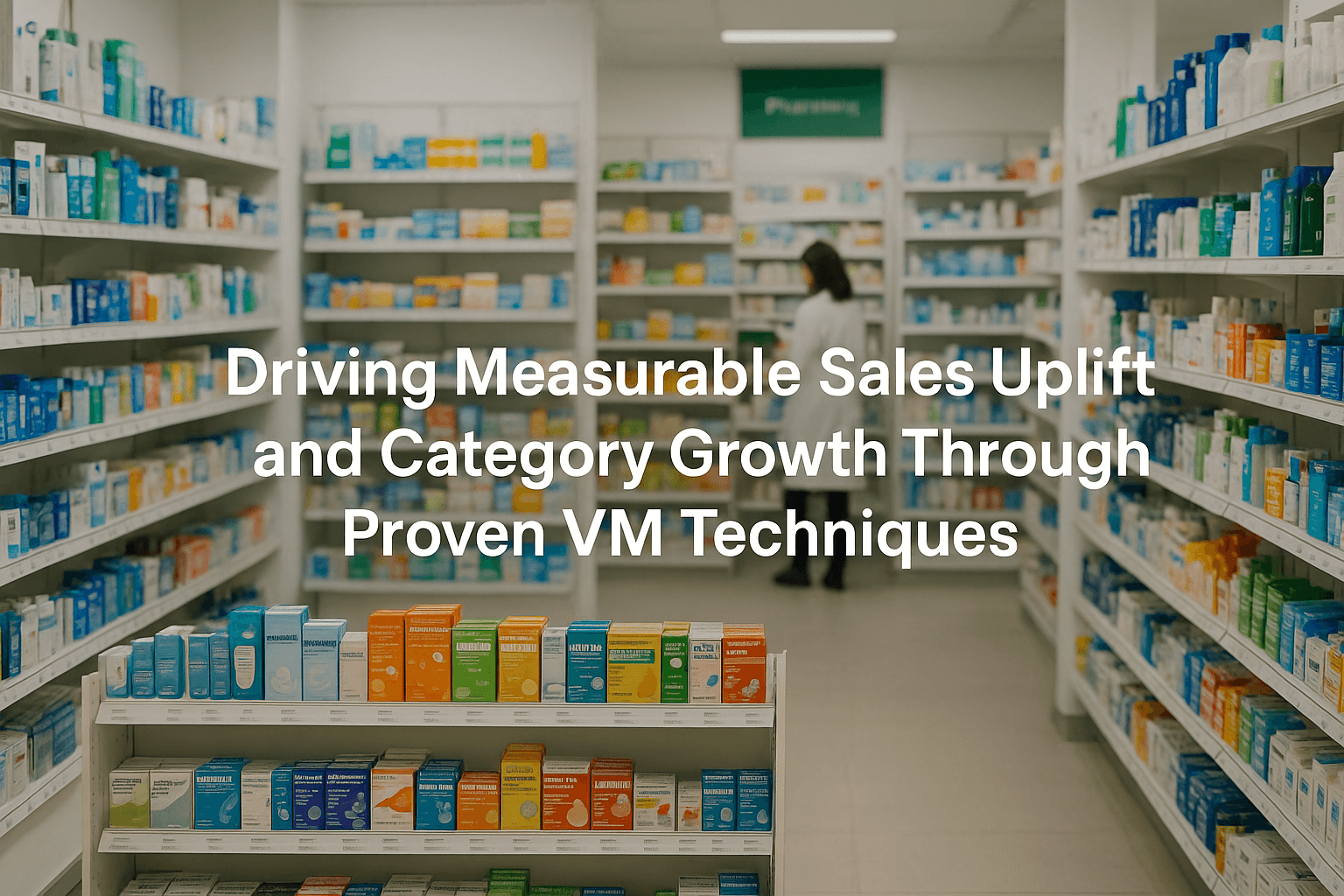
Learn more : How Merchandising Improves Pharmacy Sales: Strategies That Work in Malaysia

Learn more : Pharmacy Research Priorities Malaysia – Second Edition | Good Pharmacy Practice Guidelines
How Visual Merchandising Optimizes Pharmacist Workflow and Advisory Accuracy

For pharmacists, time is the most precious commodity, and visual merchandising serves as a critical operational accelerator. In the high-stakes environment of a Malaysian pharmacy, where accuracy and speed are paramount, a well-organized sales floor is far more than a marketing tool—it’s a reliable system that supports efficient daily workflows. When a trusted pharmacist is consulting with a customer, minutes spent searching for a specific SKU or clarifying misplaced products detract from the quality of advice and create bottlenecks. Strategic VM implementation directly counteracts this by ensuring planogram compliance, particularly for fast-moving consumer health (FMCH) categories and high-advice products like prescription medications or specialized supplements. A logical, consistent shelf layout means that a product’s location is predictable, turning a potential search mission into a simple retrieval task. This operational efficiency reduces dispensing errors, streamlines inventory management, and allows pharmacy staff to focus their expert energy on patient care rather than logistical puzzles.
From the retail manager’s perspective, standardized VM translates into tangible labor savings and improved service metrics. A store where the diabetes care section is always organized, with blood glucose monitors, test strips, and lancets clearly grouped, enables faster customer service during busy periods. For the distributor representative, supporting this efficiency is key. When they deliver a new stock of antihistamines, ensuring it’s placed correctly within the established allergy relief bay according to the agreed facing plan means the pharmacy team can restock in seconds. This seamless integration between delivery and display is what makes a pharma distributor a true supply chain partner. Ultimately, effective visual merchandising empowers the pharmacist to fulfill their primary role as a healthcare advisor with confidence and speed, building a proven foundation for both operational reliability and enhanced patient trust.
Establishing a Distinct Competitive Edge in Malaysia’s Crowded Pharmacy Landscape
In a market as competitive as Malaysia’s, with national chains like Guardian and Watsons alongside independent community pharmacies, differentiation is strategic. Visual merchandising provides a powerful, tailored avenue to build a unique brand identity and recall at the very point of sale. When every retailer stocks similar products from the same pharmacy wholesale distributors, the in-store experience becomes the ultimate differentiator. A pharmacy with cluttered, inconsistent shelves communicates disorder, while a space with effective, thoughtful displays projects professionalism and care. This is especially crucial for independent pharmacy distributors and the stores they supply, which may not have the massive marketing budgets of larger chains. For them, excellence in VM is a primary marketing channel, creating a strategic advantage that attracts and retains customers.
Consider the contrasting environments of a busy Klang Valley urban pharmacy and a neighbourhood outlet in Ipoh. In the urban setting, customers are often time-poor; clear category signage, hero endcaps highlighting wellness themes, and a logical flow from OTC to personal care enable quick, successful shops. In the community setting, VM fosters relationship-building; a dedicated section for local health concerns with educational materials can position the pharmacy as the trusted neighborhood health hub. In both scenarios, well-structured shelves reduce the outlet’s reliance on constant, margin-eroding price promotions. Instead of competing solely on price, the pharmacy competes on perceived value, expertise, and a superior customer journey. This approach not only builds loyalty but also supports healthier profit margins, proving that investing in visual standards is an effective long-term business strategy for standing out in a crowded marketplace.
The Collaborative Framework: Distributors, Merchandisers, and In-House Teams
Executing flawless visual merchandising is rarely the responsibility of a single entity; it is a collaborative symphony between brand owners, distributor pharmacy teams, and in-house retail staff. Each plays a distinct yet interconnected role, and understanding this framework is key to achieving reliable compliance. Brand managers set the vision through national planograms and marketing guidelines. Pharmacy wholesale distributors act as the crucial link, employing expert merchandising field teams to translate this vision into reality across hundreds of disparate outlets. Meanwhile, in-house pharmacy staff are the custodians of the standard day-to-day.
The effectiveness of this model hinges on clear role definition and communication. The following table compares the typical contributions of external merchandisers and in-house teams within the Malaysian pharmacy retail context:
Role of Merchandisers vs. In-house Pharmacy Teams in VM Execution
| Execution Factor | Distributor / External Merchandiser | In-house Pharmacy Team |
|---|---|---|
| Primary Training Focus | Brand & category-specific planogram mastery, new product launches, compliance auditing. | Store-level operational efficiency, customer service protocols, basic facing rules. |
| Compliance Rate Driver | Strategic outlet-level implementation, correcting major deviations, installing new planograms. | Daily maintenance, minor restocking, preventing drift after the merchandiser visit. |
| Speed & Scale | High-speed execution across a designated route of stores; focused on major resets. | Ongoing, slower maintenance; integrated into daily tasks between customer interactions. |
| Stock & Inventory Link | Often works with delivered stock, may communicate out-of-stock issues back to the distributor. | Directly manages in-store inventory, conducts stock counts, initiates replenishment orders. |
| Brand Communication | Direct conduit for brand-driven messaging, promotions, and point-of-sale material updates. | Embodies the store’s brand; provides tailored product advice based on customer interaction. |
From the pharmacist’s viewpoint, a good merchandiser is a helpful ally who respects the pharmacy’s workflow while elevating its presentation. The distributor rep sees their role as ensuring strategic alignment and protecting brand equity at retail. This collaborative, multi-perspective approach ensures that visual standards are not a one-time event but a sustained, reliable practice that drives consistent performance.
The Future Landscape: Digital Integration and Data-Driven VM Execution

The future of pharmacy visual merchandising is inextricably linked to digital transformation and data analytics, moving from intuition-based decisions to strategic, insight-driven execution. Cloud-based planogram platforms are revolutionizing compliance tracking, allowing distributor pharmacy teams and brand managers to view real-time shelf data from across Malaysia. AI-powered image recognition technology, where field staff upload shelf photos that are instantly analyzed for facing compliance, stock levels, and pricing accuracy, is making audits remarkably efficient and objective. This shift is not about replacing human expertise but augmenting it with proven data.
For pharmacy wholesale distributors, these tools are game-changers. Data on sell-through rates can directly inform facing recommendations—giving more space to faster-moving items from a particular healthcare logistics provider. Predictive analytics can optimize replenishment cycles, reducing out-of-stocks for key items. Furthermore, digital screens are beginning to supplement physical VM, especially in chronic disease categories. Imagine a diabetes care bay with a small screen looping expert videos on nutrition management—this educational VM deepens engagement and reinforces the pharmacy’s authority. The adoption of these digital tools represents the next evolution of VM: a strategic, efficient system that continuously learns and adapts to maximize both commercial outcomes and patient health impact.
Learn more : The Future of Pharmacy Merchandising Services in Malaysia: Trends and Predictions | Supply Chain & Network Operations in Healthcare Distribution
The Enduring Role of VM in Pharmacy Retail Excellence
As the Malaysian pharmacy sector continues to evolve with new regulations, consumer expectations, and competitive pressures, the fundamental importance of visual merchandising remains constant. It is the essential connective tissue that binds together the strategic intent of brand owners, the operational efficiency of pharma distributors, and the daily reality of the retail pharmacist. VM is the physical manifestation of a reliable supply chain and a trusted healthcare promise. It directly influences shopper psychology, drives measurable commercial growth, ensures rigorous regulatory compliance, and empowers expert frontline staff.
Viewing VM as merely a cosmetic task is a significant strategic oversight. Instead, it must be recognized as a core operational discipline and a long-term investment in brand equity, customer loyalty, and retail performance. In an industry where trust is the ultimate currency, the clarity, consistency, and professionalism conveyed through excellent visual merchandising are non-negotiable components of sustainable success.
Frequently Asked Questions (FAQ)
Q1: Why is visual merchandising important?
Answer:
Visual merchandising is important because it guides customer attention, improves product visibility, and increases purchase likelihood by creating an organized, appealing shopping experience.
Q2: Why is VM important?
Answer:
VM (visual merchandising) matters because it shapes how customers perceive products, simplifies decision-making, and strengthens a store’s professional and trustworthy image.
Q3: What is the most important goal of visual merchandising?
Answer:
The main goal is to influence customer behaviour—by making products easier to find, understand, and compare—ultimately driving sales and enhancing customer satisfaction.
Q4: What is merchandising and why is it important?
Answer:
Merchandising involves planning, presenting, and managing products in retail. It is important because it ensures the right products are available, displayed well, and aligned with shopper needs to maximise sales.
Q5: What is the most important thing in visual merchandising?
Answer:
The most important element is customer-focused presentation—ensuring displays are clear, logical, and intuitive so customers immediately understand what to buy and why.
Q6: What are the benefits of merchandising?
Answer:
Merchandising improves product visibility, increases sales, enhances brand trust, reduces customer confusion, and ensures consistent store standards.
Q7: What is visual merchandising?
Answer:
Visual merchandising is the strategic arrangement of products, layouts, colours, and signage to influence shopper behaviour and create an engaging retail environment.
Q8: What are the three main functions of merchandising?
Answer:
The three core functions are product planning, product presentation, and inventory management to ensure availability, appeal, and sales efficiency.
Q9: What are the five qualities of merchandising?
Answer:
The key qualities are clarity, consistency, visibility, customer-focus, and commercial impact.
Q10: What are the 4 pillars of merchandising?
Answer:
The four pillars are Product, Placement, Pricing, and Promotion, which work together to deliver a complete, effective retail strategy.
How can we assist you today? 😊
Just let us know—we’re here to help!