

November 5, 2026
In the uniquely regulated landscape of Malaysian healthcare retail, visual merchandising transcends mere aesthetic appeal to become a critical operational function. Unlike fast-moving consumer goods (FMCG) environments where impulse buys reign, the pharmacy space operates at the intersection of public health, strict compliance, and consumer education. Here, every shelf arrangement, signage placement, and product grouping carries weight, influencing not just sales but patient safety and health outcomes. The growing sophistication of pharmacy distribution services in Malaysia has made this discipline more strategic than ever. These trusted partners are no longer just logistical entities; they are integral collaborators in ensuring that the retail pharmacy floor—from a sprawling chain outlet to a community independent pharmacy—functions as a reliable point of care. This is essential because shopper behaviour in pharmacies is fundamentally different. Customers are often in a state of need, seeking solutions for personal or family health concerns, which makes clarity, trust, and navigability paramount. Effective visual merchandising directly supports KKM (Kementerian Kesihatan Malaysia) guidelines, aids in GDP (Good Distribution Practice) adherence, and transforms a regulated retail space into an environment that facilitates informed health decision-making.
Defining Pharmacy Visual Merchandising: A Framework for Compliance and Clarity
Pharmacy visual merchandising is the science and art of optimizing product placement, store layout, and informational displays within a healthcare retail setting to achieve three core objectives: regulatory compliance, enhanced customer experience, and strategic commercial performance. Its scope is rigorously defined by constraints seldom seen in general retail. Where an FMCG store may freely create dazzling displays to drive impulse purchases, a pharmacy must first and foremost adhere to NPRA (National Pharmaceutical Regulatory Agency) regulations on product claims, controlled substance placement rules, and KKM-mandated separations between prescription and over-the-counter (OTC) zones. This creates a unique set of challenges that demand an expert touch. The function of a pharmacy distributor Malaysia extends deeply into this realm. A proven distributor’s role involves ensuring shelf readiness—this means delivering not just products, but also the necessary planogram guidance, compliance-approved promotional materials, and efficient merchandising support to maintain a trusted retail execution. Their operations directly influence whether a pharmacy can consistently present a safe, organized, and professionally credible face to the community, making them an essential link in the healthcare supply chain.
Learn more : The Role of End-Cap Displays in Increasing Pharmacy Sales in Malaysia
Strategic Product Presentation and Planogram Compliance

The first and most visible pillar of effective pharmacy merchandising is product presentation. This goes beyond simple stocking; it is a strategic exercise in maximizing visibility, ensuring safety, and guiding choice within a compliant framework. In a Malaysian pharmacy, high-impact zones such as eye-level shelves, counter areas near the consultation point, and disease-state clusters (like arranging diabetes care products together) are critical real estate. Their management requires meticulous collaboration between the pharmacy, brand managers, and pharmacy wholesale distributors. From a pharmacist’s point of view, a cleaner, logically categorized layout is not just about sales—it’s about patient safety. It enables quicker, more accurate product recommendations and reduces the risk of dispensing errors. For the brand manager, it involves establishing a clear SKU hierarchy to ensure key products gain maximum visibility amidst intense competition. The distributor’s perspective is operational and reliable, focusing on the ground-level execution: maintaining FEFO (First Expired, First Out) principles, managing stock rotation to prevent expiry, and physically reblocking shelves to match the agreed planogram. This triad of viewpoints must align for shelf-level excellence.
Consider the operational scenario of a independent pharmacy distributor servicing a network of community pharmacies across Penang. Their merchandising teams are not just stock fillers; they are trained to understand planogram compliance as a GDP-aligned activity. They ensure that fever relief products for children are grouped appropriately, that prescription areas remain unobstructed, and that health supplements are displayed with the necessary disclaimers. To illustrate the value a distributor brings, consider this compliance scorecard:
Table: Product Presentation Compliance Metrics – Distributor-Supported vs. In-House Management
| Performance Indicator | Distributor-Supported Team | In-House Pharmacy Staff Only |
|---|---|---|
| Planogram Adherence Rate | High (95%+) | Variable (60-80%) |
| FEFO/Expiry Management | Systematic, documented checks | Often ad-hoc, higher risk of oversight |
| Shelf Reblocking Frequency | Weekly, as part of routine service | As time allows, often during quiet periods |
| Response to Promotional Changes | Rapid, aligned with campaign launch | Slower, dependent on staff availability |
| Consistency Across Multiple Outlets | High, standardized processes | Low, varies by manager priority |
The framework for success here is built on a cycle: Planogram Design → Strategic Placement → Consistent Replenishment → Audit and Feedback. A proven distributor acts as the glue holding this cycle together, ensuring that the strategic intent of the brand and the compliance needs of the pharmacy are realized on the shelf every single day.
Mastering Customer Flow for Guided Health Journeys

The second critical element is customer flow design—the intentional orchestration of how shoppers physically move through a pharmacy. This flow powerfully shapes shopper behaviour, especially in a context where customers may be anxious, seeking relief, or navigating complex self-care options. Typical Malaysian pharmacy layouts, from the entry vortex to the prescription counter at the rear, are deliberately designed to manage this journey. The goal is to use customer flow to gently guide individuals through health-related decision points, from OTC remedies to preventative care products, without creating confusion or congestion. For instance, placing frequently requested items like vitamins or pain relievers along the primary path increases discoverability, while creating a quiet, private zone for sensitive consultations near the pharmacist counter respects customer dignity. This is where the efficient support of a distributor pharmacy team becomes invaluable. Through activities like reblocking (resetting entire sections) and zoning (creating thematic clusters), they help maintain navigational clarity, ensuring that the store layout continues to serve its purpose as footfall patterns evolve.
From the pharmacist’s perspective, good flow management reduces bottlenecks at the counter, allowing them more time for meaningful patient engagement. It also passively educates; a logical journey from cough and cold products to immune boosters, for example, can encourage complementary purchases. For the merchandiser employed by a pharmacy distributor Malaysia, flow is about operational efficiency—arranging deliveries and shelf-service to minimize disruption to the shopping experience. For the distributor as an entity, it’s about providing tailored insights. They might analyze sales data from similar outlets to recommend moving adult nutrition supplements closer to the chronic care area, recognizing that shoppers managing conditions like diabetes or hypertension are a key demographic for those products. Consider the challenge of serving elderly shoppers in a pharmacy in Johor Bahru. A strategic flow design would ensure wide aisles, clear signage with large fonts, and seating areas near high-engagement sections like compression stockings or mobility aids, all supported by a distributor team sensitive to these needs during shelf servicing.
Learn more : Retail Merchandising Services Malaysia
Compliant Promotional Displays and Conversion Strategy
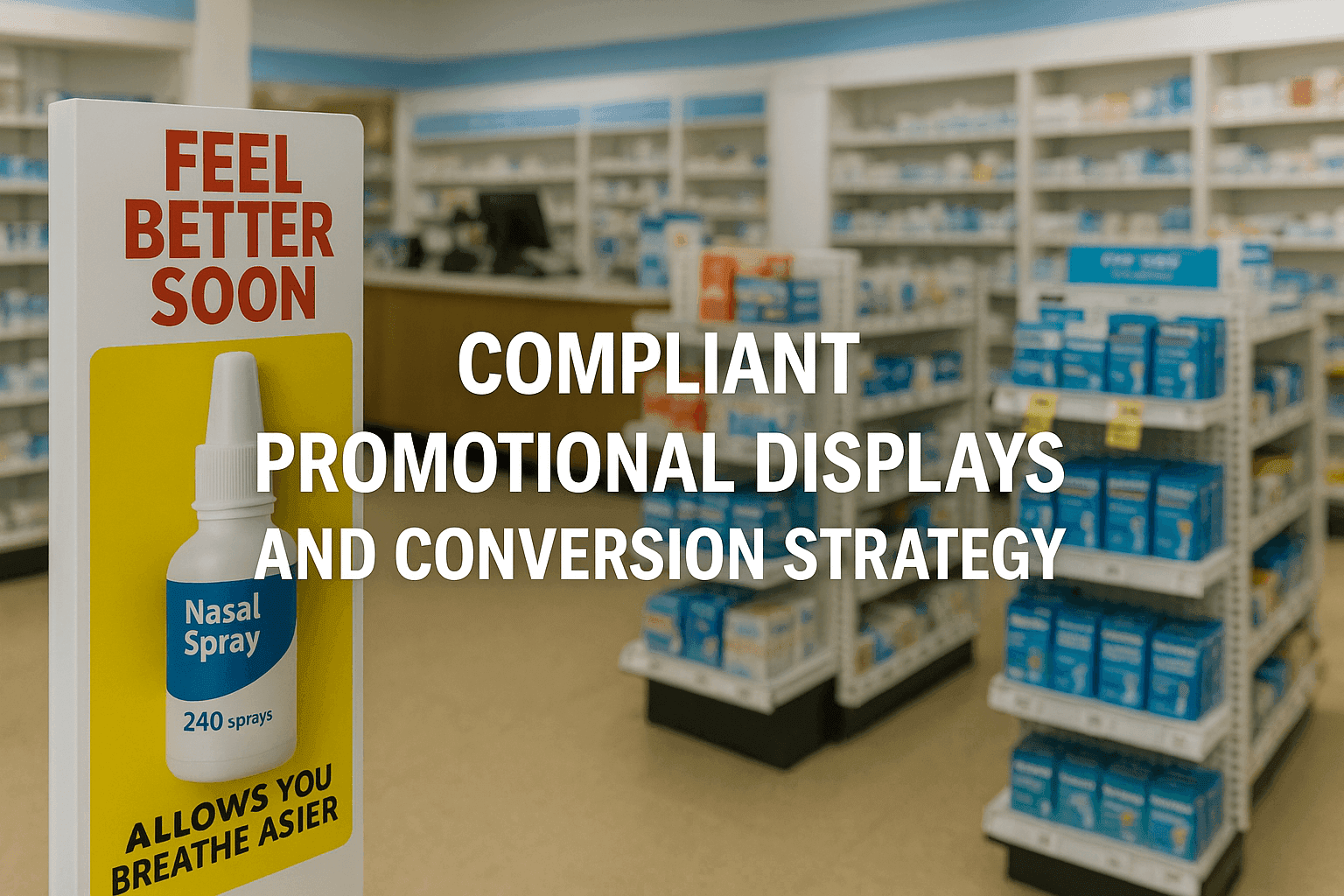
The third pillar is promotional display strategy, which in a pharmacy context must balance commercial drive with rigorous compliance. Promotions are essential for moving inventory, launching new products, and providing value to customers, but they must be executed with an expert understanding of healthcare regulations. Common promotional displays in Malaysian pharmacies include endcaps (displays at the end of aisles), gondola heads (the first facing of a shelf run), and promotional bins for fast-moving items. The execution of these campaigns often falls to the field teams of an independent pharmacy distributor. Their task is to build these displays according to brand specifications while strictly adhering to NPRA-approved health claims—ensuring no unauthorized therapeutic promises are made on signage. The role of pharmacy wholesale distributors here is to act as the reliable quality-control checkpoint, guaranteeing that all promotional materials shipped to pharmacies are pre-vetted and compliant, thus protecting both the pharmacy’s license and the brand’s integrity.
A brand manager’s perspective focuses on using promotions to gain trial and visibility for key SKUs, often targeting high-traffic periods like flu season or back-to-school. They rely on their distributor partner for effective ground-level execution and feedback. From the pharmacist’s point of view, a well-executed promotional display for, say, children’s vitamins during the school holiday period, is a service—it highlights relevant products when customers are most likely to need them. However, they depend entirely on their distributor to ensure that the display’s messaging is accurate and compliant. An effective example can be seen during the Hari Raya or Chinese New Year period, where pharmacies often run promotions on gift packs of health supplements. A trusted distributor would not only ensure timely delivery of these special packs but also provide display guidelines that group products attractively while including all mandatory labeling information, creating a festive commercial opportunity that remains firmly within regulatory boundaries. This seamless, proven collaboration turns promotional strategy into safe, strategic conversions.
Learn more :WHO Guidelines on Advertising and Promotion of Medicines
The Synergistic Impact of Presentation, Flow, and Promotional Strategy
When executed in isolation, each element of pharmacy visual merchandising offers distinct benefits. Yet, it is their strategic integration that unlocks truly transformative results for both sales performance and regulatory compliance. The magic occurs when logical product presentation, intuitive customer flow, and compliant promotional displays weave together into a seamless, guided customer journey. This holistic approach does more than just boost average transaction value; it actively supports patient safety and pharmacist efficacy. Consider a shopper entering a pharmacy seeking relief for a persistent cough. A well-designed customer flow naturally guides them past a disease-state cluster for respiratory health, where strategic product presentation ensures OTC syrups, lozenges, and relevant supplements are grouped with clear signage. A nearby promotional endcap for honey-based remedies or humidifiers—crafted with NPRA-compliant claims—then offers a tailored solution for complementary care. This journey is efficient, educational, and builds trust. From a supply chain partner perspective, this synergy is only possible with reliable coordination. The pharmacy distribution service in Malaysia that supplies these products must also support the planogram that dictates their placement, understand the store’s layout to optimize delivery schedules around foot traffic, and provide approved promotional materials. This alignment ensures that the strategic vision for the retail space is perfectly mirrored in its on-shelf reality, making the entire system essential for modern healthcare retail.
The Central Role of the Distributor in Unified Retail Execution

Achieving this level of synchronized merchandising across diverse pharmacy outlets—from sprawling urban chains to compact neighborhood independent pharmacies—is the core challenge where a proven pharmacy distributor Malaysia proves indispensable. Their role transcends logistics to become the guardian of retail execution consistency. For brand managers, the distributor is the expert arm ensuring their trade marketing strategies are faithfully translated at the point of sale. For pharmacists, especially those in independent settings, the distributor’s field team functions as an extension of their own staff, providing the specialized manpower and know-how to maintain complex planogram compliance and stock rotation. The responsibility is immense: ensuring SKU readiness, preventing out-of-stock (OOS) situations that break the customer journey, and conducting regular retail audits to measure performance against benchmarks. The comparative advantages of leveraging a distributor’s scale and expertise become clear when examining the operational split of responsibilities.
Table: Distributor-Led vs. In-House Merchandising – A Comparison of Capabilities
| Operational Area | Distributor Pharmacy Field Team | In-House Pharmacy Staff |
|---|---|---|
| Primary Focus | Cross-brand planogram execution & category management | Overall store operations & direct patient care |
| Consistency Across Locations | High; standardized processes applied across multiple client pharmacies | Variable; dependent on individual store manager priority and time |
| Expertise in Compliance Details | Specialized in NPRA/KKM display guidelines and GDP during merchandising | General awareness, but depth can vary |
| Resource for High-SKU-Count Resets | Dedicated teams capable of major reblocking projects with minimal store disruption | Limited; major resets can interrupt core pharmacy services |
| Data-Driven Insights | Access to broader market data to suggest optimized facings and placements | Primarily limited to internal sales data from their single outlet |
For a major chain with its own resources, the distributor partnership might focus on efficient bulk delivery and coordinated campaign launches. For the independent pharmacy distributor serving a sole proprietor in Melaka, the service is far more hands-on, often involving training shop assistants on basic merchandising principles and providing tailored planograms that maximize limited shelf space. This multifaceted role makes the distributor a strategic linchpin in the retail ecosystem.
Learn more : Top 10 Pharmacy Distributors in Malaysia Ranking
Navigating Real-World Barriers in the Malaysian Landscape
Despite a clear understanding of best practices, several persistent challenges can hinder optimal visual merchandising in the Malaysian context. These barriers underscore why a reliable and adaptive approach is essential. Spatial constraints represent a primary hurdle, particularly for urban pharmacies in cities like Kuala Lumpur or Georgetown, where retail square footage comes at a premium. This limited space must accommodate an ever-growing SKU density, from prescription medications and OTC products to a booming wellness and personal care assortment, all while maintaining mandatory clear aisles and segregated zones. This physical crunch is compounded by human-resource limitations. A typical independent pharmacy operates with a lean team where the pharmacist’s primary duty is patient care, leaving little time for meticulous shelf management. Furthermore, misalignment between brand objectives and ground-level reality can occur. A brand manager may design an ambitious secondary placement campaign, but if the pharmacy wholesale distributors’ field teams are not adequately briefed or resourced, execution will be inconsistent. Another critical barrier is the dynamic nature of regulatory claim restrictions. Promotional materials created for a general trade audience may not be suitable for a pharmacy environment without modification, requiring constant vigilance and communication between all parties to ensure every piece of in-store communication remains within compliance boundaries.
Learn more : The Future of Retail Consumer Behaviour.
Actionable Strategies for Enhanced Merchandising Performance
Overcoming these challenges requires a commitment to structured processes and tailored solutions. The foundation is unwavering planogram discipline, supported by a cycle of regular auditing and feedback. This is not a static document but a dynamic tool that should be updated based on sales data, new product introductions, and seasonal health trends. Training for distributor pharmacy field teams is a non-negotiable investment. These front-line personnel must be expert not only in stacking products but in understanding the “why” behind the planogram—the health journey it supports and the compliance rules it upholds. Leveraging digital tools for compliance tracking can transform this process. Imagine a field merchandiser using a tablet app to complete an audit, instantly flagging OOS situations or misplaced items to both the distributor’s logistics hub and the brand manager, creating a closed-loop system for corrective action.
Utilizing the aggregated data from a pharmacy distributor Malaysia offers a powerful advantage for optimization. This data can reveal which product adjacencies drive complementary sales or how customer flow patterns differ between a pharmacy in a suburban mall versus one in a hospital lobby. Finally, strategies must be tailored to format. A large chain pharmacy can utilize sophisticated planogram technology and dedicated promotional bays. For a smaller independent pharmacy, the strategy might focus on creating a flexible modular display for high-margin essential health categories and ensuring the distributor provides pre-packed promotional kits that are simple to deploy. This strategic, data-informed, and context-sensitive approach is what separates effective merchandising from simple shelf-filling.
Learn more : The Science Behind Effective Retail Merchandising
The Enduring Value of a Cohesive Merchandising Philosophy
In a competitive and highly regulated environment, long-term retail performance is not defined by sporadic promotional wins alone. It is built on the solid foundation of a cohesive merchandising philosophy that honors the interconnected nature of product presentation, customer flow, and promotional strategy. These three core elements, when harmonized, create a pharmacy space that is both commercially vibrant and professionally trusted. They ensure that regulatory compliance is woven into the fabric of the retail experience, not bolted on as an afterthought. This approach proven to reduce customer confusion, empower pharmacist counselling, and ultimately, support better health outcomes. It transforms the pharmacy from a mere point of transaction into a essential destination for care and well-being. For brand owners and pharmacy operators alike, investing in this holistic view—and in the strategic partnerships with distributors who enable it—is a decisive step toward sustainable growth and lasting customer loyalty.
Learn more : Last-Mile Supply Chain Excellence
Frequently Asked Questions (FQA)
Q1: What are the 7 R’s of merchandising?
Answer: The 7 R’s of merchandising are Right Product, Right Place, Right Time, Right Price, Right Quantity, Right Quality, and Right Promotion. These principles ensure retailers deliver what customers want, when they want it, and in the most effective way to drive sales.
Q2: What are the four most important elements in VM?
Answer: The four most important elements in visual merchandising are Presentation, Lighting, Signage, and Layout. These elements work together to attract attention, guide customer flow, and improve product visibility to influence purchase decisions.
Q3: What are the 5 R’s of merchandising?
Answer: The 5 R’s of merchandising are Right Product, Right Price, Right Place, Right Time, and Right Quantity. These basics help retailers match supply with customer demand efficiently.
Q4: What are the 4 P’s of visual merchandising?
Answer: The 4 P’s of visual merchandising are Presentation, Pricing, Promotion, and Placement. These pillars shape how products are displayed, how value is communicated, and how shoppers engage with the store environment.
Q5: What is the 80/20 rule in merchandising?
Answer: The 80/20 rule states that 80% of sales typically come from 20% of products. This helps merchandisers identify top-performing items and allocate space, stock, and promotions more efficiently.
Q6: What are the 10 principles of merchandising?
Answer: The 10 principles usually include Product Availability, Visual Appeal, Space Planning, Pricing Strategy, Stock Rotation, Category Management, Display Consistency, Customer Flow, Seasonal Planning, and Promotional Execution. These guide retailers in creating effective, customer-focused merchandise strategies.
Q7: What are the 6 P’s of merchandising?
Answer: The 6 P’s of merchandising are Product, Price, Promotion, Place, Presentation, and People. They combine traditional retail principles with shopper experience elements.
Q8: What is 7 P’s in marketing?
Answer: The 7 P’s in marketing include Product, Price, Place, Promotion, People, Process, and Physical Evidence. This extended marketing mix helps brands shape both customer experience and value delivery.
Q9: What are the four pillars of merchandising?
Answer: The four pillars of merchandising are Product, Pricing, Placement, and Promotion. These foundational elements influence how items are selected, displayed, and sold in retail environments.
Q10: What does the 7 P’s stand for?
Answer: The 7 P’s stand for Product, Price, Place, Promotion, People, Process, and Physical Evidence. They represent the core elements businesses use to create effective marketing strategies and improve customer satisfaction.
How can we assist you today? 😊
Just let us know—we’re here to help!