

How to become a visual merchandiser?
November 19, 2026
Visual merchandising within a Malaysian pharmacy is far more than simple shelf arrangement; it is a strategic discipline directly tied to consumer health outcomes and commercial success. In this unique retail environment, the practice involves the science-based organization and presentation of over-the-counter (OTC) medications, health supplements, mother & baby essentials, and specialised skincare products. Its primary function is to create a shopping experience that is both informative and navigable, directly supporting the operational efficiency of the broader pharmacy distribution service. When executed with expertise, it bridges the critical gap between the warehouse of a pharmacy wholesale distributor and the hands of the end-consumer, ensuring that the right products are visible, accessible, and available at the precise moment of need. This intersection is where the roles of pharmacy distributor Malaysia networks, independent pharmacy distributor operations, and in-store retail execution must coalesce seamlessly. Therefore, mastering pharmacy visual merchandising is not a peripheral task—it is an essential, proven career pathway that demands a reliable understanding of retail science, regulatory landscapes, and human psychology to drive both health literacy and business performance in a competitive market.
Core Responsibilities: The Day-to-Day Engine of Pharmacy Retail

At its heart, the visual merchandiser’s role in a pharmacy is one of meticulous coordination and strategic placement. The core responsibilities form a cycle of retail excellence that begins with interpreting a planogram—a detailed schematic diagram dictating the exact shelf placement for every product—and extends to its flawless execution. This involves managing product facings (the number of units facing the customer), implementing shelf zoning principles to group complementary categories logically (like placing cough syrup adjacent to honey lozenges), and ensuring all point-of-sale material (POSM) such as shelf talkers, wobblers, and posters are correctly deployed. Crucially in a pharmacy context, stock rotation following the First-Expired-First-Out (FEFO) principle is non-negotiable for patient safety, especially for health supplements and OTC items. Furthermore, compliance with both internal brand guidelines and external regulations, such as those from the Ministry of Health Malaysia (KKM), is paramount. Displaying KKM-registered items correctly, ensuring registered pharmacy products are segregated from general merchandise, and accurately signing vitamin ranges are all tasks that carry significant weight. This role is essential because it directly influences three key stakeholders: brand owners who rely on data-backed displays to gain market share; distributor pharmacy teams who depend on consistent guideline execution to protect brand equity; and pharmacists who require organized shelves to make fast, trusted recommendations to their customers.
-
From the Pharmacist’s Perspective: A disorganized shelf is a operational hazard. When a customer asks for a specific brand of infant paracetamol or a diabetic-friendly nutritional supplement, the pharmacist needs to locate it instantly. Effective visual merchandising creates a logical, consistent store layout that turns the pharmacist from a product-searcher into a health advisor, saving time and building patient trust.
-
From the Distributor Pharmacy’s Perspective: A distributor’s investment in marketing and sales can be undone by poor shelf execution. Their team needs visual merchandisers to be their on-the-ground ambassadors, ensuring the planogram compliance they negotiated with chain headquarters is actually reflected at the store level. This consistency is what makes a pharmacy distributor Malaysia service reliable to brand principals.
-
From the Brand Manager’s Perspective: Their success is measured in shelf share and sell-through rates. They need visual merchandisers to provide accurate photo audits and real-time data on how their new SKU launch is performing visually alongside competitors. Was the premium shelf block for their new probiotic actually secured? Is their hero product at eye-level? The merchandiser’s work provides the tangible proof of a strategic placement deal.
Learn more : What Does a Visual Merchandiser Do?
Essential Skill Sets for an Effective Pharmacy Visual Merchandiser

Becoming an effective visual merchandiser in the pharmacy sector requires a tailored blend of technical prowess, soft skills, and growing digital literacy. This is not a role for guesswork; it demands a proven and efficient skill set adapted to the sensitivities of the health retail space.
On the technical front, proficiency in layout design and planogram reading is the bedrock. This includes an understanding of category management principles—knowing why pediatric vitamins are placed at a lower height for parent accessibility, or why suncare products might be cross-merchandised near travel health kits. An eye for light and color usage is also key, using warmth to highlight wellness sections or clinical white lighting for medical devices. However, technical skill alone is insufficient. Soft skills are the grease that makes the machinery work. Communication and teamwork with often-skeptical pharmacy staff are critical; a merchandiser must be able to explain the why behind a reset to gain buy-in from the store pharmacist-in-charge. Time management is another essential skill, as resets are often conducted during off-peak hours under tight deadlines, requiring the ability to work swiftly without compromising on accuracy or compliance.
Increasingly, digital literacy is what separates good merchandisers from great ones. The role now involves using specialized compliance apps to submit real-time audits, utilizing SKU tracking tools to monitor on-shelf availability, and even analyzing basic heatmap data from store cameras to understand customer traffic flow. For instance, a merchandiser working with a major independent pharmacy distributor might use a tablet-based app to immediately report a stock-out of a best-selling antihistamine during allergy season, triggering the distributor’s supply chain to react.
A Practical Skill Framework for the Malaysian Context:
-
Pre-Visit:
-
Analyze the store-specific planogram and sales data.
-
Prepare necessary POSM and checklist for KKM-regulated sections.
-
Coordinate with the distributor pharmacy sales rep for product availability updates.
-
-
In-Store Execution:
-
Collaborate with store manager/pharmacist for briefing and access.
-
Execute reset with strict adherence to FEFO and planogram.
-
Ensure all KKM-registered products have correct signage and separation.
-
-
Post-Visit & Reporting:
-
Conduct a final compliance walkthrough.
-
Submit digital audit with time-stamped photos.
-
Report competitive activity and shelf share observations.
-
Learn more : The Science of Shopper Behavior in Modern Retail

Building Your Expertise: Education and Malaysia-Specific Certification Pathways
While raw talent is valuable, a structured educational foundation builds the trusted and expert profile that employers—be they retail chains, brand owners, or pharmacy wholesale distributors—actively seek. In Malaysia, there are multiple pathways to construct this foundation, blending formal education with targeted, localised certifications.
Recommended academic backgrounds provide a strong starting point. Degrees or diplomas in Marketing, Retail Management, Visual Communication Design, or Business Administration offer relevant theoretical knowledge in consumer behavior, space management, and commercial principles. However, the specialised nature of pharmacy retail makes supplementary, focused training essential. Short courses in pharmacy-specific merchandising modules, brand activation, and visual display basics are invaluable. Most critically, any aspiring merchandiser must cultivate a solid understanding of KKM-related product categorization and the profound implications of selling registered vs. non-registered items. Misplacing a pharmacy-only medicine in a general aisle is a serious compliance breach, not just a merchandising error.
Malaysia offers several strategic upskilling paths for those committed to this career:
-
HRD Corp Recognized Programs: Numerous training providers offer courses in retail merchandising and category management that are claimable under the levy system, making them a cost-effective option for both individuals and companies sponsoring their staff.
-
Specialised Retail Institutes: Institutions offering certified courses in visual merchandising often have modules tailored for different retail sectors, including health and wellness.
-
Pharmacy Chain Workshops: Major players like Guardian or Caring Pharmacy sometimes run internal or vendor workshops focused on their operational standards and planogram philosophies, providing unparalleled insider knowledge.
-
Distributor-Led Training: Leading pharmacy distributor Malaysia companies often conduct training for merchandisers contracted to handle their brand portfolios, focusing on product knowledge and guideline specifics.
Pursuing these pathways demonstrates a proactive commitment to building a reliable and legally compliant skill set, making a candidate significantly more attractive in a niche job market.
Gaining Invaluable Hands-On Experience in Malaysian Pharmacy Chains

Theory and certification pave the way, but real retail experience is the ultimate proving ground. It is here that abstract concepts like planogram compliance and shelf zoning meet the unpredictable reality of a live pharmacy environment. For aspiring visual merchandisers in Malaysia, seeking hands-on training within established pharmacy chains is the most effective method to build essential competency.
Internship and entry-level routes into major retailers such as Guardian, Caring Pharmacy, Health Lane Family Pharmacy, Alpro Pharmacy, or Multicare Pharmacy provide a structured immersion into the field. These placements offer real-world training on several critical fronts. Firstly, executing full planogram resets teaches the physical art of stripping and rebuilding a section according to a master blueprint, dealing with unexpected out-of-stocks, and managing leftover inventory. Secondly, participating in seasonal promotion setups—like creating displays for Ramadan wellness, back-to-school health kits, or seasonal flu prevention—hones skills in creating high-impact, temporary displays that drive sales. Thirdly, being involved in new SKU launch coordination provides insight into the commercial lifecycle of a product, from the initial shelf placement negotiation to the post-launch performance assessment.
This experience is also defined by collaboration. A merchandiser must learn to work alongside in-store pharmacists and assistants, respecting their domain while professionally advocating for the planned layout. Simultaneously, they will interface with field teams from pharmacy distributor Malaysia companies, understanding how their on-shelf execution fulfills a larger supply chain agreement. For example, an intern at a Caring outlet in Johor Bahru might work with a merchandiser from a distributor pharmacy servicing a specific supplement brand, learning how to set up a dedicated testers station for a new vitamin launch. This multifaceted collaboration is where soft skills are tested and refined. Demonstrating this hands-on experience to future employers—through a portfolio of before-and-after photos, examples of solved in-store problems, or understanding of multiple retailers’ compliance systems—provides tangible, proven evidence of one’s readiness for a strategic role in shaping the future of pharmacy retail.
Comparison of Experience Opportunities Across Major Pharmacy Chains:
| Pharmacy Chain | Typical Merchandising Focus Areas for Trainees | Key Collaboration Partners (In-Store & External) | Technology & Process Exposure |
|---|---|---|---|
| Guardian | High-volume beauty & wellness cross-merchandising, seasonal gift sets, planogram precision. | Guardian store staff, brand ambassadors, large FMCG distributors. | Advanced planogram software, strict compliance scoring apps. |
| Caring Pharmacy | Pharmacy-centric layouts, KKM compliance, chronic care product zoning (e.g., diabetes care). | In-house pharmacists, pharmaceutical sales reps, specialty healthcare distributors. | Integration with pharmacy management systems, focus on therapeutic category zoning. |
| Health Lane Family Pharmacy | Community-focused family health sections, mother & baby category, OTC medicine accessibility. | Store owners/managers, local brand distributors, FMCG merchandising teams. | May involve a mix of digital and manual reporting, adaptable to independent store layouts. |
The Strategic Integration of Merchandisers with Malaysian Pharmacy Distribution Networks
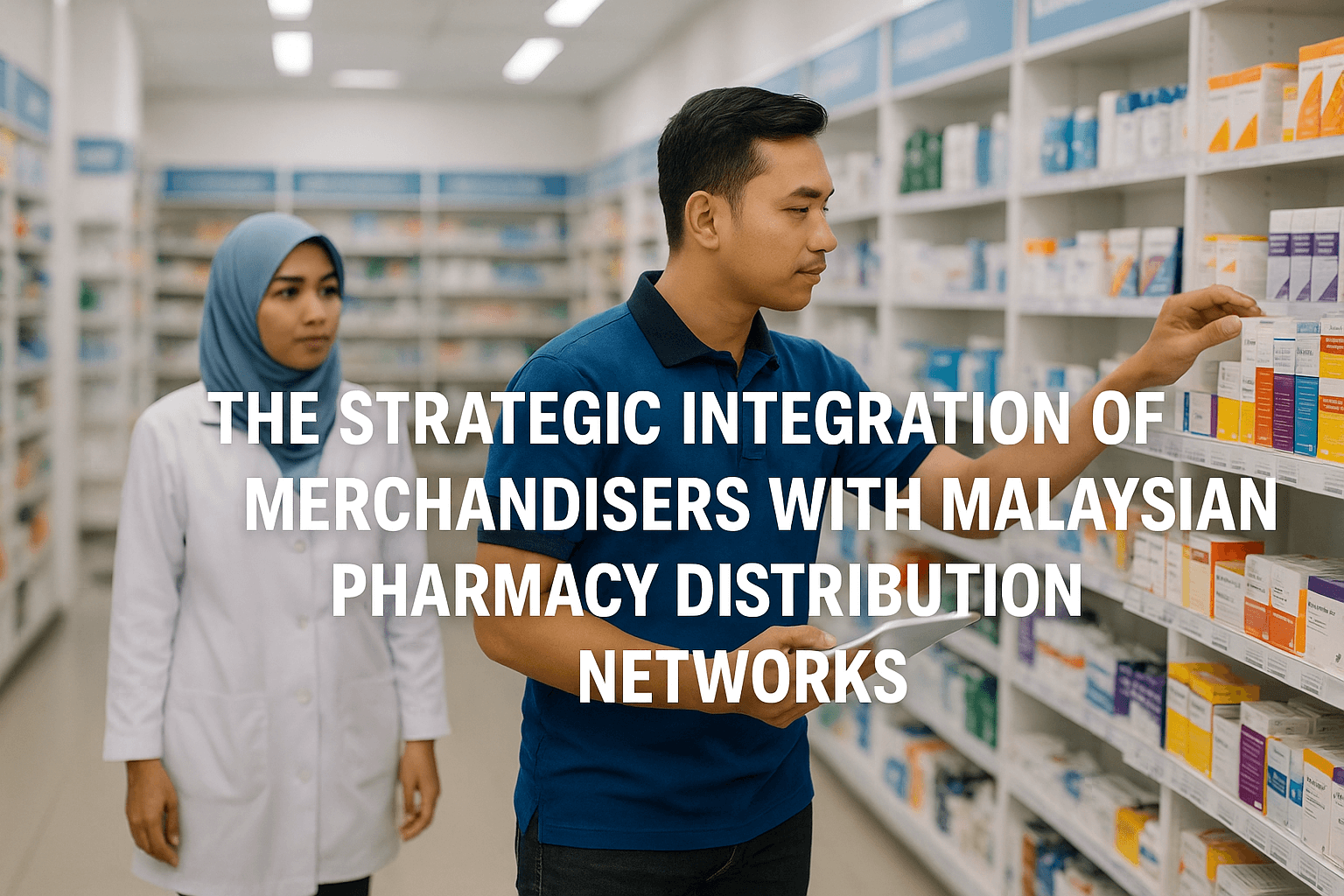
The role of a visual merchandiser transcends the individual store; it is a critical nexus within the broader pharmacy distribution service in Malaysia. Their daily work requires strategic integration and constant coordination with external supply chain partners to ensure the final link—the product on the shelf—is both effective and compliant. This involves seamless communication with field staff from independent pharmacy distributor companies, logistics teams at pharmacy wholesale distributors, and sales representatives from various distributor pharmacy operations. This collaboration is not merely administrative; it is the essential mechanism that transforms a supply chain agreement into tangible retail success. In Malaysia’s tightly regulated healthcare market, consistent execution of this partnership is non-negotiable. A single inconsistency, like a misplaced KKM-registered item, can compromise patient safety and trigger regulatory penalties, damaging trust across the entire network—from manufacturer to end consumer. Therefore, the merchandiser acts as the on-ground reliable agent for the distributor, ensuring the strategic vision for a product’s placement is realized with precision at thousands of touchpoints, making their role a proven linchpin in the commercial healthcare ecosystem.
Consider a practical scenario involving a popular Malaysian herbal supplement brand distributed by a mid-sized independent pharmacy distributor. The merchandiser, contracted by the brand, receives the monthly planogram and promotion kit from the distributor’s marketing team. Their task is to execute this across 50 designated Caring Pharmacy outlets in the Central Region. This requires checking delivery manifests against what was actually received in each store’s backroom, coordinating restock timing with the store’s pharmacist-in-charge to avoid peak hours, and then meticulously setting up the display. Their work ensures the KKM-registered supplements are not only placed in the correct wellness category but also that all health claims on the accompanying display material match exactly what is approved on the product packaging. Another common example is during a major stock replenishment from a pharmacy wholesale distributor. The merchandiser must integrate the new arrivals into the existing shelf layout without disrupting the planogram compliance for other brands, a task requiring an efficient and methodical approach to sorting and placing inventory. This level of tailored, on-site management is what allows distributor networks to scale their operations effectively while maintaining brand integrity and regulatory adherence at the storefront.
Learn more : Building a Resilient Pharmaceutical Supply Chain
Navigating Compliance, Audits, and KKM Expectations in Store Execution

For a visual merchandiser in the Malaysian pharmacy sector, regulatory knowledge is as crucial as an eye for display. This goes beyond aesthetics into the realm of legal and professional obligation. The core of this responsibility lies in ensuring absolute SKU accuracy, verifying that all product claims are approved, and that labelling on the shelf matches the National Pharmaceutical Regulatory Agency (NPRA/KKM) registration. A profound understanding of NPRA product classifications—distinguishing between a Group C (pharmacy-only) medicine and a general sale list item—dictates every zoning decision. This expertise is constantly validated through a cycle of distributor audits, which may be conducted by the brand owner (e.g., an international pharmaceutical company), the servicing distributor pharmacy like PriooCare Malaysia, or the internal compliance team of a large pharmacy chain. Preparation for these audits is a daily discipline, not a periodic scramble.
At the store level, this translates into a series of non-negotiable requirements. Critical separation must be maintained between OTC products and scheduled medicines, often requiring distinct shelving units or locked displays for the latter. Child-safe shelf placement principles must be followed, ensuring that attractive but potentially hazardous items like colorful vitamin gummies or cough syrup are not placed at a toddler’s eye level. Furthermore, general hygiene and display standards are paramount; dusty packaging, expired stock, or damaged boxes in a health retail environment erode consumer trust instantly. A merchandiser who masters these nuances becomes an invaluable asset. Pharmacy chains value such a professional not just for their aesthetic skill, but because they act as a trusted first line of defense against compliance risks. They protect the pharmacy’s license and reputation, making them a strategic partner in maintaining the integrity of the healthcare retail space. From the perspective of a pharmacy wholesale distributor, a compliance-astute merchandiser safeguards the substantial investment made in brand portfolio and logistics, ensuring their products are retailed in a manner that is both commercially optimal and legally impeccable.
Learn more : Pharmacy Merchandising vs. Traditional Retail Merchandising: Key Differences and Benefits | WHO Good Storage and Distribution Practices for Medical Products
Career Advancement: From Store-Level Execution to Strategic Leadership
A foundation in hands-on visual merchandising is far from a dead-end role; it is a powerful launchpad for a strategic career within Malaysia’s vibrant pharmacy industry. The expert knowledge gained on the shop floor—understanding consumer touchpoints, supply chain hiccups, and regulatory realities—provides an unparalleled advantage for advancement. Typical career growth paths can diverge into several rewarding trajectories within the larger distributor pharmacy ecosystems and retail corporations.
One common path is vertical progression into a Merchandising Supervisor or Field Team Leader role, where the focus shifts from individual store execution to managing a team of merchandisers, planning regional rollout schedules, and being the primary liaison for pharmacy distributor Malaysia partners. Another is a move into quality assurance as a Regional Retail Auditor, where the individual leverages their eye for detail to conduct compliance audits across multiple chains, providing critical data back to brand owners and distributors on planogram adherence and market share. For those with a flair for communication and training, becoming a Brand Activation Trainer offers a dynamic career, educating both distributor sales teams and pharmacy staff on new product launches and merchandising standards. Ultimately, this deep operational knowledge is essential for roles like Product Launch Specialist or even Brand Manager, where the ability to design a planogram that will be executed effectively in the real world is a core competency. Strong, reliable merchandising execution builds credibility and fosters trusted relationships with distributor networks, often making the former merchandiser the go-to expert for commercial and marketing teams seeking ground-level intelligence. Their insights become proven tools for shaping national commercial strategy.
Learn more : The Future of Work in Retail: Skills, Training, and Career Evolution
Comparing Execution Models: Dedicated Merchandisers versus In-House Pharmacy Teams
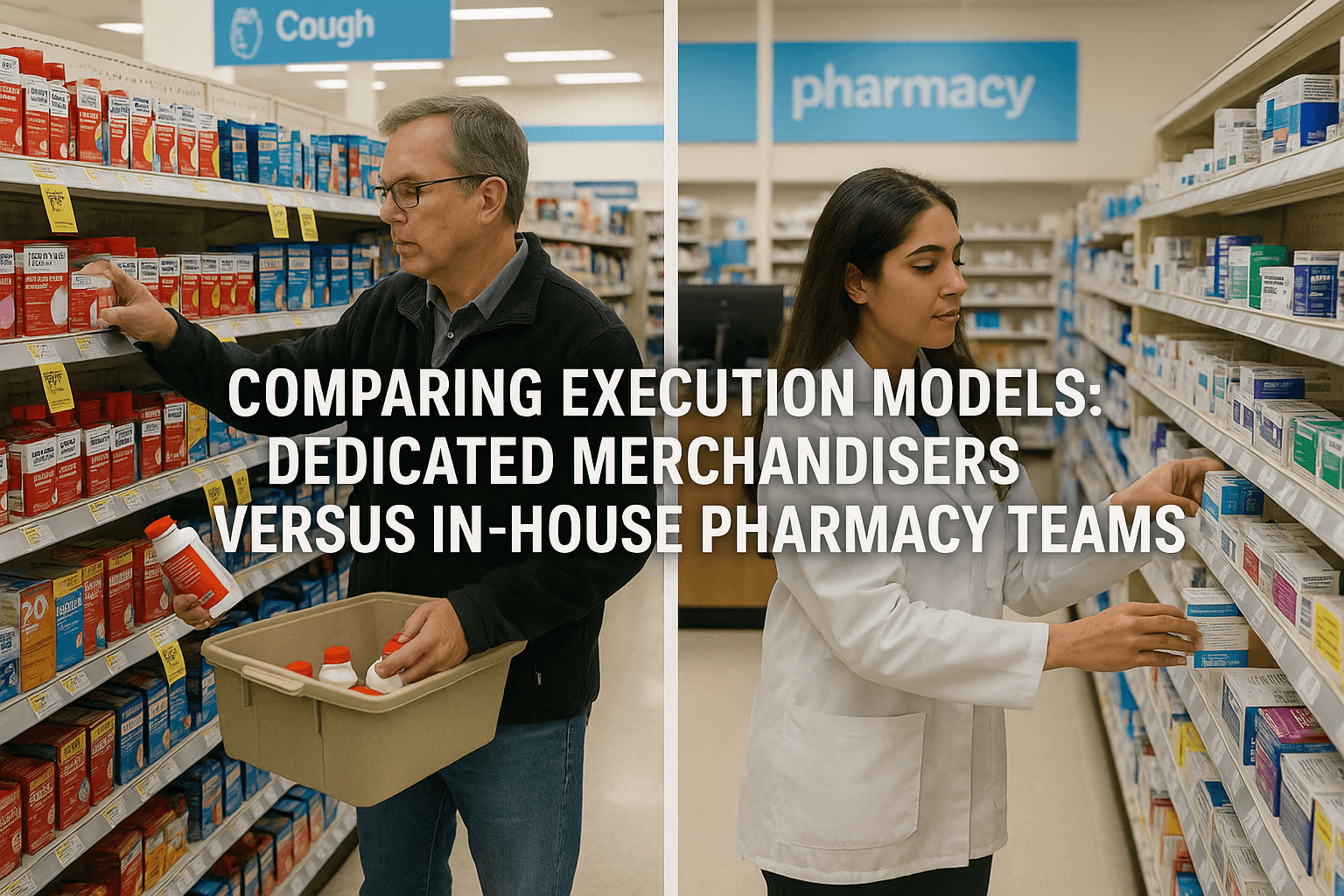
The choice between utilizing dedicated visual merchandisers (often aligned with a distributor or brand) and relying solely on a pharmacy’s in-house staff has significant implications for retail performance. Each model presents distinct advantages and challenges, influencing compliance, consistency, and strategic alignment.
Comparison of Merchandising Execution Models in Malaysian Pharmacy Retail:
| Criteria | Visual Merchandiser (Distributor/Aligned) | In-House Pharmacy Retail Team |
|---|---|---|
| Primary Focus & Accountability | Brand or category-specific compliance and execution; accountable to distributor/brand guidelines. | Overall store operations and general tidiness; accountable to store/pharmacy manager. |
| Planogram Execution Accuracy | Typically higher and more consistent. Trained on specific brand guidelines and audited against them. | Can vary significantly by outlet and staff priority. Often one of many competing daily tasks. |
| Depth of Brand & SKU Knowledge | Strong, specialized, and SKU-specific. Deep understanding of the features, benefits, and placement rules for their assigned portfolio. | General and broad. Covers the entire store inventory without deep diving into single-brand strategies. |
| Manpower & Scheduling Efficiency | More efficient and scheduled. Deployed strategically for resets, launches, and audits based on a commercial calendar. | Limited and reactive. Subject to staffing constraints, peak pharmacy hours, and competing operational demands. |
| Strategic Alignment with Distributor Goals | Direct and strategic. Their key performance indicators are designed to achieve distributor and brand sales and visibility targets. | Indirect and incidental. Store sales targets may align, but brand-level goals are not a primary focus. |
From a distributor pharmacy perspective, the dedicated merchandiser model offers greater control and reliable ROI on trade marketing investments. For the pharmacy chain, a hybrid model often works best: leveraging expert external merchandisers for major resets and brand-specific launches while training in-house staff on maintaining standards, thereby creating a proven system for sustained shelf excellence.
Forging a career as a visual merchandiser within Malaysia’s pharmacy sector is to build a profession at the very heart of healthcare commerce. It is a path defined by continuous learning, where strategic thinking meets meticulous execution, and where a deep respect for regulation underpins every display decision. The essential competencies developed—from audit preparedness to efficient stakeholder collaboration—create a trusted professional profile that is highly valued across the ecosystem. As the healthcare retail market grows in both sophistication and competition, the demand for such expert individuals who can ensure products move effectively from the pharmacy wholesale distributor to the consumer’s hands will only intensify. This role remains a proven and critical catalyst for growth, patient safety, and brand success in an evolving industry.
Frequently Asked Questions (FAQ)
Q1: What qualifications do I need to be a visual merchandiser?
Answer: Most visual merchandisers have a diploma or degree in visual merchandising, design, fashion, or marketing, but many employers also accept candidates with strong creativity, retail experience, and practical portfolio work.
Q2: What are the qualifications of a merchandiser?
Answer: A merchandiser typically needs a diploma or degree in business, retail management, marketing, or a related field, along with strong analytical, planning, communication, and organisational skills.
Q3: What skills are required to be a visual merchandiser?
Answer: Key skills include creativity, an eye for detail, design sense, understanding of consumer behaviour, spatial planning, communication skills, and the ability to work efficiently under tight deadlines.
Q4: What degree do you need for visual merchandising?
Answer: Relevant degrees include visual merchandising, fashion design, graphic design, interior design, retail management, or marketing.
Q5: Do I need a degree to be a merchandiser?
Answer: A degree is helpful but not always required. Many merchandisers start with a diploma, certificate, or strong retail experience paired with solid analytical and organisational abilities.
Q6: What is visual merchandising salary?
Answer: Salaries vary by country and experience. In general, entry-level visual merchandisers earn modest salaries, with pay increasing as skills, experience, and senior responsibilities grow.
Q7: Do visual merchandisers get paid well?
Answer: They can be paid well at senior or managerial levels. Entry roles may offer average pay, but experienced visual merchandisers, especially in major retail brands, earn higher salaries.
Q8: What are the 4 types of merchandise?
Answer: The four common types are convenience goods, shopping goods, specialty goods, and unsought goods—categories used in retail planning and product strategy.
Q9: What is the highest salary for visual merchandising?
Answer: Senior visual merchandising managers or regional VM leads in large retail companies typically earn the highest salaries, reflecting their strategic responsibilities and leadership roles.
Q10: What are 5 careers in visual arts?
Answer: Common careers include graphic designer, illustrator, photographer, animator, and visual merchandiser—fields that rely heavily on creativity and visual communication.
Our Services
Our marketing and sales teams use their strong relationships with the channel to create demand for your product at every stage of its lifecycle.
Demand creation services we offer:
Market Access Services
Regulatory Registration Services
Pharma Product Listing Services
Merchandising services (RSMS)
Brand Management
Logistic & Warehousing
Exclusive Merchandising Services
Visual Merchandising
Discover More About Our Solution
How can we assist you today? 😊
Just let us know—we’re here to help!