
Top 15 Pharmaceutical Companies in Malaysia

The sustained growth and reliability of Malaysia’s pharmaceutical sector are not accidental. It is the direct result of several interconnected, powerful drivers working in concert. These forces create a stable yet dynamic environment where top companies can thrive, innovation is encouraged, and, most importantly, patients receive access to essential medications. Understanding these drivers is key to comprehending the landscape of the top pharma manufacturers in Malaysia and their strategic operations within the nation’s healthcare logistics framework.
The Unwavering Foundation: Stringent Regulatory Compliance
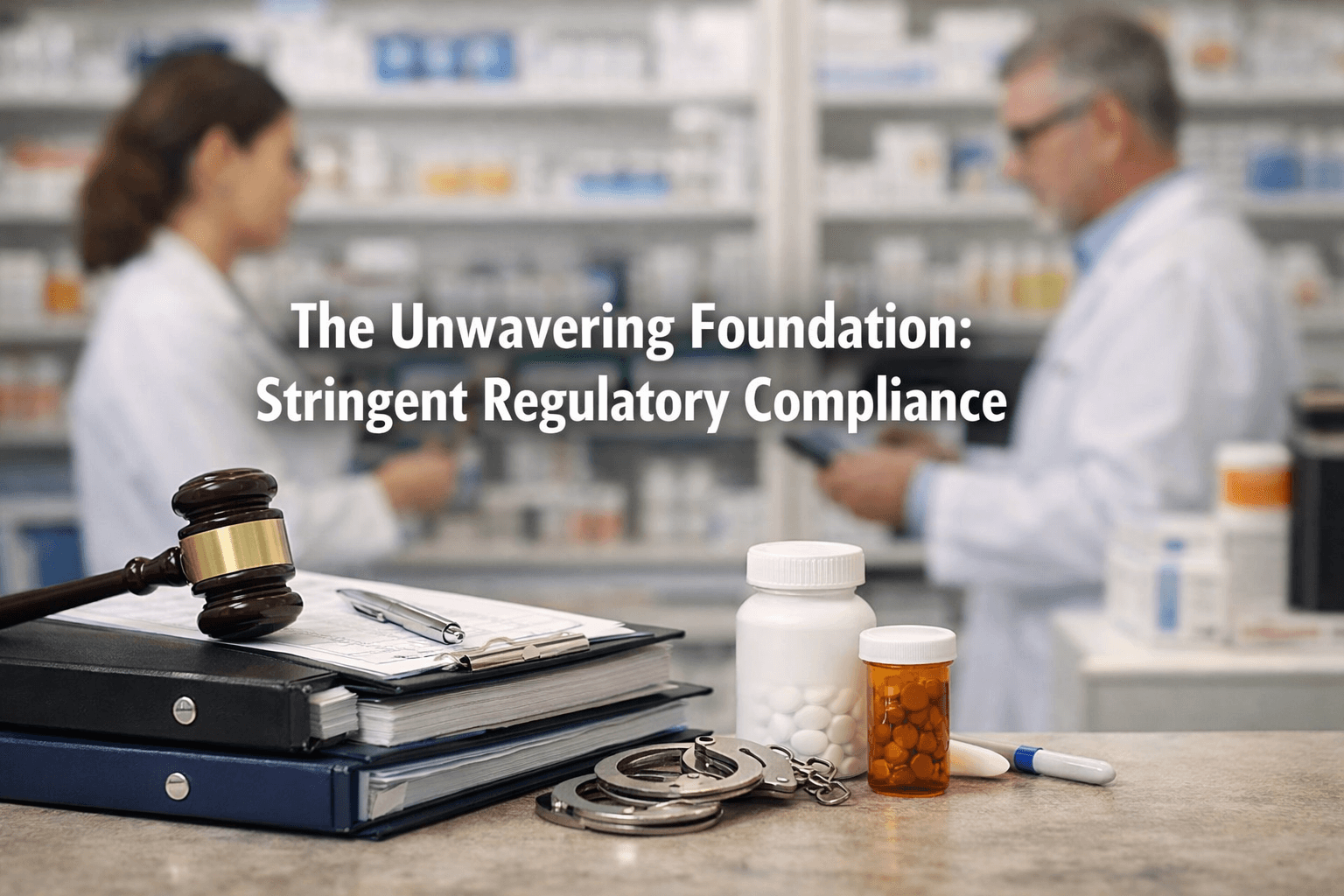
At the very core of Malaysia’s pharmaceutical integrity lies a robust regulatory framework enforced with meticulous diligence. The National Pharmaceutical Regulatory Agency (NPRA), under the auspices of the Ministry of Health (KKH), acts as the nation’s guardian of drug safety, quality, and efficacy. Their mandate is non-negotiable: every medication, whether locally manufactured or imported, must meet proven international standards before it reaches the public. This is operationalized through rigorous Good Manufacturing Practice (GMP) certification, a non-negotiable benchmark for any GMP-certified pharmaceutical firm aspiring to operate in Malaysia. Compliance is not a one-time event but a continuous cycle of audits, documentation, and quality control, ensuring that manufacturing processes are flawless from raw material to finished product. For instance, a pharmaceutical company in Malaysia specializing in sterile injectables must adhere to even more stringent aseptic processing guidelines, monitored closely by NPRA inspectors. This relentless focus on regulation builds a trusted ecosystem, giving healthcare professionals and patients confidence in the medications they prescribe and consume. The practical implication is clear: a high-bar regulatory environment filters out substandard players, elevating the entire industry’s reputation and directly protecting public health.
Learn more: FDA Regulatory Oversight in the Pharmaceutical Sector
Market Evolution: Digitalization and Consumer-Centric Trends
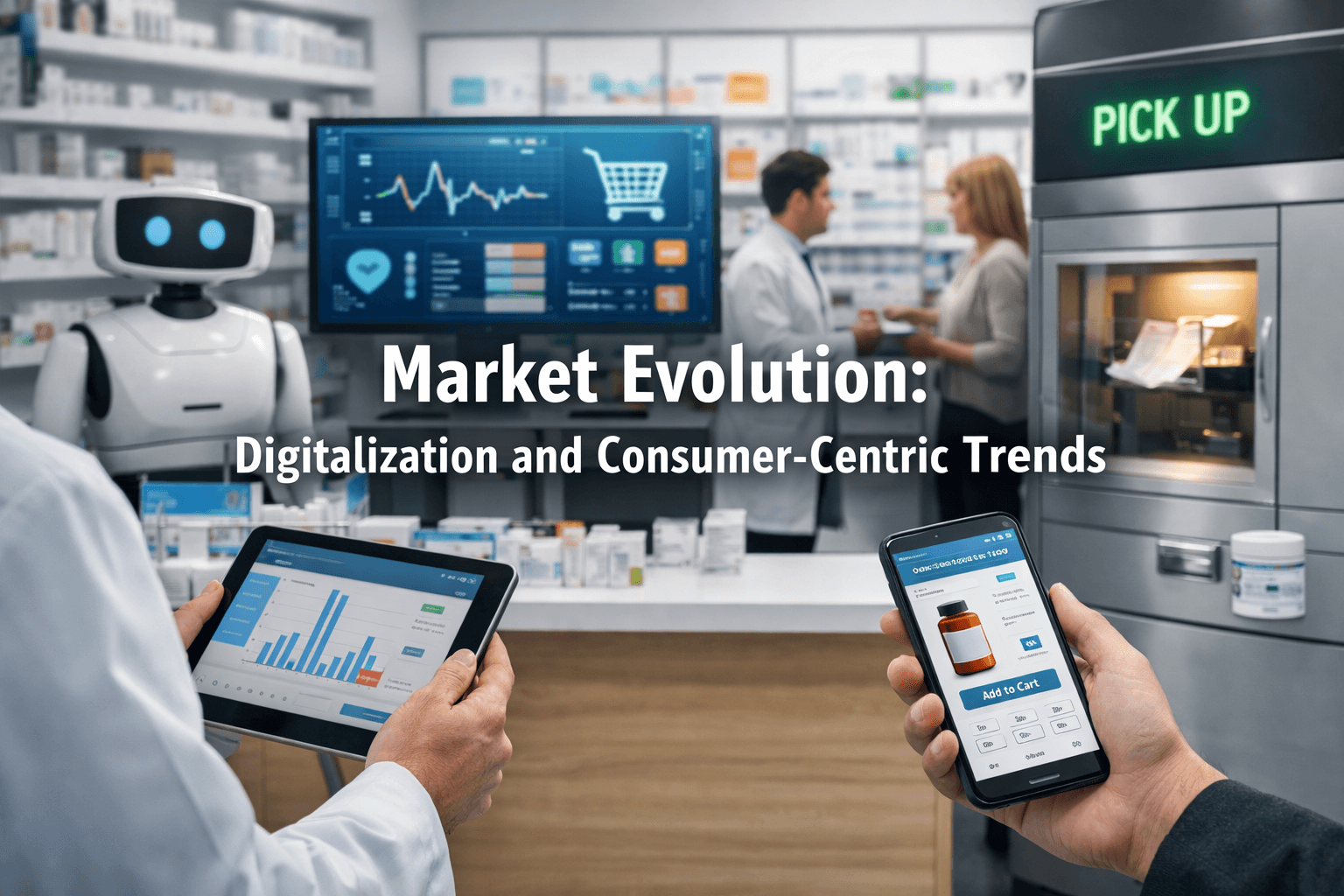
Beyond compliance, the industry is being reshaped by powerful market-driven forces. Digitalization is perhaps the most transformative trend, moving beyond simple record-keeping to revolutionize entire workflows. From AI-powered drug discovery and clinical trial management to blockchain for supply chain transparency, technology is making processes more efficient and data-driven. For pharmacy wholesale distributors in Malaysia, this manifests in advanced Warehouse Management Systems (WMS) and Transportation Management Systems (TMS) that optimize routing, reduce spoilage, and ensure perfect order fulfillment. Concurrently, growing consumer awareness and preference are pushing the market toward more personalized healthcare solutions. This includes a rising demand for specialty drugs (for complex conditions like cancer or rheumatoid arthritis), biosimilars, and health supplements tailored to specific demographic needs. In the Malaysian context, this trend is visible in the increasing shelf space dedicated to halal-certified pharmaceuticals and vitamins, catering to the specific preferences of a significant portion of the population. The practical implication for companies is the need for agile, customer-focused strategies. A pharmaceutical manufacturer can no longer just produce in bulk; it must leverage data analytics to forecast regional demand spikes—like preparing for higher volumes of respiratory medications during the annual haze season in Selangor and Kuala Lumpur—and develop tailored product lines that resonate with local consumer values.
The Critical Artery: Efficiency in Distribution and Logistics
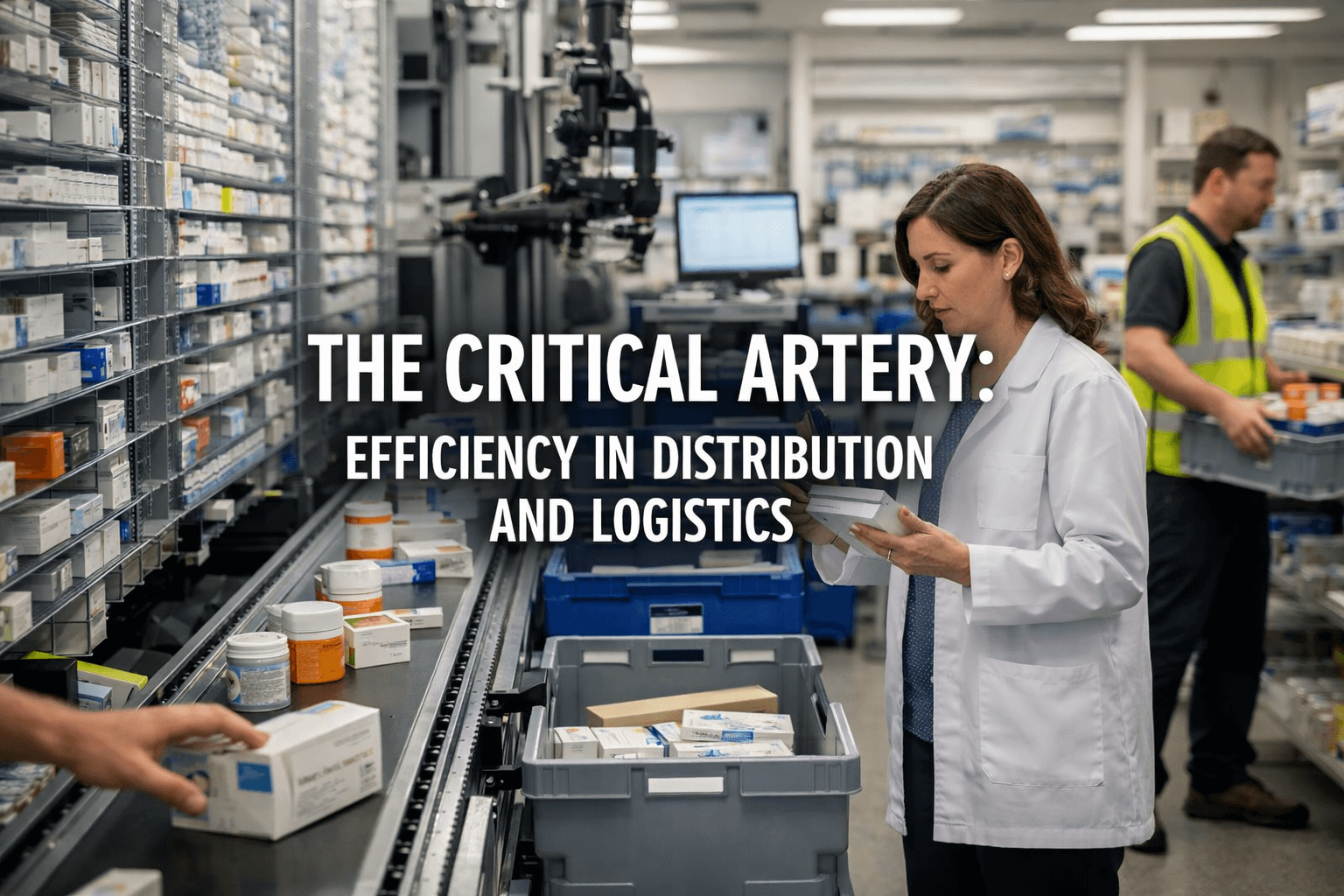
All the manufacturing excellence and regulatory compliance in the world mean little if medications cannot reach the end patient reliably. This is where the pharmaceutical distribution network proves its strategic worth. The system is an intricate, multi-tiered ecosystem connecting manufacturers to hospitals, clinics, and retail pharmacies across 13 states and three federal territories. Pharmacy distributors in Malaysia are the vital linchpins in this chain. They perform functions far beyond mere transportation; they are custodians of cold chain integrity for temperature-sensitive products, managers of complex inventory buffers, and providers of credit facilities to retail pharmacies. Their role becomes even more essential when considering Malaysia’s diverse geography—ensuring the availability of insulin in a rural clinic in Sarawak or delivering emergency oncology drugs to a hospital in Penang requires a logistics partner with unparalleled reach and reliability.
A key framework for understanding distributor value includes:
Market Access: They provide manufacturers with a ready-made network to thousands of touchpoints.
Inventory Risk Absorption: They hold stock, buffering manufacturers against demand volatility.
Last-Mile Expertise: They navigate local delivery challenges, from urban traffic congestion to rural access routes.
Value-Added Services: Many now offer merchandising support, staff training, and digital ordering platforms to pharmacies.
The adoption of technology within distribution—like real-time GPS tracking and IoT-enabled cold chain monitors—has elevated service levels dramatically. This operational excellence ensures supply chain resilience, a lesson sharply underscored during the pandemic, when distributors had to manage wildly fluctuating demand for certain drugs while maintaining routine delivery schedules for chronic medications. From the perspective of a hospital pharmacist in Johor Bahru, a reliable distributor means being able to guarantee medication availability for scheduled surgeries. For a retail pharmacy owner in Kota Kinabalu, it means receiving next-day delivery of antibiotics to treat common infections without needing to tie up excessive capital in inventory.
Learn more: Challenges and Opportunities in Malaysia’s Pharmaceutical Supply Chain | An Overview of Cold Chain Management in Malaysia’s Pharmaceutical Distribution Sector | Pharmaceutical Supply Chain Transparency
Comparative Roles: Merchandisers, Distributors, and In-House Teams
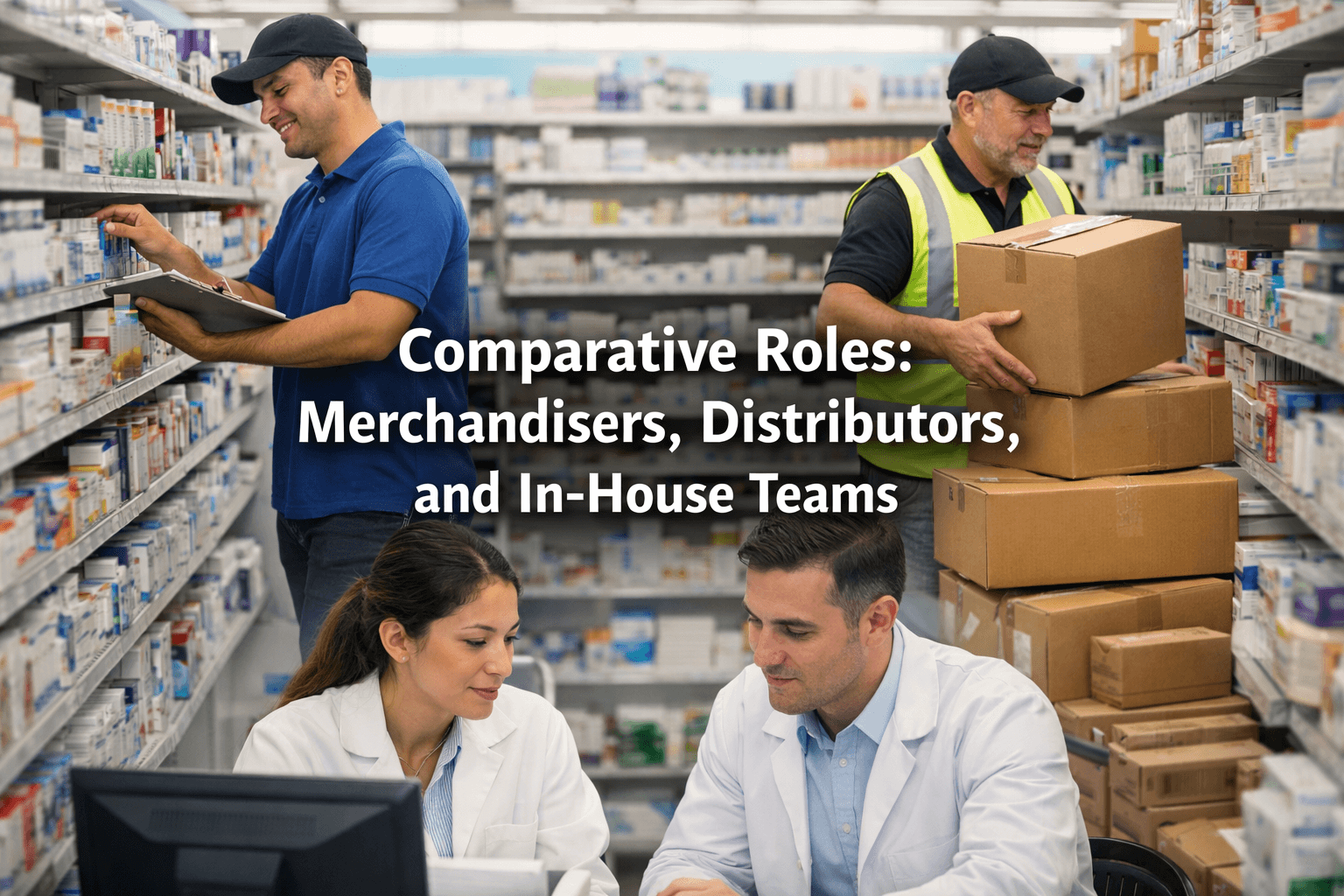
To fully appreciate the distribution landscape, it’s helpful to compare the different actors involved in getting a product to market. Large pharma manufacturers often employ a hybrid model, especially for key products or major retail accounts.
| Aspect | Third-Party Distributor | Manufacturer’s Merchandiser | Manufacturer’s In-House Sales Team |
|---|---|---|---|
| Primary Role | Physical logistics, storage, broad-market delivery, credit management. | In-store product placement, shelf management, promotional material setup. | Strategic account management, contract negotiation, clinical detailing to doctors. |
| Geographic Scope | Wide, often national or regional coverage. | Localized to specific retail zones or chains. | Focused on key accounts and institutions (large hospitals, chains). |
| Expertise | Supply chain optimization, logistics, inventory financing. | Retail execution, point-of-sale marketing. | Deep product knowledge, therapeutic area expertise, relationship building. |
| Cost Structure | Variable, based on volume and service level. | Fixed cost per store visit or project. | High fixed cost (salary, benefits). |
| Ideal Use Case | Ensuring efficient and widespread physical availability of a full product portfolio. | Maximizing visibility and sales of specific key brands on the retail shelf. | Driving prescription demand and securing formulary listings in major healthcare institutions. |
In a typical Malaysian scenario, a new diabetes drug might be launched by the manufacturer’s in-house team targeting endocrinologists in major Kuala Lumpur hospitals. Once prescribed, the pharmacy distributor ensures the drug is stocked at the hospital pharmacy and available at retail pharmacies nearby. A merchandiser might then work to ensure the product has prime shelf positioning in leading pharmacy chains like Caring or Guardian within the Klang Valley. This synergistic model leverages the proven strengths of each player for maximum market penetration.
Sustaining Leadership: The Synergy of Compliance, Market Agility, and Distribution Mastery
So, how do the top pharma manufacturers in Malaysia maintain their leadership in such a complex environment? The answer lies in mastering the synergy between all these drivers. Leadership is not defined by excellence in just one area, but by a balanced, strategic command over the entire value chain. A market leader is invariably a GMP-certified pharmaceutical firm that views regulatory compliance as a competitive advantage, not a hurdle. It is a company that invests in R&D and digital transformation to align with market trends, perhaps developing telemedicine-compatible platforms or patient support apps for its chronic portfolio. Crucially, it recognizes that its relationship with pharmacy distribution services in Malaysia is a strategic partnership, not a transactional vendor arrangement. They collaborate on data sharing for better demand planning and invest in joint training programs to ensure distributors’ sales teams are knowledgeable about complex products.
Consider the operational scenario of a leading manufacturer during the rollout of a major new vaccine. The company must first secure NPRA approval with exhaustive data. It then works backwards from the patient with its logistics partners to design a cold chain strategy that can maintain ultra-low temperatures from its Port Klang facility to vaccination centers in remote parts of Kelantan or Sabah. Simultaneously, its digital team might deploy a tracking system for clinics to monitor their shipment’s temperature and location in real-time. This holistic, integrated approach—where manufacturing quality, regulatory foresight, market intelligence, and distribution precision are all aligned—is what separates industry leaders from followers. It creates a reliable and effective pipeline that ultimately fulfills the pharmaceutical industry’s core mission: improving health outcomes for all Malaysians through consistent access to safe, effective medicines.
Navigating the Pillars of Pharmaceutical Compliance in Malaysia
The journey of a medicine from a manufacturer’s facility to a pharmacy shelf is governed by a rigid, non-negotiable framework of regulations designed to safeguard public health. In Malaysia, this framework is authoritatively defined by the National Pharmaceutical Regulatory Agency (NPRA) under the Ministry of Health Malaysia (KKM). For any entity operating within the pharmaceutical supply chain—be it a multinational drug manufacturer or a specialized pharmacy distributor—adherence to these mandates is not merely a legal formality but the fundamental cornerstone of operational legitimacy and ethical practice. The consequences of non-compliance extend beyond financial penalties; they directly compromise patient safety, erode professional trust, and damage brand integrity irreparably. Therefore, understanding and integrating these standards into every operational fibre is the first and most critical investment a company makes.
Consider the stringent protocols surrounding Good Manufacturing Practice (GMP) certification. This is not a one-time achievement but a continuous state of operational excellence. For a pharmaceutical distributor in Malaysia, GMP compliance permeates every touchpoint of the logistics chain. It dictates the specifications of warehouse storage facilities, mandating precise, real-time monitoring of temperature and humidity for cold chain products. It governs the rigorous documentation trails that track every single product batch from receipt to dispatch—a process known as serialization and traceability. A proven example within the Malaysian context is the distribution of biologic medicines or advanced vaccines, which require an unbroken, validated cold chain. A distributor’s failure to maintain a GMP-compliant logistics framework for such products could lead to reduced efficacy or patient harm, triggering immediate NPRA intervention. The practical implication is clear: regulatory compliance is intrinsically linked to product integrity. You cannot ensure one without a robust, audit-ready system for the other.
The Real-World Blueprint: How Leading Companies Operationalize Compliance
So, how do successful pharmaceutical companies translate complex regulations into daily, actionable procedures? The answer lies in a proactive, embedded compliance culture that goes beyond checklist auditing. Top-tier organizations treat NPRA guidelines not as external constraints but as the core architecture of their standard operating procedures (SPs). This involves strategic investments in both human expertise and technological infrastructure. They employ dedicated Regulatory Affairs specialists whose sole focus is to interpret evolving KKM directives and ensure all company activities—from marketing material claims to package labelling—are pre-emptively aligned. For instance, Malaysia’s strict regulations on medicinal product advertising require all promotional content to be vetted and approved. A compliant partner will have systems to ensure their merchandising teams only use NPRA-approved messaging during pharmacy engagements.
From the perspective of a local pharmacy distributor, operationalizing compliance often focuses on the “last-mile” of the supply chain. They implement foolproof systems for:
Validated storage and transportation with continuous data loggers.
Efficient batch recall procedures that can be executed within hours, not days.
Staff training protocols that are regularly updated and certified.
A Malaysia-related scenario involves the distribution of controlled medicines. A reliable distributor must have tamper-evident packaging processes, secure logistics, and meticulous record-keeping that satisfies both NPRA and Dangerous Drugs Act requirements. The practical implication for pharmaceutical brands seeking a supply chain partner is this: compliance competency is a measurable operational asset. It directly correlates with risk mitigation, market access speed, and sustained brand reputation. You should evaluate a partner’s compliance not by their certificate on the wall, but by the integration depth of their processes.
Forging Strategic Alliances: The Partnership Imperative in Modern Pharma
In today’s hyper-competitive and globalized pharmaceutical landscape, no company is an island. Strategic partnerships have evolved from advantageous arrangements into essential lifelines for maintaining competitive advantage, ensuring supply chain resilience, and accelerating market penetration. For international manufacturers looking to navigate Malaysia’s unique market dynamics, a trusted local pharmaceutical distributor is more than a logistics provider; they are a strategic ally with indispensable on-the-ground intelligence. These collaborations are proven pathways to scale operations without the prohibitive cost and risk of building in-house infrastructure from scratch. The right partnership optimizes product availability, ensures regulatory navigation, and provides unparalleled access to a network of pharmacies, hospitals, and clinics.
The effectiveness of such a partnership is vividly illustrated by collaborations focused on launching specialty or niche therapeutic products. Imagine a European biotech company introducing a novel oncology drug to Malaysia. The complexity involves not just logistics, but also specialized handling, healthcare professional education, and patient support programs. A strategic partnership with a Malaysian distributor that has an expert oncology care division can mean the difference between a successful launch and a market failure. The distributor manages the complex cold chain, coordinates with key opinion leaders (KOLs) for medical dialogues, and ensures the product is available at specialized treatment centers. This tailored approach demonstrates how collaborative synergy transforms distribution from a transactional activity into a value-added service that drives therapy adoption.
Furthermore, from the perspective of local pharmacy wholesale distributors, these alliances are a two-way street of growth. Aligning with innovative international brands elevates their own portfolio, attracts top pharmacy clients, and enhances their market standing as a forward-thinking partner. For example, a Malaysian distributor partnering with a manufacturer of digital therapeutic devices gains early experience in a growing sector, future-proofing its business model. The practical implication is a powerful shift in perspective: your distribution partner should be viewed as an extension of your commercial team, whose local market mastery and operational excellence directly fuel your brand’s growth and sustainability in the region.
The Digital Revolution: Technology as the Catalyst for Distribution Excellence
The image of pharmaceutical distribution as a purely physical, manual industry is rapidly becoming obsolete. Technological advancements are now the primary catalyst for achieving unprecedented levels of efficiency, transparency, and reliability across the supply chain. In Malaysia, as the industry strides towards greater maturity, the strategic adoption of digital solutions is what separates market leaders from the rest. Advanced inventory management systems powered by Internet of Things (IoT) sensors provide real-time visibility into stock levels at every node, from central warehouse to individual pharmacy. AI-powered logistics platforms optimize delivery routes in real-time, factoring in traffic, order priority, and cold chain requirements, thereby slashing costs and improving delivery speed. This digital transformation creates a responsive, agile, and error-resistant distribution network.
A critical technological front is blockchain for supply chain integrity. While still emerging, its potential for anti-counterfeiting and enhanced traceability is monumental for Malaysia’s market. By creating an immutable digital ledger for every product pack, stakeholders—from manufacturer to pharmacist—can verify authenticity and provenance in seconds. This directly addresses a key concern for both regulators and consumers. From the pharmacist’s point of view, user-friendly vendor management portals are a game-changer. These platforms allow for seamless online ordering, instant access to product information and NPRA registration details, and streamlined invoice reconciliation, freeing up valuable time for patient care.
The operational impact of these technologies is quantifiable. For a pharmacy distributor Malaysia, implementing a comprehensive Enterprise Resource Planning (ERP) system integrated with warehouse robotics can lead to:
A 99.9% order accuracy rate, eliminating costly shipping errors.
Reduced inventory holding costs by 15-25% through predictive demand forecasting.
Faster order-to-cash cycles through automated invoicing and payments.
A Malaysian scenario could involve a distributor using GPS and temperature telemetry to monitor a truck transporting insulin from Kuala Lumpur to East Malaysia. Any deviation triggers an instant alert, allowing for corrective action before product integrity is compromised. The practical implication is that technology is no longer a support function; it is the central nervous system of a modern, reliable, and efficient pharmaceutical distribution operation. Investing in a tech-forward partner is synonymous with investing in supply chain resilience and future-ready capabilities.
Learn more: Blockchain in Supply Chain Management: A Synthesis of Barriers and Enablers for Managers
Horizon Scanning: The Future of Pharma Distribution in Malaysia
The future of pharmaceutical companies in Malaysia will be shaped by their agility in responding to converging macro-trends. Sustainability initiatives are moving from corporate social responsibility reports to operational mandates. This includes optimizing logistics networks to reduce carbon footprints, implementing green packaging solutions, and managing product end-of-life responsibly through take-back programs. Another transformative trend is the rise of personalized medicine and specialty pharmaceuticals. These high-value, low-volume products demand a completely different distribution model—one centered on direct-to-patient or direct-to-clinic logistics, sophisticated patient support hubs, and even white-glove delivery services.
Furthermore, the digital transformation extends beyond back-end logistics to the very front of the customer experience. The growth of telemedicine and e-pharmacies is creating a hybrid distribution model. Patients may receive chronic medication via subscription-based home delivery from a central hub, while needing acute treatments from a local pharmacy. A future-ready distributor must seamlessly service both channels. From the independent pharmacy distributor’s perspective, their strategic value will increasingly lie in last-mile flexibility, data analytics capabilities that provide brands with insights into prescribing patterns, and the ability to manage smaller, more frequent deliveries to a dispersed network of points of care.
The role of independent pharmacy distributors will, therefore, not diminish but evolve. Their success will be defined by their ability to be nimble, technologically adept, and hyper-responsive to both brand and pharmacy needs. They will act as vital connectors in an increasingly complex ecosystem. For pharmaceutical brands, this means the criteria for selecting a supply chain partner must include an assessment of their future-readiness—their roadmap for integrating AI, sustainability, and omnichannel fulfillment into their core service offerings.
Learn more: The Future of Pharmaceutical Distribution Services in Malaysia: Trends and Innovations | The Impact of Digital Health on the Pharmaceutical Industry
Comparative Framework: In-House Teams vs. Strategic Distribution Partners
Choosing the right market entry or expansion model is a critical strategic decision. The table below contrasts key considerations between maintaining an in-house distribution team and partnering with an established pharmaceutical distributor in Malaysia.
| Operational Dimension | In-House Distribution Team | Strategic Distribution Partner |
|---|---|---|
| Regulatory Compliance Burden | The company bears full legal responsibility and cost for maintaining NPRA/KKM compliance across all warehousing and logistics. | The proven partner shoulders the primary operational compliance burden, leveraging their established, audited systems. |
| Time-to-Market Speed | Slow; requires time to recruit team, secure licenses, and set up infrastructure. | Rapid market penetration is possible by leveraging the partner’s immediate network and ready infrastructure. |
| Upfront Capital Investment | Exceptionally high (warehouse leasing, fleet, tech systems, licenses). | Low to moderate; operates on a service-fee model, converting capex to variable opex. |
| Scalability & Flexibility | Difficult and costly to scale up or down quickly with market demand fluctuations. | Highly scalable; the partner’s network can flexibly accommodate volume changes and geographic expansion. |
| Local Market Expertise | Must be built painstakingly over time, with inherent trial and error. | Provides immediate, deep-rooted intelligence on pharmacy relationships, regional nuances, and competitor activity. |
Frequently Asked Questions (FAQ)
Q1: Which pharma stock will boom in 2025?
Answer: No one can predict exact stock performance. In 2025, investors are closely watching large, innovation-driven pharmaceutical companies with strong pipelines in oncology, vaccines, obesity, and specialty drugs. Performance depends on approvals, earnings, and global demand.
Q2: What are the top 5 pharmacy in Malaysia?
Answer: Malaysia’s retail pharmacy landscape is led by major chains with nationwide presence, strong compliance, and consumer trust. Rankings vary by outlet count, geographic reach, and service quality rather than stock market value.
Q3: What is the trend in the pharma industry in 2025?
Answer: Key trends include biologics and biosimilars, obesity and diabetes therapies, AI-assisted drug discovery, personalized medicine, and tighter regulatory and pricing scrutiny across global markets.
Q4: Who are the top 10 pharmaceutical companies in the world in 2025?
Answer: Global leaders are typically ranked by revenue, R&D strength, and product portfolios. These include multinational firms dominating vaccines, oncology, chronic disease, and specialty therapeutics.
Q5: Which stocks go high in 2025?
Answer: High-growth stocks in 2025 are often linked to healthcare innovation, AI, clean energy, and technology infrastructure. However, gains depend heavily on market conditions and company fundamentals.
Q6: Who are the big 3 in pharma?
Answer: The “big 3” usually refers to the largest global pharmaceutical companies by revenue and global footprint, known for massive R&D budgets and diversified drug portfolios.
Q7: Which is the best pharma stock to buy?
Answer: There is no single “best” stock for everyone. Investors typically evaluate revenue stability, patent life, pipeline strength, and risk tolerance before making decisions.
Q8: What is pharma marketing in 2025?
Answer: Pharma marketing in 2025 focuses on data-driven strategies, ethical promotion, omnichannel engagement with healthcare professionals, and strict compliance with regulatory guidelines.
Q9: Which pharmaceutical stock to buy now?
Answer: This depends on individual investment goals. Many investors favor companies with strong cash flow, late-stage pipelines, and exposure to high-growth therapy areas rather than short-term speculation.
Q10: What are the most promising pharma companies?
Answer: Promising companies are those advancing novel therapies, biologics, and rare-disease treatments, while maintaining regulatory compliance and global market access.
Our Services
Our marketing and sales teams use their strong relationships with the channel to create demand for your product at every stage of its lifecycle.
Demand creation services we offer:
Market Access Services
Regulatory Registration Services
Pharma Product Listing Services
Merchandising services (RSMS)
Brand Management
Logistic & Warehousing
Exclusive Merchandising Services
Visual Merchandising
Discover More About Our Solution
How PriooCare Can Help
If you found this article useful, see how we put these insights into practice for our clients:
Or contact our team for a tailored consultation.
How can we assist you today? 😊
Just let us know—we’re here to help!