

What truly separates a regional player from a global titan? The distinction goes far beyond simply counting cash registers or shelf space. To determine the largest pharmacy chains, industry analysts rely on a multi-faceted evaluation framework. This framework prioritizes annual revenue, global footprint (number of outlets), brand equity, and the diversification of healthcare services.
CVS Health, Walgreens Boots Alliance, and Boots UK dominate the rankings not merely because of their size, but because of their strategic evolution from traditional drugstores into integrated healthcare ecosystems. Their massive scale—billions in revenue and tens of thousands of locations—is underpinned by vertical integration and a relentless focus on patient accessibility.
For pharmacy distributors in Malaysia, this global benchmark offers a mirror. It highlights that growth isn’t just about volume; it’s about authority. These giants have become trusted household names by ensuring that their network isn’t just wide, but deep. They offer a comprehensive service spectrum: from acute prescriptions and chronic disease management to over-the-counter health and wellness products. This diversification is their moat. For local pharma distributors, the takeaway is strategic: acting as a reliable supply chain partner today requires more than logistics—it requires mirroring the integration seen at the global level.
Practical Implication for Malaysia:
Consider the operational reality of a pharmacy wholesale distributor serving a chain like Big Pharmacy or Alpro Pharmacy. By adopting a service-dominant logic—where the distributor offers inventory management software, compliance training, and merchandising support—they mimic the CVS model on a local scale. This shift from pure product pusher to value-added partner is what defines modern market leadership.
CVS Health: Deconstructing the $322 Billion Giant
CVS Health is not just the largest pharmacy in the world; it is a healthcare fortress. With over 9,900 retail locations and a staggering revenue exceeding $322.5 billion, CVS has effectively blurred the lines between retail convenience and clinical care. Its crown jewel is the MinuteClinic model—an expert-led, low-acuity care initiative designed to deliver efficient, affordable treatment for minor ailments without an emergency room visit. This is vertical integration at its finest: CVS is simultaneously the payer (through Aetna), the provider (MinuteClinic), and the dispenser (pharmacy).
For pharmacy distributors in Malaysia, the CVS playbook reveals a proven truth: customer loyalty is no longer driven solely by location or price, but by accessibility to care. The Malaysian healthcare landscape, dominated by private general practitioner (GP) clinics, often leaves a gap for retail health clinics. While local regulations differ, the concept of embedding low-cost, nurse-led screening services within a pharmacy is a tangible opportunity.
Comparative Table: CVS MinuteClinic vs. Malaysian Retail Health Potential
| Feature | CVS MinuteClinic (USA) | Malaysian Retail Pharmacy Potential |
|---|---|---|
| Service Scope | Treatment for strep throat, ear infections, vaccinations | Health screenings, flu shots, travel health consultations |
| Provider Type | Nurse practitioners & physician assistants | Pharmacists with extended roles or visiting nurses |
| Integration | Fully integrated with Aetna insurance & pharmacy system | Standalone; potential to integrate with insurance panel |
| Footprint Strategy | High-density, urban and suburban | Anchor stores in major malls (e.g., Sunway Pyramid, Mid Valley) |
| Key Barrier | Regulatory scope of practice | Scope expansion for pharmacist-led clinics |
The efficient supply chain required to support these clinics—managing vaccines, point-of-care tests, and prescription fulfilment simultaneously—is a logistics challenge that Malaysian distributors must prepare for. It requires tailored storage solutions (cold chain) and just-in-time inventory. The lesson is clear: scale is an asset, but service integration is the ultimate competitive advantage.
Learn more: Retailers in Healthcare: A Catalyst for Provider Evolution
Walgreens Boots Alliance: The Architecture of a Global Partnership
Walgreens Boots Alliance (WBA) operates as a masterclass in synergy. Spanning over 18,500 locations worldwide and generating $139 billion in revenue, WBA’s dominance is rooted in a diverse business architecture. It is not merely a retail chain; it is a global healthcare platform. The company’s proven strength lies in its dual-engine model: robust pharmaceutical wholesale operations (through AmerisourceBergen) and direct-to-consumer healthcare retail.
WBA’s retail clinics and immunization programs have positioned it as a public health partner, not just a commercial entity. Its ability to administer millions of flu and COVID-19 vaccines transformed its stores into neighbourhood health hubs. This pivot from transaction-based to relationship-based care is a strategic blueprint.
From the perspective of a brand manager at a Malaysian pharmaceutical firm (e.g., Pharmaniaga), WBA demonstrates the power of seamless channel integration. A product launched in a WBA store benefits from immediate global visibility backed by reliable replenishment cycles. For pharmacy wholesale distributors in Malaysia, this highlights the necessity of omni-channel readiness. The local market is seeing a rise in digital pharmacy players like Panda Retail (operating with AEDs), forcing traditional distributors to adapt.
Multiple Perspective:
-
The Distributor’s View: WBA’s centralized procurement allows for massive economies of scale. Malaysian distributors must consolidate buying power through group purchasing organizations (GPOs) to compete.
-
The Pharmacist’s View: WBA’s investment in pharmacist-led consultations elevates the profession. Local chains like Guardian Health & Beauty are already expanding their consultation rooms—a direct echo of this trend.
-
The Patient’s View: The convenience of accessing healthcare at a trusted, familiar retail point reduces friction. This expectation is now global.
WBA’s efficient logistics network ensures that a pharmacy in Manchester and one in Kuala Lumpur (through its historical ties to Boots) maintain similar service standards. For local players, investing in temperature-controlled logistics and real-time tracking is no longer optional; it is essential for survival.
Learn more: Pharmacy’s role in the digital transformation of health
Boots UK: The Art of Localization and Brand Equity
While dwarfed in raw revenue by its American counterparts, Boots UK holds a unique position: it is a heritage brand with hyper-local relevance. With over 2,500 stores and £7 billion in revenue, Boots thrives not through aggressive global expansion, but through deep community embedding. It is the epitome of a tailored approach. Boots understands that the customer in Nottingham has different dermatological needs than the customer in Tokyo.
The genius of Boots lies in its product portfolio synergy. It seamlessly integrates its own No7 beauty brand with prescription services, creating a high-traffic ecosystem. A customer picking up a prescription often leaves with a skincare product. This cross-category fertilization is a strategic lever that pharmacy distributors in Malaysia can replicate.
Operational Scenario in Malaysia:
Imagine a distributor supplying both ethical pharmaceuticals and cosmeceuticals to a pharmacy in Kota Kinabalu. By mirroring the Boots model, the distributor doesn’t just deliver the medicine; they provide a merchandising unit for a high-margin Japanese sunscreen brand placed next to the prescription counter. They also supply digital shelf labels that update pricing dynamically. This integrated service layer transforms the distributor from a vendor into a strategic growth partner.
The Boots Advantage Card (loyalty program) is another effective tool that Malaysian players are adopting. Chains like Caring Pharmacy have robust loyalty programs, but the data utilization often lags. Boots uses its data to predict stock requirements at a store-cluster level—a practice known as micro-forecasting. For a pharmacy wholesale distributor, offering predictive analytics services to smaller independent pharmacies can be a game-changer, helping them compete with large chains.
Learn more: Pharma logistics: Challenges, opportunities, future
Operationalizing Global Lessons: A Framework for Malaysian Distributors
The insights from CVS, WBA, and Boots converge on three operational pillars: Compliance, Technology, and Service Diversification. To translate these global strategies into local success, Malaysian pharmacy distributors must adopt a structured approach.
Inline Checklist: The Strategic Distributor’s Blueprint
-
Compliance Excellence: Are you ISO 9001:2015 and GDP (Good Distribution Practice) certified? Major chains now mandate GDP compliance as a minimum entry requirement.
-
Technology Integration: Do you offer API connectivity for automatic order replenishment? Moving from manual fax/WhatsApp orders to system-to-system integration reduces stock-outs by up to 30% .
-
Merchandising Support: Are you providing planogram compliance services? Global leaders rely on distributors to ensure shelf-ready displays. This is a high-value, trusted service.
-
Data Sharing: Can you provide sell-out data to brand partners? This transforms the relationship into a transparent, collaborative partnership.
Comparative Framework: Merchandiser Models
| Role | Traditional Distributor Model | High-Performance Distributor Model (Global Standard) |
|---|---|---|
| Primary Task | Order taking and delivery | Category management advisory |
| Data Usage | Basic sales history | Real-time inventory turnover and expiries tracking |
| Retail Support | Occasional stock stacking | Full in-store merchandising, including facing and display building |
| Relationship | Transactional | Consultative; KPIs tied to sell-through, not sell-in |
| Technology | Basic ERP | Mobile apps for in-store scanning and instant reordering |
The most effective Malaysian distributors are those transitioning from the left column to the right. They are no longer waiting for purchase orders; they are generating them based on predictive analytics. They are expert advisors on shelf optimization, ensuring that high-margin products are placed at eye level. This is the direct application of the Boots localized merchandising strategy, scaled for the Malaysian independent pharmacy sector.
Navigating the Globalized Market: Strategic Positioning for Local Players

The dominance of CVS Health and Walgreens Boots Alliance creates a ripple effect that reaches Malaysian shores indirectly. These giants influence global pharmaceutical pricing, manufacturing capacity, and supply chain standards. For pharmacy distribution services in Malaysia, this means operating in a market where buyer expectations are set by international benchmarks, even if the players are local.
One critical area is cold chain logistics. With the rise of biologics and temperature-sensitive vaccines, Malaysian distributors must invest in validated cold storage solutions. A failure at the last mile—such as a vaccine exposed to ambient heat during delivery to a clinic in Penang—erodes brand trust instantly. Global leaders treat cold chain as a non-negotiable core competency, and local distributors must adopt the same rigor.
Effective strategies include:
-
Specialization: Instead of trying to stock every SKU, become the expert in a niche—such as oncology drugs or diabetic care supplies. This builds authority and justifies premium pricing.
-
Strategic Alliances: Partner with logistics heavyweights like GDEX or Pos Malaysia for last-mile efficiency, while retaining high-value, sensitive stock in-house.
-
Regulatory Agility: Malaysia’s NPRA (National Pharmaceutical Regulatory Agency) regulations are evolving. Distributors who proactively adopt track-and-trace serialization will be preferred partners for multinational brands entering the market.
The integration of health and beauty observed in Boots UK is also reshaping Malaysian consumer behavior. Pharmacy distributors are now managing inventory for probiotics, vitamins, and medical devices alongside chronic disease medications. This diversification stabilizes revenue, offsetting the thin margins typical of generic drugs. It is a proven hedge against market volatility.
Ultimately, the journey of the world’s largest pharmacies illustrates that size follows service. By anchoring their operations in reliability, investing in tailored technology solutions, and adhering to global compliance standards, pharmacy distributors in Malaysia can secure their position not just as local vendors, but as essential cogs in the regional healthcare supply chain. The bar is high, but the blueprint is clear.
Global Trends in Pharmacy Distribution and Their Impact on Malaysian Pharmacies
The boundaries of healthcare commerce are dissolving. What begins as a telehealth pilot in Boston or a drone delivery trial in rural England eventually echoes through the supply chains of Southeast Asia. Malaysian pharmacies now operate within this interconnected reality. They are no longer passive observers of global shifts; they are active participants navigating digital health adoption, e‑commerce integration, and the surging consumer appetite for proactive wellness.
Global leaders like CVS Health and Walgreens Boots Alliance have responded to these currents with decisive technology investments. CVS, for instance, acquired Signify Health to embed predictive analytics into home health assessments. Walgreens deepened its partnership with VillageMD, co-locating primary care physicians inside retail stores. These are not mere experiments—they are strategic re‑architectures of the pharmacy business model.
For pharmacy distributors in Malaysia, the implication is immediate and urgent. E‑commerce in pharmacy is no longer a novelty; it is an essential channel. Local players such as DoctorOnCall and Alpro Pharmacy have demonstrated that Malaysian consumers are ready to order chronic medication refills or purchase health supplements through digital storefronts. The distributor’s role here shifts dramatically. It is no longer sufficient to deliver pallets to a central warehouse. The effective distributor must now support direct-to-patient fulfilment, manage reverse logistics for expired or returned goods, and maintain real-time inventory visibility across multiple nodes.
Real-world scenario:
Consider a pharmacy chain operating in the Klang Valley. It receives thirty daily online orders for diabetic test strips and hypertension medication. Without a distributor capable of temperature-controlled, express delivery to individual addresses—often within a four‑hour window—the pharmacy cannot fulfill its promise of convenience. The chain is then forced to invest in its own fleet, diverting capital from clinical services. This is the friction that a tailored distribution partner eliminates.
Data insight:
According to IQVIA, the Malaysian consumer health market grew by approximately 6.8% in 2023, driven largely by vitamins, minerals, and supplements (VMS) sold through omnichannel retail. Distributors who expanded their cold chain capacity and last-mile infrastructure captured disproportionate share. Those who hesitated watched their retail partners bypass them in favor of direct manufacturer relationships.
The proven path forward involves API connectivity between pharmacy point‑of‑sale systems and distributor inventory databases. When a pharmacist in Penang checks stock availability, they should see the distributor’s warehouse as an extension of their own shelf. This seamless integration reduces stock‑outs, lowers working capital tied up in safety stock, and builds a trusted partnership that transcends the transactional.
Learn more: Challenges and Opportunities in Malaysia’s Pharmaceutical Supply Chain | Pharmacy Market Size, Share & Growth
The Role of Independent Pharmacy Distributors in a Globalized Market
Let us speak plainly: global giants will not dispatch a merchandiser to a neighbourhood pharmacy in Seremban. They will not customise a delivery schedule for a clinic in Kuching that only receives shipments twice weekly. This is the enduring strategic advantage of the independent pharmacy distributor.
While CVS and Walgreens command the headlines, the arteries of Malaysia’s healthcare system are sustained by agile, regionally embedded distributors. These firms—often family‑owned or mid‑sized enterprises—possess something the multinationals cannot easily replicate: granular market intelligence. They know which clinic prefers which brand of analgesic. They understand that the pharmacist in Johor Bahru opens earlier on Fridays. This localised knowledge is a defensible moat.
Comparative Framework: Independent Distributor vs. Multinational Logistics Provider
| Capability | Independent Malaysian Distributor | Global Integrated Player (e.g., DHL Healthcare) |
|---|---|---|
| Last‑mile flexibility | High – willing to make small, frequent drops | Moderate – optimised for volume, not variety |
| Credit terms | Tailored – negotiates based on long‑term relationship | Standardised – rigid 30‑day terms |
| Product mix | Broad – carries slower‑moving lines for community pharmacies | Selective – focuses on high‑velocity SKUs |
| Regulatory navigation | Expert – familiar with NPRA submission nuances | Limited – relies on local subcontractors |
| Merchandising support | Yes – often provides in‑store display building | Rare – strictly logistics‑only |
The table illustrates a clear divergence. Independence is not a weakness; it is a differentiator. Yet independence without evolution is vulnerability. The distributors who thrive are those who forge selective partnerships with global principals while retaining their local agility. For example, a Malaysian distributor may represent a European dermatological brand exclusively for the East Malaysian market (Sabah and Sarawak), leveraging their established network of rural clinics that a global firm would find prohibitively expensive to penetrate.
Multiple Perspectives:
-
From the pharmacist’s viewpoint: “I need a distributor who doesn’t penalise me for ordering low volumes of niche oncology supportive care drugs. The global forwarder said minimum order quantity is one pallet. My local partner splits the pallet with three other pharmacies. That is reliable partnership.”
-
From the brand manager’s viewpoint: “We entered Malaysia through a multinational logistics provider. The service was technically compliant, but our sell‑through was flat. We switched to a regional specialist distributor who understood that our product needed pharmacist detailing and in‑store sampling. Within six months, our market share doubled.”
-
From the distributor’s viewpoint: “Our proven model is built on tailored service tiers. Chain pharmacies get JIT replenishment and planogram support. Independents get flexible credit and emergency delivery within hours. We don’t try to be everything to everyone.”
The message is unambiguous. In a globalised market, the independent distributor’s survival depends on specialisation, relationship depth, and the courage to decline business that does not align with their operational strengths.
Learn more: Challenges and Opportunities in Malaysia’s Pharmaceutical Supply Chain (2026 Edition)
Regulatory Compliance: What Malaysian Pharmacies Can Learn from Global Leaders
Compliance is rarely celebrated. It does not feature in marketing brochures, nor does it generate viral content. Yet the largest pharmacy chains in the world treat regulatory adherence as their most valuable intangible asset. CVS’s $322 billion valuation rests, in part, on its ability to navigate 50 distinct state pharmacy boards in the United States while satisfying DEA (Drug Enforcement Administration) quotas for controlled substances. This is not merely bureaucratic endurance; it is strategic infrastructure.
For pharmacy distribution services in Malaysia, the regulatory terrain is defined by the National Pharmaceutical Regulatory Agency (NPRA) , MDA (Medical Device Authority) requirements, and increasingly, halal certification for pharmaceutical logistics. The lesson from global leaders is that compliance must be proactive, not reactive.
Malaysia‑specific operational scenario:
A distributor handling Schedule F poisons (psychotropic substances) receives an order from a newly opened pharmacy in Selangor. The pharmacy’s license is valid, but the distributor’s internal audit reveals that the licensee named on the application is not physically present at the location. Under Poisons Act 1952, this is a violation. A global‑standard distributor would escalate internally, refuse the order, and document the rationale. This protects not only the distributor but the integrity of the entire supply chain. Short‑term revenue sacrifice yields long‑term reputational capital.
Inline Checklist: Compliance Essentials for Malaysian Pharma Distributors
-
GDP certification – mandatory for multinational principal onboarding
-
Temperature mapping – all storage areas, including delivery vehicles
-
Audit trail integrity – electronic records that cannot be altered retroactively
-
Recall readiness – ability to trace finished product one step forward and one step backward within four hours
-
Pharmacist oversight – designated competent person holding valid B.O.P. (Board of Pharmacy) registration
Data point:
The Malaysian Pharmacists Society reported in 2024 that 33% of inspected distribution premises received minor compliance directives, primarily related to temperature excursion documentation and incomplete goods receipt records. While no major shutdowns occurred, the trend signals heightened NPRA vigilance.
What distinguishes the trusted distributor is not the absence of non‑conformances, but the transparency with which they are addressed. Global leaders publish annual environmental, social, and governance (ESG) reports detailing their compliance metrics. Malaysian distributors need not replicate this scale, but adopting a culture of audit‑readiness transforms compliance from a cost centre into a competitive moat. When a multinational brand evaluates entry into Malaysia, they do not lead with marketing budgets; they lead with due diligence questionnaires about GDP, serialisation, and pharmacovigilance capabilities. The effective distributor has these answers pre‑positioned.
Learn more: The Legal Framework of Pharmaceutical Companies in Malaysia
Comparative Table: Key Metrics for the Top 3 Largest Pharmacies
| Company | Annual Revenue (USD) | Number of Outlets | Healthcare Services Offered | Perceived Market Influence in Malaysia |
|---|---|---|---|---|
| CVS Health | $322.5 billion | 9,900+ | Pharmacy, MinuteClinic, Insurance (Aetna) | High – benchmark for vertical integration, though no direct retail presence |
| Walgreens Boots Alliance | $139 billion | 18,500+ | Pharmacy, Immunisations, Wellness Clinics | Moderate – influences local chains through Boots heritage and supply chain partnerships |
| Boots UK | £7 billion | 2,500+ | Pharmacy, Health & Beauty, No7 cosmetics | Low to Moderate – brand recognition strong; distribution model emulated by local premium pharmacy chains |
Note: Market influence reflects strategic and operational inspiration, not direct revenue share within Malaysia.
The table reveals an important nuance. CVS Health holds the highest perceived influence despite having zero retail stores in Malaysia. Why? Because its integrated care delivery model has become the aspirational standard for local chains like Caring Pharmacy and Big Pharmacy, who are increasingly co‑locating dietitian services and health screenings alongside retail dispensaries. Walgreens Boots Alliance exerts influence through indirect channels; its historical connection to Boots UK informs the category management strategies of Malaysian pharmacy retailers who stock premium skincare adjacent to prescription counters. Boots UK itself, while smaller in absolute scale, offers the most tailored blueprint for brand differentiation through private label excellence (No7, Boots Pharmaceuticals).
For pharmacy wholesale distributors, the competitive implication is clear: serving a pharmacy chain that aspires to the CVS model requires different capabilities than serving one that emulates Boots UK. The former demands cold chain capacity for vaccines and biologic samples; the latter demands merchandising agility for fast‑moving beauty SKUs with short lead times. Specialisation, once again, emerges as the strategic imperative.
Embracing Global Standards While Preserving Local Relevance
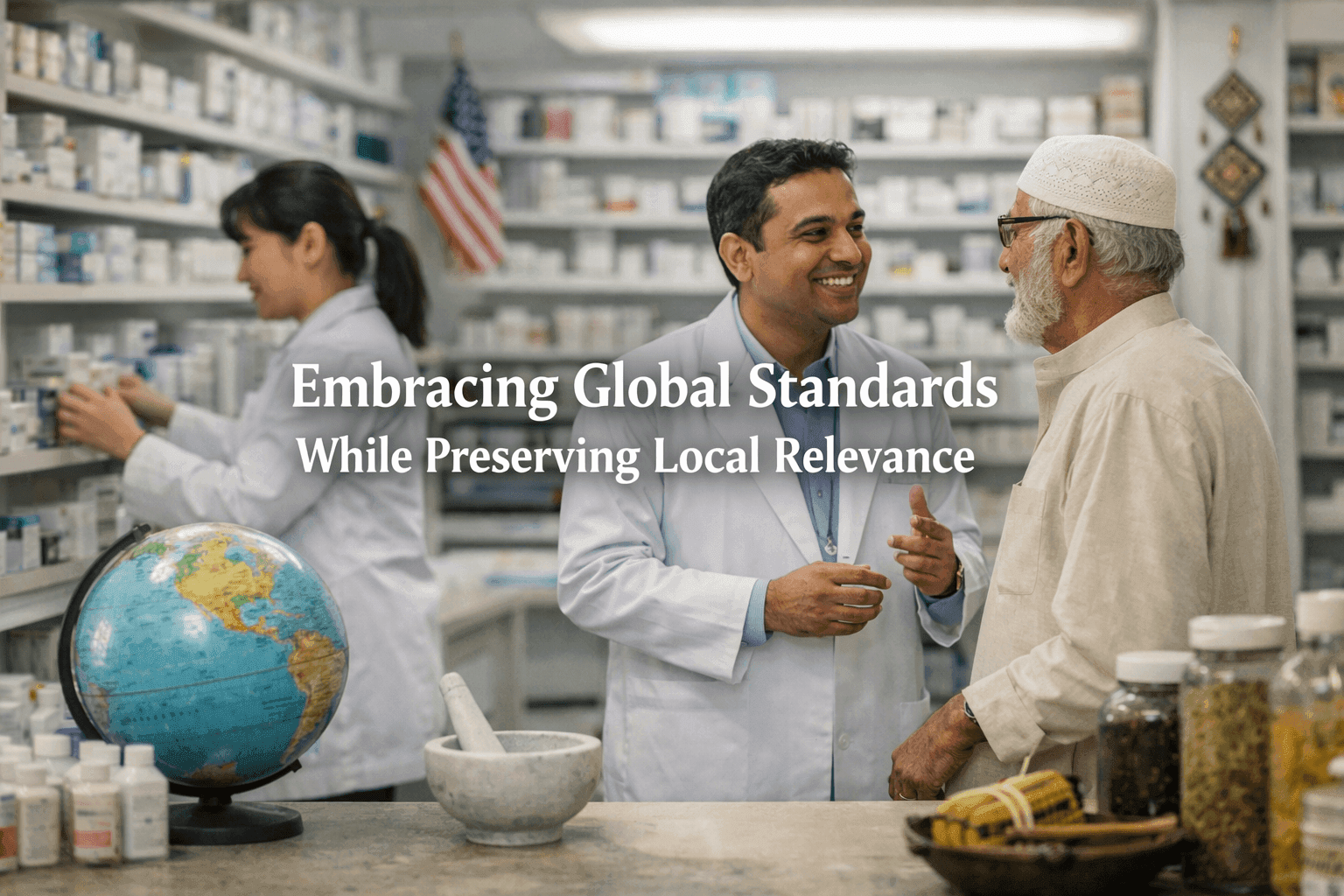
The influence of CVS Health, Walgreens Boots Alliance, and Boots UK on Malaysian pharmacy distribution is neither abstract nor distant. It is manifest in the rising expectations of pharmacists, the rigorous compliance demands of multinational principals, and the informed preferences of Malaysian consumers who have travelled abroad or shopped at international retailers online.
Yet the effective Malaysian distributor does not aspire to become a miniature CVS. That would be both impractical and strategically unsound. Instead, the goal is selective emulation: adopting the compliance infrastructure of the global giants, the technology orientation of the industry pioneers, and the patient‑centric service ethos that defines modern healthcare retail—while preserving the local agility, relationship capital, and cultural fluency that only indigenous firms possess.
The distributors who will lead the next decade of pharmacy distribution services in Malaysia are those who recognise that globalisation is not a threat to be resisted but a benchmark to be met. They invest quietly in GDP‑compliant warehouses. They train their drivers in cold chain handling. They build API bridges to their pharmacy partners. And they do all of this without fanfare, because in pharmaceutical logistics, reliability is noticed only in its absence.
Frequently Asked Questions (FAQ)
Q1: What is pharmacy and why is it important?
Answer: Pharmacy is the health profession that links the health sciences with the chemical sciences. It is concerned with the discovery, production, disposal, safe and effective use, and control of medicines and drugs. It is important because pharmacists, as experts in medicines, ensure the safe and optimal use of medications to improve patient health outcomes, prevent disease, and provide essential healthcare advice.
Q2: What services does a pharmacy provide?
Answer: Pharmacies provide a wide range of services, including dispensing prescription medications, offering over-the-counter (OTC) products and advice, providing medication management and counseling, administering certain vaccinations, conducting health screenings, and offering pharmacy care services (e.g., managing minor ailments, chronic disease management support).
Q3: What are pharmacy care services?
Answer: Pharmacy care services, often interchangeable with pharmaceutical care or advanced services, are patient-centered and outcomes-oriented practices where pharmacists work to design, implement, and monitor a therapeutic plan that will produce specific patient outcomes. Examples include Medication Therapy Management (MTM), chronic disease state management, immunization services, and support for smoking cessation.
Q4: Why is pharmacy first important?
Answer: “Pharmacy First” is a common term for schemes that allow patients to seek treatment and advice for minor illnesses directly from a community pharmacy, often without needing to see a GP. It is important because it improves patient access to convenient care, utilizes the pharmacist as a highly accessible healthcare professional, and reduces pressure on other NHS or healthcare services like GP surgeries and emergency departments.
Q5: What is the function of the pharmacy services?
Answer: The primary function of pharmacy services is to ensure that patients receive the appropriate medicines in the correct dose, along with the necessary information and support for their safe, effective, and rational use. This includes inventory management, compounding, dispensing, patient education, and collaboration with other healthcare providers.
Q6: What is pharmacy first service?
Answer: The Pharmacy First service (as implemented in the UK, for example) is a scheme that enables pharmacists to provide advice and, when appropriate, treatment (including prescription-only medicines via Patient Group Directions or by prescribing) for a defined set of common minor ailments (e.g., earache, sore throat, uncomplicated UTIs) directly in the pharmacy, expanding the pharmacist’s clinical role.
Q7: What services are offered by retail pharmacy?
Answer: Retail (or community) pharmacies offer services directly to the public, including dispensing prescriptions, selling over-the-counter medicines and health products, providing medication consultation, administering vaccinations (e.g., flu shots), offering health screening (e.g., blood pressure checks), managing minor ailments, and providing advice on healthy living.
Q8: Why is a pharmacy important?
Answer: A pharmacy is important because it serves as the most accessible healthcare point in many communities. It is crucial for safe and accurate medication dispensing, preventing drug interactions, offering essential health advice, providing primary healthcare interventions, and bridging the gap between patients and prescribers, thereby playing a vital role in public health.
Q9: What are the three types of pharmacies?
Answer: The three main types of pharmacy practice are generally categorized as:
- Community (Retail) Pharmacy: Pharmacies that serve the public directly in a community setting.
- Hospital (Institutional) Pharmacy: Pharmacies located within hospitals and healthcare facilities, serving inpatients and medical staff.
- Industrial (Pharmaceutical) Pharmacy: Involving roles in drug research, manufacturing, quality control, marketing, and regulatory affairs within the pharmaceutical industry.
Q10: Why is good pharmacy practice important?
Answer: Good Pharmacy Practice (GPP) is important because it establishes the standards for quality pharmacy services worldwide, ensuring that pharmacists provide care focused on the patient’s well-being and their use of medicines. GPP ensures safe dispensing, accurate information, professional advice, ethical conduct, and the overall goal of maximizing the positive health outcomes of patients.
At PriooCare Malaysia, we have spent years refining this balance. We operate with the rigour expected of a global supply chain partner and the responsiveness reserved for a local collaborator. Whether your requirement involves temperature‑sensitive biologics, pharmacy merchandising support, or regulatory navigation for new market entries, our team brings both proven methodology and tailored execution.
How can we assist you today? 😊
Just let us know—we’re here to help!