

What truly determines whether a company ascends to become one of the biggest healthcare firms Malaysia recognizes—is it the scale of infrastructure, the number of medical specialists, or the sheer volume of manufacturing output? On the surface, these are the visible metrics of success. However, beneath these conventional indicators lies a more decisive, yet often underappreciated, factor: supply chain control. The Malaysian health sector leaders consistently demonstrate one shared trait: a trusted, efficient, and strategic distribution framework. It’s not just about having a great product; it’s about getting that product to the right place, at the right time, every single time.
Malaysia’s healthcare ecosystem is a complex, multi-layered entity operating across public hospitals, sprawling private hospital groups, and an increasingly dynamic and competitive retail pharmacy environment. Consider the operational reality of a public hospital in Penang—it depends on structured procurement pipelines to ensure that critical medications are never out of stock. Similarly, a private healthcare group in Johor Bahru requires consistent pharmaceutical replenishment to maintain its service continuity and patient satisfaction scores. And what about the retail pharmacies? Whether they are located in the bustling heart of the Klang Valley or serving a smaller community in Kota Bharu, Kelantan, their survival hinges on steady product availability. A empty shelf erodes patient trust instantly and disrupts cash flow for the pharmacy owner.
This is where distribution transcends its traditional definition. It evolves from mere logistics into genuine market power. Pharma and medical companies that dominate their categories don’t just stumble upon success; they engineer it. They invest heavily in warehousing standards, navigate the complexities of the regulatory compliance systems set by the NPRA, and leverage predictive demand forecasting to stay ahead of the curve. Without a robust and structured pharmaceutical logistics Malaysia capability, even products with superior clinical efficacy will struggle to achieve and maintain nationwide penetration. They’ll be confined to a limited geography, forever a regional player. At a macro level, Malaysia’s impressive healthcare growth over the past decade—fueled by infrastructure upgrades and GMP-certified manufacturing expansion—has been impressive. Yet, the true differentiator between the top healthcare providers and the mid-tier operators is often not a groundbreaking innovation, but rather the quiet, consistent hum of distribution stability.
Retail pharmacies, for instance, instinctively gravitate toward partners who deliver consistently, resolve invoice discrepancies promptly, and maintain all compliance documentation ready for inspection. A reliable supply partner strengthens pharmacist confidence in the entire supply chain. When a pharmacist trusts the upstream supply, they are far more willing to recommend new SKUs to their patients, effectively acting as a brand ambassador. This dynamic is further reinforced by market concentration trends. Larger healthcare conglomerates are increasingly integrating their own distribution arms or aligning with structured national networks to secure their position. Meanwhile, smaller operators may find flexibility with independent pharmacy distributor networks, though they sometimes lack the scale for massive rollouts. In short, market leadership in Malaysia’s healthcare industry is not accidental; it is operationally engineered. Distribution strength fundamentally shapes a company’s expansion capacity, its ability to manage risk, and its long-term brand endurance.
Mapping the Top 50: Categorising Malaysia’s Healthcare Giants by Sub-Sector

Are all the biggest healthcare firms Malaysia lists competing on the same battlefield, or are they dominating different, yet interconnected, layers of the ecosystem? The reality is a complex web of specialization and interdependence. The top 50 players are diversified across several critical sub-sectors, each with its own operational logic and growth drivers. Understanding this landscape is essential for any brand owner or stakeholder looking to navigate the market.
Private Hospital Groups: These are multi-location operators delivering tertiary care services. Think of giants like IHH Healthcare or KPJ Healthcare. Their expansion into new territories depends entirely on centralized procurement systems and a reliable pharmaceutical supply chain that can service multiple locations with precision.
Pharmaceutical Manufacturers (GMP-Driven): This category includes both local champions and multinational corporations producing generics, OTC products, and specialty therapies. Their success is a function of expert compliance alignment with GMP standards and the distribution reach that puts their products in every corner of the country.
Medical Device & Equipment Suppliers: These firms provide everything from diagnostic imaging systems to surgical tools and hospital consumables. They depend not only on structured warehousing but also on robust after-sales technical support networks to keep critical equipment operational.
Pharmacy Chains: Major retail networks like Guardian, Watsons, and Big Pharmacy operate with centralized purchasing units. Their immense negotiation power often shapes product visibility and pricing trends across Malaysia, making them a critical gateway for consumer healthcare goods.
Pharmacy Wholesale Distributors: These are the large-scale players, such as Pharmaniaga or Apex Pharma, facilitating high-volume allocation and national product penetration. They are the engines of the healthcare supply chain, moving massive quantities of goods.
Independent Distributor Pharmacy Operators: This segment comprises regional specialists and operators serving the nation’s many independent pharmacies. They often win business by offering more tailored support, flexible onboarding processes, and a personal touch that larger wholesalers might struggle to provide.
Each sub-sector is profoundly interdependent. Pharmaceutical manufacturers, for example, require a sophisticated pharmaceutical logistics Malaysia infrastructure to translate manufacturing output into commercial reach. They cannot succeed without the wholesalers. Hospital groups are entirely dependent on distributors for inventory continuity; a stockout in an ICU is simply not an option. Pharmacy chains, in turn, rely on their suppliers for demand analytics and replenishment precision to optimize their own working capital.
The growing influence of pharmacy distributor Malaysia networks has fundamentally shifted competitive positioning. Companies that once focused purely on product R&D must now prioritize supply chain analytics and ERP integration to compete. A niche health supplement, for example, might find its perfect home through an independent distributor pharmacy partnership that offers targeted marketing to health-conscious consumers. In contrast, a mass-market OTC painkiller may require the sheer scale of a wholesale distributor to achieve maximum shelf presence. The biggest healthcare firms Malaysia are not defined by product diversity alone; they are defined by how effectively they integrate distribution architecture into their core expansion planning. Their category mastery is a function of their logistical prowess.
Learn more: Top 10 Pharmacy Distributors in Malaysia for Reliable and Cost-Effective Services
The Backbone of Growth: Pharmacy Distribution Service in Malaysia Explained
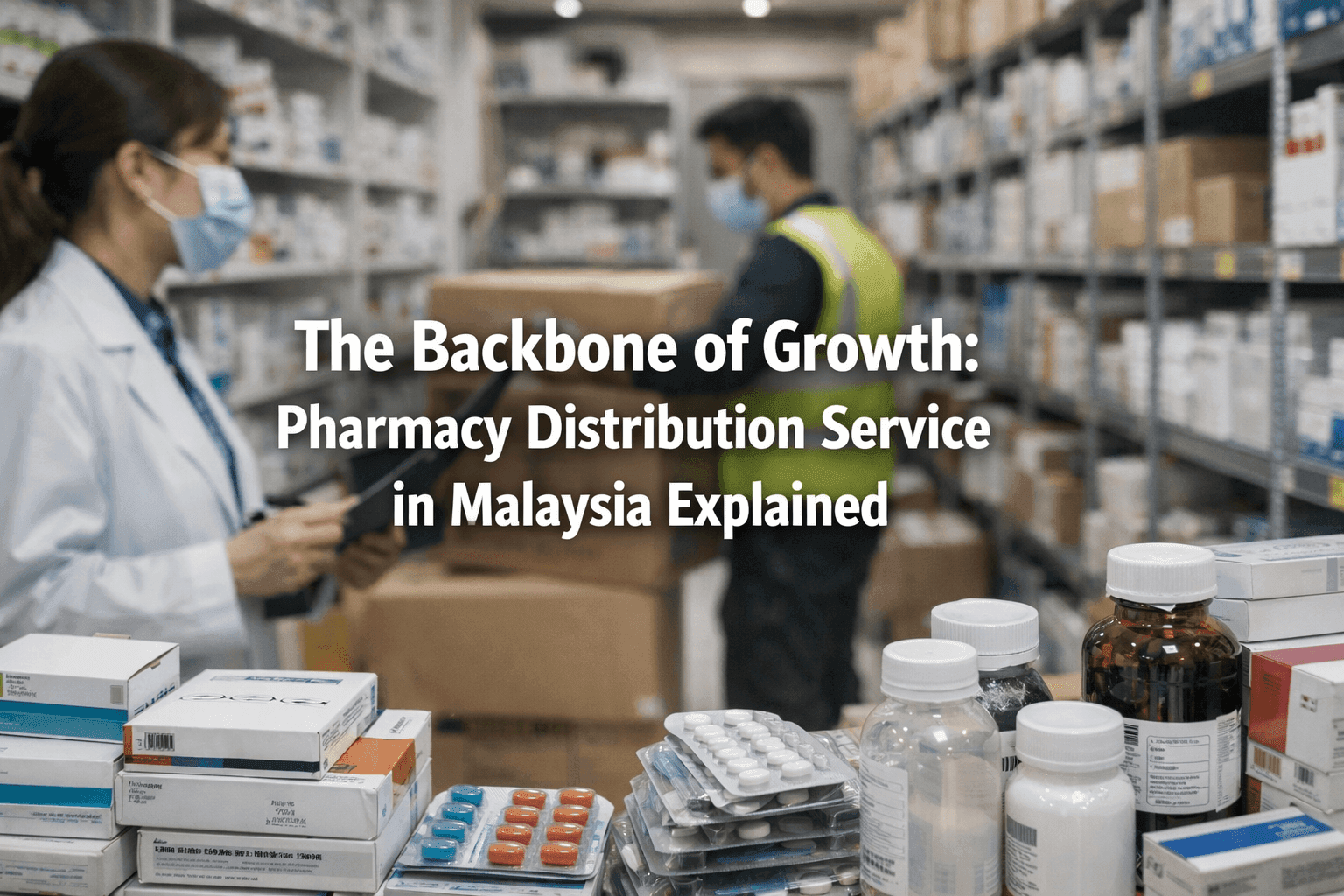
What exactly defines a structured pharmacy distribution service in Malaysia—and why is it the linchpin of commercial scalability in this sector? It’s a common misconception to equate distribution with simple transportation. In reality, a modern pharmacy distribution service in Malaysia is an intricate, technology-driven operation that encompasses far more than just moving boxes from Point A to Point B. It is a comprehensive system involving warehousing, compliance oversight, inventory allocation, cold-chain management, and last-mile coordination to thousands of pharmacies and hospitals nationwide.
The core components of this backbone are both physical and digital. They include:
GDP-compliant storage facilities that meet the stringent standards of Good Distribution Practice.
Dedicated temperature-controlled cold chain distribution Malaysia zones, essential for preserving the efficacy of biologics and vaccines.
Robust batch traceability systems that track every single unit from the manufacturer’s line to the end consumer.
Proactive expiry and recall management protocols to protect patient safety and brand reputation.
Credit coordination mechanisms that are intelligently aligned with pharmacy turnover cycles.
Sophisticated route optimisation software that ensures efficient deliveries across both Peninsular and East Malaysia, overcoming geographical challenges.
Three primary models dominate the Malaysian market, each offering a distinct value proposition. Pharmacy wholesale distributors are the high-volume operators, prioritizing efficient throughput and national coverage. They are the go-to for established brands seeking massive scale. In contrast, an independent pharmacy distributor acts as a regional specialist, offering more tailored support, flexibility, and a deeper understanding of local market nuances. This is often a proven model for niche or new entrants. Finally, we see the rise of hybrid distributor pharmacy models, which cleverly combine wholesale infrastructure with on-the-ground merchandising support for stronger sell-out alignment at the retail level.
A key differentiator among distributors is their approach to inventory risk management. An overstocked situation can lead to crippling expiry losses for the pharmacy, while understocking damages pharmacy credibility and patient loyalty. Mature, reliable operators mitigate this through structured systems that rely on demand forecasting and historical sell-through data, acting as a strategic partner rather than just a order-taker. Compliance adds another, non-negotiable layer of complexity. Adherence to GDP standards, meticulous documentation for audits, and verified cold-chain processes are not optional extras—they are essential to industry survival. As Malaysia’s healthcare sector continues its upward trajectory, its growth is increasingly dependent on this structured backend logistics. Without distribution strength, even the most innovative pharma and medical companies will inevitably hit an operational bottleneck.
Compliance as Competitive Advantage: Regulatory Strength of Leading Companies
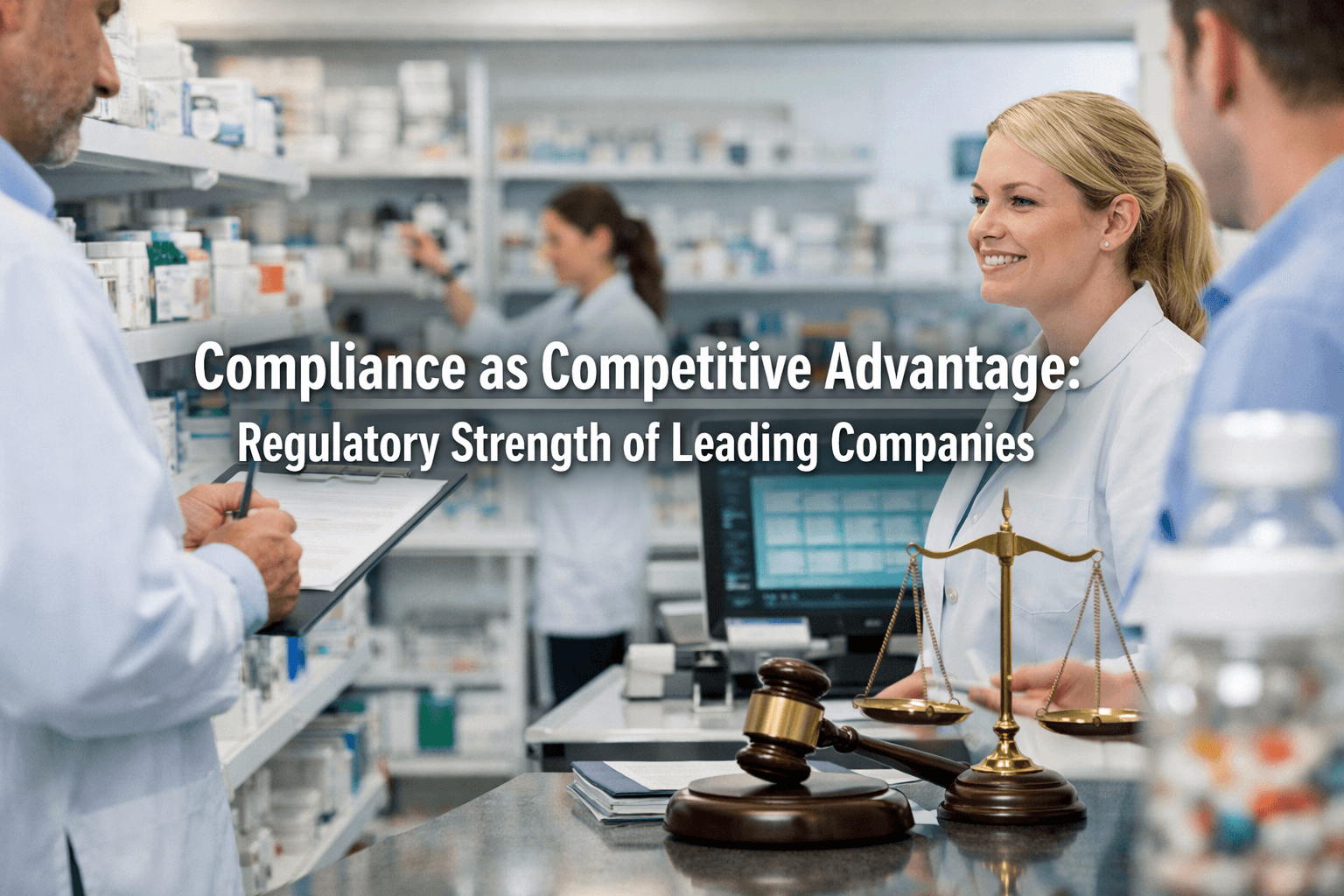
Why do the top healthcare providers invest so heavily in compliance architecture? Is it merely to satisfy regulatory obligation, or is there a deeper, more strategic rationale at play? The answer is clear: in the modern Malaysian healthcare landscape, regulatory strength functions as a powerful competitive differentiator. It’s a marker of quality, reliability, and long-term viability that separates the market leaders from the also-rans. It’s about building a business that is not just successful, but sustainable and trusted.
Malaysia’s healthcare sector operates under a strict framework of regulations enforced by the NPRA (National Pharmaceutical Regulatory Agency), KKM (Ministry of Health Malaysia), and standards like GMP (Good Manufacturing Practice) and GDP (Good Distribution Practice). Companies that don’t just comply, but integrate these requirements into their daily operational DNA, become far more reliable partners for pharmacies and hospitals. For a pharmacist, choosing a distributor with a proven compliance record reduces their own audit anxiety and ensures the products they dispense are safe and authentic. This builds an invaluable layer of trust between the pharmacist, the distributor, and ultimately, the patient.
Cold chain distribution Malaysia protocols are particularly critical in our tropical climate. The slightest temperature excursion can compromise the integrity of sensitive biologics, vaccines, and specialty therapies, rendering them ineffective or even dangerous. Large healthcare firms differentiate themselves by investing in automated monitoring systems and digital audit trails that provide end-to-end visibility and proof of compliance. They don’t just hope the cold chain holds; they know it does, in real-time. Furthermore, batch traceability has become increasingly important, not just for regulatory filings, but for rapid response. The ability to execute a rapid, precise recall protects both brand credibility and patient safety in the event of a quality issue. Smaller operators, who may rely on manual systems, face a higher risk of error and a much slower response time, which can have devastating consequences.
To illustrate this point, consider the following comparative overview:
| Compliance Capabilities | Top-Tier Healthcare Companies | Mid-Tier Players | Small/Specialist Operators |
|---|---|---|---|
| GDP Infrastructure | Advanced, automated systems with temperature mapping and alarms. | Structured but partially manual processes. | Basic procedures, often reliant on manual monitoring. |
| Cold Chain Monitoring | Real-time digital alerts and continuous data logging. | Semi-automated with periodic checks. | Reliance on manual logbooks and basic thermometers. |
| Batch Traceability | Immediate system retrieval (often via ERP/blockchain). | Periodic checks, possible within a day. | Reactive tracking, often time-consuming and paper-based. |
| Pharmacy Coverage | Nationwide with consistent service levels. | Regional, with strong presence in specific areas. | Localised, serving a specific town or community. |
For pharmacists and hospital procurement officers, a distributor’s compliance maturity translates directly into operational confidence. They know that with a top-tier partner, stock is less likely to be damaged, documentation will be in order for audits, and any potential issues will be handled swiftly and professionally. Regulatory discipline, therefore, is not just about avoiding penalties from authorities. It’s a strategic investment that strengthens long-term market positioning, builds unshakeable partner trust, and acts as a formidable barrier to entry for less disciplined competitors.
Learn more: GUIDELINE ON GOOD DISTRIBUTION PRACTICE
Distribution Strategy vs Market Access: What Separates the Top 10 from the Rest
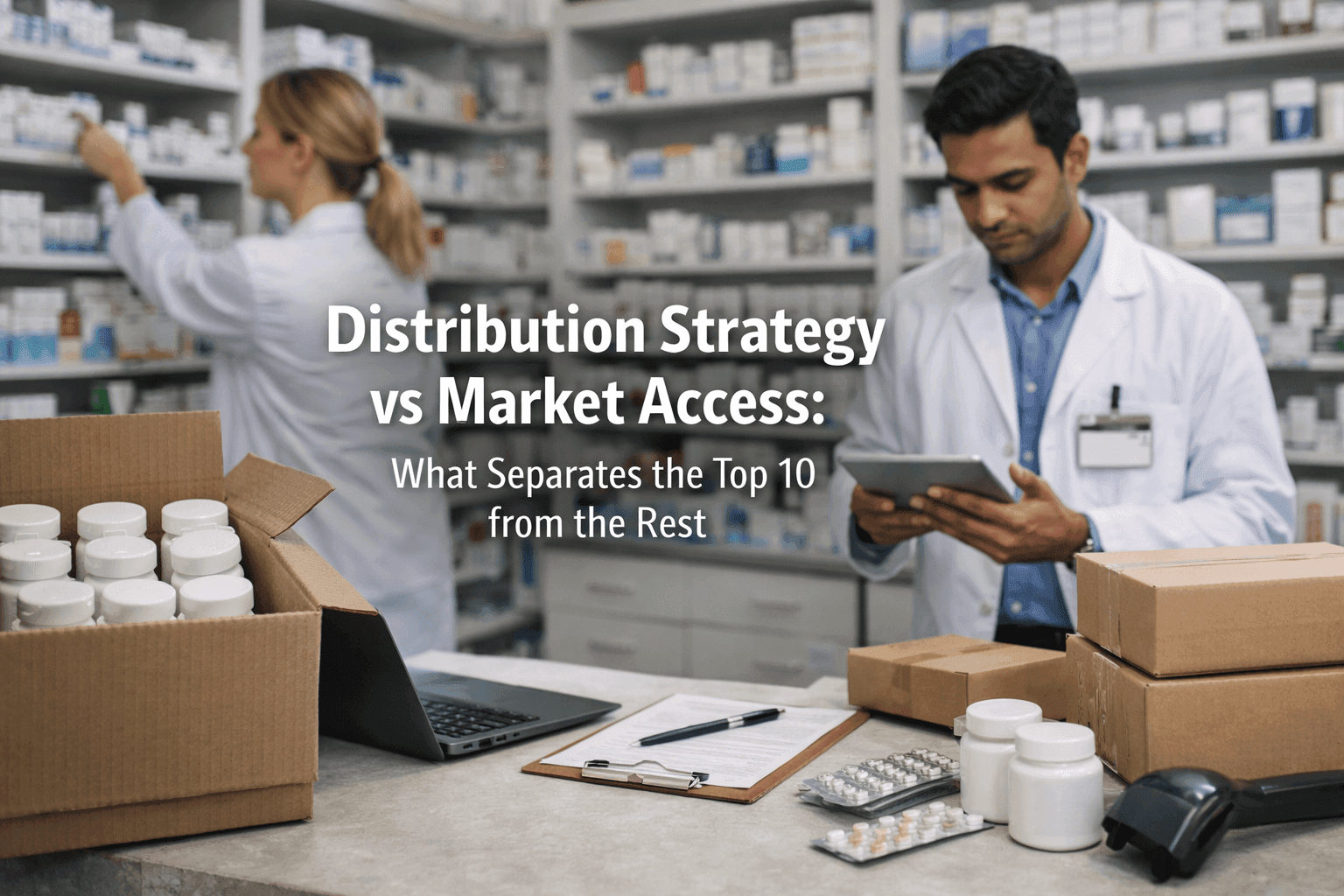
Why do some pharmaceutical companies dominate national shelf space, their products ubiquitous from the busiest pharmacy in Kuala Lumpur to a rural clinic in Sabah, while others remain confined to a single region, forever struggling to expand? The answer lies in a fundamental distinction: distribution strategy is the engine that drives market access. It’s not enough to have a product that is approved for sale; the company must have a deliberate, well-executed plan to make that sale possible everywhere.
Achieving true nationwide penetration requires more than just signing a contract with a single wholesaler. It demands a structured, multi-pronged approach involving strategic partnerships with major pharmacy chains, meticulous coordinated inventory planning that accounts for regional demand variations, and a commitment to data-driven replenishment cycles. Companies that invest in building these strategic distribution networks are the ones that secure broader retail visibility and, consequently, higher sales velocity. They move beyond simple market access to achieve market dominance.
To understand why this separation is so stark, it’s valuable to consider multiple perspectives within the ecosystem:
From a pharmacist’s perspective, consistency is everything. They need a partner who delivers the right products, in the right quantity, on the right day. Reliable expiry management and prompt replenishment of fast-moving items directly improve their workflow efficiency and ability to serve patients. A distributor that causes workflow disruption is quickly replaced by a more trusted one.
From a distributor’s perspective, scalability is the name of the game. Achieving it depends on internal efficiencies like warehouse automation (using conveyor systems, pick-to-light technology) and sophisticated route optimisation software to minimize delivery times and fuel costs. Their ability to scale profitably is what allows them to offer competitive rates to brand owners.
From a brand manager’s perspective, success in getting listed by a major chain is just the first battle. The real war is won or lost based on downstream execution. Their checklist for a successful launch includes the distributor’s coverage footprint, the quality of in-store merchandising execution, the alignment of credit terms with the pharmacy’s business cycle, and access to performance analytics that show real-time sell-out data.
Companies that integrate their warehouse operations with dedicated pharmacy merchandising services often achieve significantly stronger sell-out outcomes. This effective combination ensures that products aren’t just sitting in a pharmacy’s back store, but are prominently displayed on shelves, with proper point-of-sale materials, where patients can actually see and buy them. Separating distribution from retail execution creates a dangerous misalignment between what’s available in inventory and what’s actually placed in front of the customer. The top 10 healthcare providers understand this intimately. They don’t operate in silos. Instead, they build expert, cross-functional systems where distribution, sales, and merchandising teams operate under unified KPIs focused on the end consumer. It is this expert coordination—a seamless blend of strategy and execution—not sheer volume alone, that ultimately separates the national leaders from the regional players, creating an effective and enduring market presence.
Learn more: Distributor Pharmacy Partnerships: How to Optimize Collaboration
Independent Pharmacy Distributor vs Chain-Controlled Distribution Models
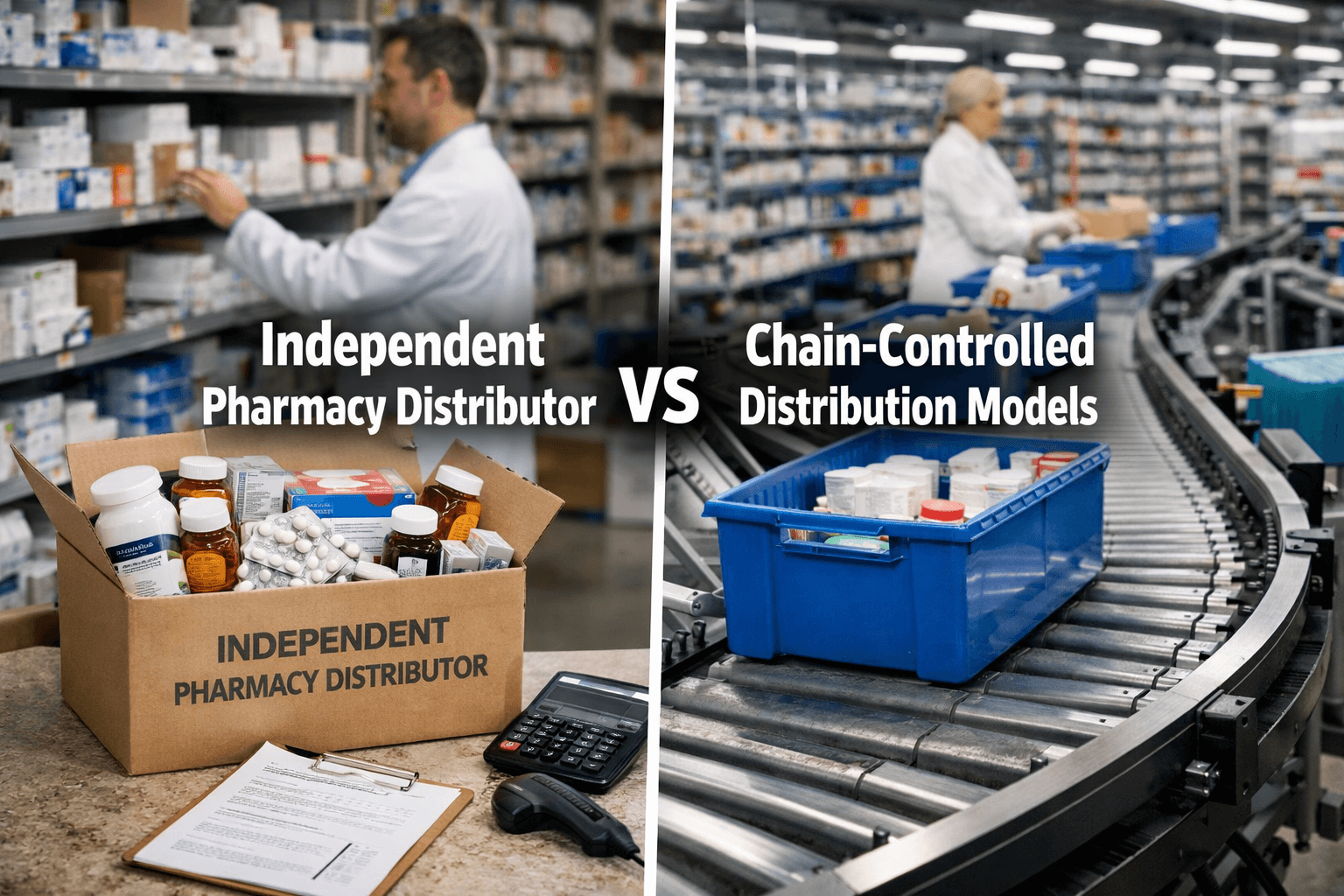
Which model better supports Malaysian pharmacies in their daily operations—the agility of independent networks or the structured power of chain-controlled systems? This is a fundamental question for any brand owner designing a go-to-market strategy, as the choice fundamentally shapes a product’s availability, pricing, and relationship with the end consumer. Both models have distinct advantages, and the “right” answer depends entirely on a brand’s specific objectives, stage of growth, and target pharmacy segment.
Independent pharmacy distributor networks are built on flexibility. They thrive by offering a more personalized, consultative approach to the pharmacies they serve. For a regional pharmacy in a place like Melaka or Seremban, an independent distributor often feels like a true business partner. They are more willing to sit down with the pharmacy owner, understand their unique customer base, and adjust credit terms to suit cash flow cycles. This allows for faster SKU expansion speed, as decisions aren’t bogged down by layers of centralized bureaucracy. If a pharmacist wants to trial a new, niche supplement from a small European brand, an independent distributor can often make it happen within days.
In contrast, chain-controlled distribution models, operated by giants like Guardian or Watsons, are engineered for a different purpose: efficiency and uniformity. Their power lies in centralised procurement. They leverage their massive buying power to negotiate the best possible prices, ensuring efficient cost control across hundreds of outlets. Execution is standardised; a promotional display in a store in Penang will look identical to one in Johor Bahru. This uniformity reduces operational complexity for the chain and ensures a consistent brand experience for the customer. For a mass-market brand seeking massive, rapid scale, this model is often the only viable path.
To better visualize these differences, consider the following comparison:
| Factor | Independent Pharmacy Distributor | Chain-Owned/Centralized Distributor |
|---|---|---|
| Brand Flexibility | High – Willing to test new, niche products. | Moderate – Decisions are driven by centralized category reviews. |
| SKU Expansion Speed | Faster – Can onboard new products quickly based on local demand. | Structured – Must align with chain-wide listing cycles and planograms. |
| Negotiation Structure | Direct – One-on-one discussion with the pharmacy owner. | Centralised – Negotiations are handled by a head office procurement team. |
| Merchandising Support | Tailored – Often involves direct, collaborative shelf planning. | Standardised – Execution follows a strict, chain-wide template. |
| Credit Terms | Flexible – Can be adapted to the pharmacy’s individual turnover. | Fixed – Standard terms applied uniformly across all locations. |
From an independent pharmacy owner’s viewpoint, this flexibility is not just a nice-to-have; it is crucial for business differentiation. It allows them to experiment with niche products and cater to specific local health trends that a chain might overlook. From a chain’s perspective, however, uniformity is a feature, not a bug. It streamlines operations, simplifies staff training, and builds a powerful, recognizable brand image. Both models can be reliable and effective, but their suitability is entirely dependent on a brand’s strategy. A premium, expert-backed dermo-cosmetic line might find its perfect home with an independent distributor, while a household-name analgesic will likely require the scale of a chain-controlled system to achieve its full market potential.
Operational Excellence: Logistics, Cold Chain & Inventory Intelligence
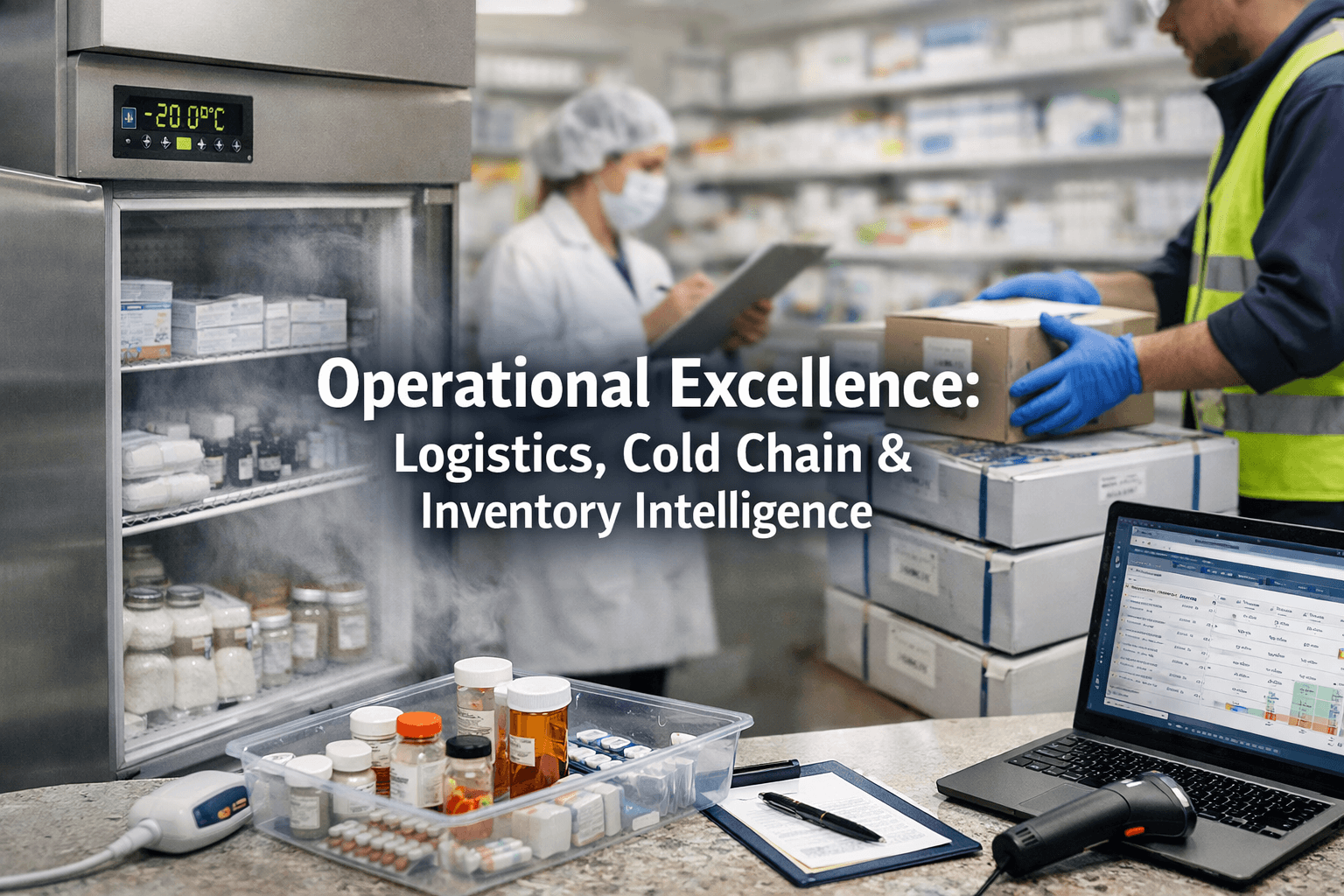
Beyond the choice of distribution model, what operational characteristics truly define the most mature and resilient healthcare companies in Malaysia? The answer lies in their mastery of the backend—the unseen engine that ensures product integrity and availability. This operational excellence revolves around three interdependent pillars: cold-chain stability, inventory intelligence, and route optimisation. It’s in these areas that leading companies build an unassailable competitive moat.
Cold chain distribution Malaysia remains one of the most formidable challenges in the industry, primarily due to our tropical climate. The difference between a reliable partner and an unreliable one often comes down to their investment in infrastructure. Large players distinguish themselves by investing in temperature-mapped warehouses and validated transport systems—which includes refrigerated vans with real-time temperature logging. They don’t just assume the product is cold; they have the data to prove it at every point in the journey. For a biologic or insulin-dependent patient, this isn’t a logistical detail—it’s a matter of health and safety.
The second pillar, inventory intelligence, is about transforming data into a strategic asset. Forward-thinking companies are moving away from reactive ordering and towards predictive analytics. They implement digital inventory dashboards that provide real-time visibility into stock levels across the supply chain, from their own warehouses to the pharmacy shelf. This improved procurement visibility allows for smarter decisions. For instance, by analyzing historical sales data and even factoring in external elements like flu season patterns, a company can proactively increase stock of relevant medications. This proven approach drastically reduces two major profit-killers: costly overstock that leads to expiry write-offs, and damaging stockouts that send customers to competitors.
Finally, route optimisation is the practical application of logistics intelligence. It’s about planning delivery routes that are not just the shortest distance, but the most efficient in terms of time, fuel, and delivery windows. This becomes critically important when you consider the regional logistics disparities within Malaysia. Sabah and Sarawak, for example, require entirely different freight planning than the west coast, often involving sea freight and coordination with local hubs. Similarly, high-density urban outlets in the Klang Valley demand more frequent, smaller replenishment cycles, while a rural pharmacy in Pahang might operate perfectly well with a larger, weekly delivery. For operations managers, mastering this complexity through predictive analytics reduces shrinkage and optimizes fleet usage. For pharmacists, the result is stable, predictable delivery schedules that enhance their ability to serve patients with continuity and confidence. In essence, operational maturity isn’t just about having good systems; it’s about building a logistics framework that is resilient, responsive, and deeply integrated into the market it serves.
Learn more: Challenges and Opportunities in Malaysia’s Pharmaceutical Supply Chain (2026 Edition) | Cold chain and logistics management
Merchandising, Visibility & Retail Execution: The Final Mile Advantage

Is the distribution process truly complete once products are safely delivered to a pharmacy’s back storeroom, or does it only end when those products are in the hands of the consumer? For too many companies, the journey stops at the delivery dock. For market leaders, however, they understand that retail execution is the crucial final step that determines sell-out performance. The “final mile” isn’t just the delivery route; it’s the last three feet from the shelf to the shopping basket.
This is where pharmacy merchandising services become invaluable. These services act as the crucial bridge between a product sitting in warehouse inventory and gaining consumer visibility. It encompasses a range of in-store activities: ensuring planogram compliance (so products are placed exactly where they should be for maximum visibility), coordinating the placement of POSM (Point of Sale Materials) like shelf wobblers and posters, and managing the frequency and quality of sales representative visits. A product that is delivered but left in a box in the back room generates zero revenue. A well-merchandised product, with proper facing and clear pricing, is already halfway to a sale.
Companies that successfully integrate their distribution operations with dedicated merchandising support gain a significant strategic advantage. They create a feedback loop where inventory data from the warehouse can directly inform display optimisation on the shop floor. For example, if data shows a particular pain relief cream is selling faster in East Coast states, the merchandising team can be instructed to ensure it has prominent display space in those specific pharmacies. This alignment prevents a common pitfall: achieving high sell-in volume (convincing the pharmacy to buy stock) without the corresponding sell-out execution (helping the pharmacy actually sell it to consumers). This mismatch is a primary cause of inventory stagnation and returned goods, a scenario mature players actively avoid.
From a brand manager’s perspective, the demand for visibility into this final mile is growing. They no longer just want shipment reports; they demand effective retail reporting dashboards that show real-time shelf photos, share of shelf data, and competitor activity. From a pharmacist’s perspective, they value structured promotional coordination. A well-executed promotion that drives foot traffic and sales is a win-win. Tailored merchandising strategies are key here; what works for a busy urban chain store—perhaps a high-tech digital screen—may be less effective in a neighbourhood independent outlet, where a simple, well-stocked display and a friendly chat with the rep builds stronger engagement. Ultimately, final-mile execution is the critical juncture where a well-planned distribution strategy finally converts into tangible revenue reality.
Learn more: Retail and Consumer Trends 2026: Human-led intelligence
Future Direction: Digitalisation & Consolidation in Malaysia’s Healthcare Sector

Standing at the present crossroads, one must ask: how will Malaysia’s healthcare distribution ecosystem evolve in the next decade to meet new challenges and opportunities? The trajectory is clear, pointing towards two powerful, converging forces: rapid digital integration and inevitable market consolidation. These trends will redefine what it means to be a market leader, demanding a level of sophistication that goes far beyond simply moving goods.
Digital integration is already accelerating at every level of the supply chain. We are seeing the widespread adoption of ERP systems across leading distributor pharmacy networks, creating unprecedented transparency from manufacturer to retailer. This is paired with the rise of AI forecasting, which strengthens pharmaceutical logistics Malaysia accuracy by analyzing vast datasets—including historical sales, seasonal trends, and even public health data—to predict demand with remarkable precision. This isn’t just about efficiency; it’s about building an expert, predictive supply chain that can anticipate disruptions. Simultaneously, e-commerce pharmacy penetration is steadily increasing, forcing a re-evaluation of traditional models. Consumers now expect omnichannel fulfilment—the ability to order online and pick up in-store, or have medications delivered to their home. This requires integrated backend coordination that many traditional distributors are only now beginning to build.
On the regulatory front, the bar is being raised. Regulatory reporting is becoming stricter, and expectations for audit traceability are growing. It will soon be insufficient to have paper records; authorities and major pharmacy chains will demand real-time, digital traceability for every batch. This push for compliance is a major driver of the second trend: consolidation. The investment required for advanced ERP systems, automated cold chain monitoring, and robust compliance infrastructure is substantial. Larger pharmacy wholesale distributors are in a better position to make these investments. Consequently, we can expect to see continued consolidation, as smaller players may find it increasingly difficult to compete on compliance and technological capability.
What does this mean for the future? Future growth will depend on a company’s ability to build trusted, strategic, and expert integration across all three layers of the value chain: manufacturing, distribution, and retail. The Malaysian health sector leaders of tomorrow will not just be those with the biggest factories or the most products. They will be the organizations that digitize their operations early, manage compliance with unyielding discipline, and forge seamless, data-rich partnerships across the ecosystem. They will treat their supply chain not as a cost center, but as a core, strategic asset capable of driving growth and building lasting market resilience.
Learn more: The future of healthcare in Asia: Digital health ecosystems
Frequently Asked Questions (FAQ)
Q1: What is the largest healthcare company in Malaysia?
Answer: The largest healthcare company in Malaysia is KPJ Healthcare Berhad, a leading private healthcare provider with a wide network of hospitals across the country.
Q2: Who are the leading companies in the healthcare industry?
Answer: Leading healthcare companies in Malaysia include KPJ Healthcare Berhad, IHH Healthcare, Pharmaniaga, and Pantai Medical Group, which are all prominent players in the healthcare and pharmaceutical sectors.
Q3: What is the ranking of Malaysia in healthcare?
Answer: Malaysia is ranked 61st globally in healthcare access and quality according to the 2018 Global Health Security Index, with a strong healthcare infrastructure and access to medical services.
Q4: What are the top 10 health insurance companies in Malaysia?
Answer: Top health insurance companies in Malaysia include AIA Malaysia, Prudential Assurance, Great Eastern Life, Allianz Life, Tokio Marine Life, Sun Life Malaysia, Manulife Insurance, Etiqa Insurance, AXA Affin Life, and Hong Leong Assurance.
Q5: Who are the top 7 companies?
Answer: The top 7 companies in Malaysia’s healthcare and pharmaceutical sector are KPJ Healthcare, IHH Healthcare, Pharmaniaga, Pantai Medical Group, Sunway Medical Centre, KPJ Healthcare, and the Ministry of Health (MOH).
Q6: What are the big 4 companies in Malaysia?
Answer: The “Big 4” in Malaysia typically refers to the largest multinational professional services firms: Deloitte, PricewaterhouseCoopers (PwC), Ernst & Young (EY), and KPMG.
Q7: What is the most famous hospital in Malaysia?
Answer: The most famous hospital in Malaysia is the Hospital Kuala Lumpur, renowned for its state-of-the-art facilities and comprehensive healthcare services.
Q8: What are the big 10 companies?
Answer: The top 10 companies in Malaysia, considering healthcare and pharmaceutical sectors, include KPJ Healthcare, IHH Healthcare, Pantai Medical Group, Pharmaniaga, Sunway Medical Centre, and others.
Q9: What are the top 5 pharmacy in Malaysia?
Answer: The top 5 pharmacies in Malaysia include Guardian, Watsons, Caring Pharmacy, Alpro Pharmacy, and Health Lane Family Pharmacy, which dominate the retail pharmacy market.
Q10: What is the biggest company in Malaysia?
Answer: The biggest company in Malaysia by market capitalization is Malayan Banking Berhad (Maybank), a leading financial services group in the region.
The landscape of Malaysia’s biggest healthcare firms continues to be shaped by those who master the backend. It is clear that distribution strength, compliance maturity, cold-chain integrity, and precise retail execution are not just operational details—they are the fundamental determinants of long-term resilience and market leadership. For pharmaceutical companies, emerging skincare brands, and healthcare product owners aiming for deeper penetration within Malaysian pharmacies, distribution strategy should never be a secondary thought; it must be a core component of the business plan from day one.
How can we assist you today? 😊
Just let us know—we’re here to help!