Why does an updated compliance list carry more weight today than it did half a decade ago? The answer lies in the rapid evolution of Malaysia’s cosmetic landscape. The market hasn’t just grown—it has transformed. With digital platforms amplifying consumer voices and regulators wielding sharper enforcement tools, pharmacies face a new reality where compliance transparency isn’t optional. It’s the foundation of survival.
Malaysia’s cosmetic sector has matured at an astonishing pace. Consumers are no longer passive purchasers; they’re informed investigators. They cara check produk lulus kkm before buying, they share findings on social media, and they expect pharmacies to have reliable answers. Simultaneously, the National Pharmaceutical Regulatory Agency (NPRA) has intensified monitoring, making kosmetik lulus kkm verification a daily operational necessity rather than a quarterly compliance ritual.
For pharmacists, brand managers, and distribution professionals, the demand for a current, accurate list of approved products reflects deeper structural shifts in the industry. A structured kkm check before onboarding new products has become standard practice. Why? Because enforcement actions tell a clear story: product recalls and public notices increasingly stem from oversight failures at the point of entry, not just manufacturing defects.
Consider this scenario: a well-known pharmacy chain in Kuala Lumpur recently faced reputational heat when a distributor pharmacy inadvertently supplied a whitening cream containing hydroquinone—a substance strictly regulated in cosmetics. The product carried a notification number, but it had expired six months prior. The pharmacy’s internal system hadn’t flagged it. Within days, the story went viral on parenting forums and TikTok. Years of trusted brand-building unraveled rapidly.
For pharmacy distributor Malaysia networks, the lesson was immediate and painful. Filtering products before they reach shelves isn’t just about inventory control—it’s a strategic safeguard. A responsible distributor doesn’t merely move cartons from warehouses to retail points. It functions as a compliance gatekeeper, ensuring every kkm product entering circulation aligns with strict notification requirements, ingredient restrictions, and documentation standards. This gatekeeper role has become essential in 2027’s regulatory climate.
An updated KKM-approved list offers more than peace of mind. It provides operational clarity across multiple touchpoints. Pharmacies use it to validate supplier claims with precision. Merchandisers rely on it to confirm shelf compliance during routine checks. Brand owners align their portfolios with NPRA requirements without guesswork. Distribution teams leverage it to reduce regulatory exposure before products leave the warehouse.
The practical implication is clear: compliance visibility directly impacts business continuity. When a pharmacy can confidently answer consumer queries about approved products, when merchandisers spot potential issues before they escalate, when distribution partners flag expired notifications proactively—that’s when the ecosystem functions effectively. That’s when a pharmacy moves from reactive compliance to proven operational excellence.
Understanding KKM Cosmetic Notification & Regulatory Framework

What truly qualifies a cosmetic product as legally distributable in Malaysia? This question generates surprising confusion even among experienced industry professionals. The distinction between cosmetic notification and pharmaceutical registration remains one of the most misunderstood aspects of local regulatory compliance.
Cosmetics operate under a notification system, while medicines require full registration with the National Pharmaceutical Regulatory Agency. This isn’t semantic hair-splitting—it’s foundational to understanding kelulusan kkm for cosmetics. A cosmetic must receive notification before marketing commences, but notification doesn’t confer the same status as drug registration.
Cosmetic Notification (NOT) applies to everyday personal care items: moisturisers, sunscreens, facial cleansers, body lotions, hair care products, and similar categories. These products cannot make therapeutic claims. They cannot promise to treat diseases or alter physiological functions. They simply beautify, cleanse, or protect.
Pharmaceutical Registration (MAL) governs medicines, supplements, and products with therapeutic intent. If a cream claims to treat eczema, it requires MAL registration. If a shampoo promises to cure fungal infections, it falls under pharmaceutical regulation.
Why does this distinction matter operationally? Pharmacies that mistakenly assume a cosmetic needs MAL registration may overcomplicate sourcing, rejecting perfectly compliant products or delaying market entry unnecessarily. Conversely, pharmacies that skip notification verification expose themselves to enforcement risk when regulators conduct inspections.
The NPRA notification process involves several layers of scrutiny. Manufacturers or Responsible Persons (RP) must submit:
Complete product formulation with ingredient concentrations
Safety assessment documentation from qualified assessors
Proposed label artwork for compliance review
Responsible Person declaration confirming accountability
Once approved, the product receives a notification number. However—and this is critical—notification is not a one-time guarantee. Expired notifications, cancelled statuses, or formulation changes without resubmission all invalidate distribution rights. A product that was compliant last year may be non-compliant today.
From a regulatory perspective, authorities emphasise traceability and accountability. They expect every player in the supply chain—manufacturer, distributor, retailer—to maintain awareness of product status. From a distributor audit perspective, compliance verification includes checking:
NOT validity status through official databases
Ingredient restrictions against current prohibited lists
Labelling accuracy including Malay language requirements
RP credentials and contact information
At pharmacy level, verification appears straightforward—a quick database search confirms approval. But responsible pharmacies adopt a more expert approach. They don’t just check numbers; they cross-reference documentation provided by the distributor pharmacy, ensuring shelf placement aligns with proven compliance protocols. They maintain internal logs of verification dates and outcomes. They train staff to recognise red flags.
The risks of non-compliant sourcing extend beyond fines. Consider a Johor Bahru pharmacy that sourced “natural” skincare directly from an overseas supplier. The products carried what appeared to be valid notification numbers. However, when NPRA conducted a routine inspection, they discovered the numbers belonged to different products entirely. The pharmacy faced:
Immediate product seizure and removal from shelves
Compounded financial penalties for each non-compliant SKU
Public enforcement notices damaging years of community trust
Reputational damage that lingered despite corrective actions
In 2027, enforcement patterns show consistent focus on misleading whitening claims and unapproved active ingredients like hydroquinone, tretinoin, and potent corticosteroids disguised in herbal products. Compliance isn’t optional—it’s essential for sustainable pharmacy operations.
Learn more: KKM Malaysia: Proses, Kos & Tempoh untuk Approval | Guidelines for Control of Cosmetic Products in Malaysia
Updated List & Examples: Senarai Produk Kosmetik Lulus KKM Terkini 2027
How can pharmacies distinguish genuinely compliant brands from superficially convincing alternatives? An updated understanding of senarai produk kosmetik lulus kkm reveals patterns that separate robust compliance from regulatory vulnerability.
While this article doesn’t reproduce proprietary NPRA databases, it categorises examples based on common approval patterns observed within pharmacy wholesale distributors networks across Malaysia. These categories reflect where compliance scrutiny concentrates and where approval trends consistently emerge.
Category 1: Skincare Essentials
This category dominates approval volumes. Moisturisers with non-therapeutic claims—those focusing on hydration, texture improvement, or skin feel rather than disease treatment—routinely receive notification. Niacinamide serums within permitted concentrations appear frequently, provided they avoid exaggerated brightening claims. Cleansers, toners, and basic facial washes populate this segment heavily.
Category 2: Sunscreen & UV Protection
Sunscreens attract heightened regulatory attention due to SPF claims and active ingredient restrictions. Compliant products feature broad-spectrum SPF formulations with clearly labelled protection factors. Mineral-based sunblocks using zinc oxide or titanium dioxide often receive faster approvals. Hybrid sunscreen lotions combining chemical and physical filters require careful ingredient verification but appear regularly in approved lists.
Category 3: Baby & Sensitive Care
Products targeting delicate skin undergo additional scrutiny, yet approval patterns remain consistent. Hypoallergenic body lotions, mild cleansers free from harsh surfactants, and barrier repair creams with ceramides or panthenol feature prominently. These products typically avoid fragrance and essential oils, aligning with NPRA’s safety expectations for vulnerable populations.
Category 4: Hair & Scalp Care
Hair care approvals focus on products without medicinal claims. Anti-dandruff shampoos containing piroctone olamine or climbazole—provided they avoid therapeutic language—receive notification. Herbal scalp tonics with traditional ingredients must demonstrate they don’t cross into pharmaceutical territory. Basic conditioners, styling products, and treatments without drug claims populate this category.
What distinguishes truly compliant brands in 2027 beyond category placement? Several characteristics recur consistently:
Transparent ingredient disclosure with INCI names clearly presented
Valid NOT numbers prominently displayed on primary packaging
Responsible Person identification with local contact details
Clear labelling free from exaggerated therapeutic claims like “cures eczema” or “eliminates pigmentation”
Pharmacies increasingly ask distributors to provide comprehensive documentation packets supporting product verification. This documentation process has become more efficient within structured supply chains supported by pharmacy distributor Malaysia networks. Rather than chasing paperwork from multiple brands, pharmacies rely on distributors who pre-verify documentation before offering products.
How to Verify Notification Status Professionally
Industry professionals typically follow a structured approach:
Conduct database search using the notification number, not just brand name
Cross-reference brand name with Responsible Person details
Confirm validity status—active, expired, or cancelled—through NPRA’s official portal
Document verification dates for audit readiness
Consumers frequently search online for cara check produk lulus kkm, and pharmacies prepared to demonstrate this process confidently build stronger customer relationships. When shelf teams understand verification basics, when they can show consumers how compliance works, trust deepens naturally.
From a distribution standpoint, pharmacy wholesale distributors implement internal screening protocols before onboarding cosmetic brands. These protocols ensure only trusted and reliable products enter the network, reducing downstream compliance burdens for retail partners.
Learn more: Cara semak produk berdaftar KKM atau tidak?
The Role of Pharmacy Distribution Service in Malaysia in Compliance Control
Why does distribution so often determine whether compliance succeeds or fails spectacularly? The answer lies in the gap between regulatory approval and physical shelf presence—a gap where documentation, verification, and traceability either function effectively or collapse entirely.
A cosmetic product may obtain valid notification status, but without structured distribution governance, that status means remarkably little. In Malaysia, pharmacy distribution service in Malaysia plays a strategic and reliable role in ensuring only compliant products reach pharmacy shelves. This isn’t accidental—it’s engineered through layered processes that transform distribution from logistics function to compliance safeguard.
Distributor pharmacy networks do more than transport cartons from warehouses to retail points. They perform layered due diligence before onboarding brands. This includes reviewing notification certificates, cross-checking Responsible Person documentation against NPRA records, verifying label consistency with approved submissions, and conducting formulation risk reviews for emerging concerns like restricted preservatives or prohibited whitening agents.
These steps may seem procedural, even mundane. But they form an expert screening mechanism that protects downstream retailers from regulatory surprises. Consider the volume: a typical distributor handles hundreds of cosmetic SKUs. Without structured onboarding, each SKU represents potential exposure.
Supplier Screening Before Onboarding
A structured onboarding process in 2027 typically includes:
Verification of valid NOT number through NPRA’s official database
Confirmation of product category alignment with distributor’s compliance parameters
Ingredient screening against restricted lists and emerging concern substances
Label compliance assessment including Malay language requirements
Responsible Person agreement review ensuring local accountability
An independent pharmacy distributor typically centralises these checks. This centralisation reduces duplication of effort at store level and improves audit readiness across the network. Smaller pharmacies benefit disproportionately because they rely on distributors’ compliance expertise rather than conducting full regulatory reviews themselves—reviews they may lack resources to perform thoroughly.
Warehouse Documentation & Traceability Systems
Once a product clears onboarding, traceability becomes critical. Reliable distributors maintain:
Batch-level tracking records linking shipments to specific notification statuses
Inbound documentation logs preserving certificates and approvals
Expiry monitoring dashboards preventing outdated stock from reaching shelves
Recall contingency procedures enabling swift action when necessary
Traceability isn’t merely about compliance box-ticking. It ensures swift action if a notification is suspended, if ingredient regulations change unexpectedly, or if enforcement notices target specific product categories. In Klang Valley, where distribution velocity peaks, and in East Malaysia, where logistics complexity introduces delays, centralised traceability ensures uniform compliance standards regardless of geography.
Relationship Between Independent Pharmacy Distributor & Regulatory Bodies
Distributors don’t replace regulatory authorities, but they often serve as compliance intermediaries in practice. When enforcement notices are issued—when NPRA announces a product recall or notification cancellation—distributors with robust systems can:
Immediately notify affected pharmacies through structured communication channels
Halt further stock movement at warehouse level
Coordinate recall logistics efficiently across the network
Communicate with Responsible Persons to understand next steps
From a distributor risk management perspective, this structure significantly reduces reputational exposure. From a pharmacy perspective, it provides operational security—confidence that supply chain partners actively monitor compliance. From a brand manager’s perspective, it offers structured oversight without requiring direct management of every retail relationship.
Compliance control, therefore, isn’t isolated at brand level or manufacturer level. It’s embedded within the distribution infrastructure itself, transforming how products move from approval to availability.
Learn more: Do All Cosmetics Need KKM Approval? | World-Health-Organization-Good-Distribution-Practices.pdf
Independent Pharmacy Distributor vs Direct Brand Supply: Compliance & Risk Comparison
Does direct sourcing from brand owners offer superior control—or does it inadvertently increase regulatory exposure? This question generates heated debate among pharmacy owners, and the answer depends heavily on understanding how compliance accountability distributes across supply chain models.
Some pharmacies prefer direct relationships with brand owners. They believe cutting out intermediaries improves margins and strengthens brand alignment. Others rely on independent pharmacy distributor networks, valuing consolidated compliance management. The compliance implications differ significantly between these approaches.
Key Differences in Accountability
Independent distributors centralise compliance screening. They apply uniform standards across all products, regardless of brand origin. Direct brand supply depends largely on brand self-declaration, which varies in rigour depending on the brand’s internal capabilities and commitment to Malaysian regulatory requirements.
This difference affects audit readiness profoundly. When regulators request documentation, pharmacies supplied by independent distributors can typically access structured records quickly. Pharmacies sourcing directly may find themselves chasing multiple brands for paperwork—brands that may respond slowly or inadequately.
Risk Exposure Comparison
The table below illustrates how these models compare across critical compliance dimensions:
Compliance Control Differences Explained
An independent distributor offers a proven framework for risk mitigation. Documentation flows through standardised channels. Compliance checks occur before products enter the network, not after issues arise. When new regulations emerge—like the 2026 restrictions on certain preservatives—distributors screen existing inventory proactively.
Direct supply lacks this consistent screening, especially when pharmacies source from multiple brands with varying compliance maturity. One brand may maintain impeccable records; another may struggle with basic notification maintenance. Pharmacies absorb this variability as operational risk.
Impact on Pharmacy Reputation
Enforcement actions rarely distinguish between brand fault and retailer oversight in public perception. When news breaks about non-compliant products, the pharmacy where they were sold bears reputational consequences regardless of where the compliance failure originated. Consumers don’t care whether the brand or distributor made the error—they care that the pharmacy they trusted stocked problematic products.
A strategic partnership with a distributor reduces this uncertainty. It creates a buffer between brand-level compliance gaps and pharmacy-level exposure. When distributors screen effectively, problems get resolved before products reach shelves.
Efficiency Gains
Operational efficiency also improves under distributor models. Rather than conducting repeated kkm check procedures for each supplier relationship—verifying notifications, reviewing documentation, tracking expiry dates—pharmacies rely on distributor validation systems. This approach is operationally efficient and reduces compliance fatigue among pharmacy staff who would otherwise manage dozens of brand relationships individually.
For a pharmacy in Penang managing 50 direct brand relationships, compliance verification becomes a significant operational burden. For that same pharmacy working with three trusted distributors covering those brands, verification centralises into manageable routines.
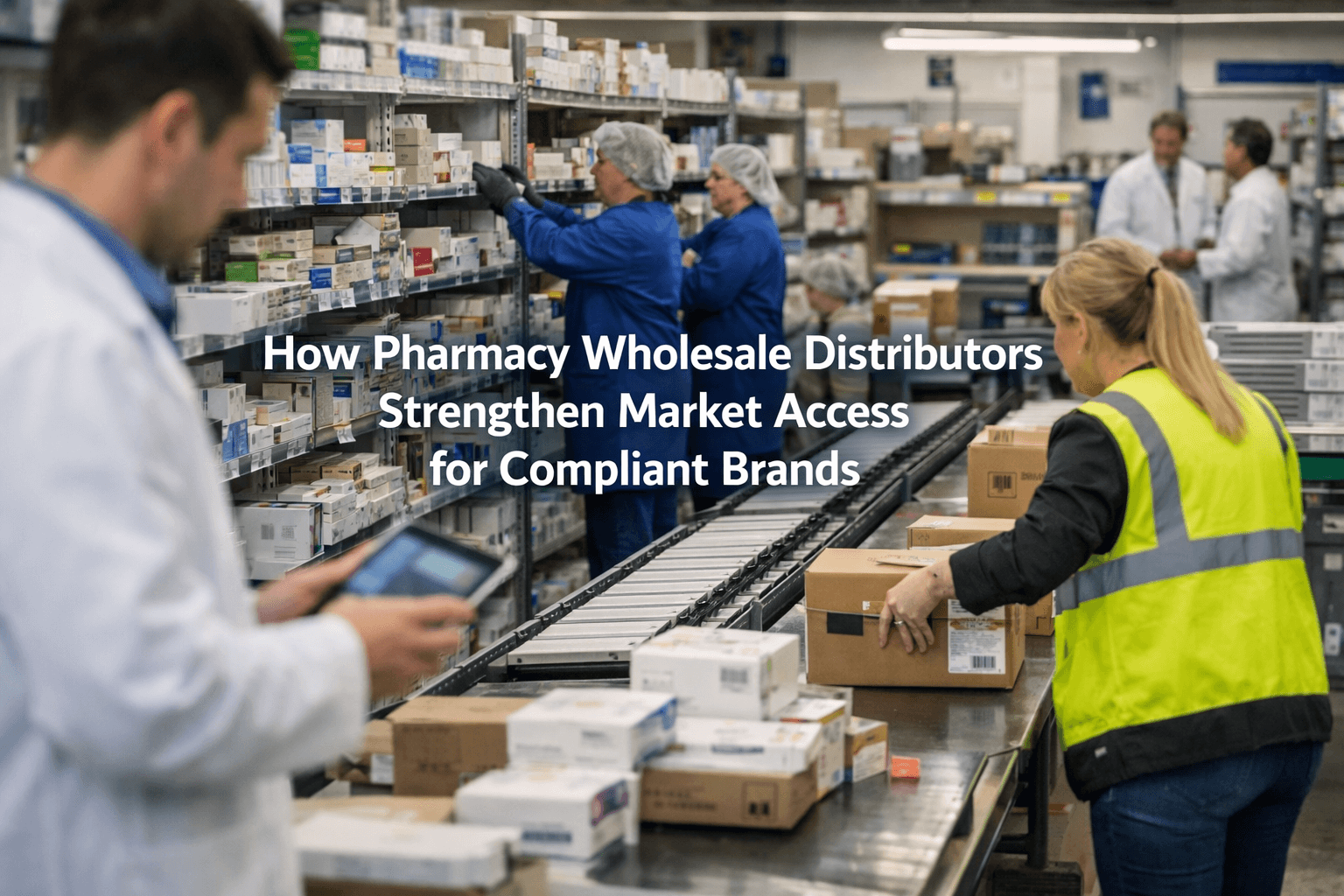
How Pharmacy Wholesale Distributors Strengthen Market Access for Compliant Brands
Why does distribution scale ultimately determine whether a compliant brand thrives or remains stagnant? The answer cuts to the heart of pharmaceutical retail in Malaysia. Approval from NPRA may open the door, but without strategic distribution partnerships, that door leads nowhere.
A cosmetic brand can secure flawless notification status, maintain impeccable documentation, and still fail commercially. Why? Because market access in Malaysia’s fragmented pharmacy landscape requires infrastructure that most brand owners don’t possess. This is where pharmacy wholesale distributors become indispensable—they transform regulatory compliance into commercial reality.
Scaling Approved Cosmetics Nationwide
Distribution networks manage complexity that would overwhelm individual brands. Consider the logistical puzzle: a skincare line approved for sale must reach pharmacies in Kota Bharu, Kuching, and Kota Kinabalu simultaneously. Each location has different delivery windows, temperature considerations, and documentation requirements.
Efficient distribution networks handle:
Central warehousing that consolidates inventory for streamlined dispatch
Regional logistics hubs serving Peninsular Malaysia, Sabah, and Sarawak separately
East Malaysia delivery coordination navigating customs and transportation nuances
Expiry tracking ensuring older stock rotates before newer inventory
Without these capabilities, brands limit themselves geographically. They become Penang-only players or Klang Valley experiments rather than national contenders.
Logistics & Documentation Standards
Reliable distributors maintain systems that proven brands depend on. Temperature-sensitive cosmetics—certain serums, vitamin C formulations, probiotic skincare—require monitoring that basic courier services cannot provide. Distributors bridge this gap through:
Temperature monitoring logs maintained throughout the supply chain
Batch tracking systems linking specific shipments to notification certificates
Delivery acknowledgement records creating auditable proof of compliant distribution
For a brand manager overseeing growth, these documentation standards offer peace of mind. They know that every unit reaching a pharmacy shelf has travelled through a controlled environment, that every batch can be traced if questions arise, that compliance extends beyond the warehouse door.
Structured Market Access Support
Beyond logistics, distributors provide tailored market access support that amplifies brand reach. When a new moisturiser receives notification approval, the work has just begun. Distributors typically offer:
Onboarding guidance helping brands understand pharmacy-specific requirements
Shelf rollout coordination ensuring new products appear consistently across outlets
Merchandising support maintaining shelf presence and promotional displays
Compliance monitoring alignment flagging documentation gaps before they become issues
For smaller brands particularly, this support proves essential. Navigating pharmacy chains independently requires relationships, understanding of buyer cycles, and familiarity with listing processes that take years to develop. Distributors compress that timeline dramatically.
In this environment, pharmacy distribution service in Malaysia functions as a compliance amplifier—not merely a transport service but a strategic partner that extends regulatory assurance from warehouse to shelf. Brands gain reach; pharmacies gain confidence; the entire ecosystem strengthens.
Operational Insights: What Pharmacists, Brand Managers & Distributors Must Align On
What happens when alignment between these three critical players breaks down? The answer reveals itself in compliance gaps, stock discrepancies, and ultimately, regulatory exposure that no single party can contain alone.
From the Pharmacist’s Perspective
Pharmacists occupy the front line of compliance. When a customer asks about product safety, when a regulatory inspector walks through the door, when a social media post questions a brand’s legitimacy—the pharmacist answers first. This reality shapes their priorities fundamentally.
Pharmacists prioritise product safety above all else. They must ensure every cosmetic occupying shelf space carries verifiable notification status, every supplier provides documentation on request, every product’s claims align with approved language. This isn’t bureaucratic preference—it’s operational necessity that reduces enforcement risk and supports public trust.
Consider a pharmacy in Johor Bahru that discovered a popular whitening cream’s notification had expired six months earlier. The brand hadn’t informed them. The distributor hadn’t flagged it. The pharmacist faced an impossible choice: continue selling non-compliant stock or remove a revenue-generating product with no clear replacement. Alignment failures created exposure that better communication could have prevented.
From the Distributor’s Perspective
Distributors implement strategic sourcing frameworks precisely to prevent such scenarios. Their role involves screening brands before onboarding, monitoring notification status continuously, and maintaining documentation that satisfies both pharmacy requirements and regulatory expectations.
Documentation audits protect network integrity. When a distributor verifies certificates, cross-checks Responsible Person details, and maintains expiry tracking, they’re not just serving themselves—they’re protecting every pharmacy in their network from downstream surprises. A single compliance failure at distributor level ripples across hundreds of retail points.
From the Brand Manager’s Perspective
Brand managers must maintain updated documentation and practice transparent communication with distribution partners. Notification amendments happen. Formulations change. Responsible Persons may transfer responsibilities. These events create compliance gaps when distributors don’t learn about them promptly.
A brand manager who notifies distributors immediately about documentation changes enables proactive management. One who waits until stock reaches shelves invites disruption. The difference between these approaches often determines whether a brand maintains pharmacy presence or faces delisting.
Alignment across these stakeholders builds an expert, essential compliance ecosystem where each party understands their role, communicates changes promptly, and treats compliance as shared responsibility rather than someone else’s problem.
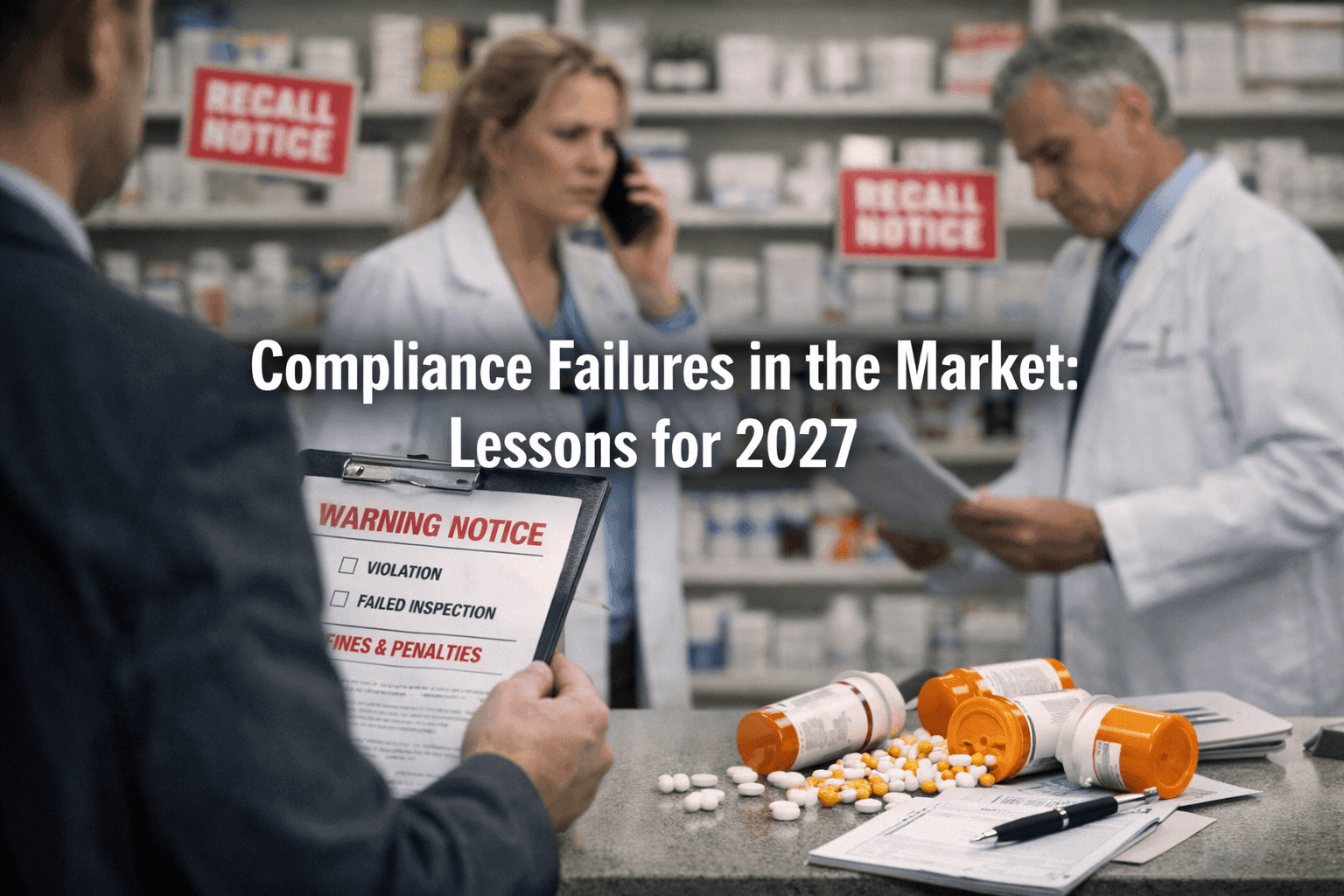
Compliance Failures in the Market: Lessons for 2027
What common mistakes continue surfacing despite years of regulatory awareness? The patterns prove remarkably consistent, suggesting that education alone doesn’t prevent recurrence—structured systems do.
Frequent Compliance Failures Documented
Market surveillance by NPRA regularly identifies:
Expired notifications where products continue circulating despite lapsed status
Overstated whitening claims promising results that exceed permitted language
Banned ingredient usage including hydroquinone, tretinoin, and potent steroids
Inconsistent label declarations where packaging doesn’t match approved submissions
These failures span the spectrum from administrative oversight to deliberate non-compliance. Either way, the consequences for pharmacies prove similar.
Financial Implications Beyond Fines
Product seizure removes inventory investment immediately. Recall costs multiply that impact through logistics, communication, and replacement expenses. A single compliance failure affecting a popular product can cost a pharmacy tens of thousands in direct losses—before considering reputational damage.
The reputational impact often exceeds financial penalties significantly. When a pharmacy gains public attention through enforcement notices, when consumers share stories on social media about non-compliant products found on shelves, the trust erosion affects everything else that pharmacy sells. Compliance failures don’t stay contained to the offending product.
A Practical Checklist for Risk Control
A trusted, proven, and reliable checklist for pharmacy distributor Malaysia operations includes:
Quarterly NOT status verification for all active products, not just new arrivals
Ingredient monitoring updates tracking regulatory changes affecting formulations
Supplier documentation renewal tracking ensuring certificates remain current
Enforcement alert monitoring through NPRA communications and industry networks
Learning from market cases—studying what went wrong for others—strengthens future risk control. The pharmacy that reviews compliance failures without defensiveness, that asks “could this happen here” honestly, builds resilience that reactive operations cannot match.
Learn more: Risk Management Frameworks in Healthcare Supply Chains
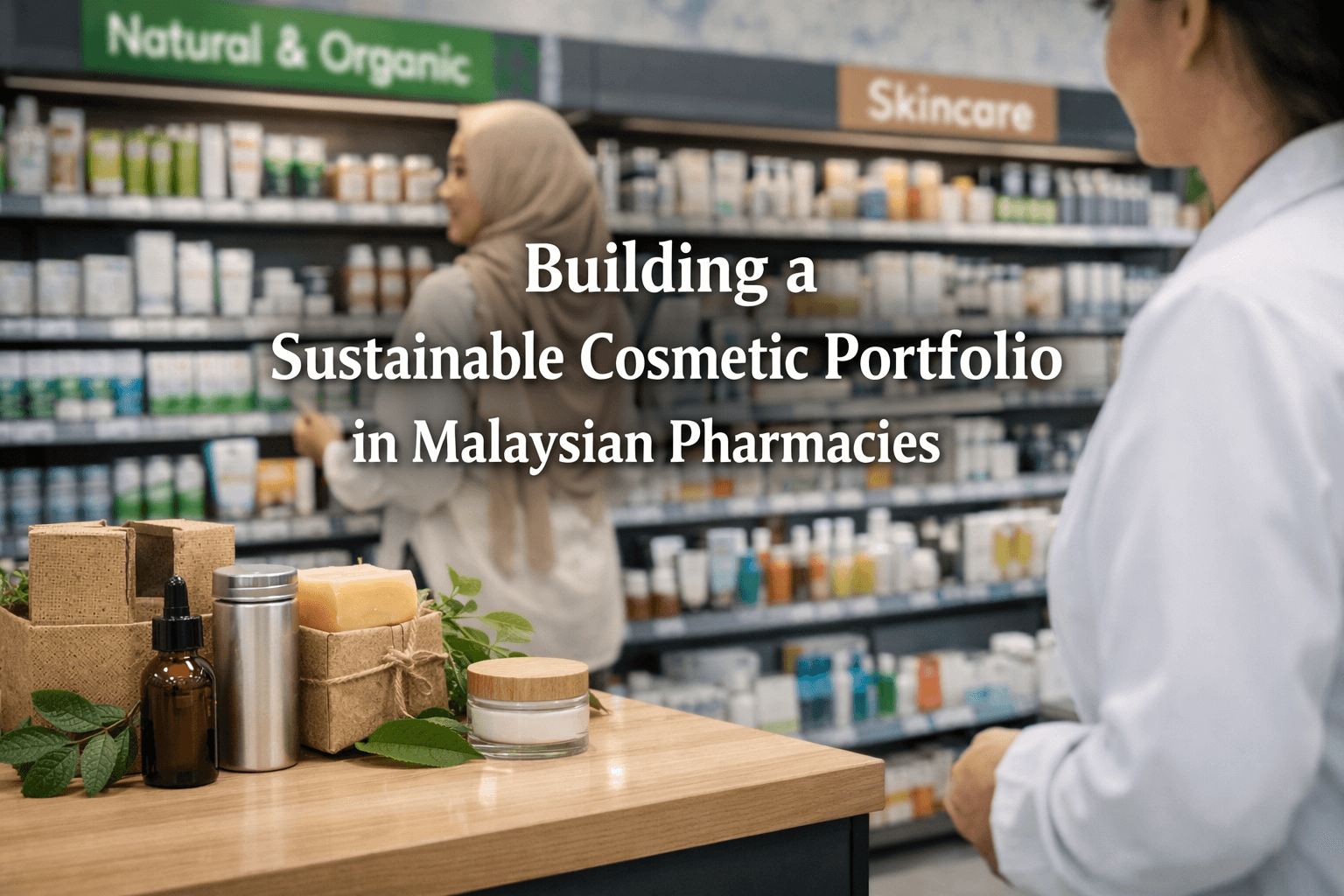
Building a Sustainable Cosmetic Portfolio in Malaysian Pharmacies
How do pharmacies balance the competing demands of growth and regulation? The tension between commercial ambition and compliance caution defines successful operations in 2027’s market.
A sustainable portfolio integrates compliance with commercial planning from the outset. It doesn’t treat regulatory requirements as obstacles to overcome after commercial decisions are made. It builds them into selection criteria from the beginning.
Long-Term Portfolio Planning
Independent distributors assist pharmacies in selecting brands with consistent notification records. They maintain data showing which brands renew promptly, which respond to documentation requests efficiently, which maintain formulation stability without frequent changes requiring resubmission.
This intelligence reduces churn—the costly cycle of introducing products only to remove them months later when compliance questions arise. It improves customer confidence as shoppers learn they can trust the pharmacy’s selection process.
A Penang-based pharmacy group recently reviewed its cosmetic portfolio using distributor-provided compliance data. They discovered that 15% of their SKUs accounted for 80% of documentation queries. Consolidating around reliable suppliers simplified operations while actually expanding compliant offerings.
Data-Driven Decision Making
Monitoring product movement alongside compliance indicators enables effective decision-making that balances commercial and regulatory considerations. A fast-moving product with pending documentation questions requires different handling than a slow mover with perfect compliance records.
The table below illustrates how pharmacies might evaluate portfolio performance across compliance and commercial dimensions:
This framework transforms compliance from abstract concern to actionable intelligence. Pharmacies can allocate attention where risk warrants it while confidently supporting products that meet both commercial and regulatory standards.
Aligning Merchandising & Compliance Strategy
Strategic product placement combined with verified documentation builds a stable, tailored portfolio structure. When merchandisers understand which products have robust compliance backing, they can feature them confidently in promotions. When pharmacists know the documentation status of every product, they answer customer questions authoritatively.
Growth without compliance is short-lived. It builds on foundations that eventually crumble under regulatory scrutiny. Compliance without strategy is inefficient. It maintains standards but misses commercial opportunities. The intersection—where both priorities receive attention—creates sustainable operations.
Learn more: Beauty Retail In 2025: Emerging Trends Shaping The Market
Frequently Asked Questions (FAQ)
Q1: What is KKM, and why is it important for healthcare products in Malaysia?
Answer:
KKM stands for Kementerian Kesihatan Malaysia (Ministry of Health Malaysia). It ensures all healthcare products—including supplements, cosmetics, and medical devices—are safe, effective, and meet national quality standards before they reach consumers.
Q2: Which agencies under KKM regulate product safety and approval?
Answer:
Three main agencies operate under KKM:
NPRA (National Pharmaceutical Regulatory Agency) – regulates medicines, supplements, and cosmetics.
MDA (Medical Device Authority) – oversees medical equipment and devices.
BPFK/NPRA Cosmetic Division – manages cosmetic product notifications and safety assessments.
Q3: What types of products require KKM registration or approval?
Answer:
Products that must be verified by KKM include pharmaceuticals, dietary supplements, traditional herbal remedies, cosmetics, and medical devices. Each category has specific certification requirements such as MAL, NOT, or MDA numbers.
Q4: How can businesses check if a product is registered with KKM?
Answer:
Verification can be done through official KKM platforms:
NPRA QUEST3+ – for drugs, supplements, and traditional medicines.
MDA Search Portal – for medical devices.
NPRA Cosmetic Notification Portal – for cosmetics with NOT numbers.
Q5: What do MAL, NOT, and MDA numbers mean on product labels?
Answer:
MAL Number: Shows registration for medicines, supplements, or herbal products.
NOT Number: Identifies approved cosmetic products.
MDA Number: Confirms a licensed and approved medical device.
Q6: What are the penalties for selling unregistered or fake KKM products?
Answer:
Businesses found selling unregistered products can face heavy fines, product seizures, license suspension, or even permanent closure. Such violations also damage consumer trust and brand reputation.
Q7: How do pharmacy distributors apply KKM checks in their daily work?
Answer:
Distributors verify product codes (MAL, NOT, MDA) using KKM portals before listing or restocking. Many also store screenshots or digital records for audit purposes and integrate verification into daily Standard Operating Procedures (SOPs).
Q8: Why is KKM compliance so important for pharmacies and distributors?
Answer:
Compliance ensures legal operation, customer safety, and brand credibility. It prevents penalties, builds retailer trust, and enhances market access for certified products.
Q9: What steps can companies take to strengthen KKM compliance?
Answer:
Firms should perform monthly audits, train staff to recognize certification labels, use digital tools for record-keeping, and keep updated with NPRA and MDA guidelines to avoid compliance errors.
Q10: How can PriooCare assist with KKM compliance and distribution?
Answer:
PriooCare helps pharmacy distributors manage regulatory audits, documentation, and logistics. Their compliance expertise simplifies KKM verification, minimizes business risk, and ensures all distributed products meet Malaysia’s health regulations.
Contact us today to explore tailored pharmacy distribution solutions and long-term collaboration opportunities that strengthen your market position while maintaining uncompromising compliance standards.