

Does every cosmetic product on a Malaysian pharmacy shelf truly have formal approval from KKM?
This question surfaces almost daily—whether during a routine KKM check, a pharmacist’s product briefing, or a brand onboarding discussion with a pharmacy distributor Malaysia partner. In 2027, cosmetic compliance is no longer a background administrative task. It has become an essential and highly strategic component of operating within Malaysia’s healthcare retail ecosystem.
The Ministry of Health Malaysia (KKM) , through the National Pharmaceutical Regulatory Agency (NPRA) , continues tightening oversight of cosmetic products sold in retail outlets, hospital pharmacies, and even online marketplaces. Retail pharmacy chains in Klang Valley, Johor Bahru, and Penang now conduct more structured internal audits before listing a new skincare SKU. Distributors are also expected to verify documentation more thoroughly than before.
Yet misconceptions persist. Many still assume that every cosmetic must obtain formal “kelulusan KKM” similar to a registered medicine. Others use the phrase “kosmetik lulus KKM” loosely in marketing materials, without understanding the regulatory distinction between approval and notification. These misunderstandings create operational risks—not only for brand owners, but also for distributor pharmacy networks and independent pharmacy distributor partners managing multi-branch supply.
Within the broader context of Pharmacy distribution service in Malaysia, cosmetic compliance affects listing decisions, merchandising execution, recall management, and even brand reputation. A single misclassified acne serum can trigger enforcement queries across multiple outlets. Consider a scenario involving a popular brightening serum sold across 30 Guardian and Watsons outlets in Penang. If the product’s claims subtly suggest “acne treatment” without proper classification, the distributor faces potential stock seizures and reputational damage—not because the product is unsafe, but because documentation doesn’t match marketing language.
This article clarifies the regulatory framework, addresses common myths, and explains what compliance truly means for pharmacy wholesale distributors and retail pharmacists. By the end, readers will understand the practical difference between notification and approval—and why that clarity is a trusted foundation for sustainable distribution.
Understanding the Regulatory Framework: KKM, NPRA, and the Cosmetic Notification System
Who actually governs cosmetics in Malaysia—and what does “approval” legally mean?
Cosmetic regulation in Malaysia falls under KKM, with NPRA functioning as the operational regulatory authority. However, cosmetics do not undergo the same approval pathway as pharmaceutical drugs. Instead of product registration (MAL number), cosmetics are subject to a notification system under the Control of Drugs and Cosmetics Regulations 1984.
This distinction is critical—yet frequently misunderstood.
Approval vs Registration vs Notification
| Classification | Requirement | Applicable Products |
|---|---|---|
| MAL Registration | Formal approval | Pharmaceutical products, certain health supplements |
| Notification (NOT number) | Pre-market submission | All cosmetics before market placement |
| “Approval” (informal) | Marketing term only | No legal standing for cosmetics |
When stakeholders conduct a kkm check through NPRA’s public database (www.npra.gov.my), they are verifying whether a cosmetic has been properly notified—not whether it received formal drug-style kkm approval. The database search reveals NOT numbers, not MAL numbers, for cosmetic entries.
Under the cosmetic notification framework:
The Responsible Person (RP) submits product information via NPRA’s Cosmetic Notification system
Safety assessment documentation must be maintained and available for inspection
The product must comply with ASEAN Cosmetic Directive standards
NPRA does not pre-approve the product before sale; it relies on post-market surveillance
This model shifts accountability toward the brand owner and distributor. For a pharmacy distributor Malaysia partner, verifying notification status before onboarding becomes a reliable and structured compliance step. The distributor essentially becomes the first line of defense against non-compliant products entering the retail supply chain.
2027 Updates Impacting Distribution Networks
In 2027, digital enforcement systems have become more integrated. NPRA databases are easier to cross-reference, and public reporting channels allow consumers to verify kkm produk information more efficiently through mobile applications and QR code scanning at point-of-sale.
For distributor pharmacy networks, documentation flow must now include:
Copy of notification acknowledgment from NPRA
Product Information File (PIF) availability confirmation
Artwork verification for compliant labeling (including Malay language requirements)
Marketing claim review to ensure therapeutic language is absent
This structured framework ensures cosmetic listings remain compliant without delaying time-to-market. For pharmacy wholesale distributors managing hundreds of SKUs across multiple categories—from halal skincare lines to imported Korean beauty products—adopting an expert review mechanism is no longer optional; it is operational necessity. Distributors who implemented automated compliance tracking in early 2026 are now processing new listings 40% faster than competitors still using manual verification.
Learn more: KKM Product Verification: What You Need to Know | ASEAN Cosmetic Directive
Cosmetic vs Medicine vs Health Supplement: Why Classification Is Critical
What happens when a cosmetic crosses the line into therapeutic claims?
Product classification is one of the most misunderstood aspects of Malaysia’s regulatory environment. A brightening serum that claims to “reduce acne bacteria” could inadvertently fall into medicinal territory. Similarly, a topical pain relief cream marketed aggressively might require drug registration instead of cosmetic notification.
Classification depends on multiple factors:
Product claims (what the product says it does)
Ingredients (active compounds present)
Intended use (as indicated on packaging)
Consumer perception (how buyers interpret the product)
Real-World Classification Examples
| Product Type | Claim Example | Correct Classification |
|---|---|---|
| Moisturizer | “Hydrates and nourishes dry skin” | Cosmetic |
| Acne cream | “Treats pimples and prevents breakouts” | Medicine (MAL required) |
| Collagen drink | “Anti-aging, reduces wrinkles” | Health supplement |
| Anti-dandruff shampoo | “Eliminates dandruff-causing fungus” | Medicine (if medicinal claim) |
Misclassification creates real risk. Pharmacy wholesale distributors may face enforcement queries if products marketed as cosmetic actually require MAL registration. In 2026, enforcement actions highlighted cases where acne treatments were incorrectly positioned as cosmetic despite containing medicinal-level active ingredients like salicylic acid above 2% or benzoyl peroxide.
From a listing strategy perspective, classification influences:
Documentation requirements (NOT vs MAL)
Shelf placement (cosmetic section vs pharmacy counter)
Staff training (how pharmacists explain the product)
Advertising language (what can be promoted on social media)
Brand managers must adopt a strategic and proven review process before submitting materials to distributors. Meanwhile, pharmacists must assess whether claims align with labeling—because when a customer asks “Is this ubat jerawat (acne medicine)?” the answer determines both safety and compliance.
An independent pharmacy distributor operating across Selangor outlets shared that misclassification once forced a product withdrawal mid-promotion campaign. The financial and reputational impact was significant, even though the product was not unsafe—it was simply incorrectly categorized. The distributor lost RM 150,000 in sunk marketing costs and faced six months of heightened NPRA scrutiny.
Understanding classification is therefore not just regulatory—it is essential for protecting supply chain continuity and brand equity.
Do All Cosmetics Need KKM Approval? The Direct Answer Explained Clearly
So, do all cosmetics require formal KKM approval?
The short answer: No.
Cosmetics in Malaysia require notification (NOT number) , not MAL registration. The phrase “kkm approval” is commonly used in marketing, but technically inaccurate for cosmetic products. This distinction matters because it affects how distributors verify compliance and how brands communicate with retailers.
What Cosmetic Compliance Actually Requires
A compliant cosmetic product must:
Be notified to NPRA before sale (obtain NOT number)
Display Responsible Person details on packaging
Avoid prohibited ingredients listed under ASEAN Cosmetic Directive
Avoid therapeutic claims that imply medicinal benefits
Maintain Product Information File for inspector access
How to Verify Cosmetic Compliance
When conducting cara check produk lulus kkm, stakeholders should follow this effective verification workflow:
Visit NPRA’s official website (www.npra.gov.my)
Navigate to the cosmetic product search portal
Search by product name or NOT number
Confirm the Responsible Person matches the brand owner
Verify notification validity (active, not expired or canceled)
Cross-check product claims against registered information
This process supports a clear and reliable compliance verification pathway. For Pharmacy distribution service in Malaysia, this distinction influences onboarding SOPs. Distributors should never assume that a product claiming “kosmetik lulus KKM” has undergone pre-market approval. Instead, verification must confirm notification status and documentation integrity.
In short, not all cosmetics need formal approval—but all must comply with notification requirements. That nuance matters. A pharmacy distributor Malaysia partner who understands this difference can educate retail clients, reducing returns and compliance rejections at the store level.
Learn more: NPRA cosmetic check online
| Guidelines for Control of Cosmetic Products in Malaysia
Role of Pharmacy Distribution Service in Malaysia in Ensuring Cosmetic Compliance
Who carries responsibility when a cosmetic is found non-compliant in retail?
The answer is shared.
Within Pharmacy distribution service in Malaysia, compliance responsibility spans three key stakeholders:
Brand owner (product formulation, claims, initial notification)
Distributor (verification, documentation, supply chain oversight)
Retail pharmacist (final check, patient consultation, reporting)
Distributor Due Diligence Framework
An independent pharmacy distributor must verify before listing:
Notification acknowledgment from NPRA (NOT number)
Label compliance (Malay language, ingredient listing, RP details)
Marketing materials (no therapeutic claims)
Safety documentation availability (PIF accessible)
Before listing, a distributor pharmacy should adopt a verification SOP that includes NPRA database screening. Efficient documentation review reduces downstream risk. One pharmacy wholesaler in Johor Bahru implemented a three-tier compliance check: initial screening by sales team, technical review by regulatory officer, and final audit by external consultant. This tailored approach reduced non-compliant listings by 72% within one year.
Multi-Perspective Analysis
Pharmacist Perspective:
Concerned about patient safety and liability exposure. When a customer purchases a cosmetic that later triggers an adverse reaction, the pharmacist faces questions—even if the product was properly notified. Pharmacists increasingly demand compliance certificates before stocking new brands.
Distributor Perspective:
Focused on supply chain continuity and recall management. A single non-compliant SKU can trigger investigations across all products distributed. Distributors now maintain compliance scorecards for brand partners, delisting those with repeated documentation failures.
Brand Manager Perspective:
Balancing speed-to-market with regulatory clarity. The pressure to launch quickly often conflicts with thorough compliance review. Smart brand managers build regulatory buffers into launch timelines—typically 4-6 weeks for complete notification and documentation assembly.
When each party plays its proven role properly, compliance becomes a trusted and tailored ecosystem rather than a reactive enforcement scramble. A pharmacy distributor Malaysia partner who facilitates this collaboration becomes invaluable to retail networks.
Learn more: State of Beauty 2025: Solving a shifting growth puzzle
Building a Distributor-Level Compliance Framework
A robust distributor framework should include these essential components:
Centralized compliance database with SKU-level documentation
Quarterly internal audits of listed products
Training programs for sales and merchandising teams
Escalation protocol for suspicious claims or missing documentation
Supplier compliance scorecards tracking brand partner performance
Merchandisers should also visually inspect packaging during outlet visits. A missing NOT number should trigger immediate reporting through mobile apps connected to the distributor’s compliance team. This real-time feedback loop prevents minor oversights from becoming major enforcement issues.
Comparative Compliance Metrics
| Compliance Indicator | Basic Distributor | Advanced Distributor |
|---|---|---|
| Documentation verification | Upon listing only | Pre-listing + quarterly re-check |
| Staff training | Annual session | Quarterly + e-learning modules |
| Audit frequency | Ad-hoc | Scheduled + random spot checks |
| Supplier monitoring | Reactive | Proactive scorecards |
| Recall readiness | Manual process | Automated notification system |
These proactive steps create an efficient and sustainable compliance environment. Distributors who invest in such frameworks report fewer enforcement queries and stronger relationships with retail pharmacy chains. In an increasingly competitive market, compliance capability has become a differentiator—not just a cost center.
The reality of Malaysia’s pharmacy ecosystem in 2027 is clear: cosmetic compliance is no longer optional background work. It is a strategic function that protects businesses, builds trusted partnerships, and ensures that every product reaching pharmacy shelves meets the standards Malaysian consumers deserve. Distributors who embrace this reality position themselves as reliable partners in a rapidly evolving healthcare retail landscape.
Common Misconceptions That Create Compliance Gaps in Pharmacies
Is a product safe simply because it’s widely sold online?
No. And yet, this assumption continues to trip up even experienced pharmacy operators.
The reality is that e-commerce availability creates a dangerous illusion of compliance. When a skincare product appears across hundreds of Shopee or Lazada listings, both pharmacists and consumers naturally assume some authority has vetted it. This gap between perception and reality is where compliance risk quietly accumulates.
Common myths circulating throughout Malaysia’s pharmacy ecosystem include:
“If Shopee sells it, it must be approved.” — Marketplace platforms do not verify NPRA notification before allowing listings.
“Imported products are automatically compliant.” — International brands, especially from Korea, Japan, and Europe, often assume ASEAN harmonization means automatic Malaysia market access. It does not.
“KKM approved” equals MAL registered. — As discussed earlier, this phrase is frequently misused in marketing materials, leading retailers to believe a product underwent drug-level scrutiny when it merely received notification acknowledgment.
Parallel imports complicate matters further. A notified product might have packaging variants that differ from NPRA-submitted artwork—different batch codes, altered ingredient lists, or missing Malay language text. Retail pharmacists, already managing hundreds of SKUs, may unknowingly stock these non-compliant versions because the barcode scans correctly in their inventory system.
Consider a scenario involving a popular Japanese sunscreen distributed through parallel channels in Johor Bahru. The product carried a valid NOT number, but the packaging artwork omitted the mandatory Malay language ingredients listing. During a routine KKM inspection at three pharmacy outlets, all units were confiscated—not because the product was dangerous, but because labeling didn’t match regulatory requirements. The legitimate distributor lost RM 80,000 in stock value overnight.
Such gaps are critical to address. Expert-level verification reduces preventable enforcement exposure. For pharmacy distributor Malaysia partners, this means moving beyond basic NOT number checks and implementing artwork verification protocols that catch labeling discrepancies before products reach shelves.
From a brand manager perspective, the lesson is clear: compliance isn’t a one-time submission; it’s a continuous monitoring obligation. Products must remain compliant throughout their shelf life, not just at launch. And for pharmacists, the reliable approach is simple: when in doubt, verify directly through NPRA’s database—don’t rely on packaging claims or online marketplace presence.
Operational Implementation: How Pharmacy Wholesale Distributors Manage Risk
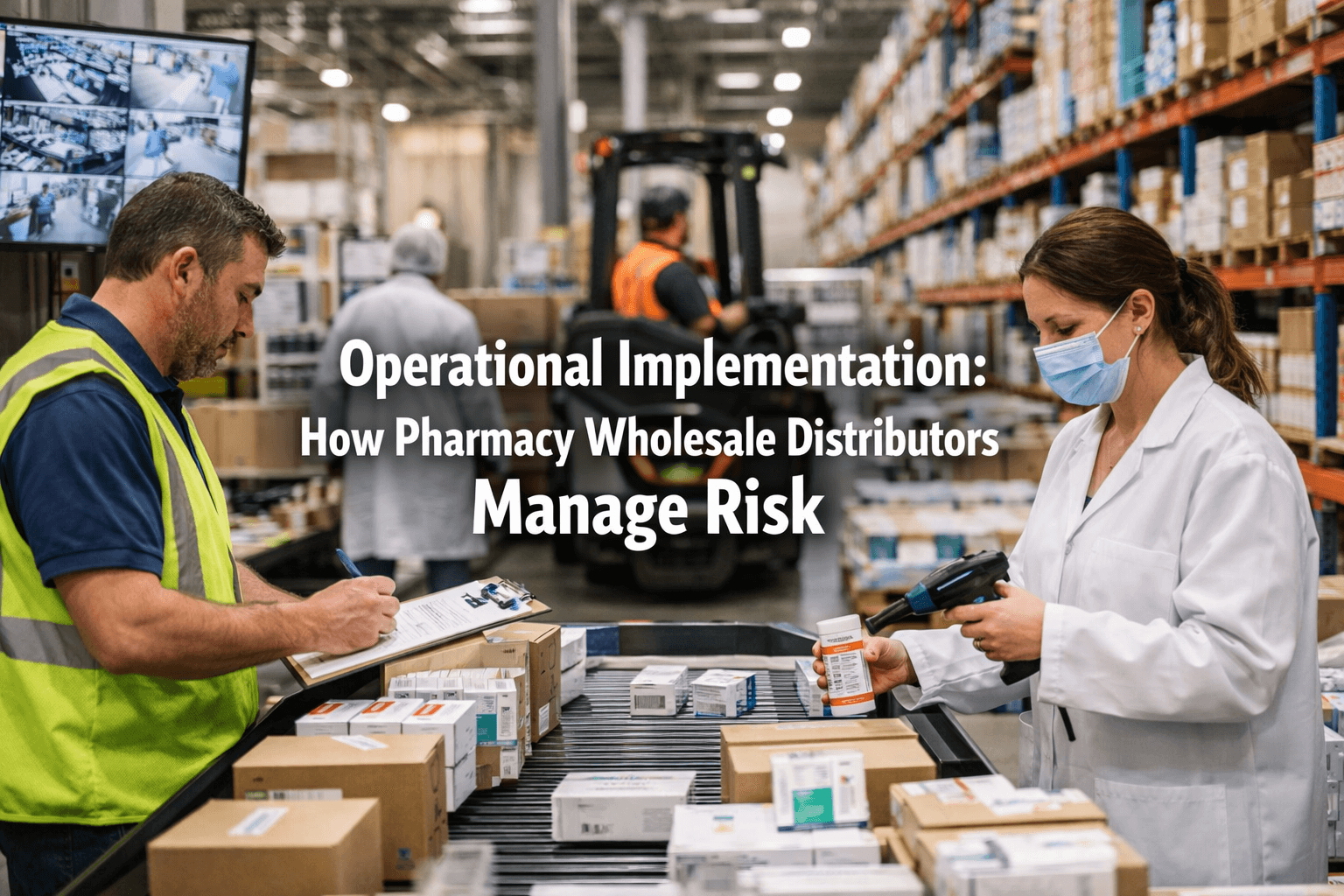
What does compliance look like at the operational level—beyond policy documents and regulatory briefings?
Effective distributors adopt a systematic compliance checklist that integrates into daily workflows. This isn’t about creating bureaucratic hurdles; it’s about building efficient processes that catch errors before they become enforcement issues.
Internal Compliance Checklist for Distributors
| Checkpoint | Verification Method | Responsible Party |
|---|---|---|
| NOT number verification | NPRA database search | Regulatory officer |
| Label cross-check | Physical vs submitted artwork comparison | Compliance team |
| Claims review | Marketing material audit | Pharmacist reviewer |
| Storage condition validation | Site inspection for temperature/humidity | Warehouse supervisor |
| PIF confirmation | Documentation availability check | Quality assurance |
| Batch code tracking | System entry for traceability | Inventory team |
Merchandisers serve as frontline compliance eyes. During routine store visits, they’re positioned to spot issues that centralized teams might miss—a missing NOT number on packaging, a translated claim that crosses into therapeutic territory, or a promotional display making unauthorized statements.
One pharmacy wholesale distributor in Penang trained their merchandising team to use a mobile checklist during outlet visits. Merchandisers photograph product packaging, upload to a shared drive, and flag any discrepancies within 24 hours. This proven approach identified 23 non-compliant SKUs across 45 outlets in six months—products that would otherwise have remained on shelves until an inspection or customer complaint triggered discovery.
Multi-Perspective Accountability Framework
Below is a structured comparative table showing how responsibilities distribute across the supply chain:
| Function | Brand Owner | Pharmacy Distributor Malaysia | Retail Pharmacist |
|---|---|---|---|
| Product Notification | Submit to NPRA, maintain PIF | Verify validity before listing | Confirm label presence at receipt |
| Label Compliance | Prepare compliant artwork | Cross-check before distribution | Inspect during stocking |
| Adverse Event Reporting | Maintain records, investigate | Coordinate recall if needed | Report incidents to NPRA |
| Marketing Claims | Ensure compliance in all materials | Review POSM materials before distribution | Prevent misleading advice at counter |
| Batch Traceability | Maintain production records | Track distribution batches | Record which batches sold |
| Storage Integrity | Provide storage guidelines | Monitor warehouse conditions | Maintain pharmacy storage standards |
This accountability structure prevents confusion about who does what. When a compliance gap emerges—say, a product found without proper labeling—the responsible party is immediately identifiable. No finger-pointing, no delayed corrective action.
For brand managers, this framework highlights why choosing the right pharmacy distributor Malaysia partner matters. A distributor with robust operational processes becomes an extension of your compliance team, not just a logistics provider. And for pharmacists, knowing which distributor stands behind each product builds trusted relationships that benefit patient care.
Legal and Commercial Consequences of Non-Compliance (2027 Risk Landscape)
What happens when compliance fails—not in theory, but in actual enforcement reality?
The consequences cascade far beyond a single warning letter.
Immediate Enforcement Actions
Enforcement letters requiring explanation within specified timeframe
Product seizure from warehouse and retail locations
Public recall announcements damaging brand reputation
Financial penalties that vary based on violation severity
Stop-sale orders affecting entire product categories
Beyond fines, reputational harm can disrupt distributor pharmacy relationships permanently. Pharmacies maintain internal blacklists; brands linked with compliance controversies find themselves excluded from future listings, regardless of corrective actions taken.
Consider the case of a halal-certified skincare line distributed across 60 pharmacies in Klang Valley. A competitor filed a complaint alleging therapeutic claims on packaging—specifically, the phrase “menghilangkan parut” (removes scars) appeared on a box. NPRA investigation revealed the product had only cosmetic notification, not MAL registration for scar treatment claims. The result: RM 50,000 in fines, all stock recalled, and three major pharmacy chains delisting the brand permanently. Two years later, the brand still struggles to regain pharmacy access.
From a pharmacist perspective, the calculus is simple. Stocking a non-compliant product risks:
Personal liability during inspections
Reputational damage with regular customers
Wasted time managing returns and customer complaints
Strained relationships with compliant distributors
Responsible stakeholders understand that regulatory adherence is not optional. It is strategic risk management. The cost of compliance—documentation review, staff training, verification processes—is negligible compared to the cost of a single enforcement action.
Enforcement Trends Shaping 2027
Recent enforcement cases emphasize several priorities:
Post-market surveillance focus: NPRA actively samples products from retail shelves for ingredient testing, not just reviewing documentation
Ingredient testing: Products containing hydroquinone, tretinoin, or other prohibited cosmetic ingredients face immediate action
Digital monitoring: Social media claims and e-commerce listings are systematically reviewed
Cross-border coordination: ASEAN member states share enforcement data; a product flagged in Singapore triggers scrutiny in Malaysia
Brands with weak documentation often struggle during audits. They scramble to locate PIFs, batch records, or safety assessments that should be readily available. Distributors with incomplete onboarding SOPs face operational pressure when NPRA requests documentation across multiple SKUs simultaneously.
The lesson is clear: proactive compliance is more sustainable than reactive damage control. Brands and distributors who invest in robust systems sleep easier—and face fewer enforcement surprises.
Learn more: KKM Produk Tidak Berdaftar: Bahaya dan Risiko | Global surveillance and monitoring system for substandard and falsified medical products
Building a Structured Compliance SOP for Cosmetic Distribution in Malaysia
How can distributors systemize compliance instead of relying on ad-hoc checks that miss critical gaps?
The answer lies in a structured Standard Operating Procedure that integrates compliance into every stage of the distribution lifecycle—not as an afterthought, but as a core operational function.
Step-by-Step Compliance SOP
Pre-listing documentation review
Collect NOT acknowledgment, PIF location, artwork files
Verify Responsible Person details match brand ownership
Confirm ingredient list against ASEAN prohibited substances
Digital kkm check verification
Search NPRA database for each product variant
Screenshot and save verification results
Flag any discrepancies between database and submitted documents
Claims audit
Review all marketing materials (packaging, social media, POSM)
Flag therapeutic language for removal
Consult pharmacist reviewer for borderline claims
Internal approval sign-off
Compliance officer documents clearance
Sales team notified of approved SKUs
Listing date scheduled with retail partners
Periodic post-listing audit
Quarterly review of active SKUs
Random sampling of physical products from outlets
Updated NPRA database check for any status changes
Merchandiser training integration
Train field teams on compliance red flags
Provide mobile reporting tools for real-time issues
Reward identification of non-compliant products
Training merchandising teams ensures labeling consistency across outlets. A merchandiser spotting a product with incorrect packaging can trigger an immediate investigation—potentially preventing widespread distribution of a non-compliant batch.
One pharmacy distributor Malaysia operating across East Malaysia implemented this SOP in early 2026. Within 18 months, compliance-related stock write-offs dropped by 65%, and the distributor became the preferred partner for three international brands entering the Sarawak market. The efficient system became a competitive advantage, not just a risk-management tool.
Alignment Across Functions
Alignment between operations, compliance officer, and marketing teams creates an efficient, proactive workflow. When marketing understands regulatory boundaries, they develop campaigns that don’t require last-minute rewrites. When operations integrates compliance checks into warehouse receiving, non-compliant products never reach the shipping dock. When compliance officers communicate clearly, everyone understands their role in maintaining standards.
This isn’t about creating a police state within the organization. It’s about building a culture where compliance is everyone’s responsibility—because everyone benefits when products stay on shelves and enforcement stays away.
Aligning Cosmetic Distribution with Malaysia’s Regulatory Standards
Not all cosmetics require MAL registration. But every cosmetic must be notified properly before entering the Malaysian market, and that notification must remain valid throughout the product’s commercial life.
Clarity reduces risk. When everyone in the supply chain—brand owners, distributors, pharmacists—understands the difference between notification and approval, between compliant and non-compliant, between safe assumptions and dangerous shortcuts—the entire ecosystem functions more smoothly.
Structured verification protects brand integrity. Products that reach shelves with proper documentation, accurate labeling, and appropriate claims build trusted relationships with pharmacists and consumers alike. Products that cut corners eventually face enforcement, and the damage rarely stays contained.
Within Pharmacy distribution service in Malaysia, compliance is not merely paperwork—it is a trusted and sustainable business foundation. Distributors who treat compliance as strategic advantage, not administrative burden, position themselves for long-term success in an increasingly regulated market.
Frequently Asked Questions (FAQ)
Q1: What is KKM, and why is it important for healthcare products in Malaysia?
Answer:
KKM stands for Kementerian Kesihatan Malaysia (Ministry of Health Malaysia). It ensures all healthcare products—including supplements, cosmetics, and medical devices—are safe, effective, and meet national quality standards before they reach consumers.
Q2: Which agencies under KKM regulate product safety and approval?
Answer:
Three main agencies operate under KKM:
NPRA (National Pharmaceutical Regulatory Agency) – regulates medicines, supplements, and cosmetics.
MDA (Medical Device Authority) – oversees medical equipment and devices.
BPFK/NPRA Cosmetic Division – manages cosmetic product notifications and safety assessments.
Q3: What types of products require KKM registration or approval?
Answer:
Products that must be verified by KKM include pharmaceuticals, dietary supplements, traditional herbal remedies, cosmetics, and medical devices. Each category has specific certification requirements such as MAL, NOT, or MDA numbers.
Q4: How can businesses check if a product is registered with KKM?
Answer:
Verification can be done through official KKM platforms:
NPRA QUEST3+ – for drugs, supplements, and traditional medicines.
MDA Search Portal – for medical devices.
NPRA Cosmetic Notification Portal – for cosmetics with NOT numbers.
Q5: What do MAL, NOT, and MDA numbers mean on product labels?
Answer:
MAL Number: Shows registration for medicines, supplements, or herbal products.
NOT Number: Identifies approved cosmetic products.
MDA Number: Confirms a licensed and approved medical device.
Q6: What are the penalties for selling unregistered or fake KKM products?
Answer:
Businesses found selling unregistered products can face heavy fines, product seizures, license suspension, or even permanent closure. Such violations also damage consumer trust and brand reputation.
Q7: How do pharmacy distributors apply KKM checks in their daily work?
Answer:
Distributors verify product codes (MAL, NOT, MDA) using KKM portals before listing or restocking. Many also store screenshots or digital records for audit purposes and integrate verification into daily Standard Operating Procedures (SOPs).
Q8: Why is KKM compliance so important for pharmacies and distributors?
Answer:
Compliance ensures legal operation, customer safety, and brand credibility. It prevents penalties, builds retailer trust, and enhances market access for certified products.
Q9: What steps can companies take to strengthen KKM compliance?
Answer:
Firms should perform monthly audits, train staff to recognize certification labels, use digital tools for record-keeping, and keep updated with NPRA and MDA guidelines to avoid compliance errors.
Q10: How can PriooCare assist with KKM compliance and distribution?
Answer:
PriooCare helps pharmacy distributors manage regulatory audits, documentation, and logistics. Their compliance expertise simplifies KKM verification, minimizes business risk, and ensures all distributed products meet Malaysia’s health regulations.
If your brand is preparing to enter or expand within Malaysia’s pharmacy network, structured compliance is your first priority—not an afterthought to address after marketing materials are printed and distribution agreements are signed.
We support pharmacy distribution solutions, merchandising verification, and strategic regulatory alignment tailored specifically for the Malaysian healthcare landscape. Our team understands the nuances of NPRA requirements, the expectations of retail pharmacy chains, and the operational realities of distribution across Peninsular and East Malaysia.
How can we assist you today? 😊
Just let us know—we’re here to help!