

The pharmaceutical industry in Malaysia operates within a tightly controlled ecosystem, one where the guardians of public health have established rigorous barriers to entry. This isn’t just bureaucracy; it is the bedrock of consumer trust and product safety. At the very heart of this system lies the indispensable need for regulatory compliance, specifically obtaining the necessary approval before any health-related product can legally touch Malaysian shelves.
The twin pillars upholding this framework are the Ministry of Health Malaysia (KKM) and the National Pharmaceutical Regulatory Agency (NPRA) . They function as the ultimate gatekeepers, a role that is both strategic and vital. Their primary mandate is clear: to conduct a meticulous sieve, ensuring that only compliant products that meet stringent health, safety, and efficacy standards filter through to the public. For any entity involved in the supply chain, from a multinational corporation to a local pharmacy distributor in Malaysia, navigating the requirements set by KKM and NPRA is not optional; it is the fundamental cost of doing business. The consequences of oversight are severe, ranging from product seizures to legal action, underscoring the essential nature of this regulatory knowledge.
The most visible manifestation of this compliance are the ‘MAL’ and ‘NOT’ numbers. These alphanumeric codes are far more than bureaucratic stamps; they are a product’s passport to the Malaysian market. They signify that a pharmaceutical product, health supplement, or cosmetic has successfully navigated the regulatory checks and emerged with a clean bill of health. For pharmacy distributors, these numbers are the primary tools for ensuring inventory legitimacy. This section aims to demystify these critical identifiers, clarifying their distinct meanings and supreme importance. By doing so, it equips distributors with the knowledge to navigate the regulatory landscape with confidence, ensuring their operations remain both profitable and impeccably compliant.
The Role of KKM and NPRA in Pharmaceutical Distribution in Malaysia
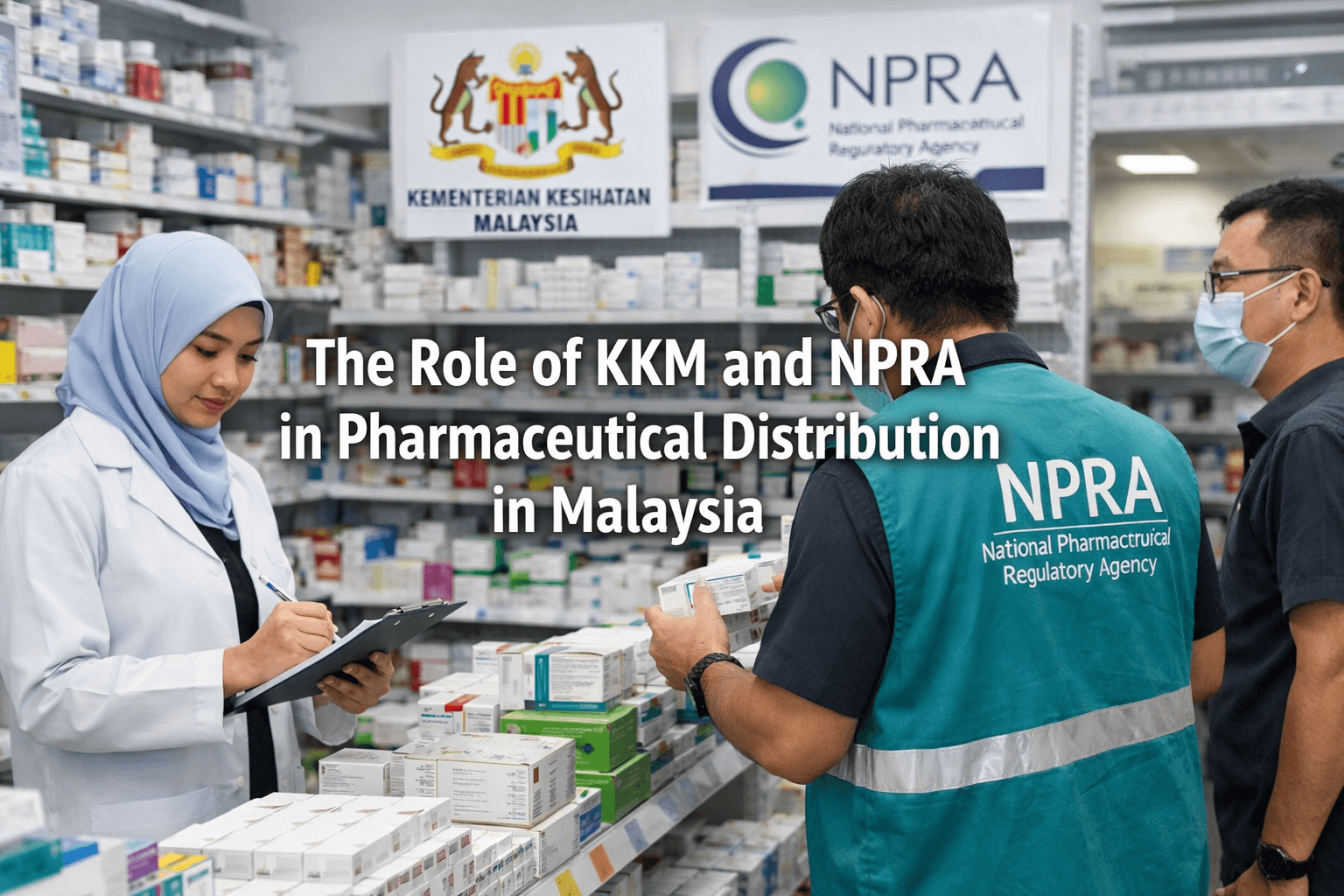
What specific role do KKM and NPRA play in regulating the pharmaceutical industry, and why should a distributor in Johor Bahru or Kota Kinabalu care? The answer lies in understanding them as the central nervous system of the nation’s healthcare logistics. KKM, as the overarching ministry, sets the national health policy, while NPRA acts as its expert technical arm, the diligent watchdog that performs the day-to-day scrutiny of products. Together, they form the cornerstone of pharmaceutical regulations, creating a standardized framework that protects consumers from Penang to Sarawak.
Their authority extends to all KKM products, a broad category that encompasses everything from prescription-only medicines to over-the-counter painkillers, traditional remedies, and cosmetic items like sunscreens and lotions. The primary objective is a unified standard of safety. For instance, a pharmacy wholesale distributor operating out of a large hub in Selangor must ensure that every carton of medicine leaving their warehouse bears a valid registration number. Similarly, smaller, independent pharmacy distributors serving niche communities rely on the NPRA’s database to verify that the new herbal supplement they wish to stock hasn’t been flagged for containing undeclared, harmful ingredients. Without the NPRA’s oversight, the market would be vulnerable to counterfeit or substandard products, eroding the very trusted relationship between healthcare providers and patients.
Furthermore, the NPRA doesn’t just set rules; it provides the tools for enforcement. The introduction of digital verification systems, such as the NPRA QUEST system, has been a game-changer. This online portal allows anyone—from a customs officer inspecting an import shipment to a pharmacist in a rural clinic—to instantly verify the registration status of a product. For distributors, this means compliance checks can be integrated into their standard operating procedures, making the process faster and more reliable. Staying updated with the evolving regulatory landscape is crucial. With discussions around tighter controls and potential new requirements anticipated in the near future, distributors who proactively use these digital tools will be best positioned to adapt quickly and maintain uninterrupted operations.
Learn more: Pharmaceutical Product Registration in Malaysia: An Overview | How to Ensure Regulatory Compliance for Pharmacy Distribution in Malaysia
What is the ‘MAL’ Number?
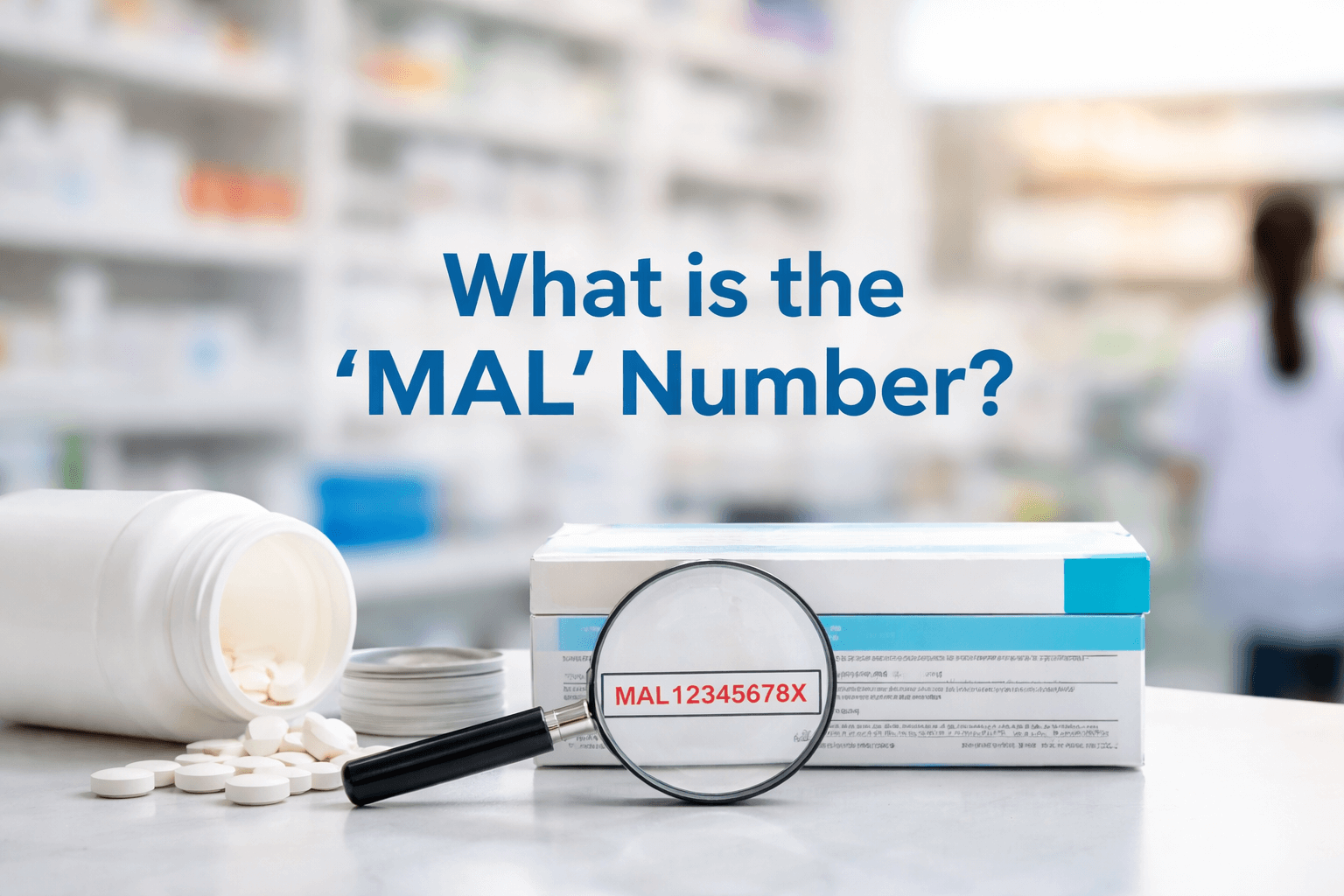
Why is the ‘MAL’ number important for distributors and consumers alike? In the simplest terms, the ‘MAL’ number is a product’s unique identifier and certification of approval for pharmaceutical products in Malaysia. Think of it as the “license to heal” for medicines. For any drug seeking to be distributed within the country—whether it’s a common antibiotic, a critical cardiovascular medication, or a widely used cough syrup—obtaining this number is a legal requirement. It is the definitive proof that the product has been thoroughly vetted and meets KKM’s uncompromising standards for safety, efficacy, and quality.
For pharmacy distributors, understanding how to obtain and, more importantly, verify the ‘MAL’ number is a core operational competency. The journey to acquire this number is intentionally comprehensive. It involves a multi-stage evaluation by NPRA, where products must undergo rigorous scrutiny. This includes the submission of extensive documentation: detailed results from clinical trials, certified manufacturing details adhering to Good Manufacturing Practices (GMP), and exhaustive safety data on pharmacovigilance and potential side effects. For example, before a new formulation of paracetamol syrup can be stocked by pharmacy distributors in Malaysia, it must first prove its stability, purity, and bioavailability to the NPRA’s satisfaction. Only then is it granted a valid ‘MAL’ number, confirming it meets the nation’s pharmacovigilance standards and is safe for public consumption.
The NPRA QUEST system becomes an indispensable tool here. A savvy distributor will use it not just for a one-time check, but as an ongoing audit mechanism. They can cross-reference their entire inventory against the NPRA database, ensuring that no product has had its registration suspended or cancelled without their knowledge. This proactive approach is a hallmark of a strategic business partner. It protects the distributor from financial losses associated with recalled goods and, more importantly, safeguards their reputation by guaranteeing that only compliant medicines reach the pharmacy counter.
Learn more: Ultimate Guide to KKM Approval in Malaysia | Digital Transformation in Pharmaceutical Distribution
What is the ‘NOT’ Number?
How does the ‘NOT’ number differ from the ‘MAL’ number, and why does this distinction matter for a distributor’s bottom line? While the ‘MAL’ number is reserved for therapeutic pharmaceutical products, the ‘NOT’ number applies to a different, yet equally significant, category: health supplements and cosmetics. This includes the booming market of vitamins, minerals, probiotics, traditional tonics, and beauty products like serums and moisturizers. These items, while still firmly under KKM’s regulatory umbrella, are not classified as drugs and therefore do not undergo the same level of rigorous, clinical trial-based testing as ‘MAL’ products.
For distributor pharmacies looking to diversify their offerings and cater to the health-conscious consumer, understanding the ‘NOT’ number is crucial for maintaining compliance and capturing market share. When a customer picks up a bottle of Vitamin C or a jar of collagen powder, the ‘NOT’ number on the packaging signals that the product has still met KKM’s regulatory standards, just under a different, more appropriate framework. The evaluation focuses more on ingredient safety, manufacturing quality, and truthful labeling, rather than therapeutic efficacy. For instance, a new brand of probiotic drinks must demonstrate that its ingredients are safe and that its label accurately reflects the bacterial strains and colony counts, but it doesn’t need to prove that the drink cures a specific disease.
A common misconception among new distributors is that ‘NOT’ products are “less regulated” or easier to approve. This isn’t accurate. The scrutiny is simply different, but no less important. The NPRA meticulously checks for prohibited substances, verifies labeling standards, and ensures that health claims are not misleading. A distributor importing a range of Korean beauty products, for example, must ensure each item has a valid ‘NOT’ number and that the ingredient list on the product matches the one approved by NPRA. Failure to do so can lead to the entire shipment being held at customs. Recognizing the difference between ‘MAL’ and ‘NOT’ is therefore not just an academic exercise; it is a practical necessity for effective inventory management and risk mitigation, ensuring that no unregistered or non-compliant products enter the supply chain.
Learn more: Cara Semak Produk Lulus KKM Secara Online | International Harmonization of Pharmaceutical Standards
KKM Product Registration Process: A Step-by-Step Guide for Distributors
How can pharmacy distributors effectively navigate the product registration process with KKM and NPRA to avoid costly delays? The pathway to obtaining ‘MAL’ and ‘NOT’ numbers is a structured journey that demands meticulous preparation. It’s a process designed to be thorough, and for distributors, understanding each phase is the key to a smooth, efficient approval. Rushing this process or submitting incomplete paperwork is the primary cause of setbacks.
The journey begins long before the application is submitted. It requires a strategic internal review. The following framework outlines the essential steps:
-
Step 1: Product Classification & Pre-Submission Assessment
-
Action: Determine the product’s exact category. Is it a medicine with a therapeutic claim (requiring a ‘MAL’ number) or a health supplement/cosmetic (requiring a ‘NOT’ number)? Misclassification is a common and avoidable error.
-
Perspective: A brand manager might see a new energy drink as a lifestyle product, but if it contains vitamins above a certain threshold or makes claims about reducing fatigue, NPRA may classify it as a health supplement requiring a ‘NOT’ number.
-
-
Step 2: Comprehensive Document Compilation & Submission
-
Action: Gather all required documents. For ‘MAL’ products, this includes clinical study reports, product dossiers, and manufacturing details certified by the country of origin. For ‘NOT’ products, this involves ingredients lists, certificates of analysis, and manufacturing licenses.
-
Perspective: From a distributor’s point of view, this is often the most time-consuming phase. They must act as a bridge, efficiently gathering complex technical data from international suppliers and ensuring it meets NPRA’s specific format requirements.
-
-
Step 3: NPRA Evaluation and Technical Review
-
Action: The NPRA conducts a scientific and technical assessment. They review the data for safety, quality, and, for ‘MAL’ products, efficacy. This may involve multiple rounds of queries where NPRA asks for clarifications or additional data.
-
Perspective: A regulatory affairs expert within the distributor’s team (or a hired consultant) is invaluable here. Their role is to interpret NPRA’s queries, communicate them effectively to the manufacturer, and ensure the responses are accurate and submitted promptly to keep the review process moving.
-
-
Step 4: Approval, Listing, and Post-Market Surveillance
-
Action: Upon successful evaluation, the product is granted its ‘MAL’ or ‘NOT’ number and listed on the NPRA’s public register. The product can now be legally imported and distributed. However, compliance doesn’t end here. The distributor must engage in post-market surveillance, reporting any adverse events or quality issues to NPRA.
-
Perspective: For the pharmacist at the retail level, seeing the ‘MAL’ or ‘NOT’ number on the packaging is the final confirmation that they are dispensing a reliable and approved product, completing the circle of trust from regulator to end-user.
-
The registration timeline is not fixed; it can vary significantly depending on the product’s complexity and the completeness of the initial submission. A straightforward health supplement with well-documented ingredients might be approved relatively quickly, while a new chemical entity drug could take much longer. Pharmacy distributors must factor these potential delays into their business plans. The most proven strategy for minimizing delays is simple yet critical: ensure every document is complete, accurate, and submitted in the correct format from the very beginning. This proactive preparation is the hallmark of a distributor committed to excellence and compliance.
| Compliance Aspect | Role of In-House Team/Distributor | Role of 3rd-Party Logistics/Contract Merchandisers |
|---|---|---|
| Regulatory Knowledge | Deep, specialized understanding of KKM/NPRA rules for their specific product portfolio. | General awareness of compliance rules, focused on storage and handling, not product-specific registration. |
| Documentation | Manages the core registration dossiers, clinical data, and communications with NPRA. | Handles shipping documents, customs declarations, and proof of delivery, ensuring they align with registered products. |
| Product Verification | Conducts regular audits using NPRA QUEST to verify ‘MAL’/’NOT’ status of their entire catalog. | Relies on the distributor’s verified product list to ensure only compliant items enter the warehouse and are delivered to stores. |
| In-Store Compliance | Responsible for training staff, ensuring correct pricing, and managing expired or recalled products. | Ensures accurate shelf-stocking, facing, and rotation of stock (FEFO) based on distributor guidelines, but not therapeutic advice. |
| Post-Market Surveillance | Primary point of contact for reporting adverse events or quality complaints to NPRA. | Reports any physical damage or storage irregularities to the distributor but does not handle pharmacovigilance. |
The Impact of ‘MAL’ and ‘NOT’ Registration on Pharmacy Distribution
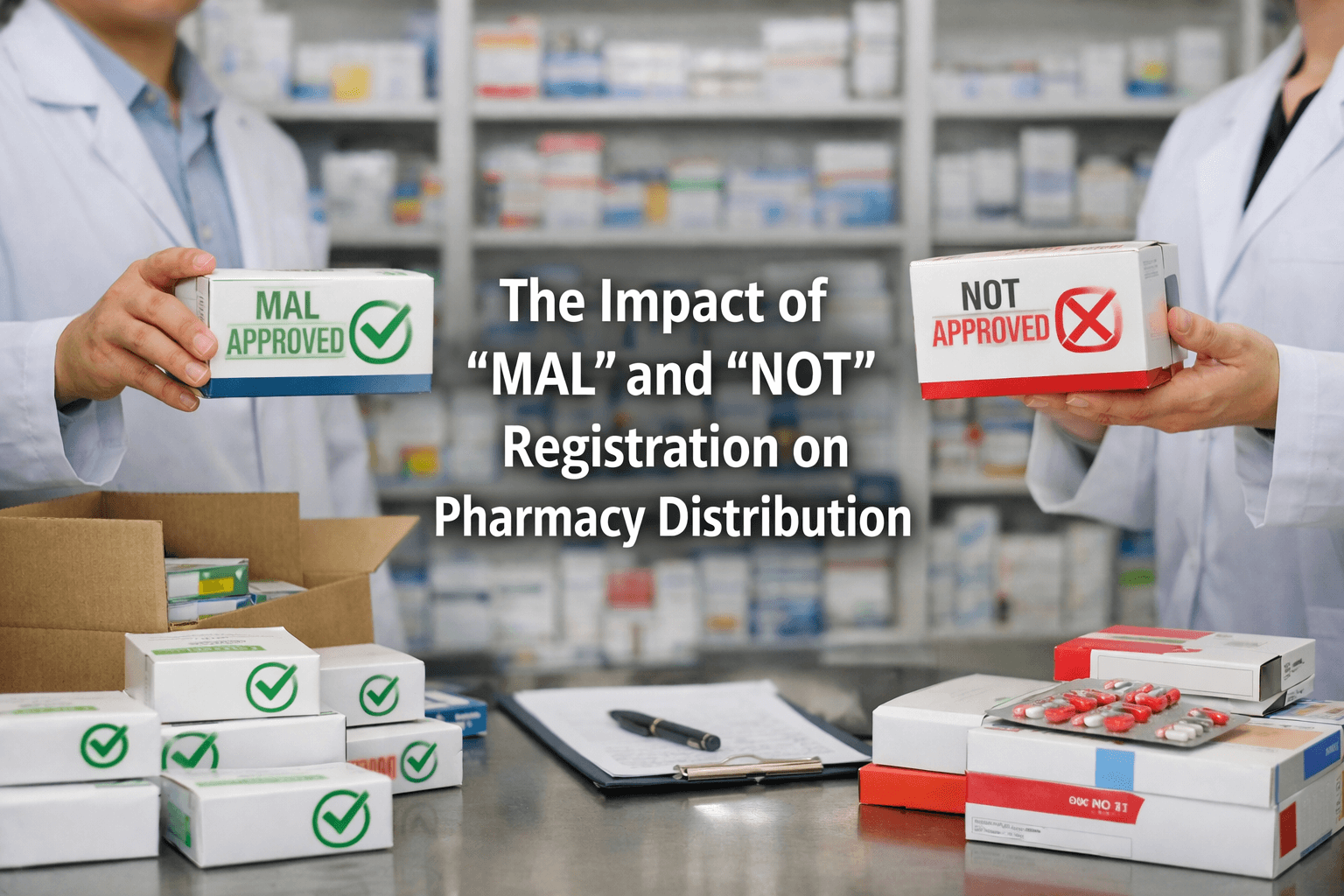
Why is obtaining the ‘MAL’ and ‘NOT’ registration numbers crucial for distributors? The answer goes far beyond simple administrative compliance. These registration numbers serve as the foundational gateway for any pharmaceutical or health-related product hoping to reach Malaysian consumers through legitimate channels. Both the ‘MAL’ and ‘NOT’ registration numbers significantly affect the way pharmacy distributors in Malaysia operate, shaping everything from supply chain dynamics to brand equity.
These numbers are essential for ensuring that products meet health safety standards and are approved for sale in Malaysia. Without these numbers, products cannot legally be distributed, and distributor pharmacies could face regulatory penalties that range from hefty fines to criminal charges. For example, distributing unregistered medicines can lead to severe health risks and consumer trust issues. In contrast, registered products provide confidence to both consumers and healthcare professionals, ensuring that public health is not compromised.
Consider the real-world implications for a moment. A pharmacy distributor in Johor Bahru receives a shipment of popular pain relief gel from a regional manufacturer. The product bears a ‘MAL’ number, meaning it has undergone rigorous evaluation by the National Pharmaceutical Regulatory Agency (NPRA). The distributor can confidently stock this item across 50 retail outlets, knowing that pharmacists will recommend it without hesitation. Now, imagine the alternative scenario—a shipment of unregistered herbal capsules seized by Pharmacy Enforcement Division officers. The financial loss is immediate, but the reputational damage lingers far longer. Suppliers begin questioning whether this distributor exercises proper due diligence.
Data from NPRA’s 2023 annual report indicates that enforcement actions against unregistered health products resulted in seizures worth over RM 8.5 million. That is not merely a statistic; it represents real businesses facing disruption. For pharmacy distributors, the ‘MAL’ and ‘NOT’ registration framework is not red tape—it is a trusted mechanism that separates reliable supply chains from dangerous gray markets. When a product carries these numbers, it signals to pharmacists that every batch meets strict quality control parameters. This assurance is invaluable in a market where consumers are increasingly educated about product safety.
The practical implication for distributors is clear: registration compliance must become part of standard operating procedure, not an afterthought. Leading distributors now assign dedicated regulatory affairs personnel to monitor registration status across their entire portfolio. They understand that a single unregistered SKU can trigger investigations that disrupt warehouse operations for weeks. Moreover, major pharmacy chains in Malaysia, such as Guardian and Watsons, have implemented internal audits requiring proof of valid registration before any new product reaches their shelves. Without the ‘MAL’ or ‘NOT’ number, distribution channels simply close.
From a brand manager’s perspective, working with distributors who prioritize registration compliance offers peace of mind. It means their carefully developed products enter the market through ethical channels, maintaining the brand’s premium positioning. For pharmacists, registered products mean fewer liability concerns when making recommendations. And for patients, it means the medicine they purchase has been verified by the very agency tasked with protecting them.
Learn more: Consumer Behavior in Pharmaceutical Purchasing
The Future of KKM and NPRA Product Registration in Malaysia (2027 and Beyond)
What regulatory changes are expected for KKM product registrations in the coming years? The landscape is shifting beneath our feet, and distributors who anticipate these changes will find themselves positioned for strategic advantage. As Malaysia moves toward 2027, the regulatory framework for product registration is expected to evolve, reflecting changes in the global pharmaceutical landscape while addressing local healthcare priorities.
NPRA’s increasing reliance on digital verification tools, such as the QUEST system, will make it easier for pharmacy distributors to verify product registration in real-time, leading to more efficient compliance processes. Currently, many distributors still rely on spreadsheets and manual checks—a method prone to human error and delays. By 2027, integration between distributor inventory systems and NPRA’s database could become standard practice. Imagine a warehouse management system that automatically flags products approaching registration expiry, preventing non-compliant stock from ever reaching pharmacy shelves. This is not science fiction; it is the logical next step in regulatory technology.
Regulatory shifts may also focus on international harmonization of product standards, meaning that products with international certifications could streamline the registration process in Malaysia. For distributors, this represents both opportunity and challenge. Products already approved by stringent agencies like Australia’s TGA or Singapore’s HSA may receive faster NPRA approvals, accelerating time-to-market. However, this also means increased competition as global brands find it easier to enter the Malaysian market. Local distributors must therefore differentiate through service excellence, not just product availability.
A Malaysia-specific scenario worth considering involves the rise of direct-to-pharmacy (DTP) models. As regulatory processes become more transparent through systems like QUEST, some brand owners may consider bypassing traditional distributors altogether. They might reason that if registration verification is simple, why not handle distribution internally? Yet this overlooks the essential role distributors play in last-mile delivery, credit management, and relationship building with hundreds of independent pharmacies across Peninsular and East Malaysia. The efficient distributor of 2027 will be one who combines regulatory expertise with operational excellence, making themselves indispensable partners rather than mere middlemen.
Another dimension is the potential expansion of product categories requiring registration. Currently, certain traditional products occupy gray areas, but consumer safety concerns may drive NPRA to broaden its scope. Distributors handling complementary medicines or traditional remedies should monitor these developments closely. A proactive approach—registering products even when not strictly mandatory—builds goodwill with regulators and positions the distributor as a reliable industry player.
From the perspective of a community pharmacist in Penang, these changes translate to fewer worries about counterfeit or substandard products entering their supply chain. They can focus on patient care rather than playing detective with product packaging. For the KKM itself, a more harmonized and digital registration ecosystem means better data on what products are actually circulating in Malaysian communities, enabling faster responses to public health concerns.
Comparative Table: ‘MAL’ vs ‘NOT’ Registration Requirements
Understanding the distinction between ‘MAL’ and ‘NOT’ registration is fundamental for anyone involved in pharmaceutical distribution or health supplement logistics in Malaysia. While both numbers indicate NPRA approval, they apply to different product categories with varying regulatory pathways. The table below provides a clear comparison to assist distributors, pharmacists, and brand owners in navigating these requirements effectively.
| Product Category | Required Registration | Regulatory Process Overview | Compliance Timeline | Examples of Common Products |
|---|---|---|---|---|
| Pharmaceuticals | MAL | Clinical testing, documentation, manufacturing details | 3–6 months | Cough Syrup, Antibiotics, Prescription Medications |
| Health Supplements | NOT | Labeling, ingredient verification, safety compliance | 2–3 months | Vitamin C, Probiotics, Herbal Capsules |
| Cosmetics | NOT | Safety checks, ingredient transparency, labeling | 2–3 months | Skincare Creams, Shampoos, Deodorants |
This comparison reveals important operational considerations. The longer timeline for MAL registration reflects the more stringent requirements for pharmaceutical products, which directly impact patient health. Distributors handling prescription medications must plan inventory accordingly, accounting for potential delays in new product launches. In contrast, NOT-registered products move faster through the system, allowing for quicker market entry—but they are also subject to frequent post-market surveillance.
From a compliance perspective, the table highlights why systematic tracking of registration types matters. A distributor servicing 500 pharmacies cannot afford to confuse a MAL-registered antibiotic with a NOT-registered supplement. Such mistakes could lead to improper storage conditions or incorrect advice to pharmacy staff. Leading distributors now categorize inventory by registration type within their warehouse management systems, applying different handling protocols accordingly. For instance, MAL products may require temperature-controlled storage and batch traceability, while NOT products might focus more on expiry management and promotional rotation.
Brand managers should note that registration type influences marketing strategies. MAL-registered products typically target healthcare professionals through detailing and medical conferences. NOT-registered products, however, lend themselves to consumer advertising and in-store promotions. Understanding these distinctions early in the product lifecycle ensures that regulatory strategy aligns with commercial objectives.
Frequently Asked Questions (FAQ)
Q1: How do I verify a product’s KKM status?
Answer: To verify a product’s KKM status, visit the NPRA (National Pharmaceutical Regulatory Agency) QUEST system. Enter the product details, such as the product name or registration number, to check if it is registered with the Ministry of Health Malaysia (KKM).
Q2: What is a KKM approved product?
Answer: A KKM-approved product is one that has been registered with the Ministry of Health Malaysia (KKM) and meets the required safety, efficacy, and quality standards for distribution in Malaysia.
Q3: How do I check my NPRA product registration?
Answer: To check NPRA product registration, use the NPRA QUEST system online. You can search for products by their registration number or other details to confirm their approval and registration status.
Q4: What is NPRA Malaysia?
Answer: NPRA (National Pharmaceutical Regulatory Agency) Malaysia is a government agency under the Ministry of Health responsible for regulating and overseeing the safety, efficacy, and quality of pharmaceutical products, medical devices, and cosmetics in Malaysia.
Q5: How do I spot a fake KKM label?
Answer: A fake KKM label may have inconsistencies such as incorrect registration numbers, poorly printed labels, or missing regulatory symbols. Always verify the product’s status through the official NPRA QUEST system for authenticity.
Q6: How to check if the product is original?
Answer: To check if a product is original, verify the product through the official NPRA QUEST system. Look for authentic branding, registration numbers, and purchase from authorized distributors or licensed pharmacies.
Q7: How can I check if a product is legit?
Answer: To ensure a product is legit, verify its registration status via the NPRA QUEST system, check the product label for authenticity, and purchase it from licensed retailers or distributors.
Q8: How to check if medicine is original or not?
Answer: To check if medicine is original, verify the product through the NPRA QUEST system. Be sure to check the label for correct details and avoid purchasing from unverified sources.
Q9: How to check if the product is safe?
Answer: Check the product’s registration with the NPRA QUEST system to confirm its approval. Also, ensure it meets all required safety standards, such as ingredient lists and manufacturing details on the label.
Q10: How to check if a product is registered?
Answer: To check if a product is registered, use the NPRA QUEST system. Enter the product’s registration number or other details to verify if it is approved by the Ministry of Health Malaysia (KKM).
For brand owners and pharmacy operators seeking a distribution partner who understands the nuances of MAL and NOT registration, who monitors KKM updates diligently, and who treats regulatory compliance as a core competency, the path forward is clear. The right partnership ensures that your products reach the market through channels that protect both your brand’s reputation and the consumers who depend on your offerings.
How can we assist you today? 😊
Just let us know—we’re here to help!