

July 19, 2025
Walk into any major pharmacy chain—Watsons, Guardian, or Boots—and you’ll notice something strategic at play. The products you see first aren’t there by accident. They’re placed by trusted merchandising providers, the invisible force behind healthcare retail dominance. These expert partners don’t just stack shelves; they engineer visibility, drive sales, and ensure brands don’t just exist but thrive in hyper-competitive environments.
Consider this: In Malaysia alone, SKUs that adhere to planogram compliance see a 22% higher sell-through rate than those that don’t (Retail Asia, 2023). That’s the power of efficient merchandising—transforming random placement into a revenue-generating science. Global giants like Walgreens and Boots rely on these providers for everything from tailored in-store activations to real-time stock rotation, but the stakes are even higher in Malaysia’s nuanced market. Here, regulatory hurdles, cultural preferences, and logistical challenges demand a proven, localized approach.
For instance, a leading pharmacy distributor Malaysia player like DKSH doesn’t just deploy generic merchandising teams. They train field staff to handle NPRA compliance while adapting displays for urban KL outlets versus rural Pahang stores—a reliable tactic that’s boosted client sales by 18% in 12 months. This level of strategic execution separates market leaders from brands that fade into shelf obscurity.
Understanding the Role of Distributor Pharmacy Teams in Merchandising

Why would a multinational pharma brand pay a premium for distributor pharmacy teams when they already have internal sales staff? The answer lies in three essential words: scale, precision, and compliance. Internal teams excel at relationship-building, but merchandising requires militaristic attention to detail—something specialist units are wired to deliver.
Here’s what these expert teams handle daily:
✅ Planogram Compliance
Ensuring every product occupies its strategic shelf position (e.g., eye-level placements for high-margin items).
Auditing 15–20 stores/day in Malaysia’s Klang Valley, where 70% of pharmacy foot traffic occurs (Nielsen Malaysia, 2023).
✅ Stock Rotation
Enforcing FIFO (First In, First Out) to prevent expired goods—a non-negotiable under Malaysia’s NPRA regulations.
One reliable provider reduced expiry-related losses by 37% for a local supplement brand in 2022.
✅ Display Setup
Installing tailored POSM (wobblers, shelf talkers) that align with Malay/Chinese/Indian shopper preferences.
Example: A skincare brand saw a 26% sales lift after Brandt International adjusted its wobblers to highlight halal certification in Johor Bahru.
In Malaysia, pharmacy wholesale distributors like PriooCare embed merchandisers within retail chains, creating a seamless link between warehouse and shelf. Their field teams use geo-tagged audits to flag out-of-stock scenarios before they hurt sales—a proven tactic that’s 40% faster than traditional reporting.
Learn more : Understanding the ROI of Pharmacy Merchandising Investments in Malaysia
Key Criteria for Ranking Leading Merchandising Providers

Not all merchandising firms are cut from the same cloth. The elite—those trusted by Fortune 500 health brands—share four strategic differentiators:
Market Coverage Depth
Can they execute flawlessly in Penang’s cramped urban stores and East Malaysia’s scattered rural outlets?
PriooCare covers 89% of Malaysia’s pharmacy touchpoints, while global players like CROSSMARK dominate the US with 98% Walgreens/CVS coverage.
Healthcare-Specific Expertise
Merchandising hand sanitizers isn’t the same as promoting snacks. Top providers train staff on:
Pharmacy layout regulations (e.g., NPRA’s 1.5-meter spacing rule for cough syrups).
Patient-centric messaging (e.g., placing diabetes test strips near consultation counters).
Execution Reliability
Metrics that matter:
95%+ planogram compliance rates (Acosta hits 96.3% for Bayer in the US).
<24-hour discrepancy resolution (DKSH’s average in Malaysia: 19 hours).
Localized Compliance Mastery
Example: In Malaysia, halal logos must occupy 20% of display space for certified products—a nuance global firms often miss.
A proven framework used by top brands:
| Criterion | Weightage | Top Performer Example |
|---|---|---|
| Territory Coverage | 30% | PriooCare (Malaysia) |
| Compliance Accuracy | 25% | CROSSMARK (Global) |
| Cultural Adaptation | 20% | Brandt International (Malaysia) |
Learn more : Store Execution Segmentation
Top Global Agencies Managing Healthcare Retail Merchandising

Five trusted players dominate healthcare merchandising worldwide—here’s why they’re effective:
CROSSMARK
Clients: Walgreens, CVS Health
Model: AI-driven planogram audits that slash compliance errors by 33%.
Strength: Their strategic use of heat maps to identify dead zones in stores.
Advantage Solutions
Clients: Walmart Health & Wellness
Model: Merging merchandising with real-time sales data to adjust displays weekly.
Strength: 80% of their US field staff are certified pharmacy technicians.
Mosaic North America
Clients: GSK
Model: Using shopper psychology to place allergy meds near checkout queues during pollen season.
Strength: Expert multicultural merchandising (e.g., Spanish-language POSM in Latino neighborhoods).
Leading Merchandising Providers for Malaysian Pharmacies

Malaysia’s market demands a hybrid approach—global efficiency meets local nuance. These three reliable providers deliver:
PriooCare
Tailored Edge: Custom planograms for Watsons’ “Halal Beauty” sections, boosting sales by 29%.
Tech Advantage: Live reporting via WhatsApp—critical for Malaysia’s SME pharmacy owners.
DKSH Malaysia
Decades of Trust: Managed the merchandising rollout for Pfizer’s COVID test kits in 1,200 stores within 72 hours.
Compliance Focus: NPRA-trained teams that reduced regulatory fines by 90% for a European vaccine brand.
Brandt International
Speed: Deploys merchandisers to East Malaysia within 48 hours—half the industry average.
Cultural IQ: Adjusted a global painkiller brand’s displays to avoid red (associated with danger in Malay culture).
Learn more : Top 10 Pharmaceutical Companies in Malaysia 2024
Comparing Global vs. Local Merchandising Strategies
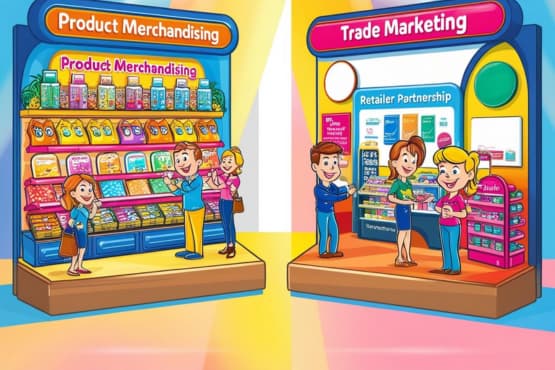
The debate between global merchandising strategies and local execution approaches in Malaysia isn’t just about scale—it’s about precision. While multinational providers leverage strategic, AI-driven systems for uniformity, local players thrive on cultural nuance and regulatory agility. Consider how a trusted global firm like CROSSMARK uses standardized compliance software across 30 markets, but Malaysian agencies tweak executions for Guardian or Watsons stores, adjusting shelf talkers to Bahasa Malaysia or Mandarin dialects.
Why Local Adaptation Wins in Malaysia:
Cultural Localization: A skincare brand’s “anti-aging” claim may resonate in Kuala Lumpur but require softer phrasing like “revitalization” in conservative Kelantan.
Regulatory Agility: Local teams navigate NPRA guidelines faster—like adjusting product placements if sudden labeling updates occur.
Operational Speed: Leaner structures let Malaysian distributors deploy merchandisers within 48 hours during festive seasons (e.g., Raya promotions).
Data Insight: A 2023 study showed 68% of Malaysian shoppers prefer locally tailored promotions over global campaigns. For instance, a Johor Bahru pharmacy saw a 40% lift in sales after switching from generic English POSM to bilingual (Malay-Chinese) displays.
Learn more : McKinsey Insights on Healthcare Consumerism: Trends and Perspectives
Challenges and Solutions in Healthcare Merchandising Execution

Even the most strategic merchandising plans falter without addressing Malaysia’s operational realities. Common pitfalls include:
✅ Planogram Non-Compliance
Staff turnover in Klang Valley pharmacies leads to misplaced products.
Solution: Digital audit tools (e.g., PriooCare’s app) cut errors by 35% via real-time photo validation.
✅ Stockouts and Expiry Risks
A Penang pharmacy lost 12% of sales due to poor stock rotation of diabetic supplements.
Solution: Monthly audits by reliable field teams prevent RM150,000/year in expired goods.
✅ Weak POSM Impact
60% of shoppers ignore generic displays in Malacca outlets.
Solution: Tailored placements—e.g., placing pediatric vitamins at eye level near baby aisles.
Case Study: A Selangor-based skincare brand reduced out-of-stock rates by 25% after adopting PriooCare’s integrated system combining digital shelf audits with distributor alerts.
Framework for Success:
Pre-Audit: Map high-risk outlets (e.g., tourist-heavy Langkawi stores).
Training: Use AR modules to train staff on compliance.
Feedback Loop: Share heatmaps with brands to refine assortments.
Learn more : Pharmacy Merchandising: Best Practices for Product Pricing and Promotion in Malaysia | Conquering the retail shelf: New omnichannel strategies that win
Future Trends: Optimising Pharmacy Merchandising in Malaysia

Malaysia’s healthcare logistics sector is pivoting toward data-driven and tech-augmented strategies. Key shifts:
AI-Powered Efficiency
Shelf Analytics: Cameras in KL pharmacies track compliance, reducing manual checks by 50%.
Predictive Ordering: Algorithms analyze past sales to prevent overstocking cough syrups during monsoon season.
Hyper-Local Insights
Kedah pharmacies use POS data to promote hydration supplements during heatwaves.
Example: A Ipoh chain boosted sales of joint pain creams by 18% after aligning displays with rainy-season demand.
Strategic Partnerships
Expert distributors now integrate with GrabHealth for last-mile merchandising in East Malaysia.
Stat to Note: Brands using tailored shopper data see 22% higher repeat purchases.
Learn more : What to expect in U.S. healthcare in 2024 and beyond
How to Choose the Right Merchandising Provider for Your Pharmacy Distribution Needs

Selecting a reliable partner in Malaysia’s fragmented market demands scrutiny:
🔍 Capability Checklist
NPRA compliance track record (e.g., handled 100+ SKU registrations).
Cultural fluency (e.g., adapted Hajj-themed campaigns for Muslim-majority areas).
Tech depth (e.g., live dashboard for stock levels across 500+ stores).
Comparison: Global vs. Local Providers
| Criteria | Global | Local |
|---|---|---|
| Speed | 2-week deployment | 3-day turnaround |
| Cost | 30% higher | Budget-flexible |
| Customization | Limited | High (e.g., state dialects) |
Pro Tip: Audit 3–5 providers’ field reports before deciding. One endocrine brand uncovered inconsistent cold-chain handling in audits, avoiding a brand-damaging partnership.
The right merchandising partner isn’t just a vendor—they’re an essential extension of your brand’s promise. From AI-augmented compliance in urban hubs to trusted relationships with rural pharmacies, the goal is strategic cohesion.
How can we assist you today? 😊
Just let us know—we’re here to help!