
KKM Product Verification: What You Need to Know (2026 Edition)

March 2, 2027
Navigating Malaysia’s pharmacy landscape requires a fundamental grasp of the regulatory architecture, a system where the Ministry of Health Malaysia (KKM) holds supreme authority. Through its National Pharmaceutical Regulatory Agency (NPRA), KKM governs every facet of medicinal and cosmetic product lifecycle, from initial registration and importation to final sale on pharmacy shelves. For any player in the pharmacy distribution network—be it a large-scale pharmacy wholesale distributor or a specialized independent pharmacy distributor—this isn’t just red tape; it’s the very foundation of legal and ethical operation. The core mandate revolves around product verification, categorizing items into distinct classes: Medicinal Product Advertisement and Sale License (MAL) for drugs, Notification of Cosmetic Products (NOT) for cosmetics, and the precarious zone of unregistered products. Why does this verification matter so profoundly? It boils down to public health safeguarding, legal compliance, and brand integrity. Operating without this diligence isn’t an option; it’s a direct threat to business continuity. From the perspective of a pharmacist, stocking verified products is a non-negotiable professional duty that protects patients and upholds the pharmacy’s license. For the distributor, it is the essential barrier against massive fines, product seizures, and severed relationships with retail chains. Meanwhile, the merchandiser on the ground depends on this verification to confidently execute planograms and promotions without risking the store’s compliance status. This interconnected reliance creates a proven ecosystem where KKM’s oversight is the ultimate linchpin, making a trusted and expert understanding of their protocols not just advisable, but strategic for survival and growth.
Product Categories Under KKM: MAL, NOT, and Unregistered Explained
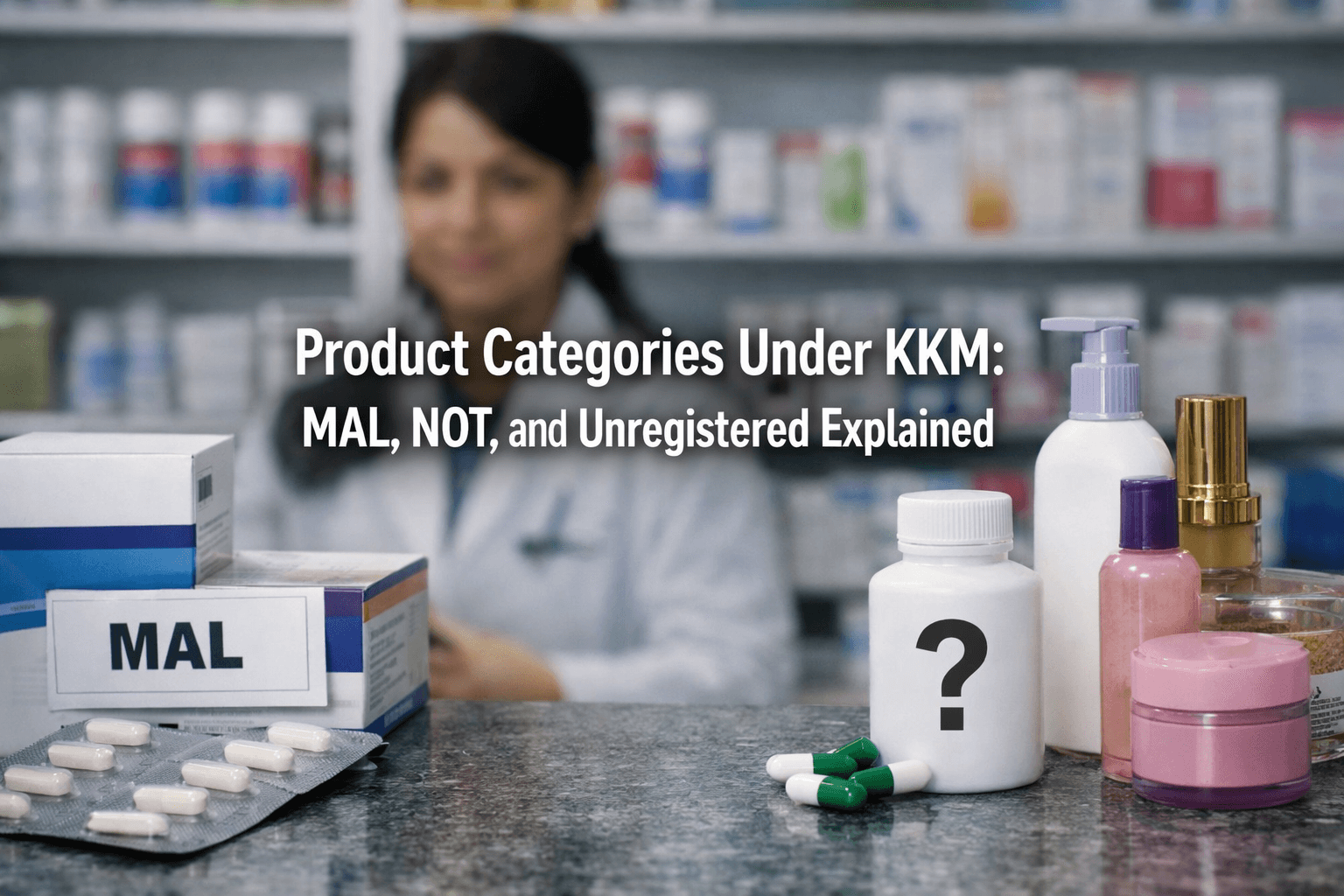
The clarity of KKM’s classification system is what allows for a streamlined and secure supply chain, yet misunderstanding these categories is a common pitfall with serious repercussions. Each classification dictates a product’s journey, positioning, and the risk profile it carries for every stakeholder involved. First, MAL-registered products encompass all prescription and over-the-counter (OTC) medicines. These have undergone the NPRA’s rigorous evaluation for quality, safety, and efficacy. For a pharmacy distributor Malaysia entity, handling MAL products demands the highest level of diligence in storage, documentation, and batch traceability. Their placement on pharmacy shelves is strictly controlled, often behind the counter or in specific therapeutic categories. Second, NOT-registered products cover cosmetics, from skincare to haircare. The process here is notification-based, requiring product information and safety assessment declaration but not pre-market approval. While seemingly simpler, this category still demands full compliance with labeling and ingredient regulations. For merchandising strategy, NOT items often enjoy more flexible front-of-store or promotional end-cap placements, driving impulse purchases in outlets like Guardian or Watsons. Finally, the unregistered product category represents a significant grey area and extreme danger. These are products that require registration but have not obtained it, or items making unauthorized therapeutic claims. A classic Malaysia-related example is the influx of health supplements marketed online with implied medicinal benefits, which then appear in some retail channels. For any pharmacy distribution service in Malaysia, dealing in such items, knowingly or not, invites immediate regulatory action, including product confiscation and prosecution. The strategic implication is clear: an efficient and expert internal verification process to categorize every SKU is not an administrative task—it’s a core business defense mechanism.
Below is a comparative framework outlining the critical differences between these KKM categories:
| Registration Type | Target Product Examples | Verification Method & Authority | Risk Level for Distributors | Typical Pharmacy Shelf Placement |
|---|---|---|---|---|
| MAL (Medicinal) | Prescription drugs, OTC medicines, vaccines | Full pre-market approval by NPRA | HIGH – Stringent storage, full traceability, recall protocols required | Behind counter, in scheduled therapeutic sections, limited access |
| NOT (Cosmetic) | Skincare, makeup, shampoo, toothpaste | Notification via NPRA’s QUEST3+ system | MEDIUM – Must comply with labeling, ingredient restrictions; subject to post-market surveillance | Open shelves, front-of-store, promotional end-caps, high visibility |
| Unregistered | Illicit medicines, supplements with drug claims, non-compliant cosmetics | No valid registration; illegal to market/sell | CRITICAL – Legal prosecution, fines, product seizure, reputational ruin | Should not be on any legitimate pharmacy shelf |
Learn more: Do You Need a License to Sell Supplements in Malaysia? | National Pharmaceutical Regulatory Agency (NPRA) Malaysia
Step-by-Step Guide to Verifying KKM Product Status Online
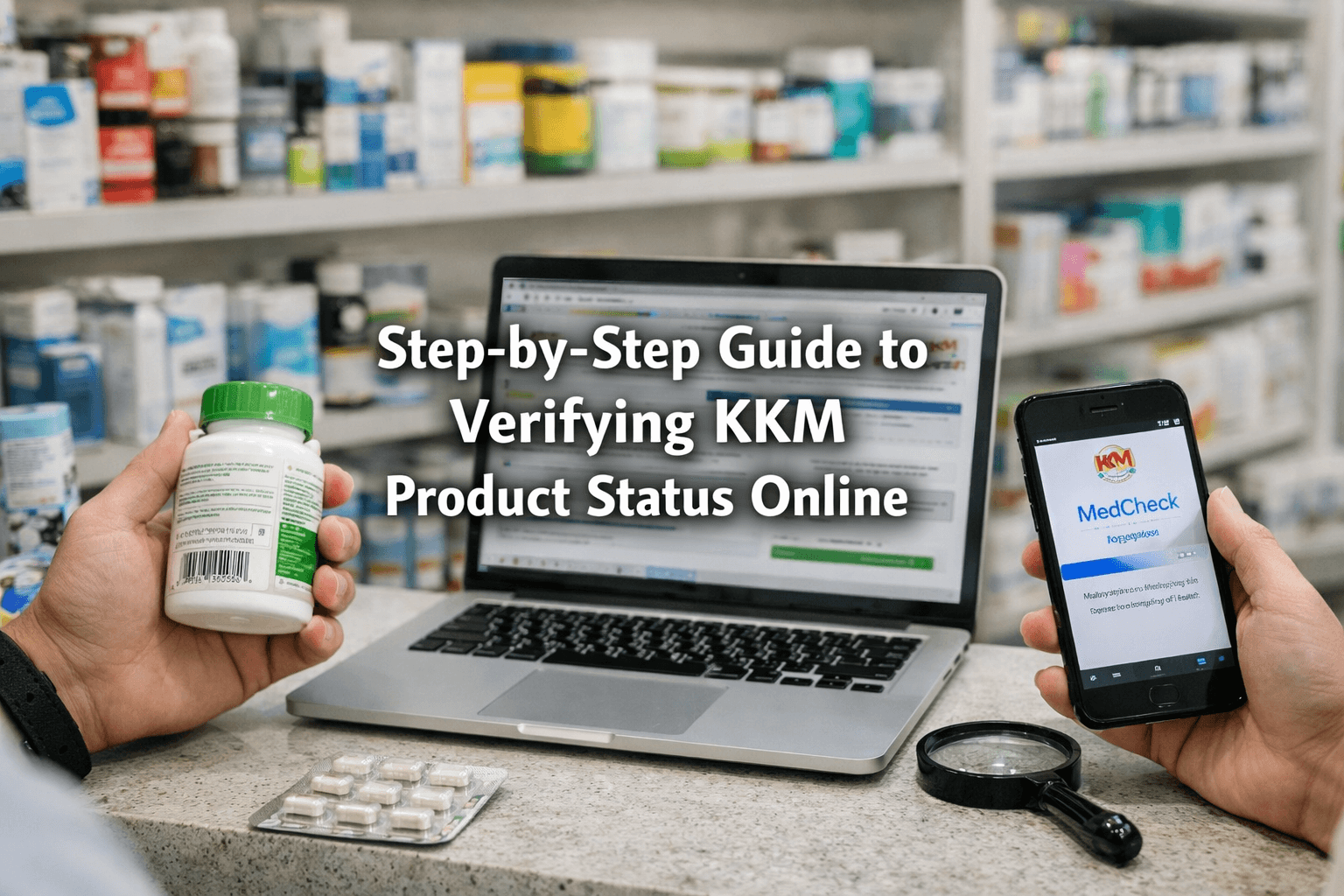
In an industry where assumption can lead to violation, the ability to independently verify a product’s status is a powerful and reliable competency. Malaysia’s NPRA provides publicly accessible digital tools that serve as the definitive source for compliance checks, a resource every brand manager, compliance officer, and merchandiser must utilize habitually. The primary platform is the NPRA Product Search Portal, a straightforward database where one can search by product name, registration number, or company. A more comprehensive system, used by the industry for submissions, is QUEST3+. While its full functionality is for licensed companies, its public-facing elements offer verification insights. Here’s a practical guide: First, navigate to the NPRA website and locate the “Product Search” feature. Second, input key identifiers—the product’s common name or its MAL/NOT number (e.g., MAL20012345XYZ). Third, analyze the search results: a valid, active registration will show details like the product holder’s name, expiry date of registration, and approved labeling. The importance of this accuracy cannot be overstated. For a distributor’s compliance team, this is a daily ritual before onboarding any new SKU. For a merchandiser, a quick check can resolve discrepancies in a store’s planogram. Consider a real-world scenario in Malaysia: A brand manager for a local health supplement company discovers their product, which only has a NOT for cosmetic use, is being listed by an independent pharmacy distributor as supporting joint health—a medicinal claim. By using the NPRA portal, the manager can confirm the product’s limited status and swiftly intervene to prevent a major compliance breach that could have implicated both the brand and the distributor. This proven process transforms regulatory adherence from a theoretical obligation into a tangible, actionable practice.
Learn more: Cara Semak Produk Supplement Lulus KKM
Strategic Impact of KKM Verification on Pharmacy Merchandising
Beyond mere compliance, KKM verification status actively shapes the commercial success and visual strategy of pharmacy retail—a fact often underestimated. Verified products are the exclusive ticket to prime retail real estate. Major pharmacy chains like Caring, Healthlane, and Guardian operate with strict internal governance that mirrors NPRA standards. Their planogram approval committees will automatically reject any product lacking valid MAL or NOT credentials. This affects everything from category listing decisions to end-cap visibility during festive promotions like Hari Raya or Chinese New Year, where sales volumes peak. A tailored approach is, therefore, essential. For instance, a large multinational’s OTC cold medicine (MAL-registered) might be strategically placed in the “Cold & Flu” bay near the pharmacy counter, supported by educational leaflets—a placement negotiated by expert merchandisers who leverage that product’s verified status. Conversely, a new cosmetic serum (NOT-registered) from a Korean brand might be targeted for a front-of-store “New Arrivals” display in Sasa outlets, capitalizing on high visibility and impulse buys. The perspectives here diverge instructively. The brand manager is focused on ensuring verification is secured before marketing materials are printed and sales teams are deployed, as a promotion for an unverified product is a catastrophic waste of resources. The merchandiser, on the other hand, uses that verification as a tool to argue for better shelf positioning and facings against competitors. Their role is to translate compliance into commercial advantage, ensuring the effective conversion of regulatory clearance into sales performance. In this way, KKM verification moves from a backend hurdle to a strategic frontline asset in pharmacy merchandising services.
The Role of Distributors in Ensuring Product Compliance
Distributors are the critical nexus in the pharmaceutical supply chain, acting as the gatekeepers of compliance between manufacturers and retail pharmacies. Their obligations under NPRA and KKM regulations are extensive and carry grave responsibility. It is not enough to simply move boxes; a trusted pharmacy distributor Malaysia partner must embed compliance into its very operational DNA. This involves maintaining immaculate internal documentation for every batch received and dispatched, ensuring full traceability from manufacturer to end-point—a requirement that becomes life-saving during a product recall scenario. They must also verify the authenticity and storage conditions of products throughout the logistics cycle. The operational load differs significantly between large wholesalers and smaller players. A large-scale pharmacy wholesale distributor typically invests in sophisticated Enterprise Resource Planning (ERP) systems with integrated compliance modules, dedicated regulatory affairs teams, and automated alerts for registration renewals. Their process is built for scale and audit-readiness. An independent pharmacy distributor, however, often operates with more agility but fewer resources. Their approach might rely on a more manual but equally vigilant system: a designated compliance officer who performs daily NPRA portal checks, maintains meticulous spreadsheets, and fosters deep personal relationships with a smaller, curated set of suppliers and retail pharmacists. For example, a smaller distributor specializing in Chinese herbal medicines (that are appropriately registered as MAL) might provide tailored compliance documentation packets to each community pharmacy client, building trust through transparency. Regardless of size, the efficient management of this responsibility is what separates a reliable partner from a liability. From the pharmacist’s perspective, ordering from a distributor known for rigorous compliance is a risk mitigation strategy in itself. They depend on this due diligence to protect their own license, making the distributor’s role not just logistical, but fundamentally strategic to the integrity of the entire healthcare ecosystem.
Learn more: Guideline on Good Distribution Practice (GDP) – 3rd Edition
Common Pitfalls in Product Verification—and How to Avoid Them
The journey toward impeccable brand compliance is often obstructed by deceptively simple errors. These are not typically failures of intent, but rather systemic oversights in process that can unravel months of strategic market work. The most frequent culprits include manual data entry mistakes, classification confusion between different regulatory statuses, and overlooking expired product registrations. Each represents a critical vulnerability in the supply chain, transforming a standard operational procedure into a significant compliance risk. For pharmacy teams and their distribution partners, understanding these pitfalls is the first, essential step in building a reliable defense against regulatory penalties and brand damage.
Consider a real-world operational scenario from Malaysia, where the consequences became vividly clear. A pharmacy retail chain in the Klang Valley sourced a batch of health supplements from a secondary distributor. Due to a clerical error during order processing, the products were logged into the pharmacy’s system under an incorrect, yet valid, Notification (NOT) number. The actual products, however, had lapsed Medical Device Authorization (MDA) status. This mislabeling and classification confusion meant the store was inadvertently stocking non-compliant items. The issue was only uncovered during a routine KKM (Ministry of Health) audit at the retail level, which triggered a full inspection. The fallout was severe: immediate product confiscation, a substantial fine for the pharmacy, and a mandatory audit of the distributor’s entire inventory—a powerful testament to how a single data point error can escalate into a crisis management situation.
Data underscores that such scenarios are far from isolated. Industry analyses suggest that up to 15-20% of compliance lapses in pharmacy retail trace back to human error in data handling or registration tracking. Furthermore, with the NPRA (National Pharmaceutical Regulatory Agency) maintaining a dynamic, updated database, a product’s status is not static. Hundreds of NOT numbers and MAL (Medicinal Product License) registrations expire or change status each quarter. Without a proactive monitoring system, pharmacies and distributors are essentially navigating a regulatory landscape with an outdated map. The practical implication is unambiguous: product verification cannot be a one-time, pre-purchase event. It must be an ongoing, integrated cycle within the standard operating procedures (SOPs) for both inventory procurement and shelf management.
Implementing cross-check SOPs is, therefore, non-negotiable for a compliant pharmacy operation. This goes beyond simply asking a wholesale distributor for a certificate. It requires a layered verification protocol. For instance, a proven framework for pharmacy teams might include:
Primary Check: Requiring the distributor’s certificate of analysis and current NPRA documentation before purchase order confirmation.
Secondary Verification: Cross-referencing the provided NOT or MAL number directly on the NPRA’s QUEST3+ public portal upon goods receipt, before shelving.
Tertiary Audit: Scheduling quarterly internal audits where a staff member physically checks a random sample of shelf products against the live NPRA database.
From the pharmacist’s perspective, this protocol is a professional safeguard. It protects their license and their pharmacy’s reputation. For the brand manager, it ensures their product is presented in the market legally and safely, preserving brand integrity. A tailored approach for the Malaysian context might also involve training pharmacy merchandisers—whether from the brand or the distributor—to perform a quick verification check during their shelf visits, adding another layer of vigilance. This collaborative, multi-point check system transforms compliance from a theoretical obligation into a tangible, operational habit, dramatically reducing risk.
Learn more: Life Sciences Industry Insights
Beyond Compliance: Building Consumer and Retailer Trust Through Verification
While avoiding regulatory action is a powerful motivator, the true value of rigorous product verification extends far beyond mere compliance. It serves as the cornerstone for building durable trust with both consumers and retail partners. In today’s discerning market, especially in Malaysia’s growing self-care and wellness sector, a verified product is a signal of safety, authenticity, and quality. This brand value of compliance directly translates into enhanced product visibility on shelves, as reputable pharmacy chains are far more likely to prioritize and promote brands with impeccable regulatory standing. It fosters consumer confidence, turning a one-time purchase into long-term brand loyalty.
This strategic advantage is clearly visible in pharmacy-retailer relationships. Major pharmacy groups like Caring or BIG Pharmacy have stringent vendor qualification processes. Their procurement teams actively vet the compliance history of both manufacturers and their appointed distributors. A proven track record of supplying only KKM-verified products becomes a key differentiator, opening doors to preferred supplier agreements and long-term contracts. For example, a local Malaysian nutraceutical brand seeking shelf space in these chains will find its pathway significantly smoothed if it partners with a distributor known for meticulous registration audits. This trust directly supports pricing stability, as products associated with risk or audit triggers are often subject to less favorable margin terms or delisting.
From the brand manager’s point of view, adopting a pharmacy-first strategy built exclusively on verified products is a long-term investment. It aligns brand growth with market integrity. Consider a brand manager launching a new line of diabetic care supplements. By insisting that every distributor partner—from the principal distributor in Selangor to sub-distributors in East Malaysia—adheres to a strict verification pact, they build a reliable market entry. This prevents channel conflict and price erosion often caused by unauthorized or non-compliant parallel imports. The brand is positioned not just as a product, but as a trusted health partner to the pharmacies that stock it. This perspective shifts the role of verification from a cost center to a core brand equity driver.
The ripple effects are profound. For the retail pharmacist, every verified product on their shelf reduces operational risk and strengthens their professional credibility as a healthcare provider. For the consumer in Johor Bahru or Penang, the visible MAL or NOT number on packaging is a tangible assurance, influencing purchase decisions in a crowded aisle. This creates a virtuous cycle: verified products build pharmacy trust, which increases consumer confidence, which drives sales and reinforces the brand’s market authority. In this context, compliance strategy is indistinguishable from business growth strategy.
Learn more: Life Sciences Insights
Comparative Table: In-House Brand Teams vs. Pharmacy Distributors in Product Verification
The responsibility for ensuring product verification is a shared one, but the division of duties between a brand’s in-house team and its independent pharmacy distributors can vary. Understanding this dynamic is essential for designing a foolproof compliance framework. The table below outlines key responsibilities and risk points, highlighting why collaboration is not just beneficial but mandatory for market success.
| Criteria | In-House Brand Teams | Independent Pharmacy Distributors |
|---|---|---|
| Access to NPRA Systems | ✅ Direct access for status checks and updates. | ✅ Typically via manufacturer portal or shared trackers; direct public access to QUEST3+. |
| Responsibility for NOT/MAL Renewal | ✅ Primary legal responsibility; must initiate and manage renewal process. | ❌ Optional; often plays an advisory role in alerting brands to upcoming expiries. |
| Risk of Non-Compliance | Medium (Direct control, but resource-dependent). | High (if unchecked; handles physical stock, so errors directly affect market). |
| Control over Shelf Execution | High (Through dedicated merchandisers and brand agreements). | Medium-High (Depends on contract; responsible for stock rotation and basic visibility). |
| Need for Collaborative Audits | Essential to ensure distributor understanding and adherence. | Essential to align with brand standards and protect distributor’s business. |
The table reveals a critical insight: while the in-house team holds the ultimate legal responsibility, the distributor on the ground often controls the final mile of compliance. A distributor’s warehouse staff or pharmacy merchandiser is the last person to handle the product before it reaches the consumer. If their operational protocols are weak, the brand’s strategic efforts are nullified. Therefore, a proven model for the Malaysian market involves shared verification protocols. For instance, a brand might grant its key distributors view-only access to its registration expiry dashboard, creating a transparent, early-warning system. This strategic partnership turns distributors from passive logistics providers into active compliance guardians, mitigating risk for all parties.
Learn more: News & Insights
Frequently Asked Questions (FAQ)
Q1: How to check if a product is KKM approved?
Answer: You can verify a product’s KKM (Ministry of Health Malaysia) status through the NPRA public search portal. Enter the product name, MAL number (for medicines), or NOT number (for cosmetics) to confirm whether it is officially registered.
Q2: How do I verify a product’s KKM status?
Answer: Use the National Pharmaceutical Regulatory Agency (NPRA) online database. A valid product will appear with its registration number, holder details, and approval status.
Q3: How to check if the supplement is original?
Answer: Check for a valid MAL registration number on the label and cross-verify it on the NPRA portal. Original supplements will match the registered product name, brand owner, and manufacturer details.
Q4: What does KKM certified mean?
Answer: “KKM certified” means the product has been evaluated and approved by Malaysia’s Ministry of Health (via NPRA) for safety, quality, and compliance with local regulations.
Q5: What is a KKM approved product?
Answer: A KKM approved product is a medicine, supplement, cosmetic, or medical-related item that is legally registered with NPRA and allowed to be sold in Malaysia.
Q6: How to check if a product is registered in Malaysia?
Answer: Search the NPRA product registration database using the product name or registration number. Registered products will have an active approval status.
Q7: How to check if a product is legit?
Answer: Verify its registration number with NPRA, review the label for accurate manufacturer details, and ensure claims align with approved indications.
Q8: How does a product get KKM approval?
Answer: The product owner must submit documentation to NPRA, including safety data, formulation details, labeling, and manufacturing compliance. Approval is granted after regulatory review.
Q9: How can I verify a company in Malaysia?
Answer: You can check company registration through the Companies Commission of Malaysia (SSM) to confirm whether the business is legally registered and active.
Q10: How to check if a product is halal or not?
Answer: Verify halal status through JAKIM’s halal certification database. Only products listed there are officially recognized as halal in Malaysia.
Our Services
Our marketing and sales teams use their strong relationships with the channel to create demand for your product at every stage of its lifecycle.
Demand creation services we offer:
Market Access Services
Regulatory Registration Services
Pharma Product Listing Services
Merchandising services (RSMS)
Brand Management
Logistic & Warehousing
Exclusive Merchandising Services
Visual Merchandising
Discover More About Our Solution
How PriooCare Can Help
If you found this article useful, see how we put these insights into practice for our clients:
Or contact our team for a tailored consultation.
How can we assist you today? 😊
Just let us know—we’re here to help!