
Learn more: How to Identify a KKM Approved Cosmetic Label

At its core, pharmacy registration is far more than a bureaucratic hurdle; it is an essential safeguard for public health. The Pharmacy Board of Malaysia acts as the primary regulatory authority, diligently maintaining professional standards, approving operational licenses, and ensuring that every community pharmacy Malaysia outlet operates within a strictly defined legal framework. This is not merely administrative paperwork to be filed and forgotten. It is, in fact, the very backbone of a trusted and reliable healthcare ecosystem, a system that protects patients, supports ethical businesses, and upholds the integrity of the entire pharmaceutical supply chain.
For patients, this registration is the ultimate assurance that their medicines are dispensed under the supervision of qualified professionals. It’s a promise that the pharmacist behind the counter has the training and legal standing to provide safe and effective counsel. For distributors, it confirms that their valuable products are entering only legitimate, compliant channels, shielding them from the risks of diversion or counterfeiting. For brand owners and manufacturers, it protects hard-earned brand reputation and minimizes regulatory exposure. Engaging with non-verified pharmacy outlets isn’t just a lapse in judgement; it creates multiple, severe risks. These include the potential for supply chain contamination, severe legal penalties under pharmacy licensing requirements Malaysia, compromised GDP Malaysia compliance (Good Distribution Practice), and significant brand damage through association with unregulated operators.
In the practical world of a Pharmacy distribution service in Malaysia, verification builds credibility and trust. When a distributor makes it a non-negotiable step to validate an outlet’s registration status before onboarding, it actively strengthens pharmaceutical distribution governance. This single action significantly reduces compliance risk. It’s a well-documented fact that many healthcare supply chain Malaysia failures—from expired products reaching shelves to the infiltration of fake medicines—can be traced directly back to poor or non-existent validation processes at the point of distribution.
In practical, day-to-day terms, a verified registration status also directly impacts:
-
Territory allocation for sales teams, ensuring efforts are focused on legitimate outlets.
-
Credit approval decisions, as registered outlets are lower-risk partners.
-
Merchandising investments, protecting promotional materials and branding from being displayed in unlicensed premises.
-
Promotional activity execution, ensuring campaigns reach the intended, compliant audience.
Without this fundamental step of verification, partnerships become inherently unstable and risky. In a highly regulated sector like Malaysia, reliability is not just a marketing word—it is a non-negotiable operational requirement for long-term survival and success.
The Regulatory Framework Governing Pharmacy Registration in 2027
What specific legal structures define and enforce pharmacy registration Malaysia today? The entire framework is governed by stringent statutory regulations under the purview of the Pharmacy Board and related health legislation. These laws are not ambiguous; they clearly outline the strict pharmacy licensing requirements Malaysia must follow before commencing or continuing operations. To qualify and maintain status as a community pharmacy Malaysia, an outlet must adhere to a set of rigid criteria.
A multi-perspective look at these requirements reveals their importance:
-
From the Pharmacist’s View: The outlet must employ a licensed pharmacist-in-charge whose name and registration number are prominently displayed. This professional carries the weight of pharmacist-in-charge compliance responsibility.
-
From the Distributor’s View: The premises must meet stringent storage standards, including temperature control and security, to be deemed a safe recipient of pharmaceutical goods.
-
From the Regulator’s View: The pharmacy must comply with all labeling and dispensing rules and maintain meticulous documentation ready for a pharmacy compliance audit at any time.
The pharmacist-in-charge compliance responsibility is particularly critical. This individual is the final gatekeeper, ensuring dispensing accuracy, adherence to all regulations, and fulfilling strict reporting obligations to the authorities. Their full-time presence is a proven requirement that underpins patient safety and operational legitimacy.
From a strategic distribution standpoint, this regulatory framework directly dictates the nature of distributor pharmacy partnerships. Reputable pharmacy wholesale distributors conduct exhaustive due diligence before onboarding any new outlet. They don’t just take a company’s word for it; they systematically assess:
-
A valid registration certificate from the Pharmacy Board.
-
The validity of the premise’s specific license.
-
The outlet’s overall audit readiness and history.
-
On-site storage conditions to ensure they align with GDP Malaysia standards for temperature and handling.
Regulators have significantly increased monitoring in recent years, and this trend is set to continue into 2027. Surprise inspections and swift enforcement actions mean distributors can no longer afford to rely on assumptions or outdated lists. An expert compliance approach, one that is both proactive and systematic, is required to ensure all business relationships are aligned with these proven regulatory standards. Failure to properly verify an outlet’s standing can expose distributors to severe penalties under NPRA compliance Malaysia frameworks (National Pharmaceutical Regulatory Agency). Therefore, rigorous pharmacy outlet verification is not just an ethical practice; it is an essential, commercially protective measure for every player in the supply chain.
The 2027 Official List of Registered Pharmacies by State and City
How is the comprehensive 2027 list structured to be a truly practical tool for the industry? The compiled pharmacy board Malaysia list in this edition is meticulously organized to provide maximum utility, segmented by all major states and territories. This includes:
| Region | Key Characteristics for Distributors |
|---|---|
| Selangor & Kuala Lumpur | High-density urban clusters; require frequent, smaller deliveries. Intense competition and high consumer demand. |
| Johor | Significant cross-border healthcare traffic from Singapore; demands reliable stock availability and diverse product range. |
| Penang | Mature market with a mix of urban and suburban outlets; requires strategic territory planning for sales reps. |
| Perak, Negeri Sembilan, Melaka, Pahang | Mix of urban centers and rural towns; logistics need to balance efficiency with reach. |
| Kedah, Kelantan, Terengganu, Perlis | Predominantly semi-urban and rural; require efficient, consolidated logistics and tailored scheduling. |
| Sabah & Sarawak | Geographically challenging with growing semi-urban penetration; demand specialized cold chain logistics and robust route planning. |
Each listing within these state categories includes crucial details such as the outlet name, city or district, unique registration reference, and its operational classification (e.g., independent, chain, hospital pharmacy). This state-by-state segmentation is the bedrock of efficient pharmacy territory planning. For instance, the high density of outlets in the Klang Valley clearly reflects the rapid retail pharmacy expansion Malaysia is experiencing, demanding dynamic sales coverage. Meanwhile, the clusters in Johor Bahru highlight the need to cater to cross-border healthcare traffic, requiring a different product mix and service level. In Sabah and Sarawak, the data reveals emerging growth corridors, requiring distributors to adapt their models for these unique geographies.
These urban clusters demand more frequent delivery cycles and intense sales rep activity. In contrast, the semi-urban zones require more tailored logistics scheduling, perhaps with consolidated weekly runs to manage costs effectively. An accurate and reliable directory empowers distributors to intelligently allocate sales representatives, fine-tune cold chain logistics Malaysia routes to prevent temperature excursions, and optimize inventory forecasting based on real outlet density, not guesswork.
This structured listing is also an invaluable asset for brand managers evaluating regional product rollouts, merchandisers prioritizing store visits for maximum impact, and independent pharmacy distributor networks looking to strategically expand their footprint. Without organized, verified data, route planning remains a reactive, inefficient guessing game. When verified pharmacy outlets are clearly categorized and mapped, supply chain coordination improves immeasurably, driving both efficiency and compliance.
Learn more: Online Market Research and Consumer Intelligence Insights
Geographic Distribution Analysis: Identifying Malaysia’s Growth Corridors
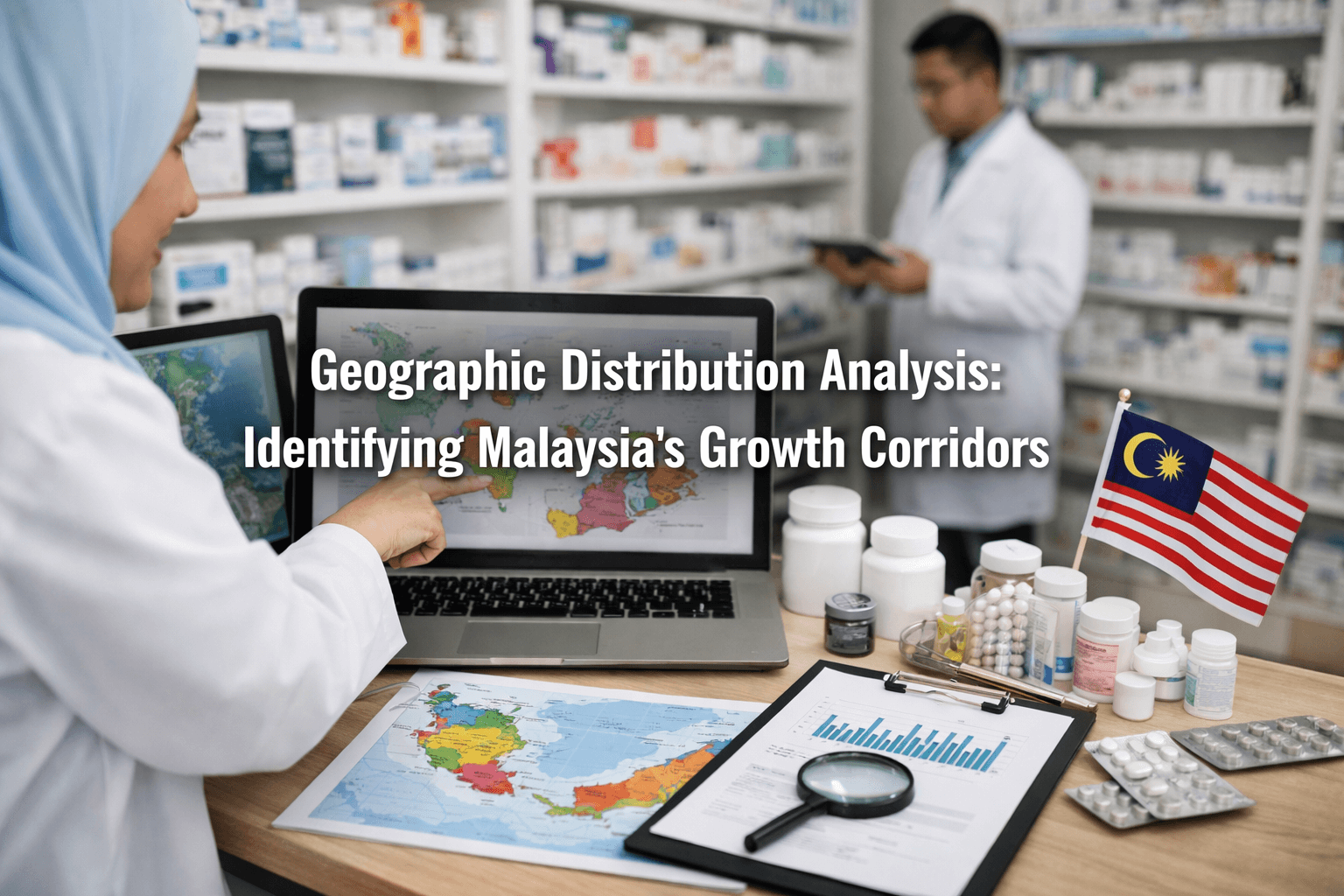
Where exactly are Malaysia’s pharmacy growth corridors emerging, and what does the data tell us about the future? A detailed analysis of registered pharmacies Malaysia reveals distinct concentration patterns that are critical for strategic planning. We see high-density clusters firmly established in mature markets like Selangor and Kuala Lumpur. Beyond these cores, there is notable rapid suburban expansion on the outskirts of the Klang Valley, as new housing developments attract retail services. Perhaps most significantly, the data confirms an increasing retail presence in major townships across East Malaysia (Sabah and Sarawak), signaling a shift in the healthcare landscape.
These patterns have a direct and powerful influence on how companies must approach strategic resource allocation. For example, the sheer density of the Klang Valley may justify and require daily delivery cycles and a larger, more specialized sales force. In contrast, the long distances and lower density of rural Sarawak routes demand a more efficient approach, such as consolidated weekly dispatches and strategic partnership with local logistics providers.
For independent pharmacy distributor networks, this geographic clustering affects nearly every operational decision, including:
-
Warehouse positioning: Ideally, warehouses should be centrally located to serve the highest-density clusters efficiently.
-
Delivery fleet planning: The size, type, and number of vehicles needed will vary dramatically between urban and rural regions.
-
Cold chain efficiency: Maintaining the cold chain is non-negotiable. In high-density zones, smaller, frequent shipments are possible. In remote regions, it demands advanced insulation, validated packaging, and meticulous route optimization to prevent any temperature excursion.
From a strategic viewpoint, this geographic data is invaluable for anticipating where the next wave of retail pharmacy expansion Malaysia will occur. It allows companies to proactively segment territories, ensuring that high-potential areas are adequately covered while reducing redundant coverage in saturated zones. Geographic clustering also reveals competitive intensity. A very high concentration of pharmacies in a specific area may signal:
-
Lower margin flexibility due to price competition.
-
Higher merchandising costs to stand out on the shelf.
-
An increased frequency of in-store promotions.
However, it also signals robust consumer demand and a mature healthcare market. The key takeaway is that balancing commercial opportunity with strict compliance is essential for sustainable, long-term expansion in this environment.
Learn more: Global Consumer Trends in Health Care
Why Registration Verification is Non-Negotiable for Distribution
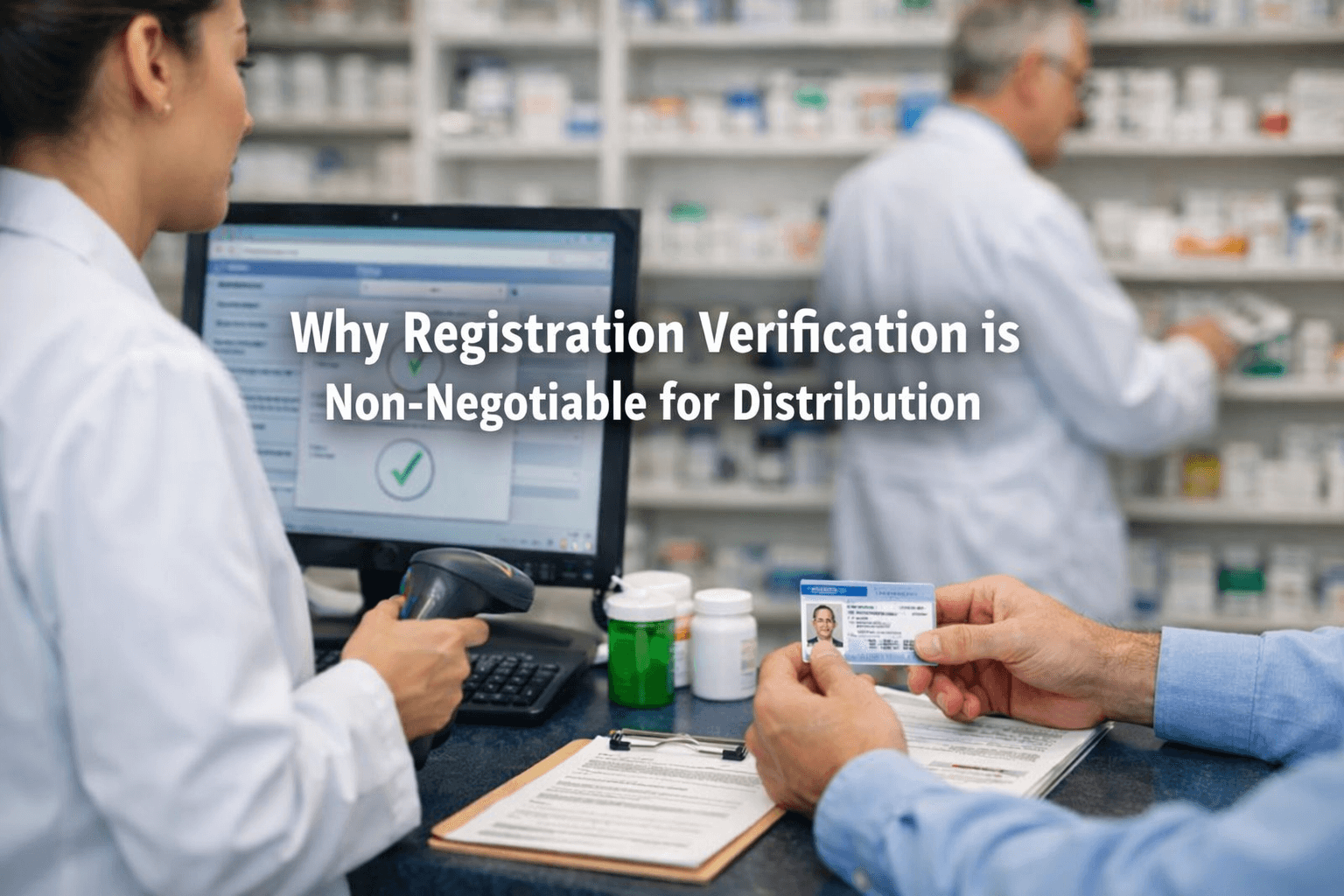
What are the tangible consequences when verification is ignored in the supply chain? Simply put, supplying an unregistered or non-verified outlet creates a cascade of risks that can ripple through the entire healthcare supply chain Malaysia. Under the stringent guidelines of GDP Malaysia, the legal onus is on distributors to ensure that every recipient of pharmaceutical products is a legally authorized entity. This is a fundamental principle of good distribution practice.
Considering this from multiple perspectives reveals the full weight of the issue. From the pharmacist’s perspective, working in or supplying an unregistered outlet puts their professional license directly at risk. Dispensing or receiving stock for premises without a valid license could expose the pharmacist-in-charge to severe regulatory sanction, including suspension or revocation of their right to practice. From the distributor’s viewpoint, the corporate risks are equally grave and include:
-
Suspension or revocation of their own distributor’s license.
-
Hefty financial penalties from regulatory bodies.
-
Potential loss of their warehouse accreditation, halting operations.
-
Complex and costly insurance complications if a claim arises from a product supplied to an illegitimate outlet.
For brand managers, the reputational risk is perhaps the most difficult to quantify but the most damaging. In today’s digital age, consumers are empowered; they actively check online reviews and are increasingly aware of a company’s compliance history. Any association, even indirect, with non-verified pharmacy outlets can rapidly erode carefully built brand trust. A single incident involving a product found in an illegal outlet can undo years of positive brand building.
Therefore, a trusted, proven, and reliable verification process is not just a ‘nice-to-have’—it is an operational imperative. This process should be a formal, documented workflow that includes:
-
Checking registration certificate validity directly with the Pharmacy Board’s database.
-
Confirming the presence of a licensed pharmacist-in-charge during business hours.
-
Reviewing the outlet’s inspection history for any past compliance issues.
-
Documenting the validation step permanently within the company’s ERP system to create an auditable trail.
Risk management in pharmaceutical distribution is not a one-time event that happens at onboarding. It must be an ongoing discipline, embedded into daily workflows and reinforced through periodic compliance audits. In today’s environment of heightened scrutiny, pharmaceutical distribution governance is under the microscope like never before. Companies that continue to treat registration validation as a routine, check-the-box exercise will inevitably face regulatory difficulties. Those who strategically embrace it as a foundational pillar of compliance will not only avoid these pitfalls but will also build a more resilient, reputable, and ultimately more successful business.
Learn more: WHO Guidelines on Good Distribution Practices (GDP) for Pharmaceuticals
Operational Implications for Pharmacy Distributor Malaysia Networks
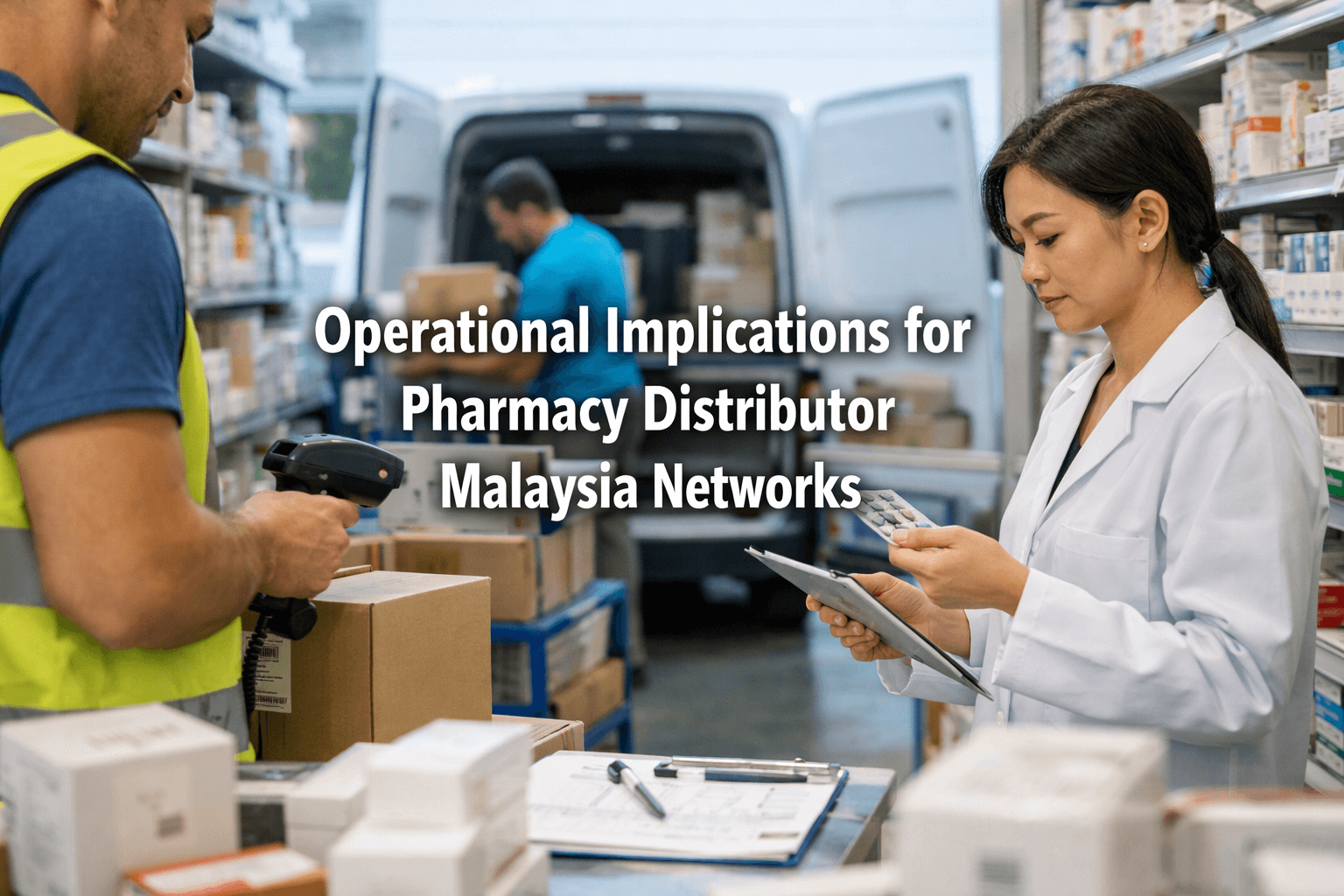
How should registration data influence operational decisions? The answer shapes everything from cash flow to compliance culture. When pharmacy registration Malaysia records are treated as dynamic intelligence rather than static paperwork, distributors unlock strategic advantages that competitors miss.
Pharmacy distributor Malaysia networks must embed verification into daily workflows, not annual checklists. Before credit approval or first invoice issuance, distributors must confirm outlet legitimacy through official channels. This isn’t merely administrative — it’s the first line of defense against regulatory breaches.
Operational integration includes:
-
CRM tagging of verified pharmacy outlets for real-time segmentation
-
ERP validation checkpoints that block unverified accounts automatically
-
Sales rep training on compliance documentation to reduce field errors
-
Merchandising approval workflow requiring verified status before activation
Territory segmentation becomes more strategic when based on verified outlet density rather than informal mapping. A distributor servicing Klang Valley might discover that only 68% of pharmacies they assumed were active actually hold current licenses. That gap represent both risk and opportunity. Sales force planning improves when managers know exactly how many licensed pharmacies operate within a district — suddenly, route optimization becomes grounded in reality.
Pharmacy wholesale distributors often integrate verification into route planning systems with striking results:
-
Prioritize high-density compliant zones for new product launches
-
Avoid areas flagged under audit investigation to maintain clean regulatory standing
-
Schedule revalidation during annual review cycles rather than scrambling before inspections
This structured approach supports an efficient and tailored field execution strategy. One Malaysian distributor reduced compliance-related delivery delays by 34% simply by aligning route planning with verified outlet clusters. The insight was simple but effective: treat registration data as logistics infrastructure.
Before merchandising displays are installed, store validation is essential. Deploying POSM in non-licensed locations could waste marketing budget and create regulatory exposure that brand owners cannot afford. Imagine investing RM50,000 in a peninsula-wide campaign only to discover that 15% of display locations lack pharmacy registration — those products shouldn’t be there, and neither should your branding.
Operational discipline strengthens compliance culture across teams. When verification becomes habitual, governance becomes second nature. Field staff stop viewing documentation as headquarters bureaucracy and start seeing it as professional protection. The shift from reactive to proactive compliance transforms how distributors approach every client interaction.
Learn more: Top 10 Pharmacy Distributors in Malaysia Ranking
Comparative Table: Registered vs Non-Verified Pharmacy Risk Indicators
What differentiates compliant and high-risk outlets? The distinction matters far beyond paperwork. For brand managers weighing market entry strategies and distributors evaluating credit terms, these differences determine whether partnerships flourish or flounder.
Below is a practical comparison useful for distributor pharmacy evaluation:
| Criteria | Registered Pharmacy | Non-Verified Outlet |
|---|---|---|
| Regulatory Compliance | Licensed & traceable through NPRA systems | Uncertain status, potential violation risk |
| Distribution Eligibility | Approved for GDP supply chain participation | High risk of product seizure |
| Audit Documentation | Available and standardized | Often incomplete or falsified |
| Brand Reputation Risk | Low — protected by official oversight | Elevated — possible association with illicit trade |
| Long-Term Partnership Viability | Stable, growth-oriented | Unpredictable, transaction-focused |
For distributor networks, the implications are clear. Registered pharmacies provide a more reliable environment for:
-
Inventory credit terms extended with confidence
-
Long-term promotional campaigns that build equity rather than expose risk
-
Product training sessions attended by qualified pharmacists
-
Data sharing agreements that inform strategic planning
One Malaysian wholesaler serving Penang island found that registered pharmacies generated 3.2x higher repeat order value compared to non-verified outlets over a 24-month period. The pattern held across therapeutic categories — compliance correlated with commercial performance.
Engaging non-verified outlets may appear commercially attractive in short term, but compliance risk makes the strategy unstable. A single enforcement action against an unlicensed premise can trigger investigations up the supply chain. Regulators don’t distinguish between intentional non-compliance and oversight — the distributor bears responsibility regardless.
Governance must remain an essential and strategic priority for any pharmacy wholesale distributor serious about Malaysian market leadership. The short-term gains from servicing questionable outlets simply don’t justify the existential risk.
Best Practices for Ongoing Pharmacy Registration Verification (2027 Update)
How frequently should verification occur? The question reveals whether a distributor treats compliance as a moment or a movement. In Malaysia’s evolving regulatory environment, static approaches invite trouble.
Verification should not be annual only. Best practice suggests:
-
Initial onboarding validation before any commercial relationship begins
-
Annual renewal confirmation aligned with license expiration cycles
-
Random spot-check before large campaign rollout to catch mid-year lapses
-
Quarterly database reconciliation against official pharmacy board records
Internal SOP for pharmacy wholesale distributors should include:
-
Designated compliance officer with authority to pause non-compliant accounts
-
Centralized verification database accessible to sales, finance, and operations
-
Digital document archive storing licenses, pharmacist credentials, and audit trails
-
Quarterly review meeting examining verification metrics and exception reports
Technology enhances oversight. Digital tracking systems allow distributors to flag license expiry automatically. ERP dashboards can trigger alerts when registration status is unclear or documentation is approaching expiration. One pharmacy distributor Malaysia operator implemented automated reminders and reduced lapsed verifications by 76% within six months.
An expert, proven, and efficient compliance workflow reduces manual errors. It also ensures alignment with evolving standards within Pharmacy distribution service in Malaysia. The 2027 update to GDP guidelines increasingly emphasizes digital traceability — distributors building these capabilities now position themselves ahead of regulatory curves.
Field teams need practical tools, not theoretical frameworks. Mobile applications that scan pharmacy licenses and cross-reference databases during sales calls transform verification from back-office burden to front-line advantage. Sales representatives become compliance ambassadors rather than paperwork collectors.
Over time, distributors that institutionalize verification processes reduce audit stress and build stronger regulator relationships. When NPRA inspectors request documentation, these organizations respond within hours, not weeks. That responsiveness builds trusted partnerships with authorities and differentiates serious operators from casual participants.
Future Outlook: Digital Compliance and Data Transparency in Malaysia’s Pharmacy Ecosystem
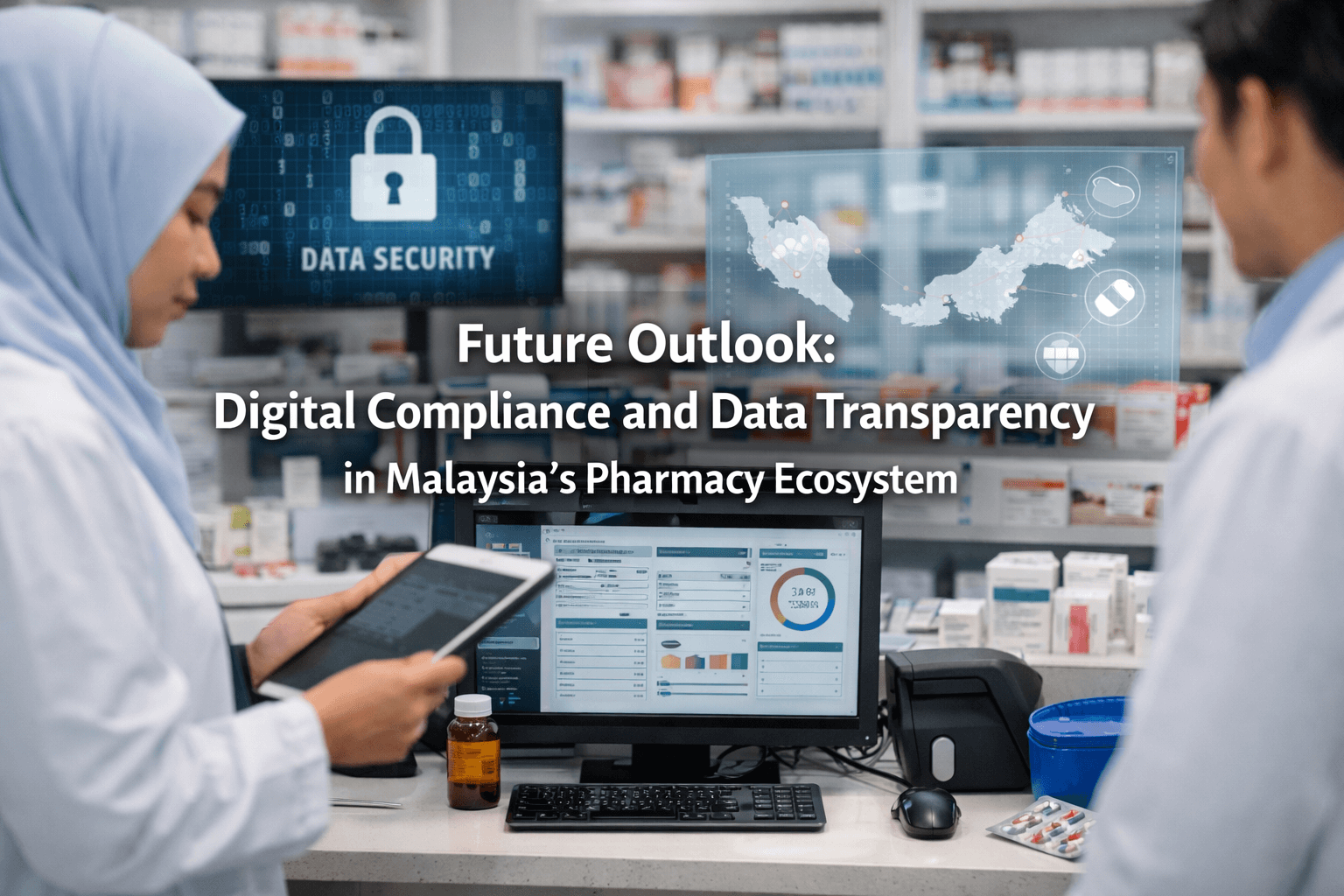
How will digitalization reshape pharmacy governance? The transformation is already underway, accelerated by Malaysia’s push toward integrated healthcare infrastructure.
Digital records are becoming standard within Malaysian healthcare infrastructure. Integration of registration data into supply chain platforms may soon become mandatory rather than optional. Progressive distributors are preparing for this shift rather than waiting for regulatory mandates.
Emerging trends include:
-
Real-time pharmacy outlet verification APIs connecting distributor systems directly to pharmacy board databases
-
Integrated GDP Malaysia dashboards displaying compliance status across entire distribution networks
-
Predictive territory planning based on licensing density identifying growth corridors before competitors
-
Blockchain-verified credentialing ensuring license authenticity cannot be fabricated
These developments enhance transparency and strengthen public trust. A trusted, strategic, and effective compliance culture will differentiate serious distributors from opportunistic operators. The gap between compliant and non-compliant supply chains will widen, making partnership choices more consequential.
Independent pharmacy distributor Malaysia networks can leverage data analytics to:
-
Identify expansion gaps where licensed pharmacies exist but distribution coverage is thin
-
Forecast new license applications by monitoring pharmacy graduate cohorts and premises registrations
-
Plan early market entry into developing areas before formal distributor networks establish
Transparency reduces friction between regulators and distributors. Over time, digital governance will make compliance less reactive and more proactive. Instead of verifying yesterday’s licenses, distributors will monitor real-time status changes and adjust operations accordingly.
For brand managers evaluating Malaysian market entry, digital compliance infrastructure signals distributor quality. Those investing in verification technology demonstrate commitment to governance that protects brand equity. Those relying on manual spreadsheets and annual checks expose partners to unnecessary risk.
The pharmacy ecosystem is moving toward data-sharing agreements that benefit all participants. Regulators gain visibility into distribution patterns. Distributors gain early warning of compliance issues. Pharmacists gain recognition for maintaining standards. Patients gain confidence in supply chain integrity.
Learn more: Healthcare Interoperability Solutions and Standards
Strengthening Malaysia’s Pharmacy Supply Chain Through Verified Registration
Malaysia’s pharmacy ecosystem is expanding, but growth must align with governance. Verified pharmacy outlets provide the foundation for safe dispensing, responsible distribution, and sustainable brand presence. Without this bedrock, even the most sophisticated marketing strategies rest on unstable ground.
For pharmaceutical companies, distributors, and brand managers, structured pharmacy outlet verification protects both compliance and commercial viability. Registration data supports:
-
Strategic route planning grounded in actual outlet distribution
-
Risk mitigation across credit, regulatory, and reputational dimensions
-
Territory optimization based on verified density rather than assumptions
-
Audit preparedness that transforms inspections from ordeals into validations
A reliable Pharmacy distribution service in Malaysia begins with disciplined validation of every outlet in the supply chain. Without that foundation, expansion becomes fragile. One compliance breach can unravel years of market development.
Governance may seem procedural, but in healthcare, procedures protect lives. Every verified pharmacy represents a commitment to patient safety, professional standards, and supply chain integrity. Distributors who embrace this responsibility don’t just avoid penalties — they build durable competitive advantages.
Learn more: Challenges and Opportunities in Malaysia’s Pharmaceutical Supply Chain
Frequently Asked Questions (FAQ)
Q1: How to check if a medicine is KKM approved?
Answer: You can verify medicine approval through the National Pharmaceutical Regulatory Agency (NPRA) website using the QUEST system. Enter the product name or registration number to confirm if it is registered with Ministry of Health Malaysia (KKM).
Q2: How to verify an online pharmacy?
Answer: Check whether the pharmacy is registered with the Ministry of Health Malaysia and displays a valid business registration number. Avoid websites selling prescription medicines without requiring a prescription.
Q3: How many registered pharmacists are there in Malaysia?
Answer: Malaysia has over 15,000 registered pharmacists, according to recent data from the Pharmacy Board Malaysia, though the number increases annually.
Q4: How do I spot a fake KKM label?
Answer: A fake KKM label may have incorrect formatting, missing registration numbers, or unverifiable codes. Always cross-check the product’s MAL number via the NPRA QUEST database.
Q5: What is a pharmacy checker?
Answer: A pharmacy checker refers to an online verification tool or regulatory database used to confirm whether a pharmacy or medicine is legally registered.
Q6: How to check if a product is registered?
Answer: Visit the NPRA QUEST portal and search by product name, MAL number, or company name to confirm registration status.
Q7: Where to search if a company is registered?
Answer: In Malaysia, you can verify company registration through the Companies Commission of Malaysia (SSM) online portal.
Q8: How to verify a company’s legitimacy in Malaysia?
Answer: Check SSM registration details, verify physical address and contact information, and confirm relevant regulatory licenses where applicable.
Q9: How do I verify a product’s KKM status?
Answer: Use the NPRA QUEST online search tool to confirm if the product is notified (for cosmetics) or registered (for medicines) under KKM.
Q10: Where can I find a list of FDA approved products?
Answer: FDA-approved products can be searched on the official website of the U.S. Food and Drug Administration (FDA) through its drug database.
If your organization requires structured support in pharmacy verification, territory planning, merchandising execution, or broader pharmacy distribution solutions, we invite you to contact us.
PriooCare Malaysia
👋 Welcome to PriooCare Malaysia!
How can we assist you today? 😊
Just let us know—we’re here to help!
How can we assist you today? 😊
Just let us know—we’re here to help!
Open chat