


Learn more: Key Considerations for Selecting a Pharmacy Distributor in Malaysia

Learn more: Pharmacy Distribution Trends: Embracing Technology and Efficiency | Managing the cold chain in pharmaceutical logistics: Best practices and trends
Compliance and Regulatory Challenges for Malaysian Pharmacy Distributors
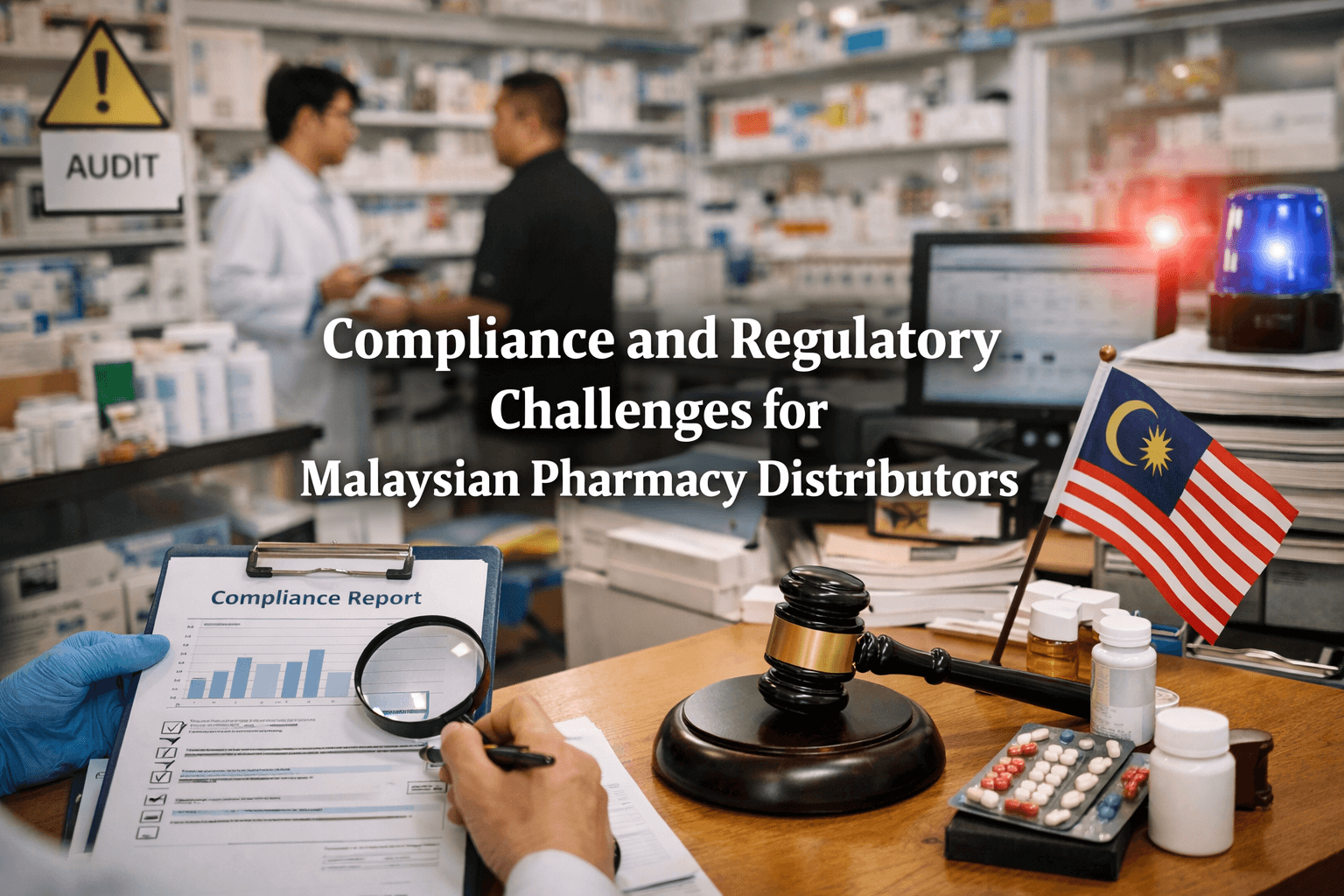
How do pharmaceutical distributors navigate the complex web of regulatory requirements in Malaysia?
Malaysia’s pharmaceutical landscape operates under some of the most stringent oversight mechanisms in Southeast Asia. The National Pharmaceutical Regulatory Agency (NPRA) and the Ministry of Health (KKM) serve as the primary gatekeepers, ensuring that every product reaching pharmacy shelves meets rigorous safety, efficacy, and quality standards. For distributors, this isn’t merely about ticking boxes—it’s about building a reliable framework that safeguards public health while maintaining business continuity.
The core claim here is straightforward: regulatory compliance isn’t optional—it’s the foundation of sustainable pharmaceutical distribution. Distributors who treat compliance as a strategic advantage rather than a bureaucratic burden position themselves for long-term success. Those who cut corners? They don’t just risk fines; they risk patient lives and their entire operational license.
Consider the real-world scenario facing Community Pharmacy chains in the Klang Valley. When the NPRA implemented stricter Good Distribution Practice (GDP) guidelines for temperature-sensitive medications, several distributors faced immediate challenges. One established distributor discovered that their standard delivery vans, previously adequate for general pharmaceuticals, couldn’t maintain the required 2–8°C range consistently during Kuala Lumpur’s notorious traffic jams. The solution required strategic investment in validated cold-chain vehicles and real-time temperature monitoring systems—an expensive but essential upgrade that ultimately separated professional operators from amateurs.
The data tells a compelling story. According to NPRA’s 2023 annual report, approximately 15% of pharmaceutical license applications faced delays or rejection due to documentation errors, while 7% of inspected warehouses received non-compliance notices requiring immediate remediation. More striking? Cold chain breaches account for nearly 40% of product quality complaints investigated by KKM annually. These numbers reveal a clear pattern: regulatory scrutiny is intensifying, and the margin for error is shrinking.
For distributors, the practical implication is unavoidable. Standard Operating Procedures (SOPs) must evolve from static documents into living frameworks. Regular internal audits, staff training on GDP requirements, and digital traceability systems are no longer nice-to-haves—they’re baseline expectations. The most effective distributors now conduct mock NPRA inspections quarterly, identifying gaps before regulators do. They’ve learned that compliance isn’t a destination; it’s a continuous process of adaptation and improvement.
From the pharmacist’s perspective, dealing with compliant distributors provides peace of mind. When medications arrive with proper documentation, correct storage indicators, and valid product registration numbers, pharmacists can focus on patient care rather than playing quality detective. For brand managers, partnering with KKM-compliant distributors protects brand reputation and ensures their products remain available to patients who need them.
Learn more: The Role of Regulatory Compliance in Malaysia’s Pharmaceutical Distribution | Pharmaceutical regulatory compliance: A global perspective
The Future of Healthcare Distribution in Malaysia: Trends to Watch
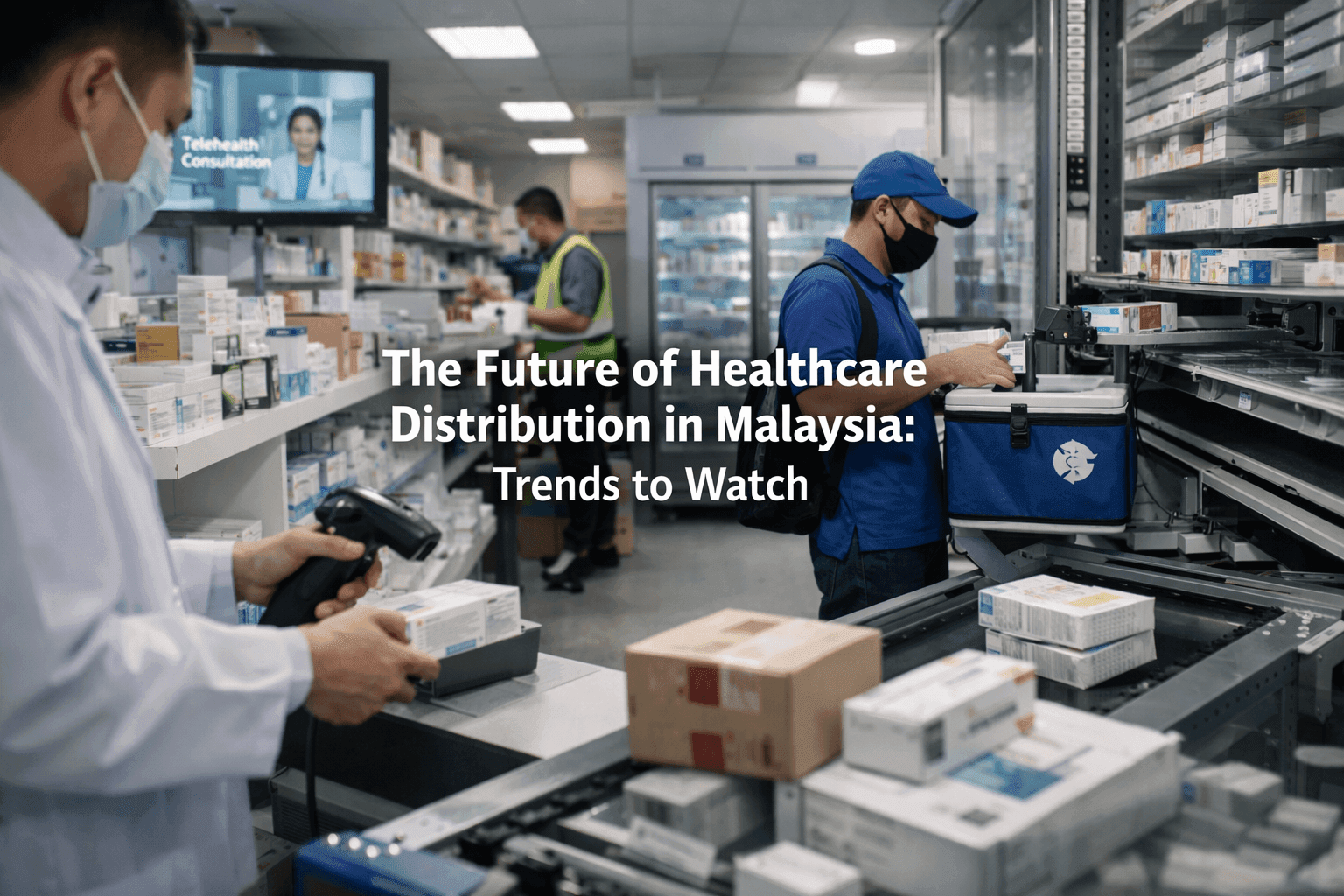
What transformative forces will reshape pharmaceutical distribution in Malaysia by 2027?
The healthcare distribution landscape stands at a fascinating crossroads. Traditional models—where distributors simply moved boxes from manufacturers to pharmacies—are rapidly becoming obsolete. Instead, we’re witnessing the emergence of integrated healthcare logistics partners who provide value far beyond transportation. This evolution isn’t happening in isolation; it’s driven by three powerful currents: biopharmaceutical innovation, digital health adoption, and changing consumer expectations.
The rise of biologics and biosimilars represents perhaps the most significant shift. These temperature-sensitive, high-value products demand specialized handling capabilities that few traditional distributors possess. Malaysia’s growing specialty pharmacy segment—particularly in oncology, autoimmune diseases, and rare disorders—requires distribution partners who understand cold chain integrity at a molecular level. One Penang-based distributor recently invested RM2 million in validated cold storage facilities specifically to handle biologic products, recognizing that this niche would define their future relevance.
Telemedicine’s explosive growth creates another dimension. When patients consult doctors virtually, prescriptions still need physical fulfillment. This has spawned integrated e-pharmacy models where distributors connect directly with telehealth platforms. A Kuala Lumpur startup now offers 2-hour delivery of medications prescribed through partner telemedicine apps, leveraging distributor networks that traditionally served only brick-and-mortar pharmacies. The boundaries between distribution channels are blurring, creating opportunities for agile operators.
E-commerce in healthcare isn’t just about convenience—it’s about data-driven inventory management. Forward-thinking distributors are implementing AI-powered demand forecasting that predicts medication needs at the individual pharmacy level. One Sarawak-based distributor reduced stockouts by 34% simply by analyzing historical sales patterns against local disease prevalence data. They’ve proven that technology adoption directly translates to better patient outcomes.
The practical implication for distributors is clear: digital transformation isn’t optional. Those still relying on spreadsheets and manual inventory tracking will find themselves unable to meet the real-time visibility requirements of modern healthcare partners. Blockchain pilots for counterfeit prevention are already underway with several major pharmaceutical manufacturers, and distributors who can’t integrate with these systems will be excluded from supply chains entirely.
From the brand manager’s viewpoint, partnering with technology-enabled distributors offers proven advantages: reduced expired product write-offs, better pharmacy-level promotion execution, and real-time sales data that informs production planning. For pharmacists, distributors who provide integrated inventory systems reduce administrative burden and free up time for patient care.
Learn more: Healthcare logistics in Asia: New trends and challenges | How AI is reshaping the healthcare supply chain
Comparative Analysis: Distribution Compliance Capabilities
How do different distribution approaches measure up against regulatory requirements?
The table below illustrates a comparative framework for evaluating distributor capabilities—something brand managers and pharmacy owners can use when selecting partners:
| Compliance Dimension | Basic Distributor | Compliant Distributor | Excellence-Level Partner |
|---|---|---|---|
| Temperature Monitoring | Manual logs, spot checks | Real-time digital recorders, alarm systems | IoT-enabled continuous monitoring with predictive alerts |
| Documentation Accuracy | 70-80% first-pass accuracy | 90-95% with digital tracking | 99%+ with blockchain-verified records |
| Audit Readiness | Reactive preparation | Quarterly internal audits | Continuous compliance monitoring, mock regulatory inspections |
| Staff Training | Annual basic GDP training | Quarterly updates, competency testing | Continuous education with specialized modules for biologics |
| Technology Integration | Basic inventory software | ERP systems with pharmacy integration | AI-powered demand forecasting, telemedicine platform connectivity |
| Recall Capability | 24-48 hours to identify affected stock | 4-6 hours with batch tracking | <2 hours with end-to-end traceability |
This comparison reveals a critical insight: compliance capability exists on a spectrum. While all licensed distributors meet minimum NPRA requirements, the gap between basic compliance and operational excellence directly impacts patient safety and business reliability. Brand managers should evaluate potential partners not just on price, but on where they fall within this framework.
Frequently Asked Questions (FAQ)
Q1: Why is Malaysia considered an emerging pharmaceutical hub in Asia-Pacific?
Answer: Because Malaysia continues to expand GMP-compliant manufacturing, invest in biotech R&D, and strengthen export partnerships—making it a competitive production and distribution base in the region.
Q2: Why are the largest pharmaceutical companies important to Malaysia’s healthcare ecosystem?
Answer: These companies influence treatment availability, set quality standards, drive innovation, and help stabilize national supply chains that support both clinics and retail pharmacies.
Q3: What criteria were used to rank the top 10 pharmaceutical companies in Malaysia?
Answer: Rankings were based on revenue performance, market penetration, GMP regulatory compliance, regional/global footprint, and investment in R&D innovation.
Q4: Which trends are currently shaping Malaysia’s pharmaceutical distribution sector?
Answer: Growth in biosimilars, rising OTC demand, cold chain logistics expansion for biologics, and digital pharmacy adoption are among the strongest shaping forces in 2024–2025.
Q5: Why is GMP certification so critical in Malaysia’s pharma industry?
Answer: GMP ensures safety, manufacturing consistency, export qualification, and regulatory trust—allowing companies to participate in both government tenders and international markets.
Q6: What role do pharmacy distributors play in Malaysia’s healthcare supply chain?
Answer: They bridge manufacturers and pharmacies, manage inventory, ensure last-mile delivery, support merchandising execution, and maintain consistent access to essential medicines nationwide.
Q7: What makes Malaysia attractive for pharmaceutical exports?
Answer: Strong compliance reputation, Halal-certified manufacturing lines, ASEAN trade frameworks, and quality consistency make Malaysian medical exports globally competitive.
Q8: What challenges remain for Malaysia’s pharma distribution landscape?
Answer: Limited rural access, margin pressure from price controls, temperature-sensitive handling requirements, and complex multi-state regulatory navigation.
Q9: How are digital technologies changing Malaysia’s pharmaceutical distribution?
Answer: AI forecasting, e-commerce pharmacy models, blockchain traceability and automated warehouse systems are improving speed, transparency, accuracy, and cost efficiency.
Q10: How can pharmacies benefit from aligning with reputable pharmaceutical companies and distributors?
Answer: They gain stronger inventory reliability, access to innovative therapies, better pricing negotiations, and reduced supply risk—improving long-term competitiveness in Malaysia.
How can we assist you today? 😊
Just let us know—we’re here to help!