

In the fast-evolving Malaysian pharmaceutical landscape, Good Manufacturing Practice (GMP) certification has emerged as far more than a regulatory checkbox. It is, in fact, the uncompromising foundation upon which trusted supply chains, patient safety, and commercial credibility are built. For pharmacy distributors, brand owners, and healthcare providers, GMP certification serves as the definitive signal that a pharmaceutical manufacturer operates with rigour, transparency, and excellence.
Without GMP, a pharmaceutical product—regardless of how innovative or affordable—cannot legally enter the Malaysian market. The National Pharmaceutical Regulatory Agency (NPRA) enforces these standards with increasing stringency, and any lapse in compliance can result in product recalls, licence suspensions, and irreversible reputational damage.
Consider the operational reality of a pharmacy distributor in Malaysia sourcing products from multiple suppliers. Each batch received must be accompanied by certificates of analysis, batch traceability documents, and evidence of GMP-compliant manufacturing. The distributor is not merely moving goods; they are stewards of public health. When a manufacturer holds valid, audited GMP certification, the distributor’s risk exposure drops significantly.
Data from the NPRA indicates that over 95% of pharmaceutical products approved for sale in Malaysia originate from GMP-certified facilities, whether local or international. This near-universal adoption underscores a clear reality: GMP is the price of admission, not a competitive advantage. Yet, the depth of compliance varies considerably.
For instance, a local manufacturer like Pharmaniaga Berhad undergoes routine NPRA inspections, internal quality audits, and supply chain traceability checks to maintain its certification status. Similarly, multinational players such as Pfizer and Novartis operate under global GMP standards that often exceed local requirements, creating a two-tier compliance environment.
The practical implication for pharmacy distributors is this: GMP certification is non-negotiable, but not all GMP certifications carry equal weight. A distributor must evaluate whether a manufacturer complies with Malaysia’s PIC/S GMP standards (Pharmaceutical Inspection Co-operation Scheme), which are harmonised with international benchmarks, or whether they operate under older, less rigorous frameworks. This distinction directly impacts product quality, regulatory approval speed, and market access.
Trusted distributors are now building supplier scorecards that place GMP audit outcomes at the centre of their vendor evaluation process. They are asking sharper questions: How recent was the last NPRA inspection? Were any critical observations recorded? What corrective actions were implemented? In doing so, they transform GMP from a static certificate into a dynamic performance indicator.
Why GMP Compliance Separates Market Leaders from the Rest
GMP certification is not merely about factory cleanliness or documentation control—though both are essential components. It represents a total systems approach to pharmaceutical manufacturing, encompassing facility design, equipment validation, personnel training, raw material sourcing, and post-market surveillance.
Companies that achieve and sustain GMP compliance demonstrate organisational maturity. They invest in quality culture, not just quality control. This distinction matters deeply in the Malaysian context, where supply chain fragmentation and price sensitivity often pressure manufacturers to cut corners.
Take, for example, Kotra Pharma, a leading local manufacturer with a robust distribution footprint across Southeast Asia. Their Melaka facility operates under strict GMP protocols, and they have successfully integrated GMP principles into their new product development pipeline. This means that when Kotra launches a new generic formulation, it enters the market with pre-validated processes and regulatory-ready documentation. For a pharmacy distributor, this translates into faster time-to-shelf and reduced regulatory friction.
In contrast, smaller, uncertified manufacturers—or those operating under expired or provisional licences—face repeated NPRA queries, delayed product registrations, and restricted access to institutional tenders. Government hospitals, private healthcare groups, and major pharmacy chains in Malaysia increasingly mandate GMP certification as a mandatory tender requirement. Without it, a company is effectively locked out of the most lucrative distribution channels.
Comparative Perspective:
From the viewpoint of a hospital pharmacist, GMP-certified products offer predictability. They know that the dissolution profile, bioavailability, and stability data of a GMP-manufactured drug will remain consistent across batches. This therapeutic reliability is critical when dispensing narrow-therapeutic-index drugs or managing chronic disease patients.
From a brand manager’s perspective, GMP certification is a brand asset. It enables marketing claims around quality, safety, and international standards. It also facilitates export expansion into regulated markets like Singapore, the Middle East, and Africa, where GMP recognition is a mandatory entry requirement.
From a distributor’s perspective, GMP certification reduces due diligence burden. Instead of conducting deep, resource-intensive audits on every potential supplier, the distributor can rely on NPRA’s regulatory endorsement as a baseline filter. This efficient triage allows distributors to focus their commercial resources on scaling partnerships rather than validating compliance.
The strategic takeaway is clear: GMP certification is not a static badge; it is a reliable proxy for operational excellence. Distributors who prioritise GMP-certified partners build resilient portfolios that can withstand regulatory scrutiny, market volatility, and evolving patient expectations.
Learn more: Good Manufacturing Practices (GMP) for Pharmaceutical Products | Top 10 Pharmaceutical Companies in Malaysia 2026
GMP Certification: A Comparative Framework for Pharmacy Distributors
To support strategic sourcing decisions, pharmacy distributors in Malaysia require a structured framework for evaluating GMP compliance across different supplier categories. The table below offers a comparative lens, highlighting how local champions, multinational corporations, and regional generic players differ in their GMP maturity, regulatory recognition, and distributor impact.
| Supplier Category | Typical GMP Standard | Regulatory Recognition | Distributor Impact |
|---|---|---|---|
| Local GMP-certified leaders (e.g., Pharmaniaga, Hovid) | PIC/S GMP, ISO 9001 | Full NPRA recognition, export-ready | Reliable supply, strong traceability, competitive pricing, lower compliance risk |
| Multinational corporations (e.g., Pfizer, Merck) | Global PIC/S GMP, often exceed local norms | NPRA recognised, plus global regulatory approvals (FDA, EMA) | Premium pricing, high brand equity, stringent cold chain requirements, strong pharmacovigilance |
| Regional generic manufacturers (e.g., YSP, Kotra) | PIC/S GMP, some ASEAN mutual recognition | NPRA registered, expanding export footprint | Cost-effective, scalable volumes, flexible trade terms, growing post-market surveillance capabilities |
| Non-GMP certified or provisional licence holders | Often pre-PIC/S, limited validation | Restricted NPRA status, frequent audits | High distributor risk, limited tender access, potential supply disruptions, reputational exposure |
This framework enables distributors to segment their supplier base with precision. It also reveals critical gaps in the market. For instance, while local leaders and multinationals operate at high GMP maturity, there remains a middle tier of manufacturers with provisional licences who have not yet achieved full PIC/S alignment. These companies often represent short-term cost opportunities but carry long-term regulatory vulnerabilities.
Strategic distributors are increasingly consolidating their procurement toward fully GMP-certified partners, even if it means accepting slightly higher acquisition costs. They recognise that the total cost of compliance failure—including product destruction, regulatory penalties, and lost customer trust—far outweighs the marginal savings from uncertified sources.
Learn more: The Legal Framework of Pharmaceutical Companies in Malaysia | ASEAN Pharmaceutical Regulatory Framework (APRP)
The Ripple Effect: How GMP Certification Strengthens the Entire Pharmacy Distribution Ecosystem
The influence of GMP certification extends well beyond the factory floor. It radiates outward, shaping logistics operations, retail pharmacy confidence, and patient adherence behaviour.
When a GMP-certified manufacturer dispatches a shipment, the accompanying documentation package includes detailed batch records, stability summaries, and certified release test results. This documentation flows through the supply chain—from the distributor’s warehouse to the retail pharmacy—creating a verified chain of custody.
For the retail pharmacist, this documentation is not merely administrative clutter. It is reassurance. It allows them to answer patient questions with authority: Yes, this medication has been manufactured under internationally recognised standards. Yes, it has passed all required quality tests. Yes, you can trust it.
This trust dividend is particularly essential in Malaysia’s dual-market environment, where patients can choose between public healthcare facilities and private retail pharmacies. In the private sector, brand reputation and product trust directly influence prescriber behaviour and patient loyalty. Pharmacists are more likely to stock, recommend, and defend products sourced from GMP-certified manufacturers.
Furthermore, GMP compliance enables seamless cold chain integration. Many biologics, insulin, and vaccines require strict temperature control from manufacturing point to patient administration. A manufacturer operating under GMP standards must validate its cold chain protocols, including shipping validation, temperature excursion management, and emergency contingency planning. For distributors handling sensitive products, partnering with GMP-certified suppliers reduces spoilage risk and warranty claims.
Data from the Malaysian Pharmaceutical Society suggests that product quality concerns remain among the top five reasons for patient non-adherence to chronic disease medications. When patients doubt a product’s efficacy or safety, they skip doses, abandon therapy, or switch providers. GMP certification does not directly influence patient behaviour—but it indirectly shapes it by ensuring that the product reaching the patient is identical in quality to the product tested in clinical trials.
GMP Certification as a Strategic Filter, Not Just a Compliance Stamp
For pharmacy distributors in Malaysia, the pharmaceutical supply chain is becoming more complex, not less. Regulatory fragmentation across ASEAN markets, rising customer expectations, and post-pandemic scrutiny on healthcare supply chains have elevated quality assurance from a back-office function to a boardroom priority.
In this environment, GMP certification functions as a reliable, efficient filter. It allows distributors to rapidly identify which manufacturers are serious about quality, which operate with transparency, and which are prepared for the future of pharmaceutical commerce—where digital traceability, real-time quality data, and patient-centric supply models will become the new baseline.
Distributors who embed GMP criteria into their supplier onboarding, contract negotiation, and performance review processes will find themselves operating with fewer disruptions, stronger brand partnerships, and greater credibility with regulators and healthcare providers.
The companies highlighted earlier—Pharmaniaga, Kotra, Pfizer, Novartis, and others—did not achieve market leadership by accident. They achieved it through sustained investment in quality infrastructure, regulatory alignment, and operational discipline. Their GMP certification is not an endorsement of past performance; it is a living commitment to future excellence.
For the pharmacy distributor navigating Malaysia’s crowded, competitive pharmaceutical market, aligning with such partners is not merely a procurement decision. It is a strategic choice—one that determines the resilience, reputation, and relevance of their entire distribution business.
Distribution Channels and Strategies for Pharmacy Wholesale Distributors
A reliable and efficient distribution strategy isn’t just operational detail—it is the backbone of market survival for both local generics manufacturers and multinational pharmaceutical companies aiming to scale in Malaysia. With a population that spans hyper-urban Klang Valley consumers expecting two-hour delivery and remote communities in Sabah reliant on monthly stock boats, the one-size-fits-all model has failed. Today’s pharmacy wholesale distributors must orchestrate a mix of legacy systems and digital agility to ensure critical therapies reach the right counter, at the right temperature, at the right time.
Direct Distribution remains the gold standard for high-value biologics and patented specialty drugs. By supplying directly to pharmacy distributors or large chain accounts, manufacturers retain control over cold chain integrity and brand positioning. However, this model demands significant capital for warehousing and fleet management—resources that even top-tier players sometimes prefer to redirect toward R&D.
This is where Indirect Distribution becomes a strategic necessity. Engaging third-party logistics (3PL) providers or specialized distributors allows brands to extend reach into Malaysia’s interior without diluting operational focus. The recent partnership between eSyms and DHL eCommerce illustrates this shift perfectly. By integrating DHL’s domestic parcel expertise with eSyms’ AllMeds digital platform, hospitals and clinics can now bypass congested pharmacy counters entirely, delivering meds directly to patients’ doorsteps with full track-and-trace visibility . For distributors, this isn’t merely a convenience—it is a blueprint for hybrid distribution that merges wholesale volume with e-commerce precision.
Tailored Solutions for Different Markets are no longer optional. Urban Johor Bahru outlets require frequent, small-batch replenishment to manage tight back-room storage, while rural Terengganu clinics need durable bulk shipments that anticipate monsoon season delays. The strategic distributor recognizes that a proven approach in Penang will fail in Pahang. Hyper-local customization of delivery frequency, order cut-offs, and even vehicle selection (refrigerated vans for cities, insulated boxes for ferries) separates essential partners from mere vendors.
Strategic Warehousing has evolved from square footage to specialized capability. With biologics and vaccines dominating new product pipelines, temperature-controlled infrastructure is now a competitive moat. DHL’s recent opening of a 38,000-square-foot dual-certified facility at KLIA’s Free Commercial Zone—capable of maintaining both 15–25°C and 2–8°C ranges—signals a new benchmark for the market. Certified under IATA CEIV Pharma and Air GxP, this hub reduces third-party handling errors and ensures Good Distribution Practice (GDP) compliance from runway to retail . For pharmacy distributors lacking such infrastructure, partnerships with certified cold chain specialists are no longer a luxury; they are a license to operate in the biologic era.
Practical Implication:
Distributors must audit their current channel mix with brutal honesty. Are you carrying expensive cold chain inventory for products better handled by a specialized 3PL? Are your rural customers suffering because your delivery schedule is optimized for urban traffic? The effective distributor of 2025 builds a layered network: direct for high-margin exclusives, indirect for geographic expansion, and digital-enabled for patient-direct fulfillment.
Learn more: Biopharma Supply Chain Workforce for a Digital Future
Research and Development: Driving Innovation in Malaysia‘s Pharmaceutical Industry
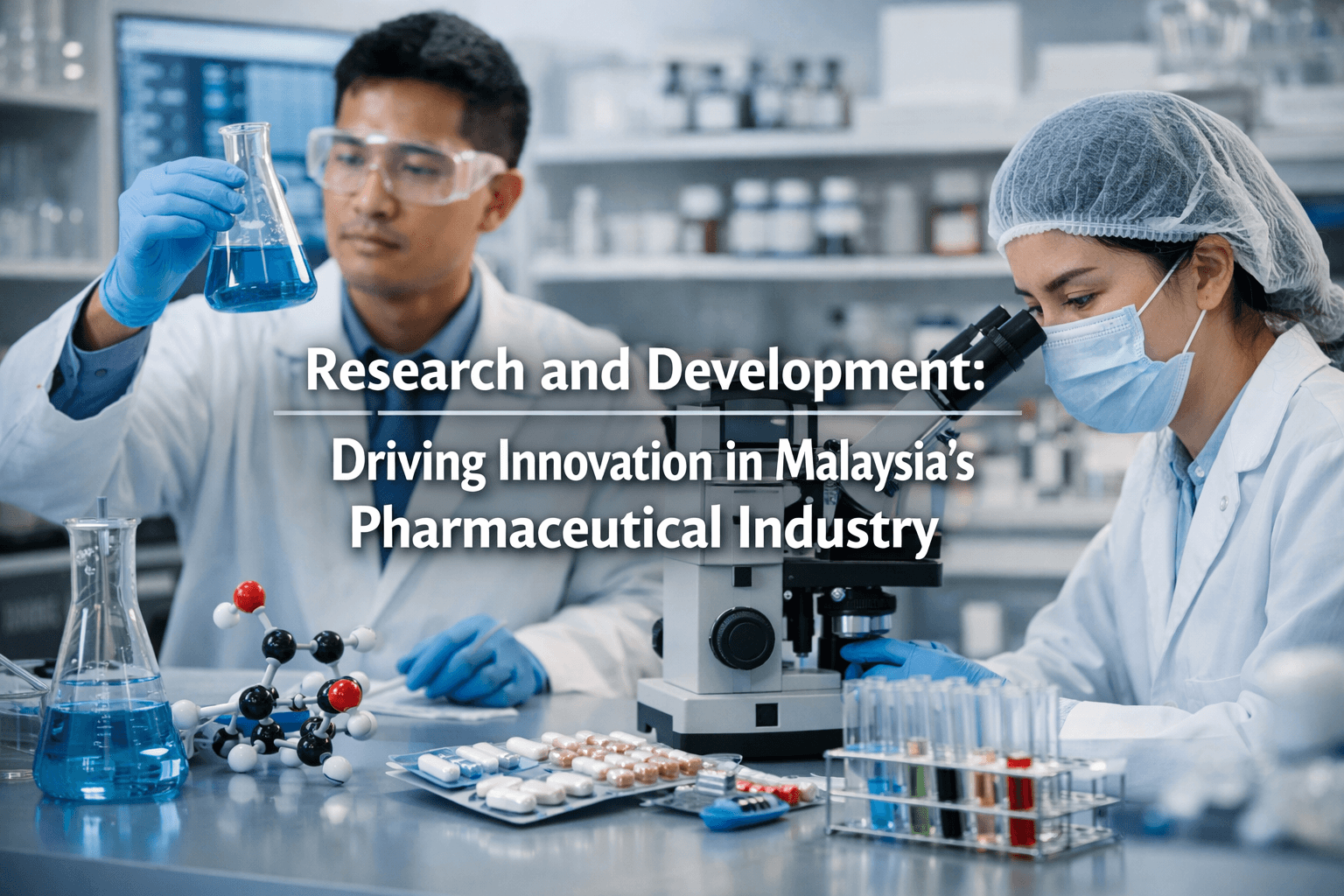
Research and Development (R&D) is frequently visualized as white-coated scientists peering through microscopes. In Malaysia, however, strategic R&D is equally about formulation adaptation, tropical disease relevance, and cost-efficient generics that relieve public healthcare expenditure. It is the engine that transforms a pharmaceutical distributor from a logistics intermediary into a value-added healthcare partner.
R&D’s Role in the Industry extends far beyond new chemical entity discovery. For the Malaysian market, where price sensitivity collides with regulatory rigor, R&D efforts are increasingly directed toward bioequivalent generics, stability studies in tropical climates, and patient-centric delivery mechanisms (think dissolvable tablets or paediatric suspensions). These innovations directly expand the portfolio that distributors can offer to government hospitals bound by tight procurement budgets.
R&D Investment Examples are reshaping the local competitive landscape. Pharmaniaga Berhad, ranked among Malaysia’s top pharma players with over RM1.1 billion in revenue, has strategically pivoted toward generic production and vaccine filling capabilities . This isn’t abstract science—it translates into tangible SKUs that distributors can confidently pitch to the Ministry of Health. Meanwhile, multinational giants like Pfizer continue their proven R&D machinery, but their local impact is amplified when distributors understand the clinical differentiation behind each launch.
Perhaps the most under-reported driver of Malaysia’s R&D ecosystem is Clinical Research Malaysia (CRM) . Since 2012, this Ministry of Health entity has facilitated over 2,700 industry-sponsored research studies, contributing an estimated RM 1 billion in gross national income through clinical trial agreements . For distributors, this is a trusted signal of pipeline vitality. When international sponsors choose Malaysia for oncology or respiratory trials, it indicates that local regulators, investigators, and logistics partners meet global standards. Distributors who monitor these trial activities can anticipate registration waves and prepare inventory, training, and pharmacovigilance systems in advance.
Impact on Pharmacy Distributors:
A broader, higher-quality product pipeline offers distributors the opportunity to differentiate. Instead of competing solely on wholesale price, distributors can position themselves as curators of innovation—selecting proven therapies backed by local clinical data. This elevates the conversation with pharmacy chains from “How much?” to “What’s new and why it matters.”
Practical Implication:
Distributors should formally track NPRA new product registrations and CRM trial completions as leading indicators. Building a “New Launch Readiness” protocol—shelf-space planning, pharmacist education materials, and first-stock buffer—turns R&D output into first-mover advantage.
Comparative Table: Operational Impact of Merchandising Models in Malaysian Pharmacies
To evaluate the tangible value of different distribution support models, pharmacy brand managers must look beyond sales volume. The table below compares three common approaches to store-level execution, highlighting why specialized merchandising partners often outperform generic logistics providers or unassisted in-house teams.
| Execution Parameter | In-House Sales Team | Basic 3PL (Delivery-Only) | Specialized Merchandising Distributor (e.g., PriooCare Model) |
|---|---|---|---|
| Shelf Compliance Rate | 60–70% (varies by rep visit frequency) | 0% (no display responsibility) | 92–98% (contracted KPIs) |
| Pharmacist Product Knowledge | High during detailing visits, decays rapidly | None | Sustained via training tools & reminder cards |
| New Product Velocity | Moderate (reliant on call cycle) | Low (passive delivery) | High (immediate shelf placement + promotion) |
| Regulatory Risk (NPRA non-compliance) | Moderate (signage errors) | N/A | Low (pre-audited displays) |
| Seasonal Campaign Adaptability | Slow (regional planning cycles) | None | Rapid (local merchandiser autonomy) |
Insight:
The data reveals a clear effectiveness gap. While in-house teams excel at clinical detailing, their infrequent store visits often leave shelves depleted or planograms outdated between cycles. Conversely, basic 3PL completes delivery but ignores the merchandising opportunity. The specialized distributor bridges this divide—handling replenishment logistics while executing brand-compliant displays and capturing pharmacist feedback. For brands seeking scalable retail execution across Malaysia’s fragmented pharmacy landscape, this hybrid capability is increasingly viewed as essential infrastructure .
Challenges and Opportunities for Pharmacy Distributors in Malaysia
The Malaysian pharmaceutical distribution sector, while mature, operates under accumulating pressure. Yet within these constraints lie differentiation opportunities for the strategic, expert operator.
Regulatory Compliance remains the foremost operational tax on distributor resources. The National Pharmaceutical Regulatory Agency (NPRA) enforces stringent protocols—from QUEST 3+ digital token registration for product transactions to GMP certification mandates for both local and international manufacturers . Simultaneously, the Medicines (Advertisement and Sale) Act 1956 requires all promotional materials to display a valid KKLIU approval number. Non-compliance—even a missing number on a shelf talker—can trigger MAB enforcement actions . For a distributor managing hundreds of SKUs across dozens of stores, the administrative burden is immense.
Real-World Example:
A Penang-based distributor recently faced a RM 50,000 sales loss and a three-week operational suspension after failing to update expiry date labels per NPRA’s 2023 amendments. The penalty wasn’t for unsafe products—it was for documentation lag. This scenario is alarmingly common .
Opportunity:
Digital compliance tools are no longer futuristic. Some forward-looking distributors now deploy AI-assisted label verification during warehouse outbound audits, flagging missing batch numbers or incorrect halal logos before trucks depart. This proven investment transforms compliance from a cost center into a client reassurance asset.
Pricing Pressures are intensifying. With the Malaysian government actively promoting generic substitution and patients exhibiting high price sensitivity, margin compression is inevitable. However, competing solely on invoice price is a race to the bottom.
Counter-Strategy:
Distributors who bundle value-added services—pharmacist training modules, sales data analytics, compliant promotional displays—justify premium wholesaler margins. They shift the conversation from “cheapest box” to “lowest total cost of retail execution.”
Digital Transformation is frequently cited but unevenly implemented. The AllMeds-DHL collaboration proves that B2B e-commerce integration is commercially viable in Malaysia, reducing pharmacy counter congestion and improving patient adherence . Yet many distributors still rely on WhatsApp orders and manual spreadsheets.
The Strategic Pivot:
Distributors should view digital adoption not as an IT project, but as a defensive moat. Real-time inventory visibility, electronic proof of delivery (ePOD), and automated expiry alerts are now baseline expectations for brand partners considering long-term exclusivity.
Learn more: Challenges and Opportunities in Malaysia’s Pharmaceutical Supply Chain
Strategic Execution: Elevating Pharmacy Distribution Through Merchandising Excellence
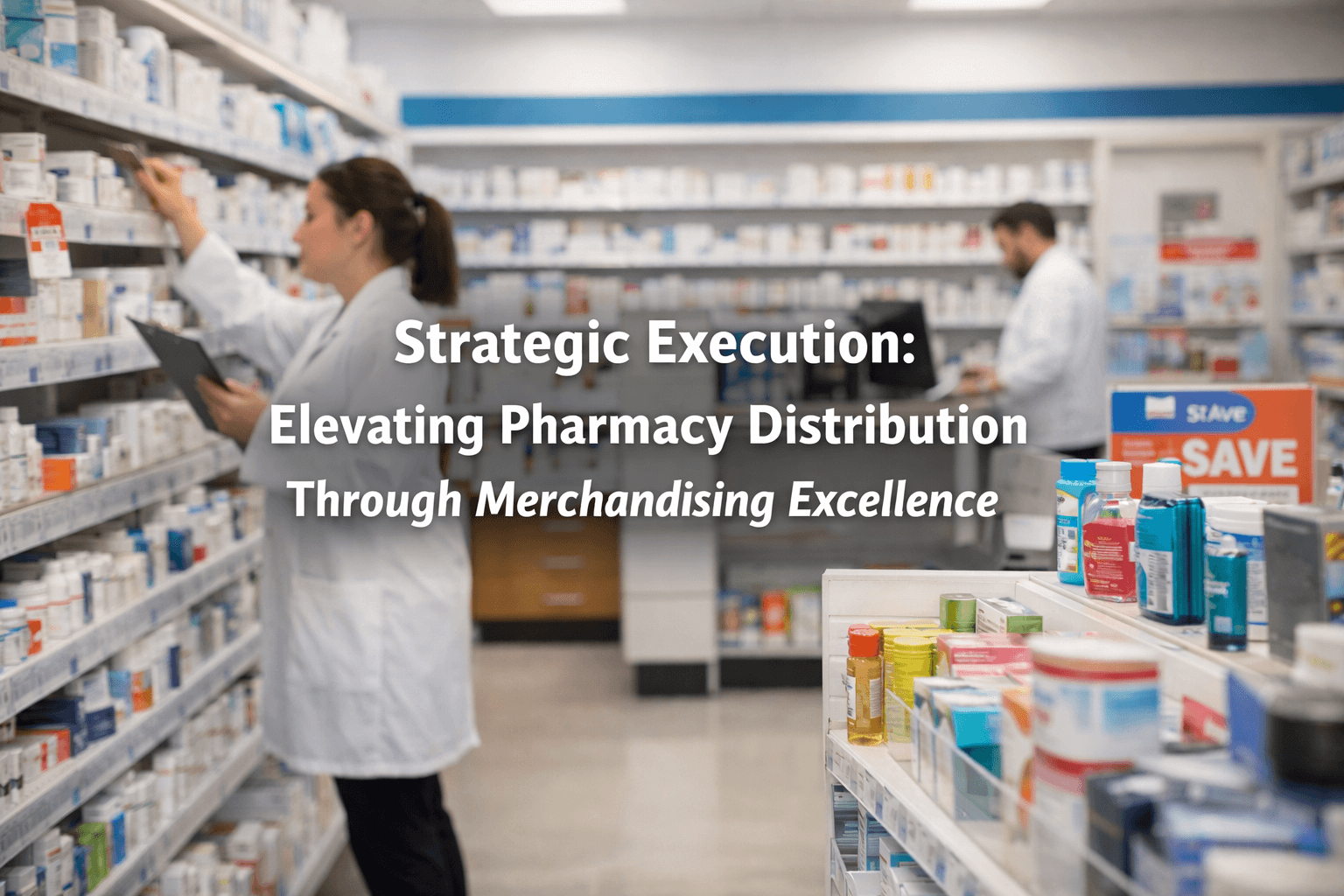
Understanding who the leading pharmaceutical manufacturers are matters. But understanding how to win at the final meter of the shelf is what separates market leaders from also-rans. In Malaysia’s pharmacy channel, the distributor’s role has fundamentally shifted from passive inventory holder to active brand steward.
Consider this: a Johor Bahru-based health supplement brand increased sales by 40% simply by tasking their distributor with optimizing shelf placements in independent pharmacies. The product didn’t change. The price didn’t drop. The visibility strategy did . Similarly, a Sabah medical device company reversed declining sales after their distributor implemented demonstration displays at pharmacist counters, resulting in a 30% uplift within one quarter . These are not anomalies. They are evidence that tailored merchandising execution—aligned with local buying behaviour and pharmacist workflow—directly moves revenue.
Yet merchandising consistency remains elusive. A brand may enjoy pristine planogram compliance in Bangsar outlets while suffering dusty, expired stock in Pahang’s independents. This execution gap erodes consumer trust and frustrates pharmacists who must manage brand mix without adequate support.
The Solution Framework:
Leading distributors now deploy dual-purpose display strategies that serve both consumers (clear benefits, bilingual instructions, seasonal cues) and pharmacists (quick-reference dosages, batch visibility, restock triggers). In Terengganu, one cough syrup brand introduced glow-in-the-dark age markers and magnified dosage charts after pharmacists reported elderly caregivers struggled to read small fonts. Sales improved 22% .
This is precision healthcare merchandising—and it requires more than logistics. It requires embedded distributor teams who think like retail marketers, not just delivery drivers.
Frequently Asked Questions (FAQ)
Q1: What are the top 5 pharmacy in Malaysia?
Answer: The top 5 pharmacies in Malaysia are Watsons Malaysia, Guardian Malaysia, Caring Pharmacy, Health Lane Family Pharmacy, and BIG Pharmacy.
Q2: What are the top 10 largest pharma companies?
Answer: The top 10 largest pharmaceutical companies globally include Pfizer, Roche, Novartis, Merck & Co., Johnson & Johnson, GlaxoSmithKline, AstraZeneca, Eli Lilly, Sanofi, and Bayer.
Q3: What is the largest healthcare company in Malaysia?
Answer: The largest healthcare company in Malaysia is IHH Healthcare, known for its vast network of hospitals across Asia and Europe.
Q4: What are the big 5 pharma companies?
Answer: The big 5 pharma companies are Pfizer, Roche, Novartis, Johnson & Johnson, and Merck & Co.
Q5: Who are the big 3 in pharma?
Answer: The big 3 in pharma refer to Pfizer, Roche, and Novartis.
Q6: Which is the biggest company in Malaysia?
Answer: The biggest company in Malaysia by market capitalization is Maybank, the country’s largest financial services group.
Q7: What are the 7 stars of pharmacy?
Answer: The 7 stars of pharmacy are key qualities for a successful pharmacist: knowledge, professionalism, communication, empathy, responsibility, leadership, and continuous learning.
Q8: What is the big 4 in pharma?
Answer: The Big 4 in pharma refers to the top four largest pharmaceutical companies: Pfizer, Roche, Novartis, and GlaxoSmithKline.
Q9: Who is a 10 star pharmacist?
Answer: A 10-star pharmacist is a highly respected professional known for excellence in both technical skills and customer care.
Q10: Who owns BIG Pharmacy Malaysia?
Answer: BIG Pharmacy is owned by the Health Management International (HMI) Group.
Building a compliant, high-velocity pharmacy distribution network in Malaysia requires more than spreadsheets and delivery vans. It demands on-the-ground intelligence, regulatory rigour, and merchandising precision that most logistics providers simply do not offer.
How can we assist you today? 😊
Just let us know—we’re here to help!