

The global pharmacy industry has evolved into a powerhouse, with the largest pharmacy chains now commanding unprecedented influence over healthcare service delivery worldwide. These are not mere retail outlets; they are integrated healthcare ecosystems generating billions in revenue, operating tens of thousands of locations, and increasingly acting as primary care touchpoints for millions of patients. From CVS Health and Walgreens in the United States to Boots in the United Kingdom and Watsons across Asia, these pharmacy giants have reshaped how consumers access medication, wellness advice, and even chronic disease management. Their scale is staggering, their supply chains are extraordinarily complex, and their strategic decisions often dictate market trends for the entire pharmaceutical sector. For pharmacy distributors in Malaysia, these global giants are not just distant competitors; they are invaluable blueprints. By dissecting how these organizations manage formulary selection, inventory turnover, and patient adherence programs, local players can extract proven, strategic frameworks. The global shift toward value-based care and omnichannel retailing is already knocking on Malaysia’s door. The question is not whether these models will arrive, but whether local distributors will be ready to adapt.
Consider the operational reality of a pharmacy distributor in Malaysia servicing a 50-outlet chain in the Klang Valley. The distributor manages thousands of SKUs, from high-margin cosmeceuticals to cold-chain dependent biologics. One stockout of a common antihypertensive can send patients queuing at a competitor across the street. Now, imagine scaling that pressure by a factor of ten thousand—this is the daily reality for the world’s largest pharmacy operators. CVS Health, for instance, processes over 1.5 billion prescriptions annually across nearly 10,000 locations. Their ability to maintain 98%+ in-stock rates is not accidental; it is engineered through sophisticated demand sensing algorithms and vertically integrated distribution assets. For the Malaysian market, where urban density in cities like Penang and Johor Bahru creates high-volume, low-margin pressures, the gap between local capability and global best practice remains measurable. However, this gap also represents opportunity. By benchmarking against these giants, local distributors can move beyond being mere order-takers. They can evolve into strategic supply chain partners who advise pharmacy owners on shelf-space optimization and category management—services that global chains have used for decades to lock in retailer loyalty.
Data reinforces the urgency of this strategic shift. The global pharmacy retail market was valued at approximately $1.2 trillion in 2023 and is projected to grow at a compound annual growth rate (CAGR) of 6.1% through 2030. Within Southeast Asia, Malaysia represents a mature but fragmented market, dominated by a mix of large local players like BIG Pharmacy and Alpro Pharmacy, alongside independent outlets. Yet, when compared to the operational efficiency of global leaders, significant headroom exists. A 2022 industry report suggested that supply chain inefficiencies account for up to 8–12% revenue leakage among mid-sized Malaysian pharmacy distributors, largely due to manual inventory processes and fragmented last-mile delivery. In contrast, Walgreens Boots Alliance has invested heavily in automated distribution centers capable of sorting 50,000 units per hour. While such investment levels are not immediately feasible for most Malaysian firms, the underlying principles—centralization, data integration, and vendor-managed inventory—are universally applicable. The practical implication is clear: incremental adoption of global-standard logistics technologies is no longer optional. It is an essential survival tactic in a market where patient expectations are rising and margins are compressing.
What does this mean for the pharmacy distributor operating in Shah Alam or Seremban today? First, it demands a re-evaluation of service level agreements with retail partners. Global leaders treat distribution not as a cost center, but as a competitive differentiator. They offer their franchisees predictable delivery windows, real-time stock visibility, and automated replenishment triggers. Malaysian distributors who wish to defend their turf against encroaching regional players must begin offering similar value-added services. This might start with something as straightforward as providing pharmacy owners with monthly consumption reports that identify slow-moving stock and recommend promotional interventions. It could evolve into co-managed inventory programs where the distributor physically monitors shelf levels during merchandising visits. The technology exists; the barrier is often mindset. By adopting the strategic lens of a CVS or Walgreens, even a family-owned distribution house in Malaysia can begin transitioning from a logistics provider to a healthcare enablement partner. This is the core claim of this analysis: global pharmacy influence is not measured by outlet count alone, but by the replicability of their operational DNA. And that DNA is now accessible to any distributor willing to learn.
Learn more: How Independent Pharmacy Distributors Compete with Large Chains
The Criteria for Ranking the Top 15 Largest Pharmacies
What fundamentally separates a mid-sized regional pharmacy chain from a global juggernaut? The answer lies in a multidimensional set of performance metrics that extend far beyond simple store counts. When industry analysts rank the world’s largest pharmacies, they apply a rigorous framework anchored in four primary pillars: annual revenue, global footprint, outlet density, and service diversification. CVS Health, for example, consistently tops rankings not merely because it operates approximately 9,900 retail locations, but because its 2023 revenue exceeded $320 billion—a figure larger than the GDP of many nations. Walgreens, while slightly behind in revenue, counters with a global presence spanning the US, Europe, and Latin America. Boots UK, owned by Walgreens, maintains brand equity so powerful it remains the first-line recommendation for British pharmacists. Revenue, therefore, signals market share and pricing power; global reach signals supply chain maturity; outlet count signals consumer accessibility; and service scope—ranging from minute clinics to specialty pharmacy—signals future-readiness.
For the pharmacy distributor in Malaysia, this ranking criteria offers a surprisingly direct diagnostic tool. It is reliable in its simplicity: global giants succeed because they optimize these four dimensions simultaneously. A local distributor can apply the same lens to assess their own portfolio. For instance, a distributor servicing 300 independent pharmacies in Malaysia may have decent outlet coverage, but if their revenue per outlet is declining, the issue likely lies in shallow service scope—perhaps they only deliver products and never assist with planogram compliance or staff training. By benchmarking against the proven metrics of global leaders, local distributors can identify specific gaps in their business model. Are you losing clients because your delivery lead time is 72 hours while a competitor offers 24-hour service? That is a logistics efficiency gap. Are pharmacy owners switching to another wholesaler because that competitor offers consignment stock? That is a financial engineering gap. The global ranking criteria, when deconstructed, become a strategic roadmap, not just a scoreboard.
| Performance Metric | Global Leader Standard (e.g., CVS/Walgreens) | Typical Malaysian Distributor Profile | Strategic Gap & Implication |
|---|---|---|---|
| Inventory Turnover Ratio | 10–12x annually (driven by automated replenishment) | 4–6x annually (manual ordering cycles) | High holding costs; cash trapped in slow-moving goods. Implication: invest in demand forecasting software or consignment models. |
| Service Diversification | Pharmacy clinics, medication synchronization, adherence packaging | Core wholesale distribution only | Commoditization risk; competing solely on price. Implication: develop compliance packaging services for nursing homes or chronic care patients. |
| Geographic Coverage Density | National saturation; urban and rural integration | Fragmented; often strong in one state (e.g., Selangor) but weak in East Malaysia | Inconsistent service levels; higher per-unit delivery cost to Sabah/Sarawak. Implication: explore 3PL partnerships for remote coverage. |
| Technology Integration | Real-time API connectivity with pharmacy POS systems | Manual order entry via WhatsApp or phone | Order errors; delayed fulfillment. Implication: pilot B2B e-procurement portal with basic inventory visibility. |
The practical implication for Malaysian distributors is this: you cannot improve what you do not measure. While a distributor in Kuching may never match CVS’s absolute revenue, they can certainly track their revenue growth rate relative to the local market. While they may not operate automated warehouses, they can measure order accuracy rates and set targets to reduce picking errors. Global leaders do not dominate because they are large; they dominate because they systematically close performance gaps. By adopting the same metric-driven discipline, a pharmacy wholesale distributor in Malaysia can build a defensible business that regional expansion funds find attractive to acquire. This is the strategic takeaway: rankings are retrospective, but the criteria that produce them are predictive. Use them to forecast your own trajectory.
Global Pharmacy Distribution Models: In-House vs. Third-Party Logistics
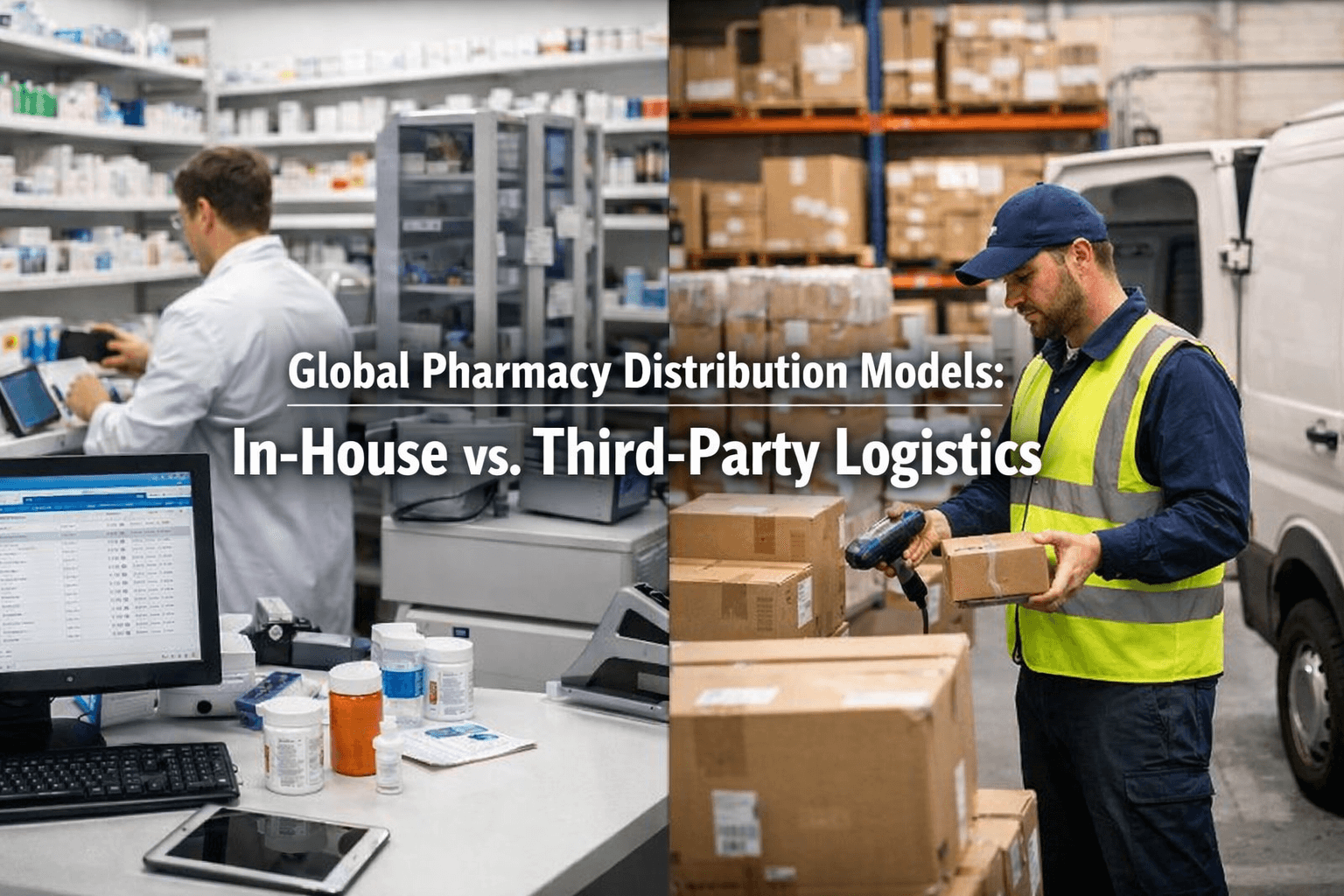
How do the world’s largest pharmacy chains physically move 500 million units of product annually without collapsing under their own weight? The answer lies in a strategic binary choice: build and operate captive logistics assets or delegate complexity to specialized third-party logistics (3PL) providers. CVS Health has historically favored the in-house model, investing billions into its own distribution center network and private fleet. This approach grants them total control over cold chain integrity, recall management, and last-mile delivery windows. When a CVS pharmacist in Boston identifies a temperature excursion on a shipment of vaccines, they can trace it back to a specific DC bay door within hours. Conversely, Walgreens employs a hybrid strategy, leaning on AmerisourceBergen (now part of the combined entity) as its primary wholesale partner. This proven model allows Walgreens to convert fixed logistics costs into variable costs, freeing capital for store refurbishments and digital health acquisitions. Neither model is objectively superior; the effectiveness depends on scale, therapeutic mix, and geographic density.
For pharmacy distributor Malaysia entities, this global debate is intensely practical. Consider a distributor servicing specialty oncology clinics in Penang. Oncology drugs often carry extreme temperature sensitivity and extremely high unit value. In this scenario, the CVS in-house logic applies strongly. Outsourcing such shipments to a generalist 3PL that primarily moves fast-moving consumer goods introduces unacceptable risk. A single deviation at 2–8°C can destroy a batch of biologics worth RM 50,000. Here, investing in dedicated, trained logistics staff and validated cold-chain equipment is not a cost; it is an insurance policy and a brand differentiator. On the other hand, a distributor supplying high-volume, low-risk commodities like paracetamol tablets or vitamin C to 500 general practice clinics across the peninsula may find the Walgreens 3PL model far more efficient. Partnering with a reliable courier network like GDEX or Pos Laju for standard cartons, while reserving internal resources for complex oncology or biologic shipments, creates a tailored cost structure.
From the perspective of a brand manager at a multinational pharmaceutical company launching a new diabetes medication in Malaysia, the distributor’s model choice is critical. They require a partner who can ensure pharmacy-level availability at launch day. An in-house heavy distributor might offer better execution certainty but at a premium price. A 3PL-leaning distributor might offer competitive wholesale rates but risk shelf gaps in remote locations like Kota Bharu. The brand manager must weigh speed-to-shelf against cost-to-serve. Simultaneously, the independent pharmacy owner in Johor views the model differently. They simply want one delivery before 10 AM that consolidates products from multiple suppliers. They do not care if the van is owned by the distributor or a 3PL, as long as it arrives intact and on time. This multi-stakeholder reality reinforces that there is no universal answer—only strategic alignment between the distributor’s operational model and the specific customer segments they target. The most expert distributors in Malaysia are those who have moved beyond dogmatic adherence to one model and instead operate a segmented logistics strategy, matching service levels to product value and customer expectations.
Learn more: How Independent Pharmacy Distributors Compete with Large Chains
Case Study: CVS Health – A Global Pharmacy Leader
What truly sets CVS Health apart from the crowded field of global pharmacy operators? It is not merely the scale of its 9,900 retail locations or its US$320 billion revenue trajectory. The defining characteristic of CVS is its systematic evolution from a retail pharmacist into a vertically integrated healthcare provider. This transformation reached its zenith with the acquisition of Aetna, a major health insurer, for $69 billion in 2018. This move was not diversification for its own sake; it was a fundamental restructuring of the healthcare value chain. CVS now effectively acts as payer, provider, and pharmacist simultaneously. When a CVS Minute Clinic nurse practitioner treats a strep throat, the insurance arm (Aetna) benefits from the lower cost of a retail clinic visit versus an emergency room visit. The pharmacy arm captures the antibiotic prescription. The front store sells the throat lozenges. This integrated model generates data-rich patient profiles that fuel adherence programs and preventive care outreach. It is the gold standard of pharmacy’s expanded mandate.
For a pharmacy distributor in Malaysia, replicating CVS’s vertical integration is obviously impossible. However, the underlying strategic intent is highly transferable. CVS succeeded not by doing one thing perfectly, but by layering complementary services onto its core distribution strength. A Malaysian distributor can adopt this layering principle. Start with reliable delivery. Add merchandising support for over-the-counter displays. Introduce pharmacy assistant training on new product indications. Develop patient education leaflets for chronic diseases like diabetes or hypertension, co-branded with the pharmacy. Each layer increases the switching cost for the pharmacy owner. Each layer moves the distributor from vendor status to trusted advisor. During the COVID-19 pandemic, Malaysian distributors who quickly offered mask bundling and hand sanitizer sourcing to their pharmacy clients strengthened relationships significantly. Those who simply continued business-as-usual lost relevance. CVS’s story is one of continuous service expansion, and Malaysian distributors who view their role through this lens will find tailored opportunities within their current client base.
The expert takeaway from CVS is this: your product is not the product; your service is the product. CVS does not make most of the drugs it sells. It purchases them from manufacturers like Pfizer and Merck, just as a Malaysian distributor purchases from local principals. The value CVS adds is accessibility, assurance, and advice. It guarantees the product is authentic. It guarantees a pharmacist is available to counsel. It guarantees the insurance claim is processed correctly. Malaysian pharmacy distributors who aspire to grow must ask themselves: what is the equivalent value-add we offer beyond delivery? Is it guaranteed cold-chain integrity? Is it expiry date management where we rotate stock before it expires, at our cost? Is it regulatory intelligence, alerting pharmacies two months before the National Pharmaceutical Regulatory Agency (NPRA) enforces a new labeling requirement? These are the proven differentiators that build unassailable market positions. CVS spent decades and billions building theirs; Malaysian distributors can begin building theirs tomorrow morning.
Learn more: Leveraging AI and Automation for Faster Pharmacy Distribution Services in Malaysia
Case Study: Walgreens – A Strategic Player in Global Healthcare
While CVS pursued vertical integration through insurance, Walgreens Boots Alliance charted a different but equally strategic course. Walgreens’ defining characteristic is its mastery of global scale through strategic partnership. Its long-term wholesale agreement with AmerisourceBergen is a case study in efficient capital allocation. By outsourcing the heavy lifting of inventory holding and DC operations, Walgreens preserved liquidity for high-return initiatives such as its minority stake in AmerisourceBergen and its aggressive expansion into primary care through investments in VillageMD. Today, Walgreens is co-locating full-service physician practices adjacent to its retail pharmacies, aiming to operate 1,000 co-located sites. This is not just retail; it is infrastructure for population health. Furthermore, Walgreens has internationalized its brand effectively, with Boots remaining the pharmacy of choice for British consumers and a premium health and beauty destination in Thailand and the Middle East through franchise partnerships.
This partnership-first model carries essential lessons for pharmacy distributors in Malaysia. It validates that you do not need to own everything to control the outcome. A Malaysian distributor can achieve national coverage without building warehouses in every state. Instead, they can form strategic alliances with regional logistics specialists—a partner in Sabah, another in Sarawak, a third in Northern Peninsular Malaysia. These partnerships, governed by clear service level agreements and shared technology platforms, can replicate the feel of a unified network without the associated capital expenditure. Walgreens also demonstrates the power of format diversification. Not every pharmacy outlet needs to be a 15,000-square-foot flagship. Walgreens operates small-format stores in dense urban cores, large-format stores in suburban areas, and specialized oncology pharmacies in medical office buildings. Malaysian distributors can advise their independent pharmacy clients on right-sizing inventory based on location. A pharmacy located next to a geriatric clinic in Ipoh should stock different products than one near a university in Bangi. Distributors who collect and share this hyperlocal insights become indispensable.
From the pharmacist’s perspective, Walgreens’ model offers relief from non-clinical burdens. Because the supply chain is reliable and automated, the pharmacist can focus on vaccinations and medication therapy management rather than chasing backorders. Malaysian pharmacists consistently report that supplier reliability is their number one frustration. Distributors who solve this—who deliver what they promised, when they promised, every time—will capture disproportionate loyalty. From the brand manager’s perspective, Walgreens’ global reach offers rapid scale. A product listed in Walgreens’ US system can rapidly be tested in Boots UK stores, providing valuable cross-market data. While Malaysian distributors cannot offer such global reach, they can offer cross-format insights. They can help a brand understand why a product performs well in a BIG Pharmacy outlet but poorly in an Alpro Pharmacy outlet, based on differences in foot traffic and promotional execution. This is expert counsel that commands premium margins. Walgreens proves that strategic partnerships, when managed with rigorous performance metrics, can outcompete vertical integration. For the capital-constrained Malaysian distributor, this is not a compromise; it is a smart and effective path to expansion.
Learn more: Pharmaceutical Regulatory Compliance: Importance and Strategies | Pharmaceutical Regulatory Compliance: Importance
Case Study: Boots: When Pharmacy Service Meets Retail Precision
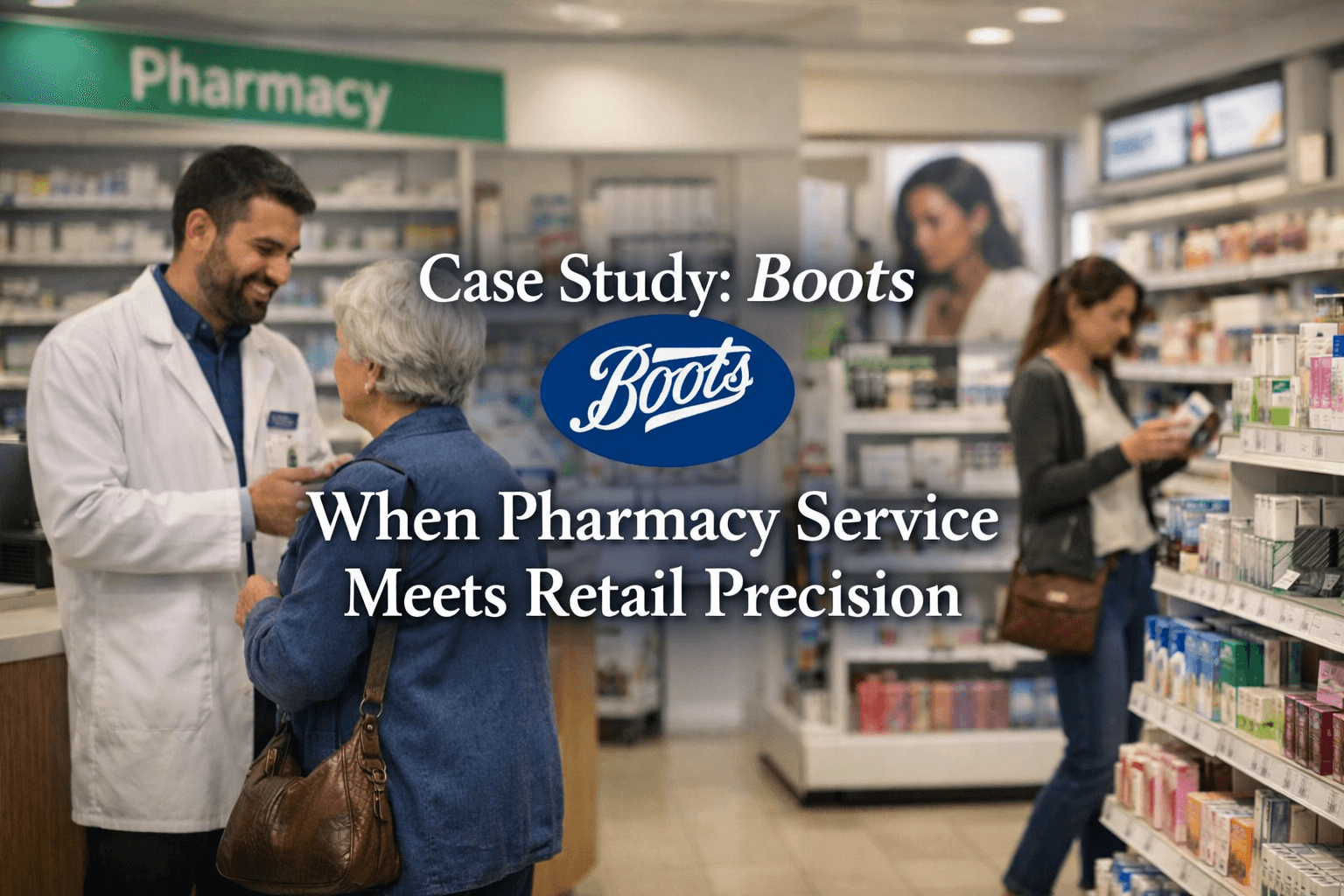
What truly sets Boots apart isn’t just its longevity—it’s the seamless fusion of high-trust healthcare with mass-market retail appeal. While many pharmacy chains struggle to balance clinical credibility with commercial viability, Boots has turned this tension into a proven competitive advantage. Operating over 2,500 outlets primarily across Europe, the brand has demonstrated that pharmacy counters need not be sterile, transactional spaces. Instead, they can function as destination health hubs where customers walk in for a prescription but leave with a holistic wellness solution. The magic lies not in any single innovation but in an integrated operational rhythm: pharmacists positioned as visible, approachable experts, retail shelves merchandised to reflect local health trends, and store layouts designed to reduce the friction between consultation and purchase.
For pharmacy distributor Malaysia players looking to emulate this model, the immediate reflex might be to mimic the aesthetics—sleeker shelves, brighter lighting, modern signage. But that would miss the point entirely. Boots’ strength is structural, not superficial. Their in-house distribution model allows for tighter quality control, consistent branding, and a reliable feedback loop between store managers and central procurement teams. When a Boots pharmacist in London identifies a surge in vitamin D inquiries during winter months, that data translates into replenishment orders within days, not weeks. Malaysian distributors, particularly those serving independent pharmacy networks, often operate in silos. The merchandiser visits once a fortnight; the pharmacist orders based on memory; the brand manager works off quarterly sales reports. The result is misaligned inventory and missed opportunities.
So what is the practical implication for local stakeholders? Consider this: Boots allocates significant floor space to own-brand products that sit adjacent to prescription medications—not hidden at the back of the store. This subtle placement signals clinical endorsement by proximity. Malaysian distributors could adopt a similar territory-specific ranging strategy. For instance, a pharmacy in Johor near the Singapore border may experience higher demand for travel health products, while an outlet in Penang’s heritage zone might benefit from enhanced elderly-care ranges. A tailored planogram approach, supported by real-time sales data, transforms the distributor from a passive supplier into a strategic category advisor. It is not about flooding every pharmacy with identical stock; it is about curating the right product, in the right store, at the right interval. And that level of sophistication requires distributors to evolve beyond logistics operators into insight-driven supply chain partners.
Learn more: Global Supply Chains in the Pharmaceutical Industry
Navigating Local Compliance: Why KKM and NPRA Alignment Is Non-Negotiable
If there is one lesson Malaysian pharmacy distributors can extract from the global playbooks of CVS and Walgreens, it is this: regulatory compliance is not a bottleneck—it is a brand asset. Both American giants operate across dozens of states, each with its own pharmacy board, dispensing laws, and controlled substance protocols. Yet they have transformed this fragmentation into a strategic capability, building dedicated compliance units that interface directly with regulators. The same principle applies in Malaysia, but with a sharper edge. Here, the National Pharmaceutical Regulatory Agency (NPRA) and Ministry of Health (KKM) do not merely advise; they enforce. For any pharmacy distributor Malaysia aiming to scale, understanding the circulars, scheduling updates, and licensing classifications is as essential as supply chain efficiency.
Yet compliance is too often treated as a back-office burden—paperwork to be filed, licenses to be renewed, audits to be endured. The global leaders view it differently. They see regulatory clarity as a barrier to entry for less-prepared competitors and a trust signal for pharmacists. When a Walgreens distributor ensures that every thermal-sensitive biologic arrives with a validated cold-chain log, the pharmacist does not just receive a product; they receive peace of mind. In Malaysia, where parallel imports and unregistered health supplements occasionally leak into the supply chain, a distributor with KKM-compliant warehousing and NPRA-registered product portfolios instantly differentiates itself. This is not merely about avoiding fines; it is about becoming the preferred partner for pharmacy owners who value their licenses over short-term margins.
Consider a Malaysia-specific scenario: A community pharmacist in Klang Valley receives an offer from a less scrupulous supplier offering a popular whitening cream at 30% below market rate. The product looks identical, but the packaging lacks the NPRA registration hologram. The pharmacist declines—not because of altruism, but because they recognise that a single seizure by KKM’s enforcement division could trigger a cascade of inspections, reputation damage, and potential suspension. This is where the compliant distributor wins. By proactively furnishing pharmacists with registration certificates, halal certifications, and expiration guarantees, the distributor reframes compliance from a cost centre into a value-added service. From the brand manager’s perspective, this diligence ensures their products are not competing against unregulated substitutes. From the pharmacist’s viewpoint, it safeguards the very license that allows them to practise. And from the distributor’s angle, it cements long-term account loyalty that discounting alone cannot buy.
Digital Infusion: How Smart Technology Is Reshaping Pharmacy Wholesale Distribution
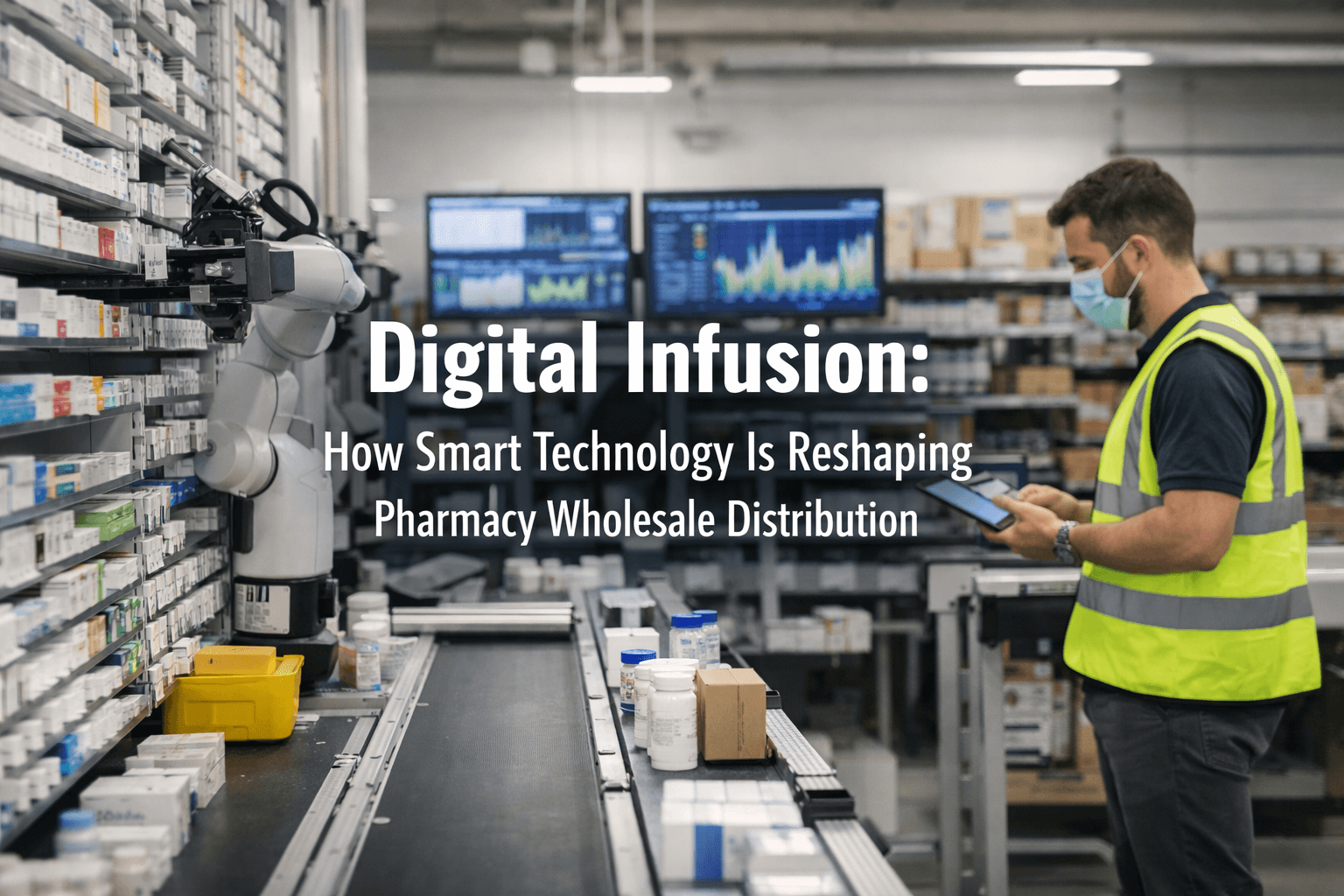
The pharmacy of the future will not necessarily be defined by the drugs it dispenses, but by the intelligence embedded in its supply chain. CVS and Walgreens have already crossed this threshold. Their distribution centres now resemble technology command centres more than traditional warehouses. Automated guided vehicles (AGVs) transport pallets; predictive algorithms flag stockouts before they occur; and centralised digital dashboards provide pharmacy managers with real-time visibility into order status, delivery windows, and substitution options. This is not futuristic speculation—it is the current operational baseline for scale players. For pharmacy wholesale distributors in Malaysia, the gap is not merely technological; it is perceptual. Many still view digital tools as expensive luxuries rather than efficiency enablers.
Yet the cost of manual inefficiency is mounting. A distributor handling 2,000 stock-keeping units (SKUs) across 300 pharmacy accounts without a digitised order management system will inevitably face order errors, delayed reconciliations, and frustrated retail partners. The pharmacist who receives the wrong strength of amlodipine is unlikely to complain; they will simply switch suppliers. This is where targeted, incremental digitisation yields outsized returns. One does not need a fully autonomous warehouse to improve service levels. A mobile-enabled sales force application, for instance, allows merchandisers to check real-time stock availability while standing at the pharmacy counter. An electronic proof of delivery (ePOD) system eliminates the lost delivery order disputes that plague many independent pharmacy relationships. These are not multimillion-ringgit transformations; they are pragmatic investments that directly improve the distributor’s reliability quotient.
Take the perspective of a pharmacist in Sabah. Her pharmacy serves a semi-urban community with specific demand for diabetes care products. Her current distributor requires three days for order processing, followed by another two days for cross-border shipping. If she runs out of glucose test strips on a Thursday, replenishment arrives the following Tuesday. A tech-enabled competitor offering a digital ordering portal with consolidated monthly delivery schedules could guarantee Thursday orders arriving by Saturday. She would switch—not because the competitor’s prices are lower, but because their operational predictability supports her patient care obligations. This is the understated power of distribution technology: it transforms logistical capability into clinical relevance. For brand managers, this digital layer also provides sell-through visibility previously obscured by wholesaler aggregation reports. They can finally distinguish between genuine retail velocity and inventory dumping. For the distributor, it closes the loop between intention and execution.
Confronting the Headwinds: Realities Facing Malaysia’s Pharmacy Distributors
Let us be candid: the operating environment for pharmacy distributor Malaysia players has seldom been more demanding. The convergence of global inflation, currency fluctuation, and supply chain volatility has compressed margins that were never particularly generous to begin with. Simultaneously, the competitive perimeter is expanding. International pure-play e-pharmacy platforms, while not yet dominant, are slowly acclimatising Malaysian consumers to the convenience of doorstep medication delivery. Large-format health and beauty retailers are expanding their wellness assortments, encroaching on categories once considered pharmacy-exclusive. And within the independent pharmacy segment, consolidation is accelerating. Smaller operators are joining banner groups to access better procurement terms, leaving traditional distributors to renegotiate relationships with newly formed centralised buying committees.
Yet within these pressures lie asymmetrical opportunities. The banners need suppliers who can service multiple outlets with consistent service levels—not just delivering products, but also providing instore execution support such as shelf replenishment, expired stock retrieval, and promotional set-up. Distributors who can field a trained, merchandising-capable workforce become essential to the banner’s retail operational model. This is the distinction between a transactional vendor and a trusted growth partner. Furthermore, the Malaysian private healthcare sector’s expansion into preventive medicine, health screening, and chronic disease management creates new channels beyond the traditional retail pharmacy counter. Corporate wellness programmes, clinic-based dispensaries, and telemedicine platforms all require last-mile pharmaceutical logistics. Distributors willing to segment their service offerings—premium same-day delivery for urgent prescriptions, economy freight for routine replenishment—can capture margin pools that undifferentiated operators cannot access.
From the brand manager’s vantage point, the ideal distributor is not necessarily the largest, but the most adaptive. A brand launching a new dermatological range does not need blanket national coverage on day one. It needs precision distribution: forty high-traffic pharmacies in Klang Valley with trained cosmetic pharmacists, compliant cold storage, and demonstrated efficacy in premium brand building. The strategic distributor listens for these nuanced requirements and customises the launch architecture accordingly. They do not treat every principal’s product like a commodity to be dumped into the broadest possible funnel. This tailored approach builds mutual equity. It also insulates the distributor from margin erosion, because brands pay a premium for execution fidelity, not merely shelf space. In an environment where everyone complains about price competition, the reliable distributor quietly builds defensibility through differentiation.
Recalibrating for Relevance: The Path Forward for Malaysian Pharmacy Distribution
What becomes clear, when one examines the operational blueprints of CVS, Walgreens, and Boots, is that their dominance does not stem from any single advantage. It is not merely their scale, nor their technology budgets, nor their regulatory heft. It is the synchronisation of all three, calibrated against a clear understanding of what their pharmacy partners actually require. For the pharmacy distributor Malaysia seeking relevance in this demanding landscape, the strategic imperative is not to replicate these giants wholesale, but to extract the underlying principles and adapt them to local constraints. Compliance as differentiation. Data as dialogue. Service as segmentation. These are not slogans; they are operational doctrines.
The independent pharmacist does not need a distributor to be the cheapest. They need a distributor who delivers cold-chain products before the vaccine spoils, who alerts them to expiry-sensitive stock before it becomes a write-off, who assists in rotating inventory during the merchandising visit. The brand manager does not need a distributor to hold excessive safety stock across every postcode. They need visibility into sell-out velocity, assurance that promotional mechanics are executed correctly at shelf level, and confidence that parallel exporters are not bleeding their authorised supply. These expectations are not unreasonable. They are, in fact, the baseline for partnership in a mature pharmaceutical market.
Malaysia’s pharmacy distribution sector stands at a juncture. It can continue to compete narrowly on landed cost and credit terms, chasing a race to the bottom with diminishing returns. Or it can elevate its value proposition, investing in the compliance infrastructure, digital interface, and instore execution capabilities that global case studies consistently validate. The latter path is harder. It requires capital, patience, and organisational willingness to disrupt legacy processes. But it is also the only route that leads to sustained relevance. The giants did not become giants by accident. They built their distribution ecosystems deliberately, painstakingly, and with an obsessive focus on the pharmacy partner’s success. Malaysian distributors who embrace this orientation will find that the lessons from Europe and America are not distant theories—they are immediate, actionable blueprints for building a distribution business that pharmacists trust, brands prefer, and patients ultimately benefit from.
Frequently Asked Questions (FAQ)
Q1: Which is the largest pharmacy chain in the world?
Answer: The largest pharmacy chain in the world is Walgreens Boots Alliance, with over 18,000 stores globally, spanning multiple continents.
Q2: What are the top 10 largest pharma companies?
Answer: The top 10 largest pharmaceutical companies are based on revenue, with leaders including Pfizer, Johnson & Johnson, Roche, and Novartis.
Q3: What are the big 3 pharmacy chains?
Answer: The “big 3” pharmacy chains globally include Walgreens, CVS Health, and Rite Aid, which dominate both the U.S. and international markets.
Q4: What are the top 20 pharma companies in the world?
Answer: The top 20 pharma companies by revenue include global leaders like Pfizer, Johnson & Johnson, Roche, and Merck & Co..
Q5: What is the largest pharmacy in Asia?
Answer: The largest pharmacy in Asia is Shanghai Pharma, a prominent player in China’s healthcare sector.
Q6: What are the 7 stars of pharmacy?
Answer: The “7 stars of pharmacy” refer to fundamental pillars for a successful pharmacy business, including quality care, accessibility, ethics, compliance, and others.
Q7: Who are the big 3 in pharma?
Answer: The big 3 in pharma often refer to Pfizer, Johnson & Johnson, and Merck & Co., known for their global influence and massive market share.
Q8: Is Walgreens or CVS more successful?
Answer: CVS Health is generally considered more successful than Walgreens, with larger revenue, strong pharmacy benefit management services, and a wide-reaching health services model.
Q9: Which country has the largest pharma industry in the world?
Answer: The United States has the largest pharmaceutical industry, driven by top companies like Pfizer, Johnson & Johnson, and Merck.
Q10: What is a pharmacy chain?
Answer: A pharmacy chain refers to a group of retail pharmacies, often owned or operated by the same company, providing pharmaceutical and health-related services.
How can we assist you today? 😊
Just let us know—we’re here to help!