

What can Malaysian pharmacy professionals truly learn from the scale of the largest global pharmacy chains? This is not merely an academic exercise in corporate comparison. Over the past decade, the phenomenon of healthcare retail consolidation has fundamentally reshaped how medicines, wellness products, and even clinical services reach the end patient. The rise of the largest global pharmacy chains and the most prominent top international pharmacies tells a story that extends far beyond simple store count. It is a narrative of supply chain sophistication, remarkable capital discipline, and a highly strategic integration between retail front-ends and distribution back-ends.
In 2027, these pharmacy brands worldwide operate at a colossal scale, one that directly influences global procurement strategies, the structure of pharmaceutical wholesale partnerships, and the efficiency of cross-border pharmacy distribution. Their expansive international pharmacy retail networks stretch across continents, seamlessly blending digital health platforms, in-store clinical pharmacy services, and deeply efficient logistics infrastructure. For stakeholders operating within Malaysia’s vibrant healthcare sector, this global evolution provides more than just inspiration—it offers essential benchmarks for growth and efficiency.
Understanding the nuances of a global pharmacy revenue ranking—the metrics of annual turnover, number of outlets, brand footprint, and healthcare capabilities—helps to contextualise the critical role of a robust pharmacy distribution service in Malaysia. While the Malaysian market is undeniably smaller and more regionally focused, its growth trajectory is heavily dependent on adopting best practices. This reliance manifests in the demand for reliable distributor pharmacy networks and adherence to GDP-certified distribution Malaysia practices. The models vary globally: some large chains operate tightly controlled, vertically integrated systems, while others depend on a network of pharmacy wholesale distributors to ensure consistent inventory turnover. For Malaysian brand owners, merchandisers, and pharmacy operators, these differing models offer trusted reference points for strategic decision-making. This analysis provides more than a simple list; it translates global scale into practical, actionable insight for retail pharmacy expansion strategy, compliance planning, and necessary upgrades to pharmacy logistics infrastructure within Malaysia’s unique healthcare ecosystem.
Ranking Methodology: Revenue, Outlet Network & Healthcare Capabilities
How do we objectively determine which pharmacy groups truly lead the world in 2027? Ranking retail pharmacy leaders requires a set of proven and reliable criteria, moving beyond brand perception to measurable data. For this 2027 overview, the methodology used here combines four key indicators to create a holistic view of operational might. These are: Annual Revenue as the core indicator of financial scale; Number of Outlets to reflect the true reach of an international pharmacy retail network; Geographic Presence to gauge capacity for cross-border pharmacy distribution; and Healthcare Service Integration, which measures the depth of in-store clinics, telehealth offerings, and preventive care programs.
Annual revenue remains the primary anchor in any global pharmacy revenue ranking exercise. However, revenue alone does not fully capture operational maturity. A pharmacy group demonstrating robust pharmacy supply chain management systems, diversified service lines, and a successful omnichannel pharmacy model shows deeper infrastructure resilience. Store count matters because outlet density directly translates to purchasing leverage and the strength of its pharmaceutical wholesale partnerships. A network exceeding 10,000 outlets, for instance, negotiates fundamentally different pricing and rebate structures compared to mid-sized regional chains. For Malaysian distributor pharmacy teams, this illustrates how scale directly influences margin frameworks and supplier agreements.
Geographic presence highlights a chain’s adaptability. Those operating successfully across multiple regulatory environments—from the US to Europe and Asia—have developed more sophisticated compliance governance systems. Their approach to navigating complex rules offers a roadmap that pharmacy compliance framework Malaysia counterparts can study to improve regulatory documentation, audit readiness, and overall quality assurance. Finally, the integration of clinical services shows whether a retail brand has truly evolved beyond simple dispensing. The presence of in-store vaccination programmes, chronic disease screening, and digital prescription fulfilment indicates a more expert healthcare positioning, shifting the brand from a commodity provider to a destination for wellness. For Malaysia’s pharmacy distribution service in Malaysia ecosystem, such benchmarking is essential. It clarifies how supply chain maturity and distributor pharmacy structure must align with retail growth ambitions to be truly effective.
Top 20 Largest Pharmacies in the World (2027 Global Ranking Overview)
Which pharmacy brands worldwide currently dominate the global stage, and what can their structures tell us about the future of the industry? Below is the 2027 global pharmacy revenue ranking overview of the top international pharmacies, categorised by their scale, infrastructure, and level of healthcare integration. This snapshot reveals not just who is biggest, but how they operate.
Top 20 Largest Global Pharmacy Chains (2027)
| Rank | Company | Revenue (USD, Approx.) | Outlet Count | Primary Markets | Distribution Model | Clinical Services Scope |
|---|---|---|---|---|---|---|
| 1 | CVS Health | $350B+ | 9,000+ | US | Vertically Integrated | In-store Clinics, Insurance |
| 2 | Walgreens Boots Alliance | $130B+ | 13,000+ | US, UK, Europe | Hybrid Model | Vaccination, Primary Care |
| 3 | Cigna (Evernorth) | $180B+ (Health Svcs) | 2,000+ | US | Integrated/Specialty | Specialty Pharmacy Care |
| 4 | Boots UK | $35B+ | 2,200+ | UK, Ireland, Thailand | Internal + Wholesale | Community Health Services |
| 5 | Walmart Pharmacy | $600B+ (Group) | 4,600+ | Global | Internal Logistics | Preventive Care, Clinics |
| 6 | Kroger Health | $140B+ (Group) | 2,000+ | US | Hybrid Model | Clinical Services, Nutrition |
| 7 | Rite Aid | $24B+ | 2,300+ | US | Wholesale Partnerships | Retail Dispensing, Minor Clinics |
| 8 | McKesson Corp. | $260B+ (Group) | Distribution-led | Global | Wholesale Giant | Infrastructure, Tech Services |
| 9 | Cardinal Health | $200B+ (Group) | Distribution Focus | Global | Wholesale | Logistics, Pharmaceutical Dist. |
| 10 | Sinopharm (China) | $80B+ (Pharma) | 10,000+ | China | State-linked | Hospital & Retail Network |
| 11–20 | Various Regional Leaders | $10–$60B | 1,000–8,000 | Europe, Asia, Americas | Mixed (Hybrid/Wholesale) | Mixed (Retail & Basic Clinical) |
The top tier—CVS Health, Walgreens Boots Alliance, and Cigna—clearly demonstrates the power of vertically integrated healthcare retail consolidation. These entities combine insurance arms, sophisticated pharmacy supply chain management, and high-volume retail dispensing within one strategic structure, allowing them to capture value at every step of the patient journey. In contrast, distribution-focused giants like McKesson and Cardinal Health are the unsung engines of the industry. As pharmaceutical wholesale partnerships powerhouses, they may not be traditional retail pharmacy leaders to the public, but they shape global inventory movement and are the backbone for countless independent pharmacy distributor ecosystems worldwide. For Malaysian professionals, understanding who operates internal logistics versus those relying on third-party wholesale models clarifies the underlying dynamics that determine product availability and pricing for pharmacy wholesale distributors and retailers alike.
Learn more: Malaysia Retail Pharmacy Market Size and Forecasts 2031
Distribution Models of Global Leaders: Lessons for Malaysian Pharmacies
Should pharmacies invest heavily in controlling their own logistics, or is it more efficient to focus on retail and rely on external experts? The global leaders demonstrate three primary models, each with proven advantages and trade-offs that are highly relevant to the Malaysian context. The first is Vertical Integration, epitomised by the CVS Health model. Here, the chain maintains full control from central procurement through to the final point of dispensing. This offers maximum margin control and supply chain visibility but requires heavy capital investment in warehouses, technology, and a dedicated fleet.
The second is the Hybrid Model, successfully employed by Walgreens Boots Alliance. This approach involves a mix of internal distribution hubs for core, high-volume lines and trusted pharmaceutical wholesale partnerships for slower-moving or niche products. It offers a balance of control and flexibility. The third model, Fully Outsourced, is common among smaller or rapidly growing chains that choose to rely entirely on specialised pharmacy wholesale distributors. This model frees up capital and management bandwidth to focus on store growth and customer experience.
From a distributor pharmacy perspective, vertical integration offers the greatest control but demands flawless execution. Warehouse infrastructure must be robust, temperature-controlled fleets must be reliable, and compliance teams must be meticulously trained. From the viewpoint of a retail pharmacist, the priority is simple: stock availability and service reliability. A trusted distribution partner, whether internal or external, reduces the risk of out-of-stocks, which is especially critical for patients dependent on chronic medications. Brand managers and suppliers, meanwhile, evaluate these models based on listing access. Large chains with internal systems can centralise buying decisions, which can be efficient but also creates a single point of entry. In contrast, independent pharmacy distributor partnerships may offer more tailored route-to-market flexibility, allowing brands to penetrate different pharmacy groups with varied value propositions.
In the Malaysian market, we are increasingly seeing the emergence of hybrid models. Local pharmacy chains are collaborating with established pharmaceutical wholesale partnerships for broad distribution while maintaining selective in-house logistics capabilities for high-value, sensitive, or own-brand products. The core lesson from the global giants is clear: distribution structure must be a strategic choice, aligned directly with scale ambition and risk appetite. Not every pharmacy chain requires the capital-heavy commitment of vertical integration. However, a strategic alignment between retail strategy and the capabilities of the distributor pharmacy team remains absolutely essential for sustainable growth.
Learn more: Pharmaceuticals Wholesale And Distribution Market Analysis, Size, and Forecast 2025-2029
The Role of Pharmacy Distribution Service in Malaysia: Bridging Global Standards and Local Execution
How does Malaysia effectively translate global pharmacy supply chain standards into tangible, on-the-ground reality? The nation’s healthcare retail sector operates within a well-defined pharmacy compliance framework Malaysia, strictly governed by the National Pharmaceutical Regulatory Agency (NPRA) and the Ministry of Health (KKM). Mandates for GDP-certified distribution Malaysia are not mere suggestions; they are enforceable standards that dictate every aspect of logistics, from stringent temperature control and full chain-of-custody traceability to unwavering audit readiness. This creates a high baseline for all operators.
The influence of global best practices in pharmacy supply chain management is evident in the rising expectations of local stakeholders. For instance, the adoption of real-time temperature tracking during transit, once a luxury, is now becoming a standard expectation for sensitive biologics. The use of digital proof-of-delivery systems with electronic signatures is replacing paper trails, enhancing security and efficiency. Furthermore, the demand for centralised procurement portals by larger retail groups mirrors the digital integration seen in the top international pharmacies, streamlining ordering and inventory management.
From a pharmacist’s perspective, a reliable stock replenishment system is the bedrock of patient trust. The consistent availability of chronic medication—be it for diabetes, hypertension, or high cholesterol—is a primary driver of customer retention and patient adherence. When a patient trusts that their pharmacy will have their medication ready on time, their loyalty deepens. For distributors, the focus is a dual imperative: unwavering compliance and peak logistics efficiency. This involves meticulous warehouse zoning, disciplined FEFO (First Expiry First Out) stock rotation, and the use of validated transport routes to guarantee both regulatory integrity and product quality upon delivery. It is a complex, high-stakes operation.
Brand managers and suppliers view this ecosystem through the lens of market access and execution. An effective distributor pharmacy partner is one that not only gets products into the central warehouse but also accelerates retail penetration and ensures excellent merchandising execution at the shelf level. A distributor’s ability to manage listings, negotiate shelf space, and provide sell-out data is as valuable as their logistics capability. While Malaysia’s evolving pharmacy distribution service in Malaysia ecosystem increasingly mirrors the sophisticated practices of global leaders, it is doing so at a scale calibrated to local demand and regulatory nuance. The persistent challenge, therefore, lies not in a lack of ambition, but in the disciplined, day-to-day execution required to bridge global standards with local market realities.
Learn more: Challenges and Opportunities in Malaysia’s Pharmaceutical Supply Chain | How to Identify a KKM Approved Cosmetic Label | GUIDELINE ON GOOD DISTRIBUTION PRACTICE
Independent Pharmacy Distributor vs Large Corporate Distribution Networks
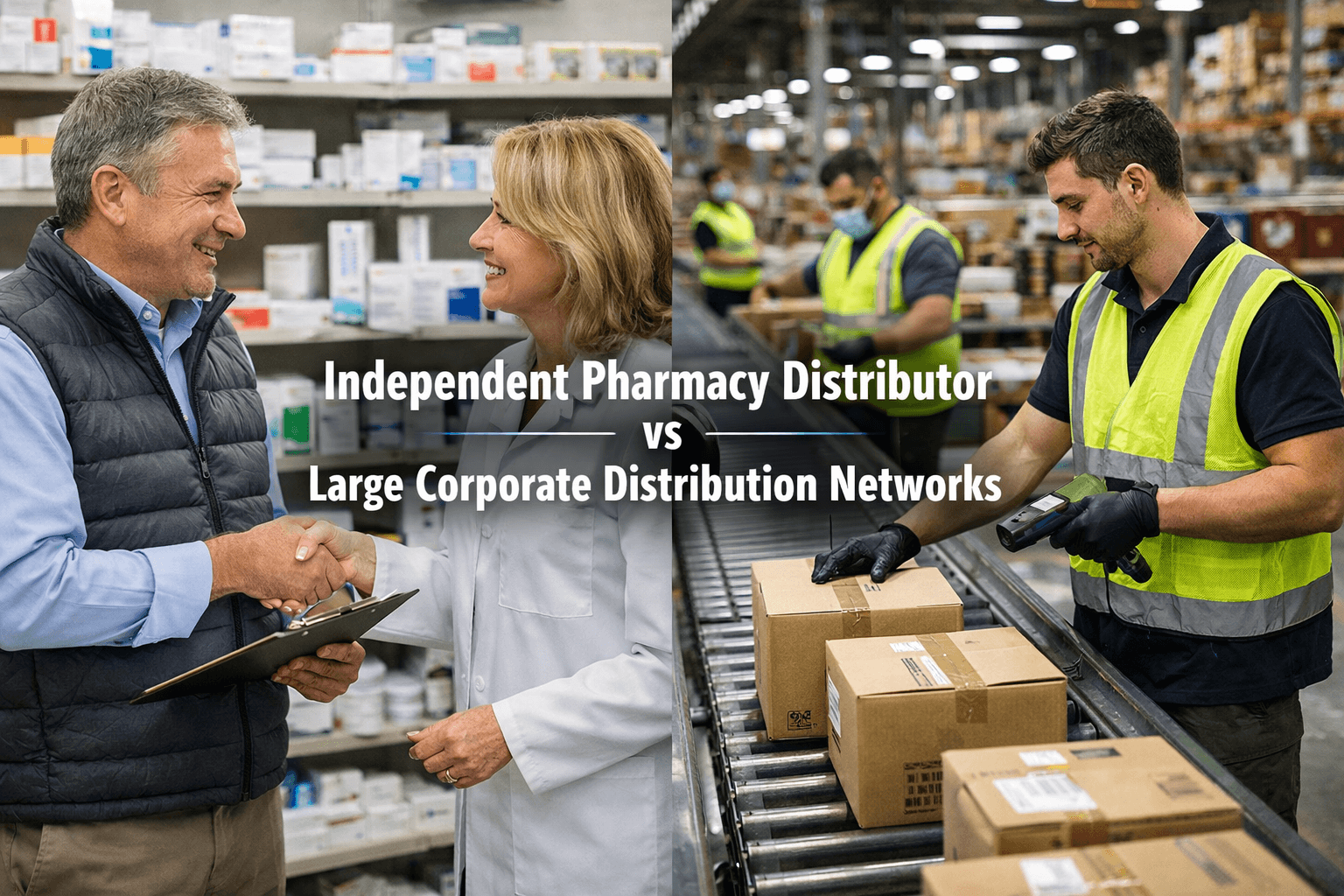
Which model better serves the diverse needs of Malaysian pharmacies operating in today’s competitive landscape? This is not a one-size-fits-all question. The answer often hinges on a pharmacy’s specific growth stage, therapeutic focus, and operational philosophy. Independent pharmacy distributor networks offer a distinct advantage in flexibility and relationship-driven execution. Their decision-making processes are typically faster, unencumbered by多层 corporate bureaucracy, and their territory focus can be sharper, allowing them to dominate specific local regions or niche therapeutic categories.
In contrast, large corporate networks bring undeniable infrastructure scale, sophisticated digital analytics, and significant capital strength. Their pharmacy logistics infrastructure often includes state-of-the-art automated warehouses, expansive national fleet coverage, and dedicated teams for regulatory affairs. This scale provides a level of consistency and reach that is difficult for smaller players to match. The choice, therefore, is a strategic one, balancing agility against raw power.
Below is a comparative view that highlights these trade-offs:
| Criteria | Independent Distributor | Large-Scale Distributor | Impact on Malaysian Pharmacies |
|---|---|---|---|
| Flexibility | High | Moderate | Faster decision cycles for tailored promotions and local needs. |
| Infrastructure | Moderate | Extensive | Broader SKU capacity and ability to handle high-volume, nationwide launches. |
| Compliance Resources | Variable | Strong | Large networks offer greater audit stability and dedicated QA teams. |
| Digital Systems | Basic–Advanced | Advanced | Better real-time inventory visibility and data sharing capabilities. |
| Relationship Depth | High | Structured | Independent owners often value deep, personal account management. |
Ultimately, Malaysian pharmacies often select partners based on a blend of these factors rather than size alone. A growing chain specializing in proven sports nutrition might prefer the agility of an independent partner, while a large healthcare group focused on chronic disease management might prioritise the reliable, consistent reach of a corporate logistics giant.
Learn more: Top 10 Pharmacy Distributors in Malaysia Ranking
Store-Level Impact: Merchandising, Service Expansion & Brand Presence
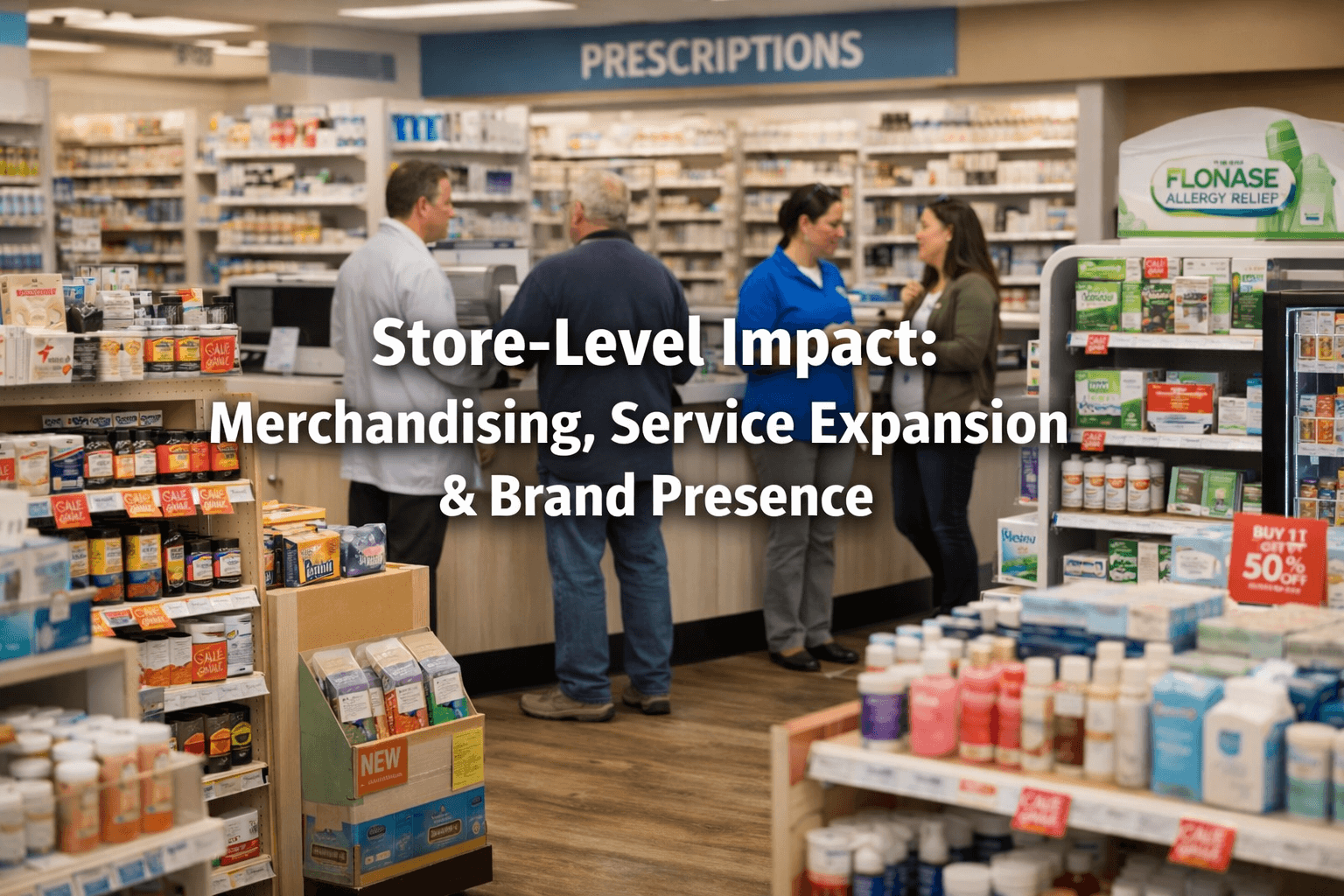
How does the strength of a distribution network translate into tangible performance at the shelf level? This is where the abstract concepts of logistics and compliance meet the reality of the customer experience. The largest global pharmacy chains invest heavily in elevating the store environment through enhanced in-store clinical pharmacy services. The presence of dedicated vaccination booths, private consultation rooms, and interactive digital kiosks significantly elevates patient engagement and positions the pharmacy as a true healthcare destination.
Merchandising execution is another critical reflection of distribution efficiency. If the behind-the-scenes stock replenishment process lags, the front-of-house planogram integrity inevitably suffers. Empty shelves or misplaced products erode customer trust and can lead to lost sales. A strategic link between the distribution centre and the store team is essential for maintaining a professional and appealing brand presence.
In Malaysia, the approach to this varies. Chain pharmacies with centralised operations may adopt corporate KPI dashboards to monitor planogram compliance and stock levels in real-time across all outlets. This allows for rapid, data-driven interventions. Independent outlets, however, often depend more heavily on the on-the-ground support of their distributor pharmacy partner. A merchandiser visiting an independent shop can provide crucial market intelligence, ensure promotional displays are set up correctly, and advise the pharmacist on upcoming trends. This is where the relationship depth of an independent distributor becomes a tangible asset.
Urban pharmacies in cities like Kuala Lumpur and Penang are increasingly emphasising preventive health services—health screenings, travel vaccines, and wellness consultations—to cater to a more health-conscious demographic. Suburban and rural outlets, by contrast, prioritise the consistent and reliable availability of essential medicines and common acute-care products. A strong alignment between pharmaceutical wholesale partnerships and the objectives of retail teams is what ultimately drives effective SKU turnover, reduces the financial impact of expiry losses, and ensures that the right product is in the right place at the right time.
Future Outlook (2027–2030): What Global Consolidation Means for Malaysia

Will the relentless wave of global mergers and acquisitions fundamentally reshape Malaysia’s pharmacy landscape in the coming years? The trend toward healthcare retail consolidation shows no signs of slowing down internationally. We are seeing the emergence of technology-driven ecosystems where the pharmacy is a central node. The integration of AI forecasting for inventory management and the expansion of integrated care models are actively redefining best practices in pharmacy supply chain management worldwide.
For stakeholders in Malaysia, these shifts carry significant implications. Pharmacy distributor Malaysia professionals may experience gradual shifts in procurement patterns as multinational pharmaceutical brands seek to standardize distribution agreements across regions, potentially favouring partners with regional scale. This could create pressure on smaller distributors to form alliances or specialise further.
Simultaneously, the importance of risk management and robust compliance governance will become even more essential. As global standards tighten, local regulators often follow suit. Being ahead of the curve on GDP-certified distribution Malaysia practices will be a key differentiator. The ongoing wave of digital transformation—particularly the adoption of AI-driven demand forecasting—will directly influence the efficiency and competitiveness of cross-border pharmacy distribution partnerships. The ability to predict demand spikes, manage complex inventories, and provide data-driven insights to brand partners will become a core competency. The next phase demands strategic readiness and proactive investment, not merely reactive adjustments to market shifts.
Learn more: The retail pharmacy of the future
Strategic Takeaways for Malaysian Pharmacies, Distributors & Brand Owners
What concrete lessons can Malaysian stakeholders extract from the operations of global pharmacy brands worldwide? The evidence from market leaders provides a clear roadmap. First, scale enhances negotiation leverage; whether achieved organically or through partnerships, volume commands better terms. Second, compliance builds a trusted reputation; in a regulated industry, a flawless audit trail is a powerful marketing asset. Third, data improves efficient forecasting; moving from reactive ordering to predictive analytics reduces waste and improves service levels. Finally, service diversification drives revenue; the pharmacy of the future sells health outcomes, not just products.
For pharmacy distributor Malaysia professionals, the path forward involves concrete investments:
Invest in digital warehouse management systems to improve accuracy and speed.
Strengthen GDP-certified distribution Malaysia compliance across all operations, not just the minimum requirements.
Enhance merchandising analytics capabilities to provide brand partners with valuable sell-out data.
For independent pharmacy distributor teams, the strategy lies in differentiation:
Focus on niche therapeutic strengths (e.g., oncology support, traditional remedies, sports nutrition) where you can offer deep expertise.
Build reliable, long-term pharmacist relationships based on trust and personalised service that large corporates cannot easily replicate.
For brand managers, success depends on alignment:
Align product launch strategy with the specific infrastructure capabilities of your chosen distributor pharmacy partner.
Benchmark key performance indicators against leaders in the international pharmacy retail network, adapting their metrics for the local market context.
Long-term competitiveness in this environment depends on building proven systems and fostering strategic partnerships, not on chasing short-term, unsustainable expansion.
Conclusion

The operations of the largest global pharmacy chains and leading retail pharmacy leaders consistently demonstrate that sustainable growth is not an accident. It is the product of disciplined supply chain management, unwavering commitment to compliance governance, and a deeply strategic alignment between retail-facing functions and the distribution backbone that supports them. For Malaysia’s dynamic healthcare ecosystem, the implications are clear and actionable. Whether you operate as an independent pharmacy distributor, a growing distributor pharmacy network, or a brand owner seeking to expand your listings, long-term success hinges on the same fundamentals: reliable infrastructure, proven compliance systems, and efficient merchandising execution. The market rewards those who build on a solid foundation.
Frequently Asked Questions (FAQ)
Q1: What is pharmacy and why is it important?
Answer: Pharmacy is the health profession that links the health sciences with the chemical sciences. It is concerned with the discovery, production, disposal, safe and effective use, and control of medicines and drugs. It is important because pharmacists, as experts in medicines, ensure the safe and optimal use of medications to improve patient health outcomes, prevent disease, and provide essential healthcare advice.
Q2: What services does a pharmacy provide?
Answer: Pharmacies provide a wide range of services, including dispensing prescription medications, offering over-the-counter (OTC) products and advice, providing medication management and counseling, administering certain vaccinations, conducting health screenings, and offering pharmacy care services (e.g., managing minor ailments, chronic disease management support).
Q3: What are pharmacy care services?
Answer: Pharmacy care services, often interchangeable with pharmaceutical care or advanced services, are patient-centered and outcomes-oriented practices where pharmacists work to design, implement, and monitor a therapeutic plan that will produce specific patient outcomes. Examples include Medication Therapy Management (MTM), chronic disease state management, immunization services, and support for smoking cessation.
Q4: Why is pharmacy first important?
Answer: “Pharmacy First” is a common term for schemes that allow patients to seek treatment and advice for minor illnesses directly from a community pharmacy, often without needing to see a GP. It is important because it improves patient access to convenient care, utilizes the pharmacist as a highly accessible healthcare professional, and reduces pressure on other NHS or healthcare services like GP surgeries and emergency departments.
Q5: What is the function of the pharmacy services?
Answer: The primary function of pharmacy services is to ensure that patients receive the appropriate medicines in the correct dose, along with the necessary information and support for their safe, effective, and rational use. This includes inventory management, compounding, dispensing, patient education, and collaboration with other healthcare providers.
Q6: What is pharmacy first service?
Answer: The Pharmacy First service (as implemented in the UK, for example) is a scheme that enables pharmacists to provide advice and, when appropriate, treatment (including prescription-only medicines via Patient Group Directions or by prescribing) for a defined set of common minor ailments (e.g., earache, sore throat, uncomplicated UTIs) directly in the pharmacy, expanding the pharmacist’s clinical role.
Q7: What services are offered by retail pharmacy?
Answer: Retail (or community) pharmacies offer services directly to the public, including dispensing prescriptions, selling over-the-counter medicines and health products, providing medication consultation, administering vaccinations (e.g., flu shots), offering health screening (e.g., blood pressure checks), managing minor ailments, and providing advice on healthy living.
Q8: Why is a pharmacy important?
Answer: A pharmacy is important because it serves as the most accessible healthcare point in many communities. It is crucial for safe and accurate medication dispensing, preventing drug interactions, offering essential health advice, providing primary healthcare interventions, and bridging the gap between patients and prescribers, thereby playing a vital role in public health.
Q9: What are the three types of pharmacies?
Answer: The three main types of pharmacy practice are generally categorized as:
- Community (Retail) Pharmacy: Pharmacies that serve the public directly in a community setting.
- Hospital (Institutional) Pharmacy: Pharmacies located within hospitals and healthcare facilities, serving inpatients and medical staff.
- Industrial (Pharmaceutical) Pharmacy: Involving roles in drug research, manufacturing, quality control, marketing, and regulatory affairs within the pharmaceutical industry.
Q10: Why is good pharmacy practice important?
Answer: Good Pharmacy Practice (GPP) is important because it establishes the standards for quality pharmacy services worldwide, ensuring that pharmacists provide care focused on the patient’s well-being and their use of medicines. GPP ensures safe dispensing, accurate information, professional advice, ethical conduct, and the overall goal of maximizing the positive health outcomes of patients.
How can we assist you today? 😊
Just let us know—we’re here to help!