
Top 20 Pharmaceutical Companies in Malaysia (2027 Edition)

By 2027, Malaysia’s pharmaceutical ecosystem has matured beyond its legacy as a hub for domestic manufacturing. It is now distinctly shaped by regulatory maturity, strategic export positioning, and deeply structured collaboration across the pharmaceutical supply chain Malaysia. The country has solidified its reputation as an ASEAN pharmaceutical export hub, leveraging strong GMP-certified production facilities and capitalizing on sustained Malaysia pharmaceutical market growth. This growth is not an accident; it is the result of deliberate policy and private sector investment working in tandem.
The expansion of pharmacy distribution service in Malaysia plays an undeniably essential role in this narrative. These services ensure that medicines and wellness products reach not only the bustling urban chains in the Klang Valley but also the independent pharmacies serving communities in Kelantan, Sabah, and Sarawak. Without a strategic and trusted distribution backbone, even the most established pharmaceutical companies in Malaysia would find themselves struggling to maintain nationwide stock continuity. A breakdown in this chain doesn’t just mean a missed sales target; it means a patient going without essential medication.
Compliance remains the absolute cornerstone of this landscape. NPRA registered products Malaysia and GDP compliant warehouse Malaysia facilities are no longer differentiators that give a company a nice-to-have edge—they are baseline, non-negotiable requirements for operation. Market leaders distinguish themselves by working seamlessly with the pharmacy distributor Malaysia network to maintain real-time inventory visibility, unbroken cold chain integrity, and consistent alignment with evolving regulations. As we examine the Top 20 pharmaceutical companies in Malaysia, a clear pattern emerges: leadership is not defined by revenue scale alone. It is defined by operational discipline, export readiness, and what we call distribution intelligence—the ability to move the right product to the right place at the right time, every single time.
Ranking Methodology: How the Top 20 Were Evaluated
What truly defines leaders in the Malaysian pharma industry?
To construct a ranking that is both credible and reliable, we moved beyond simple revenue estimates. Our evaluation framework is multi-dimensional, assessing companies against a set of rigorous, objective criteria that reflect the realities of the 2027 market. We wanted to cut through the marketing hype and identify firms with genuine, structured operational strength. The metrics included:
Revenue scale and depth of market penetration.
Pharmaceutical manufacturing Malaysia GMP certifications and their scope.
Export reach, specifically across ASEAN and into other emerging markets.
The breadth and therapeutic diversity of their NPRA registered products Malaysia portfolio.
Level of distribution integration with key pharmacy wholesale distributors Malaysia.
Warehouse capacity and the extent of GDP compliance across their logistics network.
Strength of collaboration with stakeholders in the distributor pharmacy model Malaysia.
An expert and proven evaluation framework was applied consistently. We recognized that companies with diversified product portfolios—spanning OTC, supplements, prescription medicines, and medical devices—required a different lens compared to niche therapeutic specialists. Their operational footprint was a critical factor. For instance, a manufacturer that owns and operates a GDP compliant warehouse Malaysia network with dedicated cold chain logistics Malaysia pharma capabilities demonstrates a higher resilience and commitment to quality than a firm that outsources everything to basic third-party logistics providers. That ownership signals control and a long-term view.
Importantly, we scrutinized how each company aligns with the independent pharmacy distributor ecosystem. In Malaysia’s dynamic and somewhat fragmented retail pharmacy channel Malaysia landscape, agility and flexibility often determine a product’s speed to shelf. A company that nurtures these relationships is better positioned to weather disruptions and capitalize on local market trends. The result is a ranking that reflects not hype or past glory, but current, structured operational strength and future readiness.
The Top 20 Pharmaceutical Companies in Malaysia (2027 Edition)
Which companies truly shape the Malaysian pharmaceutical industry today?
The following is a ranked overview of the Top 20 pharmaceutical companies in Malaysia. This list is based on a synthesis of our evaluation criteria, highlighting their manufacturing scale, compliance standing, export ambition, and distribution strategy. These are the firms setting the pace in 2027.
Pharmaniaga Berhad
As a government-linked pharmaceutical manufacturing Malaysia GMP powerhouse, Pharmaniaga continues to play a dominant role in public healthcare supply. Its strength lies in robust cold chain logistics Malaysia pharma capabilities and a nationwide warehouse network that supports its broad formulary portfolio.Duopharma Biotech Berhad
Widely recognized for its extensive range of NPRA registered products Malaysia across generics and OTC lines. Duopharma’s efficient supply model is deeply integrated with the pharmacy distributor Malaysia network, ensuring wide availability.Hovid Berhad
A long-standing manufacturer based in Ipoh with a significant export presence across Asia and Africa. Hovid’s long history is underpinned by a strong regulatory track record and well-established compliance systems.CCM Pharmaceuticals
A diversified producer serving both the hospital and retail pharmacy channel Malaysia with GDP-certified operations that provide a reliable and trusted supply stability for its partners.Xepa-Soul Pattinson
Recognized for maintaining exceptionally high manufacturing standards and a strong export orientation, perfectly aligned with the nation’s ASEAN pharmaceutical export hub ambitions.Kotra Pharma (Appeton)
A leader in the OTC and supplement space, Kotra Pharma leverages a robust distributor pharmacy model Malaysia to drive shelf expansion for its popular Appeton brand.Bioalpha Holdings
Focused on botanical and nutraceutical products, Bioalpha’s growth is fueled by broader Malaysia pharmaceutical market growth trends, particularly the rising consumer demand for wellness and preventive health.Y.S.P. Southeast Asia
A regional generics player with GMP-certified operations and a strong manufacturing and distribution footprint across ASEAN.Apex Healthcare
A well-balanced company with strong prescription and consumer healthcare lines. Its distribution network is particularly noted for its reliable coverage of rural pharmacies.Idaman Pharma
A specialist in contract manufacturing and private label production, serving as a crucial behind-the-scenes partner for many other brands.Medispec (M) Sdn Bhd
Focuses on niche therapeutic categories, securing consistent NPRA approvals for its targeted portfolio.Chemical Company of Malaysia (CCM Group)
Leverages its large industrial infrastructure to serve both public and private healthcare channels effectively.Alpro Pharmacy Manufacturing Division
Represents a significant move towards vertical integration, manufacturing products for its own successful retail pharmacy channel Malaysia chain.SM Biomed
A key player in the medical devices and hospital supply segment, ensuring critical equipment reaches healthcare providers.VitaHealth Malaysia
Holds a leadership position in the supplement category, thriving within the independent pharmacy distributor ecosystem through strong brand equity.Caring Pharmacy In-House Manufacturing
Another example of chain-aligned vertical sourcing, allowing for greater control over quality and margins.Biocon Malaysia
A major player in biologics, specifically insulin production, with a strong focus on export markets from its Malaysian base.Pharm-D Health Science
A local generics producer with an expanding domestic footprint and growing portfolio.Kotra Pharma International
The export-oriented arm of Kotra, specializing in taking Malaysian-made supplements to the world.Ideal Healthcare
An emerging contract manufacturer with scalable infrastructure, ready to support the next wave of pharma brands.
While these companies differ vastly in ownership and primary focus, they share a common pattern: deep operational integration with the broader pharmaceutical supply chain Malaysia. They understand that in this market, you are only as strong as your last delivery.
Learn more:Guide on Pharmaceutical Industry in Malaysia | Top 10 Pharmacy Distributors in Malaysia Ranking (2026 Edition)
The Role of Pharmacy Distribution Service in Malaysia
Why does distribution define industry leadership in 2027?
Even the top-tier pharma manufacturers Malaysia are fundamentally dependent on structured distribution channels. A brilliant new molecule or a life-saving generic is irrelevant if it sits in a warehouse. Without a reliable, strategic, and essential supply network, product innovation cannot translate into actual market penetration or, more importantly, patient access. The distribution layer is where the industry’s performance is truly tested.
Let’s look at this from multiple perspectives to understand its criticality:
Distributor Perspective: From a distributor’s lens, managing a GDP compliant warehouse Malaysia network is a constant exercise in risk mitigation. It’s not just about moving boxes; it’s about relentless focus on temperature control, ensuring absolute documentation accuracy for every batch, and maintaining perpetual NPRA audit readiness. Even a minor inventory misalignment at their end can cause a catastrophic disruption in stock continuity across the entire retail pharmacy channel Malaysia network. They bear the operational burden of compliance for everyone downstream.
Pharmacist Perspective: For a pharmacist in Penang or a small clinic in Kuching, the priority is simple: stock reliability and predictable credit terms . They need to know that the products they order will arrive on time and in perfect condition. An inconsistent distributor pharmacy model Malaysia approach—where deliveries are late or items are frequently out-of-stock—forces pharmacists to scramble, erodes patient trust, and directly damages the brand reputation of the manufacturer whose product is missing from the shelf. For them, the distributor is the manufacturer’s face.
Brand Manager Perspective: From a brand manager’s viewpoint sitting in a multinational or local company, evaluating listing potential depends almost entirely on distributor reach. A new skincare line or an innovative cardiac drug is only as good as the network that sells it in. A strong pharmacy distributor Malaysia network is an asset that ensures faster onboarding across both major chains and independent outlets, accelerating time-to-revenue.
Independent vs Chain Distribution: The choice between distribution models is also crucial. The independent pharmacy distributor ecosystem allows for localized relationships, flexible payment terms, and the ability to push niche products . Chain networks, on the other hand, demand structured planograms, centralized procurement approvals, and the ability to handle massive volumes reliably. Top companies often use a hybrid model.
Cold Chain and Logistics: Finally, the technical backbone. Cold chain logistics Malaysia pharma infrastructure is increasingly digitized, moving from manual temperature logs to real-time monitoring and automated alerts. This digitization significantly reduces the risk of product degradation during transit, strengthening the overall pharmaceutical supply chain Malaysia reliability and ensuring that sensitive biologics and vaccines retain their efficacy from factory to patient. The takeaway is unmistakable: in modern Malaysia, distribution strength determines competitive positioning. It is the new frontline of pharma competition.
Learn more: Challenges and Opportunities in Malaysia’s Pharmaceutical Supply Chain
Compliance as Competitive Advantage: NPRA, GDP & Governance
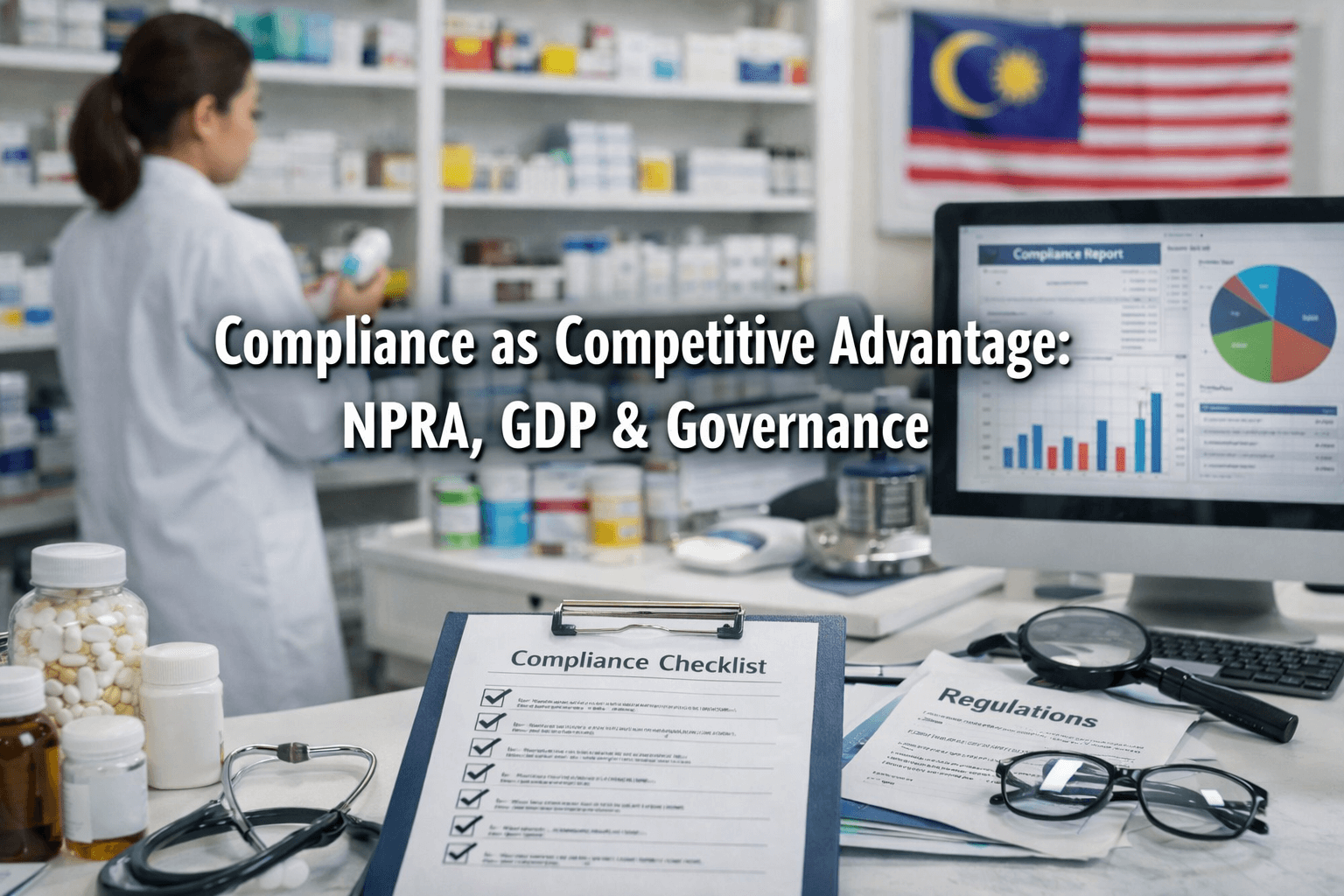
How does regulatory compliance directly influence pharmacy trust?
In a market as regulated as Malaysia’s, achieving and maintaining compliance is more than a legal checkbox—it provides a trusted, expert, and proven competitive edge. NPRA registration is the fundamental gateway; it determines a product’s legitimacy and its very right to exist on the market. Without it, securing a listing with any reputable pharmacy chain or hospital is virtually impossible. But beyond registration, it’s the ongoing adherence to Good Distribution Practices (GDP) that signals true operational maturity.
The table below illustrates how different levels of compliance translate into market positioning and risk:
| Compliance Element | Market Leader Approach | Mid-Tier Manufacturer Approach | Business Risk if Non-Compliant |
|---|---|---|---|
| NPRA Registration | Full portfolio approval, proactively renewed | Partial approval, occasional lapses in portfolio | Listing rejection by major chains; product seizure |
| GDP Certification | Multi-warehouse certified network across regions | Single certified site, reliance on non-certified 3PLs | Supply chain disruption; loss of key contracts |
| Cold Chain SOP | Digital, real-time monitoring with automated alerts | Manual temperature tracking with periodic checks | Product degradation; loss of efficacy; financial write-offs |
For pharmacy buyers and procurement managers, a company’s compliance status signals stability and reliability. It reduces their own audit risks when onboarding new suppliers and strengthens their confidence in entering long-term contracts. Furthermore, as NPRA continues to enhance its licensing processes—including pre-licensing evaluations and both on-site and remote GDP inspections—having robust internal systems is no longer optional . Leaders in the Top 20 view these inspections not as hurdles, but as validations of their commitment to quality, using frameworks like Corrective and Preventive Action (CAPA) plans not just to fix issues, but to continuously improve their operations . In this environment, compliance is quite simply the price of admission to the big leagues.
Learn more: WHO Technical Report Series No. 1025, Annex 7: Good Distribution Practices for Pharmaceutical Products | How to Identify a KKM Approved Cosmetic Label
Distribution Models: Independent vs Chain Pharmacy Strategy
Which model offers stronger scalability for pharmaceutical manufacturers in Malaysia? This is a question that often divides opinion in boardrooms, yet the answer isn’t a simple binary choice. The independent pharmacy distributor ecosystem in Malaysia offers something that large chains often struggle to replicate: flexibility and the power of localized relationship-building. Distributors serving independent outlets, like those in smaller towns across Kedah or Johor, operate with a high degree of autonomy, allowing them to tailor order quantities and engagement frequency to the specific needs of a family-run pharmacy.
Conversely, chain pharmacy integration—with major players like Guardian, Watsons, and AA Pharmacy—demands a completely different discipline. Here, the game is played by a rigid rulebook. Standardized margin structures are non-negotiable, and forecasting accuracy must be near-perfect. One major distributor shared that a forecast error of just 5% for a chain client can result in stock-outs across fifty stores simultaneously, damaging brand reputation overnight. It’s an efficient, high-volume channel, but it leaves little room for error or personalized flair.
The daily realities on the ground highlight the tension between these models. Pharmacists at the counter deeply value strict rotation policies and expiry management; they don’t want to be left holding expired stock. Distributors, meanwhile, are constantly running the numbers, prioritizing route optimization to squeeze margin from every drop of fuel. Brand managers, stuck in the middle, find their focus shifting from just selling in products to obsessing over merchandising execution—was the display actually set up? Was the point-of-sale material used correctly?
A tailored, efficient, and strategic hybrid approach often performs best in this landscape. The winning strategy isn’t picking one model over the other, but orchestrating a balance between centralized scale and regional agility. For instance, a proven tactic is using a national chain partner for flagship product volume, while deploying a specialized independent distributor to launch a niche supplement in Penang. This dual approach ensures market coverage isn’t just wide, but deep.
Product Portfolio Strength: OTC, Rx & Export Growth
Which segments drive Malaysia pharmaceutical market growth in the current economic climate? While prescription drugs remain the backbone, the real dynamism is occurring at the edges. There’s been a notable therapeutic expansion into high-margin supplements and chronic disease generics, particularly for diabetes and hypertension, which are fuelling sustained demand. Companies are no longer just treating illness; they are aggressively targeting wellness.
Simultaneously, smart players are looking beyond domestic borders. Export positioning within ASEAN pharmaceutical export hub initiatives is strengthening revenue diversification. Malaysia’s strategic location and quality manufacturing standards make it an essential launchpad for generic drugs heading to Indonesia, Thailand, and Vietnam. This isn’t just about selling more; it’s about building a reliable buffer against local market fluctuations.
To illustrate the diverse portfolio strategies currently winning in the market, consider the following comparison of leading players:
| Segment | Leading Companies | Distribution Channel | Growth Driver |
|---|---|---|---|
| Generics | Duopharma, Y.S.P | Chain + Independent | Chronic care (diabetes, hypertension) |
| Supplements | VitaHealth, Kotra | Independent focus, some chain | Preventive health / “SELF” care trend |
| Insulin/Biologics | Biocon, local partners | Hospital + Select Chain | High diabetes prevalence in Malaysia |
A diversified portfolio, spanning prescription, over-the-counter (OTC), and exports, creates effective, reliable, and essential revenue streams. It insulates manufacturers from policy changes in one segment and allows them to capitalize on growth wherever it appears—whether that’s a new health supplement trend or a government push for generic prescribing. The key is managing these distinct portfolios with equal rigor, recognizing that the distribution model for a high-volume generic cannot simply be copied for a premium, cold-chain dependent insulin product.
Market Access Strategy: Winning in Malaysian Pharmacies
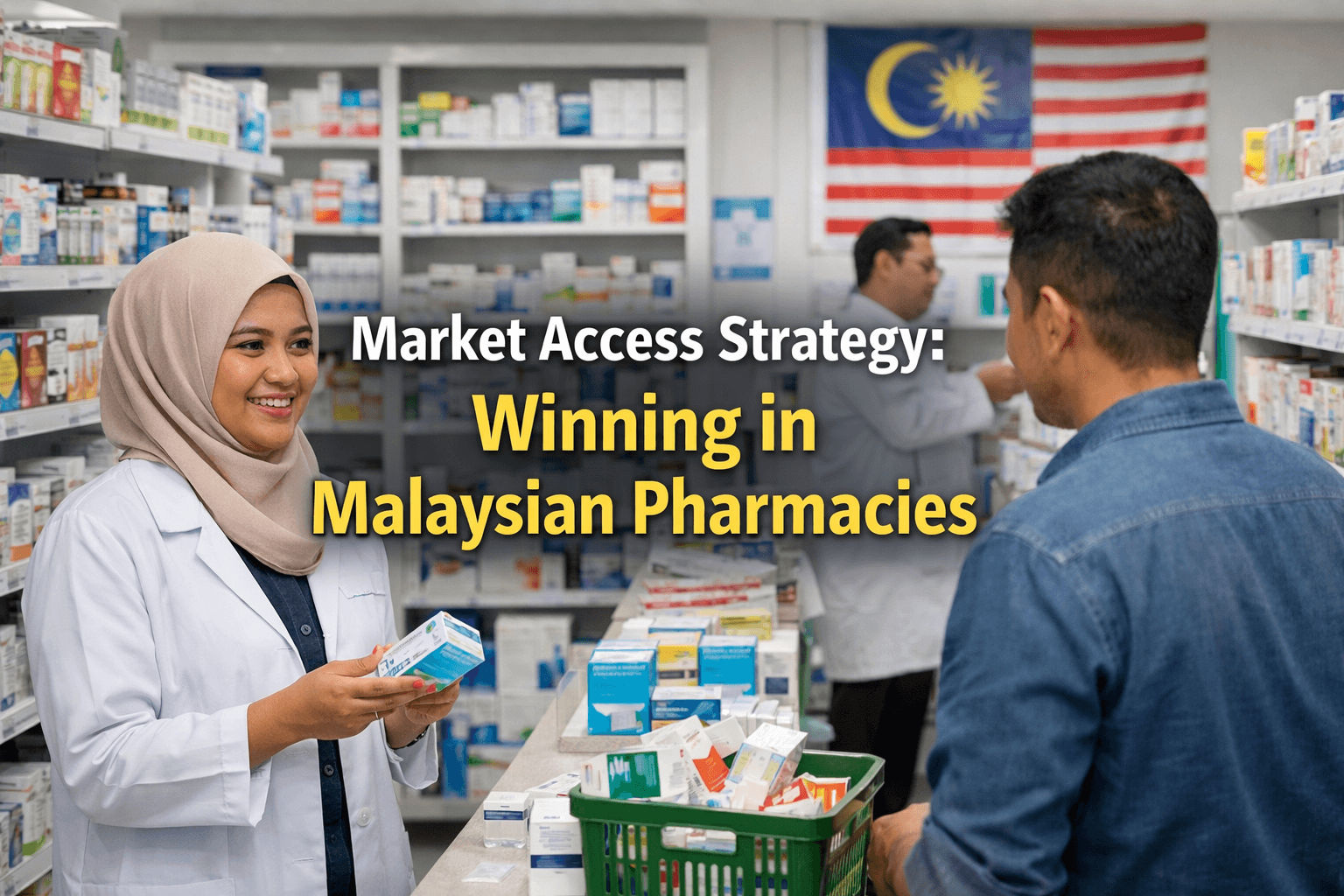
How do top companies secure shelf space in an increasingly crowded retail pharmacy channel Malaysia? Winning requires more than just getting a listing approval from a buyer’s office. It involves a deeply structured and persistent engagement with pharmacy wholesale distributors Malaysia and the end retailers themselves. It’s a multi-layered chess game, not a sprint.
Sales vs Merchandising: The Execution Gap
There is a fundamental distinction between selling and merchandising, and confusing the two is a common pitfall. In-house sales representatives are excellent at generating relationship depth. They can negotiate trading terms and present new product launches with the authority of the brand behind them. However, they are often expensive and their time is scarce. On the other hand, specialized professional merchandising services offer a different kind of value: consistency. These teams are experts at driving planogram compliance. They ensure that every shelf, in every store, looks exactly as the brand manager intended. The most strategic companies use a blend: senior reps manage key accounts and relationships, while a merchandising arm handles the relentless, detailed work of shelf-tidying and display setup across hundreds of stores.
Data-Driven Forecasting: The New Battleground
Gone are the days when orders were placed based on a “gut feel.” The modern battleground for pharmaceutical supply chain Malaysia leadership is data accuracy. ERP integration with distributor systems is no longer a luxury; it’s a necessity for enhancing stock predictability. When a manufacturer’s system can “talk” directly to a distributor’s warehouse management system, the entire supply chain tightens. It allows for vendor-managed inventory models where stock is replenished automatically based on actual consumption, not just periodic purchase orders. This effective approach dramatically reduces the risk of overstocks or, conversely, lost sales due to stock-outs on key items like popular analgesics or children’s vitamins.
The Brand Manager View
From the brand manager’s perspective, a market access strategy lives or dies by its return on investment (ROI). Every ringgit spent on trade promotions, discounts, or free stock must be justified. They know that promotional ROI depends entirely on getting the correct SKU mix into the right outlets. Running a premium, high-margin supplement promotion in a pharmacy chain known for deep discounts on generics might fail. Conversely, pushing a bulk-pack economy painkiller in a high-end “beauty and wellness” pharmacy in Kuala Lumpur would be equally ineffective. The brand manager relies on the distributor to provide the intelligence needed to prioritize outlets that match their product’s profile.
The Pharmacist View
At the counter, the pharmacist’s perspective is ruthlessly practical. Their shelf space is prime real estate, and every centimeter must earn its keep. Shelf rationalization decisions—deciding what stays and what goes—are based almost entirely on sell-through performance. If a product doesn’t move, regardless of how good the listing agreement was, it will be delisted to make room for something that does. Pharmacists value distributors who provide clear sell-out data and who take back slow-moving stock without fuss. They want partners, not just suppliers.
A strategic, proven, and efficient market access model aligns all three stakeholders. It gives the brand manager confidence, the pharmacist a reliable product, and the distributor a profitable, predictable volume of business.
Future Outlook (2027–2030): Digitalisation & Intelligence

Where is Malaysia’s pharma supply chain heading over the next three to five years? The buzzwords are finally becoming reality. We are moving beyond basic digitalization toward true intelligence. Digital compliance tracking and AI-driven demand planning are actively reshaping how pharmaceutical supply chain Malaysia operations function, moving them from reactive to predictive models.
Imagine a system that can predict a spike in demand for flu medication based on weather patterns and social media trends, automatically adjusting production and distribution schedules weeks in advance. This is the near future. Forward-looking companies are already integrating their ERP systems with distributor dashboards, creating a seamless flow of real-time information. This isn’t just about efficiency; it’s about building a trusted partnership where both parties operate from the same data set, eliminating the information asymmetry that often leads to conflict.
Furthermore, the conversation is expanding to include sustainability. Sustainability reporting is increasingly expected by global partners and multinational principals. Distributors in Malaysia will need to track and report on their carbon footprint, fleet efficiency, and packaging waste. It’s becoming a compliance issue, driven by the environmental, social, and governance (ESG) goals of the multinational corporations they serve. A reliable, forward-looking, and expert digital strategy—one that encompasses both AI-driven analytics and verifiable sustainability metrics—will be the key differentiator that separates market leaders from the followers in the coming decade.
Learn more: Third-Party Risk Management (TPRM) Platform Overview
Conclusion: What This Ranking Means
This exploration of Malaysia’s top pharma manufacturers reveals a crucial insight: they demonstrate that scale alone is insufficient for true market leadership. In an environment as dynamic as Malaysia’s, raw production capacity counts for little if it isn’t supported by flawless execution. It is the integration of manufacturing with robust compliance and true distribution sophistication that ultimately drives leadership.
For brand owners looking to enter or expand in this market, the path is clear. Aligning with the right pharmacy distributor Malaysia network is not a back-office function; it’s a core strategic move that directly strengthens shelf penetration and brand visibility. A poor distribution partner can kill a great product.
For distributors themselves, the mandate is equally clear. Upgrading warehouse management systems and investing in digital infrastructure is not an optional IT project; it is an investment in ensuring long-term competitiveness. The days of relying solely on personal relationships are fading; now, relationships must be backed by hard data and operational excellence.
For pharmacies, the advice is to be selective. Choosing partners with a demonstrable track record of consistent compliance—from GDP standards to ethical sales practices—significantly reduces operational risk and ensures a steady, reliable supply of quality medicines to their customers.
The long-term outlook for pharmacy distribution service in Malaysia remains not only essential but undeniably strategic. It is the backbone of the nation’s healthcare system. For those who operate with integrity and foresight, this sector offers a future that is both commercially rewarding and fundamentally trusted by the communities they serve.
Frequently Asked Questions (FAQ)
Q1: How to check if a medicine is KKM approved?
Answer: You can verify medicine approval through the National Pharmaceutical Regulatory Agency (NPRA) website using the QUEST system. Enter the product name or registration number to confirm if it is registered with Ministry of Health Malaysia (KKM).
Q2: How to verify an online pharmacy?
Answer: Check whether the pharmacy is registered with the Ministry of Health Malaysia and displays a valid business registration number. Avoid websites selling prescription medicines without requiring a prescription.
Q3: How many registered pharmacists are there in Malaysia?
Answer: Malaysia has over 15,000 registered pharmacists, according to recent data from the Pharmacy Board Malaysia, though the number increases annually.
Q4: How do I spot a fake KKM label?
Answer: A fake KKM label may have incorrect formatting, missing registration numbers, or unverifiable codes. Always cross-check the product’s MAL number via the NPRA QUEST database.
Q5: What is a pharmacy checker?
Answer: A pharmacy checker refers to an online verification tool or regulatory database used to confirm whether a pharmacy or medicine is legally registered.
Q6: How to check if a product is registered?
Answer: Visit the NPRA QUEST portal and search by product name, MAL number, or company name to confirm registration status.
Q7: Where to search if a company is registered?
Answer: In Malaysia, you can verify company registration through the Companies Commission of Malaysia (SSM) online portal.
Q8: How to verify a company’s legitimacy in Malaysia?
Answer: Check SSM registration details, verify physical address and contact information, and confirm relevant regulatory licenses where applicable.
Q9: How do I verify a product’s KKM status?
Answer: Use the NPRA QUEST online search tool to confirm if the product is notified (for cosmetics) or registered (for medicines) under KKM.
Q10: Where can I find a list of FDA approved products?
Answer: FDA-approved products can be searched on the official website of the U.S. Food and Drug Administration (FDA) through its drug database.
If your organization is exploring pharmacy distribution solutions, professional merchandising support, or structured market entry within Malaysia, our team at PriooCare Malaysia provides strategic guidance aligned with the latest compliance standards and on-the-ground retail pharmacy realities.
Our Services
Our marketing and sales teams use their strong relationships with the channel to create demand for your product at every stage of its lifecycle.
Demand creation services we offer:
Market Access Services
Regulatory Registration Services
Pharma Product Listing Services
Merchandising services (RSMS)
Brand Management
Logistic & Warehousing
Exclusive Merchandising Services
Visual Merchandising
Discover More About Our Solution
How can we assist you today? 😊
Just let us know—we’re here to help!