

In the highly regulated and intensely competitive Malaysian pharmaceutical market, a company’s manufacturing prowess is merely the starting point. The true differentiator, the factor that elevates a firm from a simple producer to a market leader, lies in its mastery over the healthcare supply chain. The landscape in 2025 is defined by a complex, interdependent network where pharmaceutical manufacturers, pharmacy wholesale distributors, and retail pharmacies must operate in seamless synergy. This ecosystem ensures that every NPRA-compliant product—from essential antibiotics to specialized biologics—traverses the final, critical mile to reach patients in Klang Valley high-rises and rural clinics in Sarawak with unwavering reliability. The most impactful companies, therefore, do not just make medicines; they architect and optimize the very infrastructure of national healthcare delivery, becoming strategic, trusted, and essential partners in public health.
The Core Framework: Why Distribution is the Decisive Competitive Edge
The central claim is unequivocal: in Malaysia’s fragmented and regulation-dense environment, distribution capability is the single greatest determinant of a pharmaceutical company’s market success and public health impact. It is the strategic backbone that transforms a product portfolio into patient access. This is not merely about moving boxes from point A to point B. It is about constructing a reliable, efficient, and compliant bridge between production and consumption, one that can withstand regulatory scrutiny, geographical challenges, and fluctuating healthcare demands. A superior product stranded in a warehouse is a clinical and commercial failure; a consistently available product on the pharmacy shelf is a testament to a company’s operational excellence and deep market integration.
Consider the stark reality faced by a community pharmacist in Kota Bharu. They require a steady, predictable supply of cardiovascular generics and childhood vaccines. Their ability to serve their community hinges not on which company manufactured the drug, but on which company’s distribution partner can guarantee GDP-compliant delivery before stock runs out. This operational reality shifts the competitive battleground. The proven leaders are those who have invested not only in R&D but in building and managing this complex logistical web, ensuring their products are not just approved, but accessible.
Learn more :The Role of Pharmacy Distribution Services in Malaysia’s Healthcare System
Navigating the Malaysian Distribution Matrix: Models and Nuances
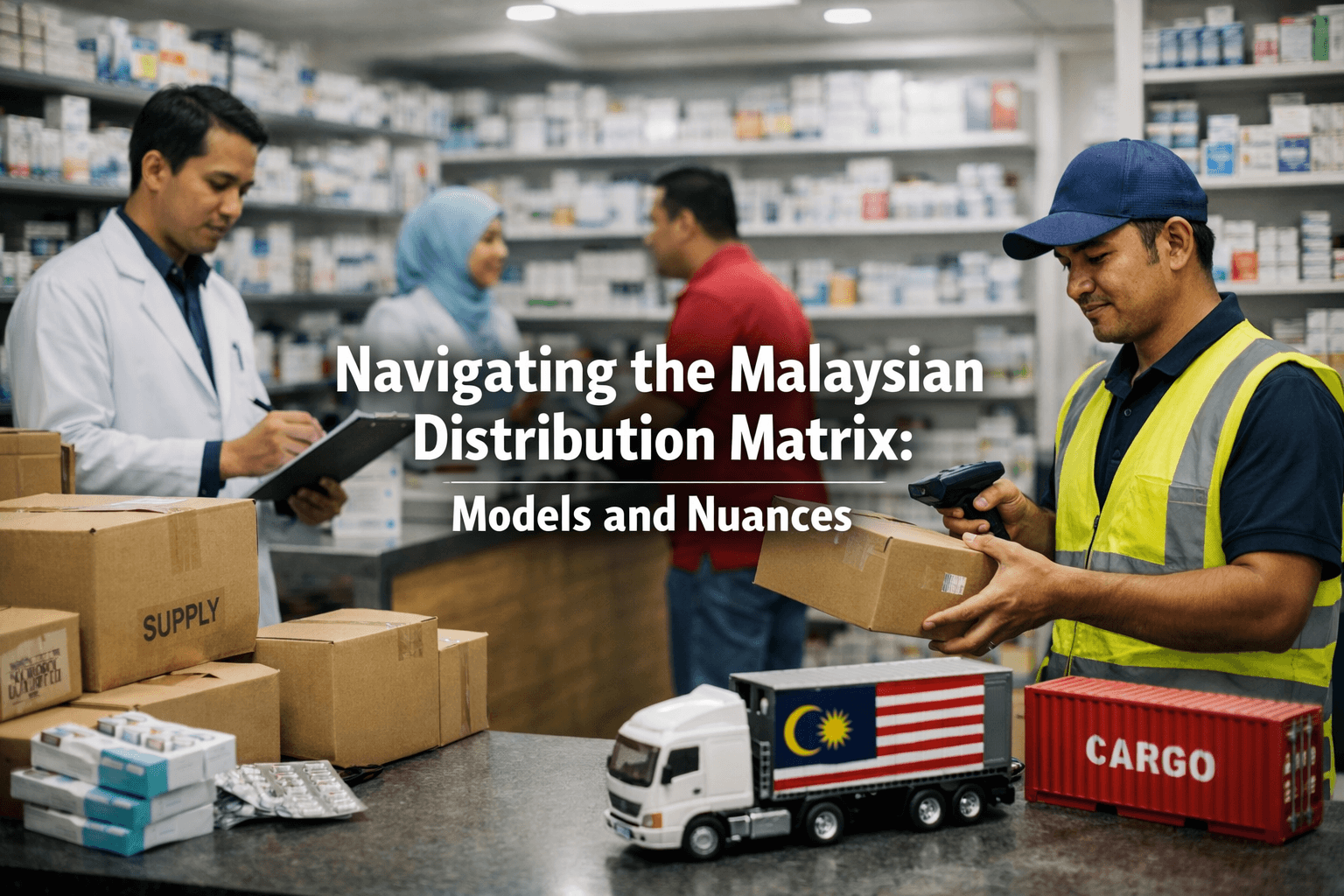
Malaysia’s pharmaceutical distribution is not a monolithic system but a dynamic matrix of models, each tailored to different market segments and challenges. Understanding this matrix is essential for grasping how products flow through the nation. At the apex is the National Pharmaceutical Regulatory Agency (NPRA), which enforces the Good Distribution Practice (GDP) framework—a non-negotiable standard ensuring product integrity from factory to patient. Beneath this regulatory umbrella, three primary distribution models operate in concert, each with distinct strengths.
The first is the independent pharmacy distributor. These specialized firms are the lifeline for independent community pharmacies and smaller clinics, particularly in suburban and East Malaysia regions. They aggregate products from multiple manufacturers, providing these smaller outlets with a cost-effective and diverse inventory without the burden of direct dealings with dozens of suppliers. A second model is the distributor pharmacy, often a larger entity that combines wholesale distribution with its own retail pharmacy chain operations. This vertical integration allows for tight control over inventory and merchandising, creating a powerful route-to-market for targeted product categories. Finally, some large, vertically integrated manufacturers maintain in-house logistics divisions, offering them maximum control over supply chain priorities and dedicated service for key institutional accounts.
The operational complexity becomes clear when comparing scenarios across the country:
In the Klang Valley: Distribution is high-frequency, with tight delivery windows and a focus on serving dense networks of chain pharmacies and private hospitals. Efficiency is measured in hours.
In Sabah and Sarawak: The challenge shifts to extended fulfillment timelines, complex route planning across difficult terrain, and managing longer inventory cycles. Reliability here is measured in days and requires robust cold-chain logistics for temperature-sensitive products.
Only a tailored, strategic approach that respects these local nuances—coupled with ironclad national compliance—can succeed. This is why a one-size-fits-all logistics solution fails, and why companies excelling in this space are so highly valued.
Learn more : The Role of Third-Party Logistics (3PL) in Malaysia’s Pharmaceutical Supply Chain
The Compliance Cornerstone: GDP and NPRA as Operational Blueprints
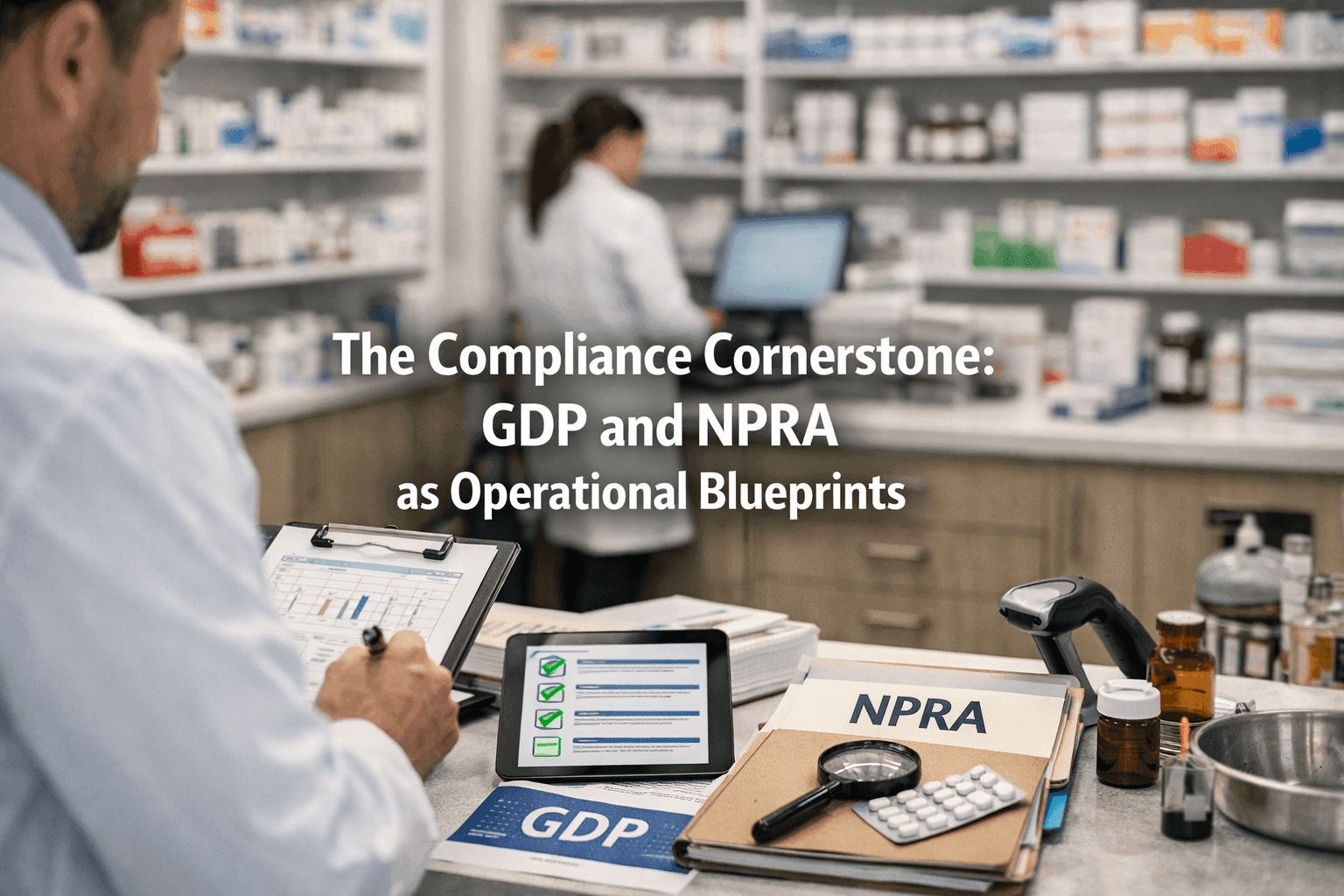
Forget viewing GDP certification and NPRA MAL registration as mere administrative hurdles. In the Malaysian context, they are the foundational blueprints for any effective pharmaceutical supply chain. These are not passive certificates but active, ongoing operational frameworks that dictate every process. GDP, in particular, encompasses standards for warehouse management, transportation, documentation, and personnel training to prevent falsified medicines from entering the supply chain and to ensure products are stored and transported under prescribed conditions.
The practical implication of this is a significant investment in infrastructure and training. A GDP-compliant warehouse is far more than a storage space; it is a meticulously controlled environment with:
Validated temperature & humidity monitoring systems (critical for products like insulins and vaccines).
Comprehensive audit trails for every product batch.
Segregated areas for quarantined, rejected, and released stocks.
Proven security protocols to prevent theft and diversion.
From the brand manager’s perspective, this compliance is a core marketing asset, assuring healthcare professionals of product safety. From the pharmacist’s viewpoint, it is a non-negotiable requirement for their own licensure—they simply cannot procure from non-compliant sources. The role of the NPRA extends beyond initial product approval to include post-marketing surveillance and routine audits of these distribution channels. A single GDP audit failure can disrupt a company’s entire market supply, making ongoing compliance a strategic priority, not a back-office function.
Learn more : Regulatory Landscape for Pharmacy Distribution in Malaysia | Guideline on Good Distribution Practice (Third Edition, 2018) | Distribution
Case in Point: Duopharma Biotech Berhad – A Study in Integrated Excellence

Examining a proven market leader like Duopharma Biotech Berhad provides a concrete blueprint of these principles in action. Their prominence is not solely due to a portfolio of over 300 registered products, including trusted consumer health brands like Champs® and Uphamol®. It is fundamentally rooted in a deeply integrated, geographically comprehensive distribution strategy that treats logistics as a core competitive competency.
Duopharma’s strategic partnerships with a wide network of pharmacy distributor Malaysia operators, both large and independent, create a capillary-like reach into the market. This dual-channel approach is essential. They service large chain pharmacies for broad urban coverage while simultaneously supporting independent pharmacy distributor networks that penetrate smaller towns and rural areas in East Malaysia. This ensures that a patient in Petaling Jaya and a patient in Tawau have equitable access to their cardiovascular or endocrine therapeutics.
Their operational infrastructure reveals the commitment. With multiple GMP and GDP-certified manufacturing and warehousing facilities in Klang and Bangi, they control a significant portion of their supply chain. This control translates into reliable inventory management and efficient last-mile execution. Furthermore, their direct engagement with hospital tenders and government formulary requirements demonstrates an understanding that distribution in Malaysia also means navigating the public procurement landscape. Their effective model shows that market leadership is a synthesis of product innovation, regulatory mastery, and, indispensably, distribution sovereignty.
The Institutional Anchor: Pharmaniaga Berhad’s Logistics Mastery
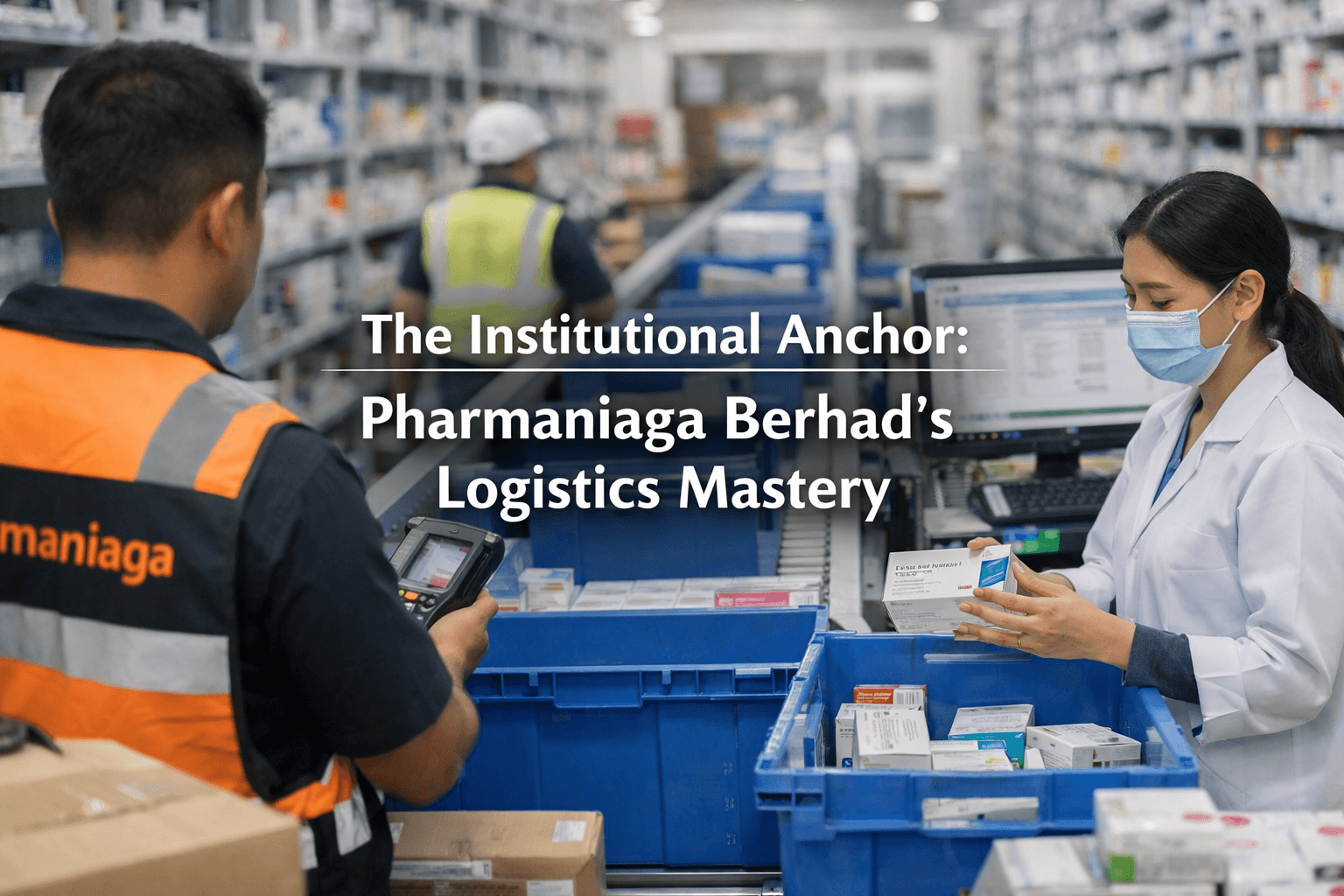
If Duopharma exemplifies integrated commercial excellence, Pharmaniaga Berhad represents the scale and strategic importance of institutional logistics mastery. As a government-linked entity, its role is unique, operating at the critical intersection of public health policy and complex supply chain execution. It functions as one of the nation’s largest pharmacy wholesale distributors, but its impact is most acutely felt as the logistics backbone for the Ministry of Health.
Pharmaniaga’s core mandate includes the massive responsibility of supplying generics, vaccines, and essential medicines to government hospitals nationwide under a long-term concession agreement. This requires a distribution system of unparalleled scale, resilience, and precision. Their investment in one of the region’s most extensive cold-chain GDP-compliant logistics networks is not just a business asset; it is a national public health infrastructure. This capability was decisively proven during the COVID-19 pandemic, where their system became essential for the nationwide storage and distribution of vaccines, showcasing an effective crisis-response capacity.
For the private market, Pharmaniaga leverages this immense infrastructure through its network of independent distributor pharmacy partners. A community pharmacy can thus access both Pharmaniaga’s proprietary products and the third-party brands it distributes, supported by the same reliable, audit-ready logistics system that serves public hospitals. From the distributor’s perspective, partnering with Pharmaniaga provides a stamp of quality and compliance. From the brand manager’s view, especially for an international firm entering Malaysia, utilizing Pharmaniaga’s distribution can be a tailored, efficient route to navigate complex local regulations and achieve nationwide placement quickly.
Comparative Insights: Distribution Model Impact on Market Performance

The choice of distribution model has direct, measurable consequences on key performance indicators (KPIs) for pharmaceutical companies. The table below illustrates how the primary models impact critical metrics from multiple stakeholder perspectives.
| Performance Indicator | In-House Logistics Model (e.g., Large Vertical Manufacturer) | Independent Distributor Partnership Model (e.g., Duopharma’s approach) | Hybrid/Institutional Model (e.g., Pharmaniaga) |
|---|---|---|---|
| Control & Compliance Oversight | Maximum direct control over all GDP processes and brand presentation. | High reliance on partner’s GDP adherence; requires robust partner auditing. | Extreme control in institutional channel; shared control in private partner network. |
| Geographic Reach & Speed | Can be limited in East Malaysia without local partners; efficient in focused urban zones. | Rapid, extensive reach through partner’s established local networks and warehouses. | Unmatched nationwide reach, especially to public health facilities; speed varies by channel. |
| Cost Structure & Flexibility | High fixed capital cost (fleets, warehouses) but lower variable cost per unit at scale. | Variable, pay-as-you-go cost structure; highly flexible to scale up/down. | Massive fixed infrastructure cost offset by huge volume from public sector concession. |
| Pharmacist & Clinic Experience | Consistent, branded service but potentially fewer aggregated product options. | One-stop shop for many brands; service quality depends on the distributor’s expertise. | For private pharmacies: reliable bulk supply; for hospitals: integrated, system-driven delivery. |
| Risk Management | Company bears all operational and inventory risk directly. | Risk is shared/transferred; but brand damage risk remains if partner fails. | Systemically important; carries high public expectation and political risk alongside operational risk. |
This comparison reveals there is no single “best” model, only the most strategic fit for a company’s portfolio, target segments, and risk appetite. A proven leader often employs a hybrid strategy, leveraging different models for different product lines or market sectors, demonstrating sophisticated supply chain expertise.
Learn more : Four ways pharma companies can make their supply chains more resilient
Learn more : Healthcare traceability and GS1 standards
Frequently Asked Questions (FAQ)
Q1: Which pharma stock will boom in 2025?
Answer: No one can predict exact stock performance. In 2025, investors are closely watching large, innovation-driven pharmaceutical companies with strong pipelines in oncology, vaccines, obesity, and specialty drugs. Performance depends on approvals, earnings, and global demand.
Q2: What are the top 5 pharmacy in Malaysia?
Answer: Malaysia’s retail pharmacy landscape is led by major chains with nationwide presence, strong compliance, and consumer trust. Rankings vary by outlet count, geographic reach, and service quality rather than stock market value.
Q3: What is the trend in the pharma industry in 2025?
Answer: Key trends include biologics and biosimilars, obesity and diabetes therapies, AI-assisted drug discovery, personalized medicine, and tighter regulatory and pricing scrutiny across global markets.
Q4: Who are the top 10 pharmaceutical companies in the world in 2025?
Answer: Global leaders are typically ranked by revenue, R&D strength, and product portfolios. These include multinational firms dominating vaccines, oncology, chronic disease, and specialty therapeutics.
Q5: Which stocks go high in 2025?
Answer: High-growth stocks in 2025 are often linked to healthcare innovation, AI, clean energy, and technology infrastructure. However, gains depend heavily on market conditions and company fundamentals.
Q6: Who are the big 3 in pharma?
Answer: The “big 3” usually refers to the largest global pharmaceutical companies by revenue and global footprint, known for massive R&D budgets and diversified drug portfolios.
Q7: Which is the best pharma stock to buy?
Answer: There is no single “best” stock for everyone. Investors typically evaluate revenue stability, patent life, pipeline strength, and risk tolerance before making decisions.
Q8: What is pharma marketing in 2025?
Answer: Pharma marketing in 2025 focuses on data-driven strategies, ethical promotion, omnichannel engagement with healthcare professionals, and strict compliance with regulatory guidelines.
Q9: Which pharmaceutical stock to buy now?
Answer: This depends on individual investment goals. Many investors favor companies with strong cash flow, late-stage pipelines, and exposure to high-growth therapy areas rather than short-term speculation.
Q10: What are the most promising pharma companies?
Answer: Promising companies are those advancing novel therapies, biologics, and rare-disease treatments, while maintaining regulatory compliance and global market access.
How can we assist you today? 😊
Just let us know—we’re here to help!