

How does a medicine manufactured in Selangor reliably reach a pharmacy shelf in Kota Bharu or Tawau without disruption? The answer lies deep within a complex, highly regulated, and strategically managed network that defines the nation’s healthcare supply chain.
Malaysia’s healthcare economy operates through a dual public–private structure. Public institutions, funded and managed by the Ministry of Health, anchor accessibility for the masses, ensuring that essential medicines and treatments are available at nominal costs. On the other side, private hospital groups, specialist centres, and expanding pharmacy chains drive innovation, service quality, and fierce market competition. Within this intricate framework, the biggest healthcare firms in Malaysia do more than just generate revenue; they fundamentally influence capital flow, shape procurement strategies, and set the benchmark for regulatory discipline across the entire sector.
Large private hospital operators like IHH Healthcare or KPJ, alongside major medical device importers and pharmaceutical manufacturers, form the visible, patient-facing layer of the ecosystem. They are the brands we recognize. Yet, beneath that glossy surface lies a highly coordinated and often invisible infrastructure—a logistical backbone that ensures medicine availability remains consistent from the bustling clinics of Johor Bahru to the remote health offices in the interior of Sarawak. This is where distribution transforms from a back-office function into an essential operational pillar.
The pharmacy channel in Malaysia is particularly dynamic and fragmented. Urban retail chains in Kuala Lumpur, Penang, and Kota Kinabalu require high-frequency replenishment and rapid SKU rotation to meet consumer demand for everything from chronic disease medication to wellness products. Their inventory turns over quickly, demanding just-in-time delivery. Conversely, rural pharmacies and smaller dispensaries depend on more strategic, forward-planning approaches to avoid costly stockouts, precisely because they grapple with distance, challenging terrain, and less frequent logistics runs. Without a reliable medicine flow—supported by experienced distributor pharmacy networks—even the strongest brand positioning and marketing spend would fail at the point of sale.
A key enabler in this structure is the pharmacy distribution service in Malaysia. These specialized logistics providers act as both a regulatory and logistical bridge between manufacturers and end-point pharmacies. They are not merely trucking companies; they are compliance guardians. They ensure:
Temperature-controlled transport for sensitive biologics and insulin, which can lose potency if exposed to heat.
GDP-compliant warehousing that meets stringent international standards for safety, cleanliness, and stock rotation.
Demand forecasting aligned to individual pharmacy turnover, preventing both overstocking and shortages.
Documentation traceability during audits by the National Pharmaceutical Regulatory Agency (NPRA), providing a clear chain of custody.
In geographically diverse and logistically challenging regions such as Sabah and Sarawak, distribution consistency is not just a commercial metric—it is operational risk management. A delayed shipment of paracetamol in West Malaysia might cause a minor inconvenience for a day or two. In East Malaysia, where transport links can be disrupted by weather or infrastructure issues, a delay in delivering critical medication like anti-hypertensives or insulin can seriously disrupt patient continuity of care, forcing individuals to miss doses.
For skincare brand owners looking to expand into pharmacy shelves, or for pharmaceutical marketers launching a new generic drug, understanding this backbone clarifies a simple, non-negotiable reality: scale in healthcare is not just about revenue targets, but about distribution discipline and proven compliance capacity. You cannot sell what you cannot safely and reliably deliver.
Ranking Methodology: How the Top 30 Companies Are Evaluated
What truly separates a large healthcare company from a market-defining leader? Is it simply the size of their balance sheet? To evaluate and compile a list of the top 30, we must look beyond simple turnover figures. Revenue scale is undeniably important—it signals market share and financial health. However, operational footprint, regulatory alignment, and supply chain reach often matter more to the pharmacies and clinics that ultimately serve the patients. A company might have massive revenue, but if it can’t consistently get its products to the East Malaysian market, its influence is capped.
Our ranking framework, therefore, considers a multifaceted set of criteria:
Revenue and Asset Base: The foundational metric, indicating the sheer size and investment capacity of the firm.
Market Penetration: The actual reach across the nation’s diverse hospital networks, retail pharmacy chains, and private clinic groups.
Integration with Pharmacy Wholesale Distributors: A critical indicator of supply chain maturity and market access.
Compliance History and Audit Transparency: A verifiable track record of adhering to Good Distribution Practice (GDP) and NPRA requirements.
Distribution Capacity: The physical infrastructure—warehouse footprint, fleet size, and technology integration.
Companies that maintain proven regulatory records with consistent GDP adherence are viewed as more sustainable and reliable partners by distributors and pharmacists. In healthcare, trust is cumulative; it is built shipment by shipment, audit by audit. Once compromised—say, through a temperature breach or a documentation error—it rarely recovers quickly. That’s why we place significant weight on compliance.
Integration with pharmacy wholesale distributors is another crucial differentiator. The largest pharma and medical companies don’t just rely on a single warehouse in the Klang Valley. They maintain multiple regional hubs or partner with distributors who do, ensuring efficient coverage from the dense networks of Klang Valley to the industrial zones of Johor, from the agricultural north in Kedah to the diverse terrains of Sabah.
To provide a clearer picture, consider how operational metrics translate into real-world value:
| Metric | What It Measures | Practical Implication for Pharmacy |
|---|---|---|
| Delivery Lead Time | Speed from order placement to receipt | Faster lead times allow pharmacies to hold less safety stock, freeing up cash flow and shelf space. |
| Fill Rate Consistency | Percentage of an order that is shipped complete and on time | A high fill rate (e.g., 98%) ensures that prescriptions can be filled without disappointing customers. |
| Cold Chain Integrity | Adherence to temperature requirements during transit | Essential for biologic drugs; a breach means the product must be destroyed, leading to losses and shortages. |
| Digital Order Tracking | Visibility of the order journey | Reduces administrative work for pharmacy managers who no longer need to call to check on delivery status. |
From a pharmacy manager’s perspective, a supplier that delivers on-time 98% of the time is not just operationally efficient; it actively protects the pharmacy’s most valuable asset: its professional reputation. In a market increasingly shaped by online reviews and discerning, repeat customers, being known as the pharmacy that always has stock translates directly into long-term customer retention and loyalty. This ranking methodology deliberately avoids hype and marketing fluff. It focuses on measurable performance indicators that are the true hallmarks of industry leadership in the Malaysian healthcare sector.
Learn more: Top 10 Pharmacy Distributors in Malaysia Ranking (2026 Edition)
Sector Breakdown: Hospitals, Pharma Manufacturers & Distributor Pharmacy Leaders

Are all healthcare giants operating in the same way? Not quite. The Malaysian healthcare ecosystem is a tapestry of distinct but interdependent sectors. The top 30 companies can be broadly, yet usefully, categorized into three core segments, each with a unique role and strategic focus.
A. Private Hospital Groups and Clinical Networks
These organizations represent the most visible face of patient care. As top healthcare providers, they are the primary drivers of demand for a vast array of pharmaceuticals, from broad-spectrum antibiotics to specialized oncology drugs. They also consume high volumes of medical devices, surgical tools, and advanced diagnostics. Their procurement decisions are centralized and heavily influenced by clinical efficacy and patient outcomes. For a pharmaceutical manufacturer, securing a listing in the formulary of a major player like Sunway Medical Centre or Prince Court Medical Centre is a significant commercial victory, signaling quality and trust to the wider market. These groups also drive innovation by demanding the latest specialized therapeutics.
B. Pharmaceutical Manufacturers and Importers
This segment includes both domestic producers, such as Pharmaniaga or CCM Duopharma, and multinational subsidiaries like Pfizer Malaysia or Novartis. Their influence extends far beyond just branding and marketing. They are the engines of the product pipeline, responsible for navigating the complex regulatory alignment required for new drug registration with the NPRA. They manage the entire lifecycle of a medicine, from research and development (or licensing agreements) to large-scale production and, crucially, initial distribution. Their strategic decisions about which products to prioritize directly shape the treatment options available to Malaysian doctors and patients.
C. Distributor Pharmacy and Wholesale Networks
Often less visible to the general consumer, these companies are the critical arteries of the healthcare ecosystem. Large-scale pharmacy distributor Malaysia operators, such as Apex Pharmacy Marketing or Pharmaserve (LYS) , coordinate the intricate supply chain between manufacturers and tens of thousands of retail pharmacy outlets and clinics nationwide. They are the logistics experts, the inventory managers, and often the credit providers for smaller pharmacies. Their expertise lies in balancing the demand from the hospitals and manufacturers with the supply needs of the independent and chain pharmacies.
From a strategic standpoint, each segment is profoundly dependent on the others, creating a delicate but powerful triad:
Pharmacists require consistent supply continuity to meet patient prescriptions and maintain their professional standing.
Brand managers need nationwide market penetration to achieve sales targets and build brand equity.
Distributors must constantly balance inventory turnover against the risk of product expiry and the financial cost of holding stock.
An independent pharmacy distributor model typically offers broader multi-brand flexibility, allowing a pharmacy to stock a wide variety of products from different manufacturers. In contrast, chain-integrated systems, like those owned by large retail groups, prioritize vertical control, often stocking private labels or products from preferred vendors to maximize margins.
For a pharmacist in a suburban clinic, supply continuity is non-negotiable. A missed delivery of a common antibiotic can disrupt a patient’s treatment plan and erode hard-won trust. For a brand owner, a strong, reliable distribution partner directly increases SKU velocity—the speed at which their product moves off the shelf. And for the distributors themselves, mastering the constant equation of expiry management and cash flow is the difference between profit and loss. The most expert organizations in Malaysia understand this triad intimately and coordinate their operations accordingly, ensuring that medicine moves from the manufacturer’s warehouse to the patient’s hands with minimal friction and maximum safety.
The Role of Pharmacy Distribution Service in Malaysia Within the Top 30
Why do some healthcare firms scale faster and more profitably than others? The answer often lies not in their R&D pipeline or marketing budget, but in their distribution intelligence. In a market as geographically and regulatory complex as Malaysia, the pharmacy distribution service acts as the critical gatekeeper between a manufacturer’s ambition for growth and a product’s actual presence on the pharmacy shelf. Without GDP-compliant transport and warehousing, ambitious expansion plans remain purely theoretical.
Cold chain compliance frameworks are particularly critical, forming the non-negotiable foundation for distributing vaccines, insulin, complex biologics, and an increasing number of specialty drugs. Distribution leaders in the top 30 don’t just rely on basic refrigerated trucks. They deploy sophisticated temperature sensors, real-time data loggers, and route optimization software to ensure that products remain within a strict 2°C to 8°C range throughout their journey. This is not just about following rules; it’s about maintaining product integrity. A broken cold chain can render an entire shipment of life-saving vaccines worthless, representing a significant financial loss and a potential public health crisis.
Inventory forecasting is another critical factor that separates top-tier firms from the rest. Efficient demand planning is a strategic discipline that prevents three major supply chain ailments:
Overstock expiry losses: Holding too much stock, especially of products with short shelf lives, leads to write-offs.
Stockout disruptions: Running out of a key product damages relationships with pharmacists and sends patients to competitors.
Working capital strain: Money tied up in slow-moving inventory is money that cannot be invested in growth or innovation.
Companies that treat distribution as a strategic core competency—rather than a mere logistical afterthought—consistently outperform their competitors. They build proven systems that are scalable and resilient. An independent pharmacy distributor, for instance, can rapidly expand a new brand’s presence across multiple pharmacy chains simultaneously, leveraging its existing relationships and logistics network. On the other hand, an integrated distributor owned by a manufacturer might offer better cost control for its own products but may have limited reach or willingness to stock competitors’ items. Ultimately, a company’s scalability is directly correlated with its distribution maturity. The most proven players build robust, GDP-compliant systems first, and then expand their product range (SKUs), knowing their infrastructure can handle the load.
Compliance as Competitive Advantage: NPRA, KKM & GDP in Large Healthcare Companies
Can compliance with a mountain of red tape actually become a growth strategy? Yes—if it is executed properly and viewed through the right lens. In Malaysia, the regulatory framework overseen by the NPRA and the Ministry of Health (KKM) enforces strict protocols for product registration, documentation, lot traceability, and audit readiness. While many companies see this as a costly burden, the largest and most successful pharma and medical device companies treat compliance not as a hurdle, but as a source of competitive leverage.
A sophisticated distributor evaluating a new product for their portfolio will rigorously examine several compliance-related factors before agreeing to take it on:
MAL registration status: Is the product officially registered with a valid MAL number? This is the absolute baseline.
Storage requirement alignment: Does the product require cold chain? If so, does the manufacturer’s supply chain plan align with the distributor’s GDP-certified capabilities?
Risk classification: Is it a controlled substance, a biologic, or a generic with narrow safety margins? Higher risk requires more robust handling.
Audit traceability: Can the manufacturer provide a complete audit trail from raw material sourcing to finished goods? This is essential for recalls.
Pharmacy wholesale distributors naturally prioritize partnering with trusted brands that have a spotless compliance history. This is because any compliance failure—say, a product recall due to contamination—doesn’t just hurt the manufacturer’s reputation; it directly affects the distributor and the pharmacy network, exposing them to liability and eroding patient confidence.
From a pharmacist’s perspective, a supplier’s strong compliance record is a direct proxy for patient safety assurance. From a distributor’s point of view, it represents liability mitigation. And from a brand owner’s lens, it supports listing sustainability—the ability to keep their products on pharmacy shelves year after year without disruption. Therefore, a reliable compliance track record, consistently demonstrated through GDP adherence and clean NPRA audits, is not just a bureaucratic necessity; it is the bedrock of long-term collaboration with the leading players in the Malaysian health sector. It transforms a supplier from a simple vendor into a strategic partner capable of supporting sustainable, shared growth.
Learn more: GDP Compliance Made Easy: Pharmaceutical Distribution
Supply Chain Depth: Logistics, Cold Chain & Nationwide Pharmacy Access
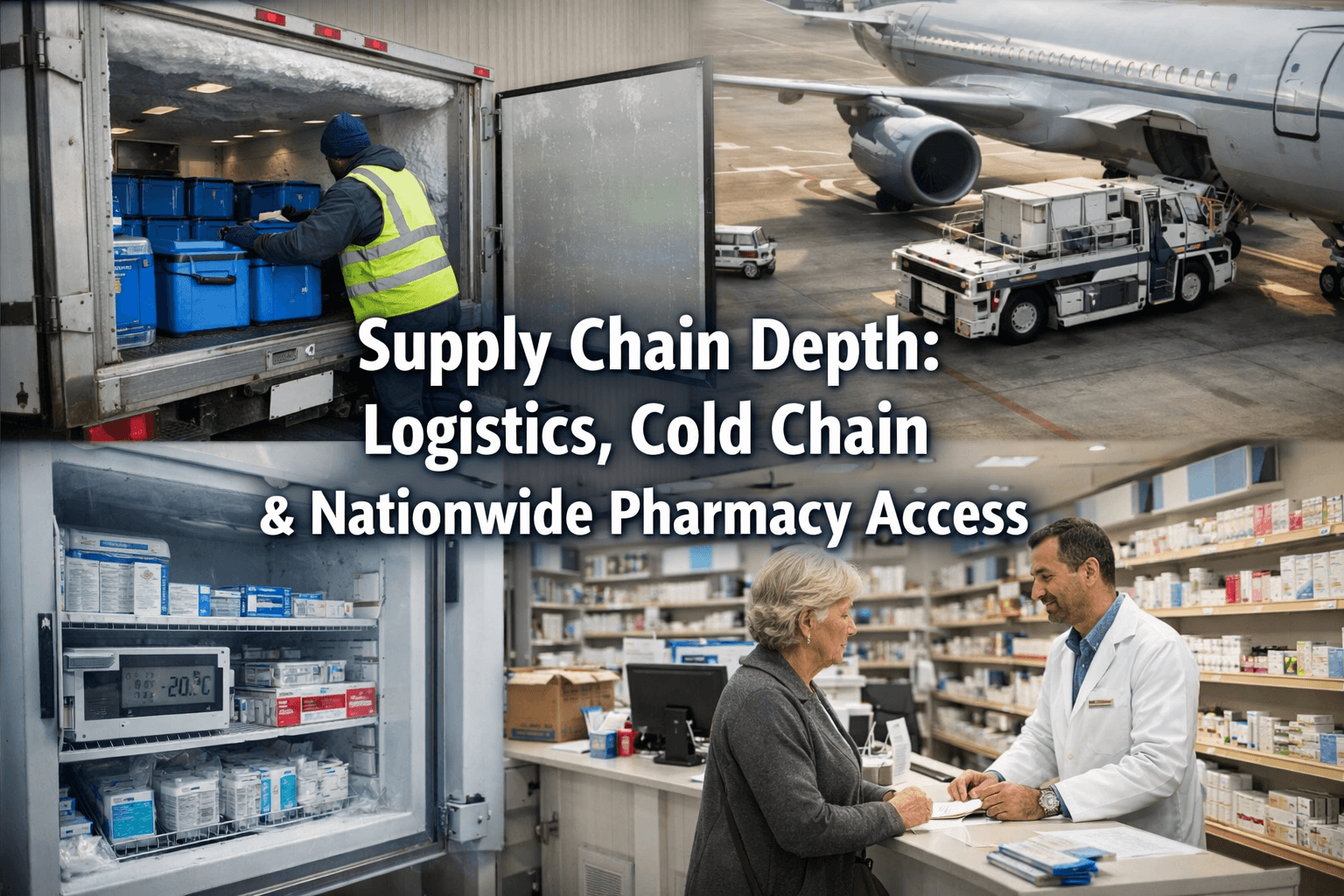
What happens when logistics fails? The answer is simple — patients feel it first. A mother in Kuching unable to find her child’s asthma inhaler. A diabetic clinic in Alor Setar running out of insulin. A small community pharmacy in Temerloh explaining to a regular customer that their blood pressure medication won’t arrive for another week. These scenarios play out across Malaysia when the healthcare supply chain encounters disruption, and they underscore why logistics depth separates average operators from truly reliable market leaders.
Behind the scenes, sophisticated warehouse infrastructure forms the foundation of national coverage. Strategic hubs positioned across Klang Valley, Penang, Johor Bahru, and increasingly in Kuching and Kota Kinabalu ensure that products don’t languish in centralised inventories while rural pharmacies wait. For East Malaysia, this infrastructure must account for additional complexity — maritime transport schedules, monsoon season disruptions, and the logistical challenge of serving communities spread across vast geographical areas. A distributor servicing Sabah isn’t just managing delivery routes; they’re coordinating port clearances, monitoring weather patterns, and maintaining buffer stock that accounts for ferry delays.
Top-tier pharmacy wholesale distributors don’t guess about their performance. They monitor operational KPIs rigorously, understanding that each metric translates directly into patient outcomes:
| KPI | Why It Matters for Pharmacies | Impact on Stock Availability |
|---|---|---|
| Fill Rate % | Ensures consistent supply of prescribed medications | High — a low fill rate means empty shelves and disappointed patients |
| Delivery Lead Time | Affects how quickly pharmacies can reorder fast-moving items | Moderate — longer lead times force pharmacies to hold more safety stock |
| Cold Chain Integrity | Critical for vaccines, biologics, and temperature-sensitive insulin | High — any breach renders products unusable and creates shortages |
| Stock Turn Ratio | Impacts working capital tied up in inventory | Moderate — slow turns indicate poor demand alignment |
What do these metrics mean in practice? Consider a pharmacy in Kota Bharu during the annual northeast monsoon. Roads flood, deliveries slow, and demand for certain medications spikes as respiratory illnesses increase. A distributor with efficient routing algorithms and strategic buffer inventory positioned in regional warehouses can maintain service levels even when primary transport routes are compromised. They’ve already anticipated the seasonal pattern and positioned stock accordingly.
The same logic applies during dengue outbreaks — a recurring reality across Malaysian states. When cases surge in Selangor or Penang, demand for certain analgesics and supportive medications can increase 300% within weeks. Distributors with shallow supply chains scramble, placing emergency orders and hoping transport capacity materialises. Those with genuine supply chain depth simply redirect inventory from slower-moving regions, activate pre-positioned buffer stock, and maintain proven service consistency while competitors struggle.
Cold chain integrity deserves particular attention. Malaysia’s tropical climate presents unique challenges for biologics and temperature-sensitive pharmaceuticals. A vaccine transported without proper temperature monitoring might appear fine upon delivery but could have lost efficacy during a brief temperature excursion somewhere along the journey. Leading distributors deploy continuous temperature monitoring devices, real-time alert systems, and validated packaging solutions that maintain required temperatures even during unexpected delays at border crossings or port clearances.
From a pharmacist’s perspective, supply chain depth translates directly into professional peace of mind. When a patient presents a prescription for a costly biologic medication, the pharmacist needs confidence that replacement stock exists, that it has been stored correctly throughout its journey, and that reordering won’t involve complex coordination with multiple suppliers. Reliable distributors make this invisible infrastructure work so seamlessly that pharmacists rarely think about it — until it fails.
The practical implication for brand owners and manufacturers is clear: your product’s reputation is only as strong as the supply chain delivering it. A superior formulation means nothing if it arrives warm, late, or not at all. Partnering with distributors who demonstrate proven cold chain capabilities, robust KPI tracking, and genuinely national coverage isn’t just operational preference — it’s a strategic necessity for protecting brand equity in the Malaysian market.
Learn more: Challenges and Opportunities in Malaysia’s Pharmaceutical Supply Chain (2026 Edition) | Challenges in Healthcare Supply Chain Resilience Management
Market Influence: How the Top 30 Shape Pharmacy Merchandising & Product Visibility

Does size automatically translate into shelf dominance? Often, yes — but not through brute force alone. The largest healthcare companies in Malaysia understand that pharmacy merchandising is a sophisticated discipline requiring coordination across multiple stakeholders, each with distinct priorities and constraints.
When a major pharmaceutical manufacturer secures a listing with a chain like Big Pharmacy or Guardian, the work has only begun. Behind that listing lies a complex web of negotiations covering shelf placement, promotional calendars, and in-store execution standards. Premium positioning — eye-level shelves, end-cap displays, dedicated promotional space — doesn’t happen by accident. It results from coordinated efforts between distributor networks and brand managers who understand retail psychology and pharmacy workflows.
Consider how a new dermatology product reaches visibility. The brand manager secures the listing agreement. The distributor ensures consistent replenishment across all chain locations. But who ensures the product actually appears on the designated shelf space, with correct pricing, and adequate facing? This is where merchandising coordination becomes essential. Some distributors employ dedicated merchandising teams who visit pharmacies regularly, checking stock levels, rotating expiry dates, and ensuring promotional displays remain intact. Others rely on pharmacy staff to manage these tasks — a less reliable approach given competing priorities at store level.
From a pharmacist’s perspective, optimised shelf layouts serve a purpose beyond commercial considerations. When products are logically organised, clearly priced, and consistently available, patient counselling becomes more efficient. A pharmacist can locate a specific antihypertensive quickly, verify its expiry date, and provide accurate guidance without hunting through cluttered shelves. Well-executed merchandising supports clinical practice, not just sales targets.
From a distributor’s viewpoint, aligned trade terms with pharmacy chains ensure that stock rotation happens efficiently. When promotional periods end, unsold inventory must be managed carefully to prevent overstock situations that tie up working capital. Distributors who maintain clear communication channels with both brand owners and pharmacy buyers can adjust order quantities dynamically, preventing the accumulation of slow-moving stock that eventually requires discounting or write-off.
Tailored merchandising strategies recognise that not all pharmacies serve identical customer bases. A pharmacy in Bangsar serves a different demographic than one in Kota Bharu. Product mixes, price sensitivity, and promotional responsiveness vary accordingly. Distributors who apply standardised approaches across all outlets miss opportunities to optimise performance. Those who develop strategic account management — understanding each pharmacy’s customer profile, adjusting ranging recommendations, and customising promotional support — generate better outcomes for brand owners and pharmacists alike.
The practical implication for brand managers is straightforward: distribution agreements secure shelf space, but merchandising discipline determines whether that space generates sustainable sales. Regular store visits, expiry management protocols, and promotional compliance monitoring are not optional extras — they are core activities determining whether your product maintains visibility or gradually disappears behind newer, better-supported competitors.
Learn more: The Future of Brick-and-Mortar Pharmacy
Independent Pharmacy Distributor vs Corporate Chain Control
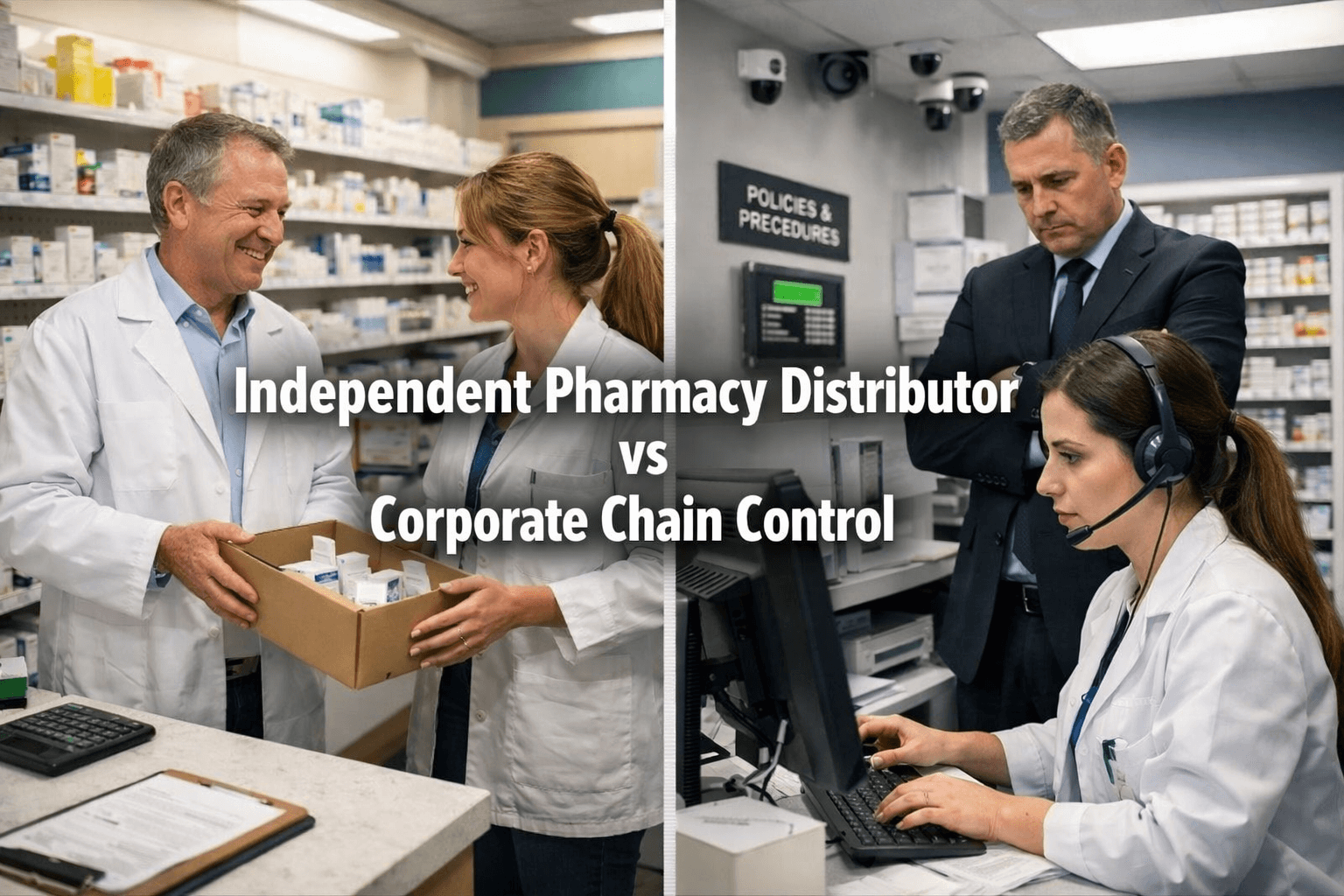
Which distribution model offers more long-term stability for pharmaceutical brands and pharmacy operators? The answer, as with many questions in healthcare logistics, depends on perspective and priorities. Malaysia’s market accommodates both independent pharmacy distributor models and corporate chain-controlled systems, each with distinct characteristics, advantages, and trade-offs.
| Criteria | Independent Distributor | Corporate Chain Distribution |
|---|---|---|
| Flexibility | High — can adjust to supplier needs and pharmacy preferences | Moderate — constrained by chain-wide policies and system integrations |
| Pricing Control | Negotiated case by case | Fixed structure with centralised purchasing |
| Market Reach | Broad — serves independent pharmacies, clinics, and smaller chains | Chain-based — limited to own outlets or affiliated groups |
| Speed to Market | Faster for new products | Controlled, often requiring central listing approval |
| Supplier Diversity | High — carries multiple competing brands | Moderate — may prioritise private label or preferred suppliers |
Smaller community pharmacies throughout Malaysia — the neighbourhood dispensaries serving local communities in towns like Segamat, Bentong, or Sandakan — often rely heavily on independent distributors for their multi-brand access. These pharmacies cannot negotiate directly with multinational manufacturers. Their order volumes are too small, their bargaining power too limited. Independent distributors aggregate demand across hundreds of such outlets, creating sufficient scale to secure favourable terms while maintaining the product breadth that community pharmacies need to serve diverse patient populations.
From a brand owner’s perspective, working with independent distributors offers faster market penetration. A new product can reach hundreds of pharmacies within weeks of launch, assuming the distributor’s network is robust and their buying committees convinced. There’s no waiting for central listing meetings, no complex system integrations. If the product performs, it gains traction quickly. If not, the brand owner can adjust strategy without terminating cumbersome chain-wide agreements.
Corporate chain systems, conversely, prioritise margin discipline and operational control. When a chain like Watsons or AA Pharmacy manages its own distribution, it can optimise inventory turns across its network, consolidate purchasing power for better pricing, and ensure consistent merchandising standards across all outlets. The trade-off is reduced supplier diversity and potentially slower adoption of new products that don’t fit immediate strategic priorities.
From a pharmacist employed by a corporate chain, distribution reliability tends to be higher. Stock arrives according to predictable schedules, system integration means automatic replenishment for fast-moving items, and centralised buying ensures competitive retail pricing. The downside? Limited autonomy to stock locally-demanded products that haven’t secured chain-wide approval.
Diversified distribution reduces systemic risk — an insight many Malaysian health sector leaders already understand. Relying entirely on any single model exposes both suppliers and pharmacies to specific vulnerabilities. Independent distributors may face working capital constraints during economic downturns. Corporate chains may experience system-wide disruptions when centralised distribution centres encounter problems. The most resilient healthcare companies maintain relationships across both models, ensuring that if one channel experiences difficulty, the other can maintain supply continuity.
For brand owners evaluating distribution partnerships, the question isn’t which model is inherently superior. It’s which combination of partners provides the right balance of reach, reliability, and strategic alignment for their specific products and market objectives. A tailored approach — perhaps using corporate chains for core urban outlets and independent distributors for broader national coverage — often delivers optimal results.
Learn more: Distributor Pharmacy Partnerships: How to Optimize Collaboration
Future Outlook: Consolidation, Digitalization & Distribution Intelligence
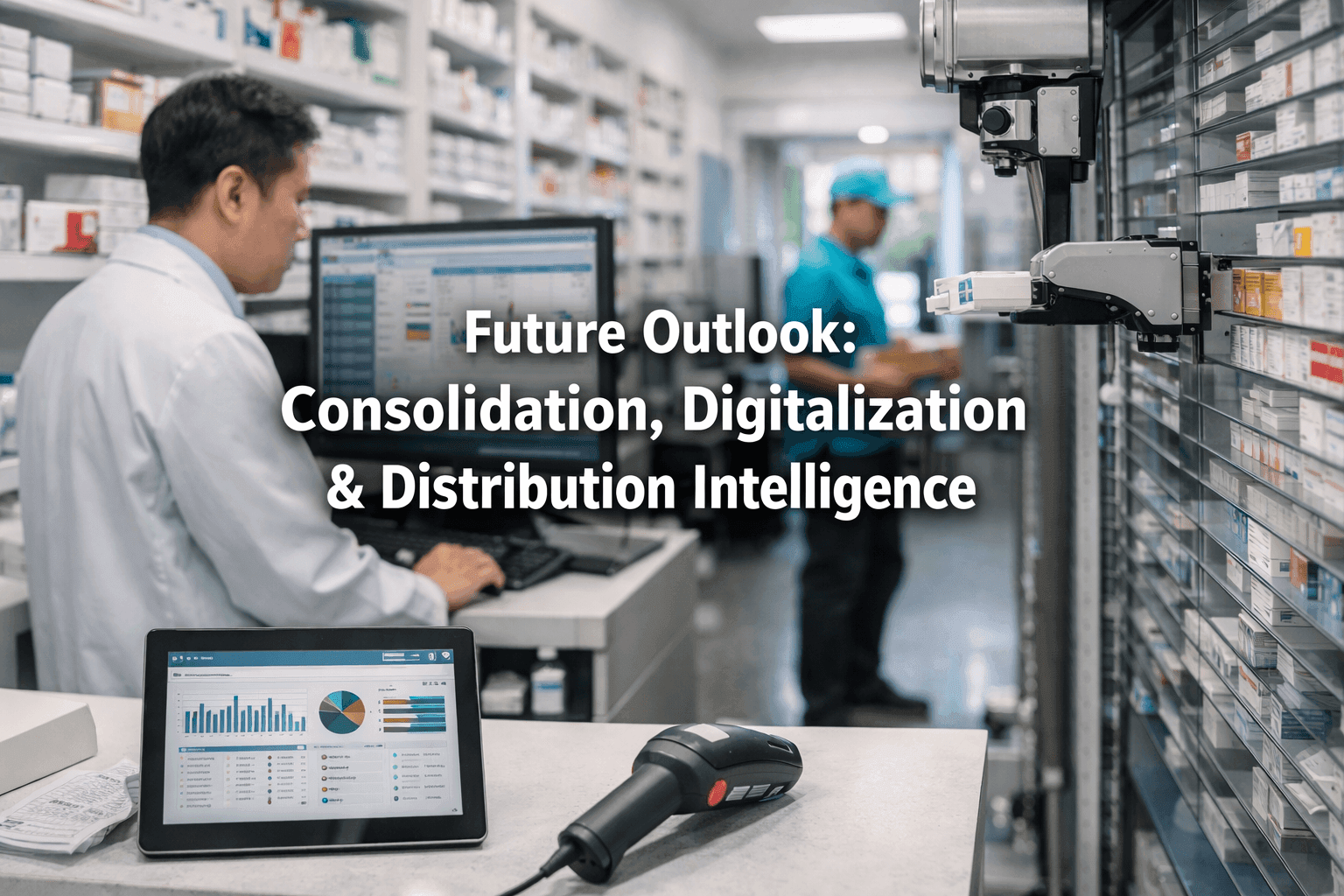
Where is Malaysia’s healthcare distribution heading over the next five years? The trajectory points unmistakably toward consolidation, digitalization, and what industry analysts term distribution intelligence — the application of data analytics and automation to supply chain decisions that were previously guided by instinct and experience.
Digital ordering platforms are rapidly becoming standard across the industry. Pharmacies that once faxed orders or spoke to sales representatives by phone now log into distributor portals, check real-time inventory availability, and place orders with few clicks. These platforms generate valuable data streams — not just about what pharmacies order, but when they order, how their order patterns change seasonally, and which products face frequent stockouts. Distributors who capture and analyse this data gain significant advantages in demand forecasting and inventory planning.
Real-time inventory dashboards transform pharmacy operations. Instead of guessing whether a product is available from their regular distributor, pharmacy managers can check current stock levels across multiple suppliers, compare delivery timelines, and make informed sourcing decisions. This visibility reduces the safety stock pharmacies must hold, freeing working capital for other uses. It also enables more responsive patient service — when a customer needs a medication urgently, pharmacy staff can immediately identify which supplier can deliver fastest.
Data-driven forecasting improves fill rate accuracy substantially. Traditional forecasting relied on historical sales data adjusted for basic seasonality. Modern approaches incorporate external variables — disease surveillance data from health authorities, weather patterns affecting respiratory illness prevalence, even social media trends indicating emerging health concerns. Distributors who integrate these diverse data sources predict demand more accurately, positioning inventory where it’s needed before prescriptions are written.
The expansion into wellness categories, supplements, and dermatology products broadens the revenue mix for both distributors and pharmacies. These products carry higher margins than prescription medicines and appeal to a growing consumer segment interested in preventive health. However, they also introduce new complexities — shorter product lifecycles, fashion-driven demand patterns, and competition from non-pharmacy retail channels. Distributors must develop category expertise that extends beyond traditional pharmaceutical knowledge.
Large healthcare companies that invest in digital distribution intelligence will redefine pharmacy distribution service in Malaysia over the coming decade. The competitive advantage will shift from physical assets — warehouse square footage, fleet size — to information assets — demand prediction algorithms, customer insight databases, integrated ordering platforms. Companies that treat technology as an afterthought will struggle to maintain service levels as expectations rise.
Expert forecasting tools and efficient logistics automation are no longer optional investments for ambitious distributors. They are essential infrastructure for maintaining national coverage while controlling costs. Malaysia’s geography ensures that last-mile delivery will always carry inherent expense. The only way to offset these costs is through operational efficiency — optimised routing, reduced empty backhauls, automated warehouse processes that minimise labour expense.
From a pharmacist’s perspective, these developments promise fewer stockouts, faster deliveries, and more responsive supplier relationships. From a brand owner’s viewpoint, they offer clearer visibility into actual market performance and more opportunities to adjust strategies based on real-time data. From a distributor’s standpoint, they represent both opportunity and existential threat — the chance to build defensible competitive advantages, but also the risk of being displaced by more technologically sophisticated competitors.
Learn more: Digital transformation in healthcare supply chains
Positioning for Sustainable Growth

The top 30 biggest companies in Malaysia’s healthcare sector demonstrate that scale alone does not define leadership. Sustainable growth is built on reliable distribution, strategic compliance management, and efficient supply coordination across hospitals, clinics, and pharmacies. These organisations understand that market position reflects operational discipline as much as commercial ambition.
For pharmaceutical companies, skincare brand owners, and distribution professionals, understanding these dynamics provides a clear roadmap. Market dominance is not accidental — it is engineered through disciplined infrastructure and collaborative partnerships that extend from manufacturer warehouses to pharmacy shelves and ultimately to patient care.
Frequently Asked Questions (FAQ)
Q1: What is the largest healthcare company in Malaysia?
Answer: The largest healthcare company in Malaysia is KPJ Healthcare Berhad, a leading private healthcare provider with a wide network of hospitals across the country.
Q2: Who are the leading companies in the healthcare industry?
Answer: Leading healthcare companies in Malaysia include KPJ Healthcare Berhad, IHH Healthcare, Pharmaniaga, and Pantai Medical Group, which are all prominent players in the healthcare and pharmaceutical sectors.
Q3: What is the ranking of Malaysia in healthcare?
Answer: Malaysia is ranked 61st globally in healthcare access and quality according to the 2018 Global Health Security Index, with a strong healthcare infrastructure and access to medical services.
Q4: What are the top 10 health insurance companies in Malaysia?
Answer: Top health insurance companies in Malaysia include AIA Malaysia, Prudential Assurance, Great Eastern Life, Allianz Life, Tokio Marine Life, Sun Life Malaysia, Manulife Insurance, Etiqa Insurance, AXA Affin Life, and Hong Leong Assurance.
Q5: Who are the top 7 companies?
Answer: The top 7 companies in Malaysia’s healthcare and pharmaceutical sector are KPJ Healthcare, IHH Healthcare, Pharmaniaga, Pantai Medical Group, Sunway Medical Centre, KPJ Healthcare, and the Ministry of Health (MOH).
Q6: What are the big 4 companies in Malaysia?
Answer: The “Big 4” in Malaysia typically refers to the largest multinational professional services firms: Deloitte, PricewaterhouseCoopers (PwC), Ernst & Young (EY), and KPMG.
Q7: What is the most famous hospital in Malaysia?
Answer: The most famous hospital in Malaysia is the Hospital Kuala Lumpur, renowned for its state-of-the-art facilities and comprehensive healthcare services.
Q8: What are the big 10 companies?
Answer: The top 10 companies in Malaysia, considering healthcare and pharmaceutical sectors, include KPJ Healthcare, IHH Healthcare, Pantai Medical Group, Pharmaniaga, Sunway Medical Centre, and others.
Q9: What are the top 5 pharmacy in Malaysia?
Answer: The top 5 pharmacies in Malaysia include Guardian, Watsons, Caring Pharmacy, Alpro Pharmacy, and Health Lane Family Pharmacy, which dominate the retail pharmacy market.
Q10: What is the biggest company in Malaysia?
Answer: The biggest company in Malaysia by market capitalization is Malayan Banking Berhad (Maybank), a leading financial services group in the region.
If your organisation is planning to expand into Malaysian pharmacies, strengthen compliance alignment, or optimise merchandising and distribution strategy, we invite you to contact us.
Our team provides structured support in pharmacy distribution solutions, merchandising coordination, and strategic market collaboration — designed specifically for Malaysia’s healthcare landscape.
How can we assist you today? 😊
Just let us know—we’re here to help!