

Defining “largest” in the global pharmacy sector requires far more nuance than simply counting cash registers. Yes, annual revenue serves as the primary benchmark—CVS Health alone generating over $320 billion annually clearly signals dominance—but scale is multidimensional. The true titans of this industry are defined by a convergence of three pillars: market penetration (number of outlets), vertical integration (ownership of supply chains), and service diversification (clinics, diagnostics, digital health).
For instance, a chain like Walgreens operates nearly 13,000 locations globally, yet its real power lies in its proprietary distribution networks and its ability to function as both retailer and insurer. Similarly, many of these giants function as their own pharmacy wholesale distributors, eliminating middlemen to protect margins. This is a proven model of efficiency.
Now, consider the context of a pharmacy distributor Malaysia stakeholder. When local operators examine these metrics, the takeaway isn’t to mimic the size—it’s to mimic the strategic layering. A Malaysian chain may not have billions in revenue, but it can adopt the tiered service model seen in global players. For example, a local distributor in Selangor might not own a fleet of planes, but by integrating GDP-compliant warehousing with direct-to-pharmacy delivery, they replicate the vertical efficiency of their global counterparts—just at a regional scale.
To clarify how these ranking criteria translate into operational reality, consider the comparative framework below:
| Ranking Criteria | Global Giant Application (CVS/Walgreens) | Relevance to Malaysia Distributors |
|---|---|---|
| Annual Revenue | Used for R&D, acquisitions, pricing power | Revenue reinvested into cold chain logistics |
| Outlet Density | Saturation strategy (urban + rural) | Focus on high-density urban Klang Valley |
| Vertical Integration | Own distribution centers & PBM services | Partnering with pharma wholesalers for reach |
| Service Breadth | In-store clinics, vaccination hubs | Retail clinics in partnership with GP clinics |
This layered approach to ‘size’ matters. A pharmacy may be trusted locally but remain small; conversely, a chain may be massive yet struggle with agility. Effective ranking, therefore, balances hard data with structural depth. For the pharmacy distributor Malaysia context, the lesson is clear: growth isn’t just about opening stores; it’s about owning the logistics between them.
Global Pharmacy Giants: Profiles of the Top 5 Pharmacies
CVS Health. Walgreens Boots Alliance. These are not just names; they are architects of modern healthcare retail. When dissecting the top tier, one discovers that their dominance is less about pharmacy and more about ecosystem control.
Take CVS Health. They didn’t just sell drugs; they acquired Aetna (a health insurer) and transformed stores into minute-clinics. This blurred the line between pharmacist and primary care provider. Their reliable supply chain—bolstered by internal pharmacy wholesale distributors—ensures that a patient in downtown Chicago receives the same service standard as one in suburban Ohio.
Similarly, Walgreens leveraged its Boots UK heritage to build a transatlantic supply chain. Their strategic alliance with AmerisourceBergen allows them to function as both client and distributor. Then there’s Boots, the UK stalwart. Boots perfected the high-street pharmacy model, combining healthcare essentials with beauty retail—a proven traffic driver.
But how does a pharmacy distributor Malaysia operator view these titans? Through a lens of adaptation. For example, a large Malaysian healthcare group might look at CVS’s clinic-in-store model. In Malaysia, regulatory frameworks differ; pharmacists cannot diagnose. However, a local chain in Penang recently piloted health screening corners within their outlets, staffed by trained nurses—a tailored interpretation of the CVS model.
From a brand manager’s perspective at a pharma distributor, these global giants set the expectation benchmark. Patients returning from the UK or US often ask local Malaysian pharmacists, “Why don’t you offer flu shots on a walk-in basis?” This demand pull pressures local distributors to upgrade their service menu.
Meanwhile, the pharmacist on the ground sees operational reality. Stocking niche oncology drugs or biologics requires GDP-certified cold chain logistics—something global chains do seamlessly. For the local distributor in Johor Bahru, competing means investing in temperature-controlled vehicles, not just relying on styrofoam boxes. The giants show the what; Malaysian players must figure out the how within local budget realities.
The Role of Independent Pharmacy Distributors in the Global Market
It would be misleading to suggest the global market belongs only to the giants. In fact, independent pharmacy distributors form the circulatory system of the healthcare supply chain, especially in emerging economies and specialized therapeutic areas.
These independents thrive where flexibility outweighs scale. A multinational chain may require 90 days to approve a new supplier contract; an independent distributor in Malaysia can onboard a European biosimilar manufacturer in under two weeks. This agility is not a weakness—it is a strategic weapon.
In Malaysia, the independent pharmacy distributor Malaysia entity often serves as the gatekeeper for rural access. Large chains concentrate in urban centers like Kuala Lumpur, Penang, and Johor. Yet, indigenous communities in Sabah and Sarawak rely on small-to-medium distributors who understand the terrain—literally and logistically. These distributors navigate infrastructure gaps, unpredictable ferry schedules to Labuan, and low-volume orders that major wholesalers ignore.
Take the case of a family-owned distributor in Kuching. They specialize in diabetes care products. While national chains stock the same three glucometer brands, this independent partners with specialized medical device makers from South Korea to offer advanced continuous glucose monitors. Their size allows them to educate patients personally—something a cashier at a large chain rarely does. This is expert service, not just transaction.
From the viewpoint of a brand manager importing European skincare-pharma hybrids, independents are essential. Large distributors often demand exclusivity and high MOQs (Minimum Order Quantities). Independents, however, will take smaller batches, test the market, and provide real-time feedback on Malaysian skin sensitivities or local Halal certification needs.
However, independents face existential pressure. Margin compression is real. A proven survival strategy emerging in Malaysia is consortium buying. Three or four independent distributors in the Klang Valley recently pooled purchasing volume to negotiate directly with an Indian generic manufacturer. They didn’t merge; they collaborated tactically. This allowed them to match the pricing power of larger pharmacy wholesale distributors while retaining their individual brand identities.
Learn more: How Independent Pharmacy Distributors Compete with Large Chains
How Pharmacy Distribution Models Vary Around the World
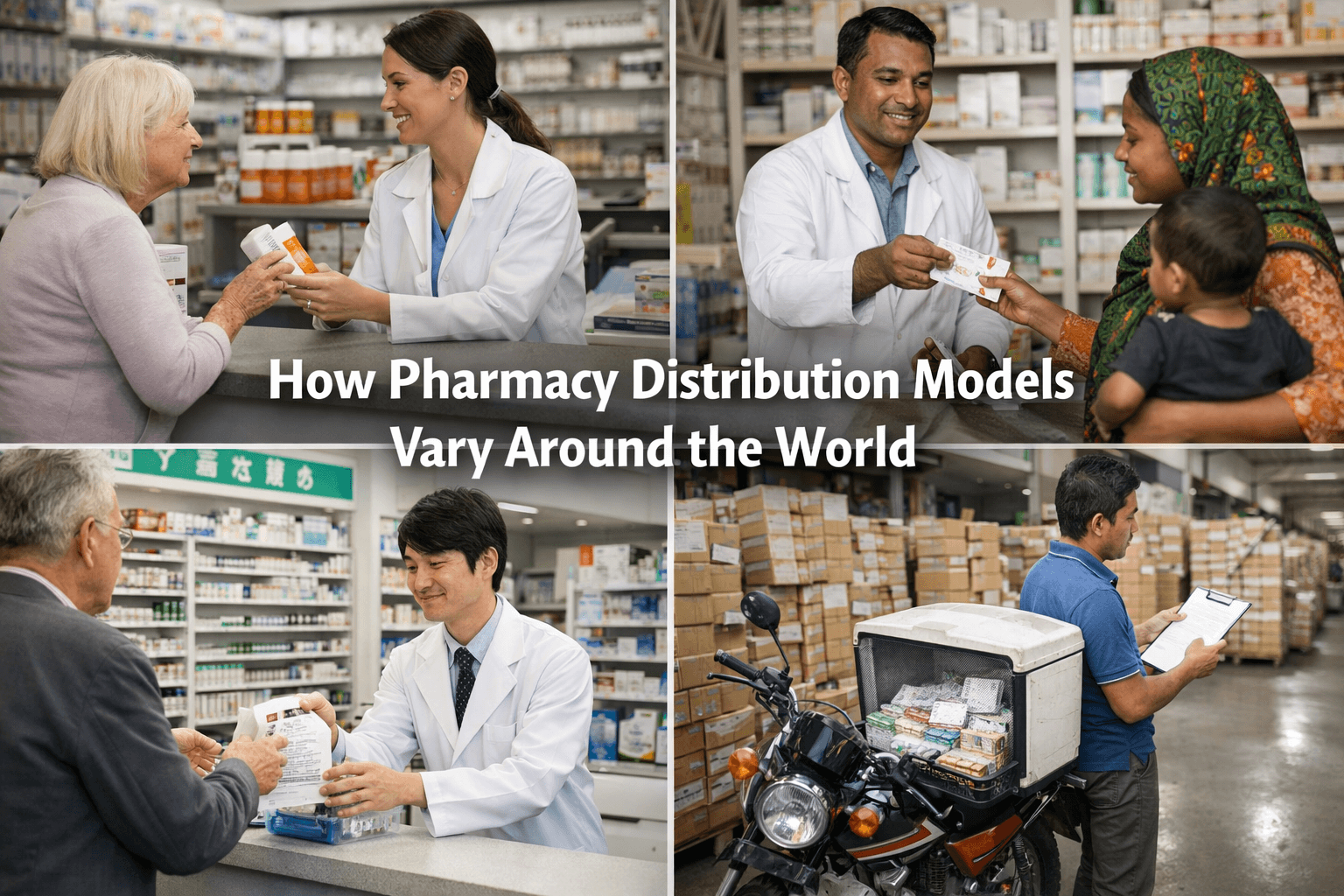
Pharmacy distribution is not monolithic. The centralized vs decentralized debate shapes how drugs move from factory to patient. In the United States, centralized mega-warehouses feeding thousands of retail outlets is the norm. This proven model drives cost efficiency but creates single points of failure—as seen during the peak of COVID-19 disruptions.
Contrast this with Germany, where decentralized wholesaling dominates. Regional hubs hold inventory closer to the point of dispensing, ensuring that a pharmacy in Munich isn’t dependent on a warehouse in Frankfurt. This model offers resilience but at higher operational cost.
For a pharmacy distributor Malaysia operator, neither model is perfectly transferable. Malaysia’s geography is fragmented: Peninsula Malaysia allows for centralized distribution via the North-South Highway corridor, but East Malaysia demands decentralized nodes. A strategic distributor might operate a central hub in Shah Alam serving the west coast, while maintaining a satellite GDP facility in Kota Kinabalu.
Critically, GDP-compliant cold chain is non-negotiable. Malaysia’s tropical climate means ambient temperatures routinely hit 33°C. For biologics requiring 2–8°C, this is a logistical minefield. Global giants use active cooling systems with real-time telematics. Malaysian distributors, historically reliant on passive gel packs, are now transitioning to IoT-enabled reefers. This is expensive but essential.
A comparative look at distribution resilience:
| Model | Structure | Risk Profile | Malaysia Adoption |
|---|---|---|---|
| Centralized (US-style) | Single hub, spokes | Low cost, high disruption risk | Suitable for West Coast, risky for Sabah |
| Decentralized (EU) | Multiple regional hubs | Higher cost, high resilience | Ideal for Sarawak, higher capex |
| Hybrid (Emerging) | Hub + satellite depots | Balanced cost/resilience | Growing adoption in pharma distributor Malaysia networks |
From the perspective of a logistics manager at a Malaysian wholesaler, the hybrid model is the pragmatic path. You cannot abandon centralization—it keeps prices competitive. But you must strategically locate forward-stocking points for remote pharmacies.
A proven local example involves a distributor serving government health clinics in the interior of Pahang. Rather than daily long-haul trips from Kuala Lumpur, they established a small GDP room in a partnering private hospital in Temerloh. This localized storage reduced transit time for vaccines from 8 hours to 45 minutes. This isn’t flashy—but it is effective logistics engineering.
Ultimately, the global distribution playbook is useful, but it must be contextualized. Malaysian distributors face infrastructure variability, temperature extremes, and fragmented demand. The expert players are those who mix and match global principles with local pragmatism. They don’t just import models; they adapt them to the monsoon.
Learn more: Comparing Pharmacy Distribution Models in Malaysia: Local vs International | Distribution Guidelines for Pharmaceuticals | The Role of Cold Chain Logistics in the Pharmaceutical Industry
Brand Presence and Customer Reach: Global vs. Local Influence
Brand equity in retail pharmacy is no longer just about logos or storefront aesthetics—it is about the emotional trust and cognitive recall patients experience when choosing where to fill their prescriptions. Global giants like CVS Health and Walgreens Boots Alliance have spent decades cultivating consistent brand experiences across thousands of locations. Their customers walk into any outlet—whether in Chicago or Bangkok—and immediately recognise the layout, service tone, and product assortment. This uniformity is not accidental; it is engineered through rigorous merchandising standards, staff training protocols, and centralised marketing assets deployed across continents.
For pharmacy operators in Malaysia, replicating this level of brand cohesion presents both aspiration and obstacle. While the Malaysian market is dominated by established names such as Guardian, Watsons, and Big Pharmacy, independent pharmacies and emerging mid-sized chains often struggle with fragmented brand identities. A pharmacy in Johor Bahru may look and feel completely different from one in Kota Kinabalu—even under the same group banner. This inconsistency dilutes customer recall and weakens negotiating leverage with suppliers who prioritise brands with high-visibility shelf presence.
Consider the Merchandiser Deployment Model adopted by PriooCare Malaysia. Instead of expecting individual pharmacy owners to master the complexities of planogram compliance and brand storytelling, PriooCare places trained field merchandisers directly into partner outlets. These merchandisers ensure that high-margin products are positioned at eye level, that cold chain vaccines are displayed with proper temperature indicators, and that promotional collateral aligns with the brand owner’s national campaign. This is not merely operational support—it is brand guardianship executed at shelf level.
Comparative Framework: Brand Consistency Models
Approach Control Level Cost Structure Suitability for Malaysian Pharmacies In-House Brand Teams High Fixed salary + training overhead Large chains with 50+ outlets Distributor-Led Merchandising Medium-High Pay-per-store or pay-per-visit Mid-sized groups & independents Unassisted Pharmacy Staff Low Minimal direct cost Single-location dispensaries
From the brand manager’s perspective, inconsistent shelf execution means wasted marketing spend. A television campaign drives consumers into stores, but if the product is buried on the bottom shelf or—worse—out of stock, the investment is lost. From the pharmacist’s perspective, a well-merchandised store reduces dispensing errors and improves patient counselling efficiency because products are logically organised. The patient simply experiences a pharmacy that feels reliable and easy to navigate—and they return.
Data reinforces this. A 2023 study published in the Journal of Retailing and Consumer Services found that 67% of pharmacy shoppers make purchase decisions based on in-store visual presentation, and 41% stated they would switch outlets if a competitor offered a cleaner, better-organised environment. In Malaysia’s densely populated urban corridors—Petaling Jaya, George Town, Iskandar Puteri—where pharmacies often sit within walking distance of one another, such switching behaviour directly impacts monthly revenue per square foot.
Strategic implication: Malaysian pharmacies must stop viewing brand presence as an abstract marketing function. It is a distribution-level accountability. When distributors integrate brand compliance KPIs into their service level agreements, they transform from passive order-takers into strategive growth partners. This is the proven pathway through which local players can emulate the shelf dominance of global leaders without requiring Hollywood-scale advertising budgets.
Learn more: Consumer Behavior Trends in Retail Distribution | Pharmaceutical Market Trends and Forecasts
Healthcare Services: The Expanding Role of Pharmacies Beyond Medication
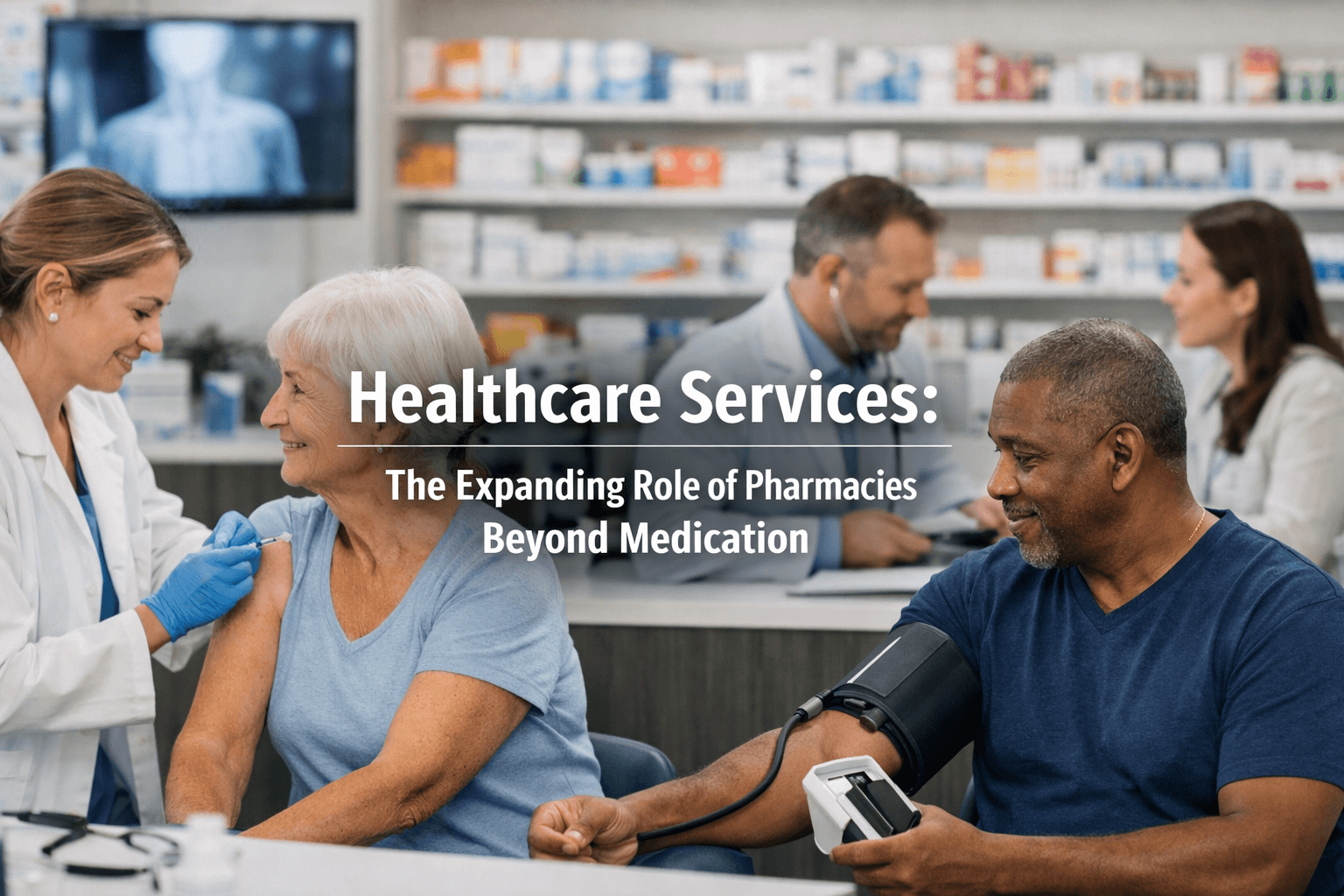
The architectural layout of a modern pharmacy is quietly rewriting its own history. Where once the dispensary counter occupied the back wall—subordinate to racks of shampoo and potato chips—today, pharmacies globally are allocating prime square footage to clinical service rooms, vaccination bays, and wellness screening kiosks. This shift is not cosmetic; it reflects a fundamental redefinition of the pharmacist’s role from dispenser to community health gatekeeper.
CVS Health’s transformation into a premier healthcare destination offers the most studied blueprint. By acquiring Aetna and embedding MinuteClinics into retail footprints, CVS demonstrated that pharmacies could compete with primary care physicians on convenience and cost. Walgreens followed with partnerships with VillageMD, placing full-service doctor offices adjacent to existing pharmacy counters. These moves are anchored in consumer behaviour data: patients visit pharmacies 12 times per year on average, compared to 4 visits to a general practitioner. Frequency builds trust—and trust monetises.
For Malaysian pharmacies, the service expansion opportunity is both urgent and achievable. The National Health and Morbidity Survey 2023 indicated that 35.7% of Malaysian adults have hypertension, and 17.5% live with diabetes. Yet screening penetration remains low outside government health facilities. Pharmacies are perfectly positioned to bridge this gap. Alpro Pharmacy, for instance, now offers community-based diabetes education programmes and point-of-care HbA1c testing in selected outlets. Caring Pharmacy has introduced in-store dietitian consultations. These are not peripheral experiments; they are revenue-generating services that deepen patient loyalty while differentiating the brand from competitors still selling only pills and plasters.
However, expansion carries operational complexities. From the distributor’s viewpoint, vaccines and diagnostic tests require GDP-compliant cold chain infrastructure that standard pharmaceutical vans may not provide. From the pharmacist’s viewpoint, administering injections demands additional certification and indemnity insurance—costs that independent operators shoulder alone. This is where tailored distribution partnerships become essential. A distributor offering temperature-controlled last-mile delivery, consumable resupply synchronisation, and even staff training modules reduces the entry barrier for pharmacies wanting to launch clinical services.
Quick Checklist: Launching Vaccination Services in Malaysian Pharmacies
Secure NPRA-approved vaccine sources and cold chain validated storage
Train pharmacists via Pharmacy Board Malaysia’s provider course
Implement appointment scheduling system to manage patient flow
Display visible signage indicating service availability (build foot traffic)
Coordinate with distributor for weekly auto-replenishment of syringes, cotton, and emergency trays
The patient perspective is simplest: they want accessible, affordable, and trustworthy care. A mother in Shah Alam should not need to drive 20 minutes to a government clinic for her child’s scheduled immunisation when a pharmacy five minutes away can administer the same vaccine, update MySejahtera, and sell her infant paracetamol on the same trip. This is convenience with clinical integrity—and it is the strategic horizon for Malaysian pharmacy retail.
Learn more: Ultimate Guide to KKM Approval in Malaysia
Key Challenges Faced by the Top Global Pharmacies
Scale is a double-edged sword. The same centralised procurement systems that enable CVS to negotiate billion-dollar rebates also create single points of failure when a tornado hits a distribution centre in Memphis. The same global brand standards that reassure investors often clash with local regulatory requirements in Southeast Asia or the Middle East. Understanding these inherent tensions allows Malaysian distributors to build resilience without inheriting the bureaucratic drag of a Fortune 50 conglomerate.
Supply chain fragility remains the foremost challenge. During the early COVID-19 vaccine rollouts, global pharmacy chains discovered that just-in-time inventory models—optimised for cost efficiency—were disastrous for pandemic demand surges. Pharmacies faced public anger over unfilled appointments while distributors scrambled to allocate limited stock across thousands of doors. In Malaysia, the National Pharmaceutical Regulatory Agency (NPRA) enforces strict traceability requirements for scheduled poisons and biologics. A single documentation error can halt an entire shipment at customs. Local distributors who implement end-to-end serialisation and real-time cold chain telemetry insulate their pharmacy partners from such disruptions.
Regulatory heterogeneity is another formidable barrier. A GDP-compliant warehouse in Malaysia does not automatically satisfy MOH- Brunei requirements or Indonesia’s BPOM standards. For Malaysian distributors eyeing regional expansion, this means maintaining separate SOPs, labelling artwork, and pharmacovigilance reporting channels for each jurisdiction. It is an expert-level undertaking—one that demands dedicated regulatory affairs personnel, not part-time attention from logistics managers.
Then there is the human factor. Recruiting and retaining competent pharmacy managers in remote locations challenges even Walgreens in rural America. In Malaysia, the disparity between pharmacy density in the Klang Valley versus Kelantan or Sabah mirrors this issue. Tier-2 cities often struggle to attract pharmacists, leading to reduced operating hours or reliance on locum tenens—which compromises service consistency. Distributors can alleviate this by offering centralised order processing and telepharmacy consultation hubs, allowing a single pharmacist in Kuala Lumpur to remotely supervise dispensing robots or verify prescriptions for three satellite stores.
The lesson from global struggles is clear: unchecked expansion multiplies complexity faster than revenue. Efficient operations are not born from size alone—they are engineered through proven workflows, adaptive technology, and collaborative partnerships that localise global wisdom. Malaysian pharmacies, leaner and more agile, can outmanoeuvre larger competitors by specialising in areas where bureaucratic giants move slowly: niche oncology therapies, personalised compounding, and indigenous herbal formulations registered with NPRA.
Comparative Table: Top 5 Global Pharmacies vs. Leading Pharmacies in Malaysia
| Pharmacy Chain | Revenue (Latest FY) | Outlets | Differentiating Healthcare Services | Distribution Model Strength |
|---|---|---|---|---|
| CVS Health (USA) | USD 322.5 billion | 10,000+ | MinuteClinic, Aetna insurance integration | Vertically integrated PBM, mail-order, retail |
| Walgreens Boots Alliance (USA/Europe) | USD 139.5 billion | 9,000+ | VillageMD primary care, specialty pharmacy | Global sourcing, boot-own brand manufacturing |
| Cigna + Express Scripts (USA) | USD 195.3 billion | N/A (PBM focus) | Speciality pharmacy, patient adherence programmes | PBM-led channel control |
| Guardian Health (Malaysia/SEA) | MYR 6.5 billion (est.) | 400+ | Health clinics, personal care consulting | Regional DCs, franchise model |
| Big Pharmacy (Malaysia) | MYR 950 million (est.) | 200+ | Retail loyalty programme, wellness supplements | Aggressive store expansion, centralised warehousing |
Insights from the Table:
Revenue disparity between global and local players is stark, yet Malaysian chains maintain higher store-level profitability in some segments due to lower labour costs and concentrated catchment areas.
Service diversification among top Malaysian pharmacies is accelerating, but still lags in chronic disease management programmes common in the US.
Distribution architecture differs fundamentally: global giants own their logistics; Malaysian pharmacies often outsource last-mile to specialised healthcare distributors like PriooCare, enabling variable cost structures without capital lock-in.
Brand Presence and Healthcare Integration: The Malaysian Synthesis
What emerges from this cross-continental analysis is not a prescription to copy—but a framework to translate. Malaysian pharmacies possess advantages that global chains envy: dense urban populations, high smartphone penetration for digital health integration, and a Ministry of Health increasingly supportive of community pharmacy roles in non-communicable disease management. The gap lies not in ambition, but in execution infrastructure.
Bridging this gap requires distributors who think like brand managers and pharmacists who think like clinicians. When a merchandiser from PriooCare aligns shelf layout with a dermatological brand’s national advertising flight, the pharmacy benefits from impulse uplift without spending a sen on media. When a distributor ensures continuous supply of influenza vaccines from July through October, the pharmacy becomes the trusted neighbourhood immunisation centre—not a sporadic participant.
From the patient’s chair, these operational details are invisible. They only notice when the pharmacy has their medication, knows their name, and offers health services that fit their schedule. That invisibility is the hallmark of effective pharmaceutical distribution. It is the quiet engine beneath customer loyalty that no loyalty card alone can replicate.
Frequently Asked Questions (FAQ)
Q1: What are the big 3 pharmacy chains?
Answer: The big 3 pharmacy chains typically refer to Walgreens, CVS, and Rite Aid, which are major players in the global pharmacy retail market.
Q2: Which is the largest pharma company in the world?
Answer: The largest pharma company in the world by revenue is currently Pfizer, followed closely by companies like Johnson & Johnson and Roche.
Q3: What are the big 5 pharma companies?
Answer: The big 5 pharma companies are Pfizer, Johnson & Johnson, Roche, Merck & Co., and Novartis, known for their market dominance and innovative drug portfolios.
Q4: What is the big 4 in pharma?
Answer: The big 4 in pharma refers to the four leading global pharmaceutical companies: Pfizer, Johnson & Johnson, Roche, and Merck & Co.
Q5: Which are the top 10 pharma companies?
Answer: The top 10 pharma companies include Pfizer, Johnson & Johnson, Roche, Merck & Co., Novartis, Sanofi, AbbVie, GlaxoSmithKline, Bayer, and AstraZeneca.
Q6: Who are the big 3 in pharma?
Answer: The big 3 in pharma typically refers to the three largest pharmaceutical companies: Pfizer, Roche, and Johnson & Johnson.
Q7: What are the top 20 pharmaceutical companies?
Answer: The top 20 pharmaceutical companies include Pfizer, Johnson & Johnson, Roche, Merck & Co., Novartis, Sanofi, AbbVie, GlaxoSmithKline, Bayer, AstraZeneca, and others, based on revenue and market share.
Q8: Which country is no. 1 in the pharma industry?
Answer: The United States is the number 1 country in the pharma industry, home to many of the largest pharmaceutical companies and major innovations in drug development.
Q9: Who is Pfizer’s biggest competitor?
Answer: Pfizer’s biggest competitors include Merck & Co., Johnson & Johnson, and Roche, all of which are leading global pharmaceutical companies.
Q10: What’s the difference between biotech & pharma?
Answer: Biotech focuses on using living organisms to develop drugs, while pharma involves traditional chemical drug development. Biotech often targets innovative therapies like gene and cell therapies.
How can we assist you today? 😊
Just let us know—we’re here to help!