
Top 50 Distributors in Malaysia for Vitamin and Wellness Products
May 27, 2026
In today’s dynamically evolving health landscape, a distributor’s function has fundamentally transcended its traditional boundaries. The question is no longer about who can move a box from point A to point B the fastest. Instead, for brands and pharmacies navigating Malaysia’s competitive wellness sector, the core claim is unmistakable: a world-class distributor functions as a strategic, integrated extension of your business, directly influencing market access, regulatory integrity, and ultimately, commercial success. This pivotal shift turns a simple logistics provider into an indispensable partner in the value chain, whose performance is measured by a multi-faceted contribution to the brand’s entire journey on shelf.
This evolution is driven by the market itself. Malaysian consumers are now exceptionally informed and demand not just products, but trust, authenticity, and consistent availability. Pharmacies, consequently, have transformed from mere dispensaries into holistic wellness hubs, curating experiences and product ranges that cater to this conscious consumer. In this environment, a distributor that merely delivers is a liability. The strategic value they must provide encompasses a complex matrix of services: ensuring unwavering regulatory compliance, executing flawless in-store merchandising, providing actionable sell-through data, and offering category insights that help both brand and retailer optimize performance. Their role is, therefore, a non-negotiable determinant of a product’s lifecycle in the market.
Learn more : Understanding Consumer Trust in Health and Wellness Products
The Pillars of Performance: Deconstructing the Metrics of a Top-Tier Distributor

Evaluating a potential supply chain partner requires a lens that looks far beyond fleet size or warehouse square footage. True distribution excellence in Malaysia’s regulated wellness market is a compound metric, built on interdependent pillars that together mitigate risk and amplify opportunity. For a brand manager, the right partner ensures products not only reach the shelf but resonate and sell. For a pharmacist, it means a reliable stream of compliant stock with support that enhances the store’s appeal. For a merchandiser, it translates to the tools and schedule to execute perfect store conditions.
Consider these essential criteria as a framework for assessment:
Regulatory Governance: Possession of a valid Good Distribution Practice (GDP) license and a proven track record with the NPRA (National Pharmaceutical Regulatory Agency) and KKM (Kementerian Kesehatan Malaysia). This is the absolute baseline.
Channel Mastery: Depth and quality of access to both large pharmacy chains (Guardian, Watsons, Caring) and the vast network of independent pharmacies across all regions, including often-under-served East Malaysia.
Category Specialization: Demonstrated expertise and focus in handling sensitive wellness product categories like vitamins, nutraceuticals, herbal supplements, and cosmeceuticals, including any necessary cold-chain logistics.
Operational Reliability: Efficient and transparent fulfillment capabilities covering order accuracy, returns handling, and robust Standard Operating Procedures (SOPs) for critical events like product recalls.
Value-Added Services: Proactive brand support through dedicated merchandising teams, Point-of-Sale Material (POSM) deployment, and providing consistent, granular reporting on stock levels and sales velocity.
A failure in any one pillar can undermine the entire operation. The following comparison illustrates the stark contrast between a high-performing partner and one that introduces risk:
| Evaluation Criteria | High-Performer Indicators | Weak-Performer Red Flags |
|---|---|---|
| Regulatory Compliance | Active GDP license with zero warnings; in-house regulatory affairs team to assist with MAL/NOT submissions. | Pending license status; history of penalties or non-compliance alerts from NPRA. |
| Pharmacy Network Reach | Coverage of 200+ outlet doors with a balanced national footprint, including East Malaysia. | Limited to under 30 outlets; concentrated in only one urban region with no pan-Malaysia capability. |
| Category Expertise & Flexibility | Handles 3+ complementary wellness segments (e.g., vitamins, sports nutrition, herbal) with tailored storage protocols. | Focuses on only one generic segment; lacks infrastructure for temperature-sensitive products. |
| Merchandising & In-Store Support | Scheduled store visit cycles by trained merchandisers; provision of customized POSM kits and installation. | No dedicated in-store team; merchandising is left entirely to the pharmacy staff with no support. |
Learn more : The Role of Pharmacy Distribution Services in Malaysia’s Healthcare System
Guardians of Trust: Why GDP Compliance is the Unbreachable Foundation

In the wellness industry, where product integrity is synonymous with consumer safety, regulatory compliance is not a back-office function—it is the frontline of brand protection. The critical question every brand owner must ask is: Is your pharmacy distributor actively shielding your brand from compliance risk, or are they an accidental conduit for it? Malaysia’s NPRA mandates that any entity involved in the wholesale of health supplements, nutraceuticals, and cosmetics must adhere to Good Distribution Practice (GDP). However, a license on the wall does not equate to expert practice on the ground.
A proven and reliable distributor operationalizes GDP through tangible, daily actions. This means storing goods in temperature and humidity-controlled, GDP-certified facilities with continuous monitoring. It requires a seamless, documented system for batch traceability from manufacturer to end-buyer, which is essential for executing timely and precise product recalls. Furthermore, a true partner goes beyond storage and transport; they offer guidance or direct assistance with the complex MAL (Marketing Authorization License) and NOT (Notification of Importation) submission processes to KKM.
A real-world Malaysia-related example underscores this: A European probiotic brand attempted market entry using a distributor with weak regulatory acumen. The NOT submissions were delayed and improperly filed, leading to the brand’s exclusion from the central listing of a major pharmacy chain, stalling its launch for over a year. Conversely, a trusted local distributor for a popular Australian vitamin range managed the entire KKM registration process, provided strategic advice on claim substantiation, and successfully secured nationwide placement in both Guardian and Watsons within a single quarter. The implication is clear: your distributor’s regulatory expertise is a direct extension of your product’s legitimacy and market access. If they cannot articulately explain NPRA protocols or the nuances of cosmetic notification versus supplement registration, consider it a significant strategic vulnerability.
Learn more : How to Ensure Regulatory Compliance for Pharmacy Distribution in Malaysia | Guidelines: Distribution (Good Distribution Practice Standards)
| Guidance Notes on Good Distribution Practice
Strategic Alignment: Choosing Between Independent Agility and National Scale

One of the most strategic decisions a brand can make is selecting a distribution model that aligns with its lifecycle stage and market ambitions. The Malaysian landscape broadly presents two archetypes: the independent pharmacy distributor, often regionally focused and agile, and the national-scale wholesaler, with extensive networks and systemic processes. This choice is not about which is universally better, but which is tailored to your current brand needs and growth trajectory.
Independent distributors frequently cultivate deep, relational roots within specific states or regions. Their pros include lower minimum order quantities (MOQ), which is ideal for market testing or niche brands. They often have close relationships with independent pharmacy owners, allowing for highly personalized service and more frequent, detailed product education during store visits. For a new brand, this hands-on advocacy can be invaluable. From the pharmacist’s perspective, an independent distributor might be more responsive to local stock needs and offer a more curated product selection.
National distributors, on the other hand, provide the infrastructure for rapid, widespread commercialization. Their strengths lie in efficient logistics to hundreds of doors simultaneously and established relationships with the central procurement teams of large chains. They typically possess more sophisticated IT systems for Electronic Data Interchange (EDI) and sales reporting, offering brands a macro-level view of performance. For a brand in its growth or scaling phase, this reach and data capability are essential.
| Operational Feature | Independent Distributor | National-Scale Distributor |
|---|---|---|
| Flexibility & MOQ | High flexibility; lower MOQs facilitate easy market entry. | Moderate to low flexibility; MOQs are often standardized and higher. |
| Channel Relationship & Personalization | High-touch, personalized service at the individual store or owner level. | Relationship managed centrally with chain HQs; less store-level personalization. |
| Regulatory Support | Can vary; some are highly specialized, others may rely on third-party consultants. | Typically has an in-house regulatory department with standardized processes. |
| Ideal Brand Fit | Market entry, niche targeting, regional focus, or specialized premium products. | Growth stage, mass-market appeal, requiring rapid nationwide penetration. |
A relevant Malaysian scenario might involve a local herbal supplement brand from Sabah. To establish a stronghold in East Malaysia before expanding westwards, partnering with a Kuching-based independent distributor with intimate knowledge of Borneo’s pharmacy landscape would be a strategic move. Conversely, a Singaporean vitamin brand seeking immediate nationwide presence in Peninsular Malaysia would likely prioritize a national partner with pre-existing shelf space in major chains.
The Partners Shaping the Market: Profiles of Trusted Distribution Leaders

The backbone of Malaysia’s wellness retail ecosystem is comprised of specialist distributors who have mastered the intricate balance of compliance, logistics, and commerce. These organizations are more than intermediaries; they are market-makers, gatekeepers, and strategic allies for both international and domestic brands. The following curated profiles highlight a segment of companies that exemplify the high standards required to thrive, each bringing a distinct focus and capability to the table.
These entities are evaluated on their core wellness segments, demonstrating category depth, their geographic strengths which reveal strategic market coverage, and key performance tags that signal their proven capabilities. It’s a landscape where specialization often wins over generalization.
BioHub Wellness Sdn Bhd: This distributor has carved a niche with a sharp focus on premium supplements and personal care innovations. Their key strength lies in an unparalleled network across East Malaysia, providing brands with expert access to the Sabah and Sarawak markets—a region where many national players have weaker penetration. For a brand looking to build a loyal following in Borneo with tailored community engagement, BioHub represents a trusted gateway.
Tags: [GDP Certified], [East MY Focus], [Community Engagement]
VitaSphere Malaysia: With a name that speaks to its core, VitaSphere has established itself as a leader in the vitamin and traditional remedy space. They are renowned not just for logistics, but as a true regulatory partner, offering end-to-end support from KKM submission strategy to post-approval lifecycle management. This makes them an effective choice for overseas brands unfamiliar with the Malaysian regulatory labyrinth. From the brand manager’s perspective, this reduces time-to-market and mitigates significant risk.
Tags: [Regulatory Partner], [Chain Access], [Traditional Medicine Expertise]
PriooCare Malaysia: PriooCare operates at the innovative intersection of wellness, focusing on functional foods and cosmeceuticals. Their standout offering is an expert and dedicated merchandising engine. They deploy brand ambassadors and merchandisers who do more than stock shelves; they conduct mini-training sessions for pharmacy staff, ensuring the product story is effectively communicated to end consumers. For brands where education and in-store experience are key drivers of trial, this service is invaluable.
Tags: [Expert Merchandising], [KKM Advisor], [Brand Activation]
UMediC Healthcare Sdn Bhd: As a full-spectrum healthcare distributor, UMediC’s strength is its national reach and operational muscle. They handle a wide range of Over-the-Counter (OTC) products and nutraceuticals with a highly efficient, technology-driven fulfillment system. Their infrastructure is designed for volume and reliability, making them a strategic partner for established brands that require consistent, nationwide delivery and integration with chain pharmacy inventory systems. The pharmacist’s viewpoint values UMediC for their consistent reliability and breadth of portfolio.
Tags: [National Reach], [Efficient Fulfillment], [Chain Integration]
The landscape, of course, extends far beyond these four examples, encompassing dozens of specialist firms each with their own geographic and categorical mastery. From distributors focusing exclusively on clinical nutrition for hospitals and clinics, to those mastering the e-commerce logistics of direct-to-consumer wellness brands, the depth of the sector is a testament to its maturity. Selecting the right one from this pool demands a clear understanding of your brand’s own map—its regulatory status, its target consumer, its geographic ambitions, and the stage of its lifecycle in the dynamic Malaysian wellness journey.
Navigating the Supply Chain: From Warehousing to In-Store Activation
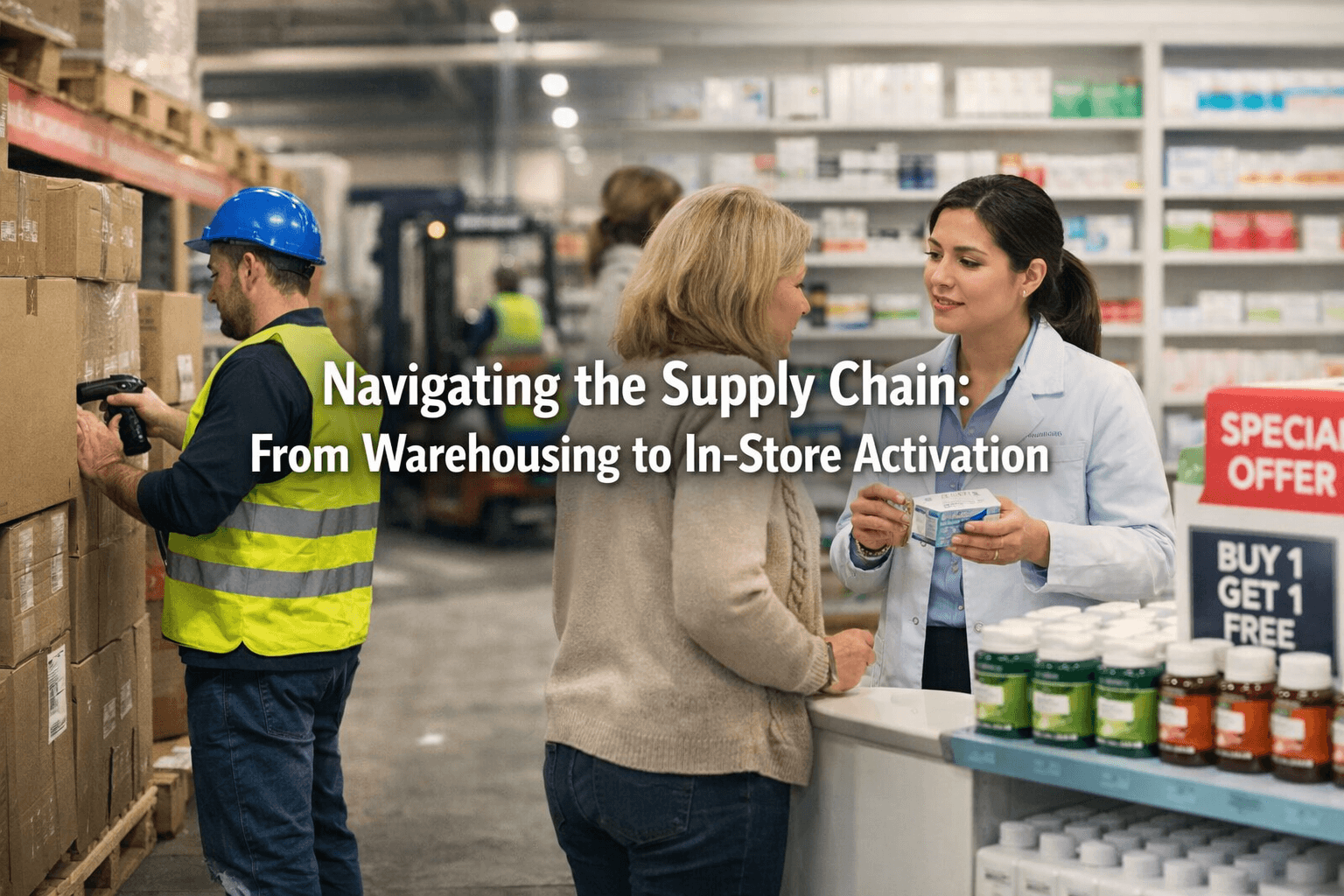
What transpires after a product arrives in Malaysia, before it finds its place on the pharmacy shelf? The journey from port to point-of-sale is a critical, often underestimated, phase that can make or break a brand’s market entry. This phase transcends mere transportation; it is a complex ballet of logistical precision, regulatory adherence, and commercial execution. Your distributor’s operational strength is the sole determinant between a seamless market penetration and a costly logistical failure. A strategic supply chain partner does not just move boxes—they orchestrate a reliable, integrated process that preserves product integrity, maximizes shelf visibility, and ultimately drives consumer uptake.
The Foundation: GDP-Compliant Warehousing as a Non-Negotiable Standard
The core claim here is unequivocal: Good Distribution Practice (GDP) certification is the absolute bedrock of pharmaceutical and wellness distribution. It is not a mere administrative checkbox but a proven framework that guarantees product safety, efficacy, and quality from the warehouse to the end-user. In Malaysia’s tropical climate, with high heat and humidity, this becomes even more essential. A GDP-certified warehouse implements rigorous protocols for temperature-controlled storage, meticulous stock rotation using FEFO (First Expired, First Out) tracking, and comprehensive documentation for full product traceability. Without this, brands risk product degradation, regulatory penalties, and a catastrophic loss of consumer trust. For instance, a distributor handling a range of probiotic supplements must maintain an unbroken cold chain; a single lapse can render the live cultures ineffective, leading to retailer returns and brand damage.
Real-World Execution: The Field Force That Bridges Warehouse and Shelf
Operational strength is proven not in the warehouse alone, but on the front lines of retail. This is where in-store activation and field execution teams become the brand’s ambassador. Their responsibilities are multifaceted and go far beyond simple stock delivery. A reliable distributor employs dedicated merchandisers or promoters who execute a brand’s commercial strategy at store level. Their tasks are critical:
Planogram compliance ensuring products are placed in the agreed, high-visibility shelf location.
Point-of-Sale Material (POSM) distribution and setup to attract consumer attention.
Regular stock refill cycles to prevent out-of-stock situations, which directly lose sales.
Shelf maintenance to keep products clean, front-faced, and within expiry date.
Consider a Malaysia-related scenario involving a leading pain relief patch brand. The brand partnered with a distributor boasting nationwide coverage and a dedicated in-store merchandising team. This team was tasked with executing a focused campaign across 120 Caring Pharmacy outlets. They ensured perfect planogram placement near the pharmacy counter, installed eye-catching shelf talkers, and conducted pharmacist education sessions. The result was a remarkable 37% sales increase within 60 days—a direct outcome of effective field execution, not just logistical delivery.
Channel Intelligence: The Strategic Map for Retail Success
Is your distributor merely delivering products, or are they strategically navigating the complex retail landscape? Channel intelligence is the sophisticated understanding of different pharmacy segments—their ordering behaviors, customer demographics, and commercial drivers. A distributor with effective channel strategy tailors its approach for each segment:
Major Chain Pharmacies (e.g., Caring, Guardian, BIG Pharmacy): These require standardized processes, central procurement teams, and an ability to handle high-volume logistics. Success here hinges on EDI integration and negotiating central listing agreements.
Independent Community Pharmacies: Here, success is built on personal relationships, flexible margin structures, and patient recommendation. Distributors need a tailored approach, often involving direct engagement with the pharmacist-owner.
Wellness Boutiques and High-End Retailers: These outlets focus on premium, niche products and lifestyle marketing. Distribution requires selective placement, elegant merchandising, and support for educational events.
A distributor with deep channel intelligence knows, for example, that immunity boosters see higher traction in pharmacies near corporate districts post-pandemic, or that product bundling strategies work exceptionally well in family-oriented neighborhoods during the back-to-school season. For example, a distributor launched a new vitamin C with zinc supplement exclusively with BIG Pharmacy, targeting outlets in Kuala Lumpur’s corporate hubs like KLCC and Bangsar South. They complemented this with custom POSMs and weekday sampling campaigns during lunch hours, creating immediate product trial and traction.
Evaluating Distributor Capabilities: A Framework for Brand Owners
Selecting a distribution partner is a strategic decision with long-term implications. Brand owners must move beyond basic logistics quotes and conduct a thorough evaluation based on capability and transparency. Here is a proven framework of critical questions to ask:
Regulatory and Operational Integrity:
Are they fully GDP licensed and compliant with all KKM (Ministry of Health) regulations?
Can they provide verifiable track records for cold-chain management for sensitive products?
What is their process for customs clearance coordination and handling import documentation?
Commercial and Market Execution Strength:
What is their coverage split between chain vs. independent pharmacies? Can they provide a map?
Do they have an in-house field force for merchandising, or do they outsource it?
Can they provide detailed reporting on stock movement, sell-through data, and expiry management?
Do they offer tailored launch support for new brands, including retailer introduction and in-store training?
A quick audit tip is to request their last 6-month in-store visit schedule and examples of activation reports for similar brands. A trusted partner will operate with transparency. In a Malaysian context, a red flag would be a distributor unable to detail their experience with NPRA (National Pharmaceutical Regulatory Agency) submissions or one with no track record in handling the specific requirements for halal-certified wellness products, which is a significant consumer demand driver locally.
Learn more : Retail Merchandising Services: What They Include and Why Retailers Use Them | A Guide to Good Distribution Practice (GDP)
Future Trends Shaping Malaysia’s Wellness Distribution Landscape
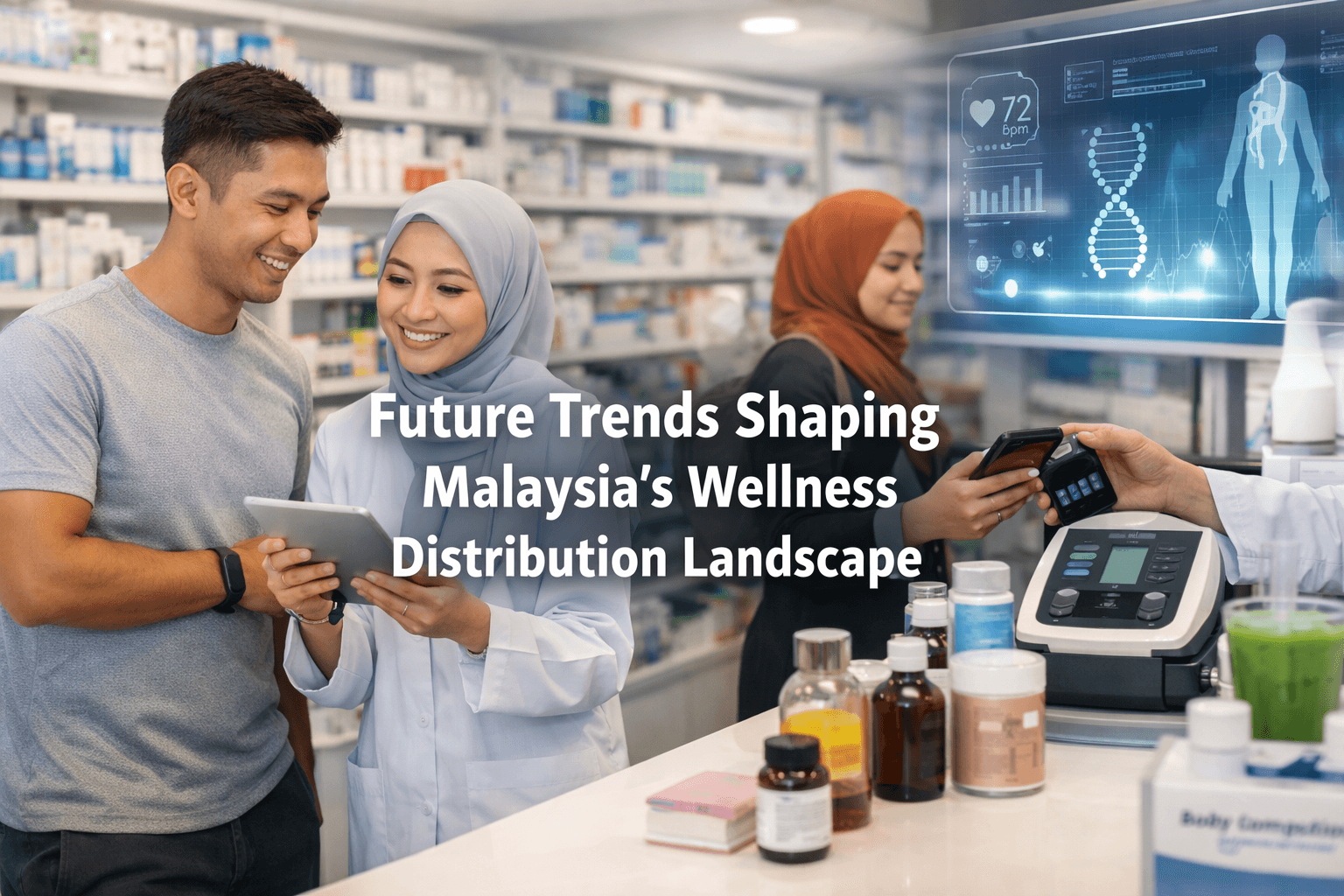
The market is evolving rapidly, and the distributors that thrive will be those that anticipate and adapt to these shifts. The future will be defined by digital integration, sustainability, and holistic wellness.
Digital and Data-Driven Distribution is becoming the norm. Pharmacists and brand managers now expect cloud-based order tracking portals, real-time inventory visibility, and AI-driven demand forecasting to optimize stock allocation. Automated expiry alerts prevent waste, while data-backed planogram recommendations maximize sales per square foot. Distributors that invest in this technology stack transition from being a logistics vendor to a strategic business intelligence partner.
The Sustainability and Ethical Sourcing wave is reshaping consumer choices. Distributors are increasingly asked about eco-friendly packaging options, carbon-neutral logistics, and ethical sourcing credentials. In Malaysia, Halal certification is not just for food; it’s a growing expectation in the wellness space, signifying purity and quality. A distributor’s ability to navigate and verify these supply chain attributes adds immense brand value.
Furthermore, the functional wellness boom sees products blending categories—beauty with collagen, immunity with gut health, sleep aids with stress relief. This requires distributors to have flexible warehousing and educated field teams who can cross-sell and explain these combined benefits to pharmacists and consumers. Pharmacists now expect distributors to support co-branded digital campaigns for loyalty apps and provide educational content for in-store use.
Learn more : Good Storage and Distribution Practice: What the WHO Says
Frequently Asked Questions (FAQ)
Q1: Who are the big 3 pharma distributors?
The “Big 3” pharmaceutical distributors in the world are McKesson Corporation, AmerisourceBergen (now Cencora), and Cardinal Health. These U.S.-based companies handle the majority of pharmaceutical distribution across North America, supplying medications to hospitals, clinics, and retail pharmacies.
Q2: What are the top 5 pharmacy in Malaysia?
The top 5 pharmacy chains in Malaysia, based on nationwide presence and consumer reach, are:
Guardian
Watsons
Health Lane Family Pharmacy
Big Pharmacy
Alpro Pharmacy
These brands have extensive networks and are known for offering a wide range of health, wellness, and pharmaceutical products.
Q3: Who is the largest pharmaceutical distributor in the world?
McKesson Corporation is currently the largest pharmaceutical distributor in the world. It is based in the United States and plays a key role in the global pharmaceutical supply chain, handling millions of prescription and OTC products annually.
Q4: Who is the largest medical distributor?
McKesson Corporation is also considered the largest overall medical distributor, providing pharmaceuticals, surgical supplies, and healthcare technology solutions to a broad range of healthcare facilities worldwide.
Q5: Where do pharmacies get their medications?
Pharmacies source their medications primarily from licensed pharmaceutical distributors or wholesalers, who receive products directly from manufacturers. In Malaysia, these distributors must comply with NPRA and KKM regulations, ensuring all medications are safe and registered before reaching pharmacy shelves.
Q6: Who is the best medical supplier?
There is no single “best” medical supplier globally, as it depends on the region and product type. However, major global suppliers include McKesson, Cardinal Health, and Henry Schein. In Malaysia, trusted medical suppliers include companies like Duopharma, Pharmaniaga, and regional distributor networks that specialize in compliant pharmacy supply.
Q7: What is a medicine distributor?
A medicine distributor is a licensed company that acts as an intermediary between pharmaceutical manufacturers and healthcare providers (such as pharmacies, hospitals, and clinics). They manage the logistics, storage, and delivery of medicines, ensuring timely and safe distribution under regulatory guidelines.
Q8: Who is the largest provider of healthcare?
Globally, government healthcare systems (like the NHS in the UK or Medicare in the US) are the largest providers of healthcare. In the private sector, UnitedHealth Group is considered one of the largest healthcare providers in terms of revenue and reach.
Q9: Who is the largest manufacturer of medicine?
Pfizer is often recognized as one of the largest medicine manufacturers globally, based on revenue and drug portfolio. Other major players include Johnson & Johnson, Roche, and Novartis, all of which produce a wide range of pharmaceutical products.
Q10: What are the big five pharma companies?
The “Big Five” global pharmaceutical companies typically refer to:
Pfizer
Johnson & Johnson
Roche
Merck & Co. (MSD)
Novartis
These companies lead the industry in terms of innovation, production volume, and global market share.
The journey to a successful brand presence in Malaysia’s pharmacy channel is intricate. It demands a partner whose capabilities are woven from threads of unwavering regulatory compliance, logistical expertise, deep channel insight, and exceptional field execution. This partner becomes an extension of your brand, safeguarding its integrity and amplifying its reach. In a market as dynamic and competitive as Malaysia, the choice of distributor is not a procurement decision but a cornerstone of sustainable growth. It is the difference between having a product that is merely available and one that is actively discovered, trusted, and chosen by consumers.
Our Services
Our marketing and sales teams use their strong relationships with the channel to create demand for your product at every stage of its lifecycle.
Demand creation services we offer:
Market Access Services
Regulatory Registration Services
Pharma Product Listing Services
Merchandising services (RSMS)
Brand Management
Logistic & Warehousing
Exclusive Merchandising Services
Visual Merchandising
Discover More About Our Solution
How PriooCare Can Help
If you found this article useful, see how we put these insights into practice for our clients:
Or contact our team for a tailored consultation.
How can we assist you today? 😊
Just let us know—we’re here to help!