Top 50 Pharmaceutical Companies in Malaysia
At its core, the pharmacy distribution service in Malaysia is the indispensable circulatory system for the nation’s health. It is the fundamental pillar that ensures the seamless, safe, and timely movement of medicines from GMP certified pharmaceutical manufacturers to the shelves of retail pharmacies and the cabinets of hospitals and clinics. Without this robust network, the entire healthcare ecosystem would falter. The system’s effectiveness is not accidental; it is the direct result of a highly regulated environment where global standards like Good Manufacturing Practices (GMP) and Good Distribution Practices (GDP) are not just benchmarks but operational mandates. This intricate dance between production and point-of-care is what guarantees that a patient in Kuala Lumpur or a rural clinic in Sarawak receives the right medication at the right time. The strategic importance of this network cannot be overstated—it is the silent, reliable engine that powers public health outcomes and enables the industry’s growth, making it an essential component of national infrastructure.
Consider the practical scenario of a nationwide vaccination drive. The logistics of storing and transporting temperature-sensitive vaccines from a central warehouse in Selangor to every single vaccination center across all 13 states demand a distribution network of exceptional precision and resilience. This is where pharmacy wholesale distributors with proven GDP-compliant cold-chain capabilities become the unsung heroes. Their efficient systems ensure vaccine potency is maintained, directly impacting public health success. Another Malaysia-related example is the distribution of chronic disease medications, like those for hypertension or diabetes, to government health clinics (Klinik Kesihatan). Here, the consistency and reliability of the distribution partner are paramount to prevent any treatment interruptions for millions of Malaysians dependent on these essential medicines. The flow is a testament to a tailored and coordinated effort between public health objectives and private sector logistical expertise.
Navigating the Competitive Landscape: Market Leaders and Strategic Niches
The landscape of pharmaceutical distribution in Malaysia is characterized by a dynamic and competitive mix of well-entrenched market leaders and agile, emerging independent distributors. This duality creates a market that is both consolidated and diverse, driving innovation and service specialization. Key players, often large, integrated corporations, dominate the broad market through vast warehousing networks, extensive fleet operations, and significant economies of scale. Their established logistics channels enable them to serve a wide array of clients, from major hospital chains to nationwide retail pharmacy franchises, with a one-stop-shop solution. Their value proposition is built on volume, reach, and the trusted security that comes with long-standing industry presence and substantial investment in compliance technology.
On the other side of the spectrum, independent pharmacy distributors carve out their strategic niche by offering highly personalized and tailored services. They often excel in addressing specific, localized needs that larger corporations may overlook. For instance, an independent distributor might specialize in servicing kedai ubat (traditional medicine shops) in the northern states with a specific mix of over-the-counter and generic medicines, building deep community relationships. Another might focus on supplying specialized oncology or rare disease medications to a select network of private hospitals, providing white-glove service and deep product knowledge. The competition between these models ultimately benefits the end consumer. While the large players provide the backbone of mass distribution, the independents offer flexibility and niche expertise, ensuring that even the most specific market segments are adequately served. The common thread uniting all credible distributors is their adherence to certifications—holding both GMP and GDP credentials is non-negotiable for maintaining market legitimacy and patient safety.
| Aspect | Large Corporate Distributors | Independent / Niche Distributors |
|---|---|---|
| Primary Strength | Economies of scale, nationwide reach, integrated IT systems | Flexibility, personalized service, deep local/segment knowledge |
| Typical Client Focus | Hospital networks, large retail chains, broad portfolio supply | Community pharmacies, specialized clinics, niche therapeutic areas |
| Operational Model | High-volume, standardized processes | Agile, adaptable, relationship-driven |
| Value Proposition | Cost-efficiency, one-stop-shop reliability, compliance at scale | Tailored solutions, rapid response, expertise in specific domains |
Learn more: The Future of Pharmaceutical Distribution Services in Malaysia: Trends and Innovations | What Are the Requirements for Pharmaceutical Distributors? | Pharmaceutical Manufacturing and GMP Testing
The Symbiotic Relationship: Manufacturers and Distributors Shaping Healthcare Access
Pharmaceutical companies in Malaysia, encompassing both multinational affiliates and dynamic local pharma manufacturers, are far more than mere producers of pills and syrups. They are active architects of healthcare accessibility. Their role extends from the research lab to the patient’s hands, a journey made possible only through strategic partnerships with distributor pharmacies. This relationship is profoundly symbiotic. Manufacturers rely on distributors as their field force, their logistical arm to navigate Malaysia’s diverse geography—from the dense urban sprawl of the Klang Valley to the remote villages of Sabah and Sarawak. Conversely, distributors depend on manufacturers for a consistent, high-quality pipeline of products that meet evolving healthcare demands.
This partnership has proven highly effective in bridging critical healthcare gaps. A powerful Malaysia-related example is the collaboration to improve access in East Malaysia. Here, logistical hurdles like challenging terrain and lower population density can make distribution costly and complex. Strategic partnerships have led to innovative solutions, such as consolidated delivery schedules to regional hubs or shared logistics resources, ensuring that essential medicines still reach remote health clinics reliably. From the pharmacist’s perspective, a strong distributor-manufacturer relationship means consistent stock availability, timely delivery of new products, and reliable support for patient education materials. For the brand manager at a pharmaceutical company, it translates into assured market penetration and brand integrity throughout the supply chain. This multi-stakeholder alignment—where manufacturers understand market nuances and distributors execute with precision—is what transforms a product in a warehouse into a life-saving intervention at the community level.
Learn more: Pharmaceutical Supply Chain Management
The Non-Negotiable Framework of Regulatory Compliance and Quality Assurance
In Malaysia, the pharmaceutical distribution sector operates within a framework of stringent oversight designed to protect public health above all else. This is not a realm where shortcuts are tolerated. Regulatory bodies like the National Pharmaceutical Regulatory Agency (NPRA) and the Ministry of Health Malaysia (KKM) act as the industry’s guardians, setting and enforcing the strict guidelines that govern every step, from drug approval and manufacturing to storage, transport, and final sale. Compliance with Good Manufacturing Practices (GMP) and Good Distribution Practices (GDP) is the absolute bedrock of legal and ethical operation. These are not optional quality badges; they are mandatory licenses to operate.
For a pharmaceutical distributor, building a reliable compliance framework is its most critical investment. It encompasses everything from validated cold storage facilities and temperature-monitored vehicles to rigorous staff training and impeccable documentation trails. A GDP-compliant warehouse, for example, will have definitive processes for:
✅ Stock rotation (FEFO – First Expired, First Out)
✅ Quarantine of rejected products in clearly marked, access-controlled areas
✅ Continuous temperature monitoring with real-time alerts and backup systems
✅ Meticulous record-keeping for total traceability of every product batch
The consequence of failure here is severe. Beyond the obvious legal repercussions and potential shutdowns, the reputational damage from a compliance breach can be irreparable. For healthcare providers and pharmacists, a distributor’s trusted status is directly tied to its proven adherence to these standards. They need the certainty that the medicines they receive have been handled in a manner that guarantees their safety and efficacy from the moment they left the manufacturer. Thus, regulatory compliance is the ultimate trust signal in the industry—a complex, ongoing commitment that separates credible supply chain partners from mere transporters of goods.
Optimizing the Journey: Distribution Channels and Overcoming Logistical Hurdles
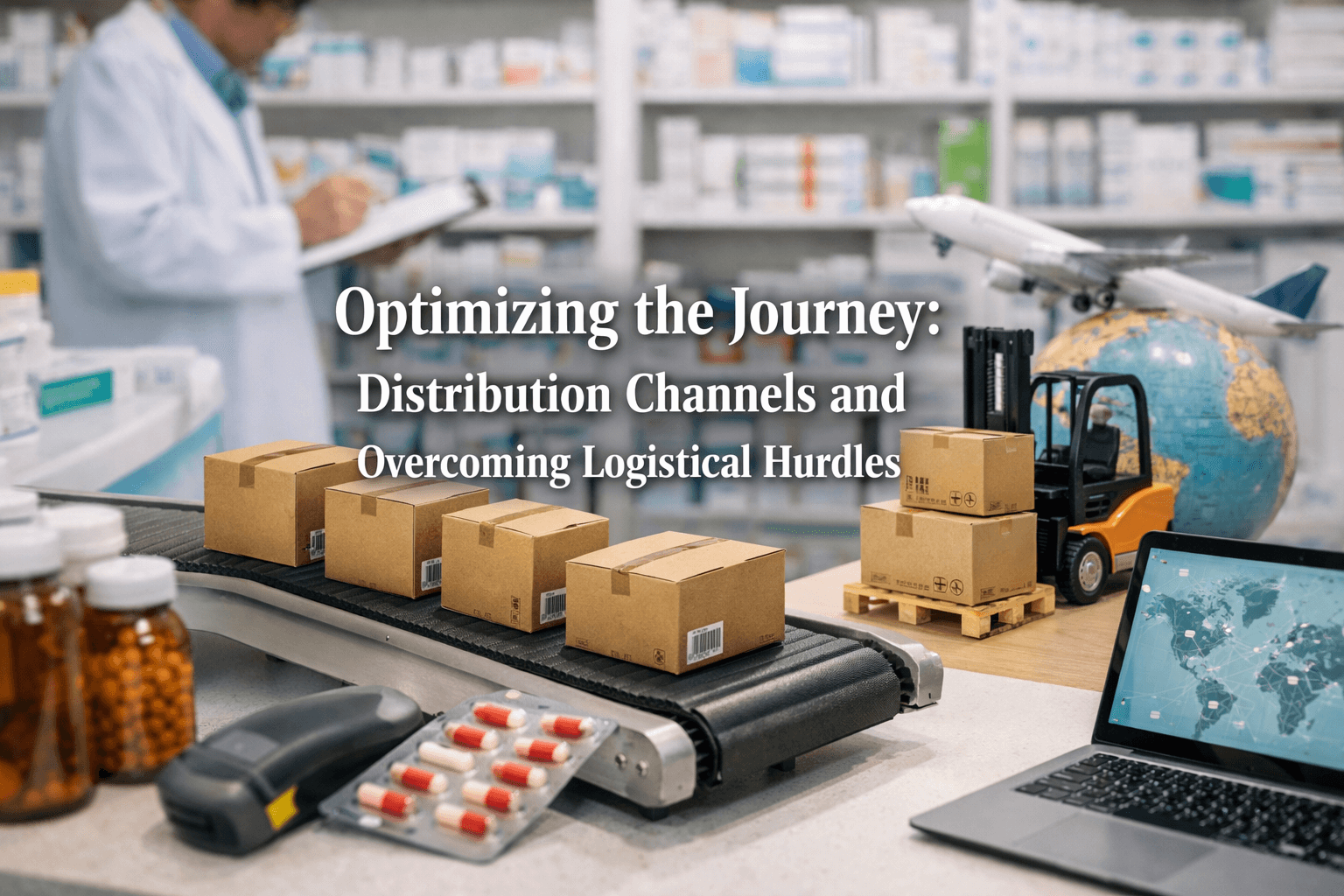
The final pathway to the patient—the distribution channels—is where strategy meets execution. The effectiveness of these channels directly determines market access and commercial success for pharmaceutical companies in Malaysia. The landscape is multi-tiered, employing various models to match product type and market segment. Direct-to-pharmacy models are often used for specialized, high-value products or when a manufacturer wishes to maintain tight control over pricing and product education. Conversely, the wholesaler distribution network remains the workhorse for the broad majority of medicines, leveraging the extensive reach of pharmacy wholesale distributors to achieve nationwide penetration efficiently.
The modernization of these channels is unmistakable, accelerated by digital transformation. The growth of Business-to-Business (B2B) online platforms allows pharmacies to order stock seamlessly, check real-time availability, and manage invoices digitally, creating a more efficient and transparent supply chain. However, significant logistical barriers persist and can disrupt even the most strategic plans. Malaysia’s unique challenges include:
Geographical dispersion: Ensuring daily or weekly delivery cycles to islands and remote inland communities.
Traffic congestion: In major urban centers, affecting delivery timelines and fuel costs.
Regulatory checkpoints: Especially for controlled substances, requiring meticulous paperwork and adding layers of complexity to cross-state transportation.
From the distributor’s point of view, navigating these hurdles requires a mix of robust technology, local knowledge, and flexible logistics planning. For the pharmacist, delays or inconsistencies in these channels can lead to stock-outs, affecting patient trust and care. Therefore, optimizing this last mile often involves tailored solutions—such as using smaller, agile vehicles for city-center deliveries or establishing regional micro-warehouses in East Malaysia to reduce lead times. The goal is a resilient and responsive network that ensures the unbroken flow of medicines, recognizing that in healthcare logistics, reliability is not just a business metric, but a clinical imperative.
Navigating the Complex Landscape: Core Challenges for Malaysian Pharmaceutical Distributors

The operational environment for pharmaceutical distributors in Malaysia is inherently complex, marked by a constant need to balance regulatory rigor with market agility. While the sector is a critical backbone of the national healthcare system, maintaining efficient and reliable operations demands navigating a series of interconnected and persistent challenges. These obstacles are not merely operational headaches; they are strategic imperatives that define competitive advantage and long-term viability in a rapidly evolving market. The most significant concerns often stem from external volatility, intense competitive pressures, and the intricate dance between compliance and cost-efficiency, requiring distributors to be both resilient and innovative to survive and thrive.
The Persistent Threat of Supply Chain Disruptions
Global and local events consistently test the resilience of pharmaceutical supply chains. For distributors in Malaysia, these disruptions are not abstract concepts but daily operational realities. Natural disasters, such as the severe flooding events in Selangor and Pahang, can cripple road networks, delaying critical deliveries to hospitals and clinics for weeks. On a global scale, health crises like the COVID-19 pandemic exposed fragile dependencies, while ongoing trade restrictions and geopolitical tensions can lead to unpredictable delays in active pharmaceutical ingredient (API) shipments. This volatility makes demand forecasting exceptionally difficult and forces companies to invest heavily in buffer stock and alternative sourcing strategies, which ties up capital and increases warehousing costs. The inability to guarantee product availability doesn’t just impact sales—it directly affects patient health outcomes, elevating supply chain management from a logistics function to a core component of public health security.
Rising Pressure from International and Domestic Competition
The competitive landscape is undergoing a profound shift. International pharmaceutical distributors and global Third-Party Logistics (3PL) giants are entering the Malaysian market, bringing with them vast economies of scale, advanced technological platforms, and extensive global networks. This puts tremendous pressure on local players to upgrade their own capabilities or risk being marginalized. Simultaneously, the market is seeing the growth of nimble, independent pharmacy distributors who compete by offering hyper-localized, personalized services that larger entities may struggle to provide. For example, a specialized distributor focusing on niche therapeutic areas like oncology drugs or rare diseases can build deep relationships with specific hospital networks in Klang Valley, offering a level of tailored service that broader distributors cannot match. This dual pressure—from global scale and local specialization—forces established distributors to critically re-evaluate their value proposition and distribution models to defend their market share.
Framework: The Competitive Pressure Matrix for Distributors
Global Competitors: Compete on scale, technology, and international reach. Strategic Response: Forge strategic partnerships for niche areas they overlook.
Large Domestic Players: Compete on nationwide coverage and broad product portfolios. Strategic Response: Deepen expertise in specific regions or therapeutic sectors.
Independent Distributors: Compete on agility, personalized relationships, and local market knowledge. Strategic Response: Systematize and scale service excellence through digital tools without losing the personal touch.
The Delicate Balance Between Compliance and Operational Efficiency
Perhaps the most daunting challenge is adhering to the stringent regulatory requirements set forth by bodies like the National Pharmaceutical Regulatory Agency (NPRA) and the Ministry of Health (KKM) while simultaneously striving for operational efficiency and cost containment. Regulations governing Good Distribution Practice (GDP), product serialization, cold chain integrity, and warehouse licensing are non-negotiable. Implementing and maintaining systems for full traceability, for instance, requires significant investment in software and training. For a distributor handling everything from ambient tablets to temperature-sensitive biologics, the cost of compliance is substantial. The key is to view compliance not as a pure cost center but as an investment in quality and reliability. An efficient compliance framework can actually streamline operations, reduce error rates, and build a trusted reputation with both regulators and clients. The distributor that masters this balance turns a regulatory necessity into a powerful competitive moat.
Learn more: Four Ways Pharma Companies Can Make Their Supply Chains More Resilient | How Independent Pharmacy Distributors Compete with Large Chains
Embracing the Future: Key Innovations Reshaping Distribution

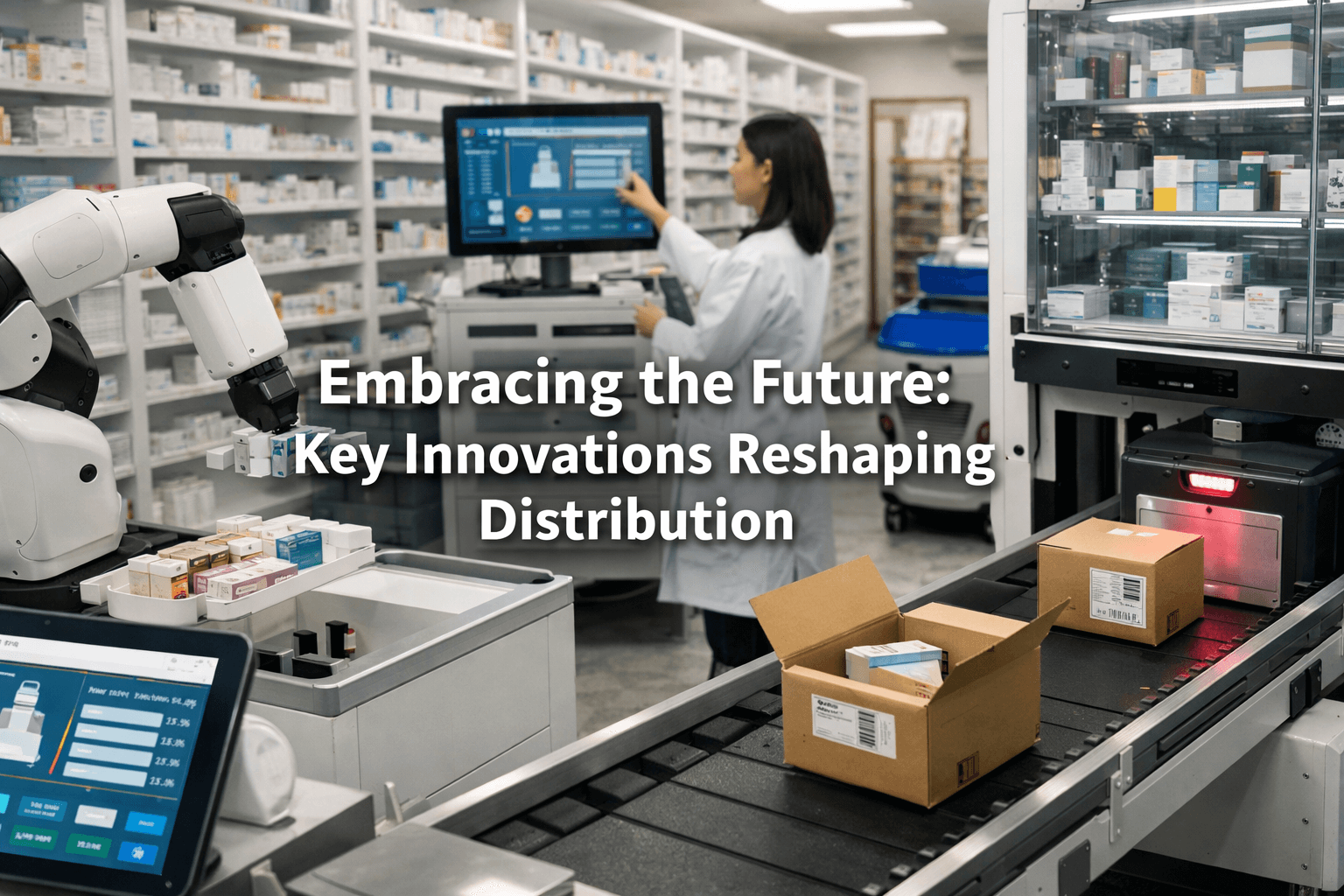
In response to these challenges, the sector is being revitalized by a wave of innovation. Forward-thinking companies are leveraging technology and new service models not just to solve problems, but to create unprecedented levels of service excellence and market access. The transformation is moving the industry from a traditional, transaction-based model to a connected, data-driven, and customer-centric ecosystem. These innovative trends are setting the stage for a more resilient, transparent, and responsive pharmaceutical distribution landscape in Malaysia, ensuring that the healthcare system is supported by a modern and effective logistics backbone.
The Digital Transformation of Ordering and Fulfillment
The adoption of digital tools is revolutionizing the fundamental processes of ordering and inventory management. Automated ordering systems, integrated directly with pharmacy and hospital inventory management systems, enable predictive restocking, drastically reducing the risk of stock-outs or overstocking. E-commerce platforms dedicated to healthcare professionals are becoming more sophisticated, allowing for 24/7 ordering, detailed product information access, and streamlined payment processing. A real-world example can be seen in the adoption of vendor-managed inventory (VMI) systems by some distributors partnering with large hospital groups in Johor Bahru. Here, the distributor takes proactive responsibility for maintaining agreed inventory levels, freeing hospital staff from procurement tasks and ensuring continuous product availability. This shift enhances distribution efficiency, minimizes human errors, and fundamentally improves supply chain visibility for all stakeholders.
Advances in Cold Chain Logistics and Real-Time Visibility
As the portfolio of temperature-sensitive products—including vaccines, insulin, and advanced biologics—continues to grow, cold chain logistics have moved from a specialty service to an essential capability. Innovations here are critical for product integrity and patient safety. Modern solutions include IoT-enabled thermal packaging with data loggers that provide a complete, unbroken temperature history, and GPS-tracked refrigerated vehicles with remote temperature monitoring. This allows distributors and their clients to monitor conditions in real-time, receiving alerts for any deviations. For a pharmaceutical distributor in Sabah delivering specialized cancer drugs across vast distances to East Malaysia, this technology isn’t just an upgrade; it’s a non-negotiable component of product stewardship. Furthermore, this demand for transparency is extending to the entire journey, with customers expecting track-and-trace capabilities for every shipment, building trusted relationships through verifiable, reliable delivery.
The Rising Strategic Role of Independent Pharmacy Distributors
A significant trend is the increasingly prominent role of independent pharmacy distributors. While large, corporate distributors provide extensive reach, independent players are carving out a proven and vital niche by offering personalized, tailored services that larger entities often struggle to replicate. They act as crucial partners for smaller brands, international companies new to the Malaysian market, or products requiring specialized knowledge. An independent distributor might excel in navigating the complex landscape of panel listing for a new supplement brand in over 500 community pharmacies across Penang, providing not just logistics but also merchandising support and sales data analytics. Their agility allows for faster decision-making and deeper engagement with specific pharmacy networks, making them an effective and strategic channel for targeted market penetration and building strong, local brand presence.
Learn more: Vaccine Management and Logistics Support | Pharmaceutical Manufacturing and GMP Testing
Lessons from Crisis: The Pandemic’s Lasting Impact on Distribution
The COVID-19 pandemic served as a brutal stress test for global systems, and Malaysia’s pharmacy distribution network was thrust into the forefront. The crisis triggered an unprecedented surge in demand for medicines, personal protective equipment (PPE), and later, vaccines, exposing both vulnerabilities and remarkable resilience within the sector. This period was not merely a disruption; it was a catalyst for accelerated change, forcing the industry to adapt at breakneck speed and revealing the proven reliability of distributors who could innovate under pressure. The strategic lessons learned have now become embedded in the operational DNA of forward-looking companies, permanently altering expectations around agility, collaboration, and crisis-ready planning.
Overcoming Acute Supply Chain and Demand Volatility
The initial phases of the pandemic highlighted extreme supply chain fragility. Border closures, factory shutdowns, and air freight bottlenecks created critical shortages. Malaysian distributors responded with a mix of pragmatic ingenuity and strategic pivoting. Many diversified their supplier base at speed, sourcing from alternative countries and qualifying new manufacturers in record time. To manage skyrocketing demand for essentials like paracetamol and antivirals, distributors worked closely with manufacturers and regulators to implement equitable allocation frameworks, prioritizing hospitals and high-risk areas. A notable example was the rapid establishment of dedicated fulfillment hubs for PPE, separating this high-volume, fast-moving stream from routine medicine distribution to prevent system overload. These efficient solutions were instrumental in ensuring the continuous availability of products, demonstrating an ability to maintain operations under seemingly impossible conditions.
Regulatory Agility and Collaborative Frameworks
A key factor in Malaysia’s response was the swift and adaptive action of regulatory bodies. The NPRA and KKM introduced fast-track approval pathways for critical products, temporary import flexibilities, and updated guidelines for the storage and distribution of vaccines. This regulatory agility was a game-changer, enabling distributors to bring new products and solutions to market in weeks instead of months. Furthermore, the pandemic fostered unprecedented collaboration between public and private entities. Distributors found themselves as essential links in the national vaccination program (PICK), tasked with the monumental logistics of getting temperature-sensitive vaccines from ports to vaccination centers nationwide. This public-private partnership proved that with clear goals and shared responsibility, the ecosystem could achieve remarkable outcomes, setting a powerful precedent for future health initiatives.
Comparative Table: Pre-Pandemic vs. Post-Pandemic Priorities in Distribution
| Operational Area | Pre-Pandemic Priority | Post-Pandemic Evolution |
|---|---|---|
| Inventory Strategy | Just-in-Time (cost efficiency) | Just-in-Case (resilience & safety stock) |
| Supplier Relationships | Primary focus on cost and quality | Diversification & geographic spread for risk mitigation |
| Technology Investment | Gradual digitization for efficiency | Accelerated adoption for visibility, agility, and remote management |
| Regulatory Mindset | Static compliance | Dynamic partnership with regulators for crisis response |
Building a Future-Proof, Resilient Operation
The most enduring impact of the pandemic is the industry-wide shift towards building inherently resilient operations. The lessons learned have made business continuity planning a top-tier strategic exercise, not a theoretical document. Distributors are now investing in redundant infrastructure, such as secondary warehousing in geographically separate locations, to mitigate regional disruption risks. Data analytics have taken on new importance for modeling disruption scenarios and predicting demand spikes. From the perspective of a hospital pharmacist, the expectation is now for distributors to have contingency plans for every critical product line. For a brand manager, selecting a distribution partner now heavily weighs their demonstrated crisis performance and supply chain robustness. The pandemic proved that reliability in the worst of times is the ultimate test of a strategic supply chain partner.
Frequently Asked Questions (FAQ)
Q1: What are the top 5 pharmacy in Malaysia?
Answer: The top 5 pharmacies in Malaysia are Caring Pharmacy, Health Lane Family Pharmacy, BIG Pharmacy, Watsons Malaysia, and Guardian Malaysia.
Q2: Who are the top 20 pharma companies?
Answer: The top 20 pharmaceutical companies in Malaysia include multinational corporations such as Pfizer, Novartis, Roche, GlaxoSmithKline, and local players like Pharmaniaga, Hovid, and Kotra Pharma.
Q3: What is the largest healthcare company in Malaysia?
Answer: The largest healthcare company in Malaysia is IHH Healthcare, known for its hospital network and medical services across Asia and Europe.
Q4: What is the biggest company in Malaysia?
Answer: The biggest company in Malaysia by market capitalization is Maybank, a leading financial institution.
Q5: What are the 7 stars of pharmacy?
Answer: The 7 stars of pharmacy refer to the essential attributes of a successful pharmacist: knowledge, expertise, communication, empathy, professionalism, responsibility, and lifelong learning.
Q6: What is the big 4 in pharma?
Answer: The “Big 4” in pharma refers to the four largest global pharmaceutical companies: Pfizer, Roche, Novartis, and GlaxoSmithKline.
Q7: What are the big 5 pharma companies?
Answer: The Big 5 pharma companies are Pfizer, Roche, Novartis, Johnson & Johnson, and Merck & Co.
Q8: Who is a 10 star pharmacist?
Answer: A “10-star pharmacist” is an informal term used to describe a highly respected and experienced pharmacist who excels in both technical expertise and customer service.
Q9: Which are the top 10 pharma companies?
Answer: The top 10 pharmaceutical companies in Malaysia include Pfizer, Roche, Novartis, GlaxoSmithKline, Merck, AstraZeneca, Eli Lilly, Sanofi, Bayer, and Johnson & Johnson.
Q10: Which is the best university to study pharmacy in Malaysia?
Answer: The best university to study pharmacy in Malaysia is generally considered to be Universiti Malaya (UM), known for its strong academic programs and research in pharmaceutical sciences.
Our Services
Our marketing and sales teams use their strong relationships with the channel to create demand for your product at every stage of its lifecycle.
Demand creation services we offer:
Market Access Services
Regulatory Registration Services
Pharma Product Listing Services
Merchandising services (RSMS)
Brand Management
Logistic & Warehousing
Exclusive Merchandising Services
Visual Merchandising
Discover More About Our Solution
How PriooCare Can Help
If you found this article useful, see how we put these insights into practice for our clients:
Or contact our team for a tailored consultation.
How can we assist you today? 😊
Just let us know—we’re here to help!