

Why does regulatory alignment shape the entire pharmacy supply chain in Malaysia? The answer lies in the foundational role of the Kementerian Kesihatan Malaysia (KKM) , which, supported by the National Pharmaceutical Regulatory Agency (NPRA) , functions as the essential gatekeeper of pharmaceutical, supplement, cosmetic, and medical device safety. Their mandate is far-reaching; it extends well beyond mere product approval. It is a comprehensive system designed to safeguard patient safety, ensure the integrity of product labeling, and protect overall market stability from counterfeit or substandard goods .
For stakeholders operating within a pharmacy distribution service in Malaysia, this regulatory structure is not simply a procedural hurdle to clear. Instead, it represents a trusted framework that governs every facet of product entry and commercial continuity. It is the lens through which all products are vetted before they can interact with patients. Distributors must understand that KKM’s oversight is a continuous process, not a one-time event. From the moment a product is conceived to its final sale, KKM’s presence is felt, ensuring that the health priorities of the nation are upheld by every player in the supply chain . This creates an environment where compliance is synonymous with credibility, and where deviation from the standard is met with swift enforcement. The reliable nature of this system is what allows both multinational corporations and local Malaysian enterprises to operate with a clear understanding of the rules of engagement.
In practice, this compliance becomes a strategic operational filter. Brands that arrive with incomplete submissions or confusing documentation often face significant distribution delays, missing out on critical market windows. Conversely, suppliers that are compliant and organized move faster across the network, gaining a competitive edge simply by respecting the regulatory framework. The effective management of these regulatory requirements is often the difference between a product that sits in a warehouse and one that flies off retail shelves.
Types of KKM Approvals: Pharmaceuticals, Cosmetics, Supplements & Medical Devices
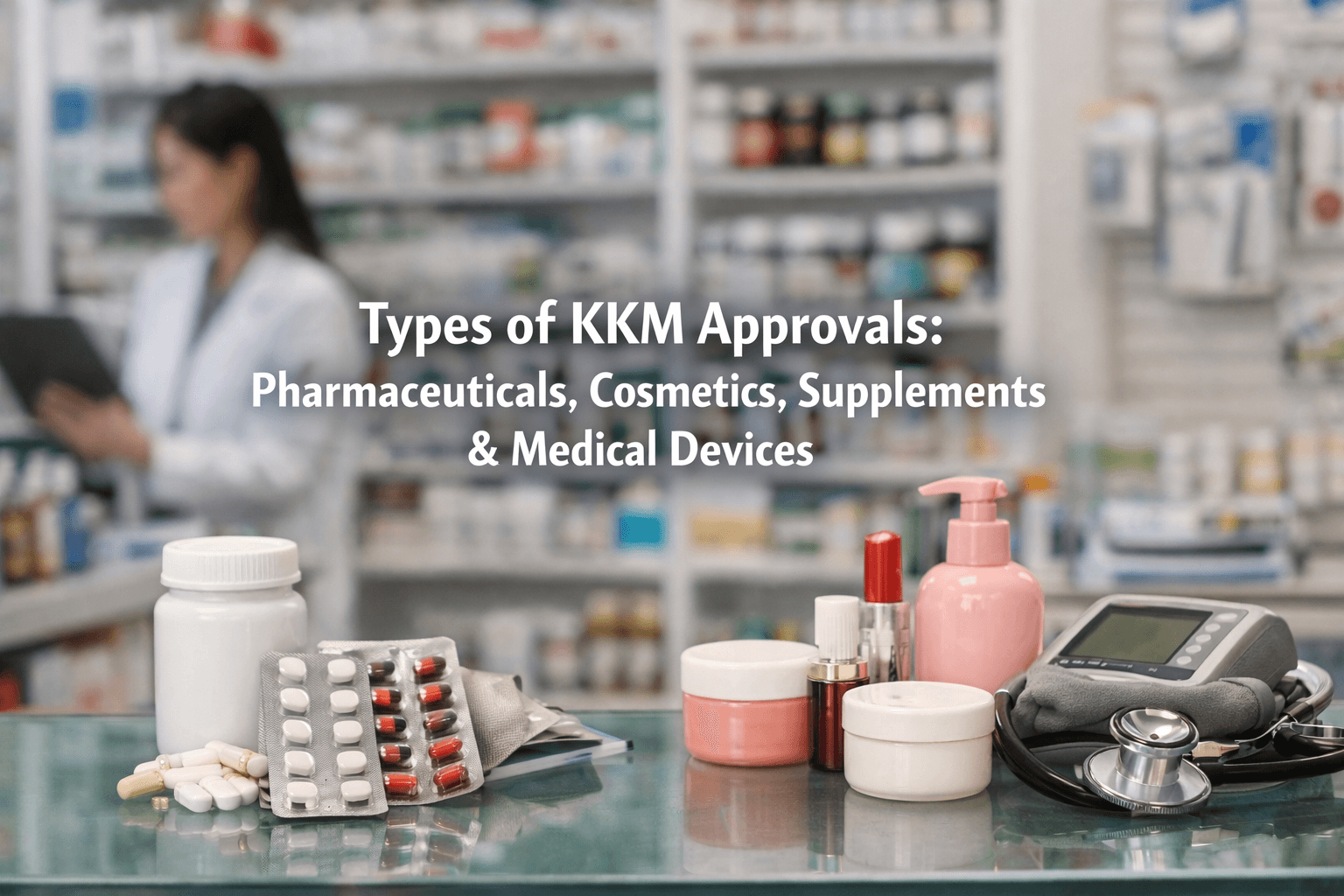
Do all healthcare products follow the same approval pathway? The simple answer is no—and misunderstanding these categories is one of the most common and costly errors made by new entrants to the Malaysian market. Each product type falls into a distinct regulatory bucket, and the pathway to approval differs significantly in terms of documentation, timeline, and cost.
1. MAL Registration (Pharmaceuticals and High-Risk Supplements)
Pharmaceutical products, whether they are over-the-counter pain relievers or prescription-only medications, require a full NPRA evaluation. This is the most rigorous pathway, demanding submission of clinical data, stability studies, proof of manufacturing compliance, and valid GMP certification from the production facility . Once approved, these products receive a unique MAL number. For distributors, MAL number verification is a mandatory step before any purchase order is fulfilled, ensuring the product’s authenticity and regulatory status are beyond reproach.
2. NOT Notification (Cosmetics)
Cosmetics, defined as products intended to cleanse, perfume, or alter appearance without affecting the body’s structure or function, follow a different route. They are regulated under the Malaysia cosmetic notification (NOT) system rather than full registration . This involves submitting product information and safety data through the QUEST3+ system. Products that are successfully notified are considered kosmetik lulus kkm and receive a NOT code. However, it is a common misconception that “notification” means no oversight. The NPRA actively conducts market surveillance on notified products, and any claims that border on therapeutic benefits can trigger a reclassification, demanding a full MAL registration.
3. Health Supplements
Health supplements occupy a middle ground. They undergo a risk-based assessment depending on their ingredients and claims. Some supplements with straightforward nutritional claims may follow a simplified path, while others that make functional or disease-risk-reduction claims require a much more proven and thorough evaluation, similar to pharmaceuticals . A supplement distributor pharmacy operation cannot treat cosmetic notification Malaysia requirements the same as pharmaceutical submissions without risking significant delays.
4. Medical Devices (MDA Pathway)
It is also vital to note that medical devices, from surgical gloves to diagnostic equipment, are regulated separately by the Medical Device Authority (MDA) under a different set of laws. Distributors must register their establishments with the MDA before they are allowed to distribute any medical devices in Malaysia.
Table: Overview of KKM Approval Pathways
| Product Category | Regulatory Pathway | Key Identifier | Typical Timeline |
|---|---|---|---|
| Pharmaceuticals | Full Product Registration | MAL Number | 6 – 12 months |
| Cosmetics | Product Notification | NOT Code | 1 – 4 weeks |
| Health Supplements | Risk-Based Registration | MAL Number | 3 – 12 months |
| Medical Devices | MDA Establishment & Product Registration | MDA Registration | Varies by Class |
Strategic differentiation between these categories prevents costly resubmission delays and ensures that the tailored documentation is prepared correctly from the start. Misclassifying a product is not just a paperwork error; it is a strategic misstep that can keep a product off the market for months.
Learn more: How to Identify a KKM Approved Cosmetic Label
Step-by-Step KKM Product Registration Process
What does the actual registration journey look like from the moment a submission is made to the point of final approval? The pathway is highly structured and requires expert preparation to navigate smoothly.
Step 1: Appointment of Responsible Person (RP)
Every product application must appoint a Responsible Person (RP) Malaysia . The RP is the individual who acts as the liaison with the NPRA and bears the responsibility for the product’s regulatory compliance. The RP ensures accurate documentation is submitted, manages all regulatory communication, and is accountable for the product’s ongoing compliance even after approval .
Step 2: Document Preparation
This is the most critical phase. Key documents that must be compiled include:
GMP certificates from the manufacturer.
Comprehensive safety data sheets.
Finalized label artwork.
Full ingredient analysis.
Stability data that accounts for Malaysia’s tropical climate .
Even small errors in labeling, such as a missing warning statement or an incorrect font size for Bahasa Malaysia text, can trigger resubmissions and delay the entire process.
Step 3: NPRA Online Submission Portal
All applications are now submitted digitally through the NPRA online submission portal, known as Quest3+ . This system streamlines the process but requires users to be familiar with its interface. Timelines for evaluation vary widely based on the product category:
Pharmaceuticals: This is a lengthy process, often taking several months to over a year due to the depth of evaluation.
Cosmetics: Processing is generally faster, often taking just a few weeks.
Supplements: Timelines are category-dependent, with novel ingredients requiring longer review.
Step 4: Evaluation & Queries
Once submitted, NPRA reviewers will evaluate the dossier. They may request clarifications or additional data. The speed at which a company responds to these queries directly impacts the total approval time. Delayed or incomplete responses can add months to the process.
Common Errors Affecting Distributors
Many applications are held up by preventable mistakes. The most common errors include:
Incorrect declaration of ingredients.
A mismatch between the ingredients listed on the label and the formula submitted to NPRA.
Missing supporting documents, such as a valid manufacturing license.
Misclassification of the product type, such as submitting a therapeutic cream as a cosmetic .
For distributors, understanding these steps is vital. Efficient preparation of documentation by the brand owner or manufacturer reduces costly resubmission cycles and dramatically speeds up the process of product listing Malaysia in major pharmacies. The goal is a “clean” submission that requires minimal back-and-forth with the regulator.
Regulatory Compliance as a Strategic Advantage in Pharmacy Distribution
Can compliance really improve a company’s commercial positioning? The answer is a definitive yes—especially when it is executed consistently and viewed as a core business function rather than a back-office chore.
Distributor–Pharmacy Trust Dynamics
Major pharmacy chains in Malaysia, such as those found in Bangsar or Georgetown, operate with rigorous internal compliance teams. They require documented proof of compliance before they will even consider a product for listing approval. Non-compliant brands, or those with patchy documentation, often fail these pre-listing audits before they even get a chance to pitch their product’s commercial merits. Pharmacists prefer to work with trusted partners who provide:
Accurate and complete regulatory documentation.
Responsive support when compliance questions arise.
Updated certificates and renewal notices without being chased.
This reliability builds long-term credibility, making a distributor the “go-to” partner for pharmacists when they are looking to stock new and innovative products.
Risk Mitigation in Commercial Agreements
Supply agreements between distributors and retailers are becoming increasingly sophisticated. They often include clauses that require the distributor to indemnify the retailer against any losses incurred due to regulatory non-compliance. Distributors with proven governance frameworks and robust compliance records are in a much stronger position to negotiate favorable terms. They reduce the risk profile for the retailer, which is a significant commercial advantage .
The Cost of Complacency
Consider a scenario where a distributor brings in a popular new skincare line without verifying that the cosmetic notification Malaysia status is still valid. If the NPRA conducts a routine audit and flags the product, the retailer will be forced to remove it from shelves immediately. The distributor not only loses that revenue stream but also damages its relationship with the retailer, who may now view them as a liability. In this context, compliance is a strategic asset—it protects business relationships and ensures uninterrupted revenue flow. It is not just about avoiding fines; it is about building a sustainable business model in a market where safety is paramount .
Learn more: Top 10 Pharmacy Distributors in Malaysia Ranking | WHO Good Regulatory Practices
Common Regulatory Risks and How to Avoid Costly Non-Compliance
What specific risks do distributors face if their compliance framework fails? The consequences of non-compliance in Malaysia’s pharmaceutical sector are severe and can ripple through the entire business.
Primary Risks in the Supply Chain
The most common risks include:
Selling or distributing an unregistered kkm product.
Making misleading health claims on packaging or in marketing materials.
Failing to complete inrenewal of product registrations on time.
Having poor traceability gaps that make it impossible to recall a faulty batch.
Legal and Financial Consequences
The legal framework, particularly the Control of Drugs and Cosmetics Regulations 1984, empowers authorities to impose strict penalties. Distributors found guilty of selling unregistered products can face fines that can reach up to RM 25,000 per product, and in serious cases, individuals may face imprisonment . Beyond the legal penalties, there are operational consequences like product seizure, where entire inventories can be confiscated and destroyed. The reputational damage from such an event is often the most devastating long-term consequence, as pharmacy chains will blacklist suppliers who put them at regulatory risk.
Strategic Prevention for Distributors
Avoiding these risks requires a proactive, not reactive, approach. Effective prevention strategies include:
Conducting a regular internal compliance audit of all products in the portfolio.
Maintaining a strict documentation review schedule to track renewal dates.
Investing in staff regulatory training so that sales and logistics teams can spot potential red flags.
Implementing a supplier vetting process that goes beyond price checks to include a thorough review of their regulatory history.
It is also critical to remember that retail pharmacists themselves face penalties if they are found to be stocking non-compliant items. This shared liability means that pharmacists will quickly sever ties with any distributor whose compliance standards are questionable. Therefore, a robust compliance program is not just an internal control; it is a critical component of customer retention.
Learn more: Control of Drugs and Cosmetics Regulations 1984
The Critical Role of Good Distribution Practice (GDP) in Compliance
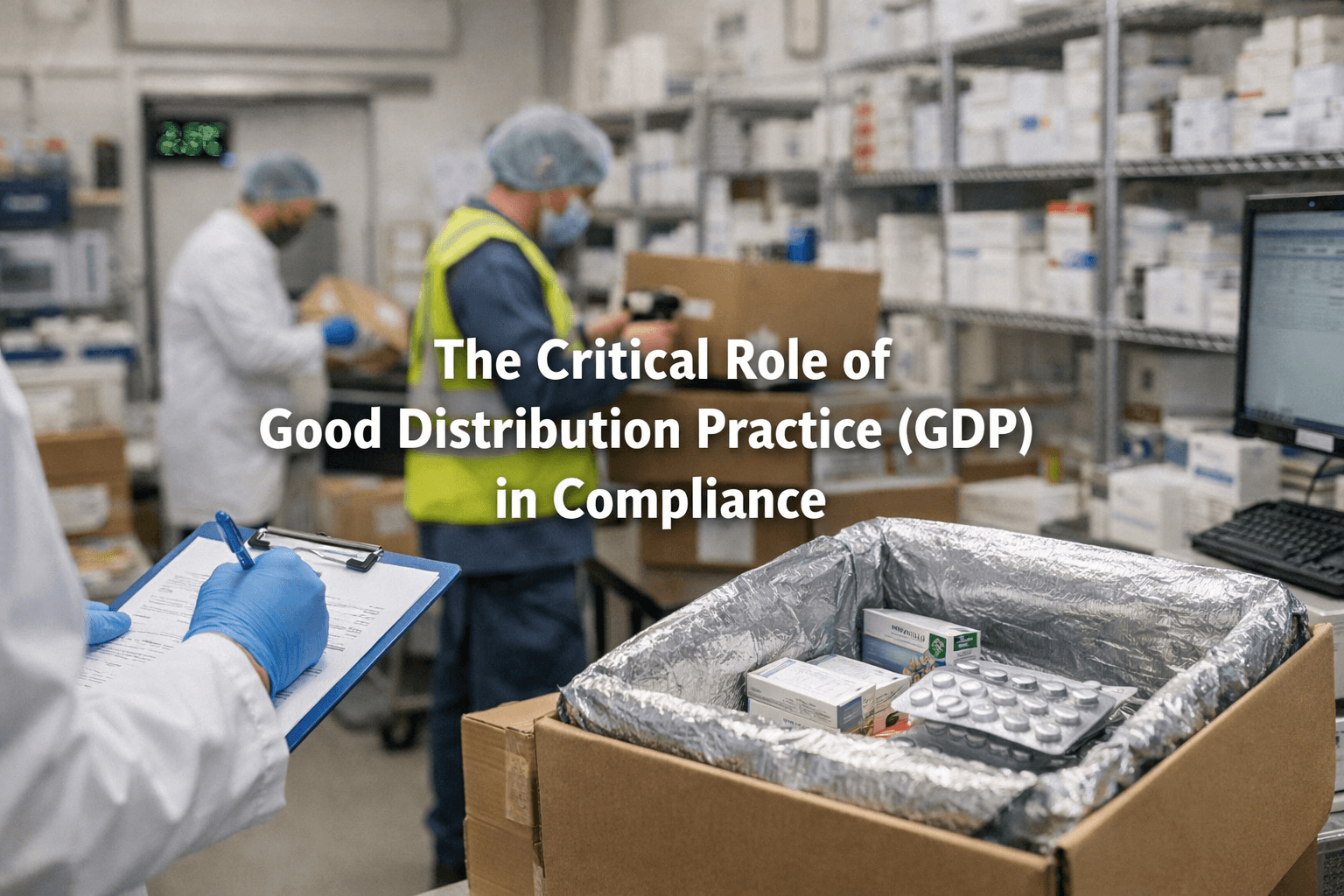
Beyond product registration, the actual process of storing and transporting these goods is heavily regulated. This is where Good Distribution Practice (GDP) comes into play, acting as the critical bridge between a registered product and a patient’s safe use of it.
What is GDP and Why It Matters
Good Distribution Practice (GDP) is a quality assurance system that ensures the quality and integrity of pharmaceutical products, cosmetics, and supplements is maintained throughout the entire supply chain . For any holder of an Import License or Wholesaler‘s License in Malaysia, compliance with GDP is not optional—it is a license condition mandated by NPRA . This is especially critical for products that are time and temperature-sensitive, such as vaccines, insulin, or certain biologics that require strict cold chain management. A lapse in GDP can render an otherwise perfectly manufactured product unsafe or ineffective by the time it reaches the patient.
The GDP Inspection Process
The NPRA conducts GDP inspections to verify that distributors are complying with these standards. These inspections can be:
On-site: A physical visit to the warehouse and business premises.
Remote: A virtual inspection involving document review and a live video tour of the facilities .
Inspectors scrutinize everything from temperature monitoring logs and standard operating procedures for handling returns to the training records of staff. Deficiencies found during these inspections are categorized as critical, major, or minor, and companies are often required to submit a Corrective and Preventive Action (CAPA) plan to address them . For distributors in Penang or Johor, where industrial spaces can vary in quality, ensuring the warehouse meets these stringent GDP standards is a significant operational focus.
GDP as a Market Differentiator
For a pharmacy distribution service in Malaysia, being GDP-compliant is a powerful marketing tool. It signals to potential pharmacy clients that the distributor is a reliable and professional operator who takes product safety seriously. It provides assurance that when a pharmacy orders a sensitive biologic or a heat-stable vitamin, it will arrive in perfect condition, with its efficacy fully intact. In an era where patients are increasingly knowledgeable about product quality, partnering with GDP-certified distributors allows pharmacies to offer an additional layer of trust and safety to their customers.
Learn more: GUIDELINE ON GOOD DISTRIBUTION PRACTICE
Building a Compliance-Centered Pharmacy Distribution Model in Malaysia
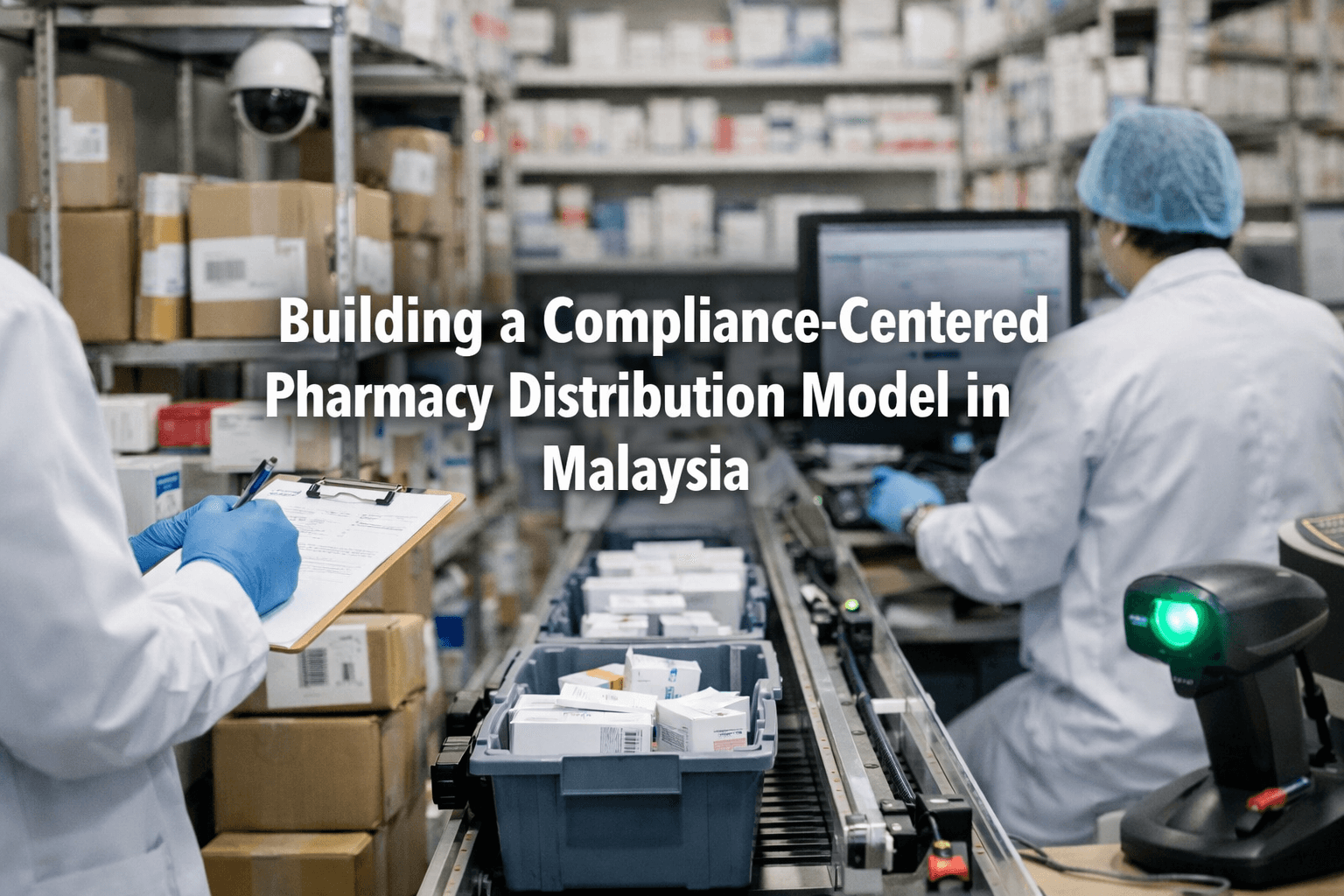
How can distributors institutionalize compliance so it becomes a seamless part of operations rather than a last-minute scramble? The answer lies in moving from a reactive, checklist-driven approach to a proactive, strategic framework. For any pharmacy distributor Malaysia operator aiming for longevity, compliance must be woven into the very fabric of daily workflows. It’s not about avoiding punishment; it’s about building a resilient business model.
Implementation Framework for Stakeholders
The most effective way to achieve this is through a structured, multi-layered framework that involves every level of the organization.
Structured SOP Development: The foundation is a set of clear, written Standard Operating Procedures (SOPs). These documents must cover the entire lifecycle of a product, from the initial NPRA product registration Malaysia process to the final step of regulatory distribution Malaysia requirements . They should detail the step-by-step process for handling a kkm produk, including how to manage renewals and what to do if a compliance issue arises.
Regulatory Onboarding Checklist: Before a single unit of a new brand or product is accepted into the warehouse, it must pass a rigorous internal screening. This checklist is a non-negotiable gatekeeper. It should include verifying the MAL number or NOT code, conducting an internal kkm product review to ensure labeling matches the approved submission, and archiving all relevant certificates in a central repository. This ensures that only products with clean documentation enter the supply chain.
Sales Team Training on KKM Produk Basics: Often, the sales and merchandising teams are the eyes and ears of the distributor at the retail level. They must be trained on the basics of regulatory compliance. This includes understanding how to perform a quick cara check produk lulus kkm (how to check for approved products), recognizing what constitutes a misleading claim on packaging, and knowing when to escalate a potential compliance concern they spot on a pharmacy shelf. This frontline awareness is a powerful, low-cost risk mitigation tool.
Centralized Documentation Dashboard: Imagine the efficiency of having all compliance data in one place. A centralized digital dashboard improves operational flow by tracking renewal deadlines, storing certificates for easy access during inspections, and maintaining a log of audit histories. This system becomes the single source of truth, reducing the chaos of scattered files and emails.
Quarterly Compliance Review: Compliance is not a “set it and forget it” task. A quarterly review meeting involving key stakeholders—from warehouse managers to sales directors—is essential. This forum allows the team to review any near-misses, discuss updates from NPRA, and ensure that all renewal processes are on track.
When these elements are in place, alignment between the pharmacist, the distributor pharmacy, and the brand owner becomes natural. This collaborative approach ensures that everyone is working from the same, accurate information, creating an efficient and reliable supply chain where expert-driven compliance culture significantly reduces the time and cost associated with reactive crisis management.
Common Regulatory Risks and How to Avoid Costly Non-Compliance
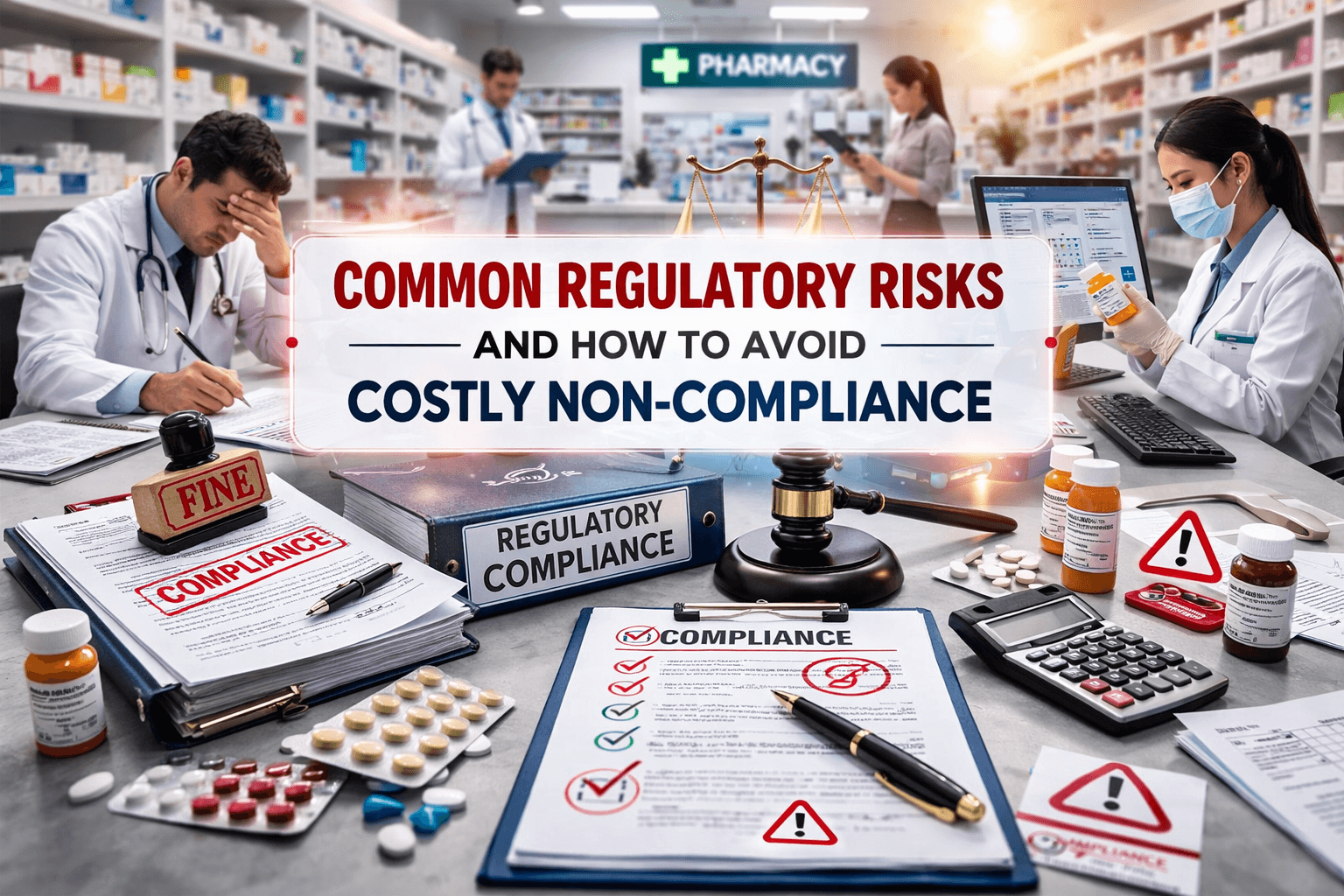
What are the most frequent compliance failures seen in Malaysian pharmacies and distributor networks? Even the most experienced pharmacy distributor Malaysia operators can occasionally underestimate their regulatory exposure. In Malaysia’s healthcare ecosystem, enforcement by the Pharmacy Enforcement Division is active, and the consequences for lapses are tangible and severe.
Primary Risks in the Supply Chain
Selling Unregistered Products (Unapproved KKM Produk): This is one of the most serious breaches. It involves distributing products that lack valid kelulusan kkm. This can occur in several scenarios:
A product’s registration expires, and the renewal process is overlooked.
A brand reformulates a product but fails to submit the updated information to NPRA for approval.
The import documentation for a shipment does not match what is recorded in NPRA’s system.
For distributor pharmacy networks, this exposes the entire supply chain, including the retailers who sell the product to consumers, to significant legal and financial risk .
Incomplete or Inaccurate Documentation: During a pharmacy compliance audit Malaysia, inspectors will meticulously review records. They commonly ask for:
MAL number verification records.
Documentation proving adherence to cosmetic notification Malaysia requirements.
Official appointment letters for the Responsible Person (RP) .
Valid import permits for every shipment .
Missing or sloppy documentation can quickly undermine a distributor’s trusted status with retail partners, even if the product itself is compliant.
Misleading Labeling or Claims: Health supplements and cosmetic products are frequently scrutinized for overstated therapeutic claims. Using words that imply a product can treat or cure a disease can trigger a regulatory reclassification, moving it from a low-risk category to a high-risk pharmaceutical category. This can lead to immediate enforcement action. Brand owners must ensure that every claim on their packaging is aligned precisely with what was submitted to NPRA.
Supply Chain Traceability Gaps: If a product is recalled, can you trace every single batch from your warehouse to the specific pharmacy shelf within hours? If not, you have a strategic risk. Inability to trace products makes a distributor a liability to pharmacies and public health.
How to Avoid These Risks
Prevention is always more efficient and less costly than remediation. A proven strategy involves:
Conducting quarterly internal regulatory audits to catch issues before an official inspection.
Implementing centralized documentation control systems to ensure no critical paper is lost.
Using renewal tracking dashboards with automated alerts so no deadline is missed.
Providing cross-functional compliance training so that every employee, from the receptionist to the CEO, understands their role in protecting the company’s license to operate.
Table: Perspectives on Compliance Risks
| Stakeholder | Primary Concern | View on Non-Compliance |
|---|---|---|
| Pharmacist | Patient safety and personal liability | An immediate threat that must be removed. |
| Distributor | Business continuity and partner trust | A reputational and financial disaster. |
| Brand Owner | Market access and brand equity | A critical failure that kills product launches. |
Learn more: Challenges and Opportunities in Malaysia’s Pharmaceutical Supply Chain
The Future of KKM Approval & Digital Compliance (2027–2030 Outlook)
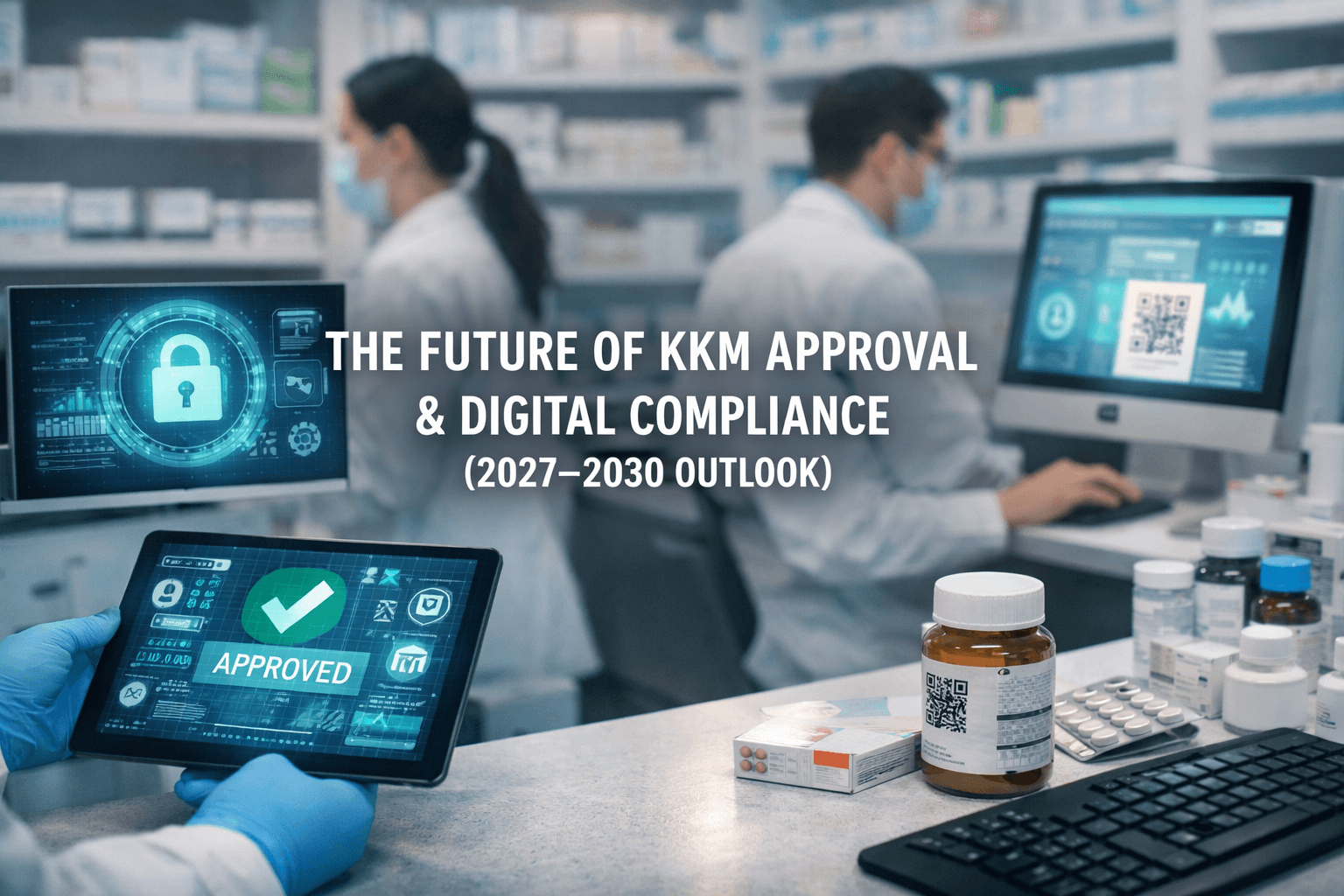
How will regulatory technology reshape Malaysia’s pharmacy distribution landscape in the coming years? The trend is unmistakable: regulatory oversight is becoming more digital, more integrated, and more transparent. For distributors, understanding this future is the key to staying ahead.
Digital Submission Enhancements
The NPRA online submission portal, Quest3+, is continuously evolving. By the 2027–2030 timeframe, we can expect significant upgrades. These may include faster processing cycles for straightforward applications, more intuitive interfaces for online MAL number verification, and integrated product tracking systems that allow regulators and companies to monitor a product’s journey from import to sale in near real-time.
Increased Public Transparency
The power of verification is shifting to the consumer. More and more, shoppers are conducting independent kkm check searches online before making a purchase, especially for health supplements and cosmetics. The NPRA’s public database is no longer a tool limited to industry professionals. This means that a brand’s credibility in the marketplace is now directly tied to its visible and verifiable compliance status. A product without a clear, searchable record will increasingly be viewed with suspicion by the public.
AI-Based Monitoring
Regulators are likely to adopt AI tools to enhance their market surveillance capabilities. These systems could be used to automatically scan online marketplaces and social media, detecting inconsistencies in label claims, product ingredient disclosures, and marketing materials. This creates a more reliable but also a stricter regulatory ecosystem where non-compliance is harder to hide. A distributor’s digital footprint will be as important as its physical paperwork.
ESG and Governance Expectations
Beyond the traditional scope of product registration, distributors will increasingly be evaluated on broader governance criteria. Factors like Environmental, Social, and Governance (ESG) standards will come into play. This includes how a company handles environmental waste from returned goods, its commitment to ethical sourcing of ingredients, and its ability to maintain transparent, auditable documentation across its entire operation.
Pharmacy wholesale distributors that proactively invest in strategic digital compliance systems will likely gain a significant competitive advantage. Long-term compliance planning is no longer a reactive measure; it is becoming essential for sustainable growth in a market that values safety and transparency.
Learn more: The Role of Regulatory Bodies Shaping Digital Health in Asia
Building a Compliance-Centered Pharmacy Distribution Model in Malaysia
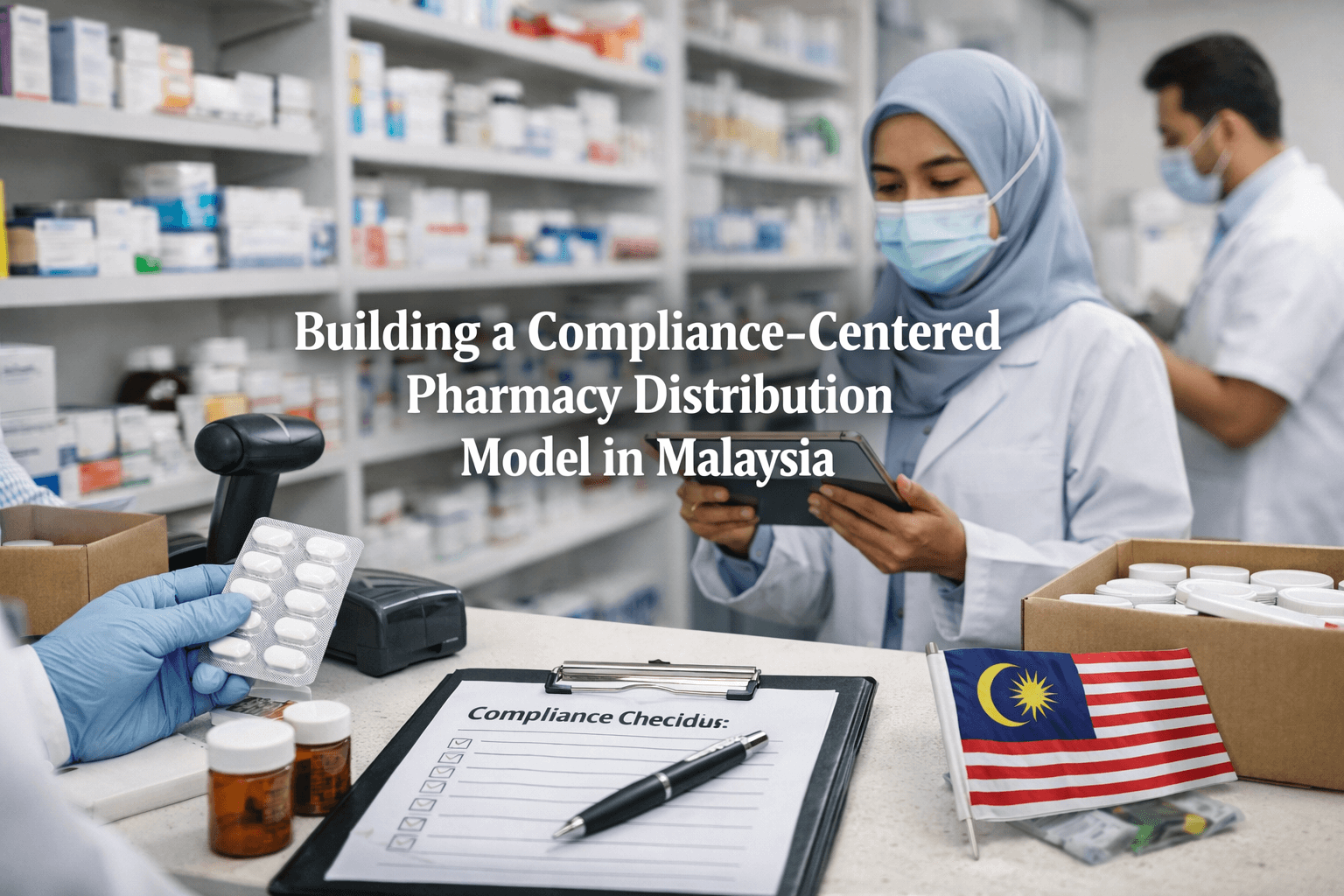
How can organizations institutionalize compliance instead of treating it as an afterthought? The most successful independent pharmacy distributor operations are those that embed compliance into the rhythm of daily work, making it a core competency rather than a support function. It’s a shift in mindset from “compliance is the regulatory department’s job” to “compliance is everyone’s responsibility.”
A Step-by-Step Implementation Framework
Step 1: Structured SOP Development
The journey begins with clear, written procedures. These are not just documents for an audit; they are practical guides for daily operations. They must cover the entire regulatory lifecycle, including the NPRA product registration Malaysia process, meticulous KKM renewal tracking, managing cosmetic notification documentation, and adhering to all regulatory distribution Malaysia requirements. These SOPs should be living documents, reviewed and updated regularly.
Step 2: Brand Onboarding Checklist
Before listing any new product, a mandatory internal checklist must be completed. This is the first and most critical filter. The process should include:
Verifying the MAL or NOT code directly on the NPRA portal.
Conducting an internal kkm product review to ensure the physical packaging matches the approved artwork.
Confirming that label claims do not exceed approved indications.
Archiving all certificates, from GMP to product registration, in a secure, accessible database.
Step 3: Training Merchandisers & Sales Teams
Your merchandisers are the face of your company at the store level. They are also your first line of defense against compliance issues in the field. They must be trained to understand:
The basics of how to do a cara check produk lulus kkm.
What constitutes a misleading or unapproved health claim on a package.
The correct protocol for when to escalate a compliance concern they observe.
This empowers your team and significantly reduces operational risk at the most vulnerable retail touchpoints.
Step 4: Documentation Dashboard
An efficient compliance program relies on easy access to information. A centralized digital dashboard is a game-changer. It should provide a clear overview of:
Upcoming renewal deadlines for all products.
Secure, cloud-based certificate storage.
Inspection readiness checklists.
A complete audit history log for traceability.
Step 5: Collaborative Governance
True compliance is a collaborative effort. It thrives on clear communication and shared goals between all parties:
The Pharmacist ensures patient safety by demanding compliant products.
The Distributor ensures supply chain integrity by vetting products and partners.
The Brand Owner ensures regulatory documentation is accurate and up-to-date.
When these roles are aligned, the entire ecosystem becomes more reliable and sustainable.
Conclusion: KKM Approval as the Foundation of Sustainable Pharmacy Growth
Is compliance simply a regulatory obligation, or is it a commercial strategy? For any serious player in the Malaysian healthcare market, the answer is clear. KKM approval is the foundational element that defines whether a product can legally enter and remain on Malaysia’s pharmacy shelves. But more than that, it defines a company’s credibility in the eyes of partners and patients.
For pharmacy distributor Malaysia operators, distributor pharmacy teams, and brand managers, a disciplined approach to regulatory affairs supports:
Faster and smoother listing approvals with major retail chains.
A significantly reduced risk of costly enforcement actions.
Stronger, more trusted relationships with pharmacists.
The foundation for long-term, profitable retail partnerships.
As we move into 2027 and beyond, the pharmacy distribution service in Malaysia will increasingly reward those who have built structured, strategic, and expert-driven compliance systems. Kelulusan kkm is not just another piece of paperwork. It is market permission. It is the stamp of trust that allows a product to move from a warehouse to a patient, ensuring safety and building a sustainable business.
Frequently Asked Questions (FAQ)
Q1: What is KKM, and why is it important for healthcare products in Malaysia?
Answer:
KKM stands for Kementerian Kesihatan Malaysia (Ministry of Health Malaysia). It ensures all healthcare products—including supplements, cosmetics, and medical devices—are safe, effective, and meet national quality standards before they reach consumers.
Q2: Which agencies under KKM regulate product safety and approval?
Answer:
Three main agencies operate under KKM:
NPRA (National Pharmaceutical Regulatory Agency) – regulates medicines, supplements, and cosmetics.
MDA (Medical Device Authority) – oversees medical equipment and devices.
BPFK/NPRA Cosmetic Division – manages cosmetic product notifications and safety assessments.
Q3: What types of products require KKM registration or approval?
Answer:
Products that must be verified by KKM include pharmaceuticals, dietary supplements, traditional herbal remedies, cosmetics, and medical devices. Each category has specific certification requirements such as MAL, NOT, or MDA numbers.
Q4: How can businesses check if a product is registered with KKM?
Answer:
Verification can be done through official KKM platforms:
NPRA QUEST3+ – for drugs, supplements, and traditional medicines.
MDA Search Portal – for medical devices.
NPRA Cosmetic Notification Portal – for cosmetics with NOT numbers.
Q5: What do MAL, NOT, and MDA numbers mean on product labels?
Answer:
MAL Number: Shows registration for medicines, supplements, or herbal products.
NOT Number: Identifies approved cosmetic products.
MDA Number: Confirms a licensed and approved medical device.
Q6: What are the penalties for selling unregistered or fake KKM products?
Answer:
Businesses found selling unregistered products can face heavy fines, product seizures, license suspension, or even permanent closure. Such violations also damage consumer trust and brand reputation.
Q7: How do pharmacy distributors apply KKM checks in their daily work?
Answer:
Distributors verify product codes (MAL, NOT, MDA) using KKM portals before listing or restocking. Many also store screenshots or digital records for audit purposes and integrate verification into daily Standard Operating Procedures (SOPs).
Q8: Why is KKM compliance so important for pharmacies and distributors?
Answer:
Compliance ensures legal operation, customer safety, and brand credibility. It prevents penalties, builds retailer trust, and enhances market access for certified products.
Q9: What steps can companies take to strengthen KKM compliance?
Answer:
Firms should perform monthly audits, train staff to recognize certification labels, use digital tools for record-keeping, and keep updated with NPRA and MDA guidelines to avoid compliance errors.
Q10: How can PriooCare assist with KKM compliance and distribution?
Answer:
PriooCare helps pharmacy distributors manage regulatory audits, documentation, and logistics. Their compliance expertise simplifies KKM verification, minimizes business risk, and ensures all distributed products meet Malaysia’s health regulations.
How can we assist you today? 😊
Just let us know—we’re here to help!