

May 23 , 2026
At its core, store layout is the strategic blueprint that dictates how every fixture, aisle, and product is positioned within a retail space. This isn’t merely about filling shelves; it’s a sophisticated customer navigation system designed to orchestrate the shopping journey from entrance to checkout. A well-conceived layout serves dual strategic purposes: facilitating efficient, goal-oriented shopping while simultaneously encouraging exploratory browsing and impulse purchases. For pharmacy distributors in Malaysia, guiding retail partners on layout is an essential service, as the physical flow of a store directly impacts dwell time, basket size, and overall customer satisfaction. A haphazard or confusing layout can frustrate customers, leading to abandoned visits, while a proven and logical one creates a sense of ease and discovery.
Strategic Layout Design: Guiding Traffic and Maximizing Exposure
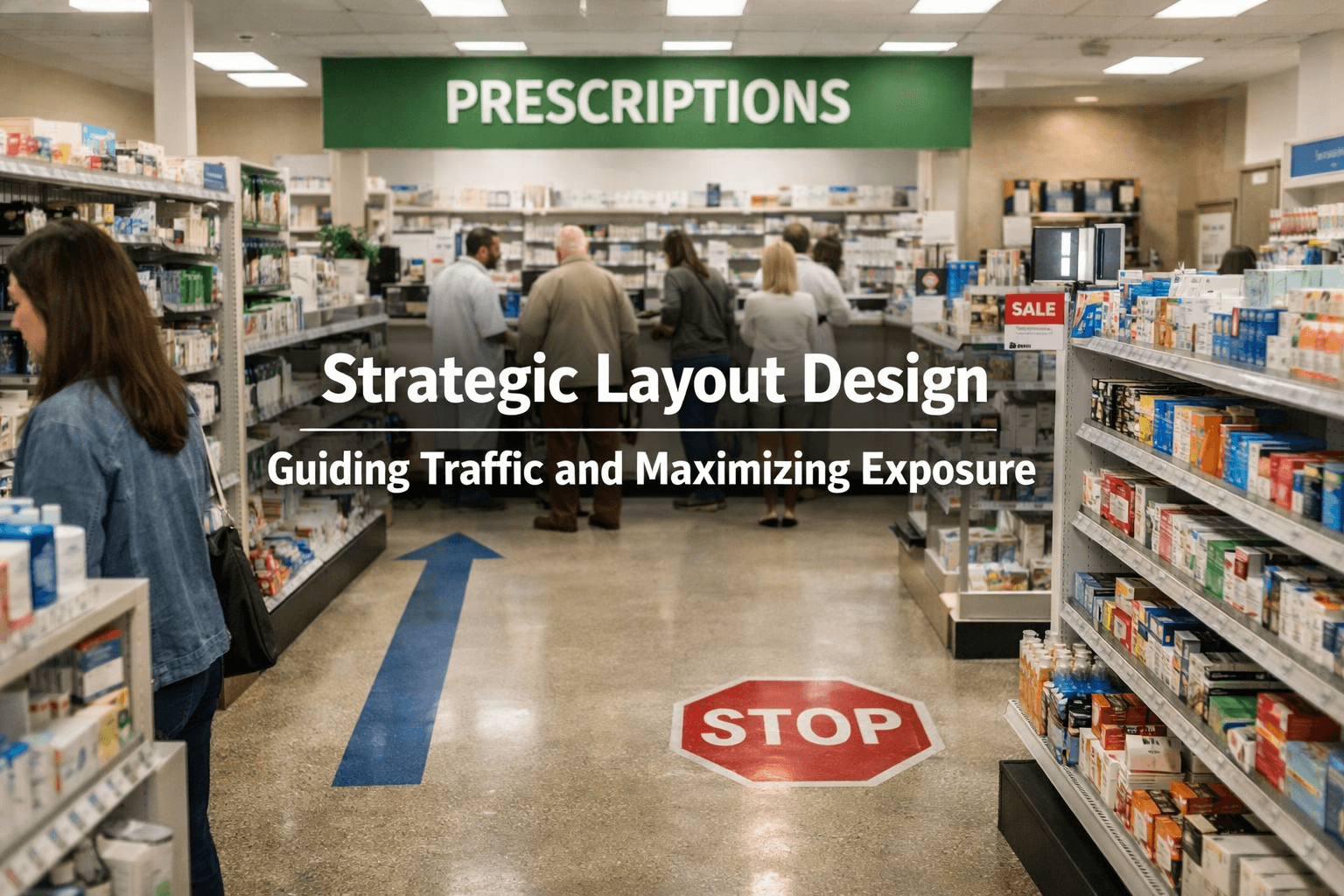
Creating a strategic layout requires a deep understanding of customer traffic patterns and purchase psychology. The goal is to intuitively lead shoppers through a curated path that maximizes product visibility. A fundamental tactic is the placement of high-demand essential items, like common over-the-counter medications or personal care staples, toward the rear or sides of the store. This pull strategy ensures customers travel through multiple aisles, increasing their exposure to a wider range of products they may not have initially considered. Conversely, destination categories like the prescription counter or specialized health supplements are often given dedicated, accessible zones. Crucially, the layout must foster cross-selling opportunities by positioning complementary products adjacently—placing muscular pain relief gels next to supportive bandages, or facial cleansers alongside moisturizers. This logical grouping not only aids customer convenience but also subtly suggests complete solutions, thereby increasing the average transaction value.
A Pharmacy Layout Checklist for Malaysian Retailers:
Implement a clear, uncluttered entrance zone with promotional or seasonal highlights.
Use power aisles (main walkways) to guide traffic toward high-margin beauty and wellness sections.
Ensure the prescription counter is visible and accessible, but not necessarily at the immediate entrance.
Group products by need-state (e.g., cough & cold, digestive health, skincare) rather than just by brand.
Design waiting areas with visibility to impulse-driven items like magazines, snacks, or small health gadgets.
Layout in Action: Contrasting Malaysian Pharmacy Environments:
The application of layout principles varies significantly between a sprawling chain outlet and a compact neighborhood pharmacy. For large Malaysian pharmacy chains like Watsons or Guardian, the expansive footprint allows for defined worlds or zones—a vibrant beauty hall, a clinical health section, a baby care corner. Their layout can afford dedicated spaces for private label brands and interactive testers, creating an experiential journey. From the pharmacist’s perspective, this zonal layout helps segregate clinical consultations from the retail bustle, maintaining professionalism. Conversely, for an independent pharmacy in Penang or Kuala Lumpur, space is at a premium. Here, the layout prioritizes efficient use of every square foot. Vertical displays, multi-functional fixtures, and a highly curated product selection become critical. The distributor’s role in this scenario is to provide tailored planogram services that help these smaller stores achieve a perception of abundance and organization without clutter, ensuring high-turnover items are always within easy reach.
Quantifying the Impact of Layout on Store Performance:
The influence of a strategic store layout isn’t just theoretical; it’s measurable. Studies in retail merchandising consistently show that an optimized layout can lead to a significant increase in unplanned purchases, which can account for a substantial portion of pharmacy revenue. Furthermore, a logical layout reduces the need for excessive staff intervention to direct customers, creating a more efficient operational flow. This allows staff to focus on value-added services like product consultations rather than basic wayfinding. For the brand manager of a health supplement, securing prime positioning within the high-traffic “wellness zone” of a store’s layout is a key commercial objective, as placement can dramatically affect sales velocity compared to being lost on a low-traffic aisle.
Learn more: Improving Retail Store Layouts to Enhance Customer Flow
Lighting: The Unsung Hero of Pharmacy Ambiance and Focus
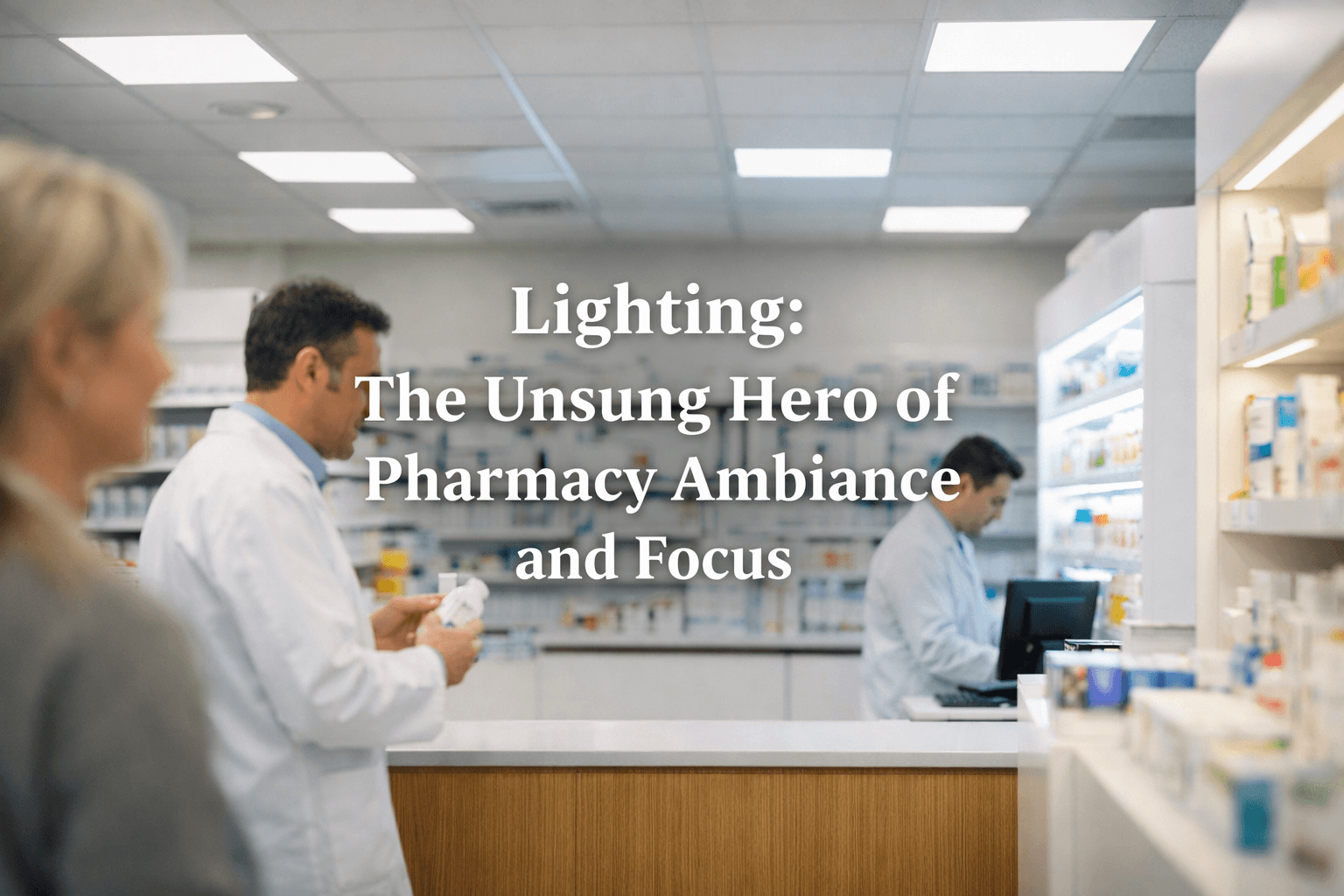
While often overlooked, lighting is a transformative force in pharmacy merchandising. It transcends its basic functional role of illumination to become a powerful psychological tool that shapes perception, mood, and behavior. Strategic lighting design employs a mix of three core types: ambient lighting for overall store brightness, task lighting for focused areas like prescription counters or reading labels, and accent lighting to create drama and highlight specific displays or featured products. The correct balance can make a pharmacy feel trusted, clean, and inviting, directly impacting how customers perceive the quality and professionalism of the establishment. Poor lighting, however, can render even the best products invisible and create an unwelcoming, potentially unsafe environment.
Crafting Tailored Lighting Strategies for Different Zones:
An effective pharmacy lighting plan is never one-size-fits-all; it is zoned and intentional. The area around the pharmacist consultation counter requires bright, shadow-free task lighting to convey accuracy, care, and clinical trust—a non-negotiable for patient safety. In contrast, the skincare and cosmetics section benefits immensely from warmer, flattering ambient and accent lighting that mimics natural daylight, allowing customers to test products confidently and fostering a leisurely, indulgent shopping mood. For OTC medication aisles, consistent and clear ambient light is key to readability of packaging and instructions. A proven tactic is to use focused accent lighting on featured end-cap displays or new product launches, creating a visual “spotlight” that draws the eye and signifies importance, effectively guiding customer attention to high-priority merchandise.
Lighting Applications in the Malaysian Retail Landscape:
Malaysian pharmacy wholesale distributors can provide tremendous value by advising on cost-effective lighting solutions suitable for the local context. A large chain like Caring Pharmacy might invest in integrated, energy-efficient LED systems with adjustable color temperatures to transition the store’s feel from a vibrant daytime mode to a calmer evening ambiance. For the independent pharmacy owner in Malacca, the strategy might involve a more tailored approach: using affordable LED track lights to brightly illuminate key gondolas and a strategically placed pendant light over the counter to create a focal point. During festive periods like Hari Raya or Chinese New Year, subtle additions of colored lighting in thematic displays can enhance the celebratory feel and attract shoppers. From the distributor’s point of view, recommending the right lighting is part of a holistic merchandising support package that helps pharmacies of all sizes compete on experience, not just price.
Learn more: The Impact of Lighting, Layout, and Store Design on Pharmacy Merchandising in Malaysia | The Impact of Lighting on Consumer Behavior
The Subtle Power of Color Psychology in Influencing Purchase Decisions
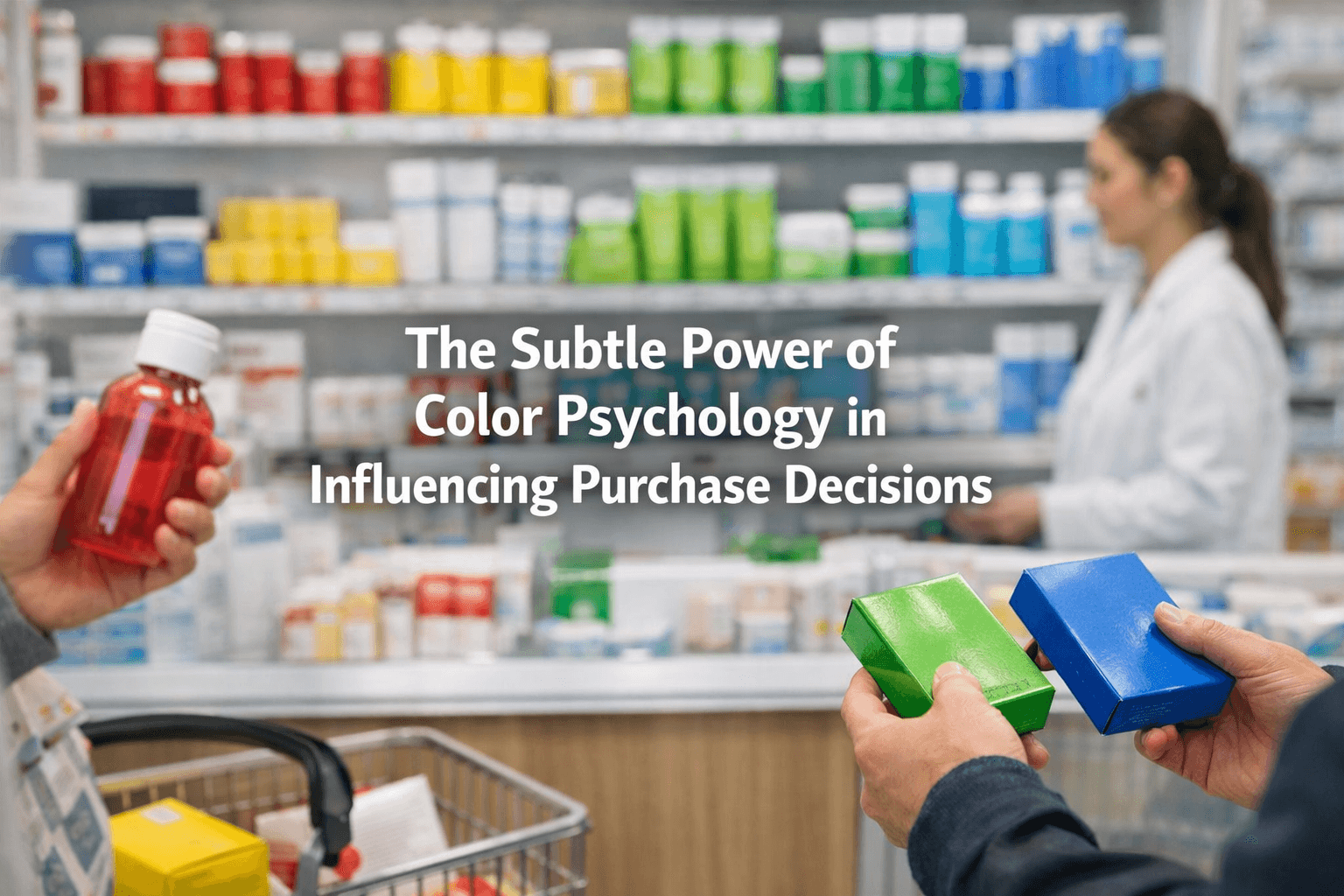
Color psychology operates on a subconscious level, making it one of the most subtle yet effective tools in the visual merchandiser’s arsenal. Colors evoke specific emotions and associations that can be harnessed to reinforce brand identity, guide navigation, and influence buying impulses. In a pharmacy setting, where trust and wellbeing are paramount, color choices carry significant weight. For instance, shades of blue are universally associated with trust, calm, and reliability—making them an excellent choice for walls near the pharmacy counter or for signage related to healthcare services. Green evokes nature, health, and tranquility, perfectly suited for sections featuring organic products, vitamins, or wellness supplements. Understanding these associations is essential for creating a cohesive and psychologically compelling store environment.
Implementing Color for Navigation and Seasonal Impact:
Beyond wall paint, color psychology is applied through signage, shelf tags, and display materials. A cohesive color-coded system can silently aid customer navigation—for example, using a consistent green border on signs for the “Natural Health” section and a soft blue for “Personal Care.” This creates a visual shorthand that improves the shopping experience. The strategic use of color is particularly potent in the Malaysian market, where cultural associations are strong. The color red, which denotes excitement, urgency, and luck, can be powerfully deployed during sales promotions or festive seasons like Chinese New Year to attract attention and stimulate action. Gold or yellow, associated with prosperity, can enhance displays of premium or giftable health products during these periods. Conversely, a consistent, clean palette of whites, blues, and greens throughout the store establishes a perennial atmosphere of trusted healthcare.
Comparative Table: Color Applications in Pharmacy Merchandising
| Color | Psychological Association | Ideal Pharmacy Application | Malaysian Cultural Context |
|---|---|---|---|
| Blue | Trust, Calm, Security, Professionalism | Pharmacy Counter, Healthcare Services Signage, Infant Care Section | Universally accepted; conveys medical reliability. |
| Green | Health, Nature, Growth, Tranquility | Wellness & Supplements, Natural/Organic Products, First Aid | Associated with harmony and Islamic themes; widely positive. |
| White | Cleanliness, Purity, Simplicity, Space | Overall Walls, Clinical Areas, Shelving for a “Clean” Look | Represents purity and modernity; enhances perceived hygiene. |
| Red | Energy, Urgency, Excitement, Passion | Promotional Sale Signage, Limited-Time Offer Tags, Festive Displays | Strongly associated with luck, celebration, and vitality in Chinese culture. |
| Gold/Yellow | Prosperity, Optimism, Warmth, Premium | Highlighting High-End or Gift Products, Festive Season Accents | Symbolizes wealth, royalty, and joyous celebration. |
Learn more: Color Psychology in Visual Merchandising and Retail Displays
Product Display: The Final Layer of Persuasive Storytelling
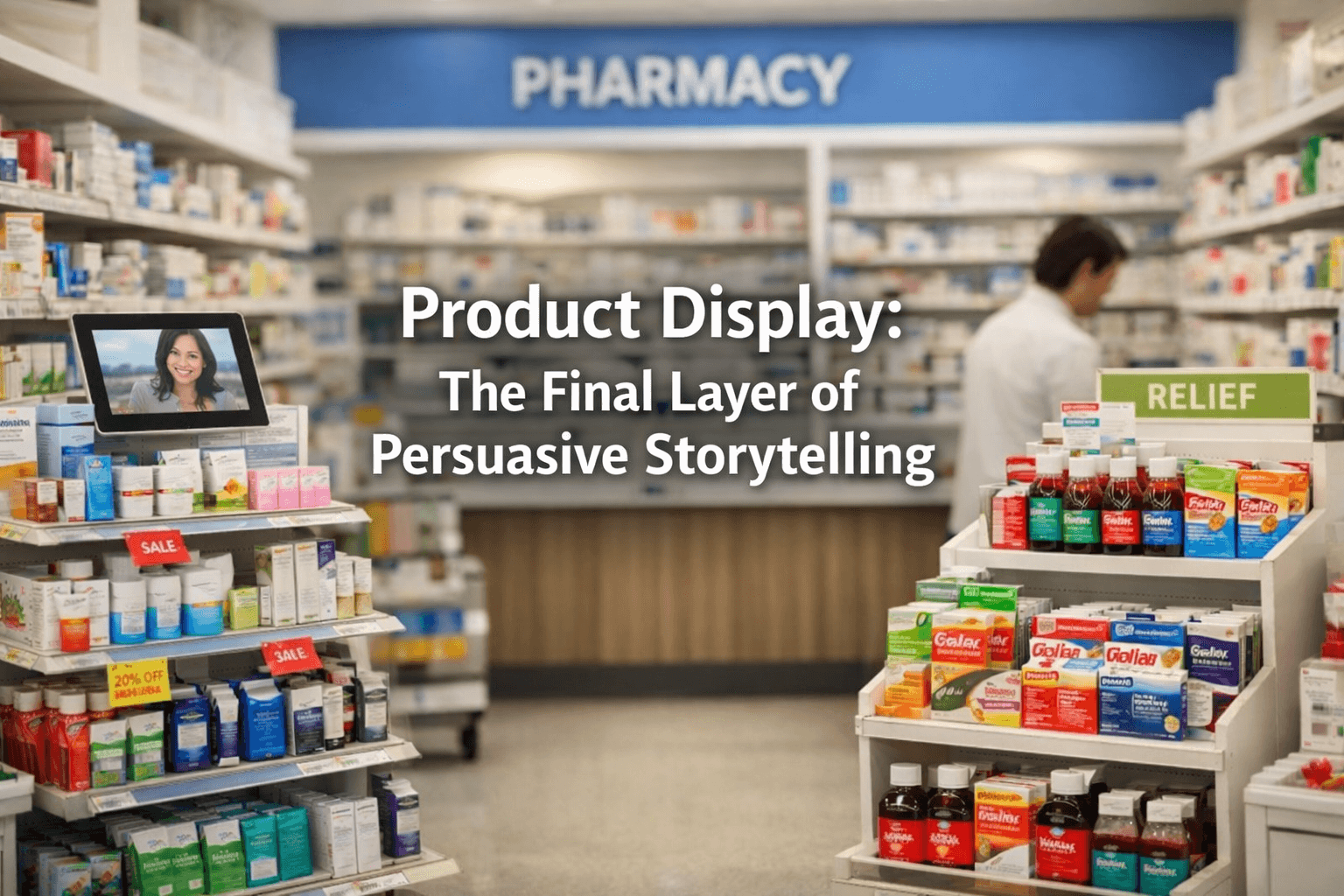
Product display is the tangible execution of all prior planning—where layout, lighting, and color converge to present merchandise in its most compelling light. A dynamic product display goes beyond basic stocking; it tells a story, solves a problem, and creates visual appeal that interrupts the shopping routine. The principles of effective display include creating focal points, ensuring visual balance, and employing the golden triangle concept (positioning high-margin items between the entrance, a key destination like the pharmacy counter, and a high-traffic category). Displays are the final, critical touchpoint where a product’s value proposition is communicated visually, often making the difference between a glance and a purchase.
Advanced Display Techniques: From Eye-Level to Lifestyle:
Strategic product placement within displays is a science. The eye-level is buy-level axiom remains a golden rule, making this prime real estate for high-rotation or high-margin items. End-cap displays at the conclusion of aisles offer phenomenal visibility and are ideal for promotional items, new launches, or seasonal products like flu relief kits during monsoon season. For pharmacy distributors in Malaysia, demonstrating creative display techniques to retailers is a key value-add. This could involve building lifestyle-focused displays—grouping sunscreen, aloe vera gel, and after-sun care together during the hot season, or creating a “Back to School” bundle with vitamins, hand sanitizer, and lice treatment. These thematic presentations help customers visualize usage and simplify their purchase decisions, directly boosting cross-selling success.
Learn more: Pharmacy Merchandising Solutions for Health and Wellness Product Categories | 11 Retail Merchandising Best Practices to Follow in Your Store
Multi-Perspective View on Displays: Pharmacist, Distributor, and Customer
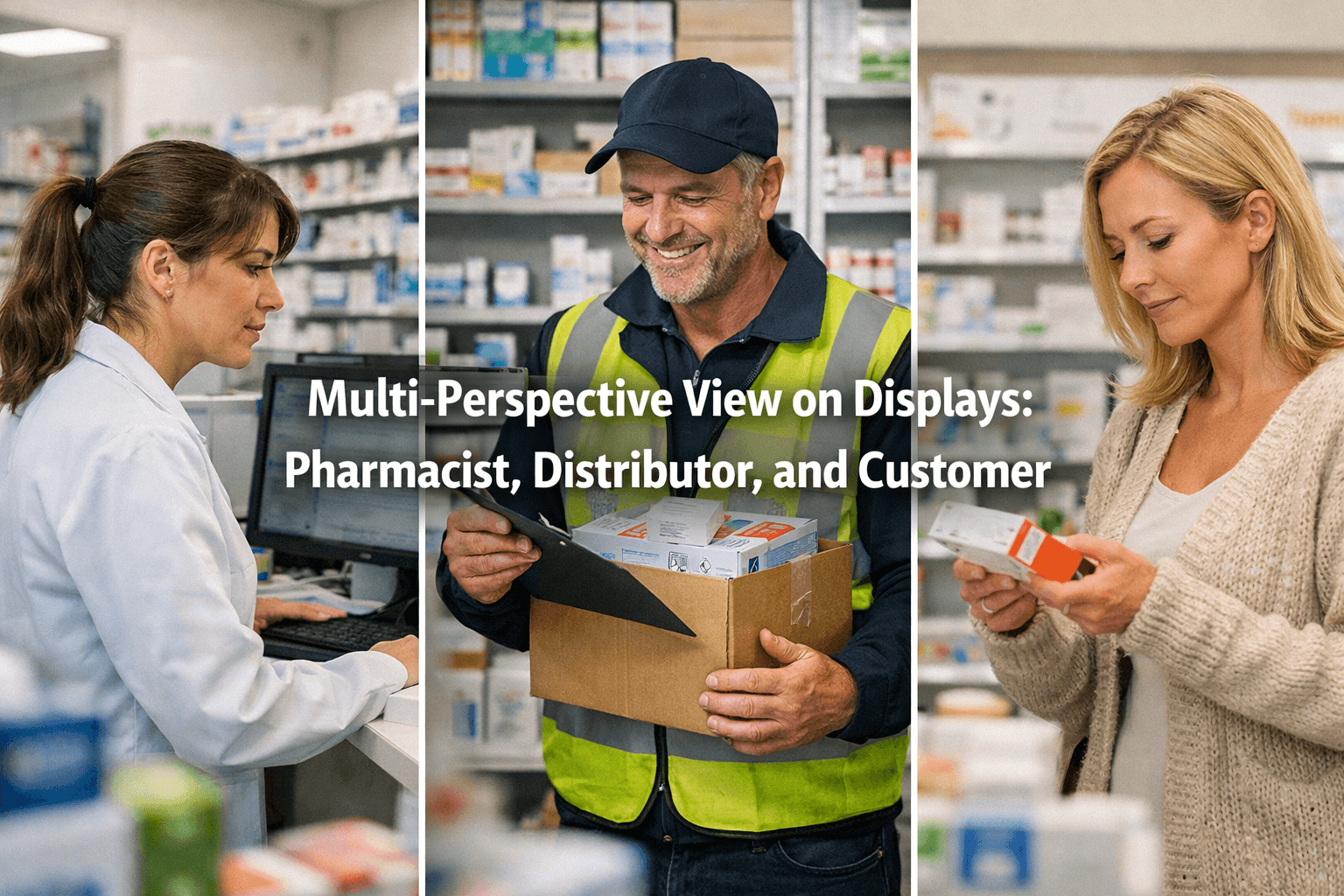
The role and perception of displays vary significantly across stakeholders. For the pharmacist or store manager, a display must be commercially effective yet operationally manageable—easy to restock, secure, and compliant with regulations (e.g., keeping certain products behind counters). They rely on their distributor pharmacy partner not just for products, but for display fixtures, planogram support, and insights into what configurations are driving sales elsewhere. From the distributor and brand manager’s perspective, securing premium display space is a strategic imperative to increase brand visibility and trial. They might provide tailored display units or commercial incentives for featured placement. Finally, from the customer’s point of view, a well-crafted display cuts through clutter. It provides inspiration, education, and convenience, transforming a routine shopping trip into a more engaging discovery. A display of diabetic-friendly products positioned thoughtfully together, for example, is seen as a helpful service, building loyalty and positioning the pharmacy as a thoughtful and expert health partner.
The Strategic Role of Distributors in Elevating Pharmacy Merchandising:
While the foundational principles of layout, lighting, color, and display are executed at store level, their strategic optimization often originates further up the supply chain. Pharmacy distributors in Malaysia are not merely logistical entities; they function as critical merchandising partners, possessing a bird’s-eye view of market trends, brand objectives, and retail performance across numerous outlets. This unique vantage point transforms them into expert consultants who can translate generic best practices into tailored, actionable plans for individual pharmacies. Their role extends beyond delivering products to delivering proven visual merchandising frameworks that enhance sell-through, optimize shelf space, and ultimately, drive profitability for both the retailer and the brands they represent. This partnership is essential in a market where consumer attention is fragmented and operational resources for independent pharmacies can be stretched thin.
Learn more: Building Strong Relationships with Distributors in Malay-Speaking Countries
Efficient Collaboration: The Distributor as an Extension of the Pharmacy Team

The most effective visual merchandising outcomes emerge from a symbiotic relationship where the pharmacy’s on-the-ground customer insights merge with the distributor’s broad market intelligence. Efficient collaboration here is operationalized through several key channels. Distributors provide strategic planogram services, which are data-driven schematic diagrams that dictate optimal product placement on each shelf to maximize sales and meet brand compliance requirements. They also supply tailored display solutions—from modular shelving units designed for small footprints to promotional end-caps themed for local festivals like Hari Raya or Deepavali. Furthermore, forward-thinking pharmacy wholesale distributors often conduct staff training sessions, equipping pharmacy assistants with the knowledge to maintain displays, understand product adjacencies, and articulate the benefits of featured items. This transforms static merchandising into a dynamic, living component of the customer service experience.
Comparative Table: In-House Management vs. Distributor-Led Merchandising Support
| Performance Metric | In-House Pharmacy Team | Specialist Distributor Partnership (e.g., PriooCare) |
|---|---|---|
| Expertise & Market Insight | Limited to single-store experience; reactive to local trends. | Proven, multi-store perspective; anticipatory of national & regional trends, brand strategies, and compliance requirements. |
| Resource Allocation | Draws from limited staff time, diverting focus from customer service or clinical duties. | Provides dedicated merchandising specialists and tools, creating operational efficiency for the pharmacy. |
| Speed of Innovation & Implementation | Slower; reliant on internal trial and error for new displays or layouts. | Faster rollout of effective, pre-tested concepts and seasonal campaigns with ready-made materials. |
| Cost Structure | Lower direct cost but carries high opportunity cost and risk of ineffective experimentation. | Higher direct service cost but typically delivers a stronger, measurable return on investment (ROI) through increased sales velocity. |
| Customization & Scalability | Highly familiar with their unique customer base but may lack frameworks to scale ideas. | Offers highly customized solutions that are scalable, blending local needs with strategic brand objectives. |
Real-World Synergy: Malaysian Operational Scenarios
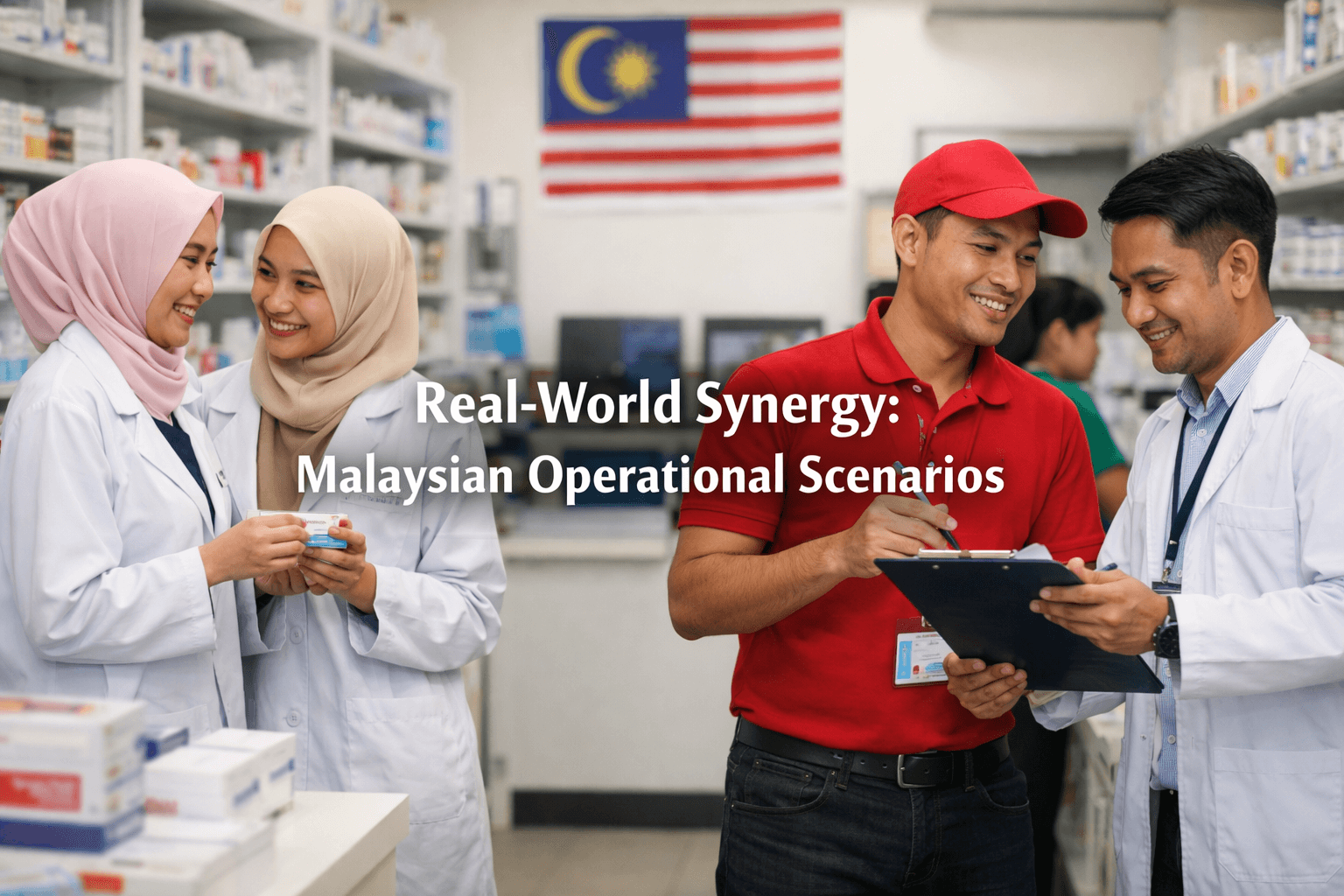
Consider the challenge of a mid-sized independent pharmacy in Johor Bahru preparing for the back-to-school season. Managing inventory for dozens of relevant brands—from vitamins to stationery—is daunting. A strategic distributor partner steps in, providing a consolidated seasonal merchandise pack complete with a targeted planogram for a high-visibility display, point-of-sale materials, and even bundle promotions. This not only saves the pharmacy owner countless hours of sourcing and planning but also creates a compelling, thematic shopping destination that drives foot traffic. From another perspective, a large pharmacy chain in Kuala Lumpur launching a new premium skincare line requires consistent, brand-compliant presentation across all stores. The distributor’s field merchandising team becomes essential for ensuring uniform implementation, auditing displays, and providing feedback to brand managers on sell-through rates, creating a reliable feedback loop between retail execution and brand strategy.
Measuring Impact: Translating Aesthetics into Actionable Analytics

Implementing visual merchandising initiatives is only half the battle; the other half is rigorously measuring their impact to validate investment and guide future strategy. Without data-driven analysis, merchandising decisions remain guesswork. The move from intuition to insight requires tracking a suite of key performance indicators (KPIs) that connect visual changes to commercial outcomes. This analytical approach allows both pharmacies and their distribution partners to move beyond assumptions and understand precisely what resonates with the Malaysian consumer, fostering a cycle of continuous, effective improvement.
Core Metrics: Tracking Sales, Engagement, and Operational Efficiency
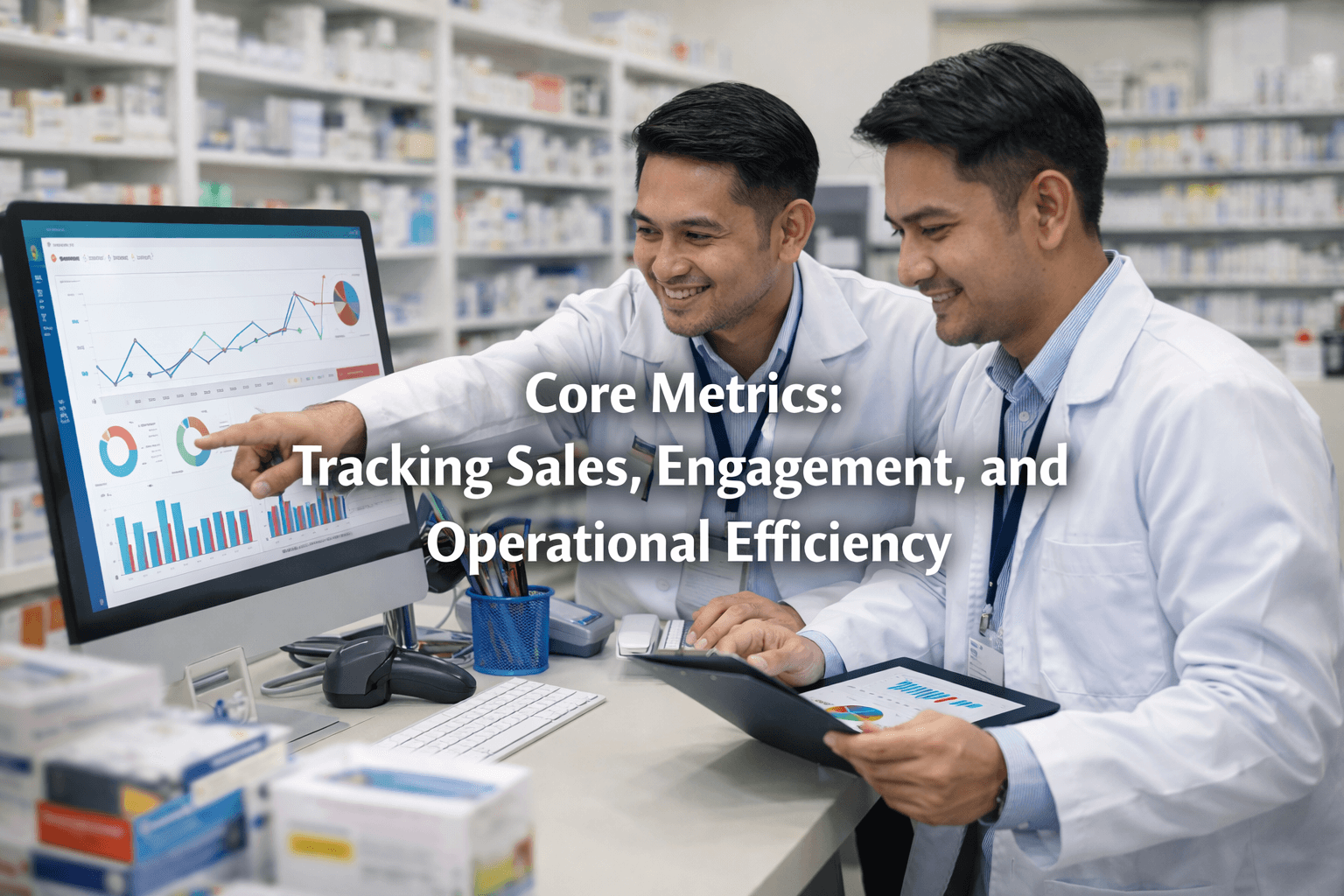
The most direct metric of success is sales performance data, analyzed at a granular level. This involves comparing sales velocity of products before and after a display change, measuring the lift in average transaction value from strategically placed cross-promotions, or tracking the sell-through rate of items featured in a themed end-cap. Beyond sales, customer engagement metrics offer deeper insights. Dwell time in specific sections can be observed—does the newly lit and color-coded wellness zone encourage longer browsing? Foot traffic heatmaps, often available through simple retail analytics tools, can show whether a revised store layout is successfully drawing customers into previously under-visited aisles. For the pharmacist-owner, these metrics answer a strategic question: is the investment in new lighting or fixtures translating into tangible commercial behavior, or is it merely cosmetic?
The Compliance Imperative: A Key Metric for Distributors
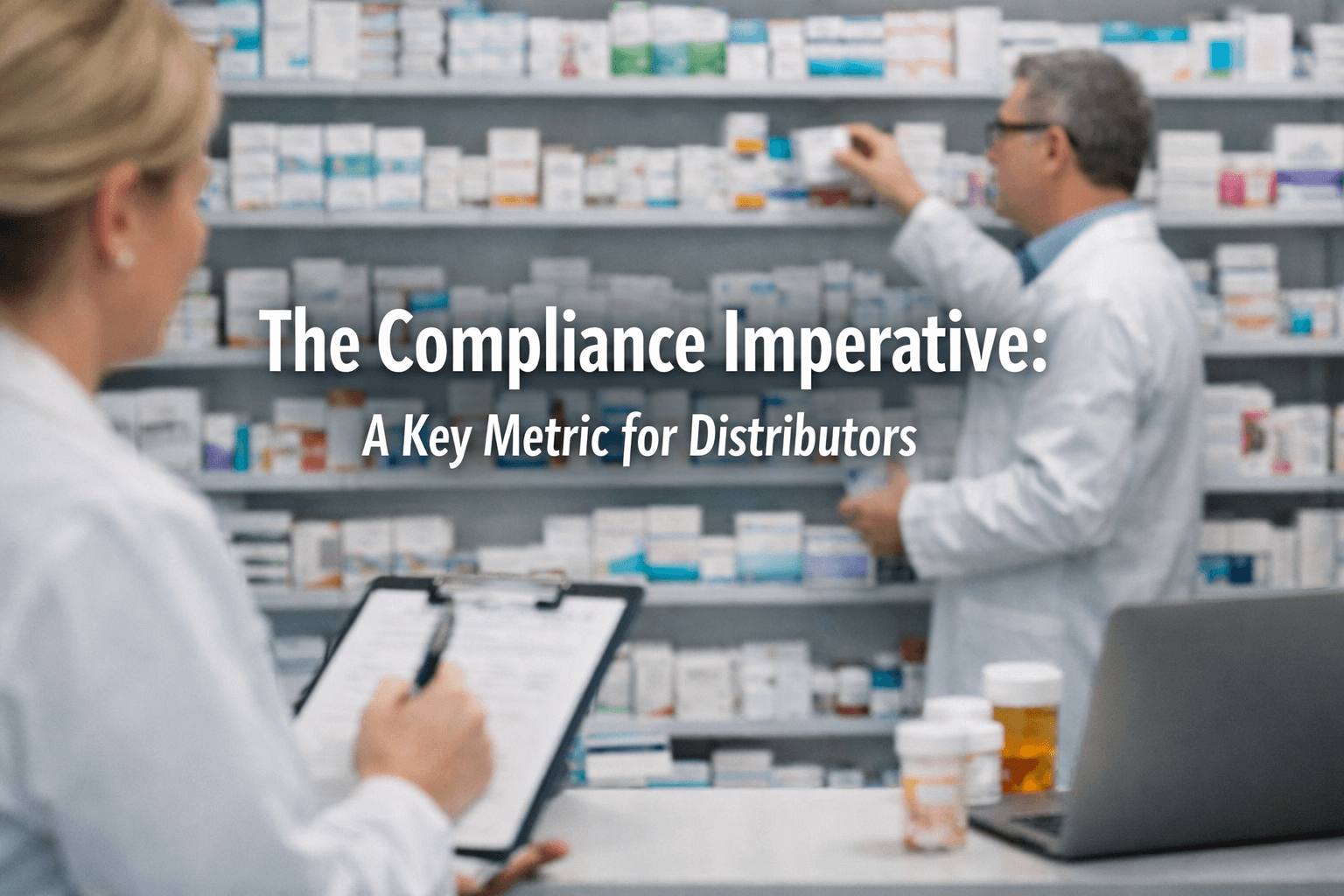
For pharmacy distributors, one non-negotiable metric is brand and regulatory compliance. This goes beyond sales; it’s about auditing whether products are displayed in the correct category, whether mandatory health warnings are visible, and whether planograms are followed to ensure fair competition on shelf. A distributor’s value is often measured by their ability to reliably enforce these compliance standards across their retail network. For example, ensuring that fever medication for children is displayed at a safe height, or that specific medical devices are accompanied by the correct informational signage, is a critical aspect of their trusted partnership with both brands and pharmacies.
Frequently Asked Questions (FAQ)
Q1. What is pharmacy visual merchandising?
Answer:
Pharmacy visual merchandising is the process of organizing store layout, displays, lighting, colors, and product placement to improve customer experience and increase sales performance. It helps pharmacies guide shoppers toward products more effectively while creating a professional shopping environment.
Q2. Why is store layout important in a pharmacy?
Answer:
Store layout determines how customers move inside the pharmacy. A strategic layout improves traffic flow, increases product visibility, encourages impulse purchases, and creates better cross-selling opportunities.
Q3. How does product placement affect pharmacy sales?
Answer:
Strategic product placement can significantly influence buying behavior. High-margin or frequently purchased products placed at eye level or in high-traffic areas generally receive greater customer attention and improve sales conversion rates.
Q4. What products should be placed near the pharmacy counter?
Answer:
Products commonly placed near the counter include travel-size health products, supplements, hand sanitizers, lip balms, snacks, and promotional products. These items often benefit from impulse purchasing behavior.
Q5. How does lighting impact customer behavior in pharmacies?
Answer:
Lighting helps create customer perception and shopping comfort. Bright and clear lighting builds trust in healthcare sections, while softer lighting can improve the shopping experience in beauty and wellness categories.
Q6. Why is color psychology important in pharmacy merchandising?
Answer:
Different colors create different emotional responses. Blue often creates trust and professionalism, green communicates health and wellness, while red may attract attention during promotions or seasonal campaigns.
Q7. What are the most effective display techniques in pharmacies?
Answer:
Common display techniques include:
• Eye-level product positioning
• End-cap promotional displays
• Seasonal product bundles
• Lifestyle-based product grouping
• Cross-category product displays
Q8. How do distributors support pharmacy merchandising?
Answer:
Distributors provide merchandising support through planogram development, display materials, shelf optimization, category recommendations, staff training, and market insights to improve retail execution.
Q9. Why do pharmacies work with professional distributors in Malaysia?
Answer:
Professional distributors often bring broader market experience, stronger retail insights, and established relationships with pharmaceutical companies in Malaysia. This helps pharmacies improve operational efficiency and merchandising quality.
Q10. How can pharmacies measure whether merchandising strategies are successful?
Answer:
Pharmacies typically track:
• Sales growth
• Average basket value
• Customer traffic patterns
• Product sell-through rates
• Promotional conversion rates
• Display compliance rates
Creating a cohesive and high-performing retail environment is an ongoing journey, not a one-time project. It demands a synergy of creative vision, strategic implementation, and meticulous measurement. For pharmacy owners and managers across Malaysia, the choice of a supply chain partner who deeply understands this holistic process—from warehouse to shelf presentation—is a critical business decision. It is the partnership that transforms standard inventory into compelling customer experiences and static space into dynamic sales growth.
How can we assist you today? 😊
Just let us know—we’re here to help!