

November 17, 2026
At its heart, the main purpose of visual merchandising within a pharmacy retail environment transcends simple decoration. It is a strategic, operational discipline designed to systematically improve product visibility, intuitively guide shopper navigation, and directly drive sales conversion. This is not about arbitrary placement of goods. It is about creating a coherent, accessible, and trustworthy environment where customers can find what they need efficiently, discover relevant solutions, and feel confident in their selections. In the context of Malaysia’s unique healthcare retail landscape, this purpose becomes intrinsically linked to the operational rhythms set by pharmacy distribution services. The flow of stock from pharmacy wholesale distributors directly dictates what can be displayed, when, and in what volume. Therefore, achieving clarity at shelf—a state where the right product is in the right place, at the right time, with the right information—is not merely a sales goal. It is an essential outcome that supports both the consumer’s journey and the pharmacist’s daily workflow, ensuring that healthcare retail operates both commercially and compassionately.
The distinction between general retail visual merchandising and pharmacy-specific practice is profound. While a fashion boutique might focus on aspiration and trends, a pharmacy must balance commercial objectives with compliance, safety, and regulatory adherence. A display must be compelling yet clear, promotional yet professional. This nuanced purpose means every decision—from where to place a new cough syrup to how to signpost prescription collection—carries dual responsibility: to facilitate a purchase and to uphold a duty of care. The main purpose thus converges on creating an environment that simplifies the often-complex healthcare journey for the customer, while simultaneously serving as a reliable, efficient tool for the pharmacy staff and their supply chain partners.
How Malaysian Pharmacy Distribution Shapes Merchandising Realities
The theoretical purpose of visual merchandising meets its practical test daily on pharmacy shelves across Malaysia, where priorities are fundamentally shaped by the pharmacy distribution service ecosystem. Stock flow dynamics, including delivery frequency, SKU rotation cycles, and minimum order quantity (MOQ) pressures, directly influence what merchandising strategies are even feasible. A beautiful planogram for a seasonal allergy display is meaningless if the distributor pharmacy network cannot supply the featured products reliably or in sync with the promotional calendar. Therefore, the alignment between the pharmacy distributor in Malaysia, the field merchandisers, and the in-store pharmacists is not just beneficial—it is critical for execution. This coordination tackles evergreen challenges: preventing out-of-stock (OOS) scenarios that create dead shelf space, managing new product launches that require prime positioning, and executing timely planogram resets to reflect category changes.
From the pharmacist’s perspective, visual merchandising must support fast, accurate access to products, especially during patient counselling. A logically zoned store with clear signage allows them to quickly guide a customer to the appropriate over-the-counter (OTC) remedy or supplement, enhancing their role as a trusted healthcare advisor. For the brand manager, the purpose is centered on visibility and consistency—ensuring their products are displayed according to agreed layouts in key partner pharmacies to maximize share of shelf and consumer attention. The distributor’s viewpoint adds a crucial layer: their need for efficient replenishment and planogram compliance to optimize truck space, delivery routes, and inventory turnover. A well-merchandised store that sells through stock predictably makes for a smoother, more efficient supply chain. This tripartite relationship underscores why visual merchandising in this sector requires expert execution and a trusted partnership between all parties to fulfill its core purpose effectively.
| Stakeholder Perspective | Primary VM Priority | Key Metric for Success |
|---|---|---|
| Pharmacist / Store Owner | Fast product access, patient safety, workflow efficiency. | Reduced customer query time, increased basket size of OTC products. |
| Brand Manager | Maximum product visibility, promotional compliance, brand equity. | Share of shelf, sales lift in featured categories, brand recall. |
| Distributor | Efficient replenishment, planogram accuracy, inventory turnover. | Order accuracy, reduction in OOS instances, sell-through rate. |
Shopper Psychology and In-Store Decision-Making in Malaysia

Understanding the main purpose of visual merchandising demands a deep dive into how Malaysian pharmacy customers actually behave and make decisions in-store. The journey often begins in the crucial “first 10 seconds” upon entering, where colour blocks, lighting, and overall layout set a tone of either clinical sterility or welcoming care. Shoppers subconsciously interpret visual cues: a clean, well-organized eye-level zone for pain relievers signals trust and quality, while a disorganized bin of supplements may trigger scepticism. Key concepts like impulse areas near the cashier (for lip balms, hand sanitizers, or small confectionery items) are engineered to capture last-minute decisions, while destination zones for chronic care or maternal health are designed for slower, more considered browsing.
Categories like pain relief, vitamins and supplements, and mother-and-baby products are particularly influenced by tailored visual strategies. For instance, a young parent looking for infant formula is not just buying a product; they are seeking reassurance. A display that cohesively groups formula with related items like bottles, sterilizers, and diaper cream, supported by clear informational signage, does more than sell—it builds confidence and simplifies a stressful process. This proven method of category adjacency directly converts anxious browsing into a confident purchase. Similarly, for supplements, the use of pharmacist-recommended tags or signage explaining benefits can be the decisive factor for a customer choosing between two similar brands. The purpose here is to educate and guide, reducing choice paralysis and leveraging the inherent trust in the pharmacy setting to facilitate a reliable decision-making pathway.
Learn more : How In-Store Experiences Influence Consumer Decisions — McKinsey & Company
Strategic Elements That Fulfill the Core Purpose
To operationalize its fundamental purpose, pharmacy visual merchandising relies on several interconnected, essential elements. Each component must work in harmony, supported by accurate data from distributor teams and a keen understanding of local shopper behaviour.
Product Placement and Category Zoning Strategy
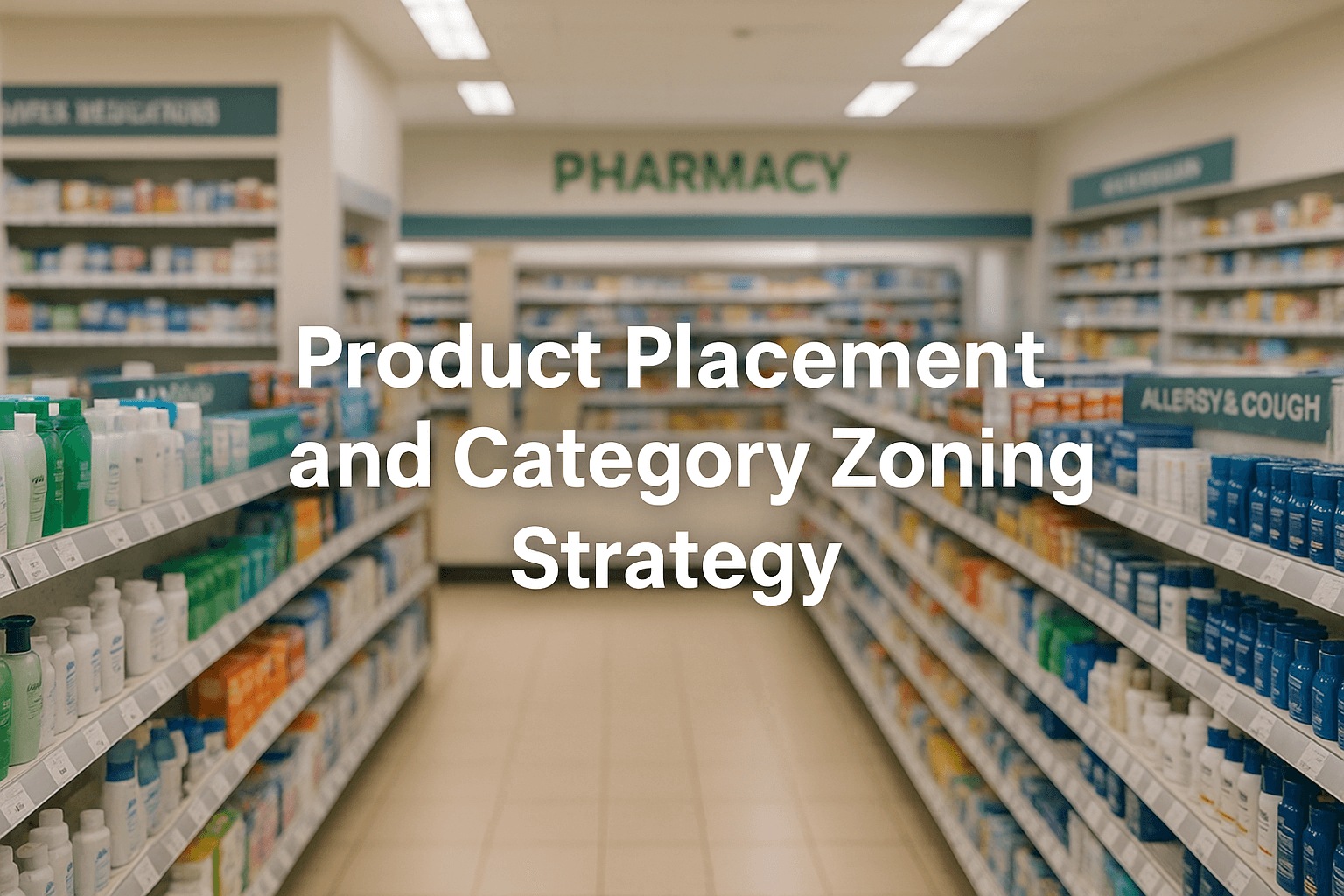
This is the foundational blueprint. Strategic product placement follows the principle that eye-level is buy-level, placing high-margin or promotional items in the direct sightline of average-height shoppers. More than just height, category zoning—the logical grouping of related products—is vital. A cold & flu zone should seamlessly flow from thermometers to lozenges to nasal sprays, and perhaps to immune-supporting vitamins, creating a natural adjacency flow that anticipates customer needs and increases basket size. In a Malaysian context, consider the zoning for diabetic care: grouping sugar-free supplements, glucose monitors, and foot care products together provides a efficient, compassionate shopping experience for a customer managing this chronic condition.
An effective placement checklist includes:
Ensuring bestsellers and high-rotation OTC items are in prime sightline positions.
Creating logical category pathways (e.g., Digestive Health → Pain Relief → First Aid).
Using planogram compliance as a non-negotiable standard, especially for partnered brands.
Allocating space based on actual sales velocity data, often provided by pharmacy wholesale distributors.
Learn more :Category Management and Shelf Optimization Insights
Signage and Informational Communication
In a pharmacy, signage is a primary tool for safety and guidance. Beyond promotional tags, clear dosage guides, age suitability indicators, and active ingredient highlights are crucial. This informational layer fulfills the purpose of aiding navigation and empowering safe choice. For example, a prominent sign distinguishing between children’s and adults’ paracetamol dosage is a critical safety feature. Signage also builds the pharmacy’s authority; a section tagged “Pharmacist’s Choice” for allergy medications leverages professional trust to guide decision-making. In multi-lingual areas of Malaysia, effective signage may incorporate simple multilingual cues to ensure clarity for all customers.
Shelf Organisation and Planogram Integrity
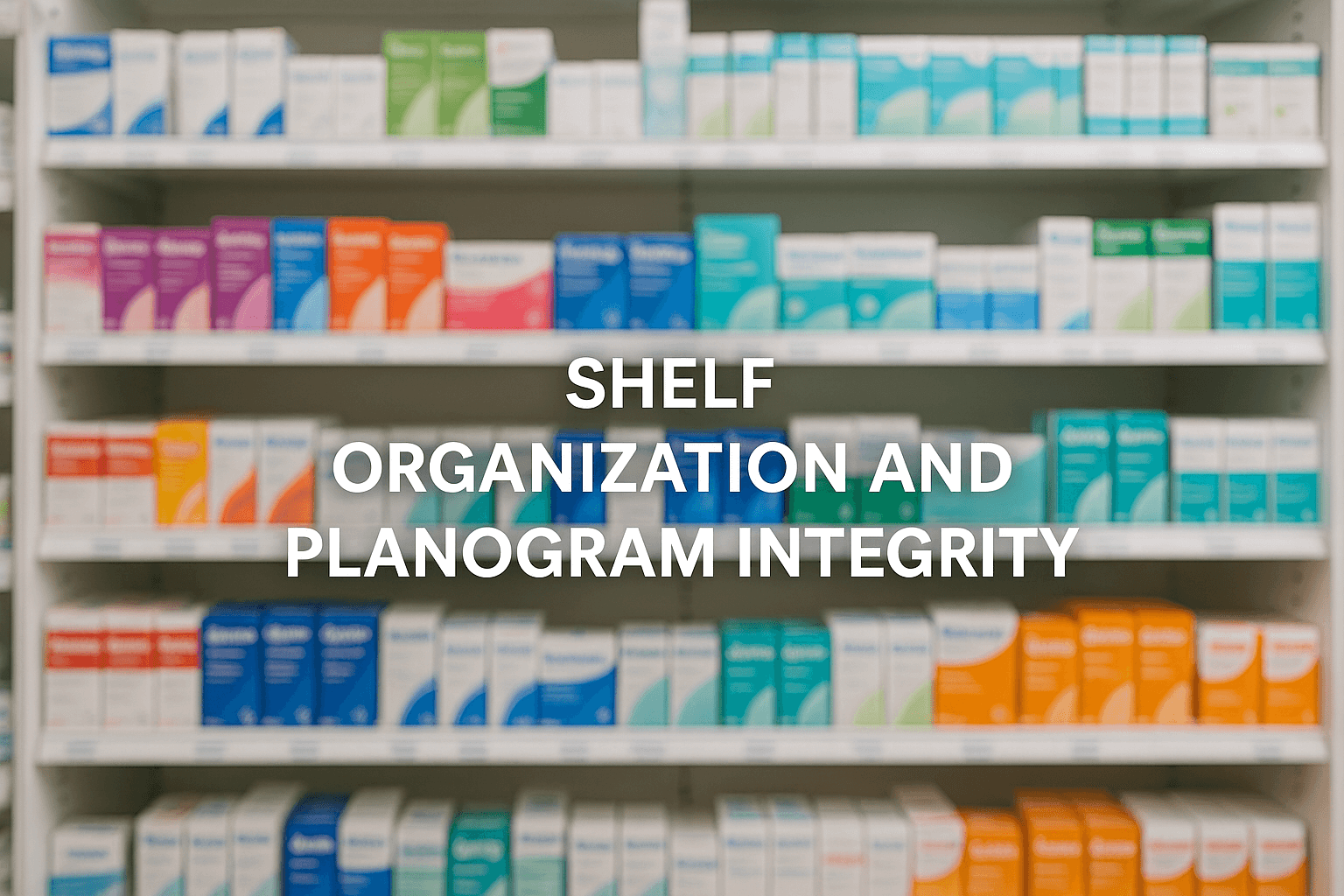
The micro-level organization of the shelf itself is where the purpose meets precision. This involves maintaining strict planogram compliance—the detailed map of where every SKU belongs. A compliant shelf ensures consistent facing (the number of product units visible), prevents out-of-stocks from being hidden by forward-facing other items, and allows for accurate inventory checks. This discipline is often supported by the merchandising teams of independent pharmacy distributors, who perform resets and audits. Their role is to ensure the on-shelf reality matches the strategic plan, making them essential partners in achieving merchandising goals. A disorganized shelf not only frustrates customers but also directly impacts sales and can erode trust in the pharmacy’s professionalism.
Lighting, Colour, and Environmental Psychology

The ambient environment sets the stage. Lighting must be bright and clear in areas requiring detailed reading of labels (like the OTC medicine aisles) to support safety, yet can be slightly warmer in areas like the skincare or baby section to evoke comfort and care. Colour strategy can be used to subtly guide navigation—a calming blue backdrop for the sleep aid section, or a vibrant green for natural wellness products. In the often-bright and bustling Malaysian urban environment, a pharmacy’s interior lighting and colour palette must create a distinct oasis of clarity and calm, directly supporting the purpose of reducing shopper stress and facilitating easier decision-making.
Learn more : The Impact of Lighting, Layout, and Store Design on Pharmacy Merchandising in Malaysia
OTC versus Chronic Care Considerations
Finally, the purpose of visual merchandising must adapt to different product categories. For OTC products (pain relievers, cough syrup, vitamins), the goal is to facilitate discovery and self-selection through compelling displays and clear information. For chronic care sections (diabetes, hypertension, cardiac health), the approach shifts dramatically. Here, the purpose is to provide discreet, organised, and reassuring displays that respect patient privacy while making essential products easy to find, often placed nearer the professional counter for easy pharmacist access. This nuanced understanding ensures the store environment serves the full spectrum of healthcare needs, from immediate impulse purchases to ongoing health management, fulfilling its comprehensive purpose as a trusted community healthcare hub.
Learn more: Merchandising Services for Malaysian Pharmacies
Achieving Purpose Through Operational Alignment
The core objective of visual merchandising—enhancing visibility, navigation, and conversion—remains an abstract concept without flawless operational alignment between three key entities: the merchandising teams, the in-store pharmacists, and the pharmacy distribution service. This triad must operate as a synchronized unit, where the strategic intent of a planogram is realized through a reliable, coordinated execution chain. The workflow is a continuous cycle: it begins with a distributor pharmacy delivery that ensures the correct products and point-of-sale materials (POSM) arrive on schedule. This is followed by the merchandiser’s expert arrangement of goods according to the mandated layout. Finally, the pharmacist’s approval and ongoing vigilance ensure the display maintains accuracy, safety, and a professional appearance. This alignment is tested during critical moments like new launch activations, where speed to shelf is paramount, or during planogram updates that require a synchronized reset across multiple stores. When this partnership stumbles—due to miscommunication, stock shortages, or inconsistent visits—the fundamental purpose of the visual scheme is compromised, leading to confused customers and missed commercial opportunities.
From the pharmacist’s perspective, this alignment is about trust and efficiency. They rely on merchandisers and their supply chain partners to create displays that are not only commercially effective but also clinically sensible and compliant. A well-organized shelf allows them to make fast, accurate recommendations during patient counselling, turning the retail space into an extension of their professional service. For the distributor, the priority is shelf readiness and fast product turnover. An efficiently merchandised store that sells through inventory predictably simplifies logistics and improves inventory management, making their entire operation more efficient. The brand manager’s viewpoint centers on consistent visibility across various chains, from large networks like Guardian or Caring to independent Alpro-style pharmacies. They depend on this three-way partnership to ensure their strategic merchandising investments are executed faithfully, protecting brand equity and driving market share. This multi-perspective reliance underscores why a trusted, collaborative relationship is not a luxury, but the very engine of effective visual merchandising.
| Criteria / Task | Distributor Pharmacy Merchandising Team | In-House Pharmacy Staff |
|---|---|---|
| Planogram Accuracy & Compliance | High consistency; trained on brand & category standards. | Often variable; competes with clinical & customer service duties. |
| Replenishment Speed & Proactivity | Efficient, scheduled visits based on delivery cycles. | Reactive, often delayed during peak pharmacy hours. |
| New Launch Execution & Speed to Shelf | Fast and systematic; direct link to brand & distributor logistics. | Slower, dependent on staff training and availability. |
| POSM Installation & Maintenance | Strategic and standardized; part of the service protocol. | Irregular; can become a lower priority amidst daily operations. |
| Compliance Auditing & Reporting | Proven structured audits with detailed reports for brands. | Informal; internal checks with limited documentation. |
| Handling of Promotional & Seasonal Campaigns | Streamlined execution for nationwide rollouts. | Can be challenging to implement consistently at store level. |
| Expertise in Category-Specific VM Principles | Expert knowledge across multiple product categories. | Focused on general OTC; deep category knowledge may vary. |
| Overall Reliability & Specialization | Reliable, specialized external support. | Variable, based on individual store workload and priorities. |
The Foundational Role of Regulatory Compliance
In Malaysia’s pharmacy sector, the purpose of visual merchandising is fundamentally constrained and shaped by a robust regulatory framework. Guidelines from the NPRA (National Pharmaceutical Regulatory Agency) and the KKM (Kementerian Kesihatan Malaysia) dictate far more than product registration; they directly influence how items can be presented to the public. This makes compliance a non-negotiable layer of any display strategy. A pharmacy distribution service in Malaysia plays an essential role here, as they are the first link in ensuring correct batch control, proper storage during transit, and rigorous expiry date management—all factors that affect what can legally be placed on the shelf. Merchandising must therefore support safe presentation, which influences everything from the segregation of scheduled medicines (which may require behind-counter placement) to the clear labelling of medical devices.
This regulatory influence is profound. For example, the arrangement of certain cough syrups containing controlled substances must prevent easy mass handling, while thermometers or blood pressure monitors might require accompanying informational leaflets to be visibly accessible. An accurate display is critical not just for sales, but to avoid misinformation and potential regulatory issues. A shelf where products are misplaced or expired stock is not rotated proactively does not merely look unprofessional—it breaches a duty of care and exposes the pharmacy to risk. Therefore, a proven and trusted partnership with a distributor who understands these nuances is invaluable. Their systems help ensure that the physical merchandising adheres to these essential legal and ethical boundaries, making compliance a seamless component of the commercial display rather than a separate, cumbersome obligation.
Learn more :WHO Good Pharmacy Practice Guidelines — World Health Organization (WHO)
The Direct Commercial Impact on Sales Growth
When executed with precision, the link between effective visual merchandising and tangible commercial growth is direct and measurable. The core mechanisms—enhanced product discovery, eye-catching displays, and intuitive category clarity—work in concert to increase conversion rates and average basket size. By logically zoning a store, a pharmacy creates natural cross-selling opportunities; a customer picking up a pain reliever is gently guided towards muscle rubs or hot/cold packs placed adjacently. This strategic adjacency, a hallmark of chains like Health Lane Family or Caring Pharmacy, transforms a single-item purchase into a comprehensive solution. Furthermore, efficient shelf organization allows pharmacists to make faster, more confident recommendations, directly boosting sales of higher-value items like premium supplements or medical-grade skincare.
The operational benefits are equally significant. A well-merchandised store with clear signage and logical flow results in fewer customer queries for basic product location, freeing staff to engage in higher-value counselling. In the Malaysian context, tailored execution for seasonal campaigns—such as creating a prominent “Hay Fever Relief” zone during the annual haze season or a vibrant “Back-to-School” health essentials display—captures immediate consumer demand. Bundling related products, guided by data-driven insights from distributor sales reports, can clear inventory and introduce customers to new items. For independent pharmacies, this strategic approach to visual merchandising is a powerful tool to compete with larger chains, creating a reliable and engaging customer experience that drives loyalty and repeat business. The reduction in operational friction—less time spent searching for stock, easier restocking processes—directly contributes to a healthier bottom line.
Learn more : Understanding the ROI of Pharmacy Merchandising Investments in Malaysia
The Future: Data, Digitalization, and Sustainable Practices
The future of visual merchandising in Malaysian pharmacies is being shaped by digital integration and data analytics, moving beyond static planograms into dynamic, responsive systems. Digital shelf labels represent a significant evolution, allowing for real-time price updates and promotional messaging, all synchronized with the inventory management systems of pharmaceutical distributors. This technology enables data-driven planograms that are no longer based on intuition alone but are optimized using actual sales velocity, customer dwell time, and seasonal trends. Imagine an AI-powered analysis that recommends adjusting the shelf space for vitamin C supplements ahead of the monsoon season, with the distributor’s logistics alerted to pre-emptively increase stock levels—this is the future of expert, efficient merchandising.
Furthermore, tools like customer flow heat-mapping can reveal how shoppers naturally move through a pharmacy, identifying dead zones and high-traffic areas to optimize product placement. Pharma distributors themselves will increasingly adopt these strategic systems, transitioning from being purely logistics providers to integrated supply chain partners that offer insights for shelf-level success. Concurrently, a growing trend is the use of sustainable displays and eco-friendly materials. In Malaysia, where consumer awareness is rising, pharmacies can leverage recyclable cardboard stands, biodegradable signage, and energy-efficient LED lighting not just as an environmental statement, but as a trusted brand message that resonates with a conscious audience, adding a new layer of purpose to the physical retail environment.
Learn more : The Future of Retail Technology and Digital Shelf Systems — Deloitte Insights
Reinforcing the Strategic Partnership for Success
The journey through the various layers of visual merchandising reaffirms its central purpose as a strategic commercial tool deeply interwoven with operational logistics and regulatory care. It is not a superficial exercise in store decoration but a critical discipline that, when executed well, seamlessly guides customer decisions, enhances professional healthcare delivery, and drives sustainable growth. This purpose is only fully realized when there is a proven, reliable partnership connecting the pharmacy, the brand, and the pharmacy distribution service in Malaysia. Each party brings an essential element to the table: the distributor’s logistical precision, the merchandiser’s expert execution, and the pharmacist’s final authority and community trust.
As the landscape evolves with digital tools and sustainability considerations, this partnership will become even more strategic. The pharmacies that will thrive are those who view their physical space not just as a point of sale, but as a dynamic, data-informed touchpoint in the patient’s health journey. They recognize that every shelf arrangement, every sign, and every product adjacency is a conversation with the customer—a conversation that must be informative, compliant, and compelling. Achieving this consistently requires the support of a distribution partner whose capabilities extend beyond delivery trucks to include strategic insights and executional excellence, ensuring that the pharmacy’s commercial goals and professional obligations are always in perfect alignment on the shelf.
Frequently Asked Questions (FAQ)
Q1: What is the purpose of visual merchandising?
Answer:The purpose of visual merchandising is to present products in an attractive, organised, and strategic way to increase customer interest, improve the shopping experience, and encourage sales.
Q2: What is the purpose of merchandising?
Answer:Merchandising aims to ensure the right products are available, properly displayed, and promoted to meet customer needs and drive business profitability.
Q3: Which is the most important goal of visual merchandising?
Answer:The most important goal of visual merchandising is to inspire customers to buy by making products easy to find, appealing, and relevant to their needs.
Q4: What is the main purpose of visual information?
Answer:The purpose of visual information is to communicate messages quickly and clearly through graphics, signage, layout, and imagery to help customers make decisions.
Q5: What are the five main functions of a visual merchandiser?
Answer:The functions include planning displays, arranging products, maintaining store aesthetics, analysing shopper behaviour, and supporting sales strategies.
Q6: Why is VM so important?
Answer:Visual merchandising is important because it shapes customer perception, strengthens brand identity, improves navigation, and influences buying decisions.
Q7: What are the three main functions of merchandising?
Answer:The main functions are product planning, product presentation, and product promotion to ensure effective sales performance.
Q8: What are the 5 most important elements of visual merchandising?
Answer:Key elements are colour, lighting, layout, signage, and product arrangement.
Q9: What are the four most important elements in VM?
Answer:Commonly identified elements include colour, space, lighting, and product placement.
Q10: What are the six functions of a merchandiser?
Answer:These include forecasting demand, planning inventory, coordinating suppliers, managing stock levels, setting display standards, and analysing sales performance.
How can we assist you today? 😊
Just let us know—we’re here to help!