

What happens when a temperature-sensitive medicine travels 500 kilometers under tropical heat? In a country where midday temperatures can consistently soar past 32°C, the journey from a port or manufacturer to a rural clinic in Pahang or a pharmacy in Kota Kinabalu is a high-stakes operation. Cold chain management in pharmaceutical logistics refers to the controlled storage and transportation of these sensitive medicines within validated ranges, typically between 2°C and 8°C, or frozen conditions depending on biologics storage requirements. In Malaysia’s unrelenting tropical climate, this is not a minor operational detail—it is an essential, strategic component of pharmaceutical supply chain integrity.
The national growth of vaccine distribution Malaysia programs, coupled with the rising prevalence of oncology injectables and specialty biologics, has fundamentally reshaped the responsibilities of every independent pharmacy distributor and pharmacy wholesale distributors. The demand for reliable temperature-controlled logistics Malaysia networks is increasing exponentially as hospitals, private clinics, and retail pharmacies stock a higher value and more diverse range of sensitive products. This isn’t just about keeping products cool; it’s about preserving their therapeutic power.
Within any reputable pharmacy distribution service in Malaysia, the cold chain serves as the backbone that protects product efficacy. A breakdown anywhere in the continuum—a malfunctioning warehouse unit, a vehicle stuck in a Klang Valley traffic jam, or an uncalibrated retail fridge—can irrevocably compromise product stability. Unlike traditional OTC tablets that might survive a short period of heat exposure, biologics are complex molecules that cannot recover once exposed to improper temperatures. That reality makes the system not only operationally complex but commercially high-risk. For brand managers and pharmaceutical companies, a single temperature excursion can unravel years of brand equity built on trust. For distributor pharmacy professionals, it’s the line between delivering a cure and delivering a costly, ineffective liquid.
Modern pharmacy warehouse Malaysia facilities now require validated cold rooms, calibrated monitoring systems, and strategic route planning that accounts for traffic patterns and distance. Distributor pharmacy networks must coordinate tightly with retailers to ensure the continuity of temperature protection, a concept known as the last mile, until the product physically reaches the patient or the pharmacy’s dispensing counter.
Temperature excursions carry both regulatory and financial consequences that can cripple a business:
Risk of NPRA non-compliance leading to license audits.
Product recalls and subsequent insurance implications that strain financial resources.
Damage to brand credibility that took years to build with healthcare professionals.
Direct financial loss from spoilage of high-value inventory.
Cold chain pharmaceutical Malaysia operations are therefore meticulously structured around principles of reliability and risk minimization. The system must function daily without disruption—and that reliability defines the professional standard of a serious pharmacy distributor Malaysia. It’s an effective shield against the environmental and operational hazards inherent in tropical logistics.
Regulatory Framework Governing Cold Chain in Malaysia
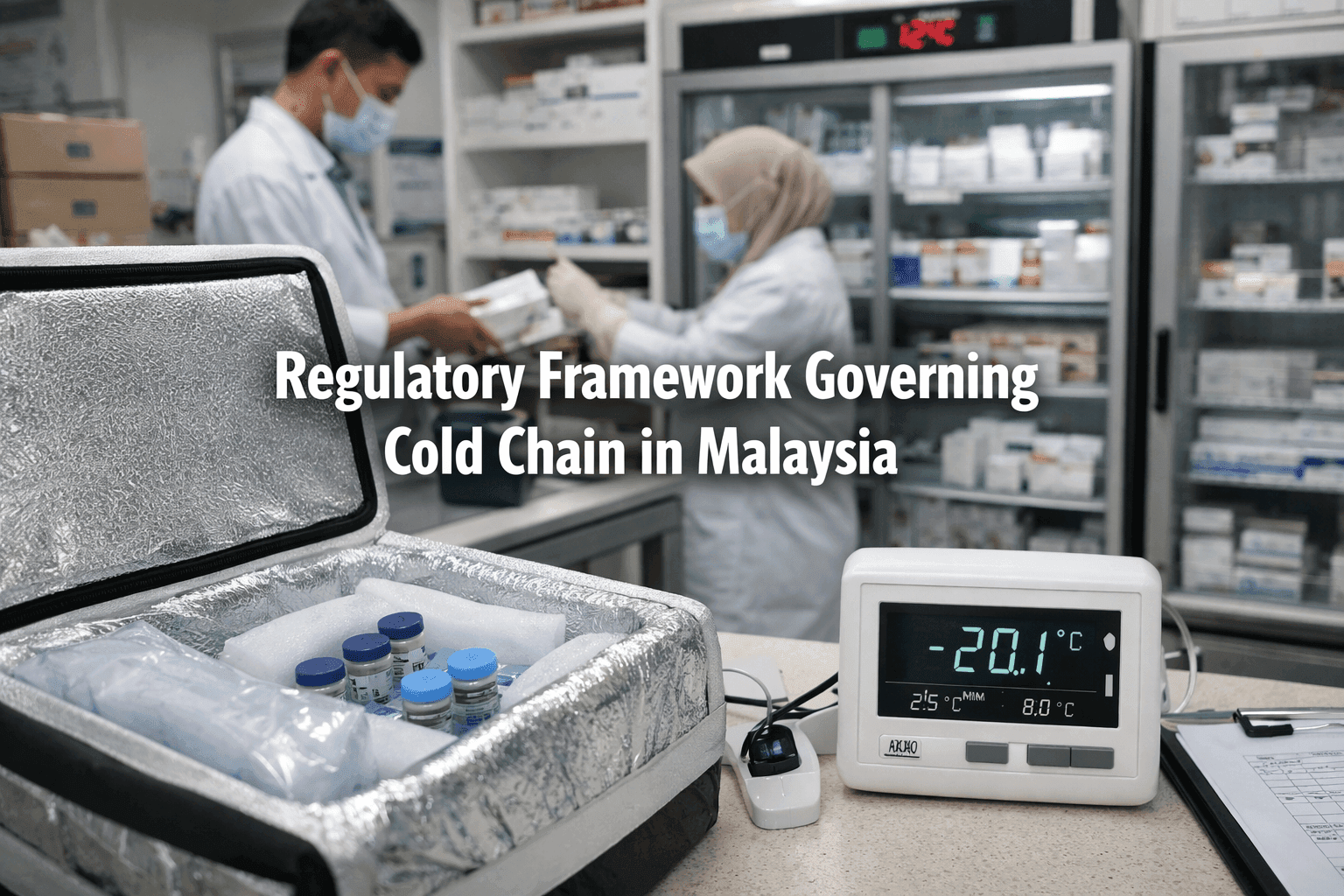
How strict are Malaysia’s compliance expectations when it comes to pharmaceutical temperature control? The answer, for those operating in the space, is absolute. Malaysia enforces cold chain under Good Distribution Practice (GDP) guidelines, rigorously regulated by the NPRA and the Ministry of Health (KKM) . These GDP pharmaceutical Malaysia standards are exhaustive, outlining exactly how temperature-sensitive medicines must be stored, transported, documented, and audited. Compliance is not a box-ticking exercise; it’s a continuous demonstration of capability.
For a distributor pharmacy to operate legally and effectively, operations must adhere to a stringent framework. They must maintain validated cold storage facilities, conduct periodic temperature mapping for all warehouse zones to identify hot spots, and implement documented Standard Operating Procedures (SOPs) for temperature excursion management. Furthermore, they must keep meticulous calibration records for every monitoring device and be prepared to demonstrate corrective and preventive actions (CAPA) during inspections.
NPRA cold chain compliance inspections are notably detailed and structured. Audit readiness requires documented proof of continuous temperature logging, vehicle validation records, and irrefutable evidence of staff training on GDP principles. A failure here isn’t just an administrative headache. Failure to comply may result in:
License suspension or revocation, halting business entirely.
Product quarantine orders that tie up capital and storage space.
Issuance of regulatory warnings that become public record.
Significant reputational damage within the medical community.
To navigate this, pharmacy distributor Malaysia companies maintain proven compliance systems by implementing structured quality management systems. They invest in trusted audit documentation, commission expert validation reports, and deploy reliable monitoring software as part of their daily operational rhythm. This ensures they are always prepared for both scheduled and surprise audits.
KKM expectations extend far beyond the warehouse door. Distributor pharmacy networks must ensure that last-mile cold delivery Malaysia adheres to the same validated standards as their central storage. It is not sufficient for the warehouse to be compliant; the entire supply chain—from the moment goods leave the manufacturing bay to the second they are accepted by a pharmacist—must remain demonstrably temperature-controlled. In Malaysia’s regulatory environment, compliance is never reactive. It is a continuous, documented process. Cold chain pharmaceutical Malaysia frameworks operate under the ironclad principle that if it is not documented, it simply did not happen.
Learn more: What Is a Distributor Pharmacy? A Comprehensive Guide | Good storage and distribution practices for medical products | Good Distribution Practice (GDP) Guidelines
Infrastructure & Technology: Building an Efficient Cold Chain Network
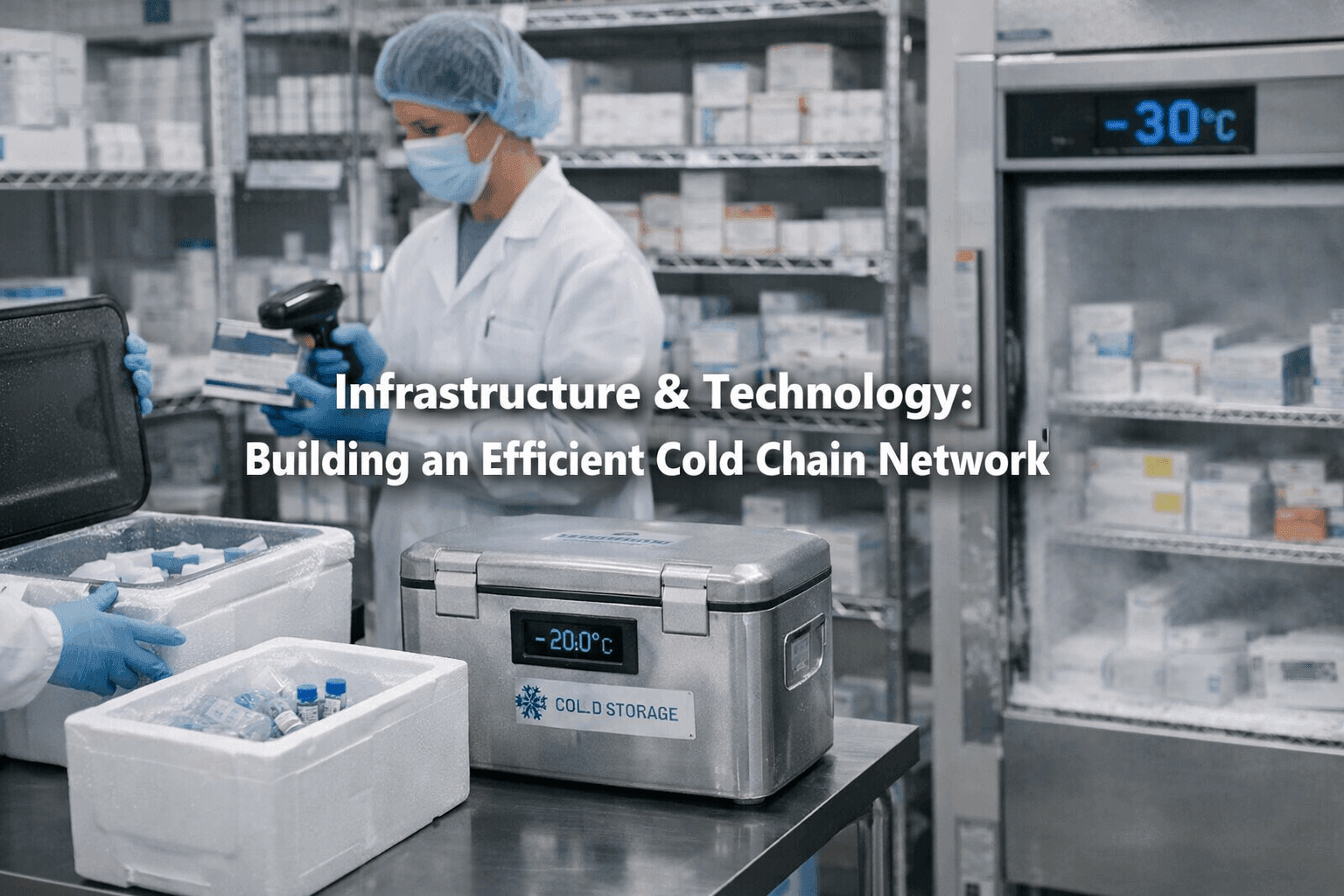
What separates a compliant cold chain from a truly efficient one? The answer lies in the infrastructure and the intelligence woven into it. A compliant facility might pass an audit, but an efficient network ensures product integrity while minimizing waste and operational costs. GDP-certified pharmacy warehouse Malaysia facilities must incorporate far more than just a refrigerator. They require:
Segregated cold rooms with distinct zones for different temperature requirements (e.g., +2-8°C and -20°C).
Backup generators with automatic switchover capability to handle Malaysia’s occasional power interruptions.
Integrated alarm systems that alert staff 24/7 to temperature deviations.
Network of calibrated temperature probes providing a granular view of storage conditions.
The strength of temperature-controlled logistics Malaysia depends heavily on vehicle validation. It’s not enough to simply own a refrigerated truck. These vehicles must undergo rigorous testing to prove they can maintain stable internal temperatures even when the external temperature is blistering, or when the vehicle is idling in congestion. Refrigerated trucks must be equipped with dual-compressor systems and pre-cooled before loading to prevent initial temperature shock.
Modern systems are now integrating IoT sensors and automated alerts. These allow for real-time monitoring across entire delivery routes. When a deviation begins to occur, alerts trigger immediate intervention—whether that’s rerouting the driver or preparing a replacement shipment. This shift from reactive to proactive monitoring is a game-changer.
Furthermore, data logging improves pharmaceutical supply chain integrity by enabling complete traceability. Blockchain and cloud-based platforms now allow audit reports to be generated quickly and accurately, improving a company’s ability to demonstrate compliance reliably and without the administrative burden of paper trails. This digital layer provides an expert level of oversight.
Strategic redundancy planning is also a hallmark of an efficient operator. This includes:
Dual power systems to prevent cooler failure.
Spare refrigeration units on standby for immediate swap-out.
Clear emergency SOP activation protocols that every staff member knows.
Ultimately, efficient cold chain networks are those that successfully combine physical infrastructure with digital oversight. Without technology integration, risk detection is delayed, and the margin for error shrinks dangerously. The goal is a seamless, transparent system that protects value at every juncture.
Learn more: Reducing Risk in the Pharmaceutical Cold Chain
The Operational Flow: From Manufacturer to Distributor Pharmacy to Retail Outlet
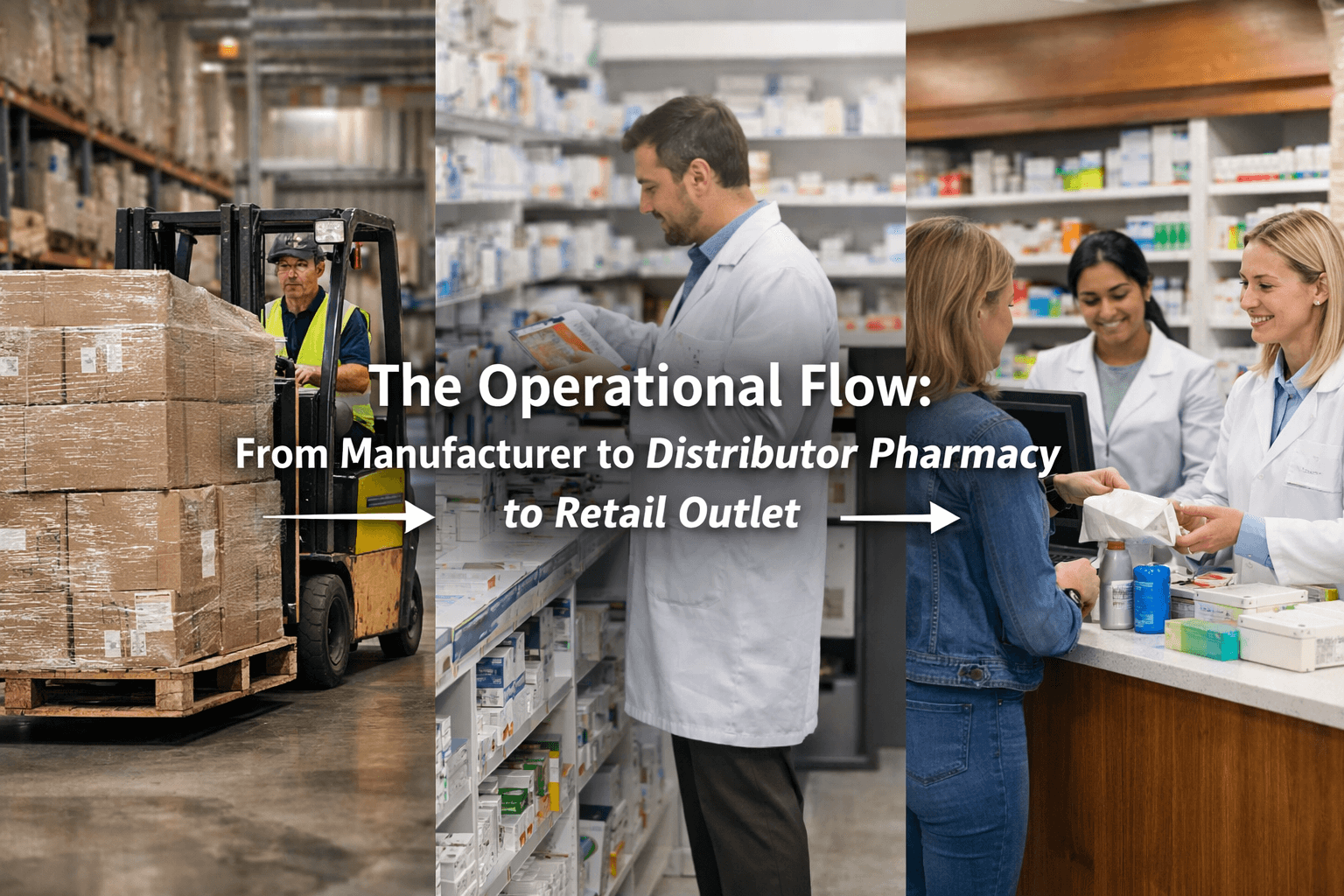
Where are the most vulnerable points in the cold chain journey? While the entire chain is only as strong as its weakest link, the moments of transfer—the handovers—are where risk is highest. The cold chain begins at the manufacturer handover. Product must be validated with a certificate of analysis and its temperature logged before physical transfer to distributor pharmacy vehicles. This initial transfer point is critical; any delay here sets the entire journey back.
Once accepted, pharmacy wholesale distributors manage transit control through validated containers (such as phase-change material packs) and vehicles with active monitoring. The route from the pharmacy warehouse Malaysia to the first drop-off is meticulously planned.
Last-mile cold delivery Malaysia presents the most heightened risk due to prolonged environmental exposure. A delivery van making multiple stops in a dense urban area like Penang island faces the constant challenge of door openings, which let in humid, hot air. Delivery scheduling must be tailored to minimize the time between the last temperature-controlled handover and the final recipient.
At the retail level, cold storage pharmacy standards are the final defense. Unfortunately, this is often the weakest point. Pharmacists and their teams must ensure they have:
Dedicated medical refrigerators (not household units, which lack precision).
Temperature logs maintained twice daily to verify conditions.
Restricted access to prevent frequent door opening.
A schedule for regular maintenance and calibration of their units.
Cold Chain Responsibility Matrix
| Stage | Key Risk | Responsible Party | Compliance Metric | Monitoring Tool |
|---|---|---|---|---|
| Manufacturer Handover | Initial temperature shift due to poor handling | Manufacturer & Distributor | Validation certificate & temperature record at交接 | Data logger with immediate printout |
| Warehouse Storage | Equipment failure or power outage | Pharmacy Warehouse Malaysia | Continuous temperature logging within 2-8°C range | IoT sensors with cloud-based alerts |
| Transit | Traffic delay or vehicle AC failure | Pharmacy Wholesale Distributors | Delivery time vs. planned route; internal vehicle temp | GPS tracking + integrated temperature tracker |
| Retail Storage | Power outage or frequent door opening | Distributor Pharmacy (outlet) | Daily min/max temperature check and recording | Manual thermometer & digital backup log |
Effective coordination across these stages, with clear communication and shared responsibility, is what ensures true pharmaceutical supply chain integrity. It’s a partnership, not a relay race where the baton is dropped at the exchange.
Learn more: The Role of Distributor Pharmacies in Healthcare Supply Chains
Risk Management & Temperature Excursion Control
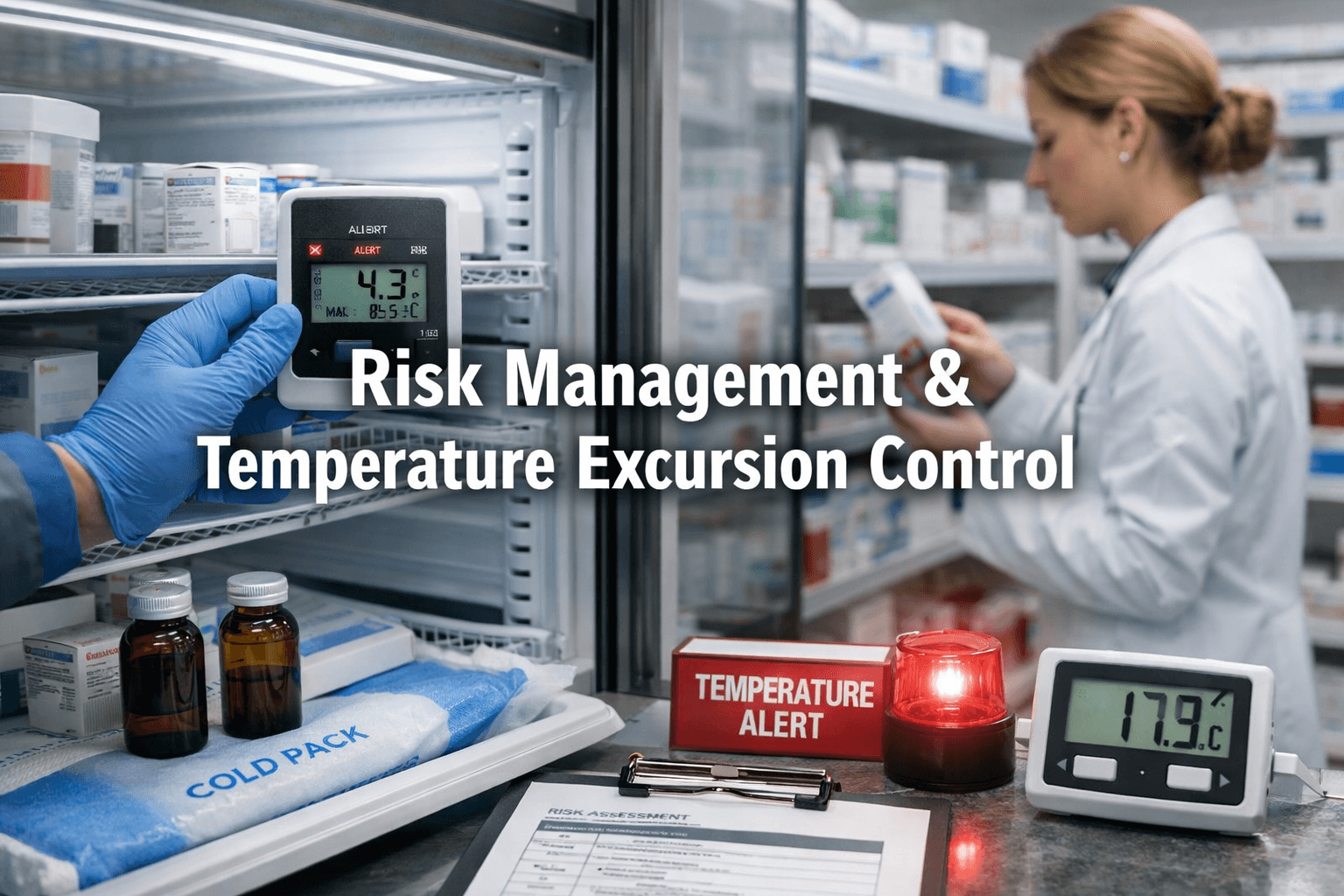
What happens when temperature breaches occur? In a perfect system, they wouldn’t. But in the real world, despite the best proven systems, deviations can happen. Malaysia’s climate inherently increases exposure risk. Extended heat waves, sporadic power instability in certain regions, and unforeseen logistics delays all contribute to the reality of temperature excursion management. The mark of a professional distributor is not the absence of risk, but the expert management of it when it appears.
When a temperature reading falls outside the validated range, the product cannot simply be used or ignored. Robust SOPs must be immediately activated to define a clear sequence of action:
Immediate quarantine of the affected product to prevent accidental dispensing.
A rapid root cause analysis to determine if the issue was equipment failure, human error, or an environmental factor.
A scientific impact assessment—often requiring consultation with the manufacturer—to determine if the product’s efficacy has been compromised.
Clear protocols for regulatory reporting to the NPRA if the breach is significant.
The financial implications demand attention. Insurance protocols require detailed documentation of the event, and recall procedures must be ready to be deployed if the product has already been distributed. Having a reliable contingency plan for these scenarios strengthens a distributor pharmacy’s credibility with both insurers and healthcare partners. It shows that they are not just hoping for the best, but are prepared for the worst.
Strategic investment in backup power and redundancy planning—such as having a backup generator at the warehouse and spare vehicles—dramatically reduces the probability of a breach occurring in the first place. This forward-thinking approach is what separates trusted logistics partners from mere commodity transporters. It’s a strategic commitment to patient safety and brand protection, executed through effective planning and reliable infrastructure.
Learn more: Challenges and Opportunities in Malaysia’s Pharmaceutical Supply Chain (2026 Edition)
Multiple Perspectives: Pharmacists, Distributors & Brand Managers

How does cold chain affect each stakeholder differently? The answer reveals that temperature-controlled logistics is not a monolithic challenge but a multifaceted one, impacting daily operations, financial health, and long-term strategy in distinct ways. Understanding these different viewpoints is essential for any supply chain partner aiming to provide a truly integrated service.
From the pharmacist perspective, the primary concern is, and always will be, patient safety. When a pharmacist hands a biologic medicine to a patient, they are staking their professional reputation on its efficacy. They trust that the distributor pharmacy has maintained the cold chain flawlessly. A single incident where a patient receives a compromised vaccine or insulin can shatter the trust built over years between the pharmacist and their community. For the pharmacist, the cold chain is invisible when it works, but devastatingly visible when it fails. They rely on reliable delivery partners who provide clear temperature records upon delivery, giving them confidence to stock high-value specialty pharmaceuticals. Their focus is on the final handover—ensuring their own cold storage pharmacy standards are met and that the product they dispense is exactly what the manufacturer intended.
Shifting to the distributor perspective, the cold chain represents a complex balance of operational cost, meticulous warehouse management, and constant audit readiness. For them, every refrigerated vehicle, every calibrated sensor, and every staff training hour is a line item. Yet, they also see it as their core differentiator. A distributor with proven cold chain capabilities can command premium partnerships with multinational brands. They must view the investment not as a cost, but as the price of admission to the high-growth biologics market. Their daily reality involves managing pharmacy warehouse Malaysia facilities with validated cold rooms, optimizing delivery routes to minimize transit time, and ensuring every piece of documentation is audit-ready for NPRA cold chain compliance inspections. It’s a high-pressure environment where margins are tight, but the cost of failure—a major temperature excursion—is catastrophic.
Finally, the brand manager perspective ties everything back to market strategy and reputation. For a brand manager launching a new oncology injectable or a premium skincare line with active ingredients, market access depends entirely on partnering with trusted pharmacy wholesale distributors who possess reliable temperature-controlled logistics Malaysia capabilities. They cannot afford to have their product’s launch derailed by a logistics provider’s equipment failure. Their focus is on brand integrity; they need distributors who act as strategic partners, protecting the product’s journey and, by extension, the brand’s promise to the consumer. They look for partners who offer tailored solutions, whether that’s for a nationwide vaccine rollout or a targeted campaign for independent pharmacy distributor networks in major urban centers. For them, cold chain competence is directly correlated with revenue potential and brand equity.
Cost, ROI & Commercial Implications of Cold Chain Investment
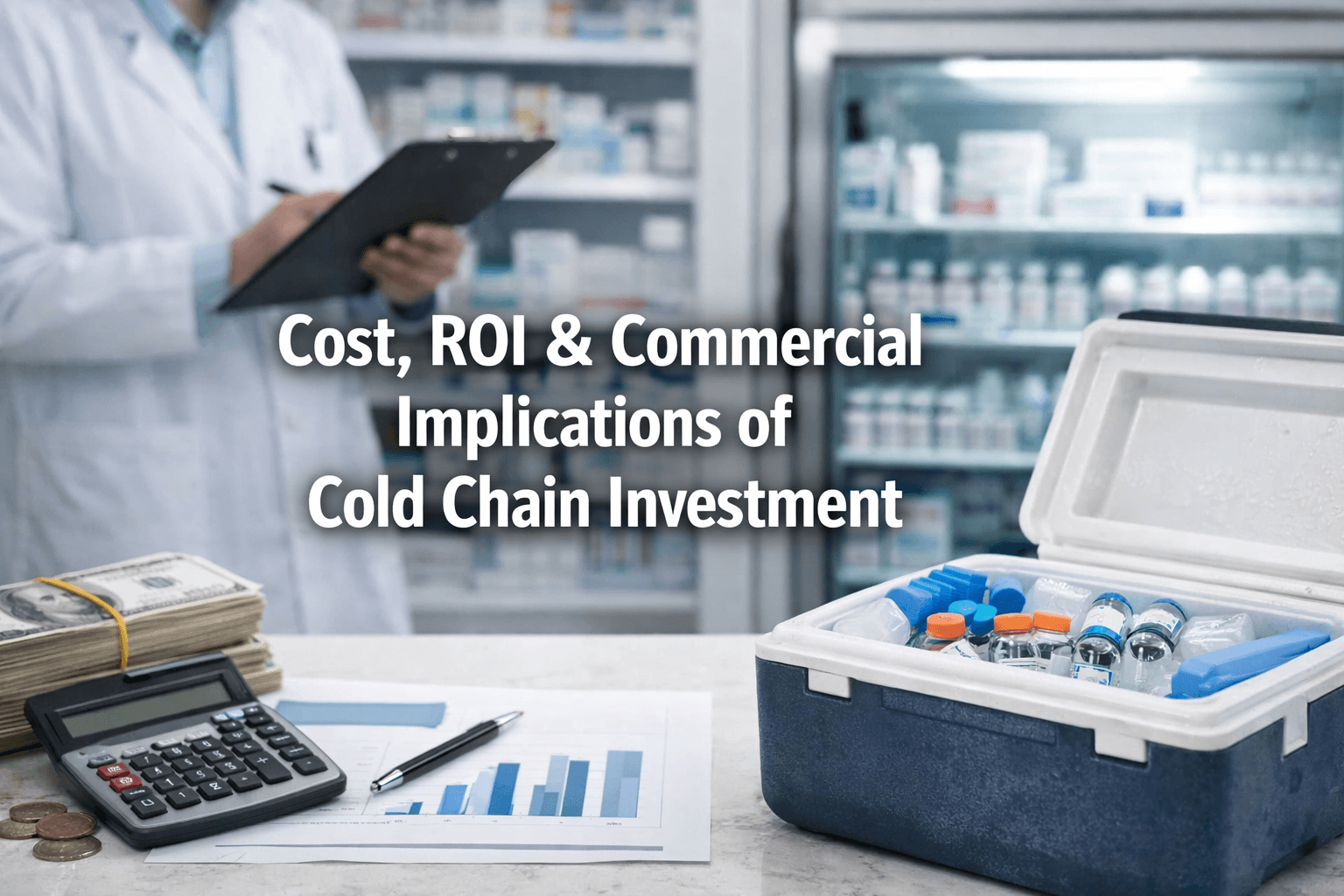
Is cold chain investment financially justified? This is a question every finance director at a pharmacy wholesale distributors asks. The answer becomes clear when you examine the true cost of failure versus the investment in prevention. The initial outlay for validated cold rooms, IoT sensors, and refrigerated fleet can seem substantial, but it pales in comparison to the financial hemorrhage caused by a single major temperature excursion.
The most immediate cost is spoilage. When a shipment of vaccines or biologics is compromised, the product—often worth tens of thousands of ringgit—must be destroyed. This is a direct hit to the bottom line. However, the hidden costs are even more damaging: investigational costs, regulatory fines, potential legal liabilities, and the long-term erosion of client trust. Often, the cost of spoilage in a single year can far exceed the multi-year investment in proven preventive infrastructure and technology.
To illustrate the financial and operational impact of technology choices, consider the difference between traditional and modern monitoring approaches:
Traditional vs Digital Monitoring in Cold Chain
| Criteria | Traditional Monitoring | Digital Real-Time Monitoring |
|---|---|---|
| Data Accuracy | Relies on manual logs, prone to human error and gaps | Automated precision with continuous, time-stamped data |
| Response Time | Delayed; issues often discovered after the fact | Immediate alerts enable proactive intervention during transit |
| Audit Readiness | Moderate; requires manual compilation of paper records | High; generates reliable digital audit trails instantly |
| Long-Term Cost | Recurrent risk of spoilage and inefficiency | Strategic savings through loss prevention and efficiency gains |
Effective systems do more than just prevent loss; they actively reduce insurance exposure. Insurers view robust, digitally monitored cold chains more favorably, potentially leading to lower premiums. Furthermore, they protect revenue streams by ensuring consistent supply. A distributor known for reliable cold chain becomes the preferred partner for brand owners launching new, high-value specialty biologics. This preferential status translates directly into increased market share and higher-margin contracts. The ROI, therefore, is not just in what is saved, but in the premium revenue that is earned. Investing in cold chain is a strategic commercial decision that underpins sustainable growth in the high-stakes world of pharmaceutical distribution.
2027 Outlook: Digital Integration & Strengthening Malaysia’s Pharmaceutical Cold Chain
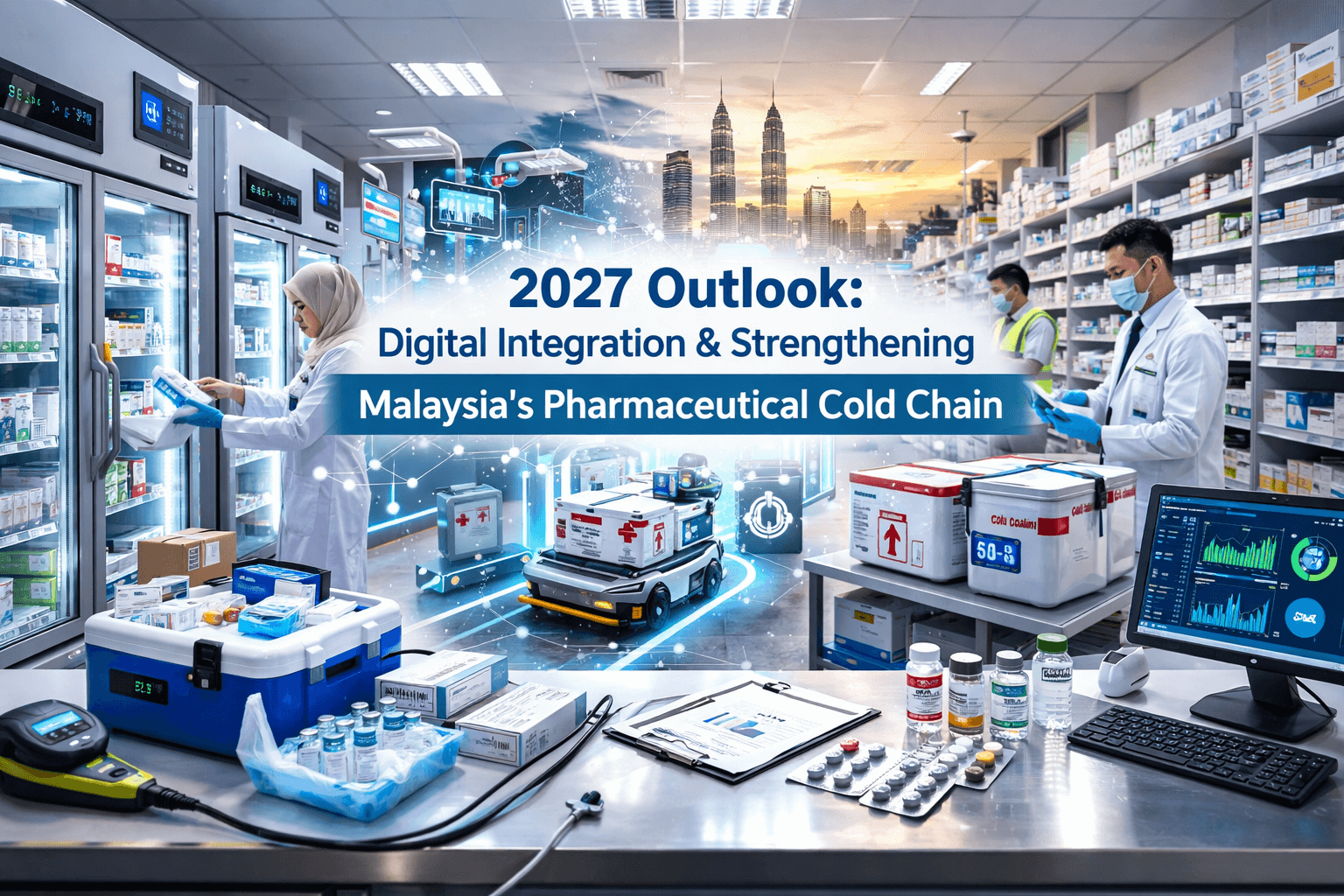
What does the future hold for cold chain in Malaysia? As we look toward 2027 and beyond, the trajectory is clear: the market for biologics and specialty injectables is rising sharply, driven by an aging population and increased healthcare awareness. Simultaneously, the growth of e-commerce pharmacy is introducing new complexities, particularly for last-mile cold delivery Malaysia. Delivering a temperature-sensitive medicine directly to a patient’s home, where storage conditions are unknown, is a challenge the industry is only beginning to grapple with.
To meet these demands, the cold chain is shedding its image as a purely logistical function and embracing its future as a digital ecosystem. We are moving beyond simple temperature logging to AI-driven predictive monitoring. These systems analyze historical data, traffic patterns, and weather forecasts to predict potential risks before they occur. For instance, AI might flag a delivery route that passes through an area prone to afternoon traffic jams during a heatwave, prompting a strategic reroute to ensure the product’s integrity.
Furthermore, integration will be key. The future cold chain will see seamless data sharing between manufacturers, pharmacy warehouse Malaysia operators, distributors, and even final retailers. This end-to-end visibility, often powered by blockchain for immutable record-keeping, will enhance pharmaceutical supply chain integrity to unprecedented levels. It will allow a brand manager in Kuala Lumpur to check the real-time status of a shipment heading to a distributor in Sabah with a few clicks.
Regulatory technology, or RegTech, will also play a larger role. Automated compliance reporting will become standard, making NPRA cold chain compliance less of a manual burden and more of an automated output of daily operations. The companies that thrive will be those that view this digital integration not as a cost, but as a core competitive advantage. Cold chain pharmaceutical Malaysia is rapidly evolving from a series of isolated checkpoints into an integrated, intelligent, and predictive digital ecosystem. It’s a transformation that is both exciting and essential for public health.
Learn more: What Does The Future Of Cold Chain Shipping Look Like?
Fostering Collaboration Across the Supply Chain

If technology is the engine, collaboration is the fuel for a resilient cold chain. The reality is that no single entity—from the manufacturer to the final pharmacist—can guarantee end-to-end integrity alone. It requires a partnership mindset. This means moving beyond transactional relationships to build strategic alliances based on shared goals and mutual accountability.
For brand managers, this collaboration starts with selection. Choosing a distributor is not just about capacity; it’s about finding a partner whose proven systems and culture align with your brand’s quality standards. It involves sharing forecast data to help the distributor plan capacity and conducting joint reviews of performance metrics. For distributors, collaboration means engaging in open dialogue with their retail partners. It means providing training to pharmacy staff on proper cold storage procedures and ensuring they understand the importance of immediate temperature checks upon delivery. This kind of tailored support strengthens the entire network.
Furthermore, collaboration extends to regulatory bodies. A proactive, collaborative relationship with the NPRA—seeking guidance, participating in industry consultations, and viewing audits as opportunities for improvement—positions a distributor as a leader, not a follower. This trusted status is invaluable. Ultimately, a collaborative ecosystem creates a multiplier effect, where the collective capability is far greater than the sum of its parts, ensuring that medicines retain their potency and patients receive the care they deserve.
Frequently Asked Questions (FAQ)
Q1: What is pharmacy and why is it important?
Answer: Pharmacy is the health profession that links the health sciences with the chemical sciences. It is concerned with the discovery, production, disposal, safe and effective use, and control of medicines and drugs. It is important because pharmacists, as experts in medicines, ensure the safe and optimal use of medications to improve patient health outcomes, prevent disease, and provide essential healthcare advice.
Q2: What services does a pharmacy provide?
Answer: Pharmacies provide a wide range of services, including dispensing prescription medications, offering over-the-counter (OTC) products and advice, providing medication management and counseling, administering certain vaccinations, conducting health screenings, and offering pharmacy care services (e.g., managing minor ailments, chronic disease management support).
Q3: What are pharmacy care services?
Answer: Pharmacy care services, often interchangeable with pharmaceutical care or advanced services, are patient-centered and outcomes-oriented practices where pharmacists work to design, implement, and monitor a therapeutic plan that will produce specific patient outcomes. Examples include Medication Therapy Management (MTM), chronic disease state management, immunization services, and support for smoking cessation.
Q4: Why is pharmacy first important?
Answer: “Pharmacy First” is a common term for schemes that allow patients to seek treatment and advice for minor illnesses directly from a community pharmacy, often without needing to see a GP. It is important because it improves patient access to convenient care, utilizes the pharmacist as a highly accessible healthcare professional, and reduces pressure on other NHS or healthcare services like GP surgeries and emergency departments.
Q5: What is the function of the pharmacy services?
Answer: The primary function of pharmacy services is to ensure that patients receive the appropriate medicines in the correct dose, along with the necessary information and support for their safe, effective, and rational use. This includes inventory management, compounding, dispensing, patient education, and collaboration with other healthcare providers.
Q6: What is pharmacy first service?
Answer: The Pharmacy First service (as implemented in the UK, for example) is a scheme that enables pharmacists to provide advice and, when appropriate, treatment (including prescription-only medicines via Patient Group Directions or by prescribing) for a defined set of common minor ailments (e.g., earache, sore throat, uncomplicated UTIs) directly in the pharmacy, expanding the pharmacist’s clinical role.
Q7: What services are offered by retail pharmacy?
Answer: Retail (or community) pharmacies offer services directly to the public, including dispensing prescriptions, selling over-the-counter medicines and health products, providing medication consultation, administering vaccinations (e.g., flu shots), offering health screening (e.g., blood pressure checks), managing minor ailments, and providing advice on healthy living.
Q8: Why is a pharmacy important?
Answer: A pharmacy is important because it serves as the most accessible healthcare point in many communities. It is crucial for safe and accurate medication dispensing, preventing drug interactions, offering essential health advice, providing primary healthcare interventions, and bridging the gap between patients and prescribers, thereby playing a vital role in public health.
Q9: What are the three types of pharmacies?
Answer: The three main types of pharmacy practice are generally categorized as:
- Community (Retail) Pharmacy: Pharmacies that serve the public directly in a community setting.
- Hospital (Institutional) Pharmacy: Pharmacies located within hospitals and healthcare facilities, serving inpatients and medical staff.
- Industrial (Pharmaceutical) Pharmacy: Involving roles in drug research, manufacturing, quality control, marketing, and regulatory affairs within the pharmaceutical industry.
Q10: Why is good pharmacy practice important?
Answer: Good Pharmacy Practice (GPP) is important because it establishes the standards for quality pharmacy services worldwide, ensuring that pharmacists provide care focused on the patient’s well-being and their use of medicines. GPP ensures safe dispensing, accurate information, professional advice, ethical conduct, and the overall goal of maximizing the positive health outcomes of patients.
How can we assist you today? 😊
Just let us know—we’re here to help!