

March 24 , 2026
What truly unfolds when a supplement or cosmetic product skips regulatory clearance and hits pharmacy shelves prematurely? In Malaysia, the consequences extend far beyond mere legal risk—they strike at the very core of public trust and operational viability. For every independent pharmacy distributor, distributor pharmacy, and pharmacy distributor Malaysia stakeholder, securing formal approval from the National Pharmaceutical Regulatory Agency (NPRA) under the Kementerian Kesihatan Malaysia (KKM) is not just a bureaucratic hurdle. It is the strategic backbone of legitimate, sustainable, and trusted market participation. This process forms the bedrock upon which pharmacy wholesale distributors build their reputations, manage inventory risk, and forge lasting partnerships with retailers and consumers alike. Navigating this landscape with precision is, therefore, an essential competency for any serious player in Malaysia’s dynamic healthcare market.
Decoding KKM and NPRA: The Gatekeepers of Market Access
What exactly is KKM, and why does NPRA play such a central, non-negotiable role in your product’s launch trajectory? The Kementerian Kesihatan Malaysia (KKM) is the overarching authority governing all health-related products in the country. Its operational arm for product regulation, the National Pharmaceutical Regulatory Agency (NPRA), is the specific division responsible for the rigorous assessment and oversight of medicines, cosmetics, and health supplements. These bodies maintain a critical, binary distinction that dictates the entire approval pathway. On one hand, you have MAL-registered products, which typically include prescription drugs, over-the-counter (OTC) medicines, traditional medicines, and certain supplements making therapeutic claims. On the other, NOT-notified products primarily apply to cosmetics and non-medicinal personal care items. The entire ecosystem of pharmacy distribution service in Malaysia depends heavily on this proper initial classification. A misstep here—such as incorrectly categorizing a supplement with a strong physiological claim as a simple cosmetic—can lead to application rejection, significant delays, and even regulatory penalties, undermining a distributor’s reliable market entry plans.
From a strategic standpoint, distributor pharmacy networks and brand owners must integrate NPRA timelines and requirements into their core business planning, especially during listing and pharmacy merchandising negotiations. Consider a Malaysian pharmacy distributor aiming to list a new locally-produced vitamin C supplement with an immune-support claim in a major retail chain. The brand manager’s marketing timeline is aggressive, but the regulatory affairs team understands that the therapeutic claim mandates a MAL registration, triggering a 6-9 month process. This discrepancy must be managed strategically to align sales forecasts with regulatory reality. Whether using an in-house team or an outsourced regulatory consultant, the pathway to compliance begins with this clear, unambiguous classification, setting the stage for all subsequent steps.
Learn more: KKM Approved Product Number: Apa Itu ‘MAL’ dan ‘NOT’? | NPRA Malaysia – Official Regulatory Authority
Navigating the KKM Approval Workflow: A Step-by-Step Guide
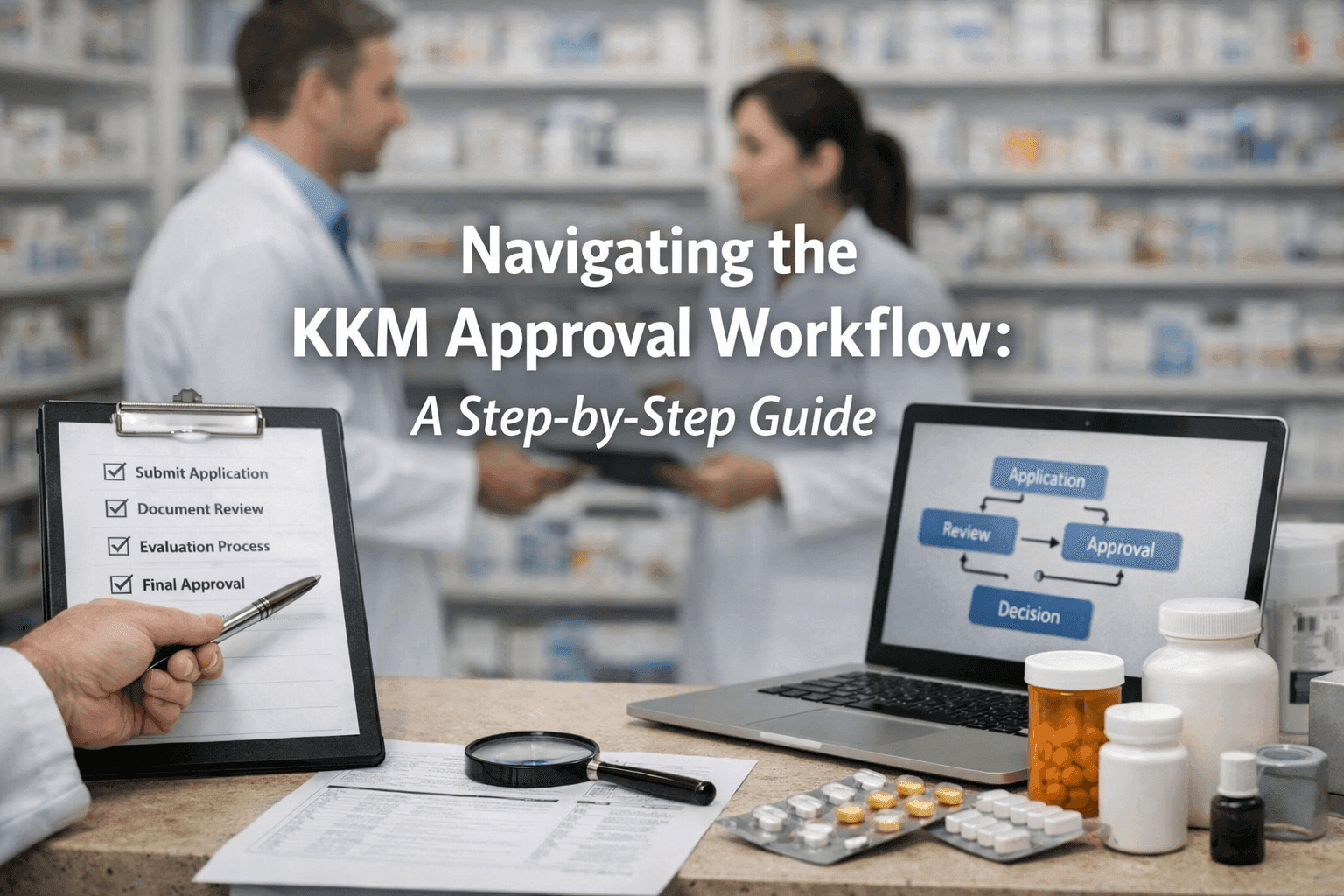
How do organizations systematically move from a product concept to full regulatory compliance? The KKM approval process is a structured, multi-stage journey that demands meticulous attention to detail. The first and most critical step is Product Classification. Here, the applicant must definitively determine if the product falls under mandatory registration (MAL) or notification (NOT). Utilizing the NPRA’s official product classification flowchart is essential to navigate this often-complex decision, which hinges on factors like ingredient composition, intended use, and marketing claims. Following a correct classification, the next phase is e-Submission via the QUEST System. This digital portal, NPRA’s primary submission platform, requires account creation and the upload of a comprehensive dossier. Required documents typically include complete formulations, detailed packaging mock-ups, and proposed labeling—all of which must adhere to specific NPRA guidelines.
For products requiring MAL registration, the process intensifies with Laboratory Testing and GMP Certification. This stage is non-negotiable for proving safety, quality, and efficacy. Registered products must undergo product testing at NPRA-recognized labs, while the manufacturing site itself is scrutinized. For imported products, this may involve verifying foreign Good Manufacturing Practice (GMP) certifications or even triggering a local GMP audit. Common bottlenecks that cause significant delays here include incomplete dossiers, vague or inconsistent ingredient lists, and marketing claims that are misaligned with the product’s classified category. This is where tailored dossier preparation and the involvement of experienced regulatory consultants prove their value, as they understand the nuances that can smooth the evaluation process. The final stage is Final Evaluation and Certificate Issuance. Upon successful review, the product is granted a unique MAL Number (an 8-digit code) or a NOT Number for cosmetics, and is listed on the official NPRA product portal, finally enabling legal sale.
Checklist for a Smooth KKM Application:
Conducted final verification of product classification (MAL vs. NOT).
Compiled complete dossier with translated (if required) and notarized documents.
Ensured all product claims are substantiated and align with classification.
Confirmed GMP status of manufacturing facility is documented and valid.
Allotted budget and timeline contingencies for potential queries from NPRA.
Learn more: How to get KKM approval for a product | NPRA Product Search Tool (QUEST 3+)
Realistic Timelines for KKM Approval: Planning for 2026 Market Entry
For pharmacy wholesale distributors managing extensive catalogs, understanding the timeline for KKM approval is as crucial as understanding the cost. These timeframes directly impact inventory planning, cash flow, and the ability to meet retailer launch windows. Based on current NPRA processing trends and capacity, a realistic forecast for 2026 approvals remains consistent with recent years, though subject to administrative fluctuations. Supplements (MAL) typically require 6 to 9 months from submission to approval, depending heavily on the completeness and complexity of the dossier. OTC Medicines face a longer pathway, generally taking 9 to 12 months, as their review involves a more stringent assessment of safety and therapeutic evidence. In contrast, Cosmetics (NOT) benefit from a notification system, with approvals often secured within 1 to 2 weeks, provided all documentation is in order. Traditional Medicines can vary widely, ranging from 6 to 12 months, as they may require additional scrutiny of traditional use claims and composition.
The operational implication for a distributor with a high SKU count is profound. Delays in MAL registration can derail coordinated planogram rollouts and disrupt distribution timing, leading to missed sales opportunities and strained retailer relationships. For instance, a distributor pharmacy in Kuala Lumpur planning a nationwide launch of a new supplement line with a key retailer like Watsons must backward-plan from the retailer’s listing date, incorporating the full 9-month MAL registration window into their project timeline. Some distributors explore a strategic approach of initially listing only NOT-notified cosmetic variants of a product line to fast-track retail shelf presence. However, this is only a viable tactic for products with strictly non-therapeutic claims; it cannot be used as a shortcut for items that legally require registration. While NPRA does offer fast-track review options, these are typically reserved for essential medicines or products with significant public health benefit, and are seldom accessible for commercial supplements or cosmetics, making standard timeline planning an essential discipline.
Comparative Table: KKM Approval Timelines & Impact for Distributors (2026 Forecast)
| Product Type | KKM Pathway | Estimated Timeline | Key Impact on Pharmacy Distributor Operations |
|---|---|---|---|
| Health Supplements (with claims) | MAL Registration | 6 – 9 months | Major factor in annual inventory & marketing planning; requires early engagement with brand owners. |
| OTC Medicines | MAL Registration | 9 – 12 months | Influences portfolio strategy; long lead times necessitate reliable forecasting and capital allocation. |
| Cosmetics & Personal Care | NOT Notification | 1 – 2 weeks | Enables agile response to market trends; easier for merchandisers to slot into rapid-turnaround promotions. |
| Traditional Medicines | MAL Registration | 6 – 12 months | Requires deep regulatory expertise; timeline volatility can affect supply chain agreements with manufacturers. |
Learn more: Healthcare Supply Chain Management: Trends and Opportunities
A Transparent Cost Breakdown for KKM Compliance
What are the full financial implications of KKM compliance for brand owners and their pharmacy distribution partners? A transparent understanding of both official and hidden costs is critical for accurate budgeting and strategic partnership agreements. The standard, out-of-pocket fees payable to NPRA form the baseline. The Registration Fee (MAL) typically ranges from RM1,000 to RM2,000 per product variant. The Notification Fee (NOT) is significantly lower, at about RM50 to RM100 per SKU. However, the substantial costs often lie in the prerequisite steps. Laboratory Testing for safety and quality for registered products can range from RM2,000 to RM5,000, varying with the complexity and number of analyses required. If an overseas manufacturing site requires verification, GMP Audit Fees facilitated by NPRA can add another RM3,000 to RM8,000 to the budget.
Beyond these direct fees, hidden and operational costs frequently catch businesses unprepared. These include professional document translation services (RM300–RM500), courier fees for sending physical samples to labs and authorities, and potentially the largest variable: regulatory consultancy fees if the process is outsourced. Furthermore, a often-overlooked cost is the capital tied up in holding inventory during the review period. For a distributor pharmacy chain like those supplying to Caring or AEON Wellness, budgeting for these costs upfront is essential for calculating true product cost and determining viable profit margins. It allows for smoother financial onboarding with key retailers and prevents mid-process budgetary shortfalls that can jeopardize an entire product launch. A proven and efficient approach is to build a comprehensive cost model during initial product evaluation, ensuring all stakeholders—from the brand manager in Penang to the merchandiser in Johor Bahru—are aligned on the financial commitment required for compliant market entry. This financial diligence is what separates reliable, long-term supply chain partners from those who face unpredictable setbacks and strained relationships with both regulators and retail networks.
The Multifaceted Impact of KKM Approvals on Pharmacy Distribution Roles
The journey of a healthcare product to a Malaysian pharmacy shelf is a symphony of coordinated efforts, and the KKM approval serves as the essential conductor. Its impact resonates differently across each stakeholder, shaping workflows, timelines, and ultimately, commercial success. For the pharmacist, this approval isn’t merely paperwork; it’s the bedrock of professional credibility and public safety. When a customer seeks advice, the pharmacist’s recommendation carries immense weight. They need absolute confidence that a product is backed by a verified MAL or NOT number, ensuring it has been assessed for safety, quality, and efficacy. This trust is paramount. Beyond recommendation, this registration is critical for complaint tracing and pharmacovigilance. Should an adverse reaction occur, the KKM registration provides a clear trail back to the manufacturer and batch, enabling swift action to protect public health. In essence, the pharmacist relies on this compliance as a non-negotiable prerequisite for any product they stock and endorse.
From the brand manager’s perspective, the KKM approval timeline is the unmovable pivot around which entire launch calendars revolve. A meticulously planned campaign—complete with media buys, influencer partnerships, and seasonal promotions—can collapse if regulatory clearance is delayed. Imagine orchestrating a major push for a new immune support supplement slated for the monsoon season, only to have inventory stranded in a distributor’s warehouse awaiting that crucial MAL number. The opportunity cost is staggering, leading to wasted marketing spend and lost market share. Therefore, a strategic brand manager doesn’t view regulatory affairs as a separate backend function but integrates its milestones directly into the core commercial timeline. This alignment is what separates a smooth, efficient market entry from a costly, embarrassing false start.
For the distributor, the implications are intensely operational and financial. Warehouse space is a valuable asset, and SKUs pending KKM approval represent dead inventory—goods that cannot be sold yet incur holding costs. This ties up capital and disrupts inventory health metrics, such as turnover ratios. A distributor managing hundreds of SKUs from various brands must have impeccable visibility into approval statuses to optimize warehouse planning and cash flow. This is why a trusted pharmacy distributor Malaysia partner embeds regulatory checkpoints directly into their SKU lifecycle management. They proactively track submissions, anticipate delays, and communicate transparently with brand owners to prevent logistical gridlock. Their role transforms from passive warehousing to active supply chain coordination, where regulatory intelligence directly informs inventory strategy.
The regulatory affairs professional operates at the epicenter of this process, bearing the responsibility for compiling, submitting, and shepherding the dossier through the NPRA. Their work is detail-oriented and high-stakes, involving the meticulous assembly of stability data, clinical evidence, and manufacturing documentation. A single oversight can trigger queries that set the timeline back by months. They are the guardians of brand compliance, constantly updating strategies in response to evolving regulatory guidelines. Their expert navigation of the NPRA’s requirements is the first and most critical link in the entire distribution chain. When all these viewpoints align—pharmacist trust, brand strategy, distributor logistics, and regulatory expertise—the ecosystem functions seamlessly, ensuring safe, compliant products reach consumers without disruption.
Learn more : Top Pharmacy Distributors in Malaysia: A 2025 Market Analysis | Substandard and Falsified Medical Products – WHO Fact Sheet
Synchronizing Merchandising Plans with Regulatory Milestones: A Strategic Imperative
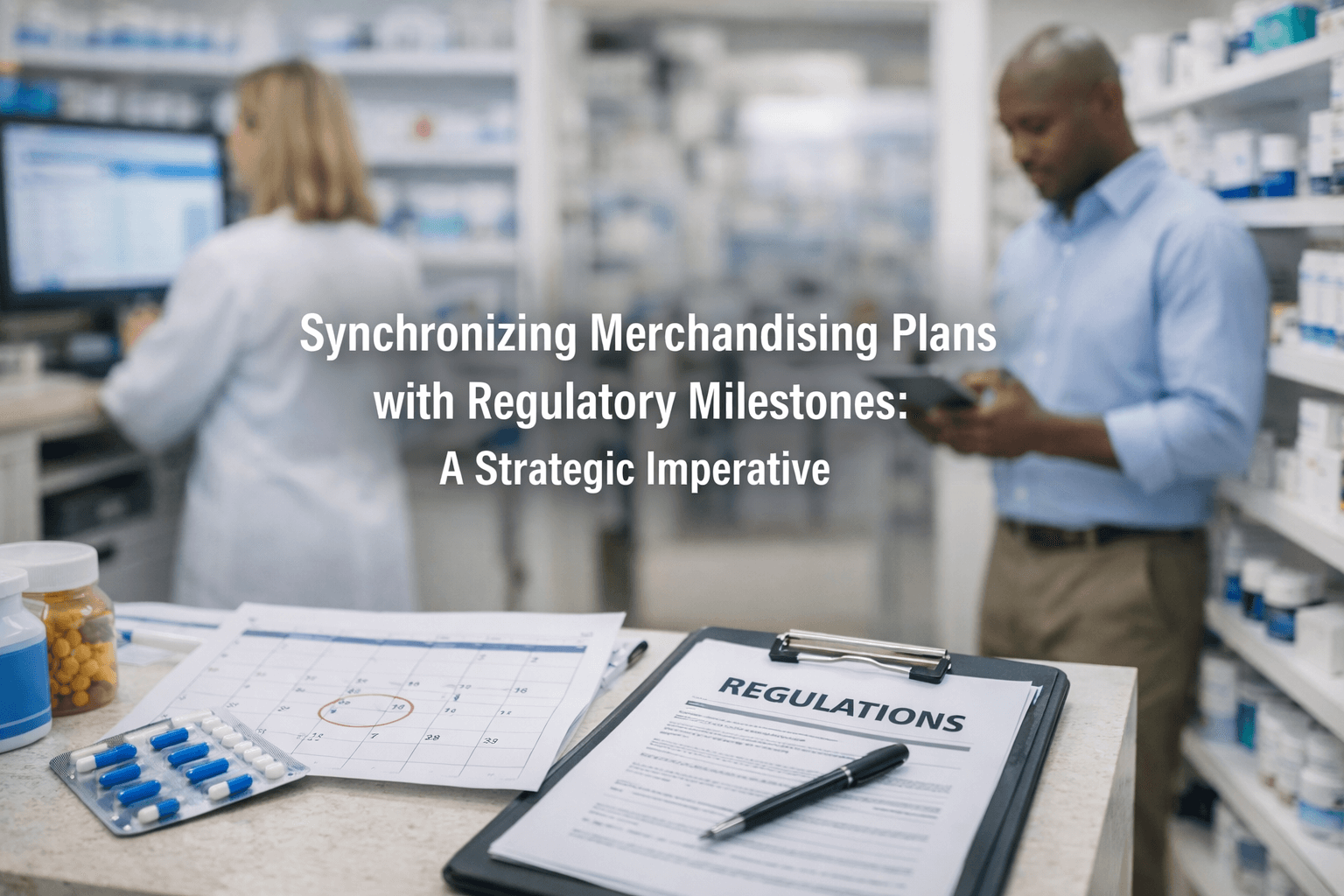
A common and costly pitfall in product launches is the disconnection between commercial ambition and regulatory reality. Teams can have flawless merchandising plans—complete with planogram designs, shelf strips, and promotional gondola endcaps booked with major retailers—only to find the stock itself cannot legally be sold. This misalignment between compliance approvals and go-to-market activities creates operational chaos and erodes brand credibility. The result is not just a delay, but a cascade of wasted resources: marketing materials become obsolete, pre-negotiated retail space is lost to competitors, and sales teams are left without product to sell. In Malaysia’s competitive pharmacy landscape, where shelf space in chains like Guardian, Watsons, and Caring is fiercely contested, such delays can relegate a product to a perpetual state of catch-up.
The key pain points are painfully clear. Merchandisers are ready with POSM (Point-of-Sale Materials), but the SKUs languish without a KKM number. Pharmacy chain procurement teams have strict vendor compliance protocols that mandate a valid registration number before any item can be entered into their system. A planogram, which is a strategic blueprint for shelf layout and product placement, is rendered useless if a key product is missing. This disruption forces last-minute, suboptimal substitutions that dilute brand impact. From the distributor’s view, they receive conflicting signals: the brand team is pushing for launch readiness, while the regulatory status dashboard shows a pending submission. This friction is why regulatory alignment is not an administrative task, but a core commercial competency.
To bridge this gap, brands must adopt integrated launch planning. This involves building regulatory milestones directly into the master merchandising and marketing calendar. Consider this practical framework for alignment:
Pre-Submission Phase (Months 12-9 before Launch): Finalize product formulation and packaging. Initiate dossier preparation. Concurrently, begin high-level discussions with pharmacy distributor Malaysia partners on potential timelines.
Submission & Review Phase (Months 9-3): Submit dossier to NPRA. Use this period for non-product-specific brand building and finalize merchandising contracts with retailers, with clear clauses contingent on regulatory approval.
Pre-Launch Phase (Months 3-1): Upon receiving KKM number, trigger mass production, POSM printing, and distributor stock orders. Conduct sales team training.
Launch & Post-Launch: Product hits shelves simultaneously with marketing activation. Regulatory team begins monitoring for renewal timelines.
A proven tactic is to institute quarterly alignment meetings that include the brand manager, regulatory affairs lead, and the commercial team from the pharmacy distribution partner. These sessions review the status of all pending submissions against the commercial calendar. Furthermore, leveraging digital tracking tools that provide a dashboard view of NPRA submission status alongside inventory and POSM readiness creates a single source of truth. This strategic synchronization turns compliance from a bottleneck into a competitive advantage, ensuring that when the marketing campaign goes live, the product is physically present and legally compliant on the shelf.
Comparative Table: The Tangible Impact of KKM Alignment on Launch Success
| Key Performance Indicator | KKM-Aligned, Compliant Launch | Launch with Regulatory Delays |
|---|---|---|
| Time-to-Shelf | 100% on planned launch date | Delayed by 2–6 months, missing seasonal windows |
| Pharmacy Chain Listing Acceptance Rate | 90–100% (smooth onboarding) | 50–70% (rejection risk; requires re-submission) |
| Planogram Compliance & Visibility | High; strategic placement secured | Patchy; often relegated to lower-visibility shelves |
| Distributor & Supply Chain Efficiency | Reliable inventory turnover, optimal cash flow | High holding costs, warehousing waste, rework of logistics |
| Brand & Consumer Trust | Strong, seamless first impression | Eroded by false starts and availability issues |
The Severe Consequences of Bypassing KKM Compliance
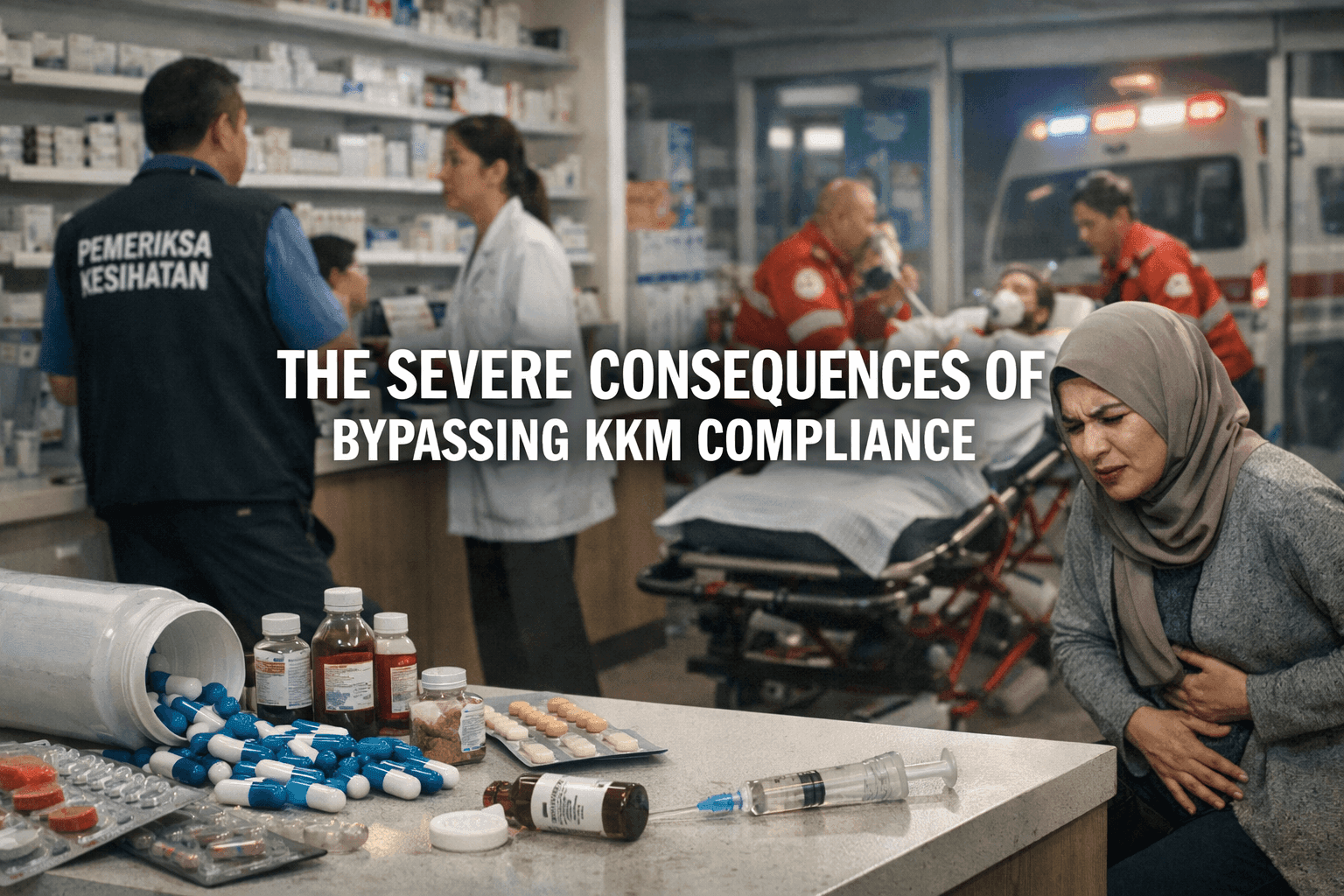
The temptation to accelerate time-to-market by launching a product before securing full KKM clearance is a high-risk gamble with potentially catastrophic consequences. The risks extend far beyond a simple fine; they threaten the very viability of the product and can inflict long-term damage on the brand’s reputation. Non-compliance is not a shortcut—it’s a direct path to operational, legal, and commercial failure. Understanding these repercussions is essential for any brand owner or distributor operating in Malaysia’s strictly regulated healthcare market.
The most immediate risk is facing NPRA enforcement actions. The authority possesses the power to impose substantial fines, often ranging from RM25,000 to RM50,000 per infringement, and can order the immediate confiscation and destruction of non-compliant stock. This represents a total loss of product investment. Beyond the financial penalty, the brand is listed in NPRA’s public alerts, creating a permanent digital record of non-compliance that can hinder future applications. For example, a 2024 enforcement sweep identified over 50 cosmetic and skincare products making unauthorized therapeutic claims or lacking proper NOT registration. The NPRA’s public announcement triggered a domino effect: within 48 hours, major national pharmacy chains initiated emergency delisting procedures, removing the products from both physical shelves and online platforms. The reputational blow was severe and public.
From a retail partnership perspective, the damage is equally profound. Pharmacy chains like Caring Pharmacy or Aeon Wellness have rigorous quality assurance and compliance protocols to protect their own brand equity and customer trust. Being found stocking unapproved products exposes them to legal liability and consumer backlash. Consequently, a single compliance breach can lead to the termination of supply agreements with the distributor or brand. This loss of reliable retail channels is often more devastating than any one-off fine, as rebuilding that trust and regaining listing status can take years. Furthermore, consumer distrust in the digital age is instantaneous and far-reaching. News of a product being “raided” or “banned” spreads rapidly on social media, leading to online backlash, demands for refunds, and permanent damage to brand perception. The market’s memory for such scandals is long, making a comeback exceptionally difficult.
For a distributor, associating with a non-compliant brand carries immense risk. Their business is built on being a trusted link in the supply chain. If they are found to be warehousing or distributing unregistered goods, they face not only NPRA action but also the termination of contracts with their pharmacy clients. Their reputation for reliable compliance is their most valuable asset; once compromised, it can lead to a cascading loss of business from other brand partners who cannot afford regulatory risk. The operational disruption—dealing with product recalls, reverse logistics, and angry retail clients—is a significant drain on resources. In one operational scenario, a Malaysian distributor faced a severe cash flow crisis when a key brand’s shipment was held at port by the Ministry of Health, revealing attempted importation without the final KKM letter. The resulting holding fees and lost sales opportunities underscored that compliance is the very foundation of effective distribution.
Proactive Strategies to Accelerate KKM Approval Timelines
Navigating the KKM approval process need not be a passive waiting game. By adopting a proactive and strategic approach, brand owners and their distribution partners can significantly streamline the journey, reducing delays while maintaining the highest standards of compliance. The goal is to build efficiency into the preparation and submission process, transforming it from a black box into a managed, predictable workflow. This requires a blend of internal diligence, expert partnership, and technological support.
The foundation of a smooth submission is accuracy. A common source of delay is incorrect product classification—submitting a product that should be a registered cosmetic (NOT) as a cosmetic, or vice-versa. Conducting pre-submission classification checks, potentially with a third-party regulatory consultant, can prevent months of back-and-forth with the NPRA. Concurrently, maintaining an impeccable dossier audit trail is non-negotiable. This means implementing strict version control for all documents—from manufacturing protocols to stability studies—and maintaining timestamped logs of every change. When the NPRA raises a query, the ability to instantly reference and provide the correct document version accelerates the response time dramatically.
The decision between managing submissions in-house versus outsourcing is pivotal. An in-house regulatory team offers greater direct control and deep brand knowledge, which is invaluable. However, this is only effective if the team is deeply experienced with the nuances of NPRA processes and has the bandwidth to manage the workload. For many companies, especially SMEs or international brands new to the Malaysian market, partnering with external regulatory consultants or a pharmacy distributor Malaysia firm with an in-house regulatory arm is a more efficient path. These expert partners bring proven templates, established communication channels with authorities, and up-to-date knowledge of evolving regulations. They can often anticipate potential issues and navigate the process more swiftly. The key is to conduct thorough due diligence to select a partner whose expertise is tailored to your product category, be it pharmaceuticals, health supplements, or cosmetics.
Integrating digital tracking tools is a game-changer for modern compliance management. Instead of relying on sporadic email updates, brands and distributors can use platforms that provide real-time dashboards on submission status, query logs, and estimated approval dates. When this dashboard is integrated with inventory and supply chain management systems, it allows for predictive logistics planning. For instance, a distributor can see that a product’s MAL approval is projected for Week 40 and can tentatively schedule warehouse receiving and delivery routes to pharmacies for Week 41, ensuring a near-instantaneous transition from approval to shelf. This level of synchronization exemplifies a strategic, modern approach to healthcare logistics. Brands that leverage these combined strategies—accurate preparation, expert partnerships, and digital transparency—consistently achieve faster, more predictable market access, turning regulatory compliance into a tangible competitive edge.
Forging a Resilient KKM Compliance Framework for the Future
As the Malaysian healthcare and wellness market continues to grow in both sophistication and regulatory scrutiny, the need for a robust, forward-thinking compliance framework has never been greater. This framework transcends mere adherence to rules; it represents a strategic infrastructure that connects regulatory intelligence with every facet of commercial operation—from R&D and branding to logistics and retail merchandising. For brand managers envisioning the next big launch, or for distributor pharmacy networks managing complex SKU portfolios, this integrated view of compliance is not an optional overhead. It is an essential component of sustainable business growth and market resilience.
Building this framework requires a shift in perspective. It means viewing the KKM product approval process not as a final gate before launch, but as a central timeline that influences initial product development choices. It involves fostering a culture of compliance where the regulatory affairs team has a seat at the strategic planning table. For distributors, it means investing in systems and partner relationships that provide early visibility into the compliance status of the brands they carry. This proactive alignment mitigates the risk of inventory deadlock and protects the distributor’s role as a reliable and trusted channel partner. The operational clarity and control gained from such a framework directly translate into commercial agility and reduced risk.
The landscape of 2026 and beyond will likely see continued evolution in NPRA guidelines, especially for digital health products, novel supplements, and personalized wellness items. A resilient framework is adaptable. It incorporates mechanisms for continuous regulatory monitoring, ongoing team training, and flexible partnership models. Whether you are a local SME launching a heritage-inspired health supplement or an international OTC brand entering Malaysia, your success will hinge on navigating this complexity with precision and foresight. The brands that thrive will be those that master the integration of science, regulation, and commerce into a seamless whole.
Frequently Asked Questions (FAQ)
Q1: How to check if a product is KKM approved?
Answer: Check the product’s registration via official Malaysian platforms. Medicines and supplements must have a valid MAL number registered with NPRA, while cosmetics require a NOT notification number. You can verify both through NPRA’s public search tools.
Q2: How do I verify a product’s KKM status?
Answer: Look for the MAL (medicines/supplements) or NOT (cosmetics) number on the label, then confirm the details (product name, holder, status) using NPRA’s online databases.
Q3: How to check if the supplement is original?
Answer: Confirm the MAL number with NPRA, ensure label details match the database exactly, check batch/expiry consistency, and buy only from licensed pharmacies or authorized sellers.
Q4: How to identify medicines that are registered with MOH?
Answer: Registered medicines will display a MAL number and can be verified through NPRA’s medicine registration search, which is overseen by the Ministry of Health (MOH).
Q5: How do I spot a fake KKM label?
Answer: Be cautious of missing/incorrect MAL or NOT numbers, mismatched product names, spelling errors, exaggerated claims, or labels that don’t match NPRA records.
Q6: How do I know if a supplement is FDA-approved?
Answer: FDA approval applies to the United States. In Malaysia, supplements must be registered with NPRA (KKM). An “FDA-approved” claim alone does not indicate Malaysian regulatory approval.
Q7: How to check if a product is original or not?
Answer: Verify NPRA registration, inspect packaging quality, confirm batch/expiry details, scan any official QR/Meditag codes, and purchase from licensed outlets.
Q8: What products need a KKM check?
Answer: Medicines, supplements, cosmetics, and certain health products sold in Malaysia require NPRA verification—either MAL registration or NOT notification, depending on the category.
Q9: Is KKM approval required for all products?
Answer: Not all products. KKM/NPRA approval is required for regulated health products (medicines, supplements, cosmetics). General consumer goods follow other regulatory bodies.
Q10: How to check product details?
Answer: Use NPRA’s search tools to review the registered product name, active ingredients, registration holder, approval status, and validity dates.
Navigating the intricacies of KKM compliance while managing efficient market entry requires a partner with both regulatory depth and operational excellence. If you are planning to launch or expand your OTC, cosmetic, or health supplement brand in Malaysia, a conversation with our team can provide clarity. We offer integrated pharmacy distribution solutions designed to align your regulatory strategy with seamless supply chain execution and retail partnerships. For a discussion on how we can support your brand’s journey to the Malaysian shelf, please reach out.
How can we assist you today? 😊
Just let us know—we’re here to help!