
Top 10 Medicine Distributors in Malaysia for Pharmacies and Clinics (2027 Edition)

What keeps a pharmacy shelf consistently stocked, compliant, and profitable in today’s fiercely competitive environment? It is a question that keeps pharmacy owners and brand managers awake at night. The answer, more often than not, lies in the strength of their supply chain.
Malaysia’s healthcare ecosystem has undergone a remarkable transformation over the past decade. From the rapid expansion of private clinics in suburban Selangor to the growth of multi-branch pharmacy chains across the Klang Valley and into East Malaysia, the landscape is more complex than ever. Consequently, the demand for a trusted, reliable, and efficient Pharmacy distribution service in Malaysia has never been more critical. Retail pharmacies in 2027 are no longer simple dispensaries; they operate as hybrid healthcare retail hubs. They are expertly balancing a diverse inventory of over-the-counter (OTC) products, prescription medicines, supplements, and increasingly, sophisticated skincare portfolios. Similarly, private clinics expect timely and accurate deliveries, especially for fast-moving generics and temperature-sensitive injectables that are vital for patient care.
Behind the scenes of every well-stocked shelf lies a structured distributor pharmacy network responsible for sourcing NPRA registered products, ensuring cold chain integrity, and maintaining rigorous GDP-compliant documentation. Without this robust distribution infrastructure, even the most innovative pharmaceutical brands fail to reach the right shelves at the right time, impacting patient health and business revenue. In this 2027 edition ranking, we evaluate the top medicine distributors Malaysia relies on—specifically those focused on pharmacies and clinics. Beyond simply listing names, we examine compliance strength, logistics coverage, operational capabilities, and retail support structures. This guide is designed for pharmaceutical companies, brand managers, merchandisers, and pharmacy owners who need clarity—not marketing claims—when choosing a distribution partner. Our goal is strictly practical: to help you assess reliability, regulatory alignment, and long-term strategic fit in a fiercely competitive pharmacy supply chain Malaysia landscape.
Overview of Malaysia’s Pharmacy Distribution Ecosystem
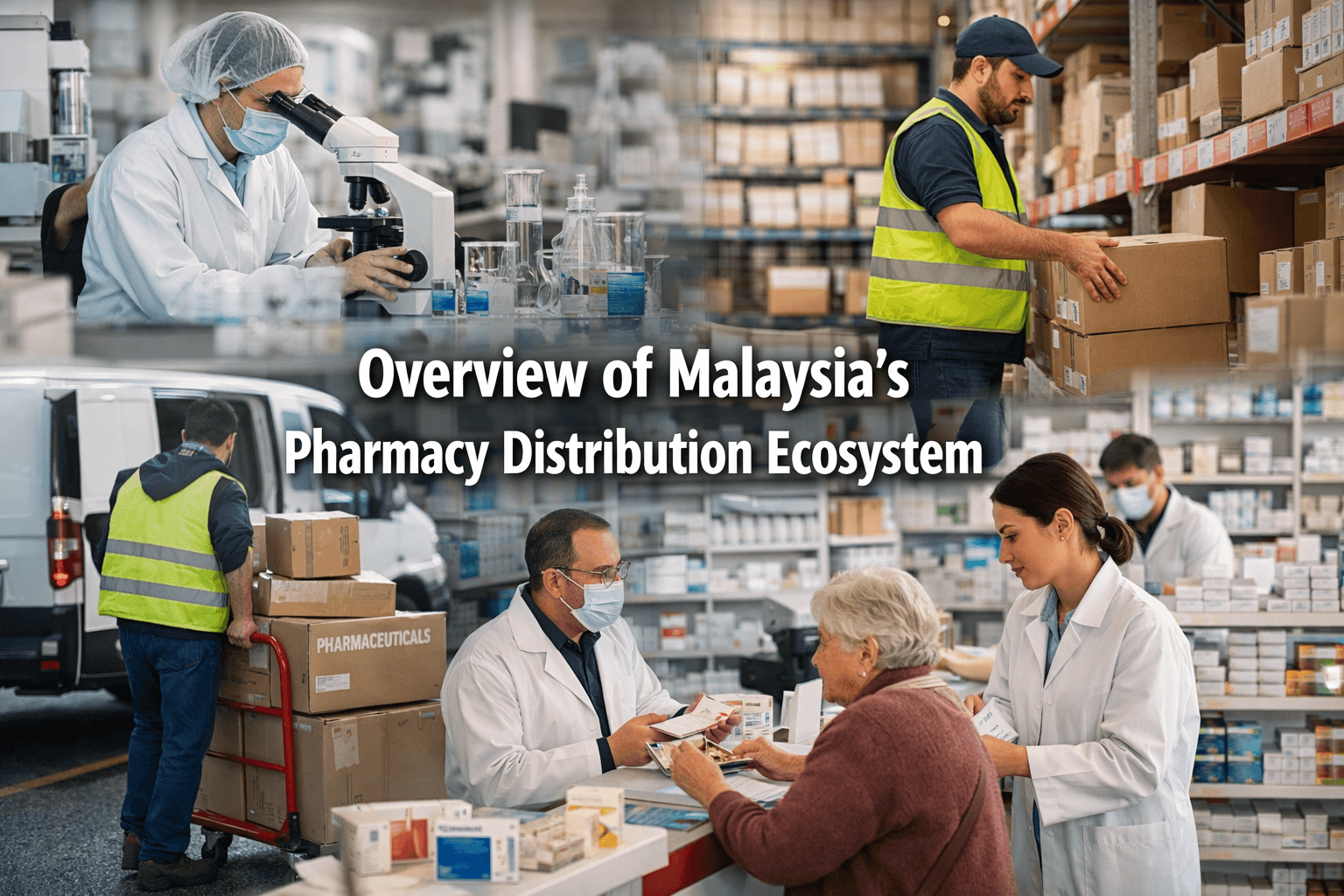
How does medicine actually move from a manufacturer’s production line to the pharmacy counter in Malaysia? It is a journey that involves far more than just transportation. The pharmacy supply chain Malaysia operates through a structured yet multi-layered model. Manufacturers either import or produce medicines locally, then typically appoint a licensed distributor pharmacy network that manages all downstream activities, including GDP-compliant warehousing, meticulous documentation, and last-mile delivery.
The core layers of this ecosystem are:
Manufacturer / Importer: The source of the pharmaceutical products.
Licensed Distributor (GDP compliant): The critical intermediary ensuring product integrity.
Pharmacy / Clinic: The point of care and final sale to the patient.
End Patient: The ultimate consumer.
Unlike hospital procurement systems, which often rely on tender-based, centralized models, retail pharmacy distribution requires frequent replenishment cycles and flexible ordering quantities to match variable consumer demand. A clinic in Penang will have different needs compared to a large pharmacy chain in Johor Bahru.
Learn more: How Malaysia’s Pharmacy Distribution Network Supports Healthcare Growth
Independent Pharmacy Distributor vs Wholesale Models: A Tale of Two Approaches
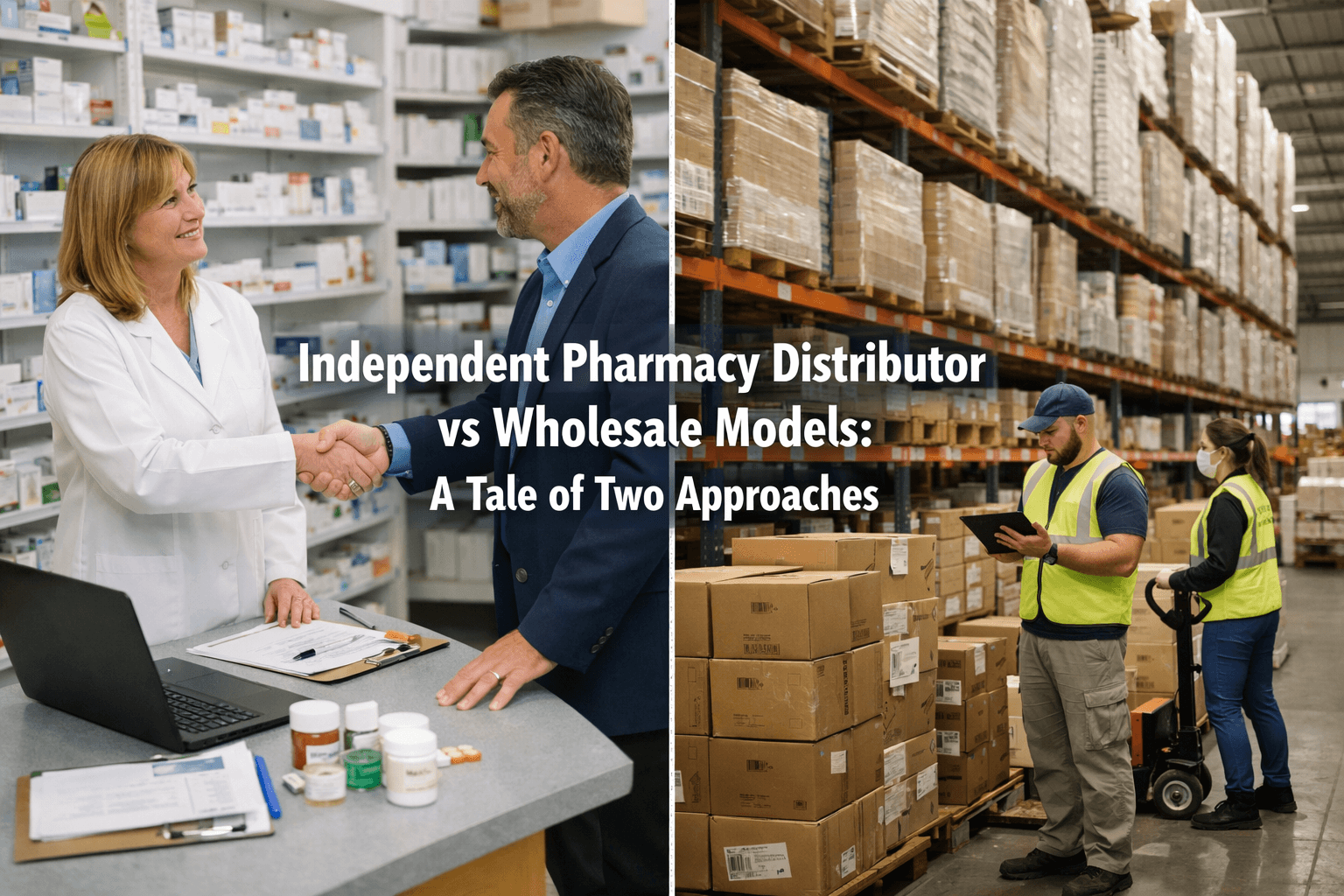
The market comprises two primary models. An independent pharmacy distributor company typically focuses on building deep relationships within specific regions. They offer:
Targeted regional coverage with a personal touch.
Close pharmacist relationships that foster trust and tailored service.
Flexible order quantities that are ideal for smaller, community-based outlets.
In contrast, large pharmacy wholesale distributors leverage economies of scale to offer a different set of advantages:
True nationwide distribution reach, including remote areas.
Structured digital portals for seamless ordering.
Advanced warehouse automation that drives efficiency and accuracy.
Both models serve distinct and vital segments. A community pharmacy in a smaller town in Kedah may value the flexibility and personal relationship with an independent distributor far more than advanced system integration. For a fast-growing chain, the opposite is often true.
The Watchful Eye: Regulatory Oversight
All players operate under the watchful eye of NPRA and must adhere to strict GDP guidelines. These aren’t mere suggestions; they are mandatory requirements that shape every aspect of operations. Every healthcare logistics provider Malaysia must maintain documented proof of:
Temperature mapping for warehouses and vehicles.
Standard Operating Procedure (SOP) documentation for all processes.
Clear recall protocols in case of product defects.
Strict security measures for controlled drugs.
This is not optional—it is the bedrock of patient safety. Therefore, compliance and nationwide logistics capability remain the most essential and strategic factors for pharmacies when evaluating potential partners.
Ranking Methodology: How the Top 10 Medicine Distributors Were Evaluated
What makes one distributor demonstrably stronger than another in a highly regulated healthcare environment? We believe that marketing materials are not enough. Our evaluation framework was built around measurable, proven, and expert-driven criteria that directly address the real-world challenges faced by Malaysian pharmacies and clinics. We didn’t just look at who has the biggest trucks; we looked at who runs the most effective and compliant operation.
1. Regulatory Compliance & Adherence to GDP Standards
This is the non-negotiable foundation. We assessed:
Valid and up-to-date GDP certification for all relevant facilities.
Full alignment with NPRA requirements for product handling.
Transparency in audit history and a proven commitment to continuous improvement.
2. Nationwide Coverage & Cold Chain Capability
A distributor’s network is its nervous system. We evaluated:
The extent and density of distribution reach in both Peninsular & East Malaysia.
The robustness of their cold chain logistics Malaysia infrastructure, including refrigerated vehicles and validated storage.
Availability of backup power systems at warehouses to protect temperature-sensitive goods.
3. Service Reliability & Fulfilment Accuracy
Operational excellence is measured in execution. We scrutinized:
Consistency of delivery lead times—is a promise a promise?
Order accuracy rate—are they delivering the right products, every time?
Out-of-stock frequency—how well do they prevent shelf gaps for their clients?
4. Support for Pharmacies and Clinics
Value-added services are a key differentiator. We looked for:
Flexible credit facilities to help pharmacies manage cash flow.
Dedicated account management for problem-solving and relationship building.
Merchandising coordination to ensure products are optimally displayed at the retail level.
5. Digital Systems and Integration
In 2027, technology is a core competency. We considered:
The ability to integrate with a pharmacy inventory management system .
The sophistication of e-ordering platforms for clients.
Provision of real-time stock visibility to aid in demand planning.
These transparent metrics ensure the ranking reflects genuine operational capabilities and real-world pharmacy challenges—not unsubstantiated assumptions.
Learn more: Guideline on Good Distribution Practices (GDP) for Pharmaceutical Products
The Top 10 Medicine Distributors in Malaysia (2027 Edition)
Based on the methodology above, here is the structured ranking of the top medicine distributors Malaysia pharmacies and clinics can rely on for proven performance. This list represents the leading players who are shaping the nation’s healthcare logistics landscape.
1. DKSH Malaysia
Strengths: Unparalleled nationwide coverage, a very strong GDP compliance framework, and advanced cold chain systems.
Best Suited For: Large chain pharmacies and multinational brands seeking a one-stop, reliable logistics partner.
2. Zuellig Pharma Malaysia
Strengths: An established healthcare logistics provider Malaysia with significant digital integration strength and extensive coverage as a clinic medicine supplier Malaysia .
Best Suited For: Organizations seeking a technology-forward partner with deep regional roots.
3. Pharmaniaga Logistics
Strengths: Benefits from a government-linked network, allowing for strong public-private supply coordination and a trusted presence.
Best Suited For: Operations requiring integration with public healthcare initiatives and broad local manufacturing access.
4. CCM Pharmaceuticals Distribution
Strengths: An integrated manufacturing-distribution model that ensures product knowledge and reliable regional fulfilment.
Best Suited For: Pharmacies looking for a partner with deep oversight of product origin and quality.
5. Apex Healthcare Distribution
Strengths: A focused approach to the pharmacy wholesale distributors model, providing efficient inventory support and a strong product portfolio.
Best Suited For: Independent pharmacies needing consistent stock and a wide range of established brands.
6. Xepa-Soul Pattinson Distribution
Strengths: Offers tailored support for branded generics, though its national coverage is more moderate than the top-tier players.
Best Suited For: Pharmacies focusing on affordable, high-quality generic alternatives.
7. IDS Medical Systems Malaysia
Strengths: A dominant player with strong capabilities in medical devices and specialty pharmaceuticals distribution.
Best Suited For: Clinics and pharmacies expanding into specialized therapeutic areas and medical equipment.
8. Caring Pharmacy Distribution Arm
Strengths: A retail-integrated distribution model that is exceptionally strong for ensuring internal supply chain efficiency for its own outlets.
Best Suited For: Understanding how a major retailer manages its own backend logistics.
9. Independent Regional Distributor (Selangor-based model)
Strengths: Offers highly flexible Minimum Order Quantities (MOQs) and a deep focus on serving the community pharmacy segment within a key region.
Best Suited For: Smaller, single-outlet pharmacies in the Klang Valley that value personalized service.
10. East Malaysia Specialist Distributor
Strengths: Possesses a dominant and specialized cold chain presence in Sabah and Sarawak, overcoming unique logistical challenges in East Malaysia.
Best Suited For: Brands looking to reliably penetrate the East Malaysian market with temperature-sensitive products.
Each distributor on this list demonstrates trusted, reliable, and efficient operational characteristics. However, the final choice is highly strategic and depends entirely on your pharmacy’s size, geographic footprint, and specific business needs.
Independent Pharmacy Distributor vs Large-Scale Wholesale Models
For a pharmacy owner or brand manager, a central strategic question emerges: Which distribution model works better for your specific needs—the nimble flexibility of a regional player or the immense scale of a national giant? The answer is rarely straightforward and requires a careful comparison of trade-offs. To make this decision more effective, consider the following framework:
| Criteria | Independent Pharmacy Distributor | Large Pharmacy Wholesale Distributors |
|---|---|---|
| Geographic Coverage | Regional / targeted with deep local knowledge. | True nationwide reach, including East Malaysia. |
| Order Flexibility | High. Willing to accommodate smaller, frequent orders. | Moderate. Optimized for larger, consolidated orders. |
| Compliance Infrastructure | Can vary significantly; may have basic but sound GDP systems. | Highly structured, standardized, and rigorously audited GDP systems. |
| Digital & Ordering Capabilities | Basic to moderate. May rely on phone, WhatsApp, or simple portals. | Advanced. Features sophisticated e-ordering platforms and system integration. |
| Ideal Suitability | Community pharmacies, small local chains, niche products. | Large multi-branch chains, multinational brands, high-volume products. |
To enrich this comparison further, it is useful to consider multiple perspectives within the supply chain.
From the Pharmacist’s Point of View:
A pharmacist managing a busy outlet in Kota Kinabalu might prioritize the proven reliability of a distributor who can guarantee cold chain delivery across the South China Sea, even if that means less flexible ordering. Conversely, a pharmacist in a small town in Perak may value the personal relationship and stock stability offered by a local independent distributor who understands their unique patient community.
From the Brand Manager’s Perspective:
A brand manager launching a new premium skincare line in pharmacies will likely seek a partner with the strategic market penetration speed and structured reporting of a large wholesaler. They need to see data on sell-through rates and inventory levels across multiple outlets. However, for an established generic product with stable demand, the lower cost structure of an independent might be more attractive.
From the Distributor’s Operational View:
Distributors themselves are constantly balancing route optimisation with cost control. A large wholesaler uses sophisticated algorithms to plan delivery routes for maximum efficiency. An independent distributor, on the other hand, might rely on the driver’s personal knowledge of backroads in a specific district to ensure timely delivery, building a different kind of operational reliability.
Choosing between these models is, therefore, not a simple binary decision. It is a tailored, strategic choice that should align perfectly with your pharmacy’s operational priorities, growth ambitions, and the specific needs of the community you serve. The right partner is not just a vendor, but a critical component of your business’s long-term success.
Compliance, Governance & Risk Control in Malaysia’s Distribution Sector
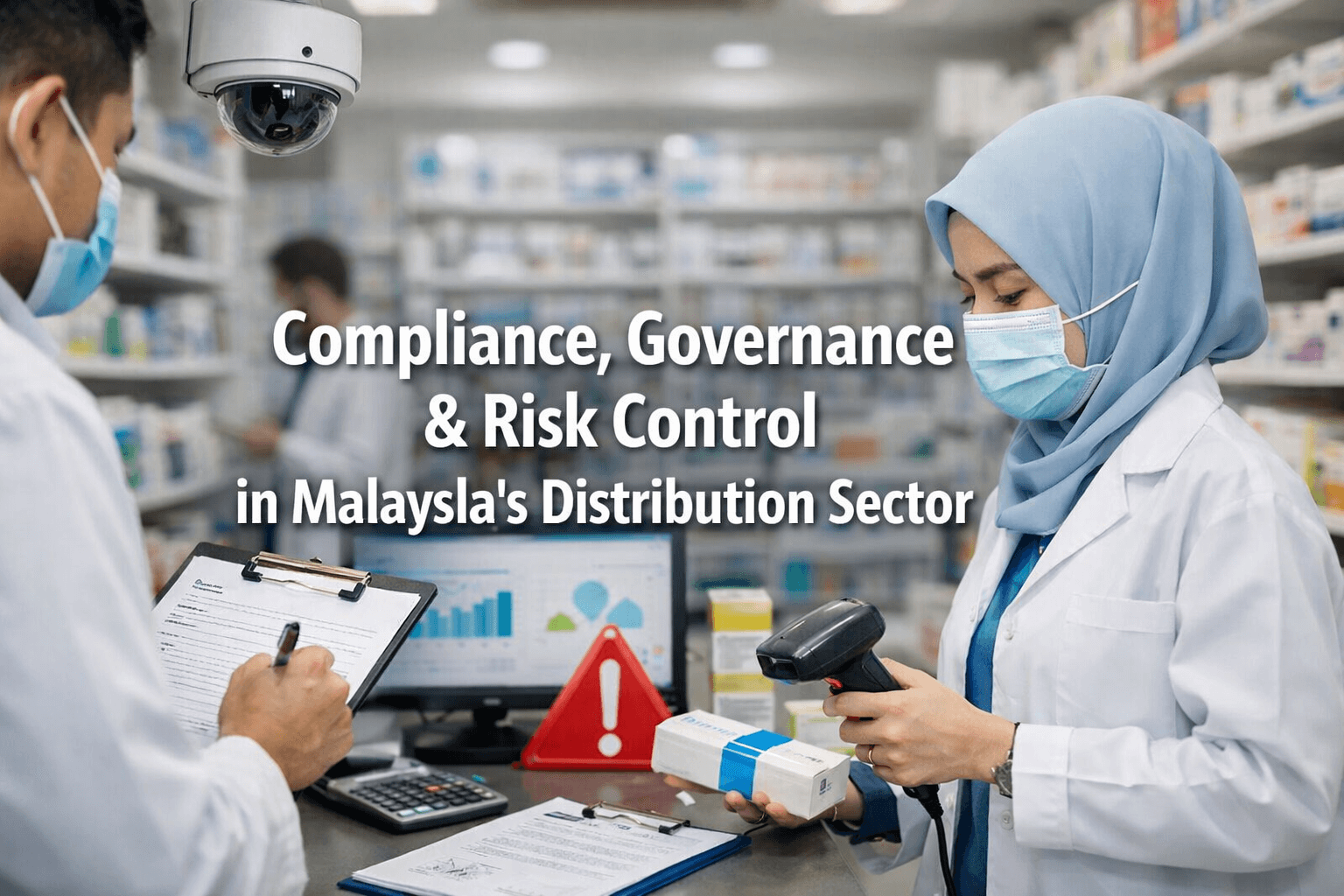
The short answer is survival—but that barely scratches the surface. In Malaysia’s rapidly maturing pharmaceutical landscape, compliance has evolved from a back-office checkbox into the single most visible differentiator between average distributors and trusted supply chain partners. Pharmacies today don’t just ask whether a distributor can deliver; they scrutinise how that delivery happens, what systems back it, and whether the operation can withstand regulatory scrutiny without crumbling.
GDP compliance is now non-negotiable. It’s the baseline. When pharmacists evaluate potential suppliers, they’re specifically looking for proven, reliable, and expert compliance systems from their pharmacy wholesale distributors. Why the heightened sensitivity? Because the National Pharmaceutical Regulatory Agency (NPRA) has intensified market surveillance, and any compliance lapse at the distributor level now directly threatens pharmacy licences and brand reputations. One broken cold chain incident, one documentation gap—and years of trust can evaporate overnight.
Cold Chain Integrity Across Malaysia’s Diverse Geography
Temperature-sensitive biologics, vaccines, and certain specialty pharmaceuticals don’t tolerate shortcuts. Maintaining cold chain integrity in Malaysia presents layered challenges that distributors must address through:
Continuous monitoring systems with real-time temperature tracking
Insulated transport solutions suited for tropical climates
Emergency response SOPs that activate the moment deviations occur
But here’s where context matters enormously. The distribution challenges differ sharply when comparing Klang Valley versus East Malaysia. In the Klang Valley, traffic congestion means delivery vehicles idle for hours—potentially compromising internal temperatures if systems aren’t designed for stop-start conditions. Pharmacies in Shah Alam or Petaling Jaya expect deliveries within specific windows, and any delay during peak hours tests cold chain protocols.
Cross over to East Malaysia—Sabah and Sarawak—and the game changes completely. Geographic barriers, unpredictable ferry schedules, and remote pharmacy locations demand tailored cold chain strategies. A distributor serving Kuching might use reefer trucks for main routes but switch to specialised cold boxes with extended-duration gel packs for pharmacies in Bau or Sri Aman. The reliable partner anticipates these variables rather than applying a one-size-fits-all model that inevitably fails somewhere along the route.
One Malaysia-specific operational scenario worth noting: distributors serving rural clinics in interior Sarawak often combine air freight to major towns with boat transport to longhouse settlements. Each transfer point represents a temperature excursion risk. The effective distributor maps every handover, calibrates equipment for local conditions, and trains local handlers who might not speak English or Bahasa Malaysia as their first language. It’s painstaking work—but it’s what GDP compliance looks like on the ground.
Learn more: Cold Chains in Developing Economies: A Techno-Socio-Economic Structural Development Challenge
Audit Readiness as a Competitive Advantage
Smart distributors have stopped treating audits as terrifying inspections and started viewing them as performance validations. The NPRA conducts both scheduled and surprise audits, and the criteria have sharpened considerably. To remain audit-ready at all times, distributors must:
Maintain batch traceability from manufacturer receipt to pharmacy delivery
Provide recall simulation drills that test response times and communication flows
Document SOP adherence with dated, signed records that leave no ambiguity
Consider the perspective of a brand manager launching a new hypertension drug. Before securing shelf space in major chains like BIG Pharmacy or Alpro Pharmacy, they must demonstrate that their chosen distributor can execute a mock recall within 24 hours. Can the distributor identify every pharmacy that received specific batch numbers? Can they produce delivery records showing cold chain compliance throughout? If not, the listing approval stalls—and months of market preparation go to waste.
From the pharmacist’s viewpoint, audit readiness translates directly to patient safety. When a quality alert emerges for a specific product, pharmacists need immediate confirmation that their stock isn’t affected. They don’t have time to chase paperwork. A distributor with robust governance systems provides that reassurance instantly, strengthening the pharmacy’s trust in that supply relationship.
Compliance is no longer reactive; it is preventative governance. The distributors winning long-term contracts today are those investing in systems that catch anomalies before they become violations. They’re conducting internal audits more frequently than regulations require. They’re training staff on “why” behind procedures, not just “what” to do. This preventative mindset separates the essential partners from the replaceable vendors.
Operational Strength: Logistics, Digital Systems & Store-Level Impact
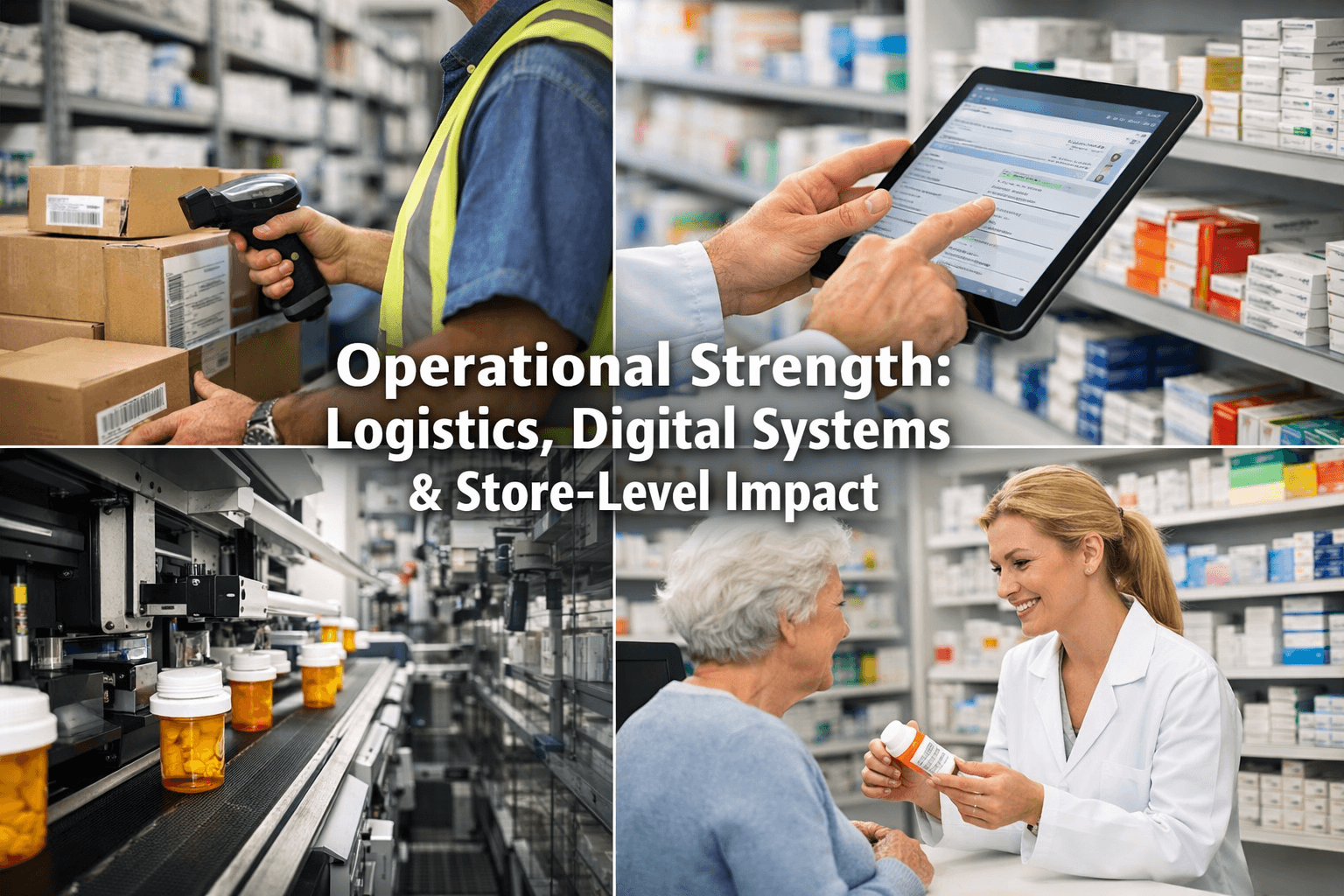
How directly does distribution affect pharmacy sales performance?
More directly than most brand owners appreciate. When a pharmacy runs out of a high-margin dermatological cream, the patient doesn’t blame logistics—they blame the pharmacy. When a prescription can’t be filled because the distributor delivered the wrong variant, the pharmacist loses dispensing revenue and patient goodwill. These micro-failures compound into measurable revenue leakage.
Delivery lead times impact stockouts with mathematical precision. A distributor promising 48-hour delivery but consistently delivering in 72–96 hours forces pharmacies to carry excess safety stock—tying up capital that could otherwise fund expansion. Worse, it creates stockout risks during促销 periods or disease outbreaks when demand spikes unpredictably.
Warehouse management systems influence accuracy in ways that directly affect pharmacy operations. Consider a mid-sized pharmacy chain in Penang receiving mixed orders—some slow-moving chronic disease medications alongside fast-moving supplements. If the distributor’s picking accuracy falls below 99.5%, the pharmacy receives the wrong items, triggering time-consuming returns, credit notes, and reordering. Each error costs the pharmacy staff hours they could have spent serving customers.
Digital portals reduce ordering errors significantly. Progressive distributors now offer pharmacists online platforms displaying real-time stock availability, batch numbers, and expiry dates. Pharmacists can check whether a specific product is in stock before committing to a patient. They can verify that received batches match what was ordered. This transparency builds confidence and streamlines the entire procurement cycle.
From the distributor’s operational perspective, route optimisation isn’t just about fuel savings—it’s about service consistency. A well-planned delivery route covering Klang Valley pharmacies might sequence stops to avoid peak-hour bottlenecks, ensuring perishable items spend minimal time in transit. Pharmacists care less about the routing logic and more about whether stocks arrive before their busy periods. The strategic distributor aligns delivery schedules with pharmacy traffic patterns, not just warehouse convenience.
Pharmacists want fewer shortages. Distributors focus on route optimisation. Brand managers require sell-through visibility. These three priorities converge when distribution functions as an integrated system rather than a series of disconnected handoffs. An efficient and strategic pharmacy distributor Malaysia partner doesn’t just move boxes—they actively influence retail performance and margin stability by ensuring the right products reach the right shelves at the right time.
Learn more:Top 10 Pharmacy Distributors in Malaysia Ranking (2027 Edition) | Digital Transformation in Healthcare
Strategic Value for Pharmacies and Brand Owners
Distribution relationships extend far beyond logistics. They shape multiple dimensions of commercial success:
| Dimension | Impact of Distributor Performance |
|---|---|
| Product availability | Direct correlation with sales volume and patient loyalty |
| Merchandising coordination | Shelf placement, promotional displays, and stock rotation quality |
| Listing approvals | Speed of new product introduction across chain pharmacies |
| Rural market penetration | Ability to reach underserved towns and clinic clusters |
Independent pharmacy distributor models help reach underserved towns. In places like Jeli, Kelantan, or Kuala Krai, chain pharmacy presence remains limited. Independent pharmacies serve these communities, but they face unique supply challenges. Small order volumes, longer delivery distances, and limited cold chain infrastructure make them less attractive to large wholesale distributors focused on high-volume urban accounts.
The expert distributor fills this gap by designing tailored solutions for independents. They might combine orders from multiple small pharmacies into consolidated shipments, share transport costs across rural routes, or deploy mobile sales representatives who visit remote pharmacies monthly to capture orders and provide merchandising support. This approach requires more effort per ringgit of sales, but it builds unmatched loyalty and positions the distributor as the indispensable link between brands and rural healthcare access.
Large wholesale networks support chain expansion. When pharmacy chains plan new branches in growth corridors like Johor Bahru or Kota Kinabalu, they need distributors who can scale with them. Consistent service levels across locations, centralised billing, and coordinated new-store openings matter more than per-unit pricing. The reliable partner demonstrates they can grow alongside the chain without service degradation.
For brand owners, distribution is not just supply—it is market acceleration. A new entrant in Malaysia’s crowded vitamin segment doesn’t just need someone to deliver bottles. They need a partner who understands which pharmacies prioritise category growth, which pharmacists recommend specific brands to patients, and how to navigate the listing bureaucracy at each chain. Distribution becomes essential, trusted, and commercially effective when it delivers these intangible advantages alongside physical products.
Key Trends Shaping Pharmacy Distribution Service in Malaysia (2027–2030 Outlook)
Looking ahead, several forces will redefine what pharmacies and brands should expect from their distribution partners:
Digital transformation will move from optional to mandatory. Pharmacies increasingly expect real-time tracking, automated ordering based on consumption patterns, and digital proof of delivery. Distributors still relying on manual processes and phone-based communication will find themselves locked out of chain pharmacy tenders.
Predictive inventory forecasting will separate market leaders from laggards. Instead of reacting to orders, sophisticated distributors will analyse historical data, seasonal patterns, and even local disease surveillance to anticipate demand. A distributor serving pharmacies in flood-prone areas might pre-position chronic disease medications before monsoon season, ensuring patients don’t face treatment interruptions.
ESG-driven fleet optimisation will gain traction. Carbon emissions, vehicle efficiency, and sustainable packaging will influence procurement decisions—especially among multinational brands with global sustainability commitments. Distributors investing in electric delivery vehicles for urban routes and optimised logistics to reduce mileage will hold competitive advantages.
Compliance enforcement tightening will continue. The NPRA’s trajectory points toward more frequent audits, stricter documentation requirements, and harsher penalties for violations. Distributors treating compliance as a minimal requirement rather than continuous improvement will face existential risks.
Industry consolidation will accelerate. Smaller distributors unable to invest in digital systems, cold chain infrastructure, or compliance teams will seek acquisition or exit. The remaining players will be larger, more capitalised, and more capable of meeting evolving pharmacy expectations.
Pharmacies should evaluate future-ready, reliable, and strategic partners—not just those offering attractive current pricing. The lowest-cost option today might become the unavailable option tomorrow if they can’t adapt to these structural shifts.
Learn more: Four Ways Pharma Companies Can Make Their Supply Chains More Resilient
Choosing the Right Distributor Pharmacy Partner for 2027
Malaysia’s distribution environment is becoming more regulated, more digital, and more performance-driven. The days when distribution meant simply moving products from warehouse to pharmacy are ending. Today’s landscape demands partners who combine operational excellence with strategic insight, compliance rigour with commercial flexibility, and digital capability with human relationships.
Pharmacies and clinics should evaluate:
Compliance credibility—verified through documentation and client references
Delivery consistency—measured across different geographies and seasons
System integration—enabling real-time visibility and error reduction
Market coverage—aligning with current locations and future expansion plans
Selecting among the top medicine distributors Malaysia offers is not just operational—it shapes long-term sustainability. The right partner helps pharmacies serve patients better, helps brands grow faster, and helps the entire healthcare ecosystem function more effectively.
Frequently Asked Questions (FAQ)
Q1: Who are the big 3 pharmaceutical distributors?
Answer: The “Big 3” pharmaceutical distributors are McKesson Corporation, Cencora, and Cardinal Health. They dominate pharmaceutical distribution in the United States.
Q2: What is the largest healthcare company in Malaysia?
Answer: IHH Healthcare is the largest healthcare company in Malaysia by revenue and market presence.
Q3: Who are the big 4 in pharma?
Answer: The “Big 4” pharmaceutical companies are commonly considered to be Pfizer, Roche, Johnson & Johnson, and Novartis.
Q4: What are the big 5 pharma companies?
Answer: The “Big 5” usually include Pfizer, Roche, Johnson & Johnson, Novartis, and Merck & Co..
Q5: Who is the largest medical distributor?
Answer: McKesson Corporation is widely recognized as the largest medical and pharmaceutical distributor globally.
Q6: What are the 10 biggest pharmaceutical companies?
Answer: The largest pharmaceutical companies include Pfizer, Roche, Johnson & Johnson, Novartis, Merck & Co., AbbVie, Sanofi, AstraZeneca, GlaxoSmithKline, and Bristol Myers Squibb.
Q7: What are the big 3 pharmacy chains?
Answer: In the U.S., the big three pharmacy chains are CVS Health, Walgreens Boots Alliance, and Walmart (through Walmart Pharmacy).
Q8: Who is Pfizer’s biggest competitor?
Answer: Roche and Johnson & Johnson are among Pfizer’s biggest competitors, especially in oncology and specialty medicines.
Q9: Who are wholesalers in pharma?
Answer: Pharmaceutical wholesalers are licensed companies that purchase medicines in bulk from manufacturers and distribute them to pharmacies and hospitals. Examples include McKesson, Cencora, and Cardinal Health.
Q10: Is Pfizer bigger than Merck?
Answer: Yes. In recent years, Pfizer has generated higher annual revenue than Merck & Co., making it larger by total sales.
If your organisation is seeking a trusted and reliable pharmacy distribution partner in Malaysia—whether for nationwide logistics, independent pharmacy coverage, or merchandising support—our team is ready to assist.
We provide structured, GDP-aligned distribution solutions tailored for pharmacies, clinics, and brand owners navigating Malaysia’s evolving healthcare supply chain. Our approach combines rigorous compliance with practical commercial understanding, ensuring your products reach the right locations in the right condition while supporting your growth objectives.
Our Services
Our marketing and sales teams use their strong relationships with the channel to create demand for your product at every stage of its lifecycle.
Demand creation services we offer:
Market Access Services
Regulatory Registration Services
Pharma Product Listing Services
Merchandising services (RSMS)
Brand Management
Logistic & Warehousing
Exclusive Merchandising Services
Visual Merchandising
Discover More About Our Solution
How can we assist you today? 😊
Just let us know—we’re here to help!