

How does a retail pharmacy remain competitive in 2027 without a reliable supply backbone? It’s a question that keeps pharmacy owners awake at night. The image of a distributor as merely a trucking company with cartons is outdated. In today’s Malaysia, the healthcare ecosystem has matured significantly over the past decade, transforming the role of logistics into a strategic advantage. The Malaysia healthcare distribution landscape now reflects a more structured, regulated, and performance-driven environment than ever before. With retail chains expanding into secondary towns and independent outlets strengthening their niche positioning, the need for a reliable and strategic pharmacy distribution service in Malaysia has become absolutely essential.
Today’s distributor pharmacy network does far more than transport cartons from warehouse to store. It coordinates regulatory compliance, cold chain logistics Malaysia requirements, merchandising execution, inventory forecasting, and increasingly, digital integration with pharmacy POS systems. In short, the distributor has become an operational partner, not merely a supplier. This shift is driven by complexity. A pharmacy in Kota Bharu, for instance, now expects the same service level as one in Bangsar. They require proven systems that ensure temperature-sensitive vaccines arrive viable and that high-demand chronic disease medications are never out of stock. The distributor is now the invisible engine powering the pharmacists’ ability to care for patients.
The rise of the independent pharmacy distributor model has introduced much-needed agility into the system. Smaller, focused players often provide tailored services to specific product categories such as supplements, dermatology, or medical devices. They can move faster, offer more personalised credit terms, and deeply understand the nuances of their niche. Meanwhile, established pharmacy wholesale distributors leverage scale economics, nationwide coverage, and purchasing power to support large retail chains. This creates a dynamic market where choice abounds, but so does the complexity of selection.
Regulatory oversight has also intensified. GDP-compliant warehouse Malaysia standards and strict NPRA product handling protocols now define baseline expectations. It’s no longer enough to just have a warehouse; it must be a certified, temperature-controlled environment. Distributors who fail to align with these standards risk not only penalties but long-term reputational damage. This has accelerated consolidation trends, where strategic alliances and acquisitions aim to strengthen compliance infrastructure and service reliability. Against this backdrop, this 2027 ranking provides a structured analysis of the top pharmacy distributors Malaysia market participants. It examines operational strengths, compliance discipline, and market positioning — enabling pharmacists, brand managers, and distribution professionals to evaluate partnerships with greater clarity and confidence.
Ranking Methodology: How the Top Pharmacy Distributor Malaysia Leaders Were Evaluated
What separates a competent distributor from a market-leading one? It is a question of depth. The 2027 evaluation framework was developed to ensure a proven, objective, and industry-aligned approach. Rankings were not based solely on size, which can often be a misleading metric, but on operational efficiency, regulatory compliance, and true market penetration within the retail pharmacy supply chain. We moved beyond surface-level data to understand the inner workings of each organization.
Core Evaluation Criteria
To provide a clear comparison, the following framework was used to assess each distributor’s capabilities:
| Evaluation Metric | Description | Why It Matters |
|---|---|---|
| Compliance Strength | GDP certification, NPRA audit history, cold chain integrity | Mitigates risk of product damage and regulatory fines. |
| Distribution Coverage | Nationwide reach vs. regional concentration (e.g., Klang Valley, East Malaysia) | Determines market access for brands and availability for pharmacies. |
| Warehouse Scale & Tech | Storage capacity, cold room count, automation level, WMS capability | Impacts inventory holding, scalability, and order accuracy. |
| Merchandising Support | Field team size, in-store execution capability, planogram compliance | Directly influences sell-through rates and brand visibility at retail. |
| Digital Integration | ERP sync, POS data sharing, e-commerce platform connectivity | Enables efficient ordering, forecasting, and inventory optimization. |
| Market Segment Focus | Primary focus on chains, independents, clinics, or hospitals | Defines their service model, credit terms, and support structure. |
Each distributor was assessed across several key performance indicators. We scrutinized GDP-compliant warehouse Malaysia status and the robustness of their cold chain logistics Malaysia infrastructure. We analyzed retail penetration across both chain and independent outlets, and verified NPRA product handling consistency through available records. Delivery lead time and fill rate—the percentage of an order that is shipped complete—were also critical. A distributor may have impressive scale, but if stock-outs occur frequently at the retail level due to poor forecasting or allocation, the partnership’s performance is fundamentally compromised.
Qualitative insights were also integrated into the ranking. Pharmacist feedback on service reliability, brand manager feedback on the transparency of the listing process, and the distributor’s reputation among pharmaceutical wholesale Malaysia stakeholders were all examined. Data sources included confidential industry interviews, publicly available compliance records, and distributor-submitted operational metrics. While perfect transparency is difficult in this sector, triangulation methods—cross-referencing different data points—were applied to ensure the ranking remains efficient and trusted within professional boundaries. This proven methodology ensures that the final ranking reflects structural strength and operational excellence, not temporary market noise or superficial advantages.
Learn more: Securing Medical Supply Chains in a Post-Pandemic World
Overview of Malaysia’s Pharmacy Distribution Ecosystem
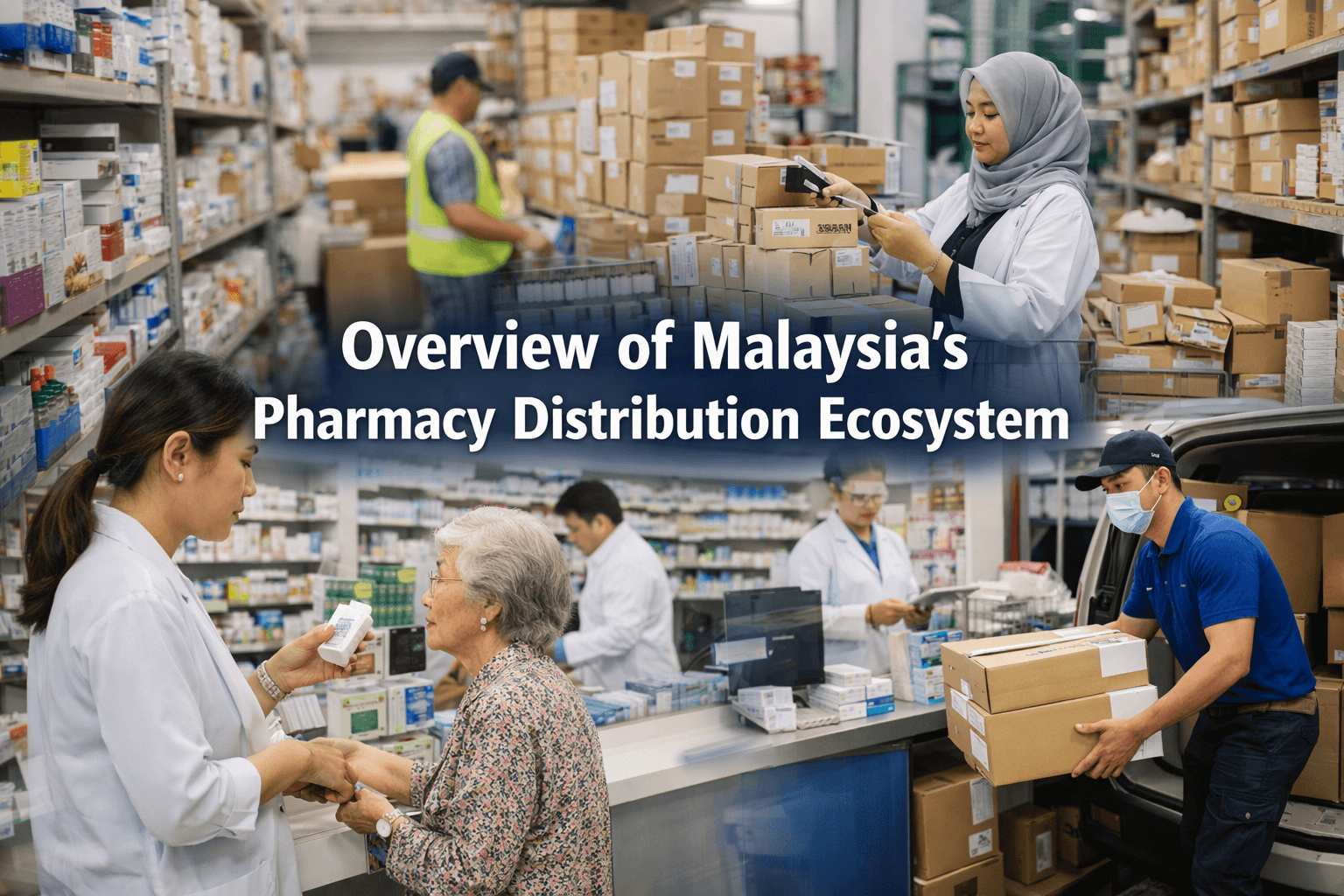
How interconnected is Malaysia’s distributor pharmacy network today? The answer is: intricately so. The ecosystem operates as a multi-layered network where the flow of pharmaceuticals is a carefully choreographed dance of coordination, compliance, and commerce. Manufacturers, from global multinationals to local producers, supply to regional or national distributors, who then supply to retail chains, independent pharmacies, clinics, and occasionally hospitals. This structure, while efficient, creates distinct roles for different types of players.
Role of Pharmacy Wholesale Distributors
Large pharmacy wholesale distributors dominate national coverage. They operate central and satellite GDP-compliant warehouse Malaysia facilities, supporting thousands of SKUs (Stock Keeping Units). Their strengths are built on scale. This typically includes:
A broad portfolio encompassing both OTC (Over-the-Counter) and ethical (prescription) products.
Significant negotiation leverage with manufacturers, allowing for competitive pricing.
Efficient logistics scheduling with optimised delivery routes.
Dedicated teams for managing large chain accounts with complex billing and promotional cycles.
However, this scale can sometimes reduce flexibility. A large distributor may be less willing to accommodate a very small, bespoke order from a rural pharmacy, preferring to stick to its standardised delivery schedule.
Independent Pharmacy Distributor Players
In contrast, an independent pharmacy distributor often focuses on niche segments, filling the gaps left by the giants. For example:
A distributor specialising in a dermatology or aesthetic-focused portfolio, requiring specific storage and brand-building support.
A company focused on supplement-heavy category management, where product knowledge and expiry management are crucial.
A player with a regional concentration, such as serving the unique logistical challenges of East Malaysia (Sabah and Sarawak), where infrastructure can be less developed.
These independent players frequently provide tailored credit terms, closer field support, and faster adaptation to brand campaigns, making them invaluable partners for specific needs.
Urban vs Semi-Urban Supply Dynamics
The physical geography of Malaysia also dictates supply chain dynamics. In the Klang Valley, delivery cycles may occur daily, with orders placed in the morning arriving by afternoon. In semi-urban states such as Perlis or parts of Sabah, lead time can extend to weekly or even bi-weekly. This is where cold chain logistics Malaysia capabilities become absolutely critical when transporting insulin, vaccines, or specialty injectables over long distances and potentially challenging terrain.
From a distributor’s operational lens, route optimisation and warehouse positioning is the key to profitability. From a pharmacist’s inventory lens, cash flow management and stock rotation discipline matter most. From a brand owner’s perspective, the speed of market access and depth of retail penetration define commercial success. Digitalisation has improved coordination across these perspectives. ERP integration, demand forecasting, and data exchange between distributor and pharmacy POS systems enhance overall ecosystem efficiency. The system, while complex, is increasingly structured and expert-driven.
Learn more: What Is a Distributor Pharmacy? A Comprehensive Guide
Top 10 Pharmacy Distributors in Malaysia (2027 Ranking)
Who currently leads the Malaysia pharmaceutical wholesale landscape? The following ranking is based on a composite score derived from the methodology outlined above, considering operational scale, compliance strength, and market presence. Each entity brings a unique set of capabilities to the table.
Zuellig Pharma Malaysia
As a global giant, their local operation is formidable. They boast an extensive GDP-certified infrastructure and a strong cold chain logistics Malaysia network. Their portfolio is heavily weighted towards multinational pharmaceutical products, giving them a strong foothold in chain pharmacy penetration, particularly for high-value ethical and specialty products.DKSH Malaysia
A leader in diversified healthcare distribution, DKSH operates an established distributor pharmacy network with strategic coverage nationwide. Their strength lies in their digitalised inventory systems and a strong OTC and consumer health portfolio, making them a key partner for fast-moving consumer healthcare goods.Pharmaniaga Logistics
Closely linked to public healthcare distribution, Pharmaniaga possesses robust warehouse infrastructure and proven compliance systems. Their focus remains strong on ethical products, benefiting from their long-standing relationship with government hospitals and clinics, which reinforces their private sector capabilities.AA Pharmacy Wholesale
This player is uniquely focused on independent pharmacy distributor relationships. They offer a competitive pricing structure and have carved out a position of regional strength in Northern Malaysia, providing a reliable alternative to national players for independents in that region.Xepa-Soul Pattinson Distribution
Operating with an integrated manufacturer-distributor structure, Xepa offers unique advantages. They possess a strong dermatology and prescription segment and deploy an efficient retail penetration strategy for their own manufactured brands, giving them expert control over their supply chain.Hovid Distribution Services
Similarly, as a manufacturing-backed distribution arm, Hovid ensures reliable NPRA product handling for its own extensive range. They maintain a strong generics presence in the market, offering cost-effective options to a wide range of pharmacy outlets.Caring Pharmacy Distribution Arm
As a major retailer, Caring Pharmacy’s internalised retail distribution support is a strategic asset. It ensures strategic supply chain alignment between their central warehouse and individual storefronts, supporting their focused chain model with high efficiency.BIG Pharmacy Distribution
With their rapid expansion, BIG Pharmacy’s distribution arm is now a notable player. They are focused on growing independent chain support and providing tailored regional logistics. A key strength is their retail merchandising integration, ensuring their own stores are well-presented.CCM Pharmaceuticals Distribution
A heritage player with a strong ethical medicine portfolio, CCM maintains proven compliance alignment. Their distribution network benefits from strategic hospital-linked access, making them a key conduit for products moving into both private and public healthcare institutions.Regional Independent Distributor (Composite Category)
This category represents the collective strength of smaller, agile players. Their strengths lie in niche category focus (e.g., traditional medicines or specific medical devices), offering flexible credit and assortment strategy and providing localised semi-urban strength that national distributors sometimes overlook.
Each distributor reflects different operational strengths. Some prioritise scale; others prioritise tailored service depth. The choice for a pharmacy or brand depends entirely on their specific strategic needs.
Learn more: Top 10 Pharmacy Chains in Malaysia: A 2025 Comparison Guide
Independent Pharmacy Distributor vs Large-Scale Wholesale Models
Is bigger always better in pharmaceutical wholesale Malaysia? The answer, when viewed through different lenses, is a definitive “it depends.” The choice between an independent pharmacy distributor and a large-scale wholesaler is a strategic decision with trade-offs that impact everything from cash flow to market reach.
Flexibility vs. Scale: A Comparative View
| Feature | Independent Distributor | Large-Scale Wholesaler |
|---|---|---|
| Flexibility | High. Can tailor order sizes, credit terms, and delivery schedules. | Moderate to Low. Operates on standardised systems and schedules. |
| SKU Range | Limited to a niche (e.g., dermatology, sports nutrition, generics). | Extensive. Offers a full catalog of thousands of OTC and ethical items. |
| Negotiation Power | Moderate within its niche. Can offer competitive prices on focused categories. | High. Leverages massive purchasing volume for low unit prices. |
| Service Depth | Personalised. Often provides direct owner-operator relationships and deep category knowledge. | Structured. Offers dedicated account managers but with broader, less personal coverage. |
| Retail Support | High-touch merchandising for their specific brands. | Standardised merchandising support across a wide range of products. |
| Best Suitability | Niche pharmacies, new brand launches, independents needing tailored credit. | High-volume chain pharmacies, outlets requiring one-stop shopping. |
The Pharmacist Perspective
From the viewpoint of a pharmacist running an independent outlet in a place like Taiping, the independent pharmacy distributor model often provides essential benefits. These distributors frequently offer more flexible credit arrangements and a carefully curated product variety that meets the specific demands of their local community. For smaller outlets in secondary towns, this can significantly improve cash flow management and allow them to stock specialised items that large wholesalers might de-prioritize.
The Distributor’s Operational Perspective
Conversely, from inside a large-scale operation, the focus is on optimisation. These players view logistics and inventory forecasting as sciences to be mastered at scale. Their goal is to ensure efficient delivery cycles and consistently high fill rates across thousands of SKUs. A stock-out for a large wholesaler is not just a missed sale; it’s a systemic failure in their data-driven model. They rely on proven algorithms to predict demand and position inventory, a luxury smaller players cannot always afford.
The Brand Manager’s Strategic View
For a brand manager launching a new supplement, a strategic multi-distributor approach is often the most effective way to mitigate risk. They might secure national coverage via one of the top pharmacy wholesale distributors to ensure their product is available everywhere. Simultaneously, they could partner with a regional independent pharmacy distributor in East Malaysia, who understands the local retail nuances and can provide the high-touch field support needed to drive initial sales. Flexibility versus scale remains the central trade-off in the industry. However, both models remain not just relevant, but essential, within Malaysia’s evolving and dynamic retail pharmacy supply chain.
Compliance, Governance & Regulatory Alignment in Malaysia
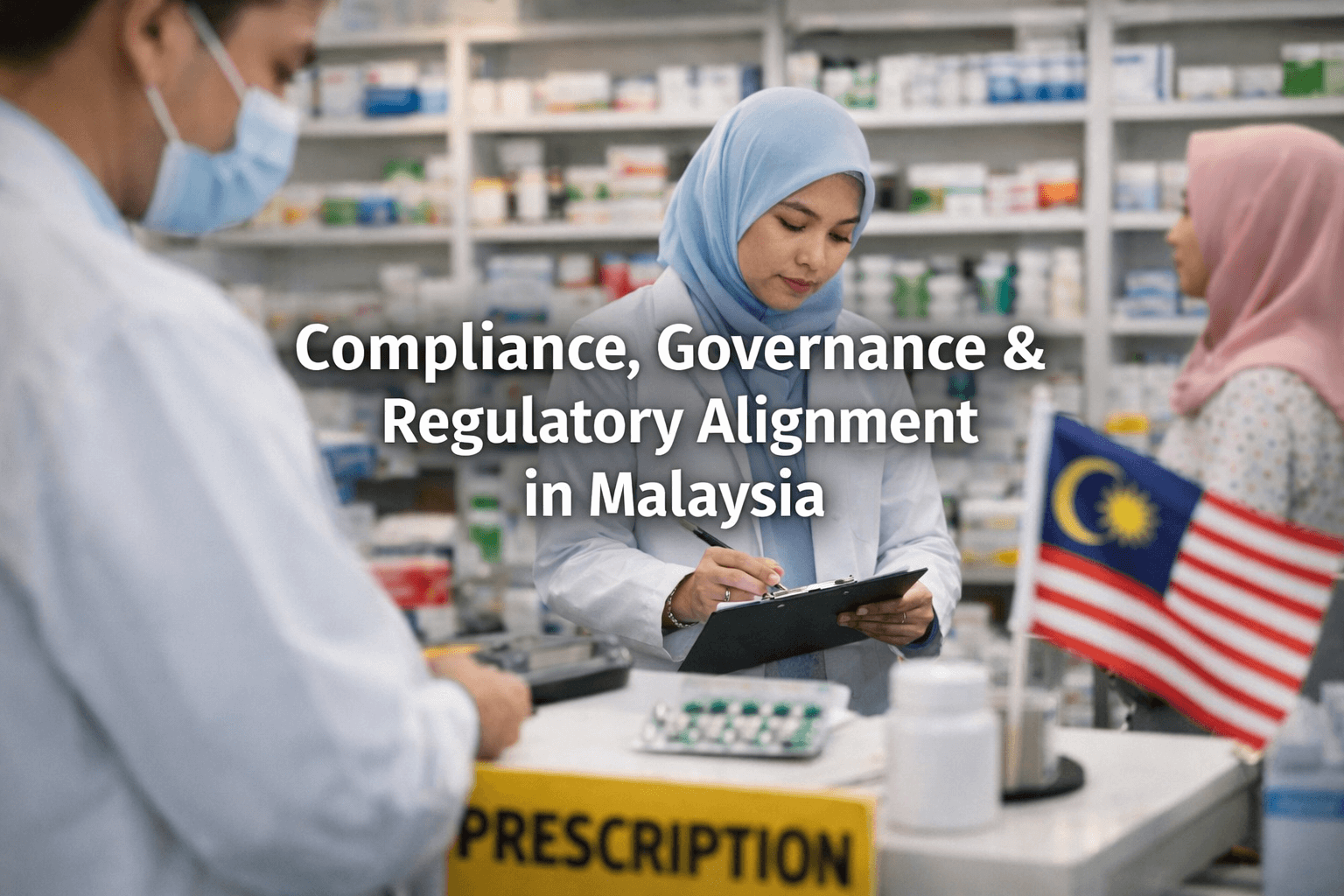
What happens when compliance becomes optional in the pharmaceutical wholesale sector? It rarely ends well for any party involved—the distributor, the pharmacy, or ultimately, the patient. The landscape in 2027 leaves no room for ambiguity. GDP requirements define the non-negotiable infrastructure standards: rigorous temperature mapping, documented Standard Operating Procedures (SOPs), complete batch traceability from warehouse to counter, and perpetual audit readiness. These are not merely bureaucratic hurdles; they are the safeguards of public health.
NPRA product handling demands a similar level of rigor. This includes maintaining impeccable documentation, having recall procedures that can be activated within hours, and ensuring the proper segregation of quarantined or expired goods. A single lapse here can trigger a cascade of problems. Furthermore, cold chain logistics Malaysia protocols require calibrated temperature monitoring devices in every storage unit and validated transport vehicles capable of maintaining product integrity even in tropical traffic. A failure in this chain—say, a vaccine exposed to ambient heat—compromises not just a single shipment, but patient safety and the distributor’s entire regulatory standing.
Distributors with proven compliance frameworks build trusted relationships with multinational manufacturers who are increasingly unwilling to risk their brand equity on unreliable partners. Conversely, a non-compliant distributor pharmacy network exposes pharmacies to severe risks: product seizure during NPRA inspections, legal liabilities, and lasting reputational harm that can erode patient trust. In 2027, compliance is no longer a differentiator that earns a badge of honor. It is the baseline cost of entry. This ranking heavily weighted regulatory discipline precisely because, in today’s market, a distributor’s compliance record is the most reliable indicator of their long-term viability and commitment to strategic partnership.
Learn more: GUIDELINE ON GOOD DISTRIBUTION PRACTICE
Operational Strength: Logistics, Digital Systems & Store-Level Impact
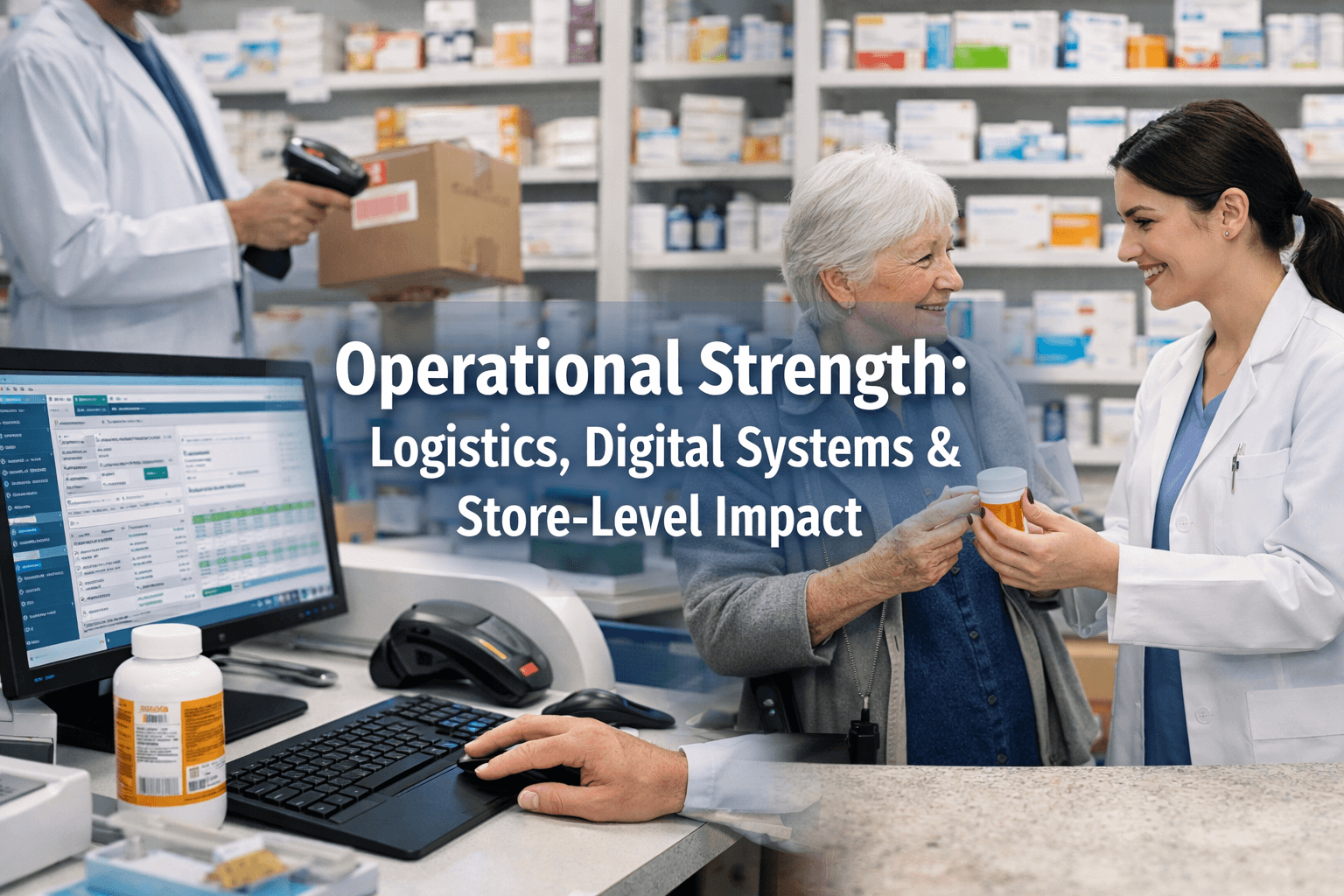
How does logistics efficiency actually influence shelf availability at your local pharmacy? The connection is more direct than most realize. Operational strength is not an abstract concept confined to warehouses; it is the primary driver of store-level performance and patient satisfaction. When a customer walks in asking for a specific hypertension medication, the distributor’s backend systems determine whether that shelf is stocked or empty.
Modern operations rely on sophisticated technology. Warehouse automation systems reduce human picking errors, ensuring that the right product and the correct quantity leave the facility. ERP integration enables real-time or near-real-time inventory synchronisation between the distributor’s mainframe and the pharmacy’s POS system. This means a pharmacist in Penang can see stock availability instantly. Demand forecasting tools, powered by historical sales data, anticipate seasonal spikes, such as the surge in flu medications during the monsoon season or the increased demand for vitamins and supplements leading up to festive periods like Chinese New Year or Hari Raya.
The key indicators of this operational strength are measurable and clear. They include a fill rate consistently above 95% , meaning orders are shipped complete. They involve a delivery lead time under 48 hours for most urban centers like Georgetown or Johor Bahru. They result in a reduced OOS (Out-of-Stock) frequency at the retail level, which is the bane of every pharmacist’s existence. And they are supported by coordinated pharmacy merchandising support, where field teams ensure promotional displays are set up correctly.
An expert distributor aligns logistics seamlessly with retail execution. Consider a national campaign for a new immunity booster. If the distributor’s inventory allocation does not match the promotional schedule across different states, the result is inconsistent availability. Some stores will have overflowing stocks while others face empty shelves, leading to frustrated pharmacists and missed sales targets. Pharmacy logistics solutions are becoming increasingly data-driven, and the effective players are those who view their digital systems not just as tools for internal efficiency, but as a strategic bridge connecting the warehouse to the end consumer.
Learn more: Understanding the ROI of Pharmacy Merchandising Investments in Malaysia | Digital transformation in healthcare
Strategic Value for Pharmacies and Brand Owners

What truly defines a sustainable and mutually beneficial distributor partnership in this complex environment? The answer shifts depending on which side of the table you sit on. For a community pharmacist in a place like Kota Kinabalu, the definition of value is often rooted in reliability and tailored financial support. They need a partner who delivers the right products on time, every time, and who understands the cash flow challenges of a small business by offering flexible credit terms. For a chain procurement manager overseeing dozens of outlets, the priorities shift toward strategic pricing agreements, rebate structures, and the assurance of supply continuity across an entire network.
From the vantage point of brand owners—whether a multinational corporation or a local manufacturer—the evaluation criteria are multi-faceted. They meticulously assess a distributor’s:
Market access capability: Can they get products listed with major chains and independent outlets?
Listing negotiation pathways: Do they have the relationships and persuasion to secure prime shelf positions?
Merchandising field team presence: Is there a dedicated team to ensure in-store execution and brand visibility?
Geographic coverage: Do they reach the target markets, from the Klang Valley deep into the rural areas of Terengganu or Sarawak?
Maintaining diversified distributor relationships is a common strategic move to reduce concentration risk. The logic is simple: a single disruption, whether it’s a compliance-related shutdown of a major player’s warehouse or a logistical hiccup due to unforeseen circumstances, should not be allowed to paralyse a brand’s entire national distribution network. An effective partnership, therefore, is one that skillfully balances the scale of a large wholesaler with the flexibility of a smaller, niche player. It aligns strict regulatory discipline with aggressive commercial objectives. In practice, many of the most successful brands now adopt a hybrid distribution strategy, using a national giant for broad coverage while engaging specialist distributors for targeted, high-touch categories.
Key Trends Shaping Pharmacy Distribution Service in Malaysia (2027–2030 Outlook)
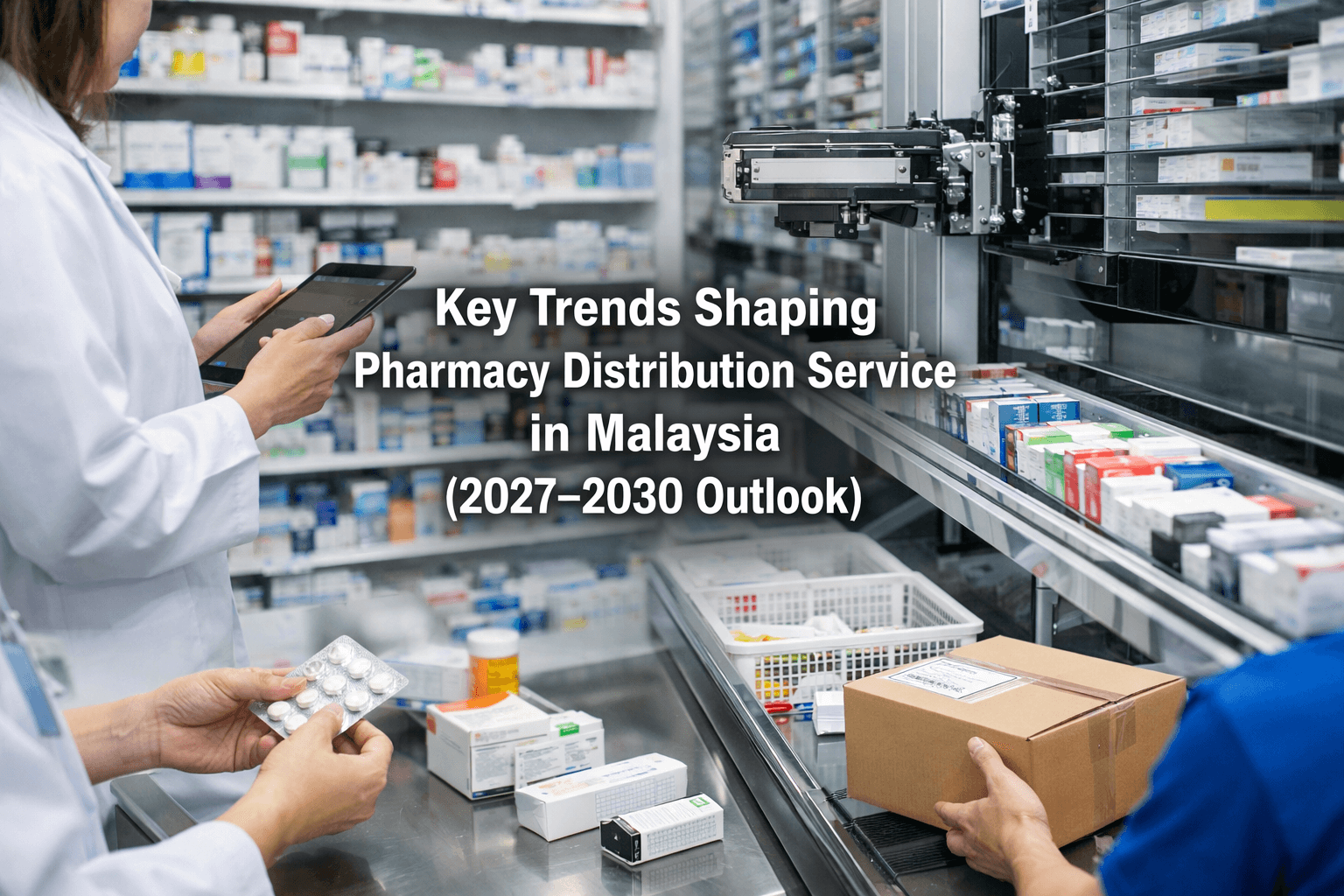
Where is Malaysia’s healthcare distribution landscape heading over the next few years? The horizon is defined by several powerful and converging structural trends that will reshape the industry. First and foremost is the continued consolidation among pharmacy wholesale distributors. We are likely to see larger players acquiring smaller, specialized firms not just for their portfolio, but for their infrastructure and niche market access. This creates giants, but also opens opportunities for new, agile independents.
Secondly, the shift toward data-driven inventory planning will accelerate. The future will belong to distributors who can leverage predictive analytics, not just to react to orders, but to anticipate them. This means analyzing prescribing patterns, demographic shifts, and even weather data to ensure the right stock is in the right place at the right time. We’ll also see a rise in ESG-focused warehouse design. Sustainability is becoming a procurement consideration, especially for European multinationals. Distributors investing in solar panels, energy-efficient cold rooms, and eco-friendly delivery fleets will gain a competitive edge.
Furthermore, cross-border sourcing integration is expected to increase as Asean economic integration deepens, potentially streamlining the flow of generics and raw materials. Concurrently, we will see increased specialisation among independent pharmacy distributor players. They will thrive by becoming expert authorities in specific therapeutic areas like oncology support, biologics, or advanced wound care, areas where deep product knowledge is as valuable as logistics. Ultimately, digital forecasting and predictive analytics will transition from nice-to-have to essential core competencies. Sustainability metrics may soon influence tender decisions, and compliance audits from bodies like the NPRA will almost certainly intensify. The market leaders of 2030 will be those making strategic investments today in their infrastructure, technology, and governance frameworks.
Learn more: Future of pharma operations
Frequently Asked Questions (FAQ)
Q1: What is pharmacy and why is it important?
Answer: Pharmacy is the health profession that links the health sciences with the chemical sciences. It is concerned with the discovery, production, disposal, safe and effective use, and control of medicines and drugs. It is important because pharmacists, as experts in medicines, ensure the safe and optimal use of medications to improve patient health outcomes, prevent disease, and provide essential healthcare advice.
Q2: What services does a pharmacy provide?
Answer: Pharmacies provide a wide range of services, including dispensing prescription medications, offering over-the-counter (OTC) products and advice, providing medication management and counseling, administering certain vaccinations, conducting health screenings, and offering pharmacy care services (e.g., managing minor ailments, chronic disease management support).
Q3: What are pharmacy care services?
Answer: Pharmacy care services, often interchangeable with pharmaceutical care or advanced services, are patient-centered and outcomes-oriented practices where pharmacists work to design, implement, and monitor a therapeutic plan that will produce specific patient outcomes. Examples include Medication Therapy Management (MTM), chronic disease state management, immunization services, and support for smoking cessation.
Q4: Why is pharmacy first important?
Answer: “Pharmacy First” is a common term for schemes that allow patients to seek treatment and advice for minor illnesses directly from a community pharmacy, often without needing to see a GP. It is important because it improves patient access to convenient care, utilizes the pharmacist as a highly accessible healthcare professional, and reduces pressure on other NHS or healthcare services like GP surgeries and emergency departments.
Q5: What is the function of the pharmacy services?
Answer: The primary function of pharmacy services is to ensure that patients receive the appropriate medicines in the correct dose, along with the necessary information and support for their safe, effective, and rational use. This includes inventory management, compounding, dispensing, patient education, and collaboration with other healthcare providers.
Q6: What is pharmacy first service?
Answer: The Pharmacy First service (as implemented in the UK, for example) is a scheme that enables pharmacists to provide advice and, when appropriate, treatment (including prescription-only medicines via Patient Group Directions or by prescribing) for a defined set of common minor ailments (e.g., earache, sore throat, uncomplicated UTIs) directly in the pharmacy, expanding the pharmacist’s clinical role.
Q7: What services are offered by retail pharmacy?
Answer: Retail (or community) pharmacies offer services directly to the public, including dispensing prescriptions, selling over-the-counter medicines and health products, providing medication consultation, administering vaccinations (e.g., flu shots), offering health screening (e.g., blood pressure checks), managing minor ailments, and providing advice on healthy living.
Q8: Why is a pharmacy important?
Answer: A pharmacy is important because it serves as the most accessible healthcare point in many communities. It is crucial for safe and accurate medication dispensing, preventing drug interactions, offering essential health advice, providing primary healthcare interventions, and bridging the gap between patients and prescribers, thereby playing a vital role in public health.
Q9: What are the three types of pharmacies?
Answer: The three main types of pharmacy practice are generally categorized as:
- Community (Retail) Pharmacy: Pharmacies that serve the public directly in a community setting.
- Hospital (Institutional) Pharmacy: Pharmacies located within hospitals and healthcare facilities, serving inpatients and medical staff.
- Industrial (Pharmaceutical) Pharmacy: Involving roles in drug research, manufacturing, quality control, marketing, and regulatory affairs within the pharmaceutical industry.
Q10: Why is good pharmacy practice important?
Answer: Good Pharmacy Practice (GPP) is important because it establishes the standards for quality pharmacy services worldwide, ensuring that pharmacists provide care focused on the patient’s well-being and their use of medicines. GPP ensures safe dispensing, accurate information, professional advice, ethical conduct, and the overall goal of maximizing the positive health outcomes of patients.
How can we assist you today? 😊
Just let us know—we’re here to help!