

Starting a pharmacy distribution business in Malaysia offers numerous opportunities, but it also requires a thorough understanding of the regulatory environment and market dynamics. Pharmacy distribution services in Malaysia play a pivotal role in ensuring that pharmaceutical products, health supplements, and wellness products reach consumers through reliable, regulated channels. As a pharmacy distributor Malaysia, navigating NPRA licensing, adhering to Good Distribution Practice (GDP) , and managing compliance with KKM regulations are fundamental to success. This article will guide you through the essential steps, including setting up your business, ensuring regulatory compliance, and developing strategic distribution approaches for success.
Key Requirements for Starting a Pharmacy Distribution Business in Malaysia
Setting up a pharmacy distribution business in Malaysia involves several legal and regulatory requirements that must be met to operate efficiently and in compliance with local laws. The first step in establishing a legal pharmacy distributor is to register with the Suruhanjaya Syarikat Malaysia (SSM) , which is the national regulatory body for business registration. This foundational step establishes your entity as a legitimate player in the market, allowing you to enter contracts and begin the licensing journey. Beyond the SSM registration, obtaining NPRA licensing is a crucial step in ensuring that your operations meet the standards set by the Ministry of Health Malaysia (KKM) . Compliance with GDP regulations is mandatory for pharmacy wholesale distributors and includes ensuring proper storage conditions, such as temperature control for sensitive medications. The cost of non-compliance, both financially and reputationally, is far too high to ignore; a single breach can lead to product recalls or even license revocation.
For example, consider a hypothetical Malaysian distributor, PharmaLink Sdn Bhd, which began operations in Shah Alam. They initially focused on over-the-counter vitamins and health supplements. By diligently securing their SSM registration and subsequently their NPRA product listings, they built a foundation of trust. They then invested heavily in GDP-compliant warehousing to handle a wider range of products. This proactive compliance allowed them to eventually partner with KKM for the distribution of essential public health program items, showcasing how adherence to regulation can open doors to lucrative government-linked contracts. From the perspective of a pharmacist, dealing with a distributor who has all their regulatory paperwork in order—from business registration to product notifications—is a massive relief. It saves them time and ensures the products they dispense are safe and legally sound.
Here are the primary steps to ensure legal and regulatory compliance:
Register your business with SSM.
Apply for NPRA licensing and ensure GDP compliance for your facilities and transport.
Obtain any necessary approvals from KKM for the types of products you plan to distribute (e.g., controlled substances require additional licensing).
Secure product notification for each individual item you intend to sell.
By adhering to these regulations, you position yourself as a trusted and efficient distributor pharmacy, capable of meeting the evolving demands of the Malaysian pharmaceutical market. This meticulous approach also provides a clear competitive advantage when tendering for business with large, compliance-focused pharmacy chains.
Learn more: Licensing for Pharmaceutical Manufacturers, Importers, and Wholesalers in Malaysia
Understanding NPRA Licensing and Good Distribution Practice (GDP)
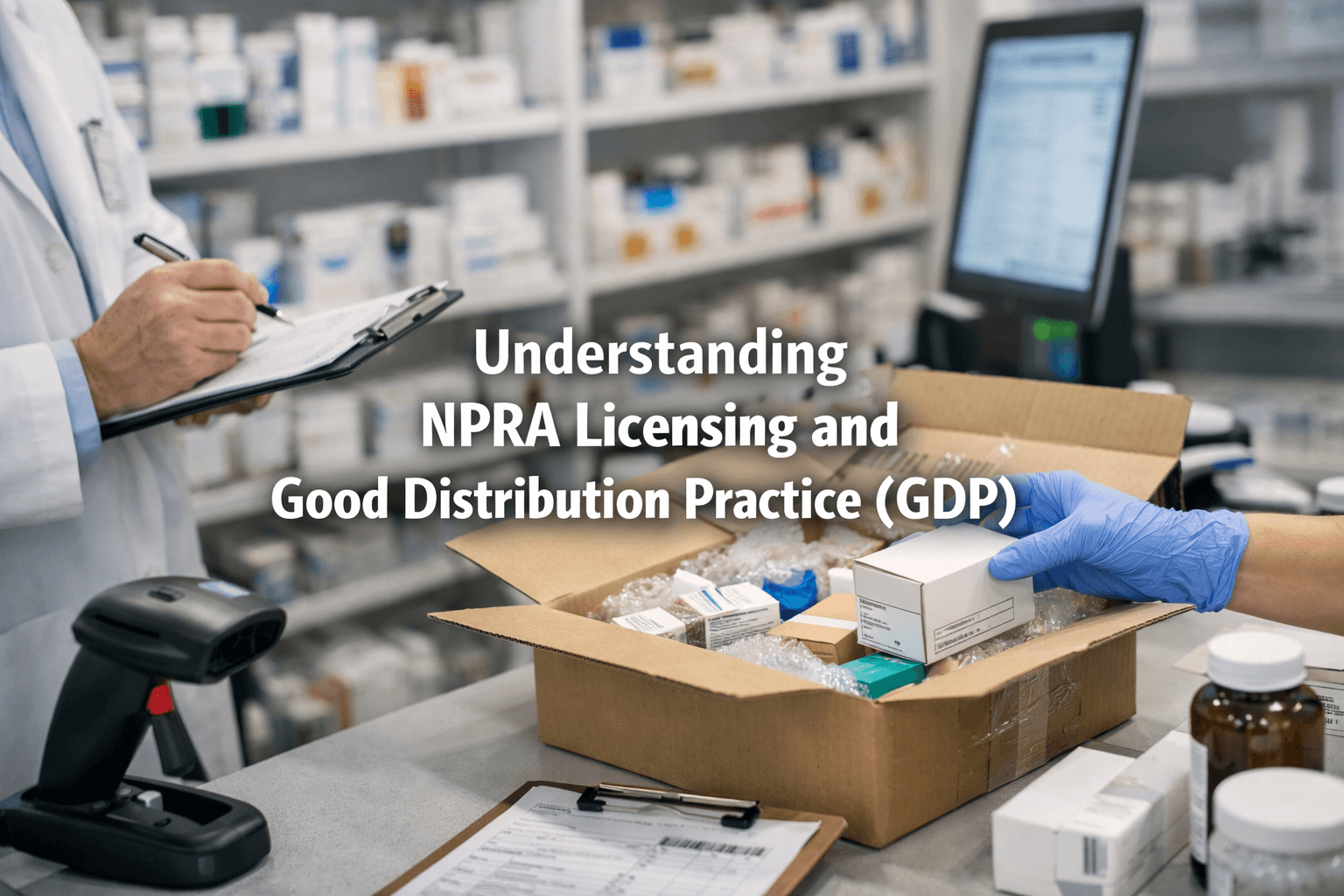
A deep understanding of NPRA licensing and Good Distribution Practice (GDP) is essential for any pharmacy distributor in Malaysia. The NPRA ensures that pharmaceutical products meet safety, quality, and efficacy standards before they reach the market. As a distributor pharmacy, you are responsible for maintaining these standards throughout the distribution chain. It’s not enough for the product to be safe when it leaves the factory; you must guarantee it remains safe until it reaches the patient’s hands. This concept is the very heart of GDP. It is a proven system that safeguards public health and maintains the integrity of the entire pharmaceutical supply chain.
Good Distribution Practice (GDP) refers to a set of guidelines for the handling, storage, and transportation of pharmaceuticals to ensure their quality is maintained. For example, products like vaccines and biologics require specific temperature-controlled environments during transportation and storage—a practice often referred to as the “cold chain.” In a tropical country like Malaysia, with its consistent heat and humidity, maintaining the cold chain is not just a guideline; it is a monumental logistical challenge. A failure here could render an entire shipment of life-saving vaccines useless. A brand manager for a multinational pharmaceutical company, for instance, would only entrust their high-value biologic products to a distributor who can demonstrate a flawless GDP record with real-time temperature monitoring throughout the delivery process.
To maintain GDP compliance, distributors must:
Regularly audit their facilities and distribution practices, including temperature mapping of warehouses and delivery vehicles.
Maintain meticulous documentation of product movement, from warehouse to end-users, ensuring full traceability.
Train staff on compliance standards for safe handling and storage, especially for products requiring special handling.
Implement a robust recall procedure, which is a mandatory requirement under GDP.
By following these guidelines, you will not only ensure the safety and efficacy of your products but also demonstrate your commitment to operating as a trusted pharmacy distributor in Malaysia. This commitment to quality builds confidence among healthcare providers, who can rely on you as an expert partner in patient care.
Learn more: Key Regulations Governing Pharmacy Distribution in Malaysia
Establishing a Reliable Warehouse and Distribution Network
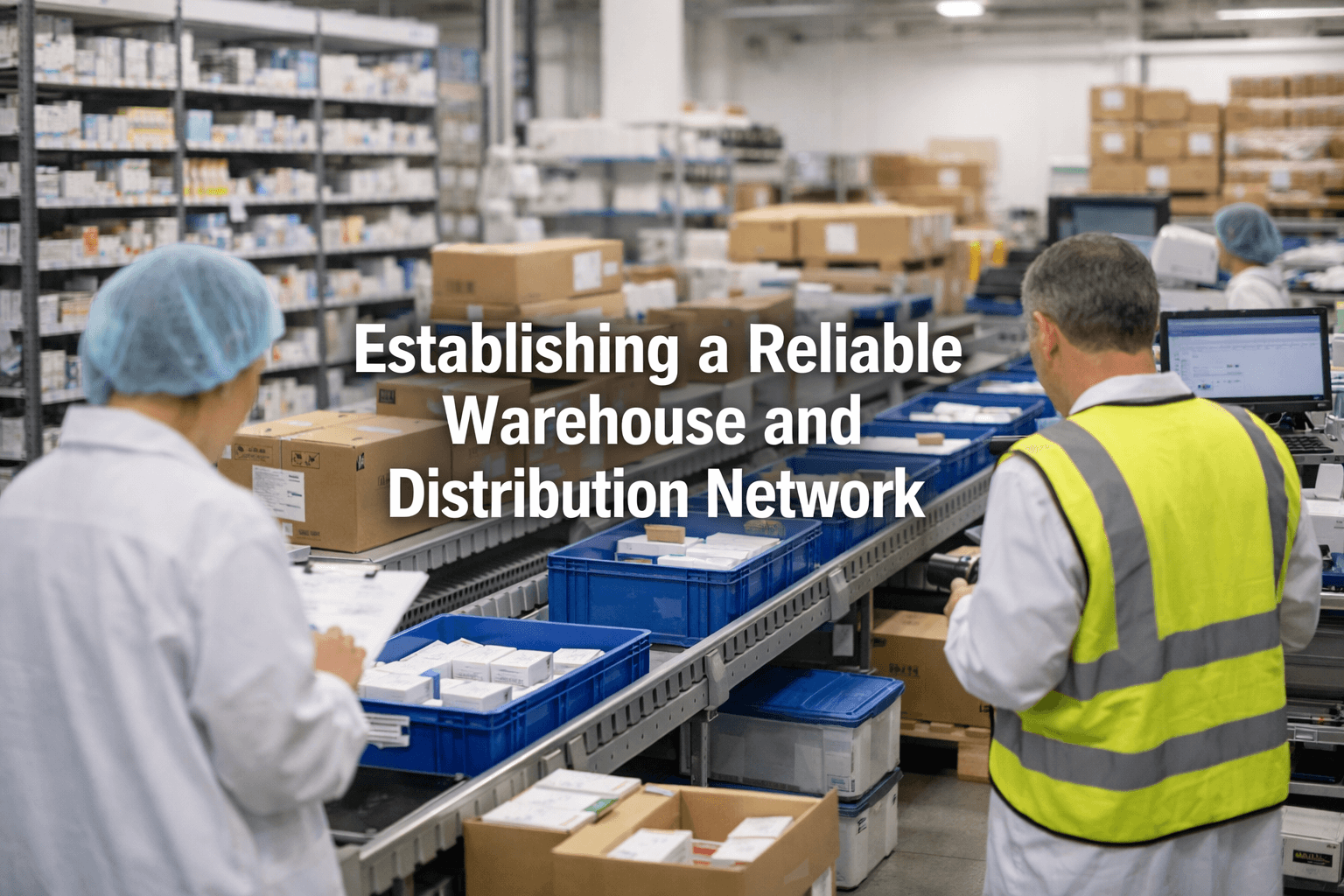
A GDP-compliant warehouse is the backbone of any successful pharmacy distribution business. Your warehouse must meet stringent conditions to store pharmaceuticals safely, ensuring that products are not exposed to harmful conditions like improper temperature or humidity. It is the central nervous system of your entire operation, and its efficiency directly impacts your ability to serve clients. The location, infrastructure, and management systems you choose will dictate your capacity for growth and your operational reliability.
Considerations when choosing a warehouse location in Malaysia include:
Proximity to major pharmaceutical markets: Choose a location near key cities like Kuala Lumpur or Penang, where pharmacy wholesale distributors are concentrated. This strategic placement reduces last-mile delivery times and costs.
Warehouse standards: Ensure that the facility meets NPRA regulations, including adequate temperature controls for sensitive products. This includes segregated areas for quarantined goods and rejected items.
Inventory management systems: Implement efficient systems for tracking product movement and stock rotation, such as a Warehouse Management System (WMS) that integrates with your accounting software.
Security: Pharmaceuticals are valuable goods. The warehouse must have 24/7 security surveillance and access control to prevent theft or tampering.
Managing a pharmacy distribution network also involves collaborating with third-party logistics providers for transportation, ensuring your distribution is reliable and efficient. This is a proven strategy for scaling operations without the massive capital outlay of owning a fleet. For instance, a distributor based in Johor Bahru might partner with a logistics company specializing in cold chain delivery to service pharmacies in smaller towns like Kluang or Mersing. This tailored approach allows them to cover a wider geographic area while maintaining product integrity. Ultimately, a well-designed network improves your ability to service pharmacies and healthcare providers consistently and cost-effectively.
Securing Product Notifications and Compliance with KKM Regulations

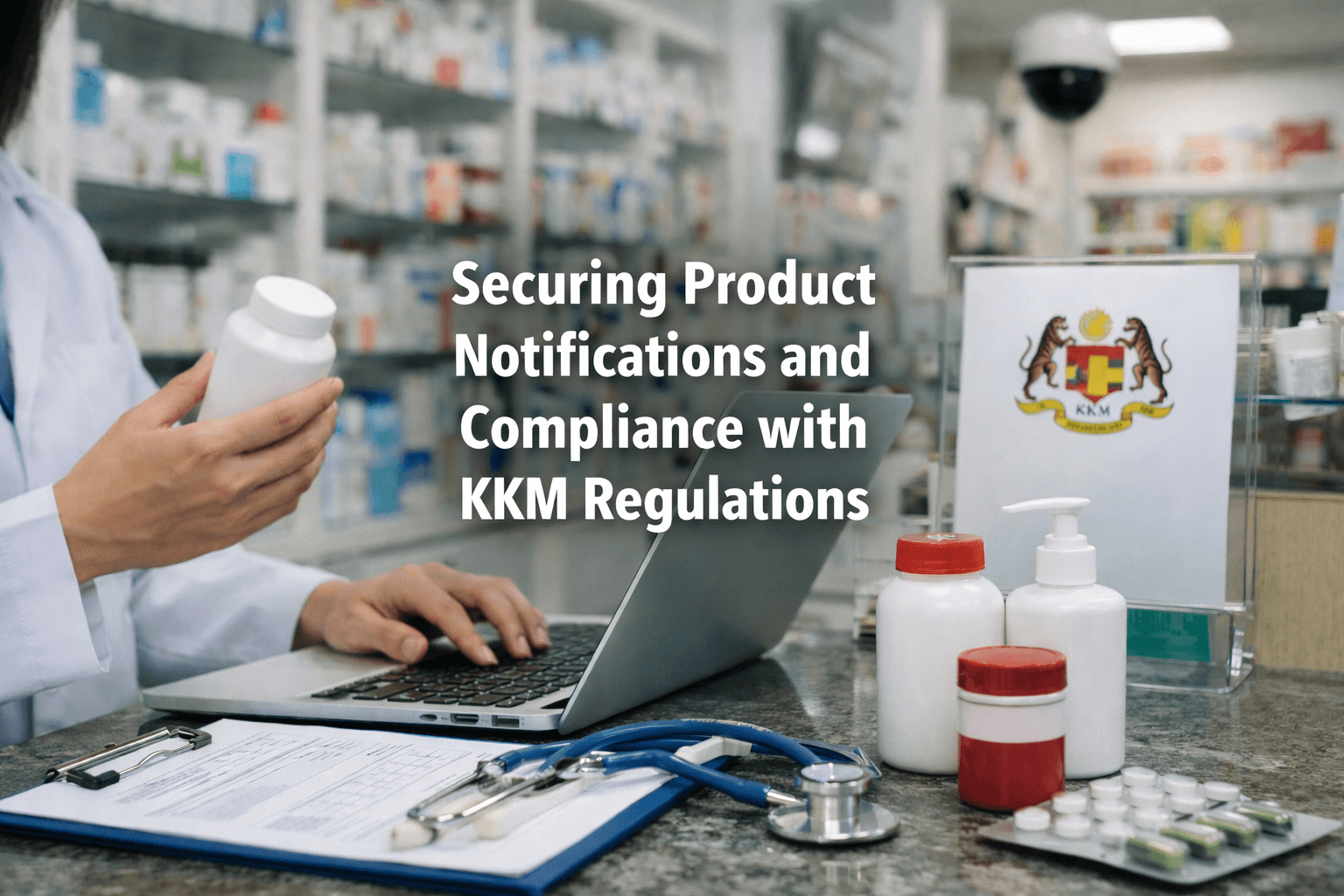
In Malaysia, all pharmaceutical products, including health supplements and cosmetics, must be notified and approved by the Ministry of Health Malaysia (KKM) before they can be distributed to pharmacies. This process, managed through the NPRA’s Quest 3+ system, ensures that the products meet regulatory standards for safety and efficacy. It is a critical gateway that every single stock-keeping unit (SKU) must pass through. Without a valid product notification, a product is considered illegal, and its distribution can lead to severe penalties. This is not just a bureaucratic hurdle; it’s a fundamental consumer protection mechanism.
To secure product notifications:
Submit an application to KKM through the Quest 3+ system along with detailed product information, including ingredients, manufacturing processes, and safety data.
Ensure that your product labels meet local language and packaging regulations, including Bahasa Malaysia text and specific warning statements where required.
Follow up with KKM for approval and ensure that all documentation is properly filed and accessible for inspection.
Pay the requisite fees for each product notification application.
Once approved, ensure that all product notifications are valid and renew them periodically to maintain compliance. This is a point where many new distributors slip. They secure the initial approval but forget to track renewal dates, leading to lapses in compliance. A brand manager for an international skincare line, for example, would rely on their local distributor to manage the entire notification and renewal process for their products in Malaysia. They expect the distributor to be an expert in local regulations, from the specific claims allowed on packaging to the Halal certification requirements that can be a significant market differentiator. By doing so, you ensure that your distribution process remains smooth and your products are available in the market without delays or legal issues.
Learn more: How to Ensure Regulatory Compliance for Pharmacy Distribution in Malaysia
Strategic Approaches to Building a Distribution Network in Malaysian Pharmacies

Building a successful distribution network in Malaysia requires a strategic approach. Malaysia’s pharmacy chains, such as Watsons, Guardian, and Caring Pharmacy, are key players in the pharmaceutical retail market. They are not just retailers; they are powerful gatekeepers with immense influence over consumer choice. To become a successful distributor pharmacy, you need to develop strong relationships with these chains and understand their unique operational models. It requires more than just dropping off a catalog; it requires a deep understanding of their category management and consumer demographics.
Here are some strategies:
Negotiate favorable terms with pharmacy chains by understanding their needs and product demand, offering exclusive deals or volume-based rebates.
Leverage marketing and promotional support to ensure that your products are visible to consumers, including in-store merchandising and joint promotional campaigns.
Provide exceptional customer service and consistent supply to build long-term partnerships with pharmacies, ensuring stock availability especially during peak seasons.
Appoint dedicated merchandisers who visit stores regularly to check stock levels, arrange displays, and build rapport with pharmacy staff.
In addition to traditional retail chains, consider expanding into niche markets or independent pharmacies, where there may be less competition. For instance, focusing on Islamic pharmacy or clinics in the East Coast states of Kelantan and Terengganu, where there is a high demand for Halal-certified health products, can be a highly effective growth strategy. By adopting a tailored approach, you can meet the needs of diverse segments in the market.
| Distribution Aspect | In-House Team Approach | Using a Specialized Distributor |
|---|---|---|
| Market Reach | Limited, requires significant time and cost to expand | Broad, pre-existing network across various channels |
| Compliance Expertise | Must build GDP and KKM knowledge from scratch | Immediate access to proven regulatory expertise |
| Logistics & Warehousing | High capital investment in GDP-compliant facilities | Leverages established, GDP-certified infrastructure |
| Relationship with Pharmacies | Must build trust and relationships from zero | Benefits from established, trusted relationships |
| Cost Structure | High fixed operational costs | Variable costs, more efficient for scaling |
This comparison clearly shows that for many international brands or local startups, partnering with an established pharmacy distributor is the most effective path to market, while larger, established players might prefer the control of an in-house model.
Effective Marketing and Sales Strategies for Pharmacy Distributors
In today’s competitive healthcare landscape, simply stocking products isn’t enough. As a pharmacy distributor Malaysia, effective marketing and sales strategies are crucial for ensuring product success and long-term sustainability. Developing a robust marketing plan that seamlessly integrates online and offline channels can help you build brand visibility and foster genuine consumer loyalty among healthcare professionals and patients alike.
Branding forms the foundation of your market presence. Creating a strong brand identity that resonates with both healthcare professionals and consumers requires consistency across all touchpoints—from packaging design to sales collateral. Your brand should communicate trustworthiness and clinical reliability, two non-negotiable attributes in pharmaceutical distribution. For instance, when pharmacists recognise your brand as synonymous with quality, they’re more likely to recommend your products without hesitation.
Promotions and Discounts must be approached strategically in this regulated environment. Offering tailored promotional campaigns—such as loyalty discounts for high-volume pharmacy partners or bundled offers on complementary healthcare products—can attract more pharmacies to your portfolio. However, these promotions must always align with NPRA guidelines to maintain ethical standards. Some successful distributors in Malaysia have implemented tiered discount structures that reward consistent ordering patterns, creating win-win scenarios for both parties.
Perhaps most critically, Training for Pharmacists represents an underutilised opportunity. Providing pharmacists with the tools and knowledge they need to recommend your products to customers directly enhances product visibility and sales velocity. When pharmacists understand your product’s clinical applications, contraindications, and unique selling points, they become trusted advocates for your brand at the point of purchase. This educational approach transforms passive stocking into active selling—a proven strategy employed by leading pharmacy distributors across Malaysia.
By implementing these strategies consistently, you will be able to generate sustained demand for your products, ensuring they remain competitive in the fast-evolving pharmacy distribution landscape. The most effective distributors view marketing not as an afterthought but as an essential driver of operational success.
Managing Regulatory Compliance and Risk Mitigation in Distribution Operations
Maintaining regulatory compliance is a continuous process—not a one-time checkbox exercise. As a distributor, it’s essential to ensure that your operations consistently adhere to NPRA and KKM standards, particularly as regulations can change with little notice in response to public health developments or emerging safety concerns. The pharmaceutical landscape in Malaysia demands vigilance and adaptability from all supply chain participants.
Risk mitigation practices for pharmacy distributors must be embedded into daily workflows rather than treated as occasional audits. Key components include:
Regular compliance audits to ensure alignment with current regulations and product standards, covering everything from storage temperatures to documentation accuracy
Quality assurance protocols that monitor the safety and efficacy of distributed products throughout the supply chain, including third-party logistics partners
Product recalls management systems that enable swift identification and removal of affected products from the market, protecting both public health and your reputation
The financial implications of non-compliance can be severe. Beyond regulatory penalties, a single compliance failure can erode years of built trust with pharmacy partners. Consider the operational scenario facing Malaysian distributors during the recent glutathione product recalls, where those with robust traceability systems removed affected batches within 48 hours, while others struggled for weeks—damaging relationships with pharmacy chains like Guardian and Watsons in the process.
Effective risk mitigation also requires documented standard operating procedures that leave no room for ambiguity. Your team should know exactly how to handle temperature excursions, damaged goods, or expiry date monitoring without needing managerial intervention for every decision. This operational discipline separates reliable distributors from those who merely claim reliability.
By implementing these risk mitigation strategies, you minimise operational disruptions and ensure that your pharmacy distribution service in Malaysia remains both compliant and trustworthy—two qualities that pharmacy partners value above almost everything else.
Learn more: How to Ensure Regulatory Compliance for Pharmacy Distribution in Malaysia
Comparative Perspectives: Distributor Pharmacy vs. In-House Pharmacy Teams
When deciding whether to work with pharmacy wholesale distributors or establish in-house distribution teams, brand owners must carefully evaluate the strategic implications of each model. This decision fundamentally shapes operational flexibility, cost structures, and market responsiveness.
Distributor Pharmacy Model: Working with an established distributor offers the undeniable advantage of scalability and specialised expertise. Distributors bring pre-existing infrastructure, established relationships with pharmacy chains, and battle-tested knowledge of regulatory compliance and logistics optimisation. For emerging pharmaceutical brands, this means immediate market access without the capital burden of warehouse construction or fleet management. Consider the experience of Duopharma (Biotech) , which leverages distributor networks to penetrate both urban and rural pharmacy markets efficiently—reaching outlets in Sabah and Sarawak that would be logistically challenging to service directly from the outset.
In-House Distribution Model: While this approach provides greater control over operations, it also requires significant investments in infrastructure, regulatory compliance capabilities, and specialised human resources. Brands like Hovid Berhad have successfully maintained hybrid approaches—handling core distribution internally for key products while engaging distributors for secondary lines or remote territories. The trade-off becomes clear: control comes with cost, while delegation brings efficiency but reduced direct market insight.
Understanding these dynamics helps brand owners make informed decisions about which model best aligns with their strategic goals. For startups and expanding brands, partnering with an independent pharmacy distributor often represents the most viable path to rapid market penetration. For established players with deep pockets, in-house distribution might eventually become feasible—but rarely without years of distributor partnership first.
Future Outlook: Trends and Opportunities in Malaysia’s Pharmacy Distribution Market
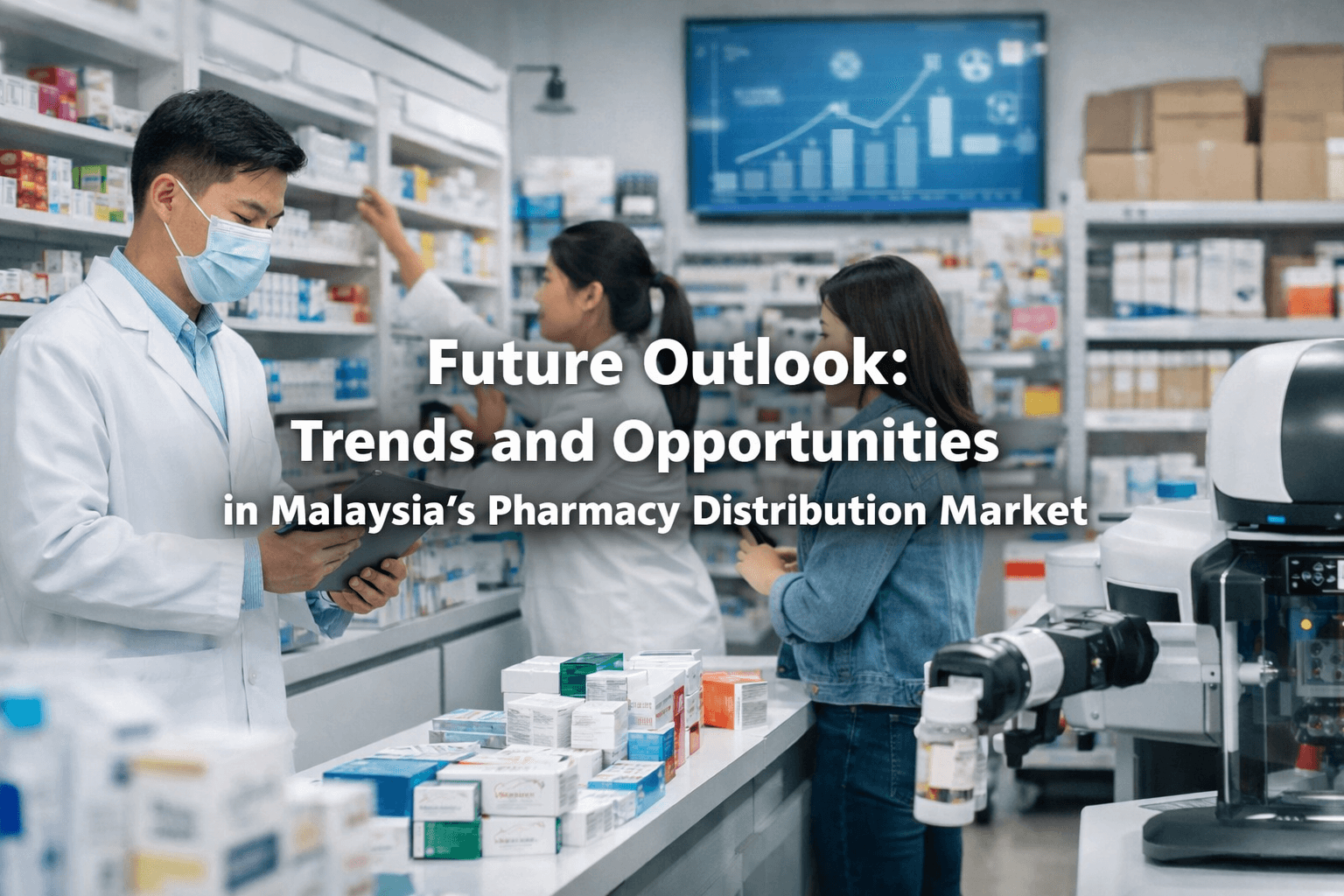
The pharmacy distribution market in Malaysia is evolving at an unprecedented pace, with e-commerce and digital transformation playing pivotal roles in reshaping industry dynamics. More consumers are turning to online pharmacies for convenience and competitive pricing, presenting both challenges and opportunities for forward-thinking distributors.
Emerging trends worth watching include:
Digital pharmacies and omnichannel integration: The rise of platforms like Panda Retail and DoctorOnCall is fundamentally changing how pharmacy distributors engage with end consumers. Distributors must now support both physical retail and digital fulfillment channels, often requiring separate inventory allocations and delivery protocols. This dual-channel reality demands sophisticated inventory management systems that can track stock across multiple selling platforms simultaneously.
Wellness product diversification: There is increasing consumer demand for natural wellness products, supplements, and halal-certified beauty items, creating niche market opportunities for distributors willing to specialise. Malaysian consumers are becoming more health-conscious, seeking products that complement traditional pharmaceuticals. Distributors who develop expertise in sourcing and certifying such products position themselves as valuable partners to pharmacies looking to expand their wellness categories.
Technology adoption and automation: Forward-looking distributors are implementing AI-driven demand forecasting and robotic process automation to streamline operations, improve inventory accuracy, and reduce order fulfillment times. These technologies aren’t just cost-saving measures—they’re becoming competitive necessities as pharmacy partners expect faster, more reliable service.
These trends offer strategic opportunities for distributors to grow their businesses in Malaysia, provided they’re willing to adapt and invest in capabilities that align with market direction.
Comparative Table: Distributor Pharmacy vs. In-House Distribution Models
| Criteria | Distributor Pharmacy Model | In-House Distribution Model |
|---|---|---|
| Cost Efficiency | High due to established infrastructure and economies of scale | High initial investment; ongoing operational costs require significant volume to justify |
| Regulatory Compliance | Proven expertise with dedicated compliance teams; reduced burden on brand | Requires dedicated regulatory staff and continuous monitoring investment |
| Scalability | Easier to scale quickly across new territories and pharmacy chains | Scaling requires additional capital, personnel, and systems investment |
| Control Over Operations | Less direct control; dependent on distributor’s systems and priorities | Full control over processes, branding, and customer relationships |
| Market Reach | Wide distribution networks covering urban and rural pharmacies | Often limited to specific geographic areas until infrastructure expands |
| Time to Market | Rapid market entry using existing relationships and infrastructure | Slower launch due to setup requirements and relationship building |
Learn more: Pharmaceutical Supply Chain Trends and Resilience | Four Ways Pharma Companies Can Make Their Supply Chains More Resilient | Health Pharma Supply Chain Transformation
Key Takeaways for Aspiring Pharmacy Distributors in Malaysia
Becoming a successful pharmacy distributor in Malaysia requires careful attention to regulatory compliance, strategic marketing, and robust distribution networks. By following the comprehensive steps outlined throughout this guide, you can build a trusted and efficient distribution business that genuinely meets the needs of Malaysian pharmacies and healthcare providers. Whether you’re just starting out or looking to expand your existing operations, understanding the essential requirements and proactively adapting to industry trends will remain central to your sustained success.
The journey demands patience, integrity, and continuous learning—but for those who commit to excellence, the opportunities in Malaysia’s growing healthcare market are substantial.
Frequently Asked Questions (FAQ)
Q1: How to be a distributor in Malaysia?
To become a distributor in Malaysia, you need to register your business with the Companies Commission of Malaysia (SSM), obtain necessary licenses such as the WRT (Wholesale Retail Trade) license, and ensure compliance with local regulations. You’ll also need to establish relationships with suppliers and ensure you have the infrastructure for inventory management, logistics, and sales.
Q2: Who needs a WRT license?
The WRT (Wholesale Retail Trade) license is required by businesses involved in the wholesale and retail trade in Malaysia. This includes distributors, retailers, and suppliers of goods in various industries.
Q3: What is a PBT license in Malaysia?
A PBT (Pihak Berkuasa Tempatan) license in Malaysia is issued by local authorities, allowing businesses to operate within specific areas or jurisdictions. It is required for certain types of businesses, particularly those involved in food, retail, or commercial operations.
Q4: Do I need a license to sell online in Malaysia?
Yes, in Malaysia, businesses selling online may require certain licenses or registrations, such as a business license from SSM and possibly a PBT license depending on the nature of the products sold. Additionally, certain sectors like food, cosmetics, or medical products require further regulatory compliance.
Q5: What do I need to become a distributor?
To become a distributor, you need to establish a legal business entity, secure suppliers or manufacturers, obtain any necessary licenses (e.g., WRT license), set up infrastructure for storage and logistics, and develop a sales strategy. A clear understanding of local regulations and compliance is also essential.
Q6: What are the three types of distributors?
The three types of distributors are:
Exclusive distributors – who have exclusive rights to distribute products within a specific region.
Selective distributors – who are selected by manufacturers to distribute in specific areas or for certain customer segments.
Wholesale distributors – who sell products in bulk to retailers or other businesses.
Q7: How do you qualify as a distributor?
To qualify as a distributor, you must have a registered business, a solid network of suppliers or manufacturers, the necessary licenses and permits, and the ability to manage logistics and sales effectively. You may also need to meet the requirements set by the manufacturers or suppliers you’re representing.
Q8: What business can I start with RM5000 in Malaysia?
With RM5000, you can start small businesses such as online retail, food delivery services, beauty product sales, tutoring, or a small distribution business. Depending on your industry, this budget can cover registration, equipment, and initial inventory or marketing costs.
Q9: How to create a distributor?
Creating a distributor involves selecting products or services to distribute, forming a legal business entity, obtaining licenses, building supplier relationships, setting up logistics and storage, and planning a marketing and sales strategy to reach potential clients.
Q10: How much money does a distributor make?
The income of a distributor varies based on the product, market, and distribution model. Distributors typically earn a profit margin on products sold, with some earning a commission or markup on wholesale prices. Profits can range from a few thousand to higher earnings depending on the scale of distribution.
How can we assist you today? 😊
Just let us know—we’re here to help!